
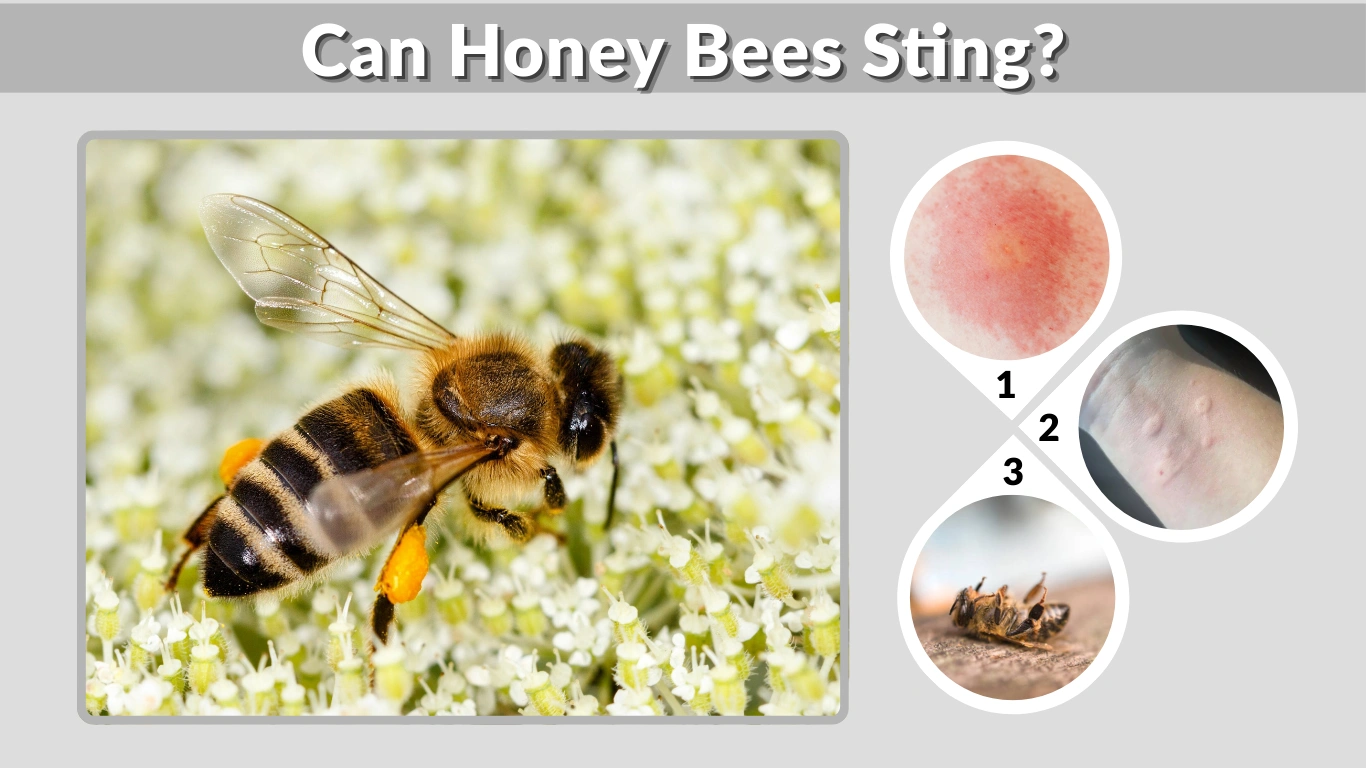
Honey bees are among the most familiar insects in the world, admired for their role in pollination and honey production. Yet despite their gentle nature, many people have questions about their ability to sting. Can honey bees sting humans? Can they sting more than once? Do male bees sting? And why do honey bees die after stinging?
Understanding honey bee stings helps people stay safer around bees and avoid misunderstandings that lead to unnecessary fear—or unnecessary harm to bees. This guide explains who can sting, how the stinger works, medical risks, and how to prevent stings.
Can Honey Bees Sting? (Short Basics)
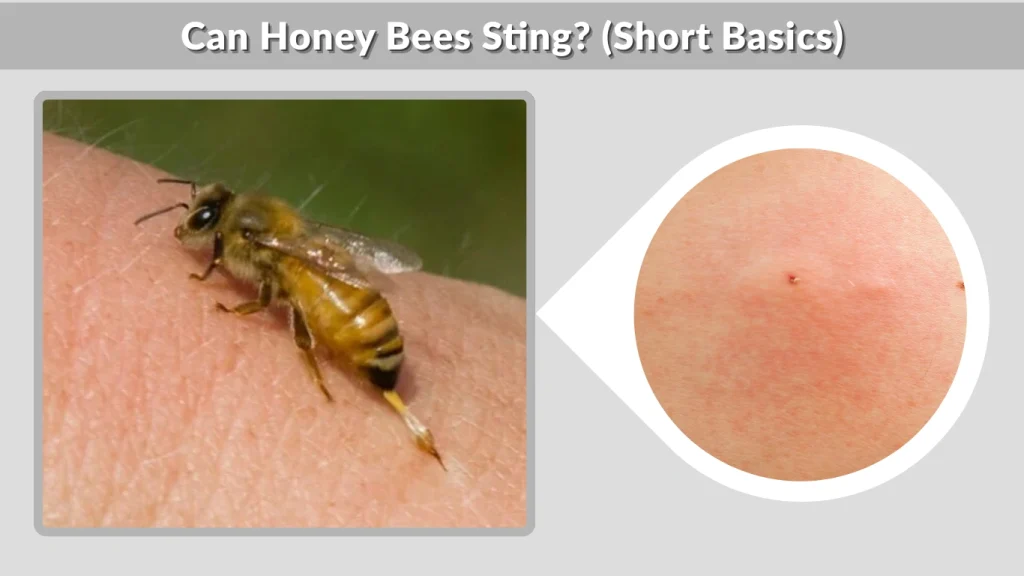
Yes, female honey bees can sting, but not all bees in the hive have this ability. Only workers and the queen possess a stinger. The male bees, called drones, cannot sting at all.
Workers are responsible for defending the hive, especially against threats like predators or hive disturbances. Their stingers are barbed, meaning once they sting a mammal, they cannot remove the stinger. This leads to a fatal injury, making it a one-time defensive act.
Why Only Female Honey Bees Can Sting
In honey bees, the stinger evolved from a specialized reproductive organ called the ovipositor. Since males do not lay eggs, they lack this structure entirely. The female anatomy allows the ovipositor to function both for laying eggs (in queens) and as a defense mechanism (in workers).
How Honey Bee Stingers Work
The honey bee stinger is a remarkable but tragic piece of anatomy. It is designed for effective defense of the colony—even at the cost of the individual bee.
Honey bee stingers are barbed, meaning they hook deeply into the skin of mammals. Once the stinger embeds, the bee cannot pull it out. Instead, the stinger breaks off from the bee’s abdomen, continuing to pump venom for 20–30 seconds.
This design makes honey bee stings extremely effective against predators but fatal for the bee.
Why Honey Bees Can Only Sting Once
When a honey bee stings:
- The barbed stinger becomes stuck in the skin
- The bee attempts to fly away
- The stinger tears out of the bee’s body
- The bee dies shortly afterward
This “suicide defense” evolved because honey bee colonies rely on the group, not individuals. One bee dying to protect thousands is a successful survival strategy from an evolutionary standpoint.
Why Wasps & Queens Can Sting Repeatedly
Wasps and bumblebees have smooth stingers, allowing them to sting multiple times without harm.
Queens also have smooth stingers, meaning they can sting repeatedly. However, they rarely sting humans. Queen stingers are used almost entirely for killing rival queens inside the hive during mating or colony takeovers.
Who Can Sting? Worker, Queen & Drone Differences
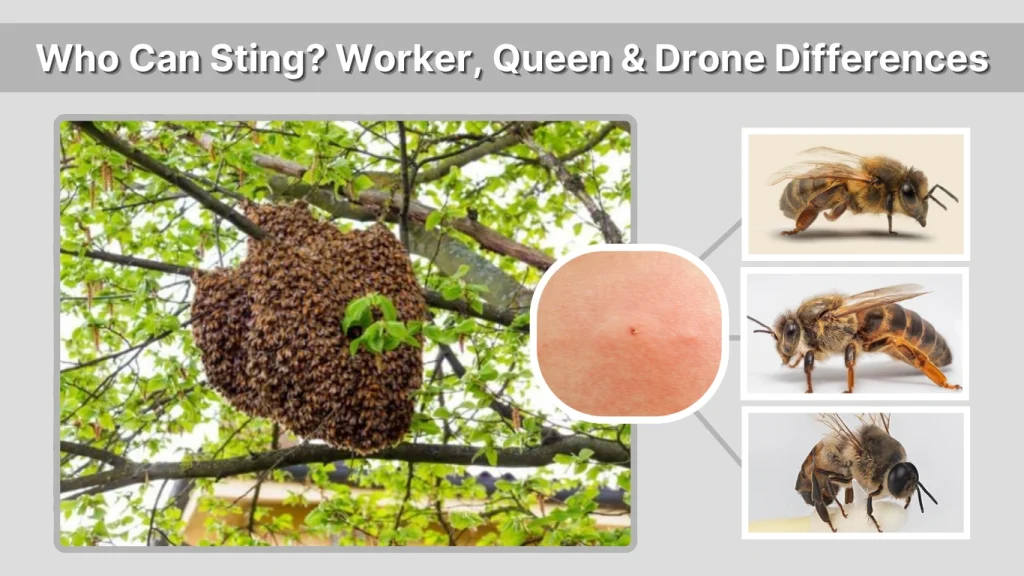
Even though honey bees live in a large, organized colony, their ability to sting varies depending on their role.
Worker Honey Bees
Worker bees:
- Can sting mammals once
- Can sting insects multiple times because insect exoskeletons don’t trap the stinger
- Are the primary defenders of the hive
- Usually sting only when the colony is threatened
Workers are what most people encounter outdoors.
Queen Honey Bees
Queen bees:
- Possess a smooth stinger
- Can sting multiple times without dying
- Rarely sting humans
- Use their stinger to fight other queens
The queen’s stinger is a tool for colony leadership and mating competition—not for defending against humans.
Male Honey Bees (Drones)
Drones:
- Cannot sting
- Have no stinger at all
- Are harmless to humans
- Don’t forage or defend the hive
- Have one purpose: mating
If a bee is large, slow, and clumsy-looking, it is likely a drone and completely harmless.
How Many Times Can Honey Bees Sting?
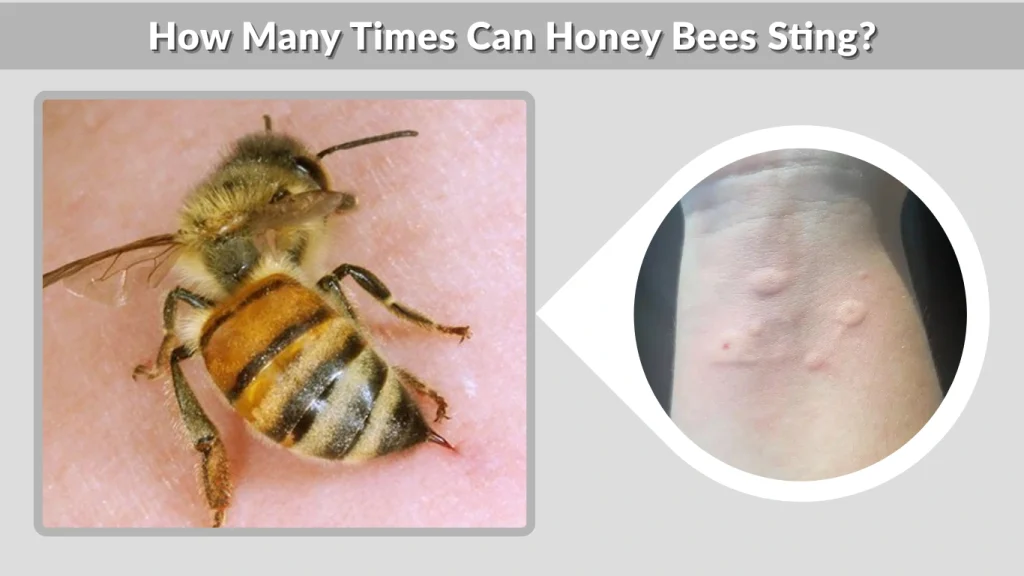
Honey bee stinging behavior depends on the type of bee.
- Workers: one sting only
- Queens: multiple stings
- Drones: no stings
Africanized honey bees have the same stinger limitation as regular honey bees, but they attack in larger numbers, making their stings more dangerous.
Can Honey Bees Sting Through Clothing?
Yes, honey bees can sting through some fabrics, especially thin materials.
They can sting through:
- T-shirts
- Thin cotton
- Latex or nitrile gloves
- Some synthetic fabrics
They rarely sting through:
- Thick denim jeans
- High-quality bee suits
- Multi-layer protective suits
However, loose clothing or stretched fabric makes stinging easier.
Special Cases: Dead Bees, Jars & Stinger Removal
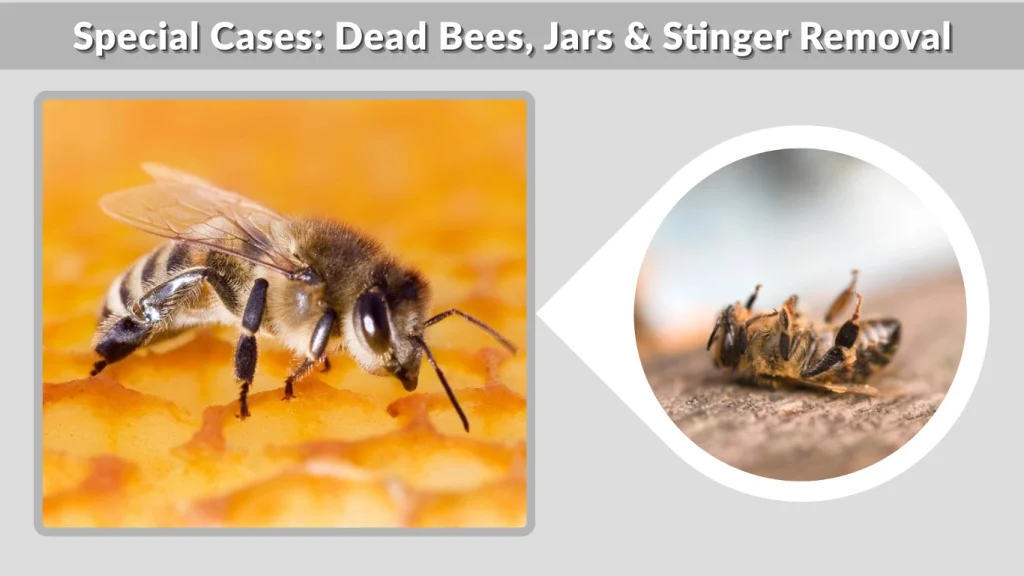
Understanding these scenarios can prevent unpleasant surprises.
Can Dead Honey Bees Sting?
Surprisingly, yes—a dead honey bee can still sting if you step on it or accidentally press against it. The stinger connected to a venom sac can inject venom reflexively.
Can a Honey Bee Sting After Stinging Once?
No. Once a worker loses its stinger, it cannot sting again and will die soon afterward.
How Long Honey Bees Live Without a Stinger
When a worker loses its stinger, the injury is severe. Most live only:
- A few minutes to one hour
The fatal wound is part of why honey bees can’t survive after stinging.
Honey Bee Sting Effects on Humans
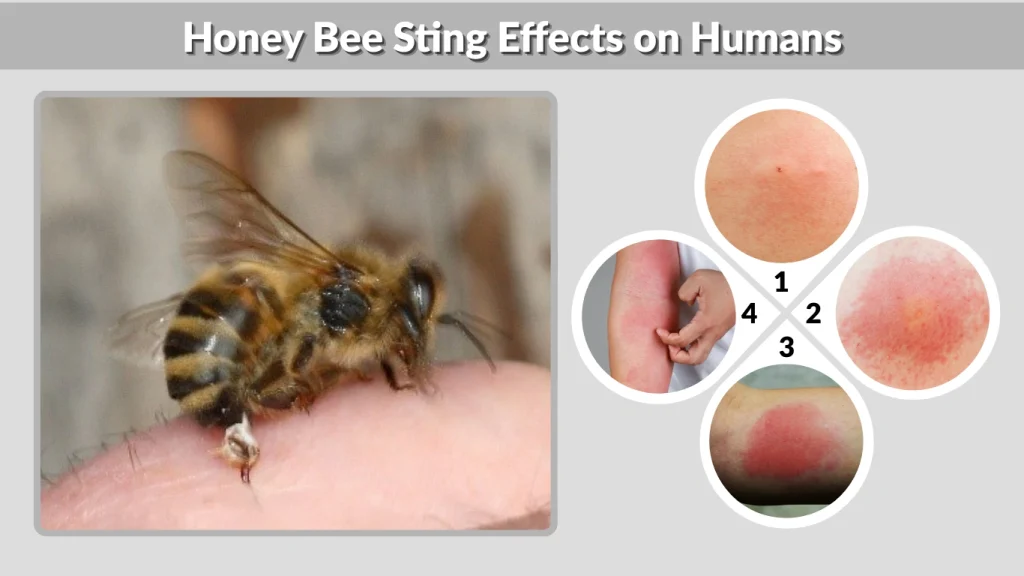
Honey bee stings can cause a range of reactions depending on the person, the number of stings, and individual sensitivity.
Normal Reactions
Most people develop mild, temporary symptoms, including:
- Sharp pain at the sting site
- Redness and swelling
- Warmth around the area
- Itching or tenderness for 1–3 days
These reactions occur because the bee injects a small amount of venom containing proteins that trigger inflammation.
Severe Reactions
A small percentage of people experience more intense responses, such as:
- Large local swelling
- Redness spreading several inches
- Fever or chills
- Fatigue
Though not dangerous, these reactions can feel very uncomfortable and may last up to a week.
Life-Threatening Reactions (Anaphylaxis)
Some individuals are dangerously allergic to bee venom. Symptoms may include:
- Difficulty breathing
- Swelling of the face, lips, or throat
- Lightheadedness or fainting
- Hives far from the sting site
- Rapid heartbeat
Anaphylaxis is a medical emergency requiring immediate treatment with epinephrine.
How Many Bee Stings Can Kill a Person?
For a healthy adult:
- 500–1,000 stings can be fatal due to venom overload
- Children are at risk from fewer stings
- Allergic individuals may react severely to just one sting
Africanized honey bees deliver no more venom per sting—but because they swarm aggressively, they pose a greater mass-sting risk.
Honey, Allergies & Medical Questions
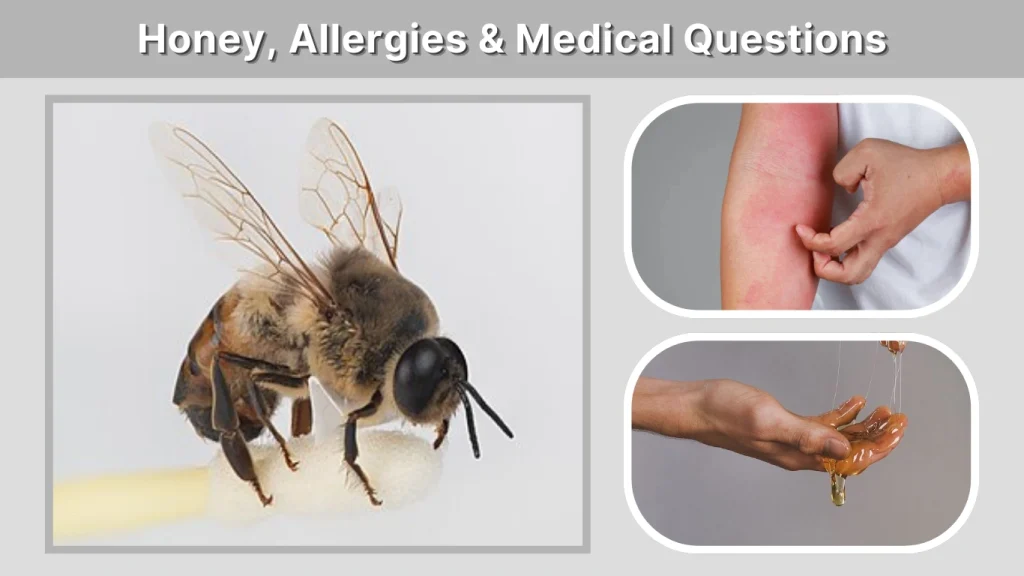
Many people wonder whether honey or bee products affect sting allergies.
Can You Eat Honey If Allergic to Bee Stings?
Yes—in most cases, people who are allergic to bee stings can safely eat honey.
That’s because:
- Sting allergies come from venom proteins
- Honey contains different substances
Exceptions exist for people with extremely severe sensitivities or pollen allergies, so they should consult a doctor.
Can Honey Heal a Bee Sting?
Honey has natural antibacterial and soothing properties. Applying a small amount:
- Reduces itching
- Provides cooling relief
- Helps prevent infection
However, honey cannot remove venom or reverse allergic reactions.
Can Honey Cure Bee Sting Allergy?
No—this is a myth.
Bee sting allergy is a venom allergy, not a honey allergy.
The only long-term medical treatment is venom immunotherapy, administered by allergy specialists.
Remedies: What to Do After a Honey Bee Sting
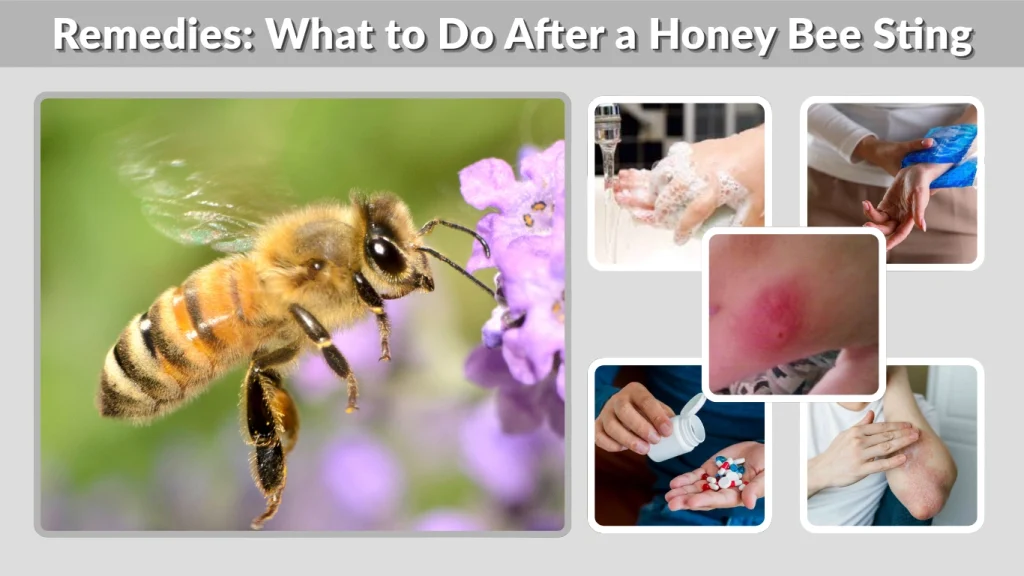
Proper first aid can reduce pain and prevent complications.
Immediate Steps
- Remove the stinger quickly.
Scrape it with a fingernail or card—don’t pinch it. - Wash the area with soap and water.
- Apply a cold compress to reduce pain and swelling.
Early removal prevents additional venom from pumping into the skin.
What You Can Put on a Bee Sting
Several home and medical treatments help soothe symptoms:
- Ice or cold packs
- Baking soda paste
- Honey (natural soothing)
- Hydrocortisone cream
- Antihistamines (like diphenhydramine or hydroxyzine)
- Aloe vera
- Calamine lotion
If swelling worsens after 24–48 hours, a doctor may evaluate for infection.
When to Seek Emergency Care
Seek help immediately if you notice:
- Trouble breathing
- Swelling of lips or throat
- Dizziness or confusion
- Persistent hives
- Severe nausea or vomiting
Children and elderly individuals should be monitored closely after any sting.
Why Honey Bees Sting & How to Prevent Stings
Honey bees are generally gentle and sting only when they feel the hive is in danger.
Why Bees Sting
Common triggers include:
- Vibrations or loud noises
- Swatting or sudden movements
- Disturbing the hive
- Dark clothing (resembles predators)
- Floral perfumes or hair products
- Sweat smell (attracts defensive behavior)
Understanding these triggers helps reduce accidental stings.
How Beekeepers Avoid Stings
Experienced beekeepers use several strategies:
- Smoke: masks alarm pheromones
- Slow movements: prevent startling the bees
- Proper suits: thick layers reduce stinging risk
- Timing: inspecting hives during daylight and warm weather
- Safe honey harvesting techniques: minimize agitation
A calm beekeeper equals a calm hive.
Interesting Extras
Honey bees have some surprising behaviors and limitations when it comes to stinging.
Can Honey Bees Sting in Their First 7 Days?
Yes—but newly emerged bees rarely sting because:
- Their venom sacs are small
- They usually stay in the hive doing housekeeping jobs
They defend only after becoming field bees.
Can Honey Bees Bite?
Yes, honey bees have mandibles and can bite.
Their bites contain a mild anesthetic chemical called 2-heptanone, which they use primarily against small intruders like wax moth larvae—mostly harmless to humans.
Honey Badgers vs Bee Stings
Honey badgers are legendary for tolerating bee stings due to:
- Very thick skin
- Dense fur
- High pain resistance
- Natural venom immunity
They can survive hundreds of stings while raiding hives.
FAQs
Can honey bees sting through gloves?
They can sting through thin latex or nitrile gloves, but thick leather gloves and professional bee gloves offer solid protection.
Do honey bees sting for no reason?
No—most stings are defensive. Bees prefer to flee unless the hive is threatened.
Can a honey bee sting twice?
Worker bees: no.
Queens: yes.
Drones: cannot sting.
Can drone bees sting humans?
No—drones have no stingers.
Why do honey bees die after stinging?
Because their barbed stinger gets stuck in mammal skin, tearing out vital organs when they fly away.
Can I become immune to bee stings?
Some beekeepers develop mild tolerance, but true immunity requires medical venom immunotherapy.
