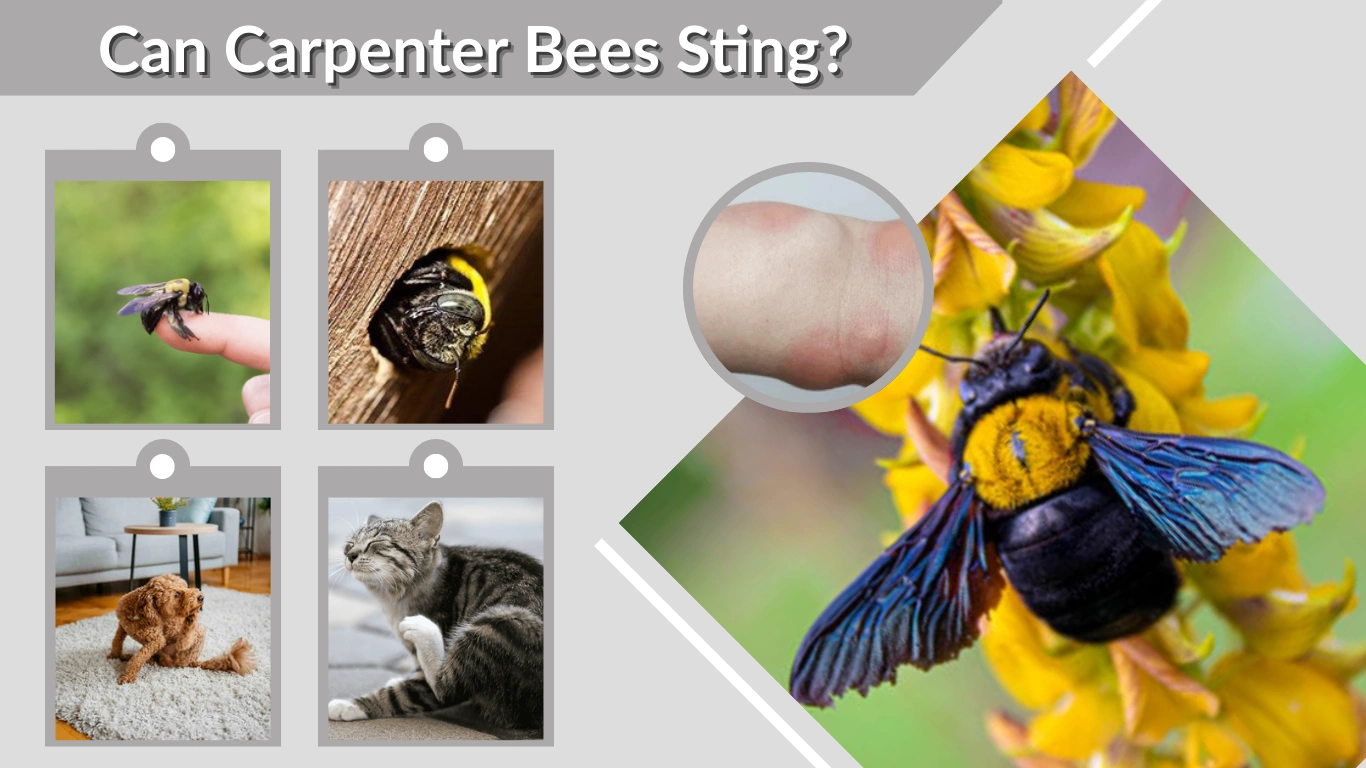
Carpenter bees are large, gentle pollinators often mistaken for bumble bees. While helpful in nature, they cause concern because they hover close to people and drill perfectly round holes in wood. Many homeowners worry about being stung, chased, or bitten. The truth is more nuanced. Carpenter bees behave very differently depending on whether they’re male or female, and understanding these differences helps reduce fear. This guide explains their sting habits, risks to humans and pets, identification, behavior, and prevention.
Identification of Carpenter Bees
How to Recognize Carpenter Bees
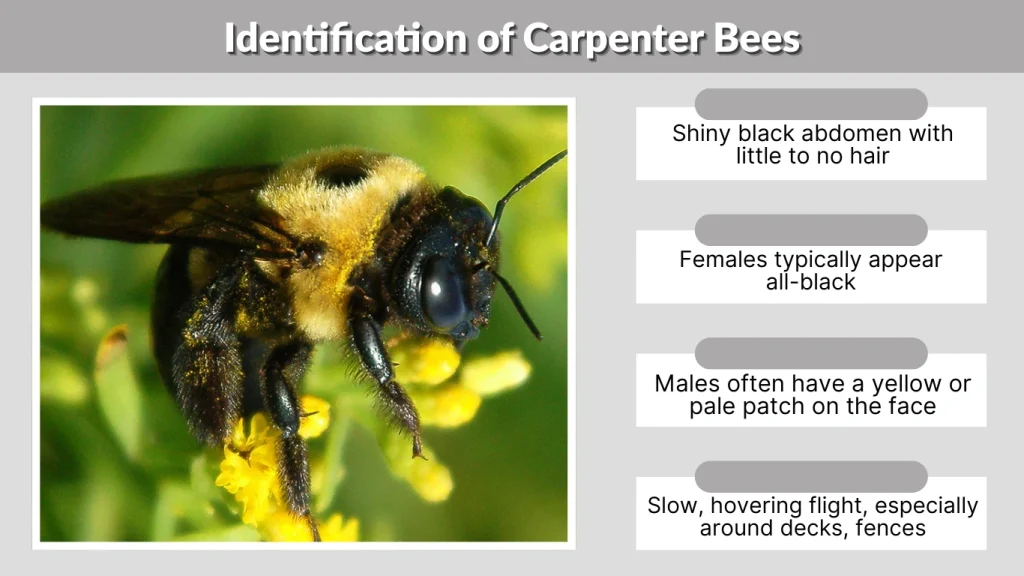
Carpenter bees are easy to identify once you know what to look for. Some of their most noticeable characteristics include:
- Shiny black abdomen with little to no hair
- Females typically appear all-black
- Males often have a yellow or pale patch on the face
- Slow, hovering flight, especially around decks, fences, or wood trim
- Perfectly round holes drilled into wood leading into nesting tunnels
Unlike bumble bees, which have fuzzy, striped bodies, carpenter bees have a smooth, glossy abdomen that reflects light. Their nesting behavior also sets them apart. If you see a bee inspecting or entering a wooden structure, it’s likely a female carpenter bee preparing or maintaining a nest.
Carpenter Bees vs. Bumble Bees
| Feature | Carpenter Bee | Bumble Bee |
| Abdomen | Shiny, hairless | Fuzzy, striped |
| Can sting | Females only | Females only |
| Sting more than once? | Yes | Yes |
| Aggression | Very low | Moderate near nests |
| Nesting | Wood tunnels | Ground colonies |
This comparison is important because many people believe carpenter bees are aggressive like some bumble bee species. In reality, they are among the least aggressive large bees you’ll encounter.
Do Carpenter Bees Sting?
General Sting Behavior
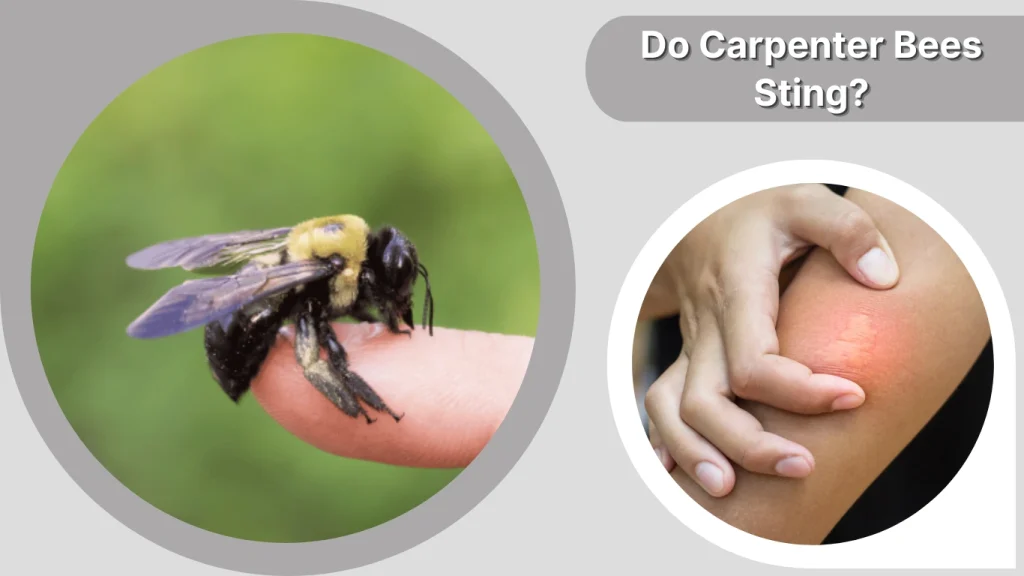
Yes — carpenter bees can sting, but only female carpenter bees have the ability to do so. Males cannot sting at all, even though they often behave more aggressively. The sting of a female carpenter bee can be painful, but stings typically happen only when she is handled, squeezed, or feels threatened at a nest entrance.
Carpenter bees are not naturally aggressive. They prefer avoiding conflict and only use their stinger as a last resort. People rarely get stung unless they attempt to catch a bee, disturb an active tunnel, or accidentally trap one against the skin.
Common Myths About Carpenter Bee Stings
Several misconceptions cause unnecessary fear:
- “All carpenter bees sting.”
False. Only females sting. Males cannot sting under any circumstances. - “Male carpenter bees attack people.”
Males hover and dart in the air defensively, but this is intimidation only. They are harmless. - “Carpenter bees bite people.”
They do not bite humans. Their mandibles are designed for chewing wood, not skin.
Understanding these myths helps reduce fear when you see these bees around your home.
Male vs. Female Carpenter Bees
Can Male Carpenter Bees Sting?
Male carpenter bees are the bees most people encounter, especially around porches and wooden structures. They hover in front of people, chasing or circling to defend their territory. Despite this aggressive display, males cannot sting. They lack a stinger entirely.
This behavior peaks in spring when males search for mates and defend nesting sites. Their bold movements can seem threatening, but they are purely bluffing.
Can Female Carpenter Bees Sting?
Female carpenter bees can sting, but they rarely choose to. Unlike honey bees, whose stingers are barbed and tear out after use, a female carpenter bee has a smooth stinger, allowing her to sting multiple times without harm to herself.
Still, stings are uncommon. Females spend their time excavating tunnels, collecting pollen, and caring for their brood. They become defensive only when:
- Their nest is disturbed
- They feel trapped
- Someone grabs or presses them
If you leave them alone, they almost always leave you alone too.
Can Carpenter Bees Sting More Than Once?
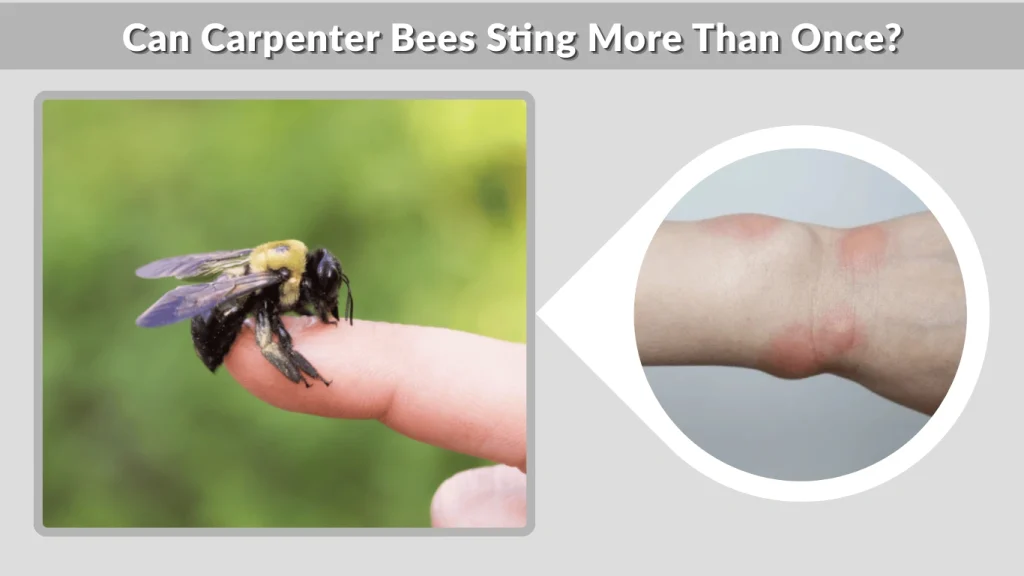
Carpenter bees can sting more than once because their stinger is not barbed, unlike the honey bee’s. This means the stinger does not lodge in the skin, and the bee does not die after stinging.
However, multiple stings from a carpenter bee are very unlikely. The calm nature of these bees, combined with their avoidance of confrontation, means they almost never sting repeatedly unless they are physically restrained or continually provoked.
The ability to sting multiple times is purely anatomical, not behavioral. In everyday encounters, carpenter bees remain one of the least threatening stinging insects around homes.
Do Carpenter Bees Bite?
Biting vs. Wood Chewing
Carpenter bees do not bite people. Their mandibles are used exclusively for chewing wood, shaping tunnels, and creating chambers for their offspring. This chewing produces the characteristic sawdust-like debris near nest entrances.
Some people believe they were “bitten” when, in reality, they likely experienced:
- A defensive jab from the legs
- The sensation of a sting without penetration
- Startle response from close hovering
While a carpenter bee could pinch with its mandibles in extreme defensive situations, this is extremely rare and not considered a true bite.
Stings on Humans and Pets
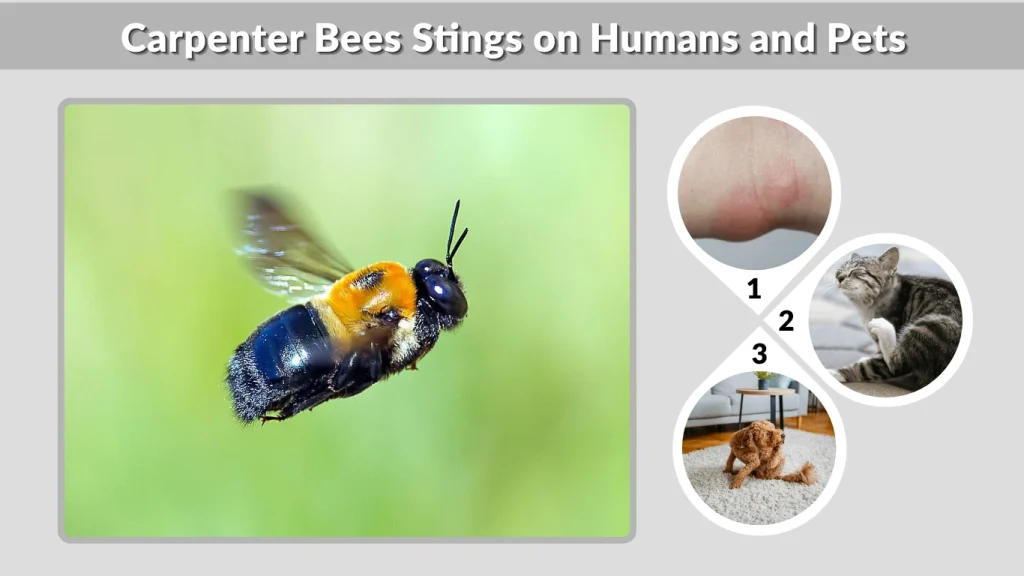
Can Carpenter Bees Sting Humans?
Female carpenter bees can sting humans, but it is not common. Their stings are usually mild to moderate in pain, similar to a wasp sting but often shorter in duration. Most reactions include localized swelling, redness, warmth, and mild itching. The risk becomes more serious only if the person has a bee sting allergy or if stings occur in sensitive areas such as the face, eyelids, or fingertips.
If someone experiences severe swelling, difficulty breathing, dizziness, or hives away from the sting site, they may be having an allergic reaction and should seek medical help immediately. For most people, simple first-aid treatments—cold compresses, antihistamines, and over-the-counter pain relievers—are enough.
Can Carpenter Bees Sting Dogs or Cats?
Yes, a female carpenter bee can sting pets such as dogs or cats if the animal swats at or tries to catch the bee. Pets most often get stung on the nose, lips, paws, or mouth, where curiosity leads them to poke at hovering males or active females near nest tunnels.
While a carpenter bee sting is rarely dangerous to pets, it can be painful. Dogs and cats may paw at their face, drool, or show signs of discomfort. Serious reactions—such as vomiting, facial swelling, or breathing difficulty—can indicate an allergy and require veterinary attention.
Despite some concerns online, it is extremely unlikely for a carpenter bee sting to kill a cat or dog unless a severe allergic reaction occurs. Most pets recover quickly with basic care.
Carpenter Bee Aggression & Behavior
Why Males Hover Aggressively
Males often exhibit what appears to be aggressive behavior around porches, decks, railings, and sheds. They hover directly in front of people, dart rapidly from side to side, or chase other insects away. This is territorial display, not real aggression. Since males cannot sting, they use intimidation to protect mating areas or deter what they perceive as threats.
Their hovering behavior peaks during spring and early summer, coinciding with mating season. In most cases, simply walking past them without swatting is enough to avoid any disturbance.
Female Nest Defense
Female carpenter bees are quieter and more focused on nest duties. They only show defensive behavior when they feel their nest is directly threatened. A female may exit a tunnel and buzz loudly near a person who taps on wood or gets too close to an entrance hole. However, she prefers retreating deeper into the tunnel rather than stinging.
Carpenter bees drill tunnels in exposed or untreated wood, raising concerns for homeowners, but the actual physical threat from a female remains minimal unless the nest is disturbed.
Carpenter Bees and Humans: Safety Tips
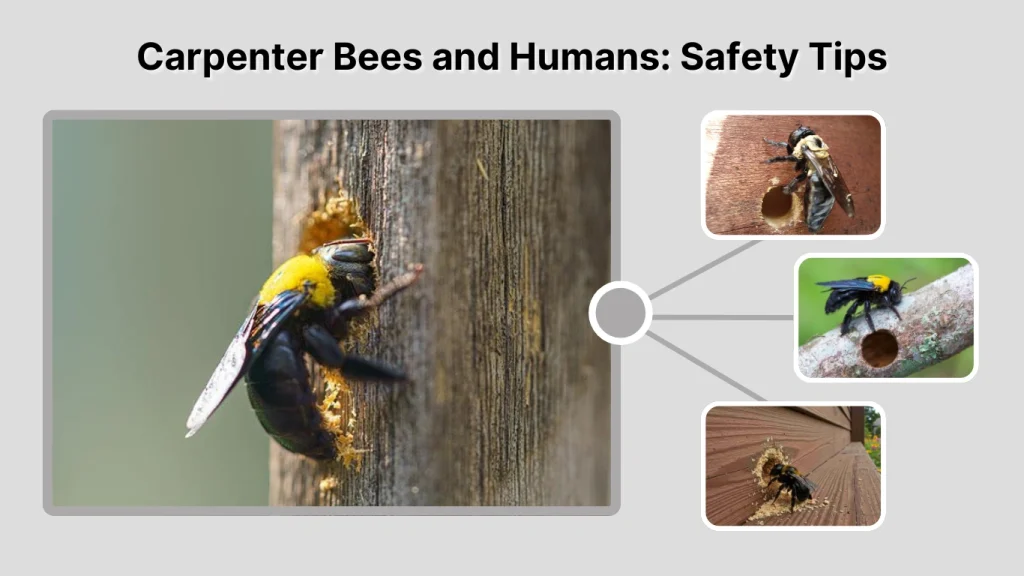
How to Avoid Stings
Here are practical steps to reduce encounters and prevent accidental stings:
- Do not block or touch nest entrances. Females may feel threatened if the opening is disturbed.
- Avoid swatting at hovering males. They cannot sting and usually retreat quickly.
- Keep pets from chasing bees. Redirect their attention with toys or treats.
- Paint or seal wooden surfaces. Carpenter bees prefer untreated wood for nesting.
- Remain calm when bees approach you. Stillness reduces perceived threat.
Following these precautions greatly decreases the chance of provoking a sting.
Carpenter Bees vs. Other Stinging Insects
| Insect | Can Sting? | Sting Multiple Times? | Aggression Level |
| Carpenter Bee | Females only | Yes | Low |
| Honey Bee | Females only | No (dies after sting) | Moderate |
| Wasp | Females | Yes | High |
| Bumble Bee | Females only | Yes | Low–Moderate |
This comparison shows that carpenter bees are among the least aggressive stinging insects people encounter around their homes.
When Carpenter Bees Become a Problem
Damage to Wooden Structures
While carpenter bees are gentle, their nesting can create structural problems over time. Females drill smooth, round tunnels about the diameter of a finger into decks, eaves, siding, fences, and outdoor furniture. Repeated nesting over several seasons can weaken boards, cause cosmetic damage, and allow moisture or pests to enter.
Signs of carpenter bee activity include:
- Round entrance holes
- Sawdust-like frass beneath holes
- Yellowish streaks of pollen staining surfaces
- Buzzing or tapping sounds inside wood
Although damage rarely becomes severe quickly, long-term infestations should not be ignored.
When Professional Help Is Needed
Homeowners may need professional assistance if:
- Multiple nests appear each year
- Bees target structural supports, beams, or roof edges
- Wood deterioration becomes visible
- DIY deterrents fail
A pest management professional can treat active tunnels, fill old holes, and apply long-term prevention strategies while protecting the bees when possible.
FAQs
Do carpenter bees sting humans?
Yes, female carpenter bees can sting, but they rarely do so unless disturbed. Most stings cause mild pain and swelling. Severe reactions are uncommon and usually involve people with allergies. Male carpenter bees do not sting at all.
How many times can a carpenter bee sting?
A carpenter bee can sting multiple times because its stinger is smooth rather than barbed. However, repeated stinging is uncommon because carpenter bees are non-aggressive and sting only when they feel threatened or handled.
Can male carpenter bees sting?
No. Male carpenter bees lack a stinger entirely. They may hover near people in a defensive display, but they cannot sting or cause physical harm.
Can carpenter bees sting dogs or cats?
Female carpenter bees can sting pets if chased or swatted at, usually on the face or paws. Most stings are harmless, though allergic reactions require attention. Male carpenter bees cannot sting pets.
Do carpenter bees bite or sting more often?
Stings are rare and only from females. Carpenter bees do not bite humans; their mandibles are used for chewing wood, not skin. Most close encounters result in no stings or bites at all.