
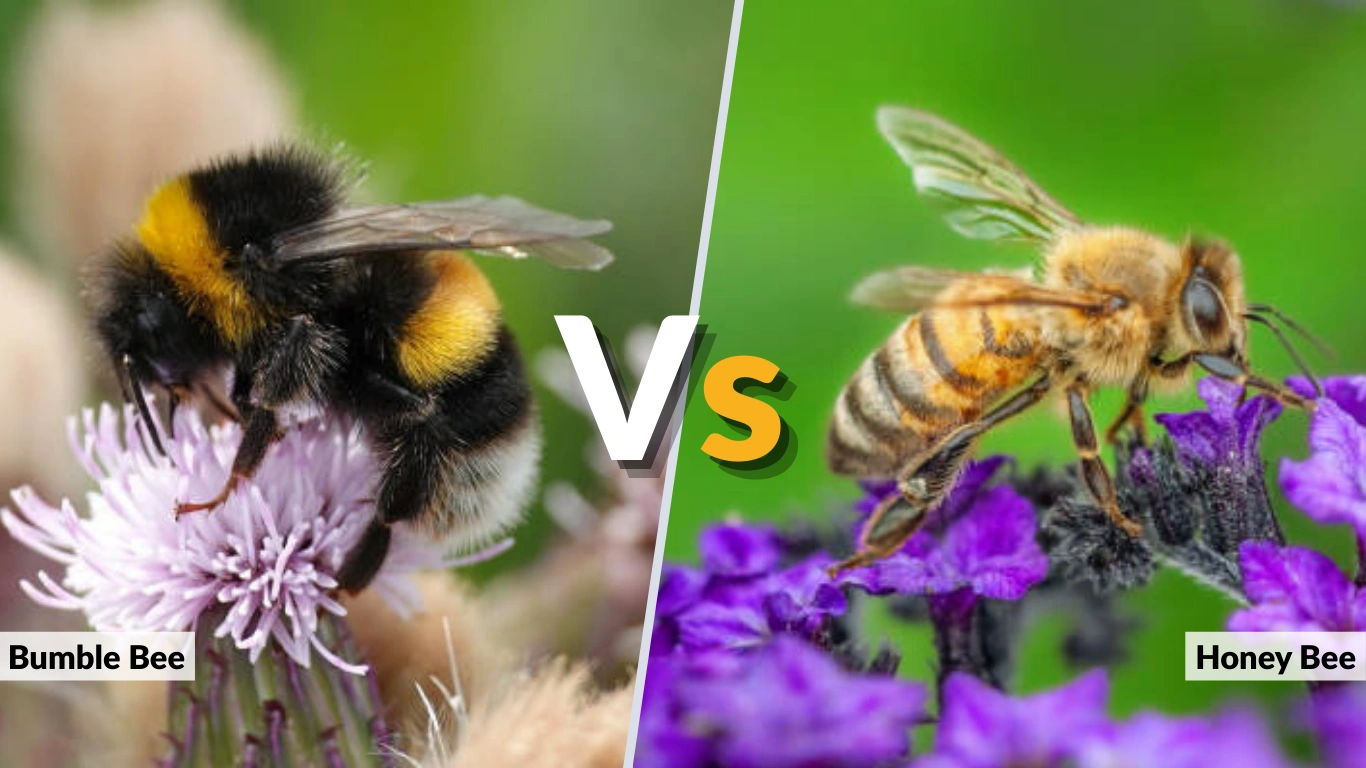
Understanding the differences between bumble bees and honey bees is essential for gardeners, homeowners, students, and anyone interested in pollinators. Although both bees play important ecological roles, they vary significantly in appearance, behavior, nesting habits, and how they interact with humans. Many people confuse these insects with carpenter bees, wasps, or yellow jackets, making proper identification even more important. This guide explores the key differences between honey bees and bumble bees with clear structure, comparisons, and practical insights.
What Are Honey Bees?
Species Background & Evolution
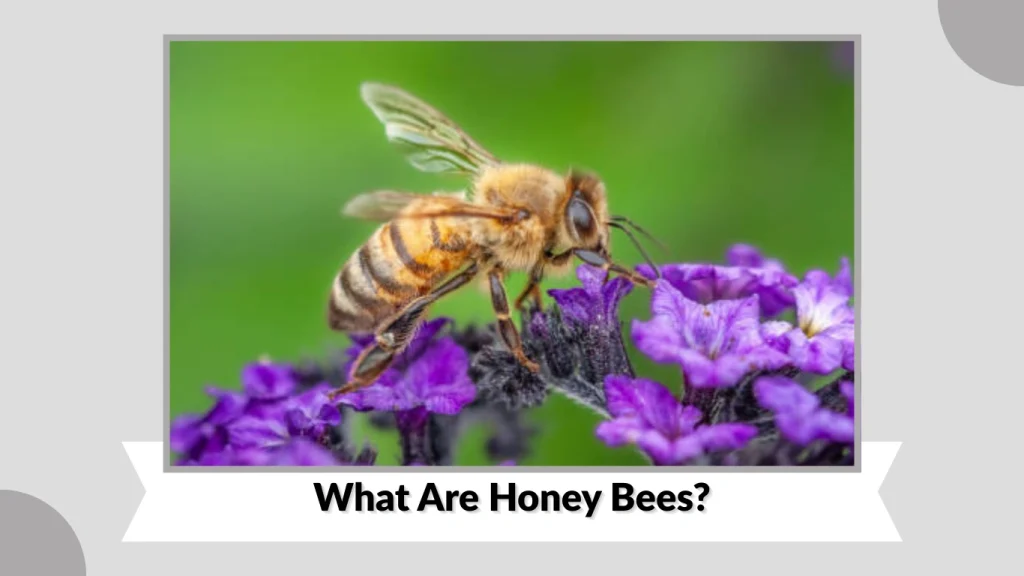
Honey bees belong to the genus Apis, with Apis mellifera being the most common species worldwide. Originating in Europe, Africa, and Asia, they were eventually introduced to North America for agriculture. Honey bees are among the most domesticated insects on Earth, selectively bred for honey production, pollination efficiency, and manageable temperament. Their long evolutionary relationship with flowering plants makes them crucial for modern food crops.
Colony Structure & Eusociality
Honey bees are highly eusocial insects, meaning the colony functions like a single organism. A typical hive contains one queen, thousands of female worker bees, and a small number of drones. Colonies are perennial and survive year-round by producing large quantities of honey to sustain themselves through winter. Workers are divided into roles such as foragers, nurses, builders, guards, and undertakers, creating a complex and organized society.
What Are Bumble Bees?
Species Overview
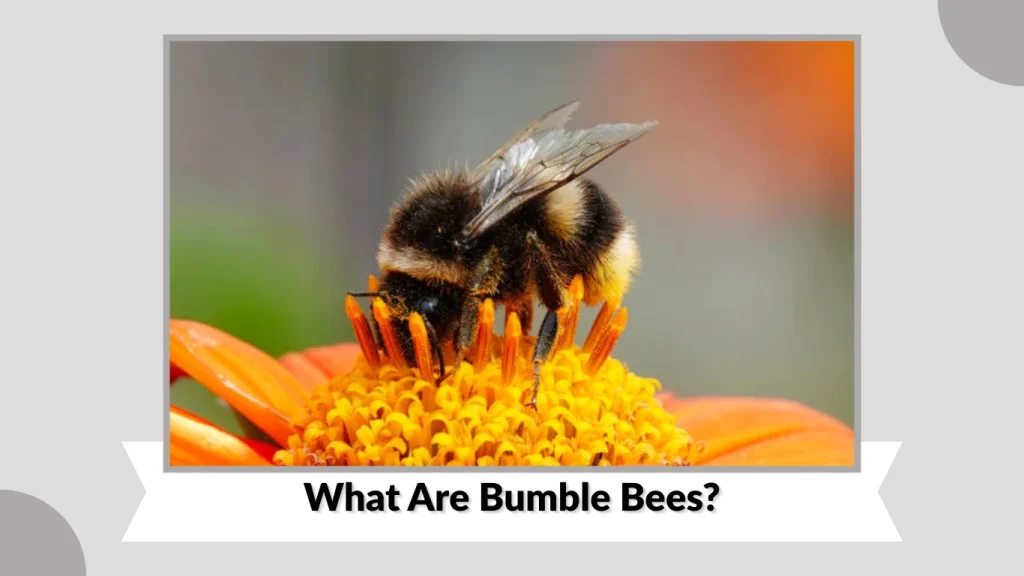
Bumble bees belong to the genus Bombus and are found in cooler regions, thriving particularly well in temperate climates. They are larger, rounder, and fuzzier than honey bees, making them easier to recognize. Their thick layer of hair allows them to forage in cooler temperatures, giving them a pollination advantage early in the morning or late in the season when honey bees are less active.
Bumble Bee Eusociality
While bumble bees are also eusocial, their colonies differ dramatically from honey bee hives. Bumble bee nests last only one season, starting each spring when a newly emerged queen searches for a nesting site. Colonies remain small, often under 300 bees, and do not store significant amounts of honey. This limited storage is why bumble bees cannot survive long winters and must restart the cycle each year.
Bumble Bee vs Honey Bee Identification
Appearance Differences
Honey bees are slender, smooth-bodied insects with golden-brown coloring and darker bands across their abdomen. Their bodies appear streamlined and slightly elongated. Bumble bees, by contrast, are noticeably larger and thicker, with dense, soft fuzz covering nearly their entire body. They often display bright black and yellow patterns, though some species include white, orange, or deep rust-colored bands.
Flight & Behavior Cues
The easiest behavioral difference to spot is flight style. Honey bees tend to fly in smooth arcs and appear more graceful in movement. Bumble bees produce a loud, low-frequency buzz and fly in a more erratic, wobbly pattern. Bumble bees are usually calm around humans unless directly threatened, whereas honey bees may become defensive if their hive is disturbed.
Size Comparison
Worker, Drone, and Queen Sizes
Bumble bees are generally larger across all castes. Worker bumble bees range from ½ to 1 inch in length, and queens can be even larger. Honey bee workers are typically ½ inch long, while their queens are longer but slimmer. Because honey bee drones are rounder and larger than workers, people sometimes confuse them with small bumble bees.
Seasonal Size Variations
Bumble bee queen size changes dramatically throughout the year. Early spring queens are large and robust, designed to survive winter hibernation. As the colony develops, later workers and males are smaller. Honey bees maintain more consistent size throughout the year because their colonies persist through all seasons.
Sting Comparison
Bumble Bee Sting vs Honey Bee Sting
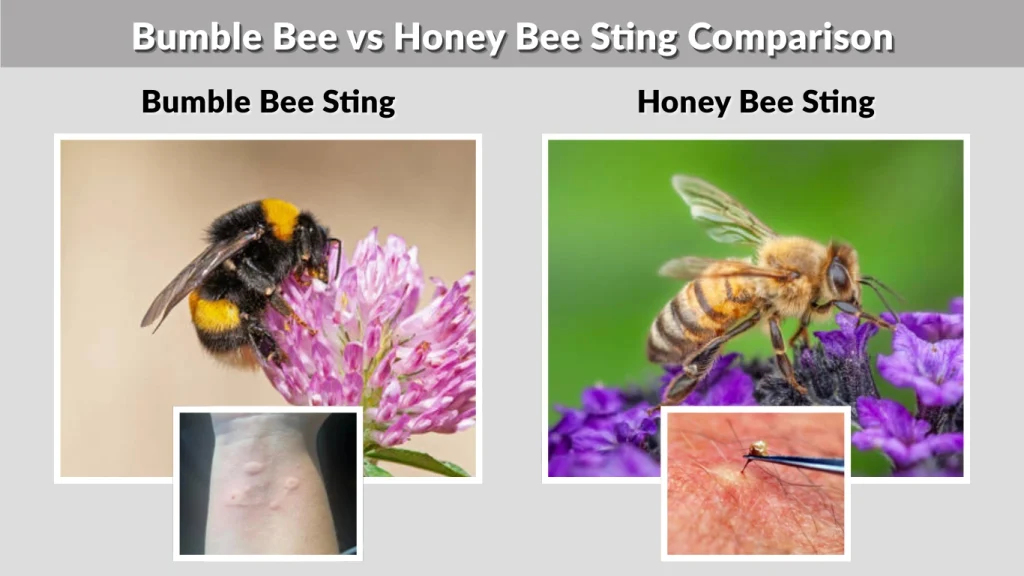
Honey bees have barbed stingers that embed into the skin, causing the bee to die after delivering a single sting. Bumble bees have smooth stingers, enabling them to sting multiple times if threatened. However, bumble bees rarely sting unless directly pressed or their nest is disturbed. Honey bees, especially near their hive, are more likely to defend aggressively.
Pain Level & Medical Risk
Both stings cause pain, redness, and swelling, but honey bee stings often feel sharper due to the barbed stinger. Bumble bee stings may deliver slightly more venom per sting, but the difference is minor unless someone is allergic. Anyone experiencing difficulty breathing, swelling of the throat, dizziness, or hives should seek medical attention immediately.
Behavior Differences
Aggression & Defensiveness
Honey bees tend to be more defensive, especially near their hive. Worker honey bees are trained by instinct to protect stored honey and brood. If a threat approaches the hive, guards issue alarm pheromones that can trigger a group response. Bumble bees, on the other hand, are generally gentle. They rarely chase or attack unless their nest is disturbed or they are handled roughly. Their smaller colonies also mean there is less reason to mount a large-scale defense.
Pollination Behavior
When it comes to pollination, bumble bees have a special technique known as buzz pollination. By vibrating their wings at a specific frequency, they release pollen from flowers that honey bees cannot effectively pollinate—such as tomatoes, peppers, and certain wildflowers. Honey bees excel in mass foraging, gathering large amounts of nectar and pollen efficiently. Together, both species play different but complementary roles in plant reproduction.
Nesting & Habitat
Honey Bee Hives
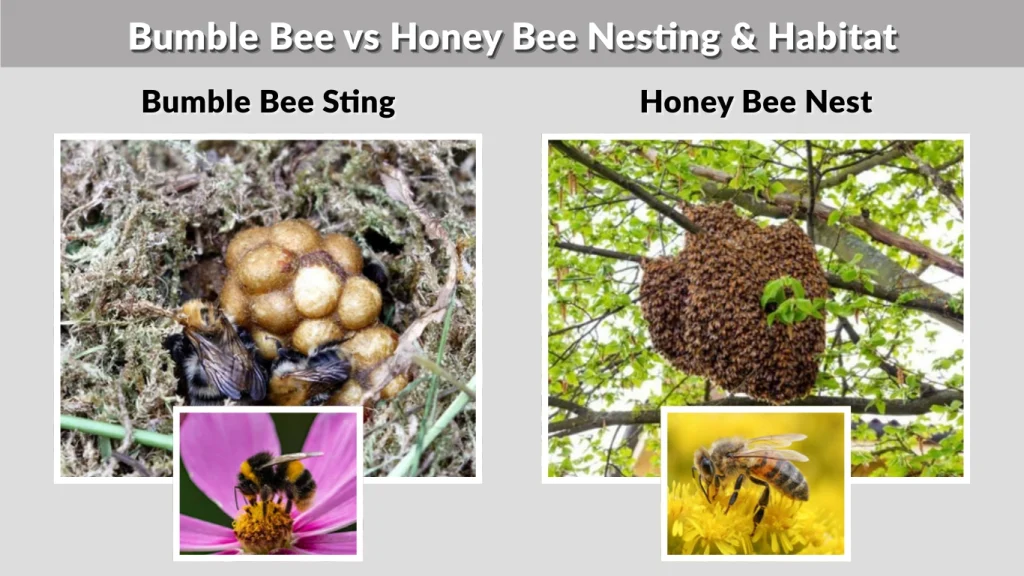
Honey bees build organized hives composed of wax combs arranged in vertical frames. These hives are either kept in wooden boxes by beekeepers or found naturally in hollow trees, wall cavities, or sheltered spaces. Because honey bees store substantial amounts of honey, they can maintain a stable colony through winter. Their hives may contain tens of thousands of bees during peak season, making them highly structured superorganisms.
Bumble Bee Nests
Bumble bee nests are far smaller and less spacious. Instead of large wax structures, they create clusters of wax pots and small chambers. They prefer abandoned rodent burrows, piles of grass, compost heaps, or insulated corners around buildings. Since they store only a small amount of honey, they cannot survive harsh winters as a full colony. When cold weather arrives, only a newly mated queen hibernates until the next spring.
Diet & Foraging
What Honey Bees Eat
Honey bees survive primarily on nectar and pollen. Nectar is converted into honey, which provides long-term energy storage. Pollen supplies protein for brood growth. Because colonies last year-round, honey bees must gather and store large quantities of food to feed thousands of individuals during colder months.
What Bumble Bees Eat
Bumble bees also feed on nectar and pollen but do not produce large amounts of honey. They store just enough nectar to sustain the colony for short periods. Their bodies are designed for rapid, high-energy foraging, relying on fresh supplies rather than long-term storage. This difference is why bumble bee colonies disappear each winter while honey bees remain active.
Bumble Bees vs Honey Bees in Ecosystems
Pollination Importance
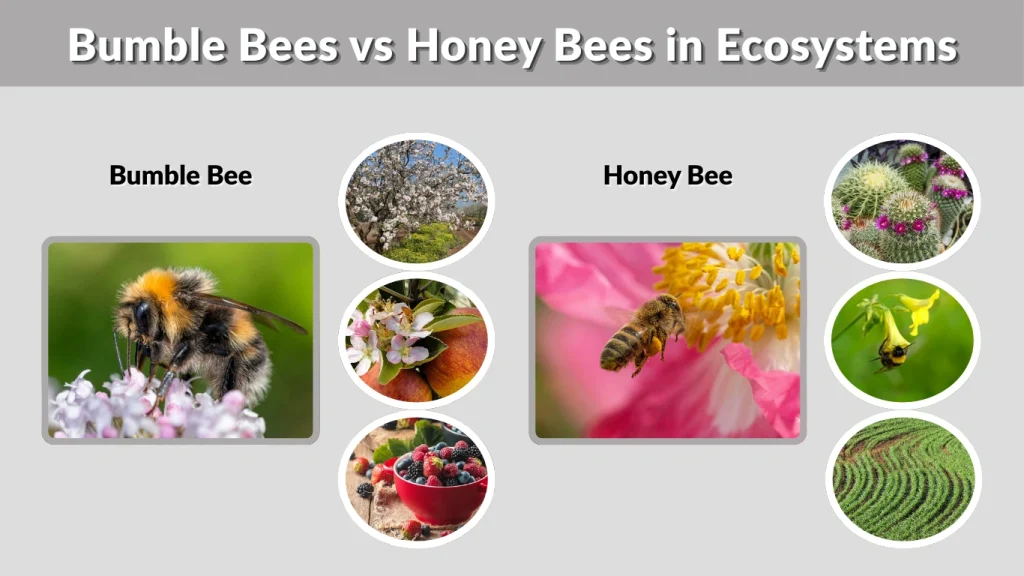
Honey bees are essential for agriculture—especially for crops like almonds, apples, berries, and melons. Their ability to form massive colonies makes them incredibly efficient pollinators on a commercial scale. Bumble bees, however, excel at pollinating wild plants and crops requiring vibration, making them indispensable in natural ecosystems. Their adaptability to cooler temperatures allows them to work when honey bees remain inside the hive.
Which Bee Needs More Conservation?
While honey bees face challenges such as mites, pesticides, and habitat loss, their populations are heavily supported by beekeepers. Bumble bees, by contrast, include many declining or endangered species. Loss of flower-rich habitats, climate change, and disease transmission from managed bees have severely impacted wild bumble bee populations. Conservation efforts often focus on protecting bumble bees, but both species benefit from pesticide-free habitats and diverse flowering landscapes.
Bumble Bee vs Honey Bee: Common Confusions
Misidentifying Carpenter Bees as Bumble Bees
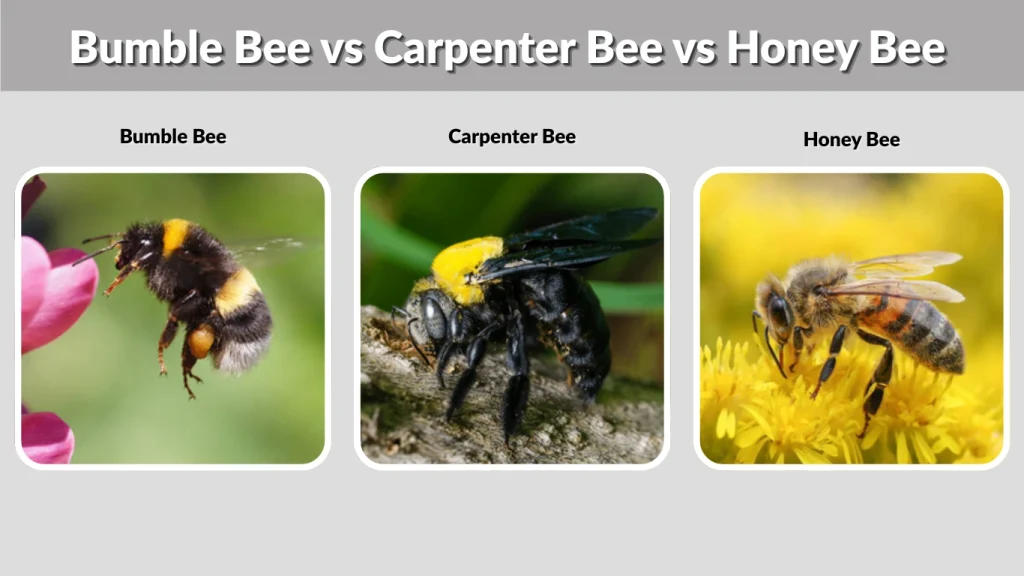
Carpenter bees resemble bumble bees in size but have one key difference: their abdomen is shiny and hairless, whereas bumble bees are fuzzy. Carpenter bees also drill tunnels into wood to build nests, which honey bees and bumble bees do not do. Many homeowners confuse carpenter bees’ hovering flight behavior with bumble bees, leading to misidentification.
Mistaking Wasps or Yellow Jackets for Honey Bees
Wasps and yellow jackets are more slender, smoother, and brighter yellow than honey bees. They also display faster, more aggressive flight and often hover around food or garbage. Unlike bees, which feed on nectar and pollen, yellow jackets often prey on other insects. Their nests are papery and round, usually found under eaves or in the ground. These insects sting more readily than both honey and bumble bees.
Bumble Bee vs Carpenter Bee vs Honey Bee (Comparison Table)
Suggested Comparison Table (fill during final write-up)
| Feature | Honey Bee | Bumble Bee | Carpenter Bee |
| Body shape | Slender, smooth | Round, fuzzy | Large, shiny abdomen |
| Nest | Hive (wooden boxes or hollow trees) | Ground burrows | Tunnels in wood |
| Aggression | Defensive near hive | Usually gentle | Males hover but don’t sting |
| Pollination | Mass foraging | Buzz pollination | Limited pollination |
| Sting | Barbed, one sting | Smooth, multiple stings | Females sting; males do not |
You can expand or adjust depending on your article length.
Bumble Bee vs Honey Bee Stings (Deep Dive)
When You’re More Likely to Be Stung
You are most likely to be stung by a honey bee when standing near a hive entrance, mowing over a colony, or disturbing stored honey. Bumble bees usually sting only when a nest is directly disturbed or they are squeezed. A foraging bumble bee rarely reacts to human presence.
First Aid & Safety Tips
If stung by a honey bee, remove the stinger quickly by scraping it sideways with a card or fingernail. For both stings, wash the area, apply a cold compress, and consider antihistamines for itching. Monitor for signs of severe allergy such as swelling of the tongue or difficulty breathing.
Educational Section (For Kids or Beginners)
Simple Differences to Teach
- Bumble bees are big and fuzzy.
- Honey bees are smaller and slimmer.
- Bumble bees live in tiny nests; honey bees live in hives.
- Honey bees make lots of honey; bumble bees make just a little.
- Stay still around both insects and avoid touching their nests.
FAQs
Are bumble bees more dangerous than honey bees?
Bumble bees are usually less aggressive and only sting when their nest is disturbed. Honey bees are more defensive, especially near a hive. Honey bees also die after stinging, while bumble bees can sting multiple times. Overall, neither species seeks to attack humans unless provoked.
Do bumble bees make honey?
Yes, but only in very small quantities. Bumble bees store enough nectar to feed the colony for short periods, not for long-term survival. They do not produce the large reserves found in honey bee hives. This is why bumble bee colonies cannot survive winter as a full group.
How can you tell a honey bee from a bumble bee?
Honey bees are slim, smooth, and golden-brown with darker stripes. Bumble bees are larger, rounder, and covered in dense fuzz. Bumble bees often appear louder and slower in flight, while honey bees move more gracefully. Color patterns and body texture are the easiest ways to tell them apart.
Do bumble bees die after stinging?
No. Bumble bees have smooth stingers and can sting multiple times. Honey bees are the ones with barbed stingers that tear away after stinging, causing the bee to die shortly after. Bumble bees rarely sting unless handled or their nest is threatened.
Which is better for gardens: bumble bees or honey bees?
Both are excellent pollinators, but bumble bees are more effective for certain crops because they can pollinate flowers with their buzz technique. Honey bees excel at large-scale pollination and supporting agricultural systems. A healthy garden ideally has both species present.
