
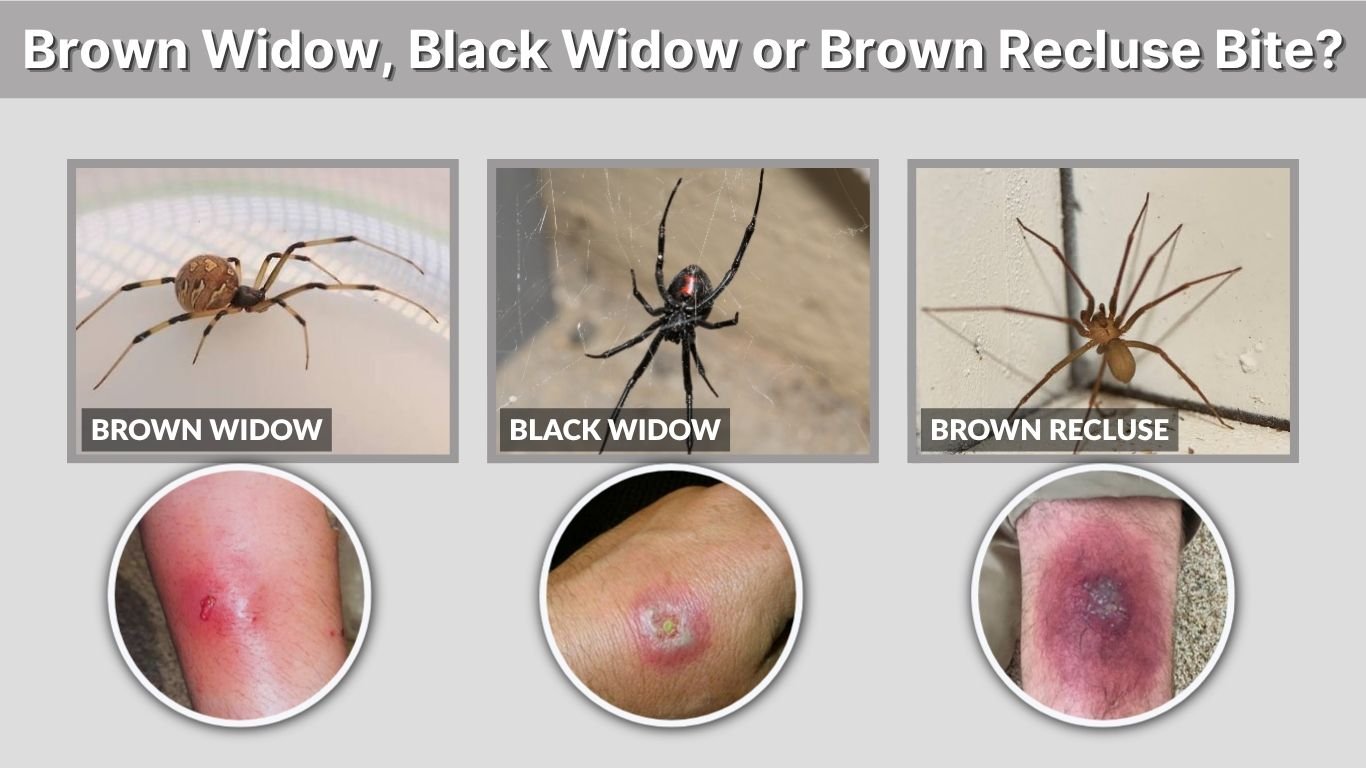
A brown widow, black widow, or brown recluse spider bite can cause very different symptoms. Black widow and brown widow bites are more likely to cause nerve-related symptoms such as pain, cramps, sweating, nausea, and muscle tightness. Brown recluse bites are more likely to cause skin damage, blistering, or an open sore. Knowing the difference can help you decide when home first aid is enough and when medical care is urgent.
Brown Widow, Black Widow, and Brown Recluse Bites
Many people search for “brown black widow spider bite” when they are unsure whether they mean a brown widow, a black widow, or a brown recluse. These spiders are not the same. A brown widow is related to the black widow, while a brown recluse is a different type of venomous spider.
A black widow bite usually affects the nervous system. A brown widow bite may cause similar symptoms, but it is often reported as milder than a black widow bite. A brown recluse bite usually affects the skin and nearby tissue more than the whole body.
Quick Comparison
| Spider Bite | Main Concern | Common Symptoms | Medical Risk |
| Black widow bite | Neurotoxic venom | Muscle cramps, abdominal pain, sweating, nausea, spreading pain | Can be serious, especially in children, older adults, and high-risk people |
| Brown widow bite | Widow-type venom | Local pain, redness, possible cramps or mild systemic symptoms | Usually less severe than black widow, but still needs caution |
| Brown recluse bite | Skin and tissue injury | Redness, blister, pain, ulcer, tissue damage | Can become serious if the wound worsens or infection develops |
What Is a Brown Widow Spider Bite?
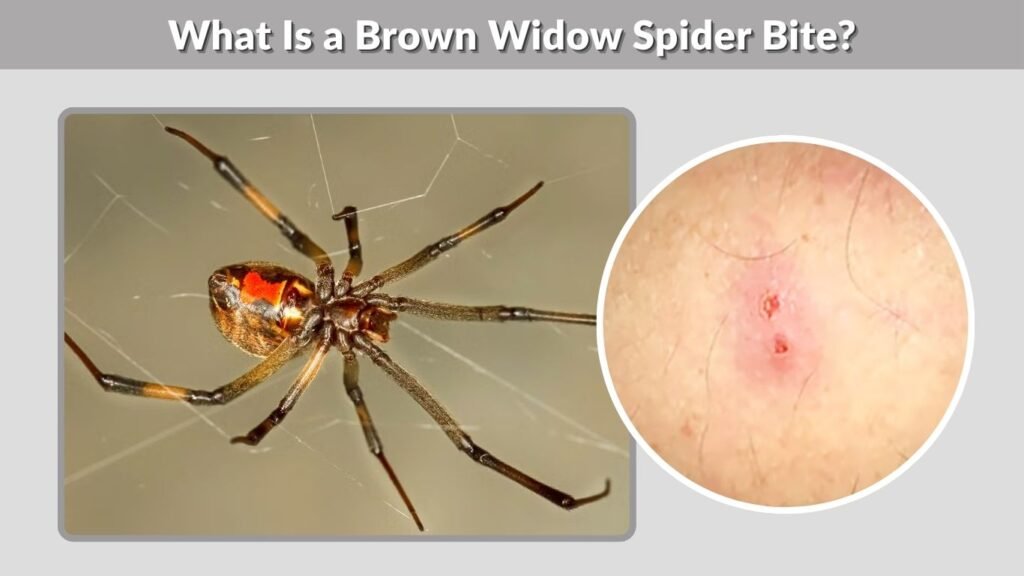
A brown widow spider bite comes from a spider related to the black widow. Brown widows are usually tan, grayish, or brown with patterned legs and a rounded abdomen. They may have an orange or yellowish hourglass marking underneath.
Brown widow bites can hurt, but many cases are milder than black widow bites. Some people may only notice local pain, redness, or swelling. Others may develop muscle discomfort, nausea, or cramping. Because individual reactions vary, it is safest to monitor symptoms closely.
Brown Widow Bite Symptoms
Possible brown widow spider bite symptoms include:
- Sharp or burning pain at the bite site
- Redness or swelling
- Itching or irritation
- Mild muscle aches
- Nausea in some cases
- Headache or tiredness
- Cramping in stronger reactions
A brown widow bite should be treated seriously if symptoms spread beyond the bite area or if the person is a child, older adult, pregnant, or has heart, breathing, or immune problems.
What Is a Black Widow Spider Bite?
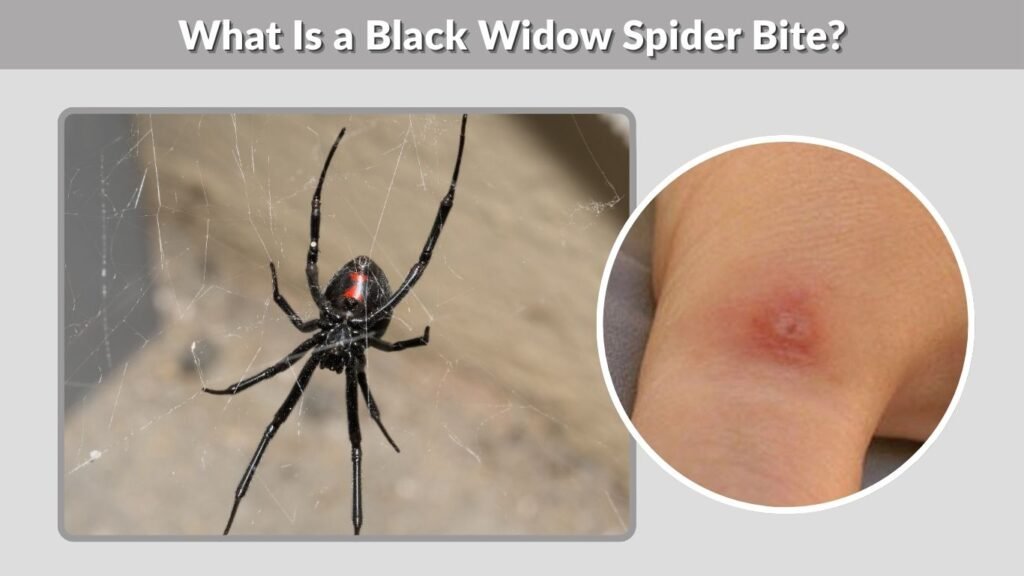
A black widow spider bite is medically important because black widow venom affects the nervous system. The bite may feel like a pinprick at first, but symptoms can become more intense over minutes to hours.
The bite area may show redness, swelling, or two small puncture marks. However, the most noticeable symptoms often involve muscle pain and cramping away from the bite. Pain may spread to the abdomen, back, chest, shoulders, or legs.
Black Widow Bite Symptoms
Black widow spider bite symptoms may include:
- Pain, swelling, or redness at the bite
- Muscle cramps or spasms
- Severe abdominal pain or tightness
- Back, chest, shoulder, or leg pain
- Sweating or chills
- Nausea or vomiting
- Headache or dizziness
- Restlessness or weakness
- High blood pressure or fast heartbeat
- Trouble breathing in severe cases
If these symptoms appear, medical care is important. Black widow bites can be especially risky for children, older adults, pregnant people, and people with existing medical conditions.
What Is a Brown Recluse Spider Bite?
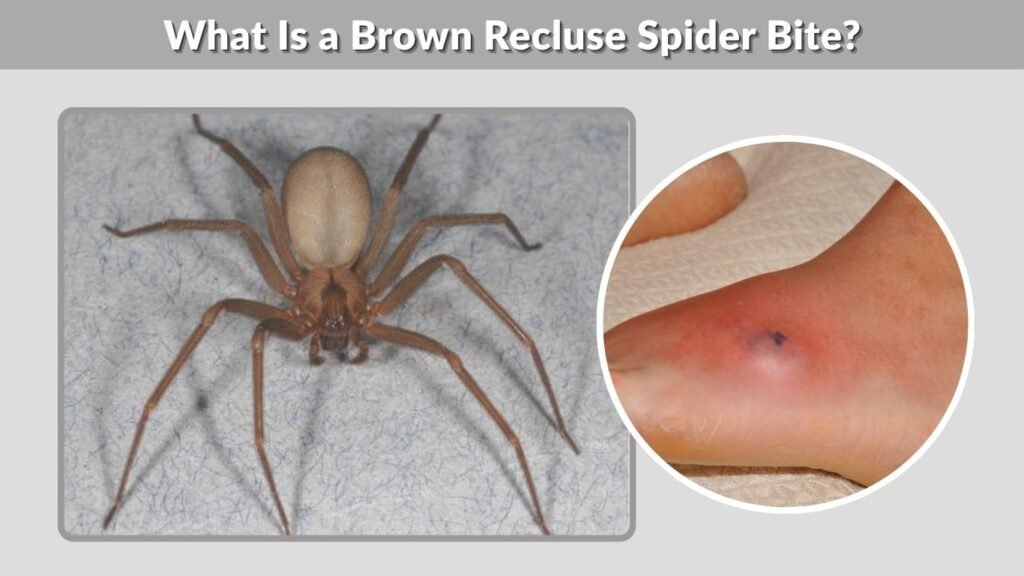
A brown recluse spider bite is different from a widow bite. Brown recluse venom is more associated with local skin injury. Some bites remain mild, while others can develop into painful wounds.
At first, the bite may be painless or feel like a mild sting. Over time, the area may become red, tender, swollen, or blistered. In more serious cases, the skin may break down and form an ulcer or darkened wound.
Brown Recluse Bite Symptoms
Brown recluse bite symptoms may include:
- Redness or swelling around the bite
- Pain that increases over several hours
- Itching or burning
- A blister at the bite site
- A pale center with a red outer area
- Dark or purple skin changes
- Open sore or ulcer
- Fever, chills, nausea, or body aches in some cases
Not every brown recluse bite causes severe tissue damage. However, any bite that becomes darker, larger, more painful, or infected-looking should be checked by a healthcare provider.
Brown Recluse Spider Bite vs Black Widow Bite
The main difference between a brown recluse bite and a black widow bite is how the venom affects the body. Black widow venom usually causes nerve and muscle symptoms. Brown recluse venom usually causes skin and tissue symptoms.
A black widow bite may cause severe cramping, sweating, nausea, and pain that spreads from the bite area. A brown recluse bite may start small but later develop a blister, wound, or ulcer.
Key Symptom Differences
| Feature | Black Widow Bite | Brown Recluse Bite |
| Pain timing | Often starts quickly and may spread | May be mild at first, then worsen |
| Main effect | Muscle and nerve symptoms | Skin and tissue injury |
| Skin wound | Usually limited redness/swelling | Can blister, darken, or ulcerate |
| Abdominal cramps | Common in serious cases | Less typical |
| Sweating/nausea | Common in systemic reactions | Possible but less central |
| Medical priority | Severe cramps or systemic symptoms | Worsening wound or tissue damage |
Which Spider Bite Is Worse: Black Widow or Brown Recluse?
Neither bite should be ignored. A black widow bite is often worse for immediate whole-body symptoms, while a brown recluse bite may be worse for local skin damage over time.
A severe black widow bite can cause intense muscle cramps, abdominal rigidity, sweating, nausea, vomiting, and blood pressure changes. A severe brown recluse bite can lead to blistering, open wounds, tissue damage, and delayed healing.
Which One Needs Faster Care?
A black widow bite may need urgent care faster if the person develops severe cramping, chest pain, abdominal pain, vomiting, sweating, weakness, or trouble breathing.
A brown recluse bite may not look serious at first, but it should be checked if the wound grows, darkens, blisters, becomes very painful, drains pus, or causes fever and chills.
Brown Widow Spider Bite vs Black Widow
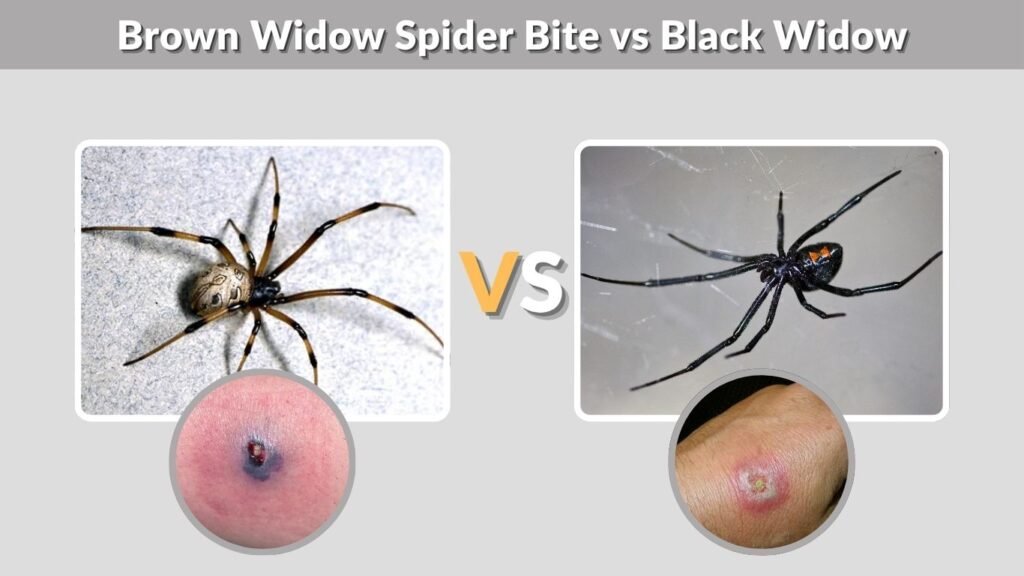
Brown widow and black widow spiders are related, so their bites can have similar types of effects. The difference is often severity. Black widow bites are generally considered more medically significant, while brown widow bites are often milder.
However, “milder” does not mean harmless. A brown widow bite can still cause pain and discomfort. People with strong reactions or higher risk factors should seek medical advice.
How to Tell Them Apart
| Feature | Brown Widow | Black Widow |
| Color | Tan, gray, brown, mottled | Glossy black or very dark |
| Marking | Orange/yellowish hourglass may appear | Red/orange hourglass often present |
| Egg sac | Often spiky or tufted | Usually smoother and rounder |
| Bite severity | Often milder | More likely to cause severe systemic symptoms |
| Habitat | Outdoor furniture, fences, sheds, mailboxes | Garages, sheds, crawl spaces, woodpiles |
First Aid for Black Widow, Brown Widow, or Brown Recluse Bites
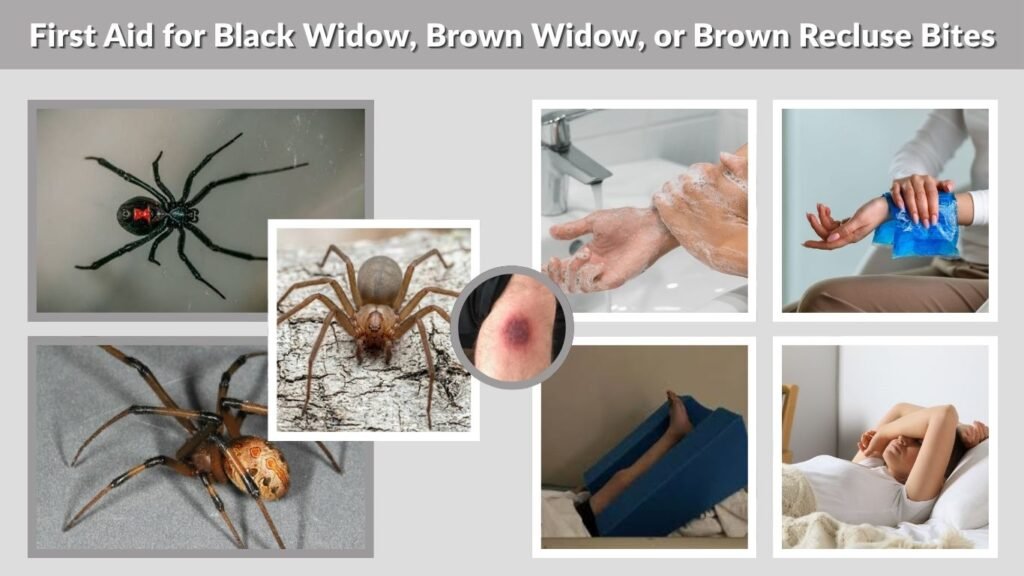
First aid is similar for many spider bites, but it does not replace medical care if symptoms are serious. The goal is to reduce pain, swelling, and contamination while monitoring for danger signs.
What to Do First
Follow these steps:
- Wash the bite with soap and water
- Apply a cold pack wrapped in cloth
- Keep the bitten area still and elevated if possible
- Remove tight jewelry or clothing near the bite
- Take a photo of the spider if it is safe
- Mark the edge of redness with a pen to track spreading
- Contact a healthcare provider or poison control if symptoms are concerning
Do not cut the bite, suck out venom, apply a tourniquet, burn the area, or use harsh chemicals. These methods can make the injury worse.
When to Get Medical Help
Medical care is recommended if you suspect a black widow bite, a brown recluse bite, or if symptoms are more than mild. It is especially important for high-risk people.
Seek Urgent Care If You Notice
Get help right away if there is:
- Severe pain or spreading pain
- Muscle cramps or spasms
- Severe abdominal, chest, back, or shoulder pain
- Vomiting, sweating, shaking, or weakness
- Trouble breathing
- Fever or chills
- A bite in a child, older adult, or pregnant person
- A growing blister, dark center, or open sore
- Redness that spreads quickly
- Pus, warmth, or signs of infection
When in doubt, it is safer to get professional advice than to wait for symptoms to worsen.
Medical Treatment Options
Treatment depends on the spider and the symptoms. Doctors may clean the wound, give pain relief, update tetanus protection, and monitor vital signs. For black widow bites, treatment may include pain medicine, medication for muscle spasms, and in severe cases, antivenom.
For brown recluse bites, treatment focuses on wound care, pain control, preventing infection, and monitoring for tissue damage. Antibiotics are not always needed unless there are signs of infection.
What a Doctor May Do
A healthcare provider may:
- Examine the bite and surrounding skin
- Check blood pressure, pulse, and temperature
- Ask about the spider, timing, and symptoms
- Provide pain medicine or muscle spasm treatment
- Give a tetanus booster if needed
- Treat infection if present
- Monitor severe black widow symptoms
- Refer serious wounds for follow-up care
Do not wait for a wound to become severe before getting help, especially if you suspect a brown recluse bite.
Black Widow and Brown Recluse Spider Bite Pictures
Many people search for pictures of black widow and brown recluse spider bites. Pictures can be helpful, but they can also be misleading. Many skin infections, allergic reactions, tick bites, and other wounds can look like spider bites.
A black widow bite may not look dramatic on the skin, even when the person has severe cramps or systemic symptoms. A brown recluse bite may become more visually concerning over time, especially if a blister, dark center, or ulcer forms.
What to Look for in Bite Photos
When comparing images, pay attention to:
- Whether the skin wound is growing
- Whether there is blistering
- Whether the center is turning dark
- Whether redness is spreading
- Whether there are whole-body symptoms
- Whether the spider was actually seen biting
A photo alone cannot confirm the spider species. Symptoms and medical evaluation matter more.
Brown Recluse or Black Widow Bite on a Dog
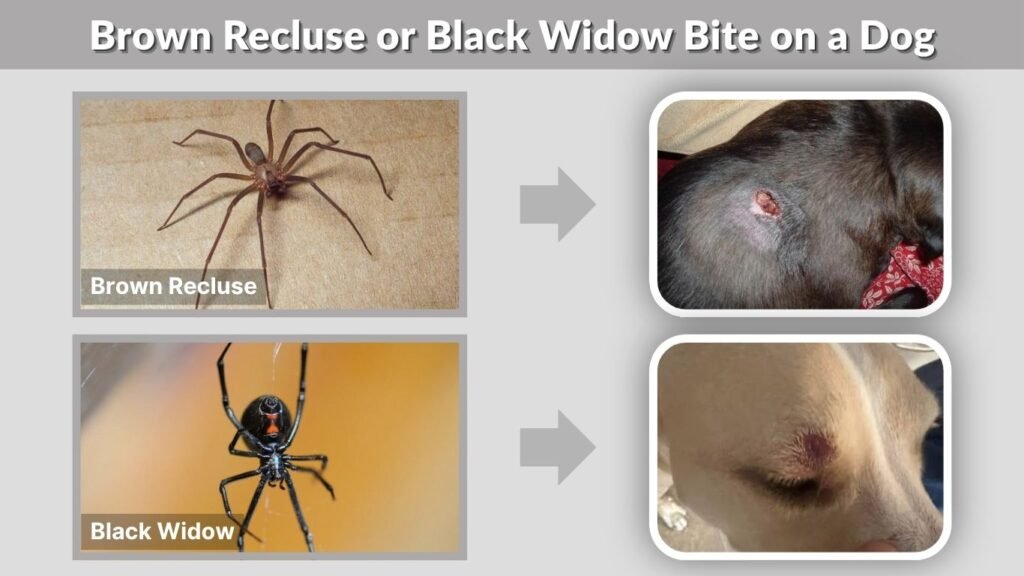
Dogs can also be bitten by widow or recluse spiders. A dog may show pain, swelling, restlessness, weakness, vomiting, muscle tremors, or difficulty walking. Smaller dogs and older dogs may be at higher risk.
If you suspect a black widow, brown widow, or brown recluse bite on a dog, call a veterinarian or emergency animal hospital. Do not give human pain medicine unless a veterinarian tells you to. Some human medications are dangerous for dogs.
Regional Notes: California, Desert Recluse, and Brown Spiders
In some areas, people confuse brown recluse bites with bites from other brown spiders. For example, California has desert recluse spiders in some regions, but many suspected “brown recluse” cases in California are actually other skin problems or other spider species.
Black widows and brown widows may also occur in warm regions. Because species vary by location, it is helpful to save the spider or take a clear photo only if it is safe. Local pest control, extension services, or medical professionals may be able to help with identification.
How to Prevent Widow and Recluse Bites
Most medically important spider bites happen when a spider is trapped, squeezed, or disturbed. Prevention focuses on avoiding hidden spiders in dark, quiet places.
Prevention Tips
Use these steps:
- Wear gloves when moving firewood, boxes, or outdoor clutter
- Shake out shoes, gloves, and clothing stored outside
- Keep garages, sheds, and basements organized
- Move beds away from walls if spiders are common indoors
- Seal cracks around doors, windows, and foundations
- Use caution around crawl spaces and storage areas
- Reduce clutter where spiders can hide
- Inspect outdoor furniture and mailboxes
- Keep firewood away from the house
Regular cleaning and clutter reduction can lower the chance of accidental contact.
FAQs
What is the difference between a black widow and brown recluse bite?
A black widow bite usually causes nerve and muscle symptoms, such as cramps, abdominal pain, sweating, nausea, and spreading pain. A brown recluse bite is more likely to cause skin symptoms, including redness, blistering, darkening, ulceration, or tissue damage.
Is a brown widow bite the same as a black widow bite?
A brown widow bite can cause similar types of symptoms because brown widows are related to black widows. However, brown widow bites are often milder. Any bite with spreading pain, cramps, vomiting, sweating, or breathing trouble should be checked by a medical professional.
Which spider bite is worse, black widow or brown recluse?
A black widow bite is often worse for immediate whole-body symptoms, while a brown recluse bite can be worse for skin damage and delayed wound healing. Both can be serious, and medical advice is recommended if symptoms are severe or worsening.
What should I do first after a suspected widow or recluse bite?
Wash the area with soap and water, apply a cold pack wrapped in cloth, keep the area elevated if possible, and monitor symptoms. Seek urgent medical care for severe pain, cramps, vomiting, sweating, trouble breathing, fever, or a worsening wound.
Can spider bite pictures tell me if it was a black widow or brown recluse?
Pictures can help, but they cannot confirm the spider species by themselves. Many skin infections and insect bites look similar. Symptoms, location, whether the spider was seen, and medical evaluation are more reliable than pictures alone.
