
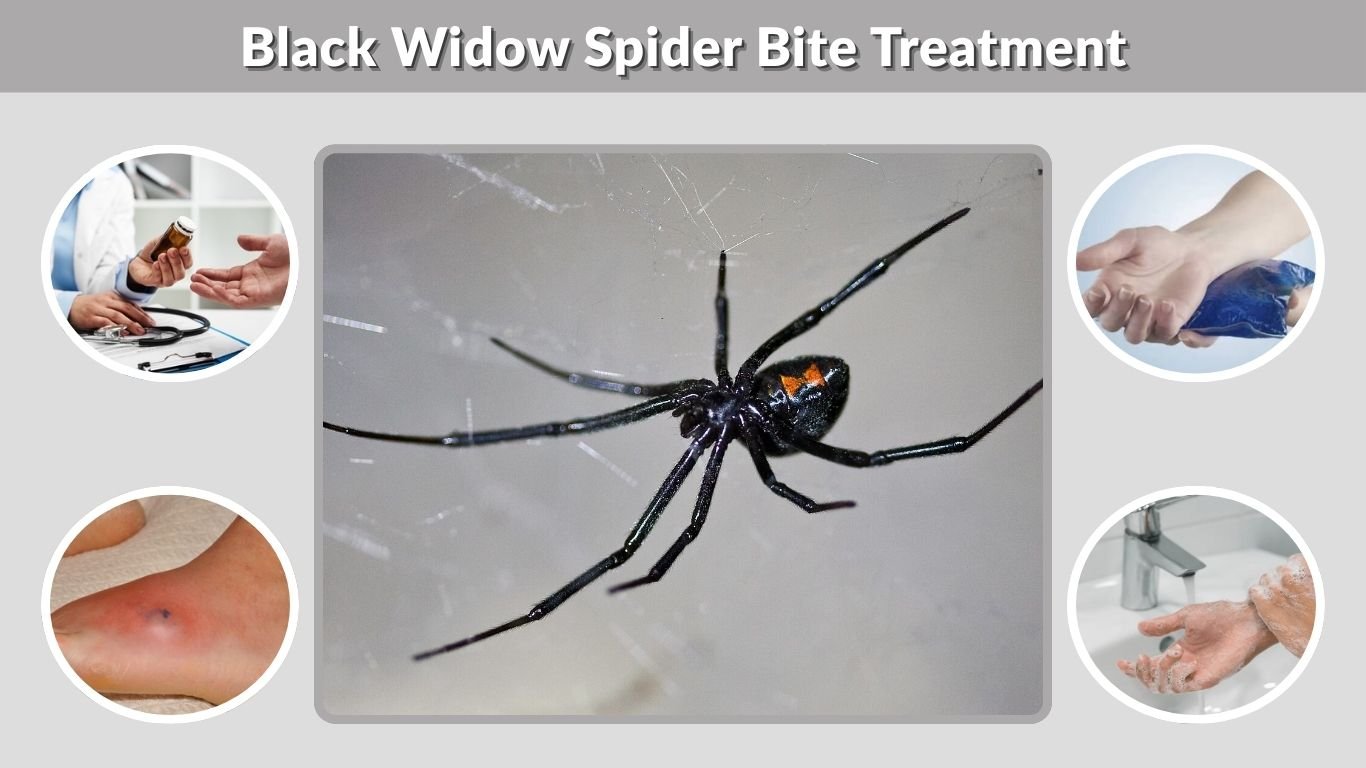
A black widow spider bite can cause mild local pain or serious whole-body symptoms, including muscle cramps, sweating, nausea, abdominal pain, chest discomfort, and trouble breathing. Treatment depends on the person’s symptoms, age, health, and reaction to the venom. If you think a black widow bit you, clean the bite, apply a cold pack, stay calm, and seek medical advice right away, especially if symptoms spread beyond the bite area.
What Makes a Black Widow Bite Serious?
Black widow spiders are venomous spiders known for their shiny black body and red hourglass marking on the underside of the abdomen. Their venom affects nerve endings, which is why symptoms may involve intense muscle pain, cramping, stiffness, sweating, and abdominal discomfort rather than only a skin reaction.
Not every bite becomes severe. Some people have only mild pain, redness, or swelling. Others develop stronger symptoms within minutes to hours. Children, older adults, pregnant people, and people with heart or breathing problems may have a higher risk of complications.
Common Symptoms After a Black Widow Bite
A black widow bite may feel like a sharp pinprick at first. In some cases, the bite area becomes painful, red, swollen, or numb. More serious symptoms can develop when venom effects spread through the body.
Possible symptoms include:
- Pain, redness, swelling, or numbness at the bite site
- Muscle cramps or spasms
- Severe abdominal pain or tightness
- Chest, shoulder, back, or leg pain
- Sweating, chills, or shaking
- Headache, nausea, or vomiting
- Weakness, restlessness, or dizziness
- High blood pressure or fast heartbeat
- Trouble breathing in severe cases
Because symptoms can sometimes resemble other urgent conditions, such as appendicitis or heart-related pain, medical evaluation is important when symptoms are severe or unusual.
First Aid Treatment for a Black Widow Spider Bite
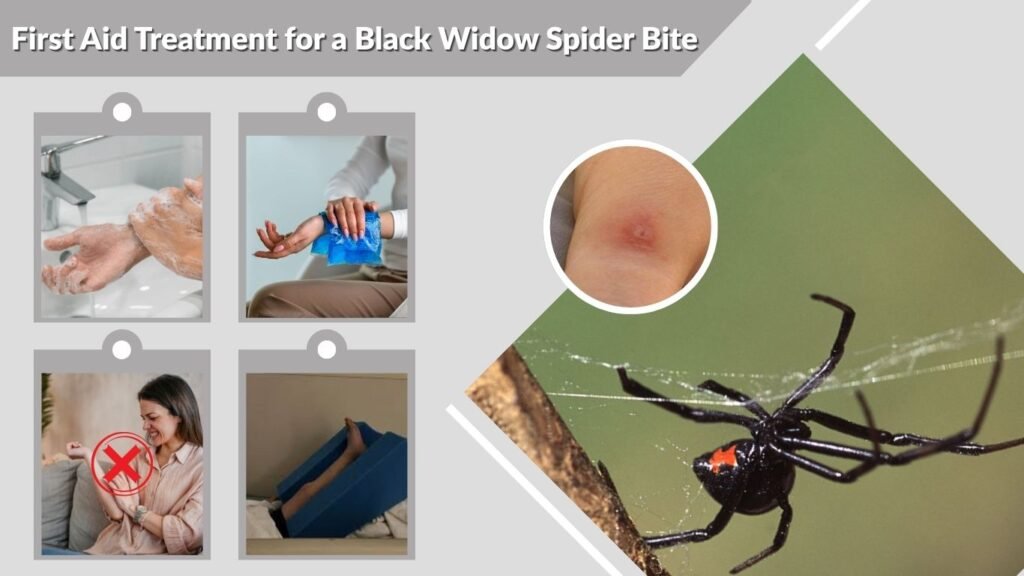
First aid can help reduce discomfort while you arrange medical guidance. It should not replace emergency care if symptoms are severe. If possible, stay calm and avoid unnecessary movement, because activity may increase discomfort.
What to Do Immediately
Follow these first aid steps:
- Wash the bite area with soap and water
- Apply a cold pack wrapped in cloth for 10 to 15 minutes at a time
- Keep the bitten area still and elevated if practical
- Remove tight jewelry or clothing near the bite area
- Take a photo of the spider if it is safe to do so
- Call a doctor, urgent care, poison control, or emergency services for advice
Do not cut the bite, try to suck out venom, apply a tourniquet, or put heat directly on the bite. These methods can cause more harm and do not reliably remove venom.
When to Seek Emergency Treatment
You should seek emergency medical care if symptoms are severe, spreading, or involve the whole body. Black widow venom can cause significant pain and muscle cramping, and some people need prescription medication or observation.
Get Help Right Away If You Notice
Emergency care is especially important if the person has:
- Severe muscle cramps or spasms
- Severe belly, chest, back, or shoulder pain
- Trouble breathing
- Vomiting or repeated nausea
- Heavy sweating or shaking
- Weakness, fainting, or confusion
- Rapid heartbeat or high blood pressure
- A bite in a young child, older adult, or pregnant person
- A history of heart, lung, or immune problems
If symptoms are mild, you should still contact a healthcare professional or poison control for guidance. A black widow bite can worsen after the initial bite.
Medical Treatment for Black Widow Spider Bite
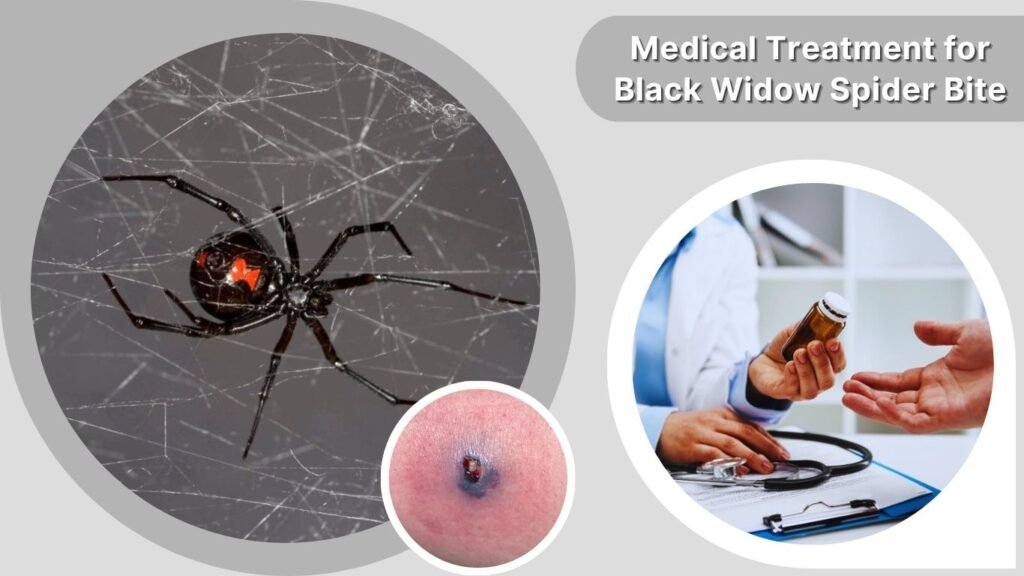
Medical treatment focuses on controlling pain, muscle spasms, and serious venom effects. A healthcare provider may examine the bite, check vital signs, ask about symptoms, and monitor for complications.
Treatment may include wound cleaning, cold packs, pain medicine, muscle relaxants, and sometimes a tetanus shot. Mayo Clinic notes that healthcare professionals may prescribe pain medicine, muscle relaxants, or both for pain and muscle spasms, and a tetanus shot may be needed.
Common Treatment Options
Medical care may include:
- Prescription or over-the-counter pain relief
- Muscle relaxants for cramping and spasms
- Anti-nausea medication if vomiting occurs
- Blood pressure monitoring
- Tetanus booster if needed
- Observation for severe symptoms
- Antivenom in selected serious cases
Treatment depends on how severe the reaction is. Mild bites may improve with supportive care, while severe bites may require emergency department treatment.
Black Widow Antivenom Treatment
Black widow antivenom may be used when symptoms are severe or life-threatening. It is usually given through a vein under medical supervision. Antivenom can reduce symptoms quickly in some patients, but it is used carefully because allergic reactions are possible.
Mayo Clinic states that doctors may recommend antivenom when a black widow bite causes severe pain or life-threatening symptoms, and symptoms may ease within about 30 minutes after antivenom, though serious allergic reactions can occur. Merck Manual also notes that antivenom is used for severe, and sometimes moderate, widow spider envenomation and is most effective when given early.
Who Might Need Antivenom?
A doctor may consider antivenom if the person has:
- Severe pain not controlled with other treatment
- Severe muscle cramping or rigidity
- High blood pressure or rapid heartbeat
- Breathing difficulty
- Serious whole-body symptoms
- Higher risk due to age, pregnancy, or medical conditions
Antivenom is not something to use at home. It requires medical evaluation and monitoring.
Home Treatment for Black Widow Spider Bite
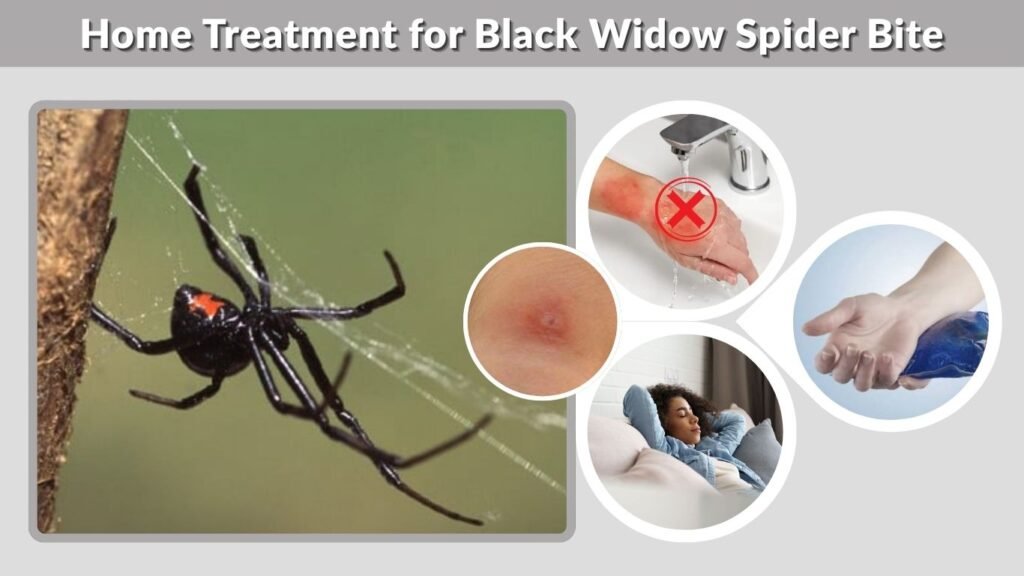
Home treatment may be appropriate only for mild symptoms after medical guidance. A bite that causes only minor local pain or swelling may be managed with basic first aid and careful monitoring. However, because black widow symptoms can become systemic, home care should be cautious.
Safe Home Care Steps
For mild symptoms, you may be told to:
- Keep the bite clean and dry
- Use cold compresses for pain and swelling
- Rest and avoid heavy activity
- Use over-the-counter pain relievers if safe for you
- Watch for worsening symptoms
- Follow up with a healthcare provider if symptoms continue
Do not rely on natural remedies, essential oils, alcohol, bleach, cutting, suction, or tight bandages. These methods do not treat black widow venom and may irritate the skin or delay needed medical care.
Natural Treatment for Black Widow Spider Bite
Natural treatment should not be the main treatment for a suspected black widow bite. While cold compresses, rest, and cleaning the area can help with comfort, they do not neutralize venom. A black widow bite can affect the nervous system, so medical advice is important.
Some people search for natural treatment because they want to avoid medication. However, severe cramping, chest pain, breathing trouble, or vomiting should never be treated with home remedies alone. In those cases, emergency care is the safest option.
Black Widow Spider Bite Treatment Medication
Medication depends on symptom severity. A healthcare provider may recommend pain relievers for mild discomfort, stronger pain medicine for severe pain, muscle relaxants for spasms, or anti-nausea medicine if vomiting occurs.
In more serious cases, patients may need IV medication, monitoring, or antivenom. The goal is to reduce pain, control muscle symptoms, and prevent complications.
Why Antibiotics Are Not Always Needed
A black widow bite is a venom reaction, not automatically an infection. Antibiotics are usually not needed unless the bite area becomes infected or a healthcare provider sees signs of bacterial infection. Redness, pus, increasing warmth, fever, or worsening skin changes should be checked by a medical professional.
EMS and Prehospital Treatment
Prehospital treatment for a black widow spider bite focuses on safety, symptom assessment, and transport when needed. Emergency medical providers may check breathing, pulse, blood pressure, pain level, and the severity of muscle cramping.
EMS treatment may include supportive care, oxygen if needed, monitoring, and transport to an emergency department. Paramedics may follow local protocols for pain control, nausea, or other symptoms. Severe symptoms should be evaluated in a medical setting because black widow bites can cause systemic effects.
What to Tell EMS or the Doctor
Helpful information includes:
- Time of the bite
- Where on the body the bite occurred
- Description or photo of the spider
- Symptoms and when they started
- Any medications taken
- Allergies or medical conditions
- Whether the person is pregnant, elderly, or a child
Do not delay care while trying to capture the spider. A clear photo is useful only if it can be taken safely.
Can You Survive a Black Widow Bite Without Treatment?
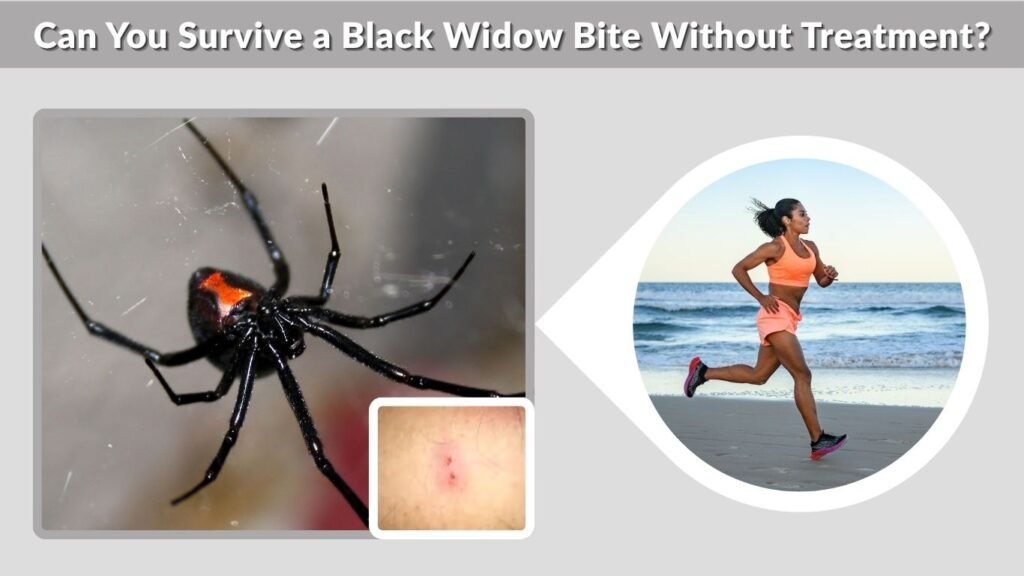
Most healthy adults survive black widow bites, and deaths are rare. However, surviving does not mean the bite should be ignored. Symptoms can be extremely painful and may require medical treatment, especially in high-risk groups.
Without treatment, severe symptoms may last longer and cause more distress. Medical care can help control pain, muscle spasms, blood pressure changes, and other complications. It is safest to contact a healthcare professional or poison control after a suspected bite.
Black Widow Bite Treatment for Dogs
Black widow bites can also be dangerous for dogs. Small dogs, older dogs, and dogs with health problems may be at higher risk. Signs may include pain, restlessness, drooling, muscle tremors, weakness, vomiting, difficulty walking, or breathing problems.
If you suspect a black widow bit your dog, contact a veterinarian or emergency animal hospital immediately. Do not give human pain medication unless a veterinarian tells you to. Some human medicines are toxic to dogs.
What a Veterinarian May Do
Veterinary treatment may include pain control, muscle relaxants, IV fluids, monitoring, oxygen support, or other supportive care. The exact treatment depends on the dog’s size, symptoms, and overall health.
False Black Widow Spider Bite Treatment
False widow spiders can bite, but their bites are usually less severe than black widow bites. They may cause local pain, redness, swelling, or mild illness. However, it can be hard to identify a spider bite accurately without seeing the spider.
If you are unsure whether the bite came from a black widow, false widow, or another insect, monitor symptoms carefully. Seek medical care if pain worsens, the skin changes significantly, or you develop whole-body symptoms such as cramps, vomiting, sweating, fever, or breathing trouble.
Male Black Widow Spider Bite Treatment
Female black widows are usually considered more medically significant because of their size and venom delivery. Male black widows are smaller and are less likely to cause serious bites. Still, if you are bitten and symptoms develop, treatment should be based on symptoms rather than the spider’s sex.
Clean the bite, apply a cold pack, and contact a healthcare professional if there is significant pain, cramping, swelling, nausea, or any systemic symptom.
Recovery After a Black Widow Bite
Recovery time varies. Mild bites may improve within a day or two. More severe bites may cause muscle pain, cramps, weakness, or discomfort for several days. Some symptoms can last longer, especially if treatment is delayed or the reaction is strong.
Follow your healthcare provider’s instructions. Return for care if symptoms worsen, new symptoms appear, or the bite area shows signs of infection.
How to Prevent Black Widow Bites
Black widows usually bite when they are trapped, touched, or disturbed. They often hide in dark, quiet places such as garages, sheds, woodpiles, crawl spaces, outdoor furniture, storage boxes, and cluttered areas.
Prevention Tips
To reduce the risk of bites:
- Wear gloves when moving firewood, boxes, or outdoor debris
- Shake out shoes, gloves, and clothing stored outside
- Keep garages, sheds, and basements clutter-free
- Seal cracks and gaps around doors and foundations
- Use caution around woodpiles, meter boxes, and crawl spaces
- Move stored items away from walls
- Use a flashlight in dark storage areas
Teach children not to touch spiders or webs. If black widows are common around your home, consider pest control or habitat reduction.
FAQs
What is the treatment for a black widow spider bite?
Treatment includes washing the bite, applying a cold pack, resting, and getting medical advice. Doctors may use pain medicine, muscle relaxants, anti-nausea medicine, a tetanus shot, monitoring, or antivenom in severe cases.
Can I treat a black widow spider bite at home?
Only mild symptoms should be managed at home, and medical guidance is still recommended. Clean the area, use a cold compress, and monitor symptoms. Seek urgent care if pain spreads, cramps develop, or symptoms become severe.
When is a black widow bite an emergency?
It is an emergency if there is severe muscle cramping, abdominal pain, chest pain, trouble breathing, vomiting, fainting, heavy sweating, weakness, or symptoms in a child, older adult, pregnant person, or someone with major health problems.
Do black widow bites always need antivenom?
No. Antivenom is usually reserved for severe or sometimes moderate cases. Many bites are treated with pain control, muscle relaxants, and observation. A doctor decides whether antivenom is needed based on symptoms and risk.
What should I not do after a black widow bite?
Do not cut the bite, suck out venom, apply a tourniquet, use heat, or rely on natural remedies for severe symptoms. These methods can delay proper care or make the injury worse.
