
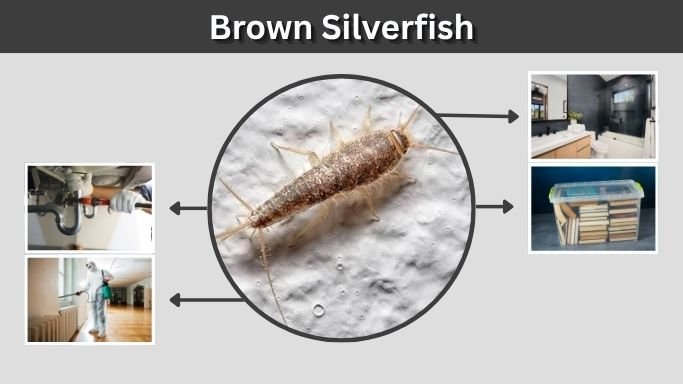
A brown silverfish can be confusing because most people expect silverfish to look shiny gray or silver. However, some silverfish-like bugs may appear light brown, dark brown, tan, or mottled depending on species, age, lighting, and body condition. In many cases, a brown bug that looks like a silverfish may actually be a firebrat, bristletail, carpet beetle larva, young roach, or house centipede. This guide explains how to identify brown silverfish-like bugs indoors.
Can Silverfish Be Brown?
Silverfish are usually silver-gray, metallic, and teardrop-shaped. However, they can sometimes look brownish, especially in poor lighting, after molting, when covered in dust, or when confused with similar insects. A true silverfish is more likely to appear silver, gray, or pale gray than rich brown.
The phrase “brown silverfish” is often used by homeowners to describe any fast, narrow, long-antenna bug found in bathrooms, basements, closets, kitchens, or bedrooms. Correct identification matters because different pests cause different problems.
| Bug Type | Color | Main Clue |
| Silverfish | Silver, gray, pale gray | 3 tail bristles and shiny body |
| Firebrat | Brown, gray-brown, mottled | Looks like silverfish but darker |
| Bristletail | Brown or gray | Outdoor bug, jumping movement |
| Carpet beetle larva | Brown, tan, hairy | Fuzzy body, fabric damage |
| Roach nymph | Brown or black | Oval body, no 3 tail bristles |
| House centipede | Tan or brownish | Many long legs |
If the bug looks exactly like a silverfish but is brown or mottled, a firebrat is one of the most likely possibilities.
What Does a Brown Silverfish Look Like?
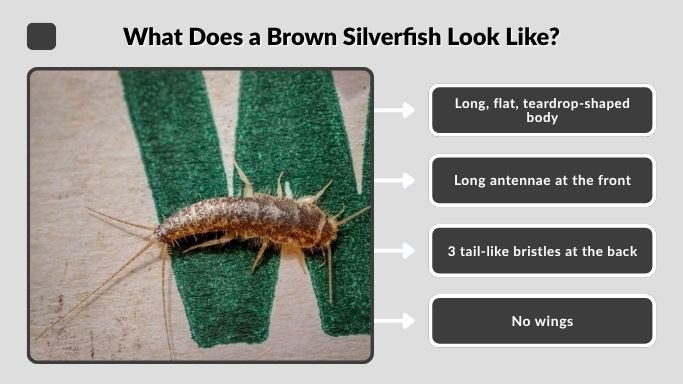
A brown silverfish-like bug usually has a long, narrow body, long antennae, and quick movement. If it is a true silverfish, it should have three thin tail-like bristles at the back. These bristles are one of the best identification features.
Key Features to Check
Look closely for these signs:
- Long, flat, teardrop-shaped body
- Long antennae at the front
- 3 tail-like bristles at the back
- No wings
- Fast, wiggling movement
- Brown, tan, gray-brown, or silver-gray color
- Found in damp, dark indoor spaces
A true silverfish has a smooth, scale-covered body. It does not have many long legs like a house centipede. It also does not look fuzzy like a carpet beetle larva.
Brown Bug That Looks Like a Silverfish
Many brown bugs can look like silverfish at first glance. This is especially true when the bug moves quickly across a floor or wall and you only see it for a second. The most common silverfish lookalike is the firebrat.
Firebrats are closely related to silverfish and have a similar body shape. They are usually gray-brown, brown, or mottled. They also have long antennae and three tail bristles. Unlike silverfish, firebrats prefer warmer places such as furnace rooms, boiler rooms, water heater closets, kitchens, and areas near heat sources.
Common Brown Silverfish Lookalikes
Here are the pests most often confused with brown silverfish:
- Firebrats
- Carpet beetle larvae
- Bristletails
- Roach nymphs
- Earwigs
- House centipedes
- Clothes moth larvae
- Booklice
If the bug is brown, fast, and has three tail bristles, it may be a firebrat. If it is brown and hairy, it is more likely a carpet beetle larva. If it has many long legs, it is probably a house centipede.
Brown Silverfish vs Firebrat
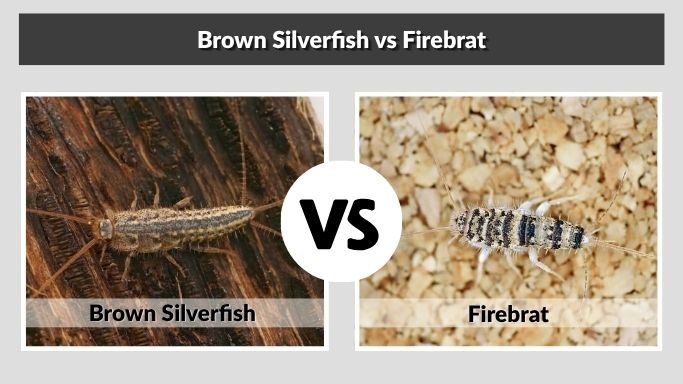
Firebrats are the closest match for a brown silverfish. They look very similar to silverfish but are usually darker, warmer-toned, and more mottled. Both pests are wingless and have three tail bristles.
| Feature | Silverfish | Firebrat |
| Color | Silver, gray, pale gray | Brown, gray-brown, mottled |
| Body shape | Teardrop-shaped | Teardrop-shaped |
| Tail bristles | 3 | 3 |
| Preferred area | Damp, cool, dark places | Warm, humid places |
| Common rooms | Bathroom, basement, closet | Kitchen, boiler room, furnace area |
| Food | Starch, paper, glue, fabric | Starch, crumbs, paper, organic debris |
If you find the bug near a water heater, oven, furnace, or warm laundry area, it may be a firebrat instead of a silverfish.
Brown Silverfish in House: Why Are They Indoors?
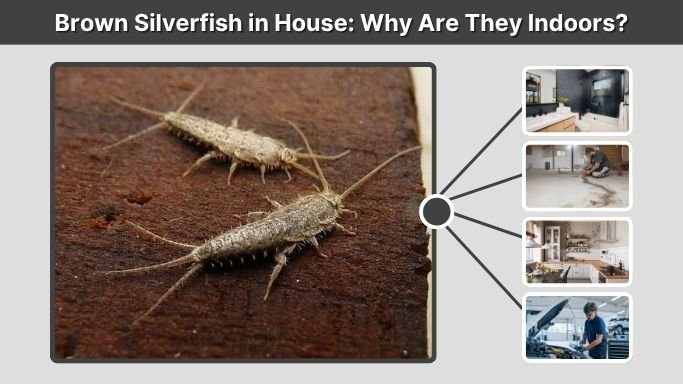
Brown silverfish-like bugs come indoors because the home provides moisture, warmth, hiding places, and food. They prefer dark areas where they can hide during the day and come out at night.
Silverfish and firebrats can feed on many household materials, especially things that contain starch or glue. This includes paper, cardboard, wallpaper paste, book bindings, cereal, flour, crumbs, fabric starch, and dead insects.
Common Places to Find Them
You may see brown silverfish-like bugs in:
- Bathrooms
- Basements
- Kitchens
- Laundry rooms
- Closets
- Attics
- Garages
- Storage boxes
- Bookshelves
- Under sinks
- Near water heaters
- Around baseboards
If you see them often, check for leaks, humidity, cardboard clutter, and stored paper items.
Are Brown Silverfish Dangerous?
Brown silverfish are not usually dangerous to people. True silverfish and firebrats do not sting, do not spread serious disease in normal home situations, and do not feed on blood. They are mostly nuisance pests.
However, they can damage household items over time. They may scrape or chew materials that contain starch, glue, or natural fibers.
They may damage:
- Books
- Paper documents
- Cardboard boxes
- Wallpaper
- Photos
- Stored clothing
- Cotton or linen fabric
- Dry food packaging
- Cereal and flour containers
A few bugs may not cause serious damage, but a larger infestation can become a problem, especially in storage rooms, closets, libraries, and damp basements.
Do Brown Silverfish Bite?
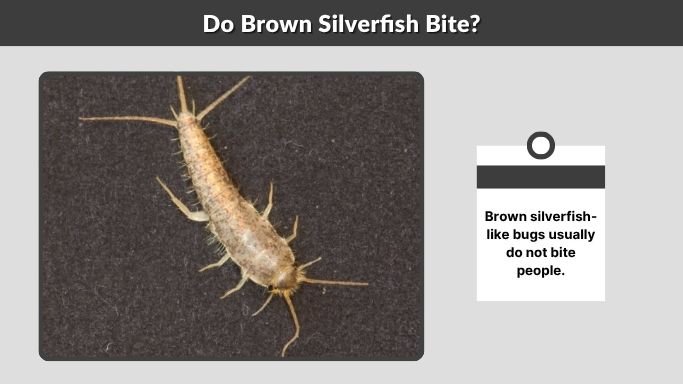
Brown silverfish-like bugs usually do not bite people. Silverfish and firebrats are not biting pests. They have weak mouthparts designed for scraping starchy materials, not piercing human skin.
If you wake up with bites or itchy marks, do not blame silverfish immediately. Other pests such as bed bugs, fleas, mosquitoes, mites, or spiders may be involved.
Silverfish may crawl into beds if there are crumbs, paper, books, cardboard boxes, or moisture nearby. But they are not parasites and do not seek humans as food.
Brown Silverfish vs Carpet Beetle Larvae
Carpet beetle larvae are one of the most common bugs mistaken for brown silverfish. They are often found in bedrooms, closets, rugs, drawers, and storage boxes. However, they look different when you inspect them closely.
Carpet beetle larvae are usually brown, tan, or striped and have tiny hairs. They may look fuzzy or bristly. Silverfish and firebrats are smoother, flatter, faster, and have three tail-like bristles.
Carpet beetle larvae are more likely to damage wool, fur, feathers, silk, and other animal-based materials. Silverfish are more likely to damage paper, glue, wallpaper, cardboard, and starch-based materials.
Brown Silverfish vs House Centipede
Some people search for “silverfish vs brown centipedes” because house centipedes can look long, fast, and scary. But a house centipede is very different from a silverfish.
A house centipede has many long legs spread along the body. A silverfish has only six legs and three tail bristles. House centipedes are predators that eat other pests, while silverfish feed on paper, glue, starch, and fabric debris.
If the bug has lots of long legs and runs extremely fast, it is not a silverfish. It is probably a house centipede.
Brown Recluse Silverfish: Are They Related?
A brown recluse and a silverfish are completely different pests. A brown recluse is a spider, while a silverfish is a wingless insect. They do not look the same when seen clearly.
A brown recluse has eight legs and a spider-shaped body. A silverfish has six legs, long antennae, and three tail bristles. If you see a fast, long, narrow bug with antennae and tail bristles, it is not a brown recluse.
Some people also ask, “Do brown recluse eat silverfish?” Spiders may eat small insects and household pests if they catch them, but seeing silverfish does not mean you have brown recluse spiders.
How to Get Rid of Brown Silverfish-Like Bugs
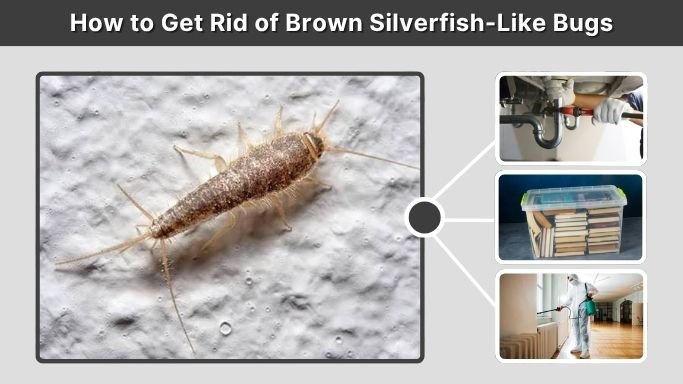
The best way to remove brown silverfish-like bugs is to reduce moisture, clean hiding areas, and remove food sources. Killing visible bugs will not solve the problem if eggs, nymphs, and hiding places remain.
Step-by-Step Control Tips
Use these methods to reduce them indoors:
- Fix leaking pipes and faucets.
- Use a dehumidifier in damp rooms.
- Improve ventilation in bathrooms and basements.
- Remove cardboard boxes from storage areas.
- Store books and documents in sealed containers.
- Keep dry foods in airtight jars or bins.
- Vacuum baseboards, closets, and corners.
- Seal cracks around walls, trim, and cabinets.
- Use sticky traps to monitor activity.
- Call pest control for large infestations.
If the bug is actually a carpet beetle larva or roach nymph, treatment may be different. Correct identification should come first.
How to Prevent Brown Silverfish in the House
Prevention is mostly about making your home dry, clean, and less attractive to pests. Brown silverfish-like bugs thrive where they have moisture, darkness, clutter, and food.
Keep humidity low, especially in bathrooms, basements, kitchens, and laundry rooms. Avoid storing paper, books, clothing, or cardboard in damp areas. Replace cardboard boxes with plastic storage bins when possible.
Also clean behind furniture, under sinks, around appliances, and inside closets. These quiet spaces often collect dust, crumbs, paper fibers, and dead insects that pests can eat.
FAQs
Can silverfish be brown?
Silverfish are usually silver-gray, but they can sometimes appear brownish because of lighting, age, dust, or confusion with similar bugs. A bug that looks like a brown silverfish is often a firebrat.
What bug looks like a silverfish but is brown?
A firebrat is the most common bug that looks like a silverfish but is brown or gray-brown. Carpet beetle larvae, bristletails, roach nymphs, and house centipedes may also be confused with brown silverfish.
Are brown silverfish dangerous?
Brown silverfish-like bugs are not usually dangerous to people. They do not normally bite or sting. However, they can damage paper, books, wallpaper, cardboard, and some stored fabrics.
Do brown silverfish bite?
Silverfish and firebrats usually do not bite humans. If you have bite marks, another pest such as bed bugs, fleas, mosquitoes, or mites may be responsible.
Why are brown silverfish in my house?
They may be in your house because of moisture, warmth, darkness, and available food sources. Bathrooms, basements, kitchens, laundry rooms, closets, and cardboard storage areas are common places to find them.
