
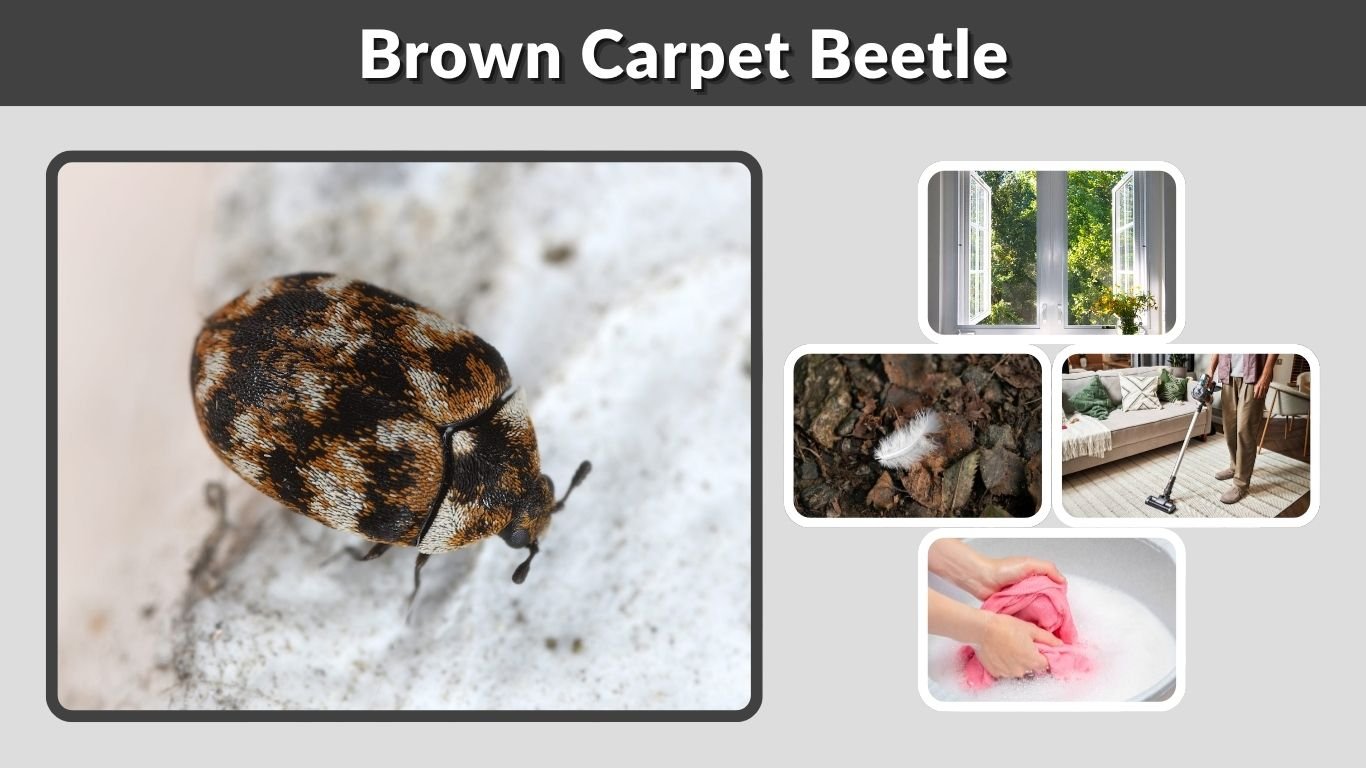
The brown carpet beetle is a small household pest that can damage carpets, clothing, furniture, and other materials containing natural fibers. Although adult beetles are usually harmless, their larvae feed on animal-based materials and may remain hidden for months. These insects are often mistaken for bed bugs or other tiny brown beetles. Knowing how to identify brown carpet beetles, recognize their larvae, understand their life cycle, and remove them from your home can help prevent infestations and protect your belongings.
What Is a Brown Carpet Beetle?
The brown carpet beetle (Attagenus smirnovi) is a small beetle belonging to the Dermestidae family. It is also known as the vodka beetle and is particularly associated with homes, museums, and buildings containing animal-based materials.
Originally native to eastern Africa, this species has spread to parts of Europe, including the United Kingdom.
Unlike many household insects that consume living plants or human food, brown carpet beetle larvae primarily feed on dry animal materials.
Adult beetles can fly and are sometimes discovered near windows, while larvae usually hide in dark, undisturbed locations.
Brown Carpet Beetle Identification
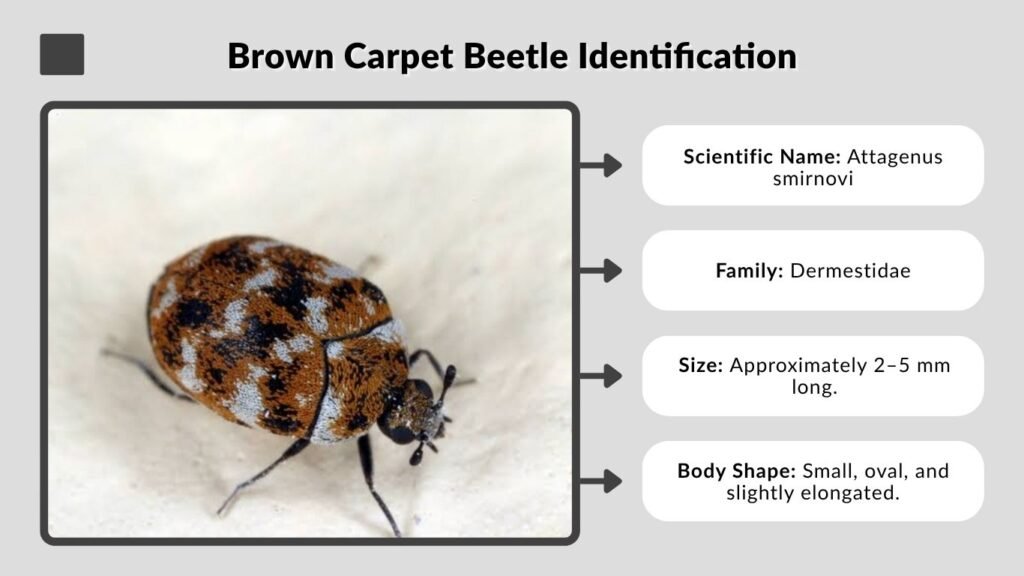
Brown carpet beetles have distinctive physical features, although their small size makes them difficult to recognize without close examination.
Adult beetles and larvae look completely different, so understanding both stages is essential for accurate identification.
Adult Brown Carpet Beetle Appearance
- Scientific Name: Attagenus smirnovi
- Family: Dermestidae
- Size: Approximately 2–5 mm long.
- Body Shape: Small, oval, and slightly elongated.
- Wing Color: Brown to reddish-brown.
- Head Color: Dark reddish-brown to black.
- Antennae: Short and clubbed, with differences between males and females.
- Wings: Hard wing covers protecting functional flight wings.
Adults have a relatively smooth-looking surface covered with fine hairs.
Their darker head and thorax contrast with their lighter brown wing covers, helping distinguish them from some other household beetles.
Brown Carpet Beetle Larvae Identification
Brown carpet beetle larvae look like tiny, hairy, segmented worms.
They have elongated bodies that gradually narrow toward the rear, with characteristic tufts of hair.
Fully grown larvae can reach approximately 8 mm in length.
Their upper surfaces are generally bronze-brown, while the undersides are somewhat lighter. Long, golden-brown hairs cover their bodies.
Unlike adults, larvae prefer dark environments and are often found beneath carpets, inside cupboards, and around stored fabrics.
Are All Small Brown Carpet Beetles the Same?
No. Several carpet beetle species can appear brown.
The black carpet beetle (Attagenus unicolor) may be dark brown or nearly black, while the varied carpet beetle (Anthrenus verbasci) often displays mottled brown, cream, white, and black patterns.
The true brown carpet beetle, Attagenus smirnovi, usually has more uniform reddish-brown wing covers and a darker head and thorax.
Accurate species identification may require close examination.
Where Do Brown Carpet Beetles Come From?
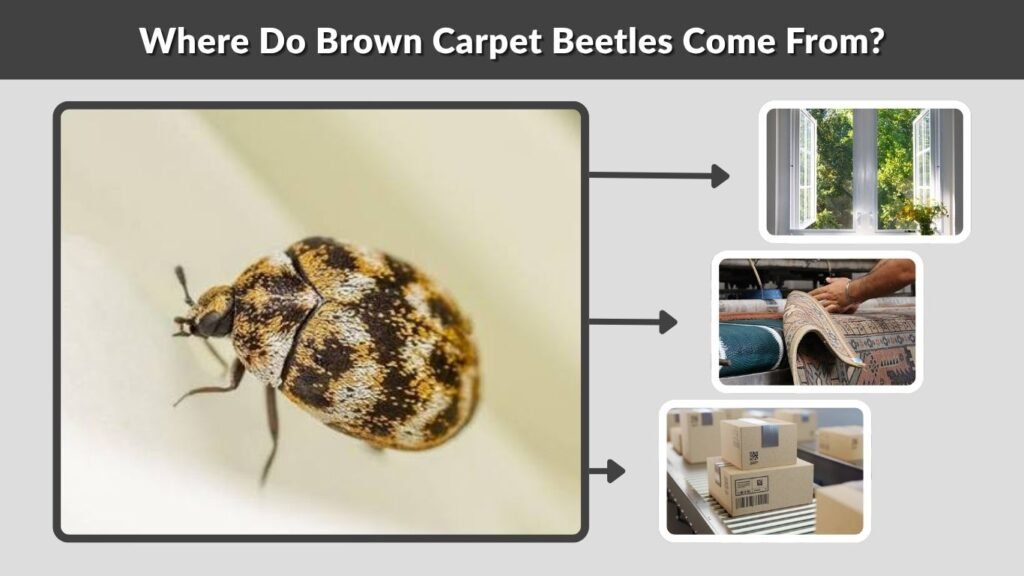
Brown carpet beetles may enter homes through open windows, doors, ventilation openings, or infested belongings.
Adult beetles can fly and may be attracted to light, explaining why they are frequently discovered near windowsills.
Their larvae develop in hidden areas containing suitable food materials.
Common hiding places include carpet edges, upholstered furniture, wardrobes, storage boxes, and spaces beneath heavy furniture.
Accumulated pet hair, dead insects, and animal-based fabrics can provide food for developing larvae.
A single adult beetle does not necessarily indicate an established infestation. Finding multiple larvae or repeated fabric damage is more concerning.
Brown Carpet Beetle Life Cycle
The brown carpet beetle undergoes complete metamorphosis through four developmental stages: egg, larva, pupa, and adult.
Its development depends heavily on temperature, humidity, and food availability.
1. Egg Stage
Female brown carpet beetles lay small eggs in protected areas close to food sources.
Under favorable conditions, a female may lay approximately 30–50 eggs.
The eggs can hatch in around 10 days, although cooler environments may delay development.
2. Larval Stage
Newly hatched larvae begin consuming suitable organic materials.
As they grow, they repeatedly shed their outer skin, leaving behind recognizable hairy casings.
Larval development may take approximately three months under ideal conditions but considerably longer in ordinary indoor environments.
3. Pupal Stage
Once mature, the larva transforms into a pupa.
During favorable conditions, adult beetles may emerge approximately 8–13 days later.
4. Adult Stage
Adult beetles emerge, seek mates, and reproduce.
The complete life cycle commonly takes 6–18 months in real-world conditions, although development can be faster under optimal conditions.
What Do Brown Carpet Beetles Eat?
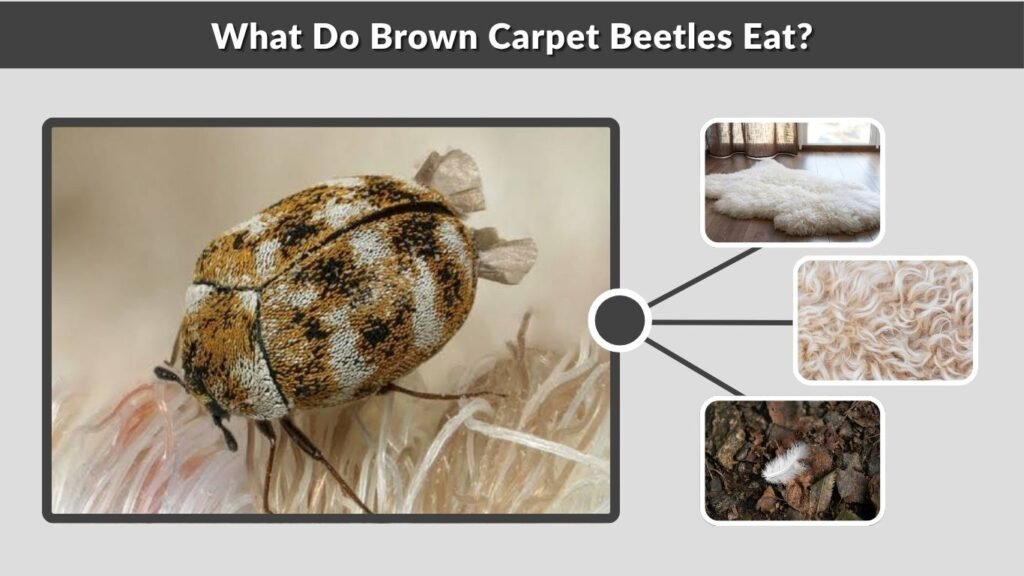
Brown carpet beetle larvae primarily feed on dry organic substances, especially materials containing keratin, a structural protein found in animal hair, feathers, and wool.
They can damage wool carpets, fur, feathers, natural-history specimens, and clothing made from animal fibers.
Their feeding may also occur in lint or accumulated debris containing pet hair and dead insects.
Clean synthetic fabrics such as polyester and nylon are generally not suitable food sources. However, blended textiles or synthetic materials contaminated with animal matter may still harbor larvae.
Adult beetles are not responsible for the characteristic fabric damage. They can survive without feeding.
Are Brown Carpet Beetles Harmful?
Brown carpet beetles are not considered dangerous in the same way as biting or stinging insects.
They do not feed on human blood, and adults do not typically harm people.
However, infestations can cause costly damage to natural-fiber materials.
The tiny hairs associated with carpet beetle larvae may also irritate sensitive skin.
Do Brown Carpet Beetles Bite?
No. Brown carpet beetles do not bite humans.
However, contact with carpet beetle larval hairs or shed skins can trigger an itchy skin reaction in susceptible individuals.
This condition is sometimes called carpet beetle dermatitis.
Symptoms may include redness, small bumps, and localized itching. These reactions can resemble insect bites, but the appearance alone cannot confirm the cause.
If symptoms are persistent, severe, or unexplained, seek medical advice rather than assuming carpet beetles are responsible.
Brown Carpet Beetle vs. Bed Bug
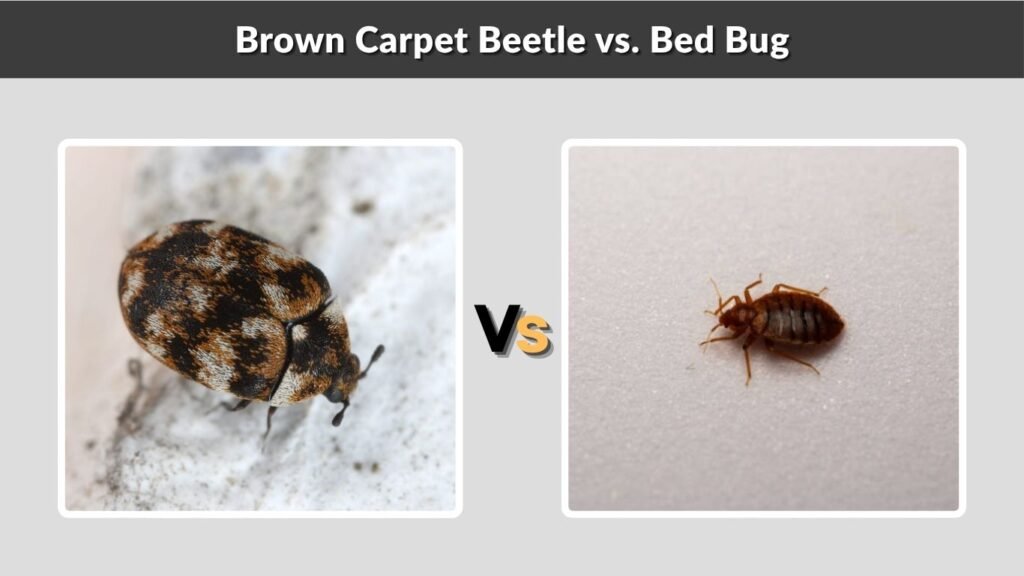
Brown carpet beetles and bed bugs are sometimes confused because both may appear as small brown insects indoors.
However, their appearance, feeding behavior, and potential harm are different.
| Feature | Brown Carpet Beetle | Bed Bug |
| Body shape | Oval, convex | Broad, flattened |
| Typical adult size | 2–5 mm | 5–7 mm |
| Wings | Functional flight wings | No functional wings |
| Main food | Animal-based materials as larvae | Blood |
| Human bites | No | Yes |
| Common evidence | Hairy larvae, shed skins, fabric damage | Dark fecal spots, shed skins, blood spots |
Bed bugs typically hide around sleeping areas and emerge to feed on humans or other hosts.
Carpet beetles are more closely associated with stored textiles and organic debris.
How to Get Rid of Brown Carpet Beetles
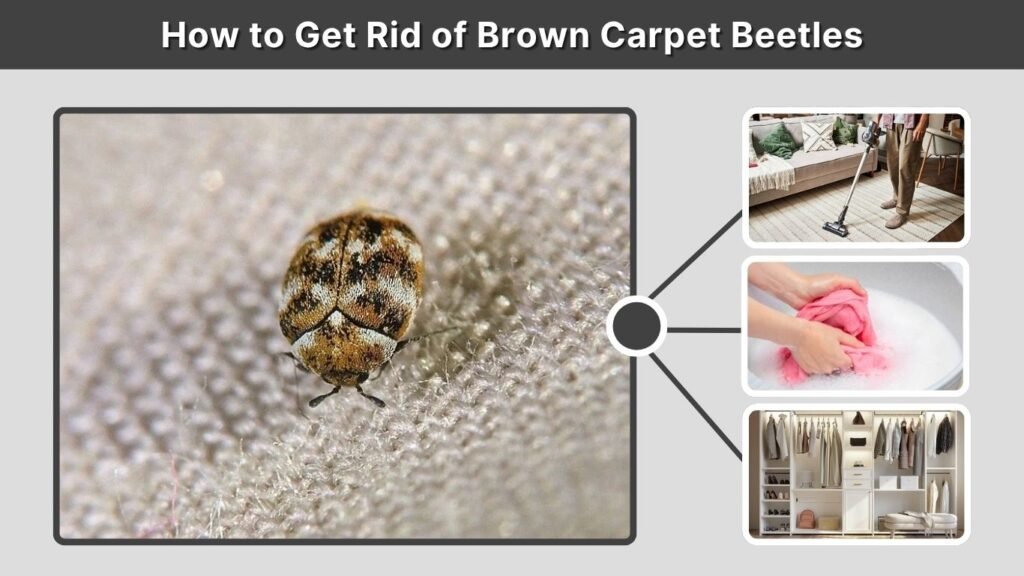
Removing brown carpet beetles requires locating their food sources, eliminating developing larvae, and cleaning affected areas thoroughly.
The following methods can help control an infestation.
- Identify the Infested Area: Inspect carpets, wardrobes, upholstered furniture, baseboards, and stored natural-fiber clothing. Look for larvae, shed skins, and irregular fabric damage.
- Vacuum Thoroughly: Clean carpet edges, furniture undersides, closets, cracks, and other difficult-to-reach places. Dispose of vacuum contents promptly in a sealed bag.
- Wash or Dry-Clean Fabrics: Launder washable infested fabrics using temperatures permitted by their care labels. Dry-clean delicate wool, silk, and other unsuitable materials.
- Remove Food Sources: Clear accumulated pet hair, lint, dead insects, and other debris. Inspect unused rooms and storage areas for hidden infestations.
- Store Clean Clothing Properly: Place clean woolens and other vulnerable fabrics inside airtight containers or sealed garment bags.
- Seek Professional Treatment When Necessary: Persistent infestations may require professional pest control. Only use insecticides specifically labeled for the intended treatment area, and never spray bedding or clothing unless explicitly permitted by the label.
Successful treatment usually depends more on locating and removing the source than on spraying visible adult beetles.
How to Prevent Brown Carpet Beetles
Preventing brown carpet beetles involves regular housekeeping and proper storage of vulnerable materials.
Vacuum beneath furniture and around carpet edges, particularly in rooms that are rarely used.
Keep wool clothing clean before placing it in storage, and inspect carpets, blankets, and upholstered furniture periodically.
Installing well-fitting window screens can reduce the number of flying adults entering a home.
Addressing accumulated pet hair and dead insects also removes potential larval food sources.
FAQs
1. Are Brown Carpet Beetles Dangerous?
Brown carpet beetles do not bite or sting people. However, their larvae can damage natural-fiber materials, and their hairs may cause itchy skin reactions in sensitive individuals.
2. What Do Brown Carpet Beetle Larvae Look Like?
The larvae are elongated, brown, hairy, and visibly segmented. They taper toward the rear and have characteristic tufts of hair. Mature larvae may reach approximately 8 mm.
3. Can Brown Carpet Beetles Live in Beds?
Yes. Carpet beetle larvae may occur near beds if suitable materials, such as feathers, wool, pet hair, or accumulated debris, are present. They do not feed on human blood.
4. Do Brown Carpet Beetles Fly?
Yes. Adult brown carpet beetles have functional wings and can fly. They may appear near windows or other light sources inside buildings.
5. How Do You Permanently Get Rid of Brown Carpet Beetles?
The most effective approach is to locate infested materials, remove larvae and food sources, vacuum thoroughly, clean affected fabrics, and protect vulnerable items in sealed storage. Continue inspecting for new activity because hidden larvae can survive for months.
