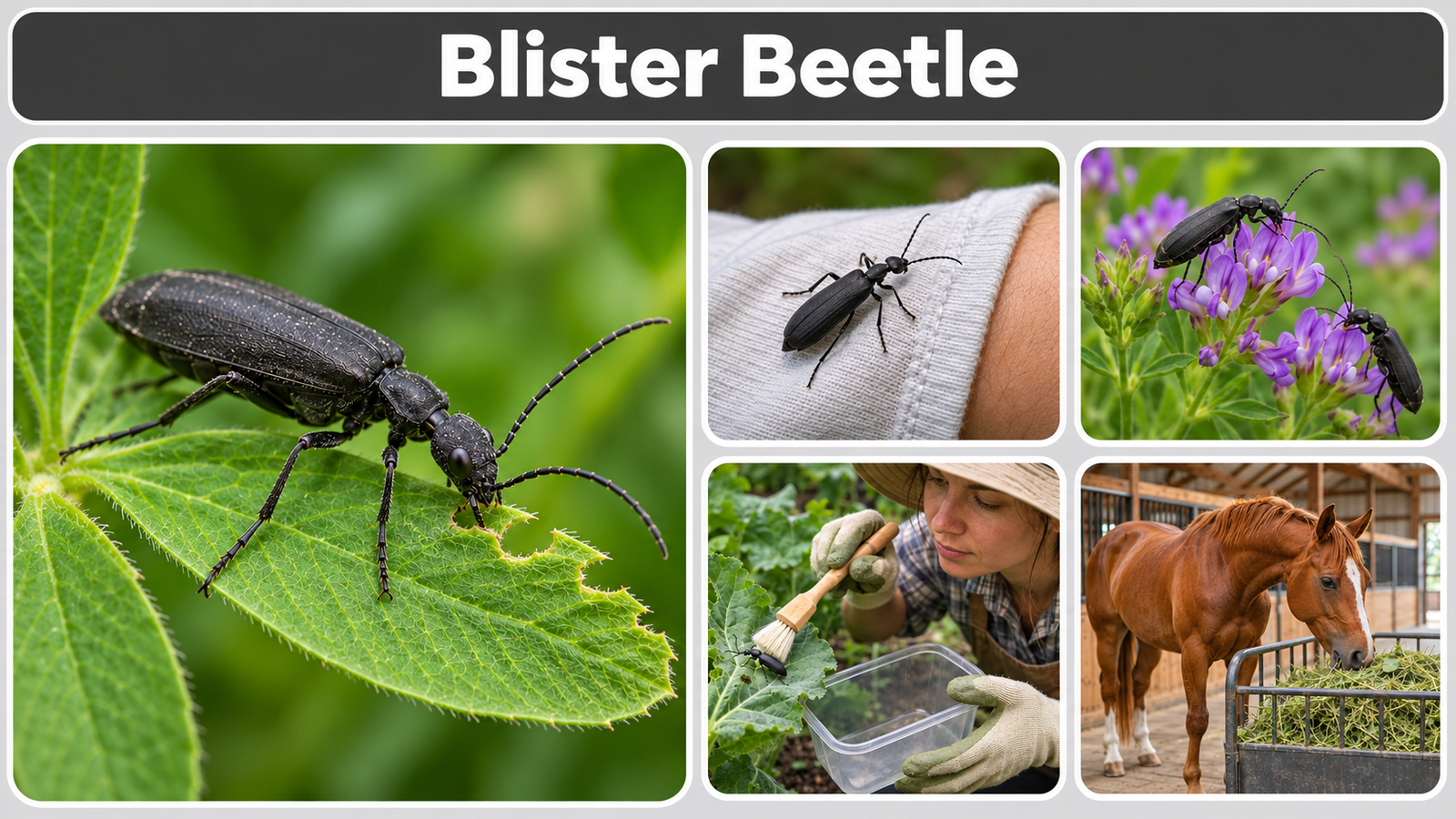
A blister beetle is easy to overlook until you find a group feeding on your plants or one lands on your sleeve. These insects get their name from cantharidin, a defensive chemical that can cause painful blisters if it gets on your skin. Adults often visit flowers and feed on leaves, while some species have larvae that eat grasshopper eggs. Blister beetles also pose a serious risk to horses when they end up in baled alfalfa. Whether you found a single beetle indoors or several in your garden, start by checking its shape and keeping your hands clear.
What Does a Blister Beetle Look Like?
Blister beetles belong to the family Meloidae. Many adults are elongated and relatively soft-bodied, with a broad head, long legs, and a narrow section immediately behind the head. This narrow section, called the pronotum, often gives the insect a distinct neck-like appearance. Color varies considerably. Some blister beetles are solid black or gray, while others have stripes, spots, or a metallic sheen. Body shape is a more useful starting point than color alone.
| Feature | What to look for |
|---|---|
| Head | Clearly wider than the section directly behind it |
| Pronotum | Narrow, giving many species a noticeable neck-like profile |
| Body | Often long and narrow, although oil beetles have broader abdomens |
| Wing covers | Relatively soft and flexible in many species |
| Color | Black, gray, striped, spotted, or metallic, depending on the species |
| Location | Often on flowers or foliage, sometimes feeding in groups |
Black, Striped, and Oil Beetles
The black blister beetle (Epicauta pensylvanica) is dark across most of its body. Striped blister beetles can have dark lengthwise bands over a yellowish or orange background. Other species have gray or spotted wing covers. Several beetle families share these colors, so check the head and pronotum before settling on an identification.
Oil beetles in the genus Meloe have a different silhouette. Their short wing covers leave much of the abdomen exposed, making the body look broad and swollen. If you want an identification, photograph the insect from above and from the side while it is on the plant or ground. Those two angles show the head, body shape, and wing covers without requiring you to pick it up.
Do Blister Beetles Bite or Cause a Rash?
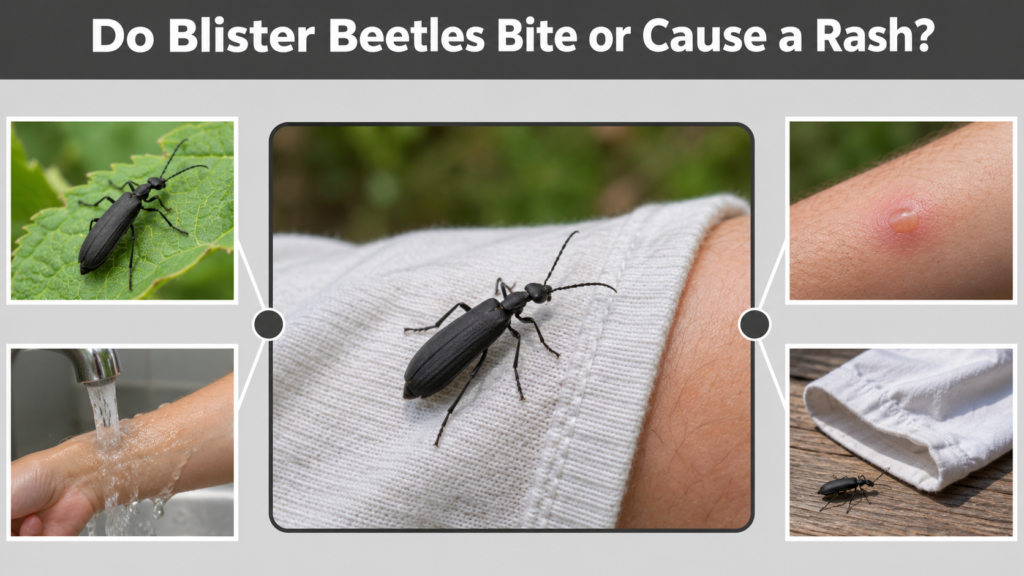
People often call the injury a blister beetle bite because a welt or blister appears after contact. The characteristic injury comes from cantharidin, which can get onto the skin when the beetle is disturbed, pressed, or crushed. Slapping one against your arm or trapping it beneath a sleeve can expose the skin. Redness, irritation, and fluid-filled blisters may develop after contact, sometimes with a delay.
What to Do After Skin Contact
If a beetle lands on you, gently blow it away or take off the item of clothing it landed on. Wash the exposed skin with soap and water promptly. Wash your hands before touching your face, since the chemical can transfer from your fingers to your eyes. Seek medical advice if blistering is extensive, unusually painful, or worsening.
If the fluid gets into an eye, rinse it immediately with clean running water and seek urgent medical advice. Eye exposure can cause pain, tearing, and corneal injury. If someone swallows a beetle or a product containing cantharidin, contact a poison center or emergency medical service immediately.
What Do Blister Beetles Eat?
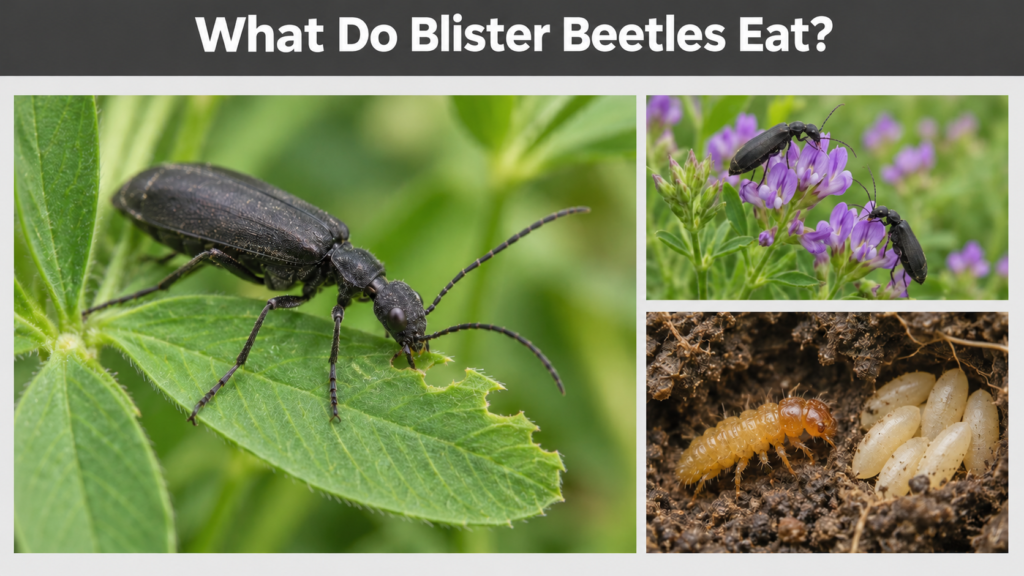
Adult blister beetles feed on plant material. Depending on the species, you may find them chewing foliage, gathering on flowers, or feeding on crops such as alfalfa. A few adults may leave scattered holes or ragged leaf edges. A group feeding in one place can strip much more foliage, especially from a small plant. Check nearby stems and the undersides of leaves if you see fresh chewing damage and have already spotted a suspect beetle.
What Blister Beetle Larvae Eat
The larvae of many Epicauta species feed on grasshopper eggs in the soil. These beetles can therefore play two different roles in a garden or field. The adults chew plants, while the larvae prey on the eggs of another plant-feeding insect.
Other blister beetle larvae develop in bee nests. Their food varies by species and may include bee eggs, immature bees, or stored provisions. This difference explains why two adults that look fairly similar can have quite different relationships with other insects.
Where Do Blister Beetles Live and How Do They Develop?
Blister beetles occur in many parts of the world. Adults can turn up in fields, gardens, weedy areas, and other places with suitable food plants. The timing depends on the species and region. In Oklahoma, for example, adults can be active from mid-May into early fall, with striped blister beetles often more abundant in June and July. An adult found on a garden flower tells you where it was feeding that day. Its early life may have taken place elsewhere.
From Egg to Adult
Blister beetles pass through egg, larval, pupal, and adult stages. The first larval stage is called a triungulin. It is small and active, which helps it reach a food source such as a grasshopper egg pod or a bee nest, depending on the species.
Later larval stages can look and behave quite differently from the first one. Entomologists call this hypermetamorphosis, a form of development in which the larva changes body form markedly as it grows. The beetle eventually pupates and emerges as an adult.
How to Get Rid of Blister Beetles in the Garden or House
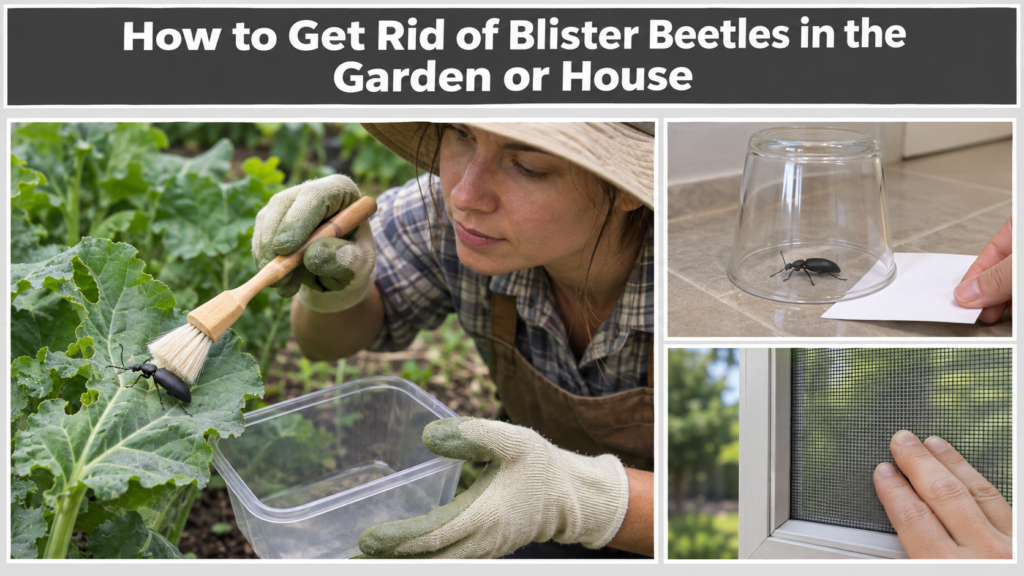
Start by checking how widespread the feeding is. If you see one or two beetles and little damage, check the plants again over the next few days. If several are feeding together on a small plant, wear gloves and gently guide them into a container with a long-handled tool. Avoid squeezing or crushing them. Look at neighboring plants as well, since more than one plant can have fresh feeding damage.
| Where you find them | What to do |
|---|---|
| One beetle on an outdoor flower | Give it space and check the plant for fresh damage later |
| A group feeding on vegetables | Wear gloves and use a tool and container to remove them |
| A beetle indoors | Cover it with a container, slide stiff paper underneath, and release it outside |
| Beetles repeatedly appearing indoors | Inspect window screens and gaps around exterior doors |
| Suspected beetles in hay | Set the hay aside and keep it away from horses pending veterinary guidance |
If fresh damage keeps appearing across several beds, ask a local extension office to confirm the insect from photos before choosing a treatment. If you use a garden product, check that its label allows use on the specific crop and follow the instructions, including the interval before harvest.
Why Are Blister Beetles Dangerous to Horses?
Horses can develop serious poisoning after eating alfalfa hay contaminated with blister beetles. The beetles sometimes gather in patches within a field, where harvesting equipment can crush them and incorporate their remains into bales. Cantharidin remains active after the beetles die, and contamination may be concentrated in only part of a cutting or bale.
Signs of Possible Cantharidin Poisoning
A horse exposed to cantharidin may show colic, poor appetite, or frequent attempts to urinate. The signs can resemble other illnesses, so call a veterinarian immediately if the horse becomes ill after eating suspect hay. Remove the hay from reach and save a sample for the veterinarian.
When buying alfalfa for horses, ask the supplier how they monitor fields for blister beetles and how they harvest the hay. A quick look at the outside of a bale can miss fragments inside. If you find suspect beetles in one bale, set aside hay from the same lot until you get advice.
Frequently Asked Questions
Are blister beetles poisonous to humans?
Yes. Their defensive chemical, cantharidin, can blister skin and irritate the eyes. Swallowing it can cause serious poisoning. Handle a suspected blister beetle with a tool or container to avoid direct contact.
Can a dead blister beetle still cause a reaction?
Yes. Cantharidin can remain active after the beetle dies. Avoid picking up a dead beetle or handling crushed remains with bare hands. This persistence also explains why dead beetles in hay can poison horses.
Can blister beetles fly?
Many adult blister beetles can fly and move between feeding sites. Oil beetles in the genus Meloe are flightless and have short wing covers that leave much of the abdomen visible.
Why are blister beetles suddenly gathering on my plants?
Some species feed in groups and may concentrate where fresh foliage or flowers are available. Inspect the affected plant and its neighbors to see whether the beetles have gathered in one patch or spread across the bed.
Are blister beetles beneficial or harmful to gardens?
It depends on the species, life stage, and number present. The adults can damage foliage when they gather in large groups. The larvae of some species eat grasshopper eggs, while others develop in bee nests.