
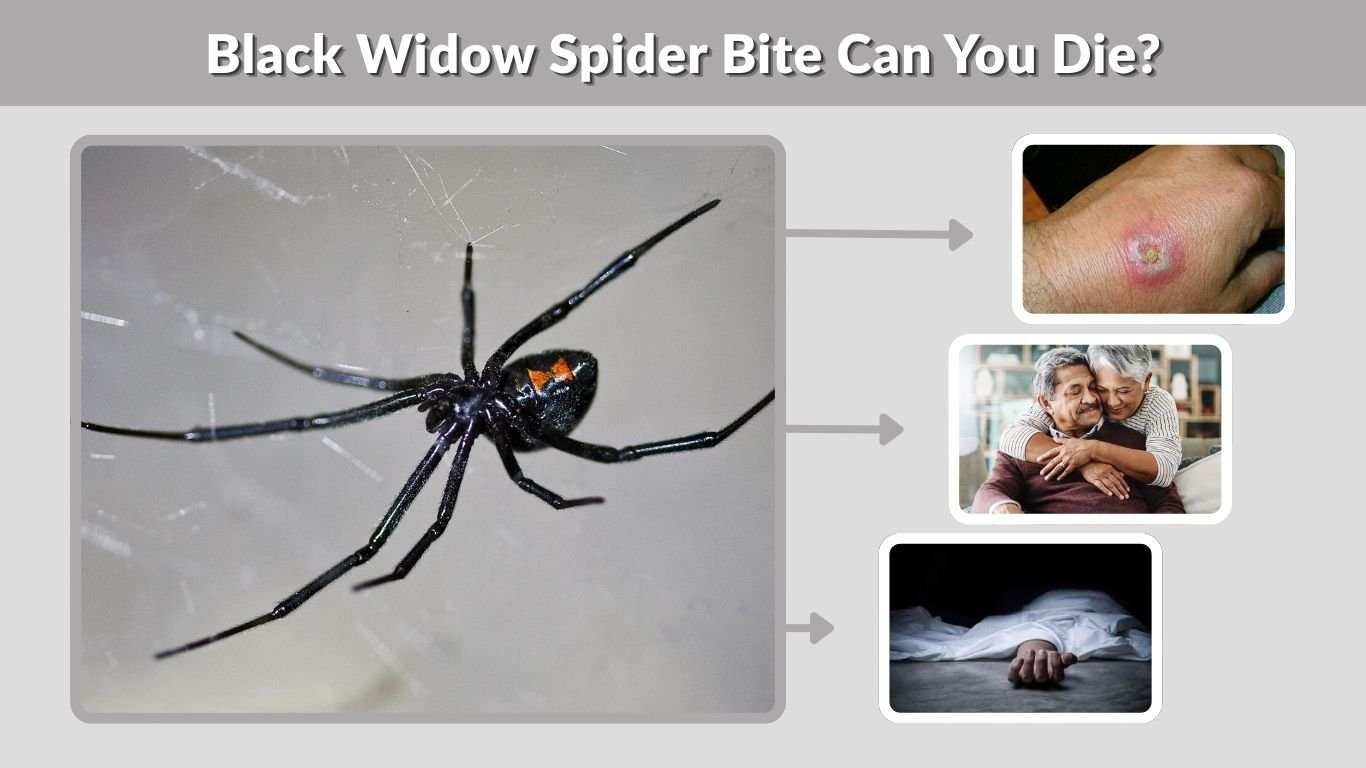
A black widow spider bite can be scary because the venom affects the nervous system and may cause severe pain, muscle cramps, sweating, nausea, and other body-wide symptoms. But can you die from a black widow spider bite? The short answer is that death is possible in very severe cases, but it is extremely rare, especially when a person gets timely medical care.
Can You Die From a Black Widow Spider Bite?
Yes, a person can die from a black widow spider bite, but this is very uncommon. Most healthy adults recover with proper treatment. The bite can still be serious, painful, and medically important, so it should not be ignored.
Black widow venom is powerful because it contains neurotoxins that affect nerve signals. These toxins can cause intense muscle cramps, high blood pressure, sweating, vomiting, and pain that spreads beyond the bite area. Severe symptoms are more concerning in children, older adults, pregnant people, and people with heart, breathing, or immune problems.
The main message is simple: a black widow bite is rarely fatal, but it can become dangerous. If you suspect a black widow bite and symptoms are spreading or severe, seek medical care quickly.
Why Death Is Rare
Deaths are rare for several reasons. First, black widows do not always inject a large amount of venom. Some bites may be “dry” or mild. Second, many people receive medical care before symptoms become life-threatening. Third, hospitals can treat severe pain, muscle spasms, blood pressure changes, and other complications.
Modern supportive care makes a major difference. Doctors can monitor vital signs, manage pain, treat muscle cramping, and decide whether antivenom is needed.
Why the Bite Still Matters
Rare does not mean harmless. A black widow bite can cause severe suffering and may require emergency care. Some people develop a syndrome called latrodectism, which is the body-wide reaction to widow spider venom. This can include intense muscle pain, abdominal rigidity, sweating, nausea, and high blood pressure.
Even if death is unlikely, serious symptoms should be treated as a medical issue.
What Makes a Black Widow Bite Dangerous?
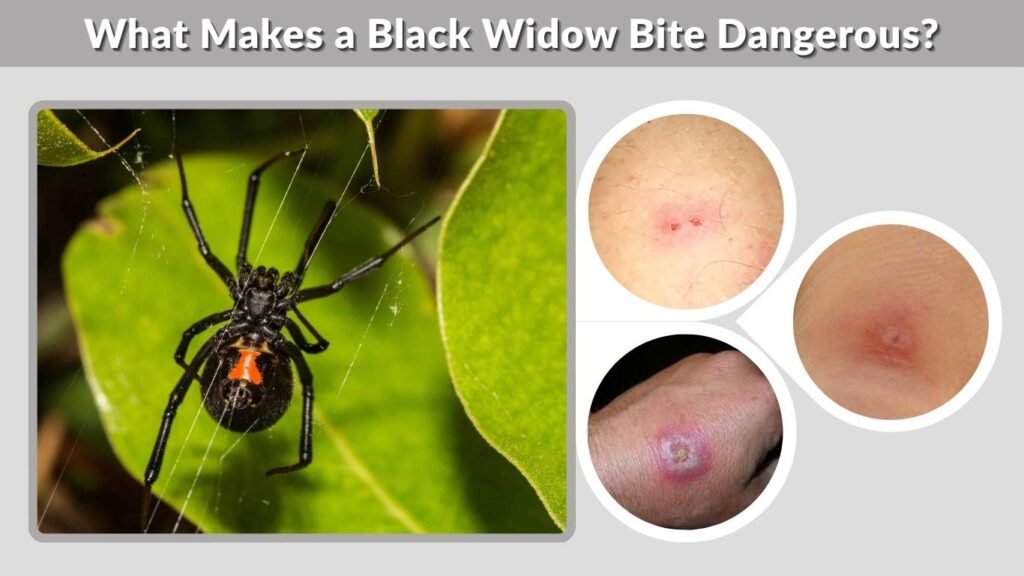
A black widow bite is dangerous because the venom affects the nervous system. Unlike some bites that mainly cause skin irritation, black widow venom can affect muscles, nerves, sweat glands, blood pressure, and the digestive system.
How Black Widow Venom Works
Black widow venom contains a powerful toxin called alpha-latrotoxin. This toxin acts on nerve endings and causes them to release excessive chemical messengers. These chemical messengers tell muscles and other parts of the body how to respond.
When too many signals are released at once, the body can become overstimulated. Muscles may cramp. Pain may spread. Sweating may increase. Blood pressure may rise. Nausea, vomiting, and restlessness may follow.
Why Symptoms Can Spread
The bite may start as a small painful spot, but the venom’s effects can move beyond the skin. A person may feel pain in the back, chest, abdomen, shoulders, or legs. This spreading pain is one reason black widow bites can be mistaken for other medical problems.
For example, abdominal cramps may feel like appendicitis. Chest tightness may feel like a heart problem. That is why medical evaluation is important when symptoms are strong or unusual.
Black Widow Spider Bite Symptoms
Symptoms can vary from mild to severe. Some people notice only local pain and redness. Others develop body-wide symptoms within minutes to a few hours.
| Symptom Level | What May Happen | What to Do |
| Mild | Local pain, redness, swelling, itching | Clean the area, use a cold pack, monitor closely |
| Moderate | Spreading pain, muscle cramps, sweating, nausea | Contact a doctor or urgent care |
| Severe | Chest pain, breathing trouble, severe cramps, vomiting, high blood pressure, faintness | Seek emergency medical care |
Early Symptoms
The first symptom may feel like a pinprick, sting, or burning sensation. Some people do not notice the bite right away. The bite mark may show mild redness or swelling, but it may not look dramatic.
Early symptoms may include:
- Sharp pain at the bite site
- Burning or stinging feeling
- Mild swelling or redness
- Two small puncture marks
- Local numbness or tingling
- Sweating near the bite area
A mild-looking bite can still become more serious later, so watch for symptoms that spread.
Body-Wide Symptoms
More serious symptoms happen when venom affects the nervous system. These symptoms may develop within the first few hours after the bite.
Possible body-wide symptoms include:
- Muscle cramps or spasms
- Severe abdominal pain
- Back, chest, or shoulder pain
- Sweating
- Nausea or vomiting
- Headache
- Weakness
- Anxiety or restlessness
- High blood pressure
- Fast heart rate
Severe symptoms should not be managed only at home.
Emergency Warning Signs
Some symptoms need urgent medical attention. Get emergency help if the person has trouble breathing, severe chest pain, fainting, repeated vomiting, severe muscle rigidity, or rapidly worsening symptoms.
Emergency care is also important if the bite victim is a child, older adult, pregnant, or medically fragile.
Who Is Most at Risk of Severe Illness?
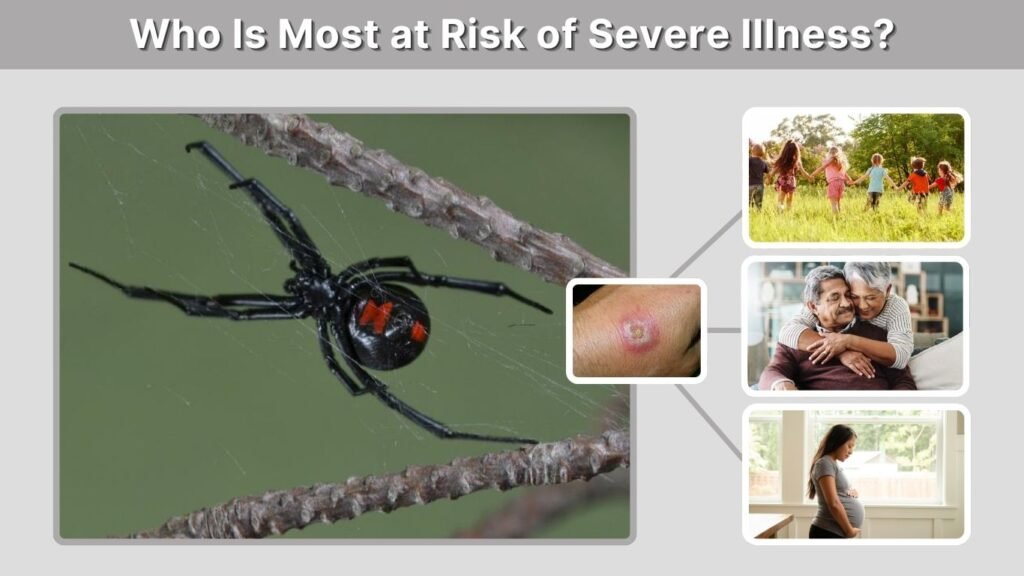
Anyone can have a painful reaction to black widow venom, but some people are more likely to develop serious complications.
Children
Children have smaller bodies, so the same amount of venom can have a stronger effect. A child with a suspected black widow bite should be evaluated by a medical professional, especially if pain spreads or muscle cramps appear.
Children may also have trouble describing symptoms clearly. Watch for crying, sweating, stiffness, vomiting, weakness, or unusual behavior.
Older Adults
Older adults may be at higher risk because they are more likely to have heart disease, high blood pressure, breathing problems, or other medical conditions. Severe pain, stress, and blood pressure changes can be more dangerous in this group.
Pregnant People
Pregnant people should seek medical guidance after a suspected black widow bite. Severe pain, cramping, vomiting, or blood pressure changes can require monitoring. It is better to get checked early than to wait for symptoms to worsen.
People With Health Conditions
People with heart disease, uncontrolled high blood pressure, breathing problems, immune problems, or severe allergies should be cautious. They may need closer monitoring if symptoms develop.
What Should You Do After a Black Widow Bite?
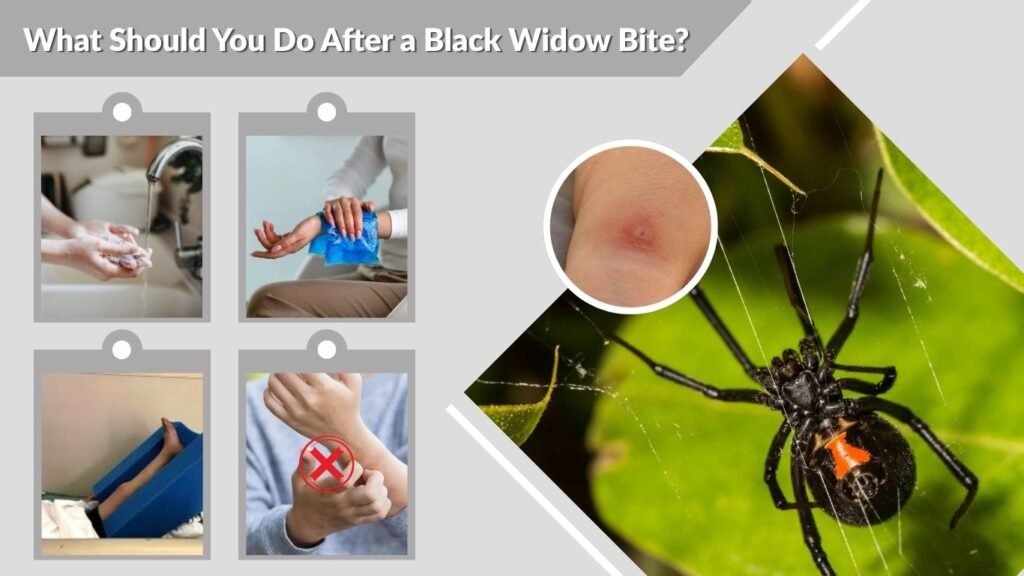
A suspected black widow bite should be handled calmly but seriously. The goal is to reduce pain, prevent complications, and get medical help when needed.
First Aid Steps
If you think a black widow bit you, take these steps:
- Wash the bite area with soap and water
- Apply a cold pack wrapped in cloth
- Keep the affected area still if possible
- Elevate the limb if the bite is on an arm or leg
- Remove tight jewelry or clothing near swelling
- Avoid scratching the bite
- Call a doctor, poison control center, or emergency service if symptoms spread
Do not cut the bite, suck out venom, apply a tourniquet, or use harsh chemicals. These methods can cause more harm.
When to Call a Doctor
Call a doctor or poison control center if you are unsure whether the bite is serious. You should also call if pain is increasing, cramps begin, nausea develops, or the bite victim is in a high-risk group.
Medical advice is especially important when the spider was seen and identified as a black widow, or when the bite happened in an area where black widows are common.
When to Go to the Emergency Room
Go to the emergency room if symptoms are severe or spreading quickly. Chest pain, breathing difficulty, severe abdominal cramps, repeated vomiting, faintness, or extreme muscle spasms are not normal mild bite symptoms.
Emergency care may also be needed if over-the-counter pain medicine does not help or if the person looks very ill.
How Doctors Treat a Black Widow Bite
Treatment depends on the severity of symptoms. Many people need pain control and observation. More serious cases may need stronger medication or antivenom.
Supportive Care
Doctors may clean the bite, monitor vital signs, check blood pressure, and watch for complications. Pain relief is often a major part of treatment because black widow bites can be extremely painful.
Supportive care may include:
- Pain medicine
- Medicine for muscle spasms
- Nausea treatment
- Blood pressure monitoring
- Fluids if needed
- Tetanus update if appropriate
The goal is to control symptoms while the body recovers from the venom’s effects.
Antivenom
Black widow antivenom may be used in selected moderate or severe cases. It can reduce venom effects, but it is not automatically given to every patient. Doctors consider symptom severity, medical history, allergy risk, and local availability before using it.
Because antivenom can cause allergic reactions, it must be given under medical supervision.
Recovery Time
Many people begin to improve within 24 to 48 hours, but soreness, fatigue, or muscle discomfort may last longer. Severe cases may take several days to fully improve. Recovery depends on the amount of venom injected, the person’s health, and how quickly treatment begins.
How to Tell If It Was Really a Black Widow
Many skin bumps and painful marks are blamed on spiders, but not all are spider bites. Infections, insect bites, allergic reactions, and skin irritation can look similar.
Black Widow Identification
Adult female black widows are usually shiny black with a round abdomen. Many have a red or orange hourglass marking on the underside of the abdomen. Some may have red spots or broken markings instead of a perfect hourglass.
Male and juvenile black widows may look lighter, smaller, or more patterned. Because identification can be difficult, avoid handling any spider you suspect may be a widow.
Where Black Widows Hide
Black widows prefer dark, quiet, sheltered areas. Bites often happen when people accidentally disturb them.
Common hiding places include:
- Woodpiles
- Garages and sheds
- Outdoor furniture
- Storage boxes
- Crawl spaces
- Basements
- Rock piles
- Garden equipment
- Gloves, shoes, or clothing stored outside
Wearing gloves and checking stored items can reduce bite risk.
Myths About Dying From a Black Widow Bite
Black widow spiders have a frightening reputation, and many myths exaggerate the risk of death. The truth is more balanced: the bite can be very painful and sometimes dangerous, but death is rare with medical care.
Myth: Every Black Widow Bite Is Deadly
Not every bite causes severe symptoms. Some bites inject little venom. Others cause local pain but do not become serious. However, you should not ignore symptoms just because deaths are rare.
Myth: You Can Treat Every Bite at Home
Mild symptoms may be managed with basic first aid while monitoring closely, but moderate or severe symptoms need medical attention. Severe cramps, chest pain, breathing trouble, or vomiting should never be treated casually.
Myth: The Bite Always Looks Terrible
A black widow bite may not look dramatic. The skin may show only mild redness or swelling. The most serious symptoms often come from nerve and muscle effects, not from a large wound.
How to Prevent Black Widow Bites
Prevention is the best protection. Black widows are not aggressive, so most bites happen from accidental contact.
Home and Yard Safety
Reduce hiding places around your home and be careful when working in dark or cluttered areas.
Helpful steps include:
- Wear gloves when moving firewood or debris
- Shake out shoes, gloves, and clothing before use
- Keep garages and sheds organized
- Move woodpiles away from the house
- Seal cracks around doors and foundations
- Use caution around outdoor furniture and storage boxes
- Teach children not to touch spiders or webs
Outdoor Work Precautions
People who work outdoors should be especially careful around areas where spiders may hide. Use tools instead of bare hands when moving objects. Check gloves and boots before putting them on. Avoid reaching blindly into holes, boxes, or dark corners.
FAQs
Can you die from a black widow spider bite?
Yes, death from a black widow spider bite is possible, but it is extremely rare, especially with modern medical care. Most healthy adults recover after treatment. The bite can still cause severe pain, muscle cramps, sweating, nausea, and blood pressure changes, so serious symptoms should be checked by a doctor.
How fast can a black widow bite become serious?
Symptoms can begin within minutes and may become stronger over the next few hours. A bite may start with local pain, then progress to muscle cramps, sweating, nausea, abdominal pain, or chest discomfort. If symptoms spread beyond the bite area or become severe, medical care is needed quickly.
Who is most likely to die from a black widow bite?
Death is rare, but the highest-risk groups include children, older adults, pregnant people, and those with heart disease, breathing problems, or serious medical conditions. These people should get medical advice after a suspected black widow bite, especially if pain, cramping, vomiting, or weakness develops.
Should I go to the hospital for a black widow bite?
Go to the hospital if symptoms are severe, spreading, or include chest pain, breathing trouble, severe muscle cramps, repeated vomiting, fainting, or high blood pressure signs. Children, older adults, pregnant people, and medically fragile individuals should be evaluated sooner rather than waiting for symptoms to worsen.
What is the survival rate of a black widow bite?
Most people survive black widow bites, and fatal cases are extremely rare with proper medical care. Exact survival rates vary by source and region, but the overall risk of death is very low. The bigger concern is severe pain and systemic symptoms that may require urgent treatment.
