
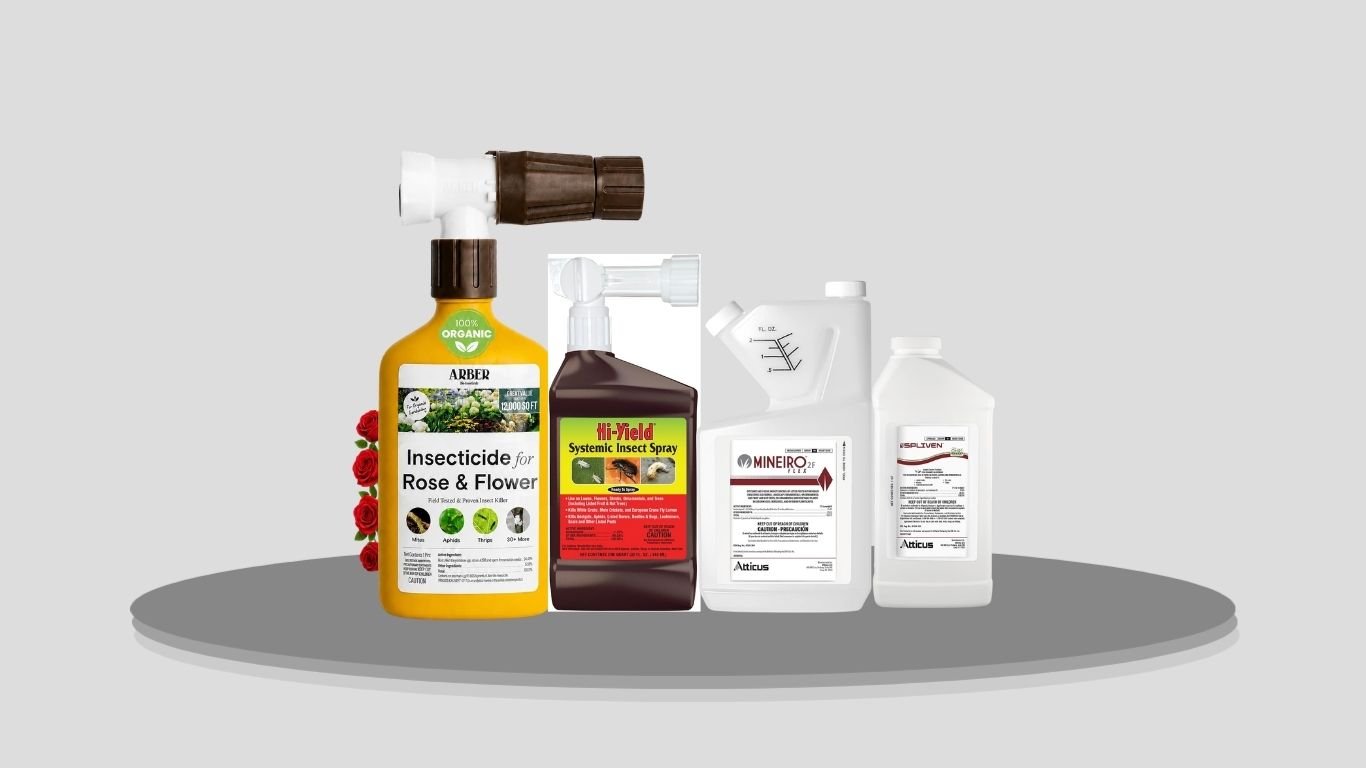
Japanese beetles can quickly damage roses, vegetables, fruit trees, shrubs, and other landscape plants by feeding on leaves and flowers. The best Japanese beetle sprays are designed to help reduce feeding damage while offering different application options, including ready-to-use sprays, systemic treatments, and concentrated formulas. Some products target adult beetles directly, while others work through the plant or soil for longer-lasting protection. In this guide, we review eight Japanese beetle sprays that can help protect gardens, lawns, flowers, and ornamental plants during peak beetle season.
1. Arber Organic Insecticide for Roses & Flowers
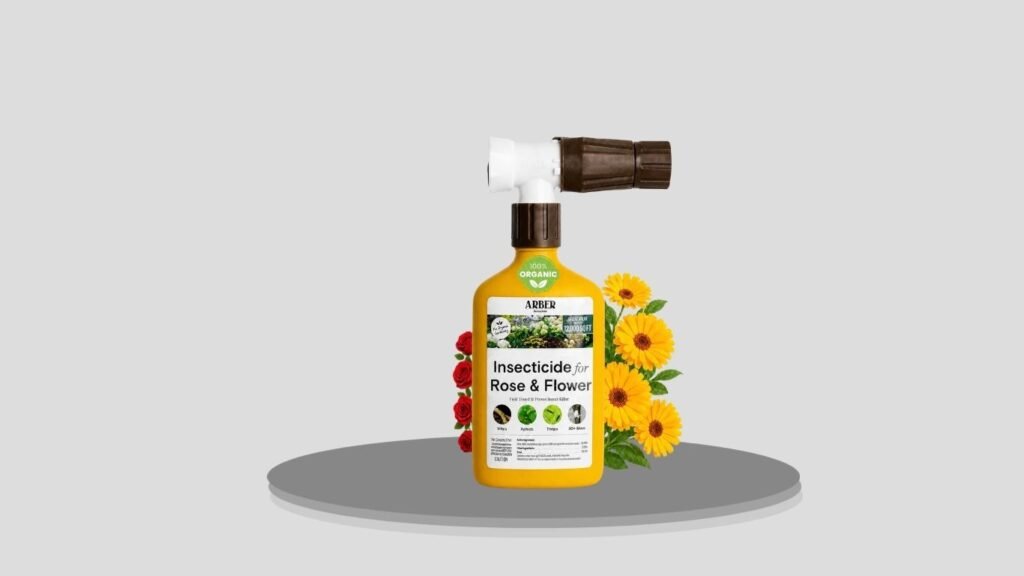
The Arber Organic Insecticide for Roses & Flowers is a ready-to-spray option designed for gardeners dealing with Japanese beetles and other common plant pests. Its 16-ounce hose-end format eliminates measuring and mixing, while the formula is intended for roses, flowers, and ornamental plants. It targets more than 30 pests, making it useful when Japanese beetles are only one part of a broader garden insect problem.
Key Features
- 16-ounce ready-to-spray formula
- Attaches directly to a standard garden hose
- Controls Japanese beetles, aphids, thrips, mites, and other pests
- Intended for roses, flowers, and ornamental plants
- EPA-registered insecticide formula
- Naturally derived active ingredients
- No measuring or concentrate mixing required
- Designed for broad garden coverage
Why It’s Best For
This Arber spray is particularly useful for gardeners who want to treat flower beds, rose gardens, borders, and ornamental plantings without carrying a separate pump sprayer. The hose-end design makes larger treatment areas easier to cover evenly.
It is also a practical choice when several insect species are damaging the same plants. Instead of selecting a Japanese beetle-only product, the broader pest range provides additional flexibility during the growing season.
Performance & Durability
The formula works as a contact insecticide, so thorough coverage of affected plants is important. Japanese beetles commonly feed on exposed foliage and flowers, making direct treatment of affected areas especially useful.
Because outdoor sprays are exposed to rain and weather, repeat applications may be necessary. Available product guidance recommends reapplication during continued pest pressure or after heavy rainfall, while the product label should always take priority.
Pros & Cons and Overall Verdict
Pros: Ready-to-spray application, broad pest coverage, convenient hose attachment, and no complicated mixing.
Cons: Outdoor conditions may require repeat treatment, and careful application is necessary around flowering plants and beneficial insects.
Overall, Arber Organic Insecticide is a convenient option for gardeners who want Japanese beetle control combined with broader protection against common flower and ornamental pests. Its ready-to-use format is especially appealing for treating larger garden areas efficiently.
2. Hi-Yield Systemic Insect Spray RTS
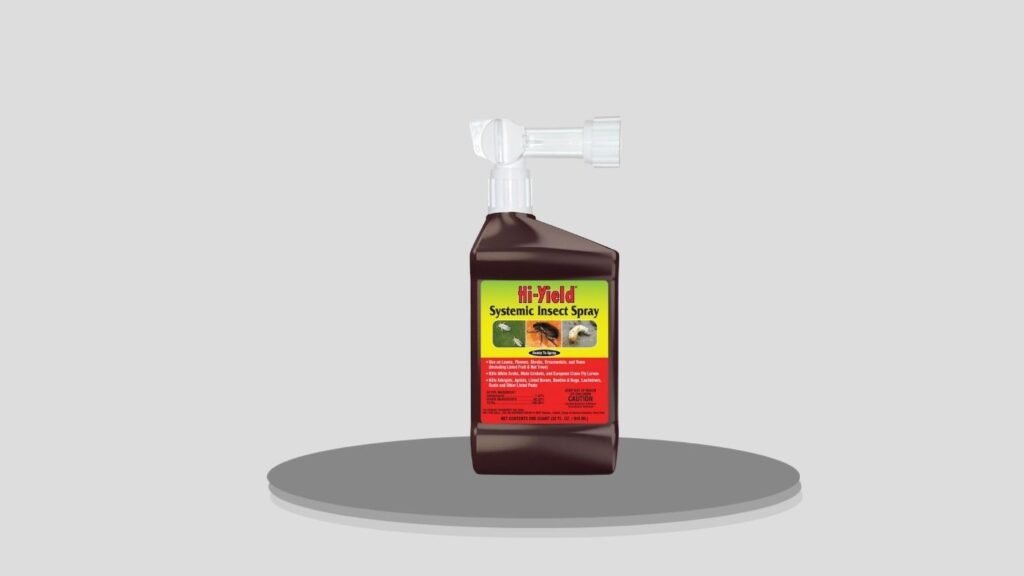
The Hi-Yield Systemic Insect Spray RTS is a convenient hose-end treatment designed for Japanese beetles and numerous other chewing, sucking, and boring pests. Its 32-ounce ready-to-spray format eliminates manual mixing and can be used on labeled flowers, trees, shrubs, lawns, fruits, and nuts. The manufacturer lists residual control lasting approximately two to four weeks.
Key Features
- 32-ounce ready-to-spray container
- Connects directly to a garden hose
- Controls adult Japanese beetles
- Suitable for labeled trees, shrubs, flowers, and lawns
- Controls many additional garden pests
- Provides approximately 2–4 weeks of residual control
- Covers up to 5,333 square feet of lawn
- No manual measuring or mixing required
Why It’s Best For
This product is especially useful for homeowners who need to cover larger landscaped areas efficiently. Instead of carrying a hand sprayer and continually refilling it, the hose-end applicator delivers the diluted treatment directly as you move through the yard.
It can be particularly practical when Japanese beetles are attacking several shrubs, ornamental plants, or trees at the same time.
Performance & Durability
Hi-Yield combines contact control with residual protection, helping control insects already feeding on treated plants while reducing reinfestation for a period afterward. The label specifically includes adult Japanese beetles among its target pests.
Its two-to-four-week residual period is another advantage for gardeners who prefer not to repeat treatments every few days. Actual persistence can still vary with weather and application conditions.
Pros & Cons and Overall Verdict
The main advantages are broad coverage, easy hose attachment, Japanese beetle labeling, and multi-week residual performance. The main drawback is that it is a conventional systemic insecticide rather than an organic garden product, and application restrictions must be followed carefully.
Overall, Hi-Yield Systemic Insect Spray RTS is a strong technical option for larger yards where fast application and extended control are important.
3. HARRIS Japanese Beetle Killer Spray
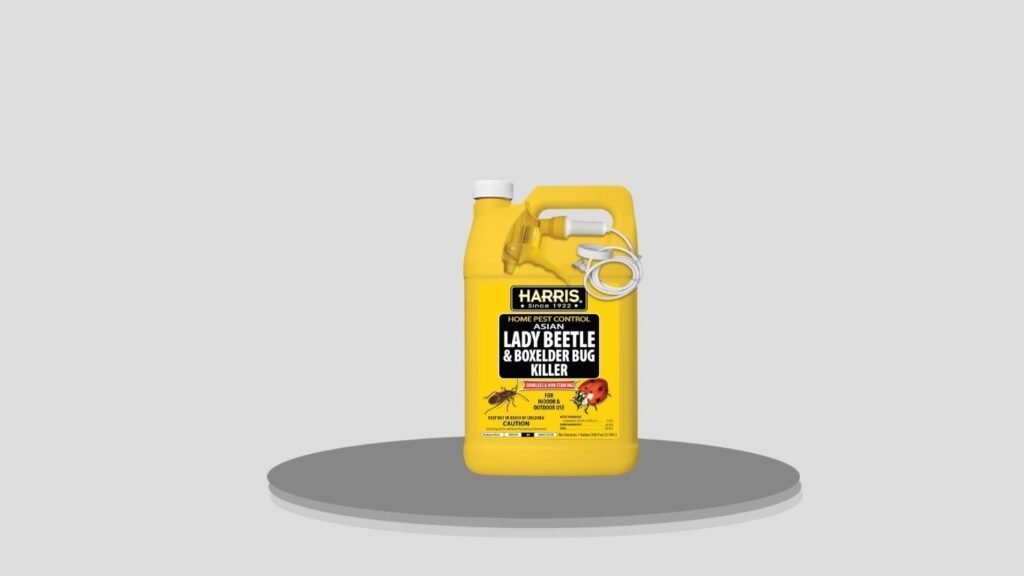
The HARRIS Japanese Beetle Killer Spray comes in a large one-gallon ready-to-use container and uses deltamethrin as its active ingredient. It is formulated to control Japanese beetles along with Asian lady beetles, box elder bugs, and other listed insects. The water-based formula is designed to be odorless and non-staining when used according to label directions.
Key Features
- One-gallon ready-to-use formula
- Contains deltamethrin
- Targets Japanese beetles and other listed insects
- Odorless formulation
- Water-based and non-greasy
- Designed to be non-staining when used correctly
- Extended trigger sprayer included
- Provides residual insect control after drying
Why It’s Best For
HARRIS is particularly useful for homeowners who prefer a ready-to-use product rather than a concentrate. There is no measuring or dilution required, so treatment can begin immediately around labeled problem areas.
The gallon size also makes sense when beetles repeatedly appear around multiple locations and several applications may be required during the season.
Performance & Durability
One of the strongest features is residual action. HARRIS states that the dried treatment continues killing listed beetles for weeks after application.
The extended trigger sprayer also makes controlled spot application easier than pouring concentrate into a separate sprayer. Because the formula is water based, it avoids the oily residue associated with some pest-control products.
Pros & Cons and Overall Verdict
Pros include the large ready-to-use supply, no mixing, low-odor application, and residual performance. On the downside, a one-gallon container is heavier to carry than a small spray bottle, and the trigger format is better suited to targeted treatment than rapidly covering a very large garden.
Overall, HARRIS offers a straightforward solution for users who value convenience and lingering beetle control without complicated preparation.
4. Atticus Mineiro 2F Flex Imidacloprid Insecticide – 1 Gallon
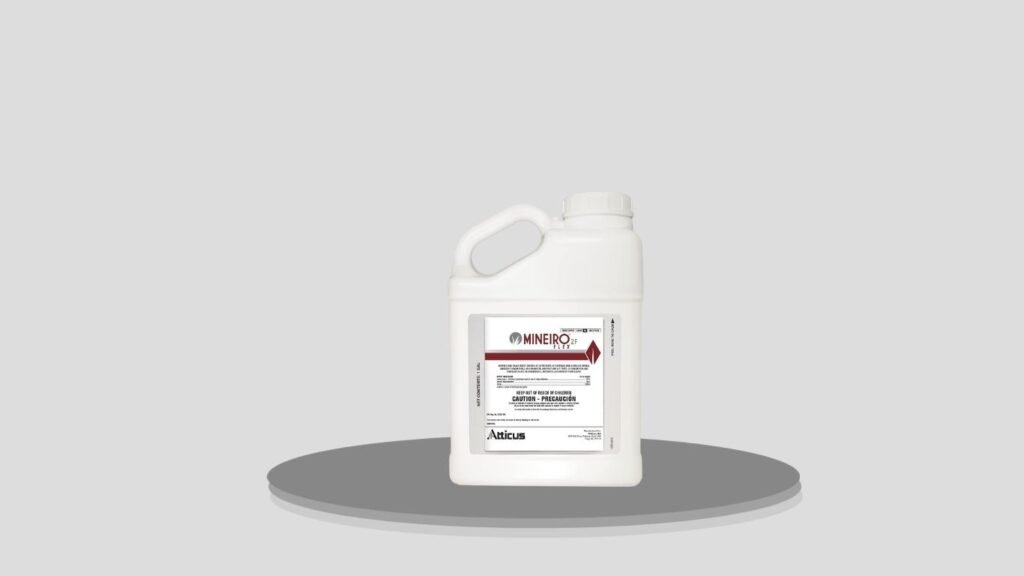
The Atticus Mineiro 2F Flex is a professional-style systemic insecticide containing 21.4% imidacloprid. This one-gallon concentrate is designed for turfgrass, ornamentals, nurseries, trees, shrubs, and other labeled areas. Atticus lists Japanese beetles among the pests controlled, including adult beetles through foliar treatment and larvae in turf applications.
Key Features
- 1-gallon concentrated formulation
- Contains 21.4% imidacloprid
- Systemic and foliar insect-control properties
- Controls adult Japanese beetles
- Controls Japanese beetle larvae in labeled applications
- Suitable for turf and ornamental use
- Broad-spectrum pest control
- Long-lasting residual activity
Why It’s Best For
The one-gallon size is particularly suited to large properties, frequent treatments, landscaping operations, or users who need enough concentrate for substantial turf and ornamental coverage.
Its ability to address both foliage-feeding adults and soil-dwelling white grub larvae makes it especially versatile when Japanese beetles are causing problems at different stages of their lifecycle.
Performance & Durability
Mineiro 2F Flex combines systemic movement with foliar activity. Atticus describes it as providing rapid pest knockdown together with lasting residual control, while its systemic properties allow the active ingredient to move through treated plants when applied according to label directions.
Because imidacloprid can pose risks to bees and other pollinators, the label includes important restrictions around flowering plants and pollinator activity. Those directions are essential when Japanese beetles are feeding on flowers.
Pros & Cons and Overall Verdict
Major strengths include concentrated value, adult and larval Japanese beetle control, systemic performance, and broad application flexibility. The tradeoffs are the need for accurate mixing and stricter application precautions compared with simple ready-to-spray products.
Overall, the one-gallon Mineiro 2F Flex is best suited to serious lawn and landscape management where coverage and long-term versatility matter.
5. Atticus Mineiro 2F Flex Imidacloprid Concentrate – 32 oz
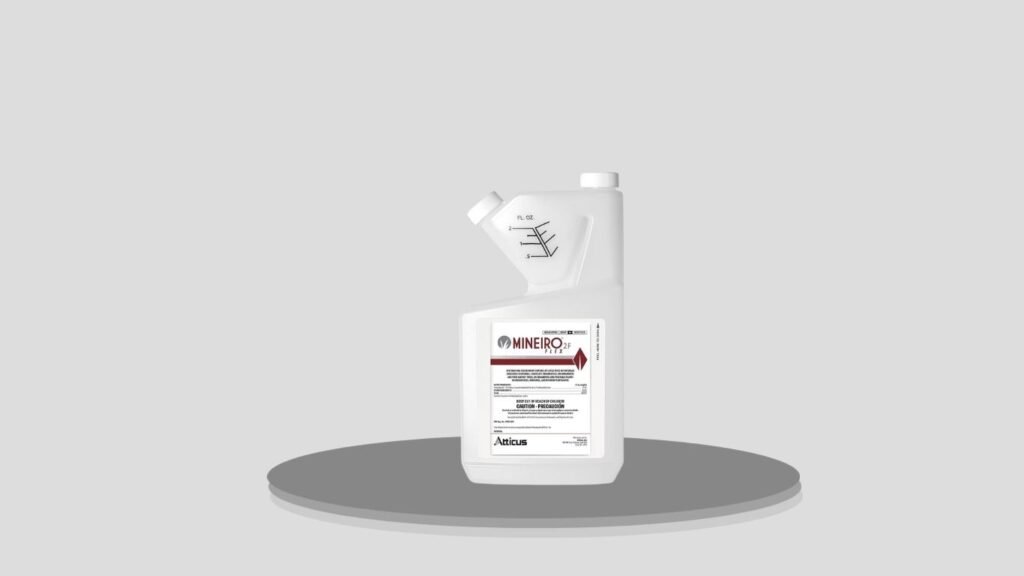
The 32-ounce Atticus Mineiro 2F Flex provides the same 21.4% imidacloprid chemistry in a more manageable container. It is intended for controlling grubs and numerous landscape insects, including Japanese beetles, while providing both foliar and systemic activity. The smaller bottle can be more practical for residential users who do not need a full gallon of concentrate.
Key Features
- 32-ounce concentrated bottle
- 21.4% imidacloprid active ingredient
- Targets Japanese beetles and grub larvae
- Systemic and foliar action
- Suitable for lawns and landscaped areas
- Broad-spectrum insect control
- Long-lasting residual protection
- Smaller size than the one-gallon version
Why It’s Best For
This size is particularly attractive for homeowners managing a typical residential lawn rather than a large commercial property. You receive the same concentrated formulation without having to store or handle a gallon-size container.
It also allows users to target both above-ground Japanese beetle activity and labeled soil-dwelling larvae using the appropriate application method.
Performance & Durability
Mineiro 2F Flex is formulated to provide quick pest suppression while maintaining residual control. For Japanese beetle larvae in turf, label directions specify broadcast application followed by irrigation to move the product into the upper soil profile. Adult Japanese beetles are also listed for foliar applications.
This two-way application flexibility makes it more technically versatile than a simple contact-only spray.
Pros & Cons and Overall Verdict
The advantages include concentrated strength, manageable bottle size, systemic protection, and control across multiple pest stages. The disadvantages are the required measuring and mixing and the need to carefully observe pollinator restrictions when treating flowering plants.
Overall, the 32-ounce Mineiro 2F Flex is a practical choice for homeowners who want professional-style Japanese beetle control without purchasing the larger gallon container.
6. Atticus Spliven Organic Insecticide
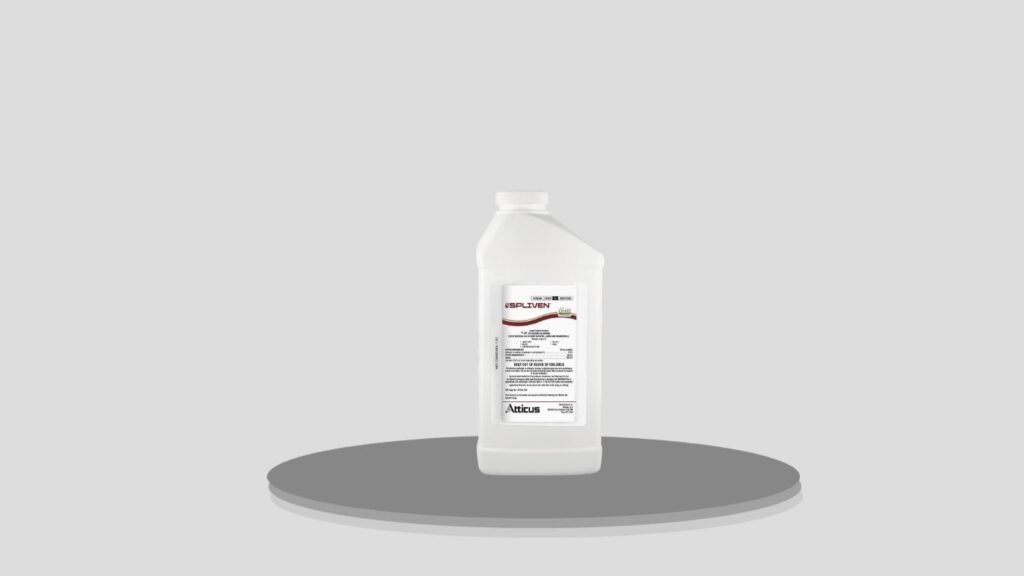
The Atticus Spliven Organic Insecticide is a 32-ounce concentrate formulated with 0.5% spinosad. It is marketed for organic gardening and controls more than 40 listed insect pests, including Japanese beetles, caterpillars, thrips, mites, and other common garden insects. It can be used on various labeled vegetables, fruits, lawns, and ornamental landscapes.
Key Features
- 32-ounce concentrated formulation
- Contains 0.5% spinosad
- Marketed for organic gardening
- Targets Japanese beetles
- Controls more than 40 listed insect pests
- Suitable for many fruits and vegetables
- Can be used in lawns and landscapes
- Concentrate allows multiple treatment batches
Why It’s Best For
Spliven stands out for gardeners who want Japanese beetle control while maintaining an organic-style gardening program. Its spinosad active ingredient provides a different approach from synthetic pyrethroids or systemic neonicotinoids.
Its broad crop compatibility is another advantage for mixed gardens containing vegetables, fruit trees, ornamentals, and landscape plants.
Performance & Durability
Because Spliven is a concentrate, users can prepare only the amount needed for each treatment area. Spinosad acts on susceptible insects through contact and ingestion, making thorough coverage important when Japanese beetles are actively feeding.
Its usefulness extends beyond beetles, so the same product can address other labeled pests appearing later in the growing season. Continued infestations may require repeat applications according to label intervals.
Pros & Cons and Overall Verdict
The main benefits are the spinosad formulation, broad garden use, Japanese beetle control, and compatibility with many edible plants when used as labeled. The main downside is that concentrate requires mixing, and applications still need careful timing and label compliance around beneficial insects.
Overall, Atticus Spliven is one of the more appealing options for gardeners who want versatile Japanese beetle control while favoring a spinosad-based garden insecticide.
7. Bonide Eight Vegetable, Fruit & Flower Concentrate
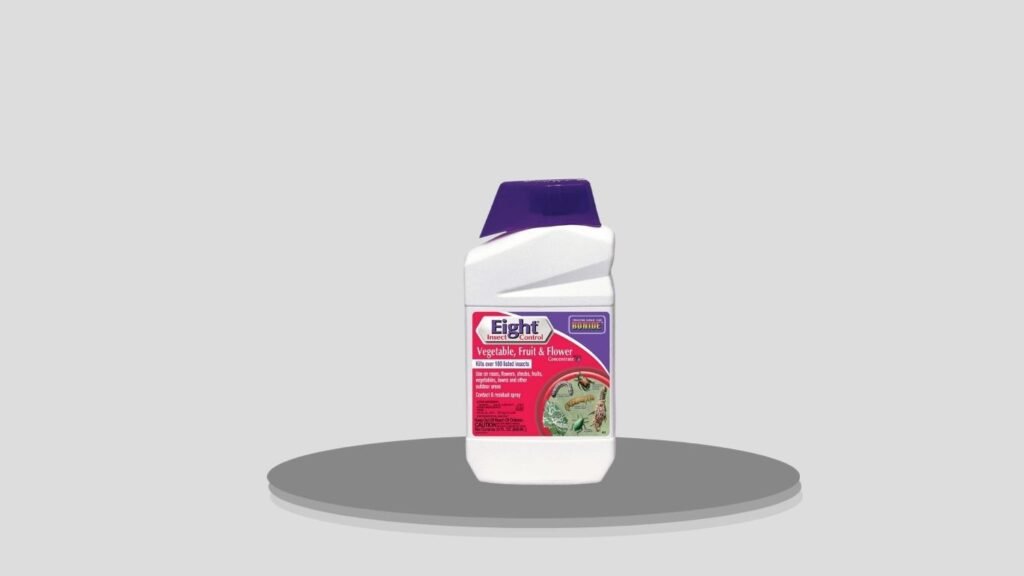
The Bonide Eight Vegetable, Fruit & Flower Concentrate is a versatile garden insecticide designed for Japanese beetles and more than 100 other listed pests. Its 2.5% permethrin formula provides both contact and residual control and can be used on labeled vegetables, fruits, flowers, roses, shrubs, trees, and ornamentals. The 32-ounce concentrate is particularly practical for gardeners who need repeated treatments across several planting areas.
Key Features
- 32-ounce concentrated insecticide
- Contains 2.5% permethrin
- Controls Japanese beetles and 100+ listed pests
- Provides contact and residual control
- Works for up to four weeks
- Suitable for labeled fruits, vegetables, and flowers
- Can be used on roses, ornamentals, trees, and shrubs
- Mixes with water for sprayer application
Why It’s Best For
Bonide Eight is particularly useful for mixed gardens where Japanese beetles are damaging more than one type of plant. Instead of keeping separate products for roses, ornamental shrubs, fruit plants, and vegetables, gardeners can use one appropriately mixed concentrate across many labeled plants.
Its concentrated format also makes sense for larger gardens because users prepare only the amount required for each treatment.
Performance & Durability
This formula combines immediate contact action with residual insect control. Bonide states that one application can continue working for up to four weeks, although weather, plant growth, and pest pressure can affect treatment intervals.
Good coverage matters, particularly because Japanese beetles feed across exposed leaf and flower surfaces. Always follow crop-specific mixing rates and harvest intervals on the label.
Pros & Cons and Overall Verdict
Pros: Broad plant compatibility, controls numerous pests, concentrated value, and up to four weeks of residual activity.
Cons: Requires measuring and mixing, and permethrin products require careful use around pollinators and flowering plants.
Overall, Bonide Eight is a technically versatile choice for gardeners who need Japanese beetle control across multiple types of plants rather than a single rose bush or small ornamental bed.
8. Liquid Harvest Pro Grub Control
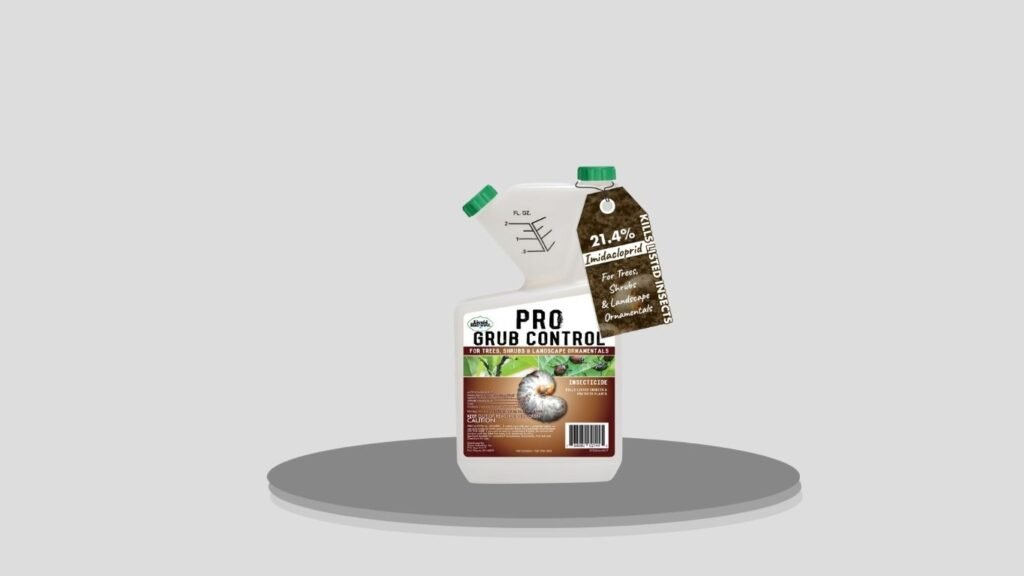
The Liquid Harvest Pro Grub Control takes a different approach to Japanese beetle management. Rather than being primarily an adult beetle foliar spray, this 32-ounce concentrate contains 21.4% imidacloprid and is especially useful for controlling Japanese beetle larvae developing beneath turf. It can also be applied according to its label to turf, soil, trees, shrubs, and landscape ornamentals.
Key Features
- 32-ounce concentrated formulation
- Contains 21.4% imidacloprid
- Controls Japanese beetle grubs
- Suitable for turf applications
- Can also be used for labeled soil and foliar treatments
- Targets several soil-inhabiting pests
- Provides residual activity
- Best performance occurs around the egg-hatch period
Why It’s Best For
This product is best for lawns experiencing Japanese beetle grub problems. Adult beetles lay eggs in soil, and the developing larvae feed on grass roots, potentially causing thinning turf and brown patches.
Treating the larval stage can therefore address the underground portion of the beetle lifecycle rather than simply spraying adults after they emerge.
Performance & Durability
The product label states that it has enough residual activity to be applied before target pests hatch. For turf applications, irrigation or rainfall helps move the active ingredient through thatch and into the soil zone where grubs are located. If rainfall does not occur, the label directs irrigation within 24 hours after application.
Timing is therefore just as important as concentration when targeting Japanese beetle larvae.
Pros & Cons and Overall Verdict
Pros: High-concentration imidacloprid formula, effective larval-stage approach, residual activity, and flexible turf and landscape applications.
Cons: It is more accurately considered a grub-control treatment than a conventional adult Japanese beetle spray, requires precise mixing, and carries important pollinator precautions.
Overall, Liquid Harvest Pro is most useful when Japanese beetles are causing lawn problems at the grub stage. It complements adult beetle treatments by addressing a different part of the pest lifecycle.
FAQs
1. What spray works best for Japanese beetles?
The right product depends on where the beetles are causing damage. Contact and residual foliar insecticides can target adults feeding on leaves and flowers, while systemic or soil-applied products may target larvae or provide longer-term plant protection. Always confirm that Japanese beetles and the intended plant are specifically listed on the label.
2. When should I spray Japanese beetles?
Adult Japanese beetles are easiest to target when they are actively feeding on plants. Thoroughly inspect roses, fruit plants, trees, and ornamentals during their seasonal activity and apply the chosen insecticide according to its label. Avoid spraying when pollinators are actively visiting flowering plants.
3. How often should Japanese beetle spray be reapplied?
It depends on the formulation. Some contact products require more frequent treatment, while residual products such as Bonide Eight can remain effective for up to four weeks under suitable conditions. Rainfall, new plant growth, and heavy beetle pressure may influence how soon another application is needed.
4. Will grub control stop adult Japanese beetles?
Grub treatments target Japanese beetle larvae developing in soil rather than adult beetles currently feeding on foliage. They can be useful as part of a lifecycle-based management strategy, but they will not provide the same immediate result as an adult beetle treatment applied directly to infested plants.
5. Can Japanese beetle insecticides harm bees?
Some insecticides used for Japanese beetle control can also harm bees and other beneficial insects. Avoid unnecessary application to blooming plants and never spray when bees are actively foraging unless the product label specifically permits it. Following the pesticide label is essential for protecting both plants and beneficial insects.
