
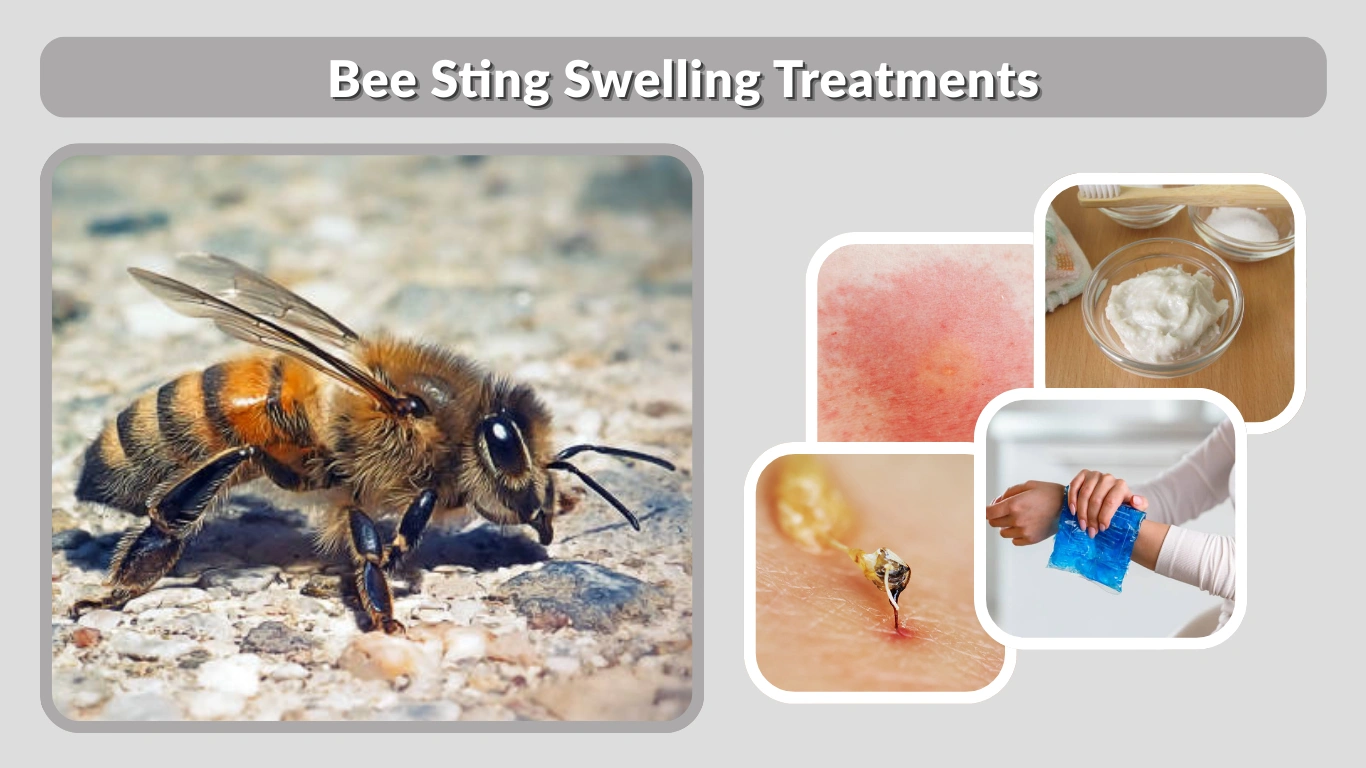
Bee stings often cause sharp pain followed by redness and swelling, but the reaction varies depending on sensitivity and location of the sting. Understanding what’s normal and what needs medical attention helps you respond quickly. This guide explains fast treatments, home remedies, severe swelling care, eye and face swelling management, and natural solutions so you can reduce discomfort safely and effectively.
Understanding Bee Sting Swelling
Bee venom contains proteins that trigger inflammation. This leads to redness, warmth, and swelling at the sting site. For most people, the reaction is mild and lasts a few hours. Others experience a large local reaction, where swelling spreads several inches and peaks within 24–48 hours. In some cases, swelling may continue the next day or even appear days later, especially in people sensitive to bee venom.
Normal swelling usually stays around the sting area and improves with simple treatments. Large local reactions, however, can cause intense redness, itching, and stiff skin. Though uncomfortable, they are not typically dangerous unless accompanied by breathing difficulty, dizziness, or swelling of the lips and tongue—symptoms that require immediate medical help.
Swelling after 24 hours often worries people, but delayed inflammation is common. If swelling is warm, extremely painful, or producing pus, infection could be developing. Otherwise, delayed swelling simply means your immune system is still responding to the venom.
Immediate First Aid for Bee Sting Swelling
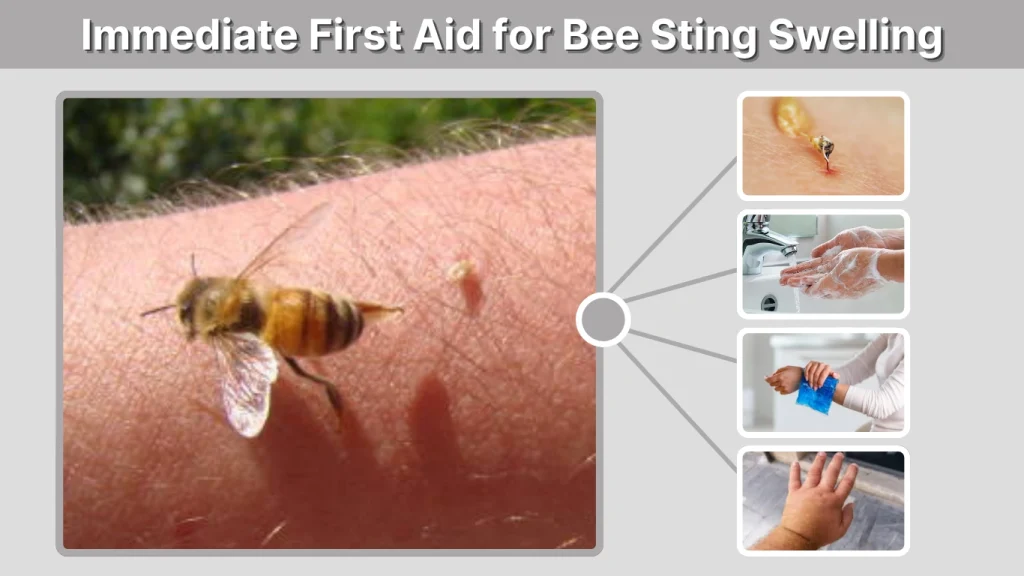
Quick action limits the spread of venom and reduces swelling.
Steps to take right away:
- Remove the stinger immediately. Scrape it with a card; avoid squeezing it, as this increases venom release.
- Wash the area with soap and water to prevent infection.
- Apply a cold compress for 10–15 minutes at a time. Cold constricts blood vessels and reduces swelling.
- Elevate the limb if the sting is on your hand, finger, or foot to reduce fluid accumulation.
These basic steps help minimize inflammation before applying topical treatments or taking medication. Even if swelling has already started, cold therapy still reduces pain and slows immune response at the site.
Best Treatments to Reduce Bee Sting Swelling
Treating swelling quickly can shorten recovery time and prevent discomfort from spreading.
Most effective medical treatments include:
- Ice packs: Use intermittently for the first 24 hours.
- Oral antihistamines (e.g., Benadryl): Reduce swelling, redness, and itching by blocking histamine release.
- NSAIDs: Medications like ibuprofen lessen pain and inflammation.
- Hydrocortisone cream: A mild steroid that calms inflammation on the skin.
These treatments work well for typical stings and many large local reactions. Combining ice with an antihistamine often gives the fastest results.
Home Remedies for Bee Sting Swelling
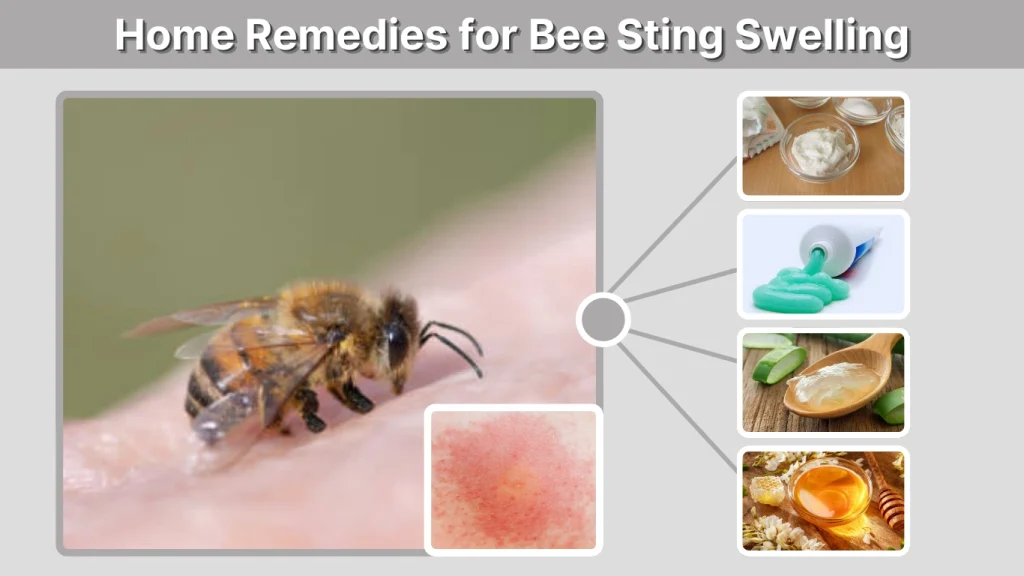
Natural and household remedies can be effective, especially for mild swelling or when medication isn’t available.
Popular at-home treatments include:
- Baking soda paste: Neutralizes venom acidity and reduces irritation.
- Toothpaste: Mild alkaline effect may calm burning sensations.
- Aloe vera: Soothes skin and reduces redness.
- Honey: A natural anti-inflammatory and antibacterial agent.
- Cold tea bag compress: Tannins help tighten skin and decrease swelling.
- Essential oils (lavender, tea tree): Provide mild anti-inflammatory support—dilute before use.
Home treatments are best for mild reactions or supportive care alongside medical options. If swelling worsens despite these remedies, escalate to antihistamines or consult a healthcare provider.
Targeted Treatment for Specific Body Areas
Swelling differs depending on where the sting occurs. Certain areas—especially the face, eyes, and lips—can appear more dramatic due to looser skin and faster fluid buildup.
Bee Sting Eye Swelling Treatment
Stings near the eye cause intense alarm because swelling develops quickly in the thin tissue surrounding the eyelids. Fortunately, most reactions are not dangerous.
How to treat eye swelling:
- Apply cold compresses—not ice directly—to reduce puffiness.
- Take oral antihistamines to control itching and swelling.
- Avoid rubbing the eye; this worsens inflammation.
- Do not use steroid eye drops unless prescribed by a doctor.
Seek urgent care if swelling closes the eye completely, vision becomes blurry, or if pain increases.
Bee Sting Face & Lip Swelling Treatment
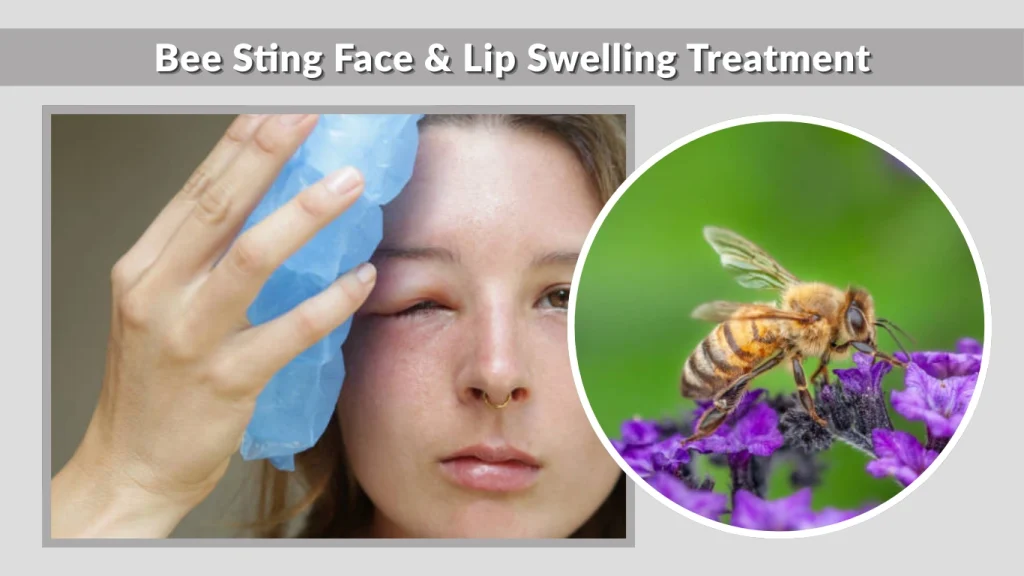
Stings on the face often look severe because fluid collects rapidly in facial tissue. Lip swelling, especially, can appear dramatic.
Care guidelines include:
- Ice the area in short intervals to reduce fluid accumulation.
- Use antihistamines to slow progression of swelling.
- Apply hydrocortisone cream only on external skin—not near the eyes or mouth.
- Monitor for signs of allergic reaction, especially if lips or tongue enlarge quickly.
Because facial swelling is more visible, people often assume it’s dangerous; however, most cases resolve within 24–72 hours with proper care.
Bee Sting Finger & Hand Swelling Treatment
Fingers and hands are prone to swelling because they contain many small blood vessels and limited space for expansion.
Key steps:
- Remove rings immediately to prevent circulation problems.
- Elevate the hand above heart level to reduce fluid pooling.
- Apply cold compresses and consider an oral antihistamine.
- Use gentle compression if tolerated, such as a loose wrap.
Swelling can extend toward the wrist or forearm during a large local reaction, but this is usually not dangerous.
Bee Sting Foot Swelling Treatment
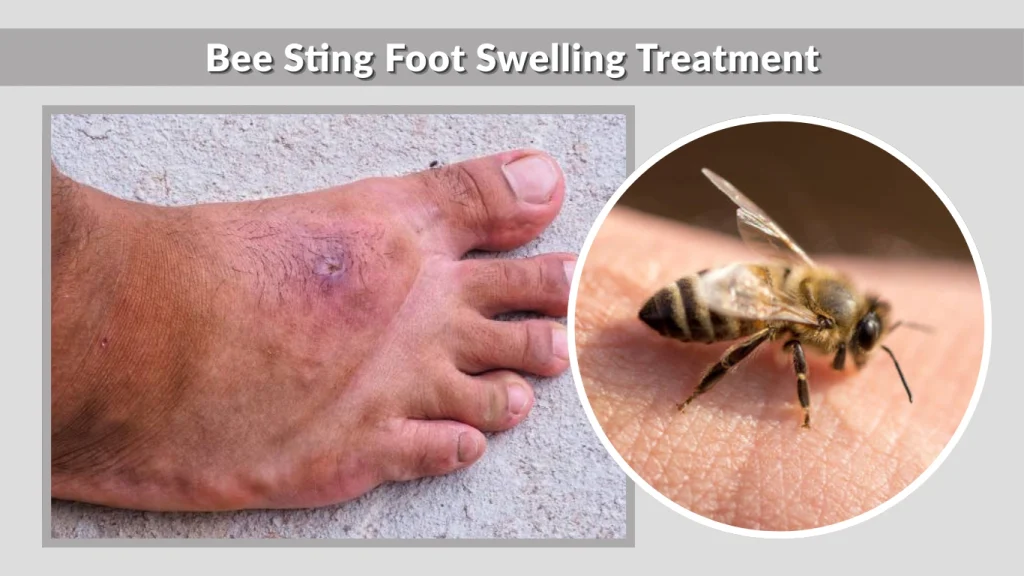
Foot stings swell easily because gravity causes fluid to collect.
Recommended care:
- Rest with the foot elevated.
- Apply cold packs several times a day.
- Avoid tight shoes until swelling decreases.
- Use an antihistamine if itching or redness spreads.
Severe Swelling & Large Local Reaction Management
Large local reactions involve swelling larger than 3–4 inches, sometimes expanding across joints or limbs.
Treatment options include:
- Cold compresses and oral antihistamines
- Hydrocortisone cream for surface inflammation
- Oral steroids (only with medical guidance) for extreme swelling
- NSAIDs to manage pain and pressure
These reactions can last 3–7 days. Though uncomfortable, they rarely indicate a life-threatening allergy unless accompanied by systemic symptoms such as hives, dizziness, or difficulty breathing.
Bee Sting Swelling With Itching: What to Do
Itching is triggered by histamine release and often lasts longer than swelling.
Relief options:
- Topical anti-itch creams or calamine lotion
- Oatmeal paste or oatmeal baths
- Oral antihistamines for persistent itching
- Avoiding scratching to prevent infection
If itching intensifies after 24–48 hours, monitor for signs of infection such as warmth, pus, or increasing redness.
Swelling the Next Day or After 24 Hours
Delayed swelling occurs in many mild allergies to bee venom.
Common reasons include:
- Extended immune response
- Bee venom proteins still active in tissue
- Fluid retention due to inflammation
Continue cold therapy, antihistamines, elevation, and topical steroids. Swelling that appears days later may still be normal, but seek medical attention if symptoms worsen unexpectedly.
Bee Sting Swelling in Dogs
Dogs may yelp, paw at the sting site, or develop sudden face swelling.
What to do:
- Apply ice wrapped in cloth.
- Give a vet-approved antihistamine if recommended.
- Watch closely for vomiting, difficulty breathing, or rapid swelling.
Facial swelling in dogs can become dangerous quickly—contact a veterinarian if breathing changes or swelling spreads around the mouth.
Special Cases: Yellow Bees & Wasp Sting Swelling
Wasp and yellow bee venom differ slightly, but treatment is similar.
Key differences:
- Wasps inject more venom, often causing greater pain.
- People allergic to bees may not be allergic to wasps—and vice versa.
Use ice, antihistamines, and topical steroids as needed.
When to Seek Emergency Care
Immediate medical help is required if any of the following occur:
- Trouble breathing or swallowing
- Rapid lip, tongue, or throat swelling
- Dizziness, fainting, or widespread hives
- Chest tightness or wheezing
These are signs of anaphylaxis, a life-threatening allergic reaction.
FAQs
What reduces bee sting swelling the fastest?
Ice combined with an oral antihistamine such as Benadryl typically provides the quickest relief. Hydrocortisone cream can further calm inflammation. Elevating the affected limb also reduces fluid buildup. Using these methods together often shortens swelling time significantly.
Is baking soda or toothpaste better for bee sting swelling?
Both can offer mild relief. Baking soda works by neutralizing acidity in the venom, while toothpaste provides a similar alkaline effect. Baking soda is generally more effective, but either remedy may help reduce burning and irritation when applied early.
How long does swelling last after a bee sting?
Typical swelling lasts 4–24 hours. Large local reactions may continue for 2–7 days. Facial, hand, and foot swelling often takes longer to improve due to fluid retention. If swelling persists beyond a week or worsens suddenly, evaluation is recommended.
When should I worry about severe swelling?
Severe swelling becomes concerning when it spreads rapidly, affects breathing, or is accompanied by dizziness or hives far from the sting site. These symptoms may signal an allergic reaction requiring emergency care. Local swelling alone, even if large, is usually not life-threatening.
Do bee stings swell more the next day?
Yes, swelling often peaks the next day as your immune system continues responding to the venom. This is especially common in sensitive individuals. If swelling is warm or unusually painful, monitor for infection. Otherwise, next-day swelling is normal and usually improves with proper treatment.
