
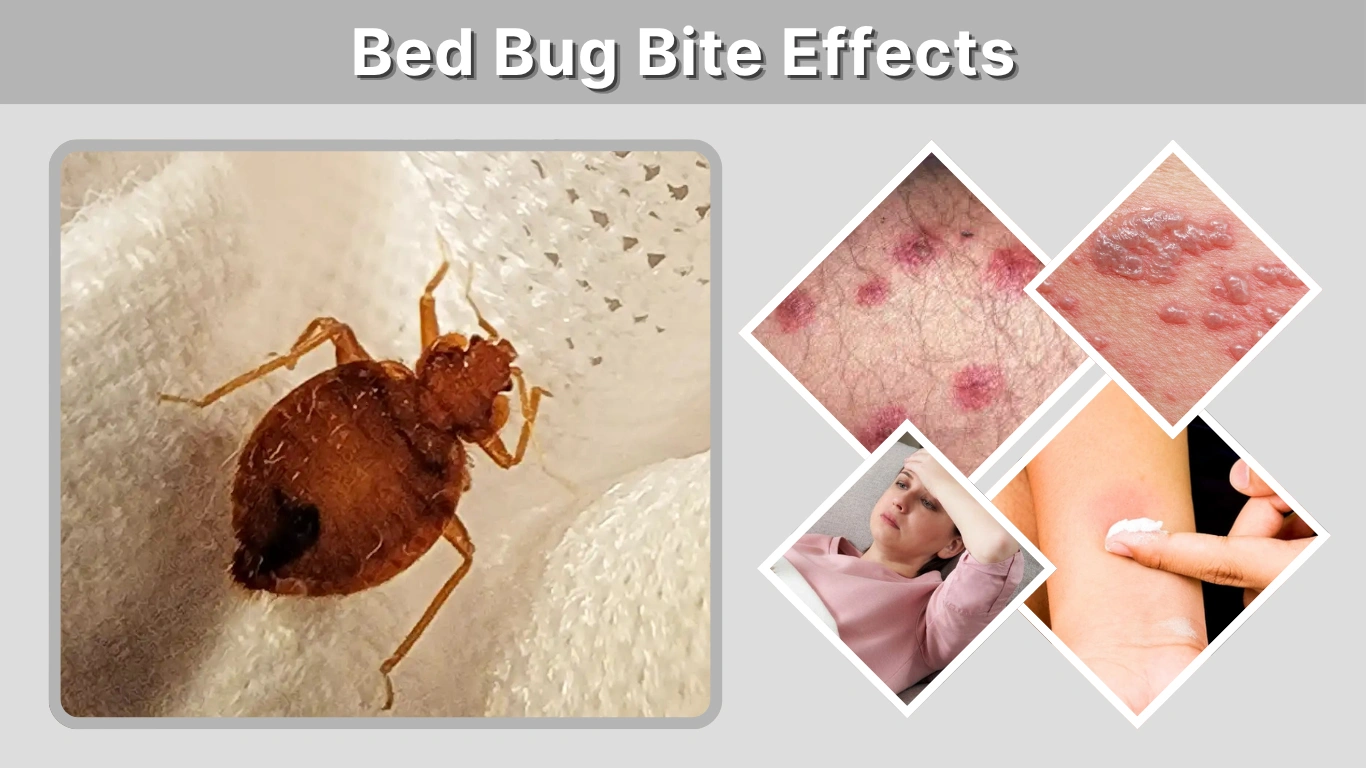
Bed bug bites are more than just itchy red bumps. For many people, they cause physical discomfort, emotional stress, and in some cases long-lasting effects that linger for weeks or even months. Although bed bugs do not transmit diseases, their bites can still lead to health complications, allergic reactions, and persistent psychological distress. Understanding the immediate, long-term, and emotional effects of bed bug bites helps you respond quickly and prevent the situation from becoming more damaging.
Immediate Effects of Bed Bug Bites
Typical Skin Reactions
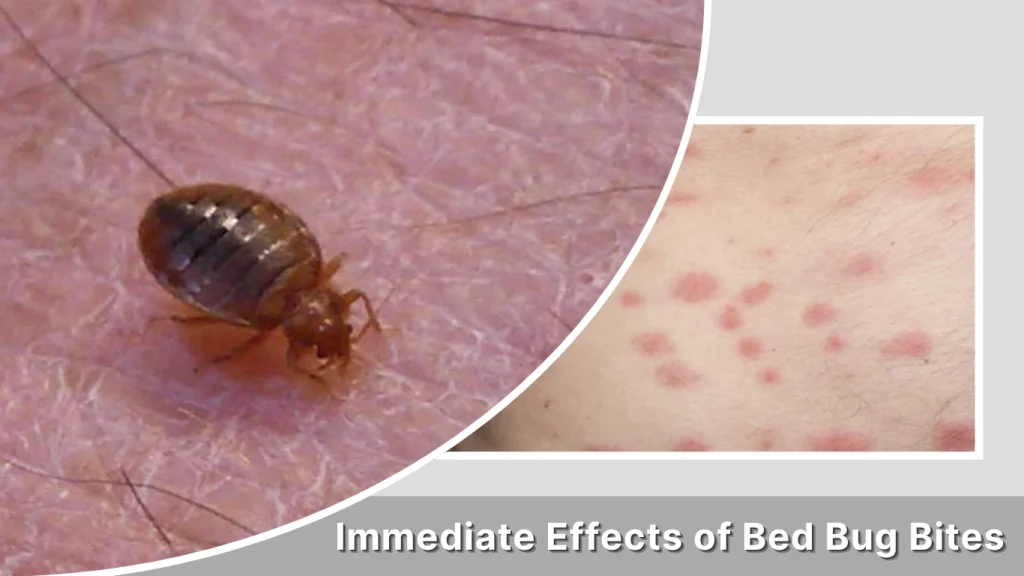
The most common effects of bed bug bites appear on the skin. These include red, raised bumps—often arranged in clusters or straight lines. A bite may look similar to a mosquito bite, but bed bug bites tend to form in groups of two or three. The area often becomes itchy, warm, and mildly swollen.
Some people experience a delayed reaction, where bumps or redness do not appear until several hours after being bitten. This delay can make it difficult to identify the cause, especially if the person was asleep when the bites occurred. The intensity of the reaction varies from person to person depending on skin sensitivity, age, and previous exposure to bed bugs.
Symptoms That Appear Right Away
After a bite, the body releases histamines, leading to itching, redness, and inflammation. Some people feel a slight burning sensation immediately after exposure. Others may not notice anything until the following morning. The bitten area may also feel tender, especially if scratched repeatedly.
Certain individuals develop small welts or raised bumps shortly after the bite. These welts are often firm to the touch and can become irritated by friction from clothing or bedding. If scratched aggressively, the skin may break, increasing the risk of infection.
Common Side Effects of Bed Bug Bites
Mild Side Effects
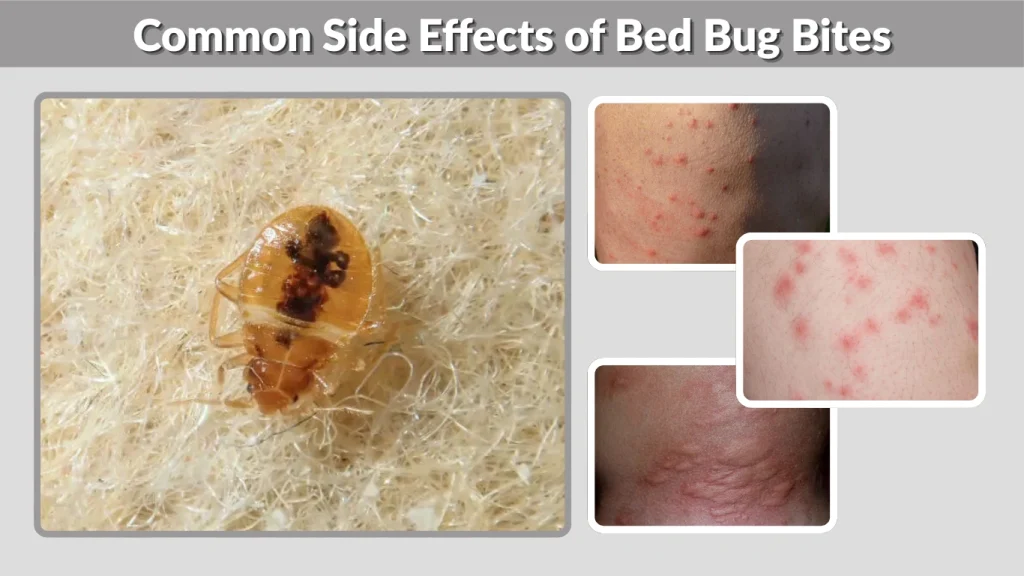
Most people experience mild side effects that include itching, irritation, and small red bumps. These symptoms are typically manageable with home treatment and fade within a week. Mild swelling is common, especially in sensitive individuals. The itching is often most intense at night or early in the morning when the body reacts more strongly to the previous night’s bites.
Moderate Side Effects
Moderate reactions include more pronounced swelling, rash formation, and persistent redness. These symptoms can last several days and may feel uncomfortable or distracting. Some individuals develop large, raised welts that resemble allergic hives. These can be very itchy and may spread slightly around the bite area.
Moderate side effects often lead to scratching, which increases the risk of skin damage. Repeated scratching can irritate the skin further, leading to scabs, abrasions, or open sores. Individuals with sensitive skin or those prone to eczema may experience stronger reactions.
Severe Side Effects
In some cases, bed bug bites lead to severe allergic reactions. These can include intense swelling, blistering, or clusters of hives that spread across the body. People with strong allergies may experience difficulty breathing, although this is extremely rare. Severe reactions require medical attention to prevent complications.
Another serious issue is the potential for secondary infection. When bacteria enter broken skin from scratching, conditions like cellulitis or impetigo can develop. Signs of infection include warmth around the area, increased swelling, pus, or fever. Prompt treatment is essential to avoid worsening symptoms.
Long-Term Effects of Bed Bug Bites
Scarring & Hyperpigmentation
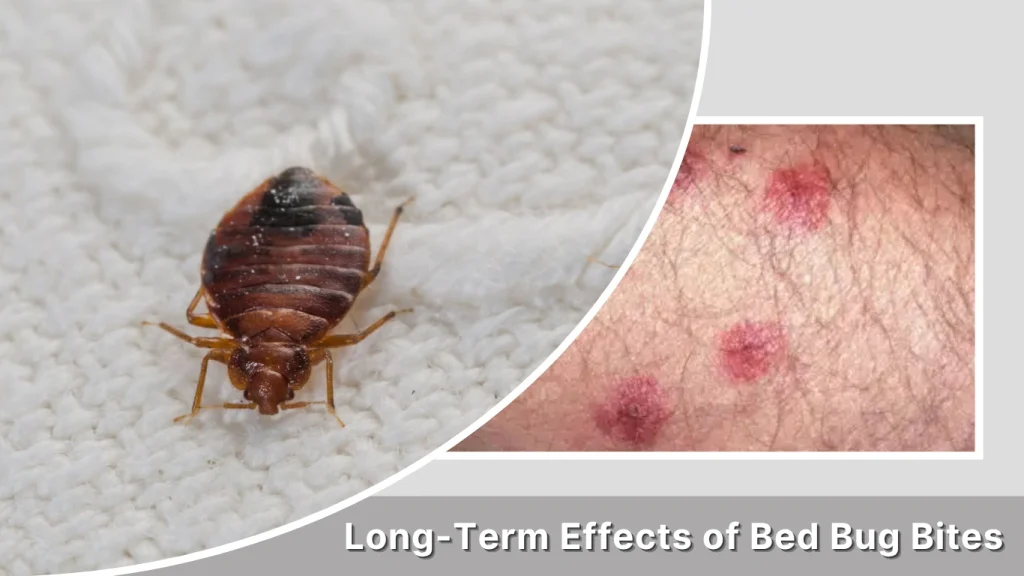
For some individuals, bed bug bites leave marks long after the skin heals. Hyperpigmentation—a darkening of the skin—can occur at the site of old bites, especially for people with darker skin tones or those prone to discoloration. These marks can last weeks or even months.
Scarring may occur if the wound becomes infected or if the person scratches aggressively. Repeated scratching can lead to raised scars or permanent skin texture changes. Children and individuals with sensitive skin are more likely to develop lasting marks.
Recurring Skin Sensitivity
Even after the initial reaction fades, some people notice lingering sensitivity at the bite site. The area may remain itchy or tender for weeks. Others find that their skin reacts more strongly to future bites due to increased sensitivity from repeated exposure. This heightened response can cause more intense swelling or irritation over time.
Effects of Repeated Bites
With ongoing exposure—such as during a prolonged infestation—bed bug bites may worsen. The immune system can become increasingly reactive, causing stronger histamine responses. Individuals may notice larger welts, more pronounced inflammation, and longer healing times.
Psychological Effects of Bed Bug Bites
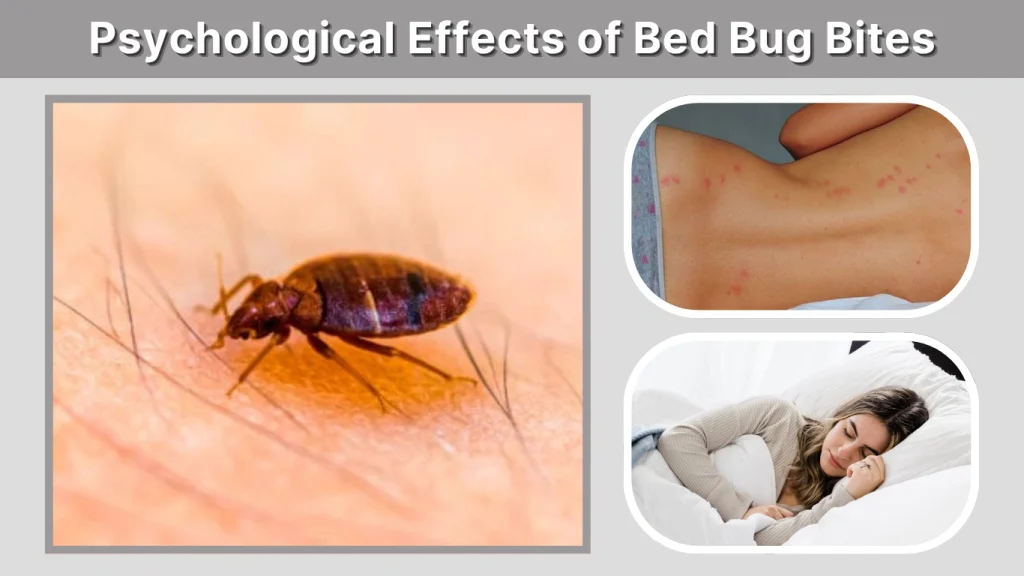
Mental Health Impacts
Beyond the physical symptoms, bed bug bites can lead to significant emotional distress. Many people develop anxiety, particularly surrounding sleep. The idea of bugs feeding at night can cause hypervigilance, fear, and obsessive checking. Some individuals avoid sleeping altogether, leading to exhaustion and emotional instability.
Bed bug infestations often carry a stigma, causing embarrassment or shame even though anyone can get them. This emotional burden can limit social interaction and cause isolation.
Sleep Disruptions
One of the most common psychological effects of bed bug bites is disrupted sleep. People who discover bites often become anxious about lying down at night. The knowledge that bites happen while sleeping can trigger restlessness, nightmares, and repeated waking. Even after an infestation is eliminated, some individuals continue to experience sleep anxiety for weeks or months. This ongoing stress can affect daily functioning, energy levels, and mental clarity.
Trauma & Emotional Distress
For some, bed bug bites lead to ongoing fear or distress. The experience of being bitten at night can feel invasive and traumatic. Individuals may constantly search their beds, inspect their clothing, or feel phantom sensations of bugs crawling on their skin. This psychological impact can be especially intense in people who already struggle with anxiety or obsessive-compulsive tendencies. Emotional distress can continue long after the physical signs of bites have healed.
Effects of Bed Bug Bites in Special Circumstances
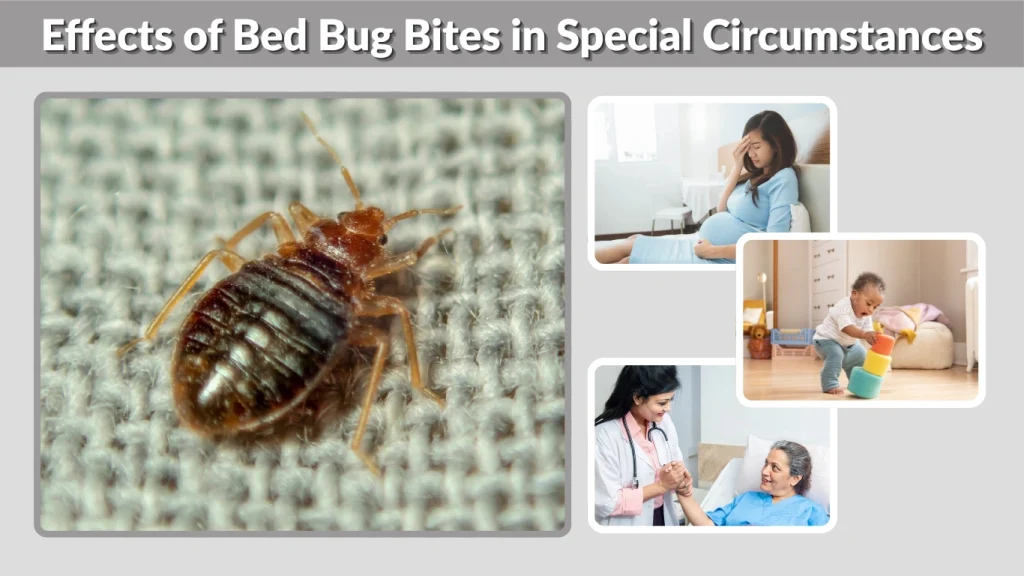
Effects During Pregnancy
Pregnant individuals can experience stronger skin reactions due to hormonal changes. Bed bug bites may swell more, itch more intensely, or take longer to heal. Although bed bug bites do not directly harm the baby, the stress and sleep disruption they cause can negatively affect maternal health. Persistent insomnia or anxiety during pregnancy can lead to elevated stress hormones, which may impact overall well-being if not managed properly.
Effects on Babies & Children
Children often react more strongly to bed bug bites because their skin is more delicate and sensitive. Bites may become redder, more swollen, and more inflamed compared to adults. Kids are also more likely to scratch aggressively, increasing the risk of infection. Sleep disruption is another major concern—children who are bitten may wake frequently, cry at night, or develop fear of sleeping in their beds.
Effects on People With Medical Conditions
Certain medical conditions make bed bug bites more concerning. People with diabetes may have slower wound healing, making them more vulnerable to infection or long-term skin damage. Immune-compromised individuals may experience prolonged inflammation or skin complications. Those with eczema, psoriasis, or dermatitis may experience flare-ups around the bite areas.
Health Complications From Bed Bug Bites
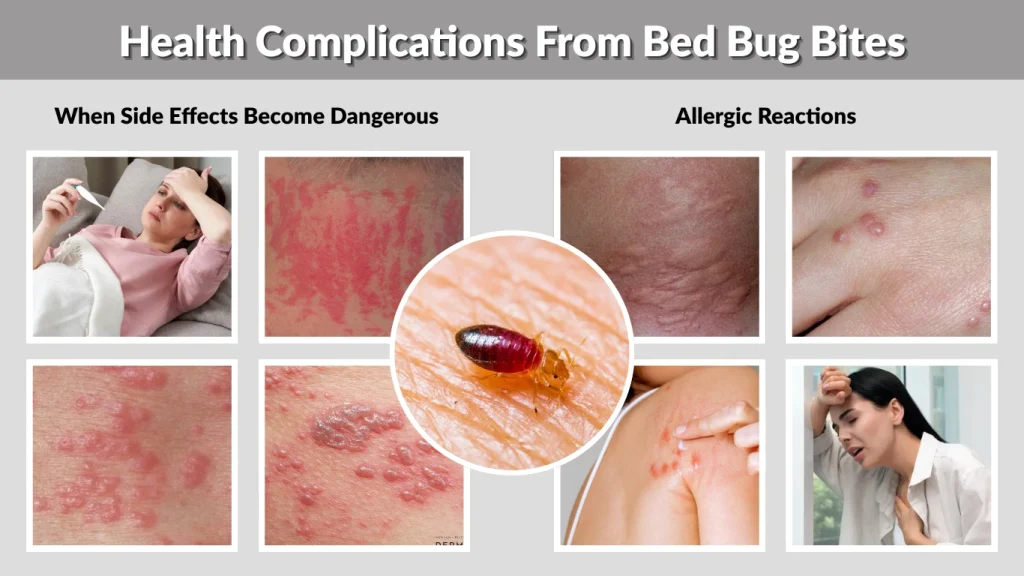
Secondary Infections
Secondary infections are one of the most serious complications of bed bug bites. When the skin is scratched repeatedly, bacteria can easily enter the broken skin. Common infections include:
- Cellulitis — painful skin infection causing redness, swelling, and warmth
- Impetigo — crusty sores, often from scratching
- Folliculitis — inflamed hair follicles around bites
These infections may require medical treatment such as topical or oral antibiotics. If symptoms include fever or spreading redness, urgent medical care is essential.
Allergic Reactions
Some individuals experience significant allergic reactions to bed bug saliva. Symptoms can range from mild swelling to severe hives. In rare cases, individuals may experience difficulty breathing or severe swelling, which requires immediate medical attention.
Symptoms of allergic reactions include:
- Rapidly swelling bite areas
- Spreading hives
- Intense itching
- Breathing difficulties (extremely rare)
While life-threatening reactions are unusual, they should be taken seriously.
When Side Effects Become Dangerous
Bed bug bites usually remain harmless, but certain warning signs indicate a more serious issue:
- Persistent fever
- Spreading rash or streaking redness
- Excessive swelling
- Open sores that do not heal
- Sudden dizziness or shortness of breath
These symptoms require prompt medical evaluation to rule out serious infections or allergic complications.
How to Prevent or Reduce Side Effects
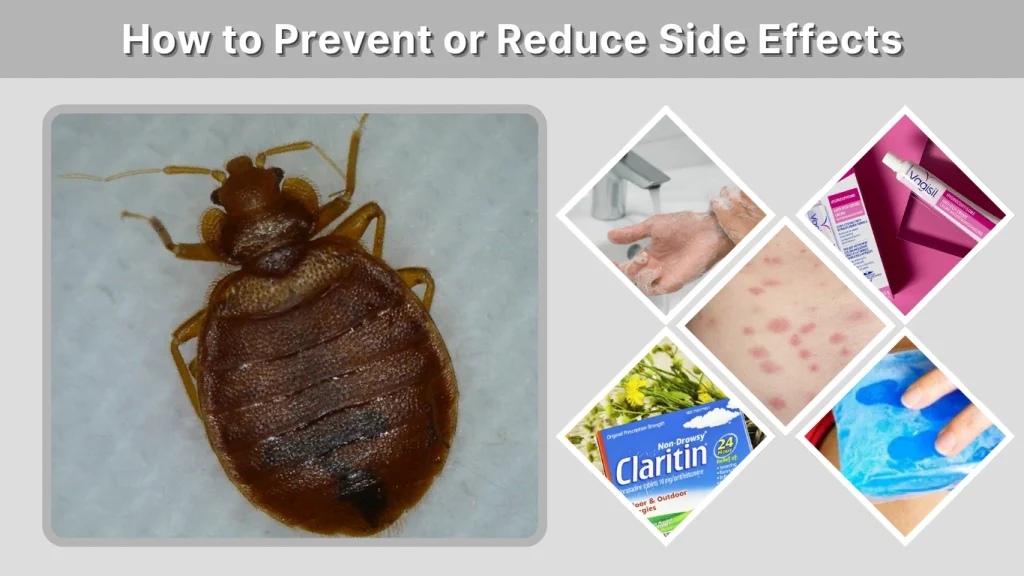
Treating Bites Early
Early treatment helps minimize discomfort and prevents complications. Basic steps include:
- Washing the bite area with soap and water
- Applying hydrocortisone or anti-itch creams
- Taking oral antihistamines to reduce swelling
- Using cold compresses to soothe irritated skin
Treating bites promptly can prevent long-term scarring and reduce the likelihood of infection.
Preventing Scratching
Scratching is the biggest contributor to complications. To avoid damaging the skin:
- Keep nails trimmed
- Use moisturizer to reduce itch sensitivity
- Apply calamine lotion
- Cover bites with bandages while sleeping
Children may require mittens or long sleeves at night to prevent scratching during sleep.
Avoiding Long-Term Damage
To prevent hyperpigmentation or scars:
- Apply soothing creams like aloe vera
- Use anti-inflammatory products
- Avoid harsh soaps
- Monitor the area for infection
If discoloration persists for months, dermatological treatments (like topical retinoids or light therapy) may help.
Most Effective Treatments for Bed Bug Bites
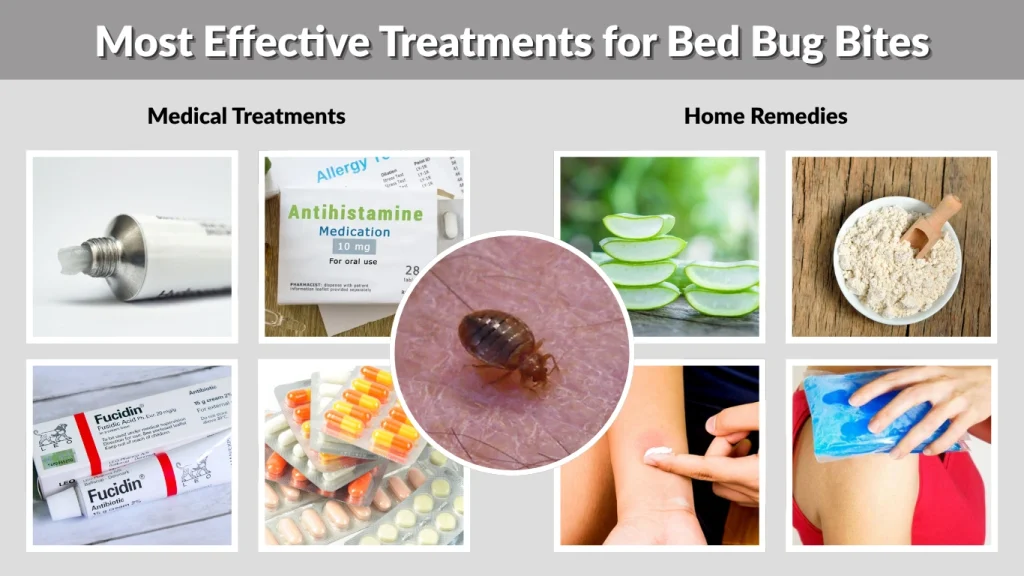
Medical Treatments
Medical care may be needed if bites are severe. Doctors may prescribe:
- Stronger steroid creams
- Oral antihistamines
- Topical antibiotics
- Oral antibiotics for infections
These treatments reduce inflammation, improve healing, and prevent complications.
Home Remedies
Many home remedies help reduce symptoms naturally:
- Aloe vera gel reduces swelling and redness
- Oatmeal paste or oatmeal baths soothe irritation
- Baking soda paste helps reduce itch
- Cold compresses minimize swelling
- Coconut oil moisturizes and reduces irritation
Home remedies work well for mild to moderate bites.
When Professional Care Is Needed
Medical help is necessary if:
- Bites become infected
- Welts grow larger or spread
- Symptoms worsen instead of improving
- The person experiences breathing issues
- A baby or immune-compromised person is bitten
Early intervention prevents serious complications.
Preventing Future Bites to Avoid Side Effects
Eliminating Bed Bugs
Preventing future effects requires eliminating the infestation. Effective steps include:
- Washing all bedding and clothes in high heat
- Vacuuming mattresses, carpets, and furniture daily
- Using mattress encasements
- Steam cleaning the bed frame and nearby furniture
- Using professional pest control for serious infestations
Bed bugs multiply quickly, so early action is essential.
Preventive Measures
To avoid future bites:
- Inspect bedding regularly
- Reduce clutter near beds
- Use interceptor traps under bed legs
- Check luggage after traveling
- Avoid bringing used furniture indoors without inspection
Prevention is key to avoiding repeated exposure.
FAQs
What are the most common side effects of bed bug bites?
The most common side effects include itching, redness, mild swelling, and clusters of small red bumps. Some people may also develop rashes or raised welts. These effects typically appear within hours of the bite and may last several days. Sensitive individuals may experience stronger reactions.
Can bed bug bites cause long-term effects?
Yes. Some people develop long-term effects such as hyperpigmentation, scars from scratching, or lingering skin sensitivity. Repeated bites can worsen reactions over time. In rare cases, severe scratching can lead to chronic skin changes or secondary infections that require medical treatment.
Can bed bug bites affect your mental health?
Yes. Bed bug infestations often lead to anxiety, sleep disturbances, and stress. Many people experience fear of sleeping, obsessive checking, and loss of peace of mind. These psychological effects can last even after the infestation is gone, especially in severe cases.
Can bed bug bites be dangerous for certain people?
Bed bug bites can be more serious for babies, pregnant individuals, people with allergies, diabetics, and those with weakened immune systems. These groups may experience stronger swelling, slower healing, or higher risk of infection. Medical evaluation is advised if symptoms worsen.
What should I do if bed bug bites become infected or don’t heal?
If bites show signs of infection—such as spreading redness, warmth, pus, or fever—you should seek medical treatment promptly. Infections may require antibiotics. If bites don’t improve after two weeks, become increasingly painful, or continue to spread, a doctor should evaluate the condition.
