

Bed bug droppings are one of the most reliable signs of an active infestation. While live bed bugs can be difficult to find due to their excellent hiding abilities, their droppings are often left behind in visible areas. These tiny dark stains provide important clues about where bed bugs sleep, hide, and feed. Understanding what the droppings look like—and where they appear—helps confirm an infestation early and prevents it from spreading. This guide explains how to identify bed bug fecal spots, where to find them, how to distinguish them from other insects’ droppings, and the best ways to clean them safely.
What Are Bed Bug Droppings?
Bed bug droppings are fecal waste created after bed bugs digest human blood. Because their entire diet consists of blood, their waste is dark, almost black, and resembles small ink-like marks. Whether you see tiny dots or smeared stains, these spots almost always indicate areas bed bugs recently used. Bed bug fecal spotting often appears before you see a live bug, making droppings one of the earliest and most important detection signs.
What They’re Made Of
Bed bug droppings are composed of partially digested blood. As bed bugs feed, they digest red blood cells and release dark liquid waste shortly afterward. This is why their feces dry into dark brown or black stains. Unlike dust or lint, the spots cannot be blown away—they soak into fabric or smear when rubbed because they contain iron from human blood.
Why Bed Bugs Leave Droppings
Bed bugs release droppings in areas where they rest, digest food, or hide. Because they often return to the same hiding places, droppings accumulate in clusters. These fecal spots map out bed bug pathways, showing their hiding spots, feeding patterns, and nesting areas. The more droppings you find, the more active the infestation likely is.
What Do Bed Bug Droppings Look Like?
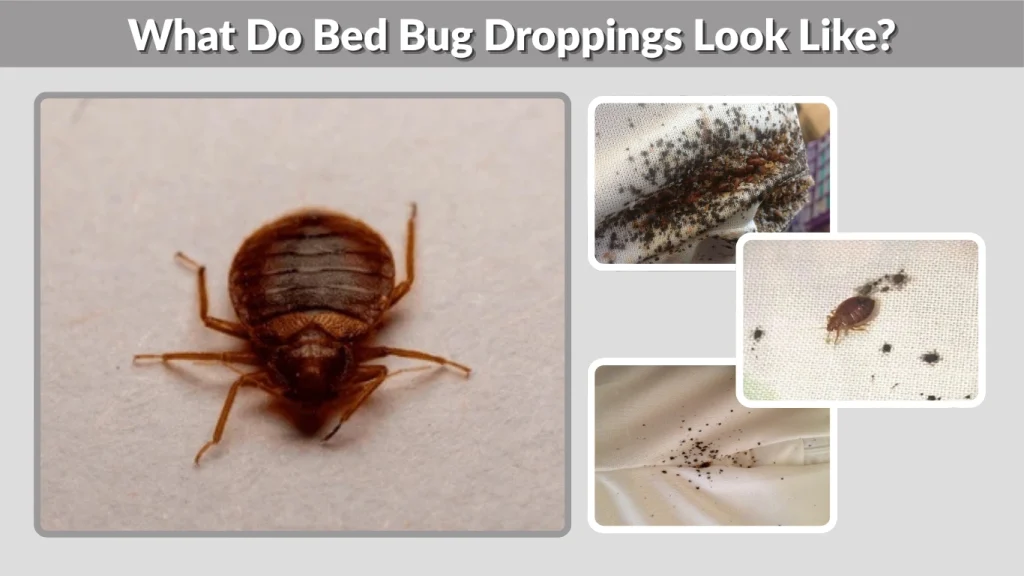
Understanding how droppings look is essential for confirming an infestation. Many people mistake the spots for mold, lint, or ink marks, but bed bug waste has a distinct appearance.
General Appearance
Bed bug droppings typically look like:
- Tiny black or dark brown spots
- Round or dot-like markings
- Small ink-like stains
- Poppy seed–sized dots
- Pepper-like flakes on hard surfaces
On fabric, the spots often soak into the material, creating a dark, permanent stain. On hard surfaces, the dots may appear raised or slightly glossy, depending on how fresh they are.
Texture & Consistency
Fresh bed bug droppings are soft and smear easily. If you wipe them with a tissue or apply a small amount of water, they will smudge into a reddish-brown streak. This smear test helps distinguish real bed bug feces from dust, lint, or specks of dirt.
Over time, dried droppings flatten out and become harder to remove. Older stains often embed into fibers, especially on sheets, mattresses, and upholstery.
Key differences:
- Fresh droppings: Semi-liquid, smear dark when rubbed
- Old droppings: Dry, flat, may not smear as easily
- Are they hard? Fresh ones are not; old ones can be
Unusual Shapes You Might See
While most droppings look like simple dots, some people notice:
- Cross-shaped droppings
- Diamond-shaped marks
- Elongated smears from movement
- Clusters of spots forming dark patches
These unusual shapes occur when the bug moves slightly while defecating or when droppings accumulate heavily in one location.
Bed Bug Dropping Pictures & Visual Identification
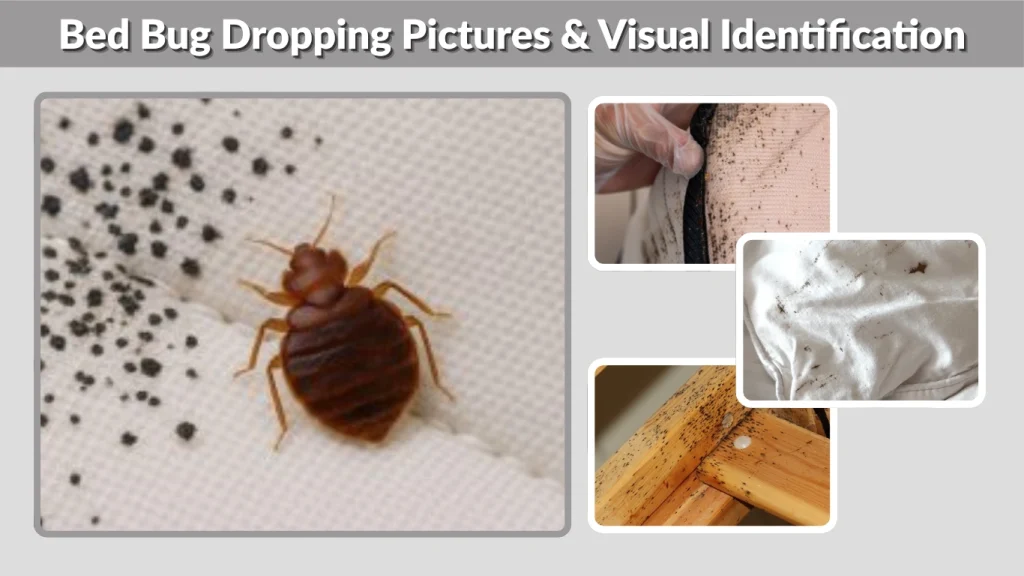
Bed bug droppings can appear differently depending on the surface they land on. Knowing how they look in photos or in real-life situations can make spotting them easier.
Images You May See
Common photo examples include:
- Tiny ink-like dots along mattress seams
- Dark stains on sheets or pillowcases
- Clusters of spots under a bed frame
- Black dots on wood slats, walls, or baseboards
Close-up images usually show that each droplet has slightly uneven edges and a deep black coloration.
What Droppings Look Like in Different Stages
Droppings can appear differently depending on their age:
- Fresh: Shiny, dark, smear easily
- A few days old: Matte finish, slightly dry
- Old: Flattened, faded black stains embedded in fabric
In mild infestations, you may only see a few dots. In severe cases, smears and clusters spread across the mattress, walls, or furniture.
Where You’ll Find Bed Bug Droppings

Bed bug droppings appear in the same areas where bed bugs hide or feed. These locations provide the best clues about the level and location of the infestation.
On Bedding & Mattresses
Bed bug droppings commonly appear on:
- Sheets and pillowcases
- Quilts or comforters
- Mattress seams and piping
- Mattress tags
- Box spring edges
Droppings on bedding often indicate that bed bugs are feeding at night and returning to nearby hiding places.
Furniture & Household Surfaces
Bed bugs don’t only leave droppings in beds; they can appear anywhere bugs hide, including:
- Headboards
- Bed frames
- Wooden slats
- Walls near the bed
- Baseboards
- Carpet edges
- Clothing piles
On wood or walls, the droppings often appear as tiny black dots similar to black pepper or marker stains.
Odd or Unexpected Locations
Although bed bugs prefer staying close to where humans sleep, they can leave droppings in unusual places:
- Inside cars, especially on seats or fabric panels
- On cardboard boxes stored near beds or couches
- Between book pages or on the sides of books
- On curtains or behind wall hangings
- On luggage, backpacks, or jackets left near beds
Finding droppings in these areas usually indicates that bed bugs are spreading beyond the bed and beginning to travel throughout the home or building.
Bed Bugs Dropping From the Ceiling – Myth or Reality?
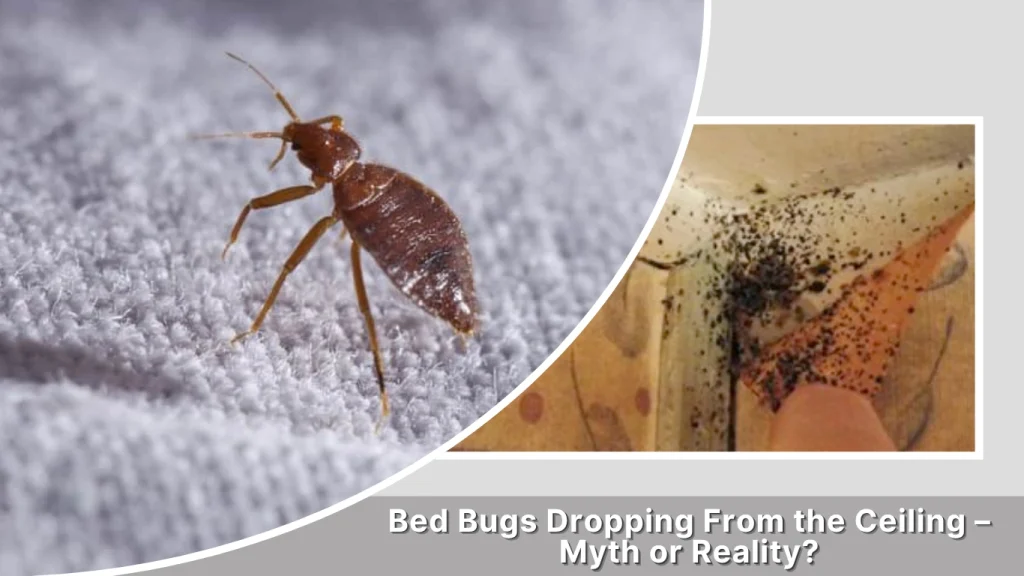
Can Bed Bugs Drop From Above?
A common question is whether bed bugs can drop from the ceiling. While bed bugs cannot fly or jump, they can climb almost any surface, including walls and ceilings. If they lose their grip or are disturbed, they can fall, which may look like they “dropped down” intentionally. However, this behavior is accidental—not part of their normal feeding strategy.
When Ceiling Activity Happens
There are situations where droppings—or even bugs—appear on ceilings or upper walls:
- Heavy infestations forcing bugs to spread outward
- Bugs traveling along walls seeking new hiding spots
- Ceiling cracks or loose tiles giving them access
- Bugs hitchhiking on clothing or items lifted overhead
In homes with drop ceilings, bed bugs sometimes travel above tiles and accidentally fall through gaps.
Bed Bug Droppings vs Other Insect Droppings
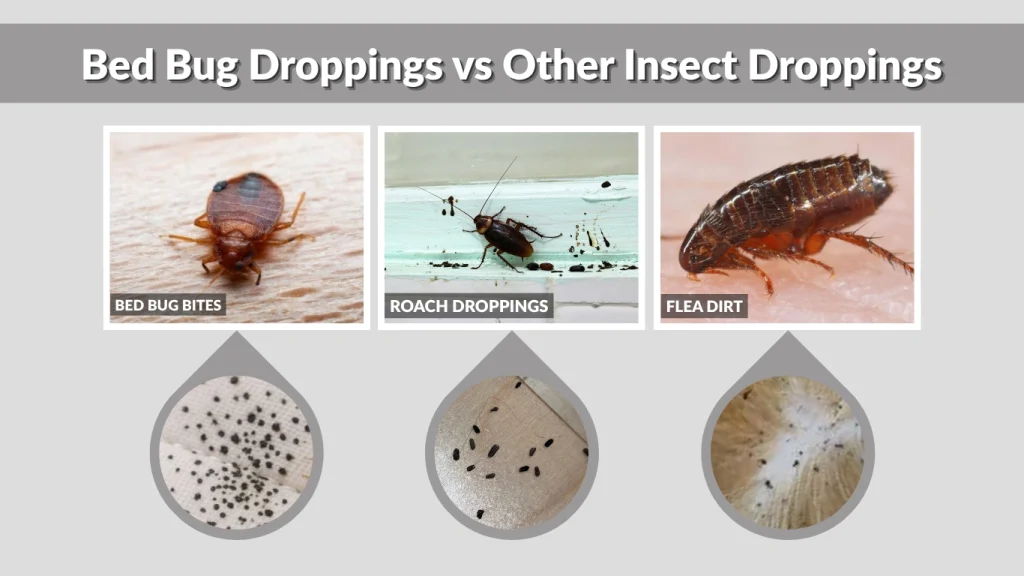
Misidentifying droppings can lead to unnecessary panic or, worse, missed infestations. It’s important to distinguish bed bug droppings from other insects.
Roach Droppings vs Bed Bug Droppings
Cockroach droppings are:
- Larger
- Grain-like or pellet-shaped
- Brown rather than deep black
- Often have ridges or cylindrical form
Bed bug droppings are:
- Much smaller
- Ink-like dots
- Soft when fresh
- Clustered near sleeping areas
Roach waste also tends to appear in kitchens or bathrooms—not bed frames.
Flea Dirt vs Bed Bug Droppings
Flea dirt is flea feces composed of dried blood. It can resemble bed bug droppings, but:
- Flea dirt turns reddish-brown when exposed to water
- Flea dirt usually appears on pets or pet bedding
- Flea droppings are slightly more crumbly and not as ink-like
Bed bug feces smear into dark streaks, not red-tinted ones.
Dust, Lint, & Fabric Particles
Some people mistake lint, small black fibers, or tiny clothing beads for bed bug droppings. Unlike feces, these:
- Can be picked up easily
- Do not smear
- Lack dark pigmented staining
Using a simple smear test helps clarify the difference.
How to Identify Bed Bug Droppings

Simple Identification Tests
There are three easy ways to confirm whether a spot is actually bed bug feces:
1. Smear Test
Rub a damp cotton swab over the spot.
If it smears into a dark reddish-brown streak, it’s likely bed bug droppings because of the iron content from digested blood.
2. Texture Test
Fresh droppings feel soft or semi-wet; older ones feel flat and dry.
3. Pattern Test
Bed bugs leave droppings:
- In clusters
- Near hiding areas
- Along seams and cracks
- Near feeding sites
Randomly scattered specks across an entire sheet are rarely from bed bugs.
Confirming with Other Signs
Droppings alone may not confirm an infestation. Look for additional clues:
- Shed skins from molting
- Tiny white eggs in crevices
- Red blood smears from crushed bugs
- A sweet, musty odor in severe cases
- Live bed bugs hiding in seams
If two or more signs appear together, the chances of an active infestation are high.
What Droppings Reveal About an Infestation

Bed bug droppings can give useful information about how severe and widespread an infestation is.
Early Infestations
You may only find:
- A few dots on sheets or pillowcases
- Light stains along mattress seams
- Single clusters near headboards
Small, isolated fecal marks often indicate a recent or limited presence.
Moderate Infestations
Signs become more noticeable:
- Multiple clusters of dots
- Smears along the mattress edge
- Droppings on bed frames, walls, or furniture
- Increasing frequency of fresh stains
This suggests multiple bugs feeding and returning to the same location.
Heavy Infestations
Large, dark patches of fecal stains indicate a widespread or long-standing infestation. You may see:
- Thick smears on mattress seams
- Droppings spreading across walls
- Carpet edges dotted heavily
- Droppings in multiple rooms
At this stage, professional extermination is almost always required.
How to Clean Bed Bug Droppings

Cleaning Fabric Surfaces
For sheets, pillowcases, quilts, and clothing:
- Wash in hot water (120°F or higher)
- Use enzyme-based cleaners for stubborn stains
- Dry on high heat to kill any remaining bugs or eggs
For mattresses and upholstered furniture:
- Blot stains with warm soapy water
- Use a steam cleaner for deeper sanitation
- Avoid oversaturating fabric, which can cause mildew
Cleaning Hard Surfaces
On wood, walls, or flooring:
- Use mild soap and warm water
- Apply rubbing alcohol for fresh stains
- Use a magic-eraser sponge for older stains
- Avoid harsh chemicals that damage wood finishes
On painted walls, test a small area before cleaning fully.
When Droppings Stain Permanently
Some stains—especially older ones—become embedded and cannot be removed completely. In such cases:
- Mattress encasements can hide permanent marks
- Upholstery may need professional cleaning
- Repainting walls may be necessary in extreme cases
Permanent droppings indicate long-term activity rather than current infestation levels.
Do Droppings Mean You Still Have Bed Bugs?
Fresh vs Old Droppings
Fresh droppings are dark, shiny, and smear easily.
Old droppings are dry, faded, and embedded.
If all the spots are old and no new ones appear, the infestation may already be eliminated.
Droppings But No Bugs?
This is common. Reasons include:
- Bugs hiding deeply within cracks
- A recently treated infestation
- Early-stage infestations with few bugs
- Bugs feeding very infrequently
If you see new droppings appearing, there are still active bugs nearby.
Preventing Future Droppings (and Infestations)
Controlling the Current Infestation
- Vacuum cracks and seams daily
- Wash bedding frequently
- Use mattress and box spring encasements
- Steam-treat furniture and carpet edges
- Consider professional extermination for heavy cases
Preventing Reinfestation
- Inspect luggage and clothing after travel
- Avoid bringing used furniture indoors
- Reduce clutter around beds
- Place interceptor traps under bed legs
- Check seams and headboards regularly
These steps significantly reduce the chances of bed bug return.
FAQs
What do bed bug droppings look like?
Bed bug droppings look like tiny black or dark brown dots, similar to ink spots from a marker. They are usually round, slightly raised when fresh, and smear into a dark reddish-brown streak when rubbed. These fecal spots often appear in clusters around seams, cracks, and hiding areas.
Where are bed bug droppings most commonly found?
You’ll find droppings in areas where bed bugs hide or feed, including mattress seams, bed frames, pillows, sheets, headboards, walls, and furniture cracks. In heavier infestations, they can also appear on carpets, clothing, curtains, and even in cars or on ceilings.
How can I tell if it’s bed bug droppings and not dirt or lint?
Bed bug droppings smear when wiped with a damp cloth, creating a dark streak. Dirt, lint, and fibers will not smear. Droppings also tend to appear in clusters near hiding spots, unlike random household debris. The smear test is the most reliable identification method.
Are bed bug droppings dangerous?
While bed bug droppings do not spread diseases, they can contribute to allergies, asthma irritation, and indoor air contamination—especially in heavy infestations. They may also stain mattresses, sheets, and furniture permanently if not cleaned promptly.
How do you clean bed bug droppings?
Cleaning methods depend on the surface. On fabric, use hot water, strong detergent, or enzyme cleaners. On hard surfaces, use warm soapy water, rubbing alcohol, or stain-removal pads. For mattresses and upholstery, steam cleaning works best. Old stains may not fully disappear.
