
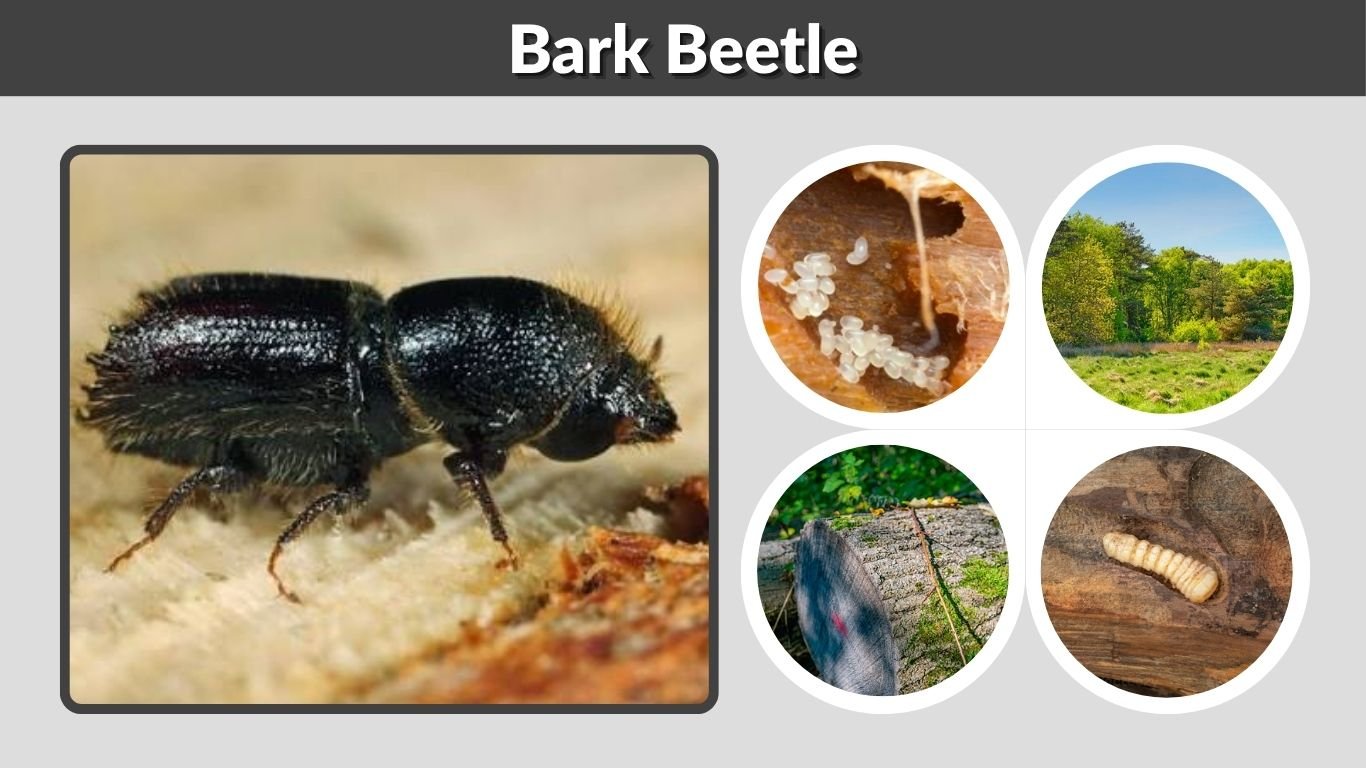
Bark beetles are tiny wood-boring insects that live beneath the bark of trees and can sometimes cause serious damage to forests, landscapes, and ornamental trees. Although individual beetles are small, large infestations may weaken or kill trees by disrupting the flow of water and nutrients. Bark beetles belong mainly to the subfamily Scolytinae, which includes thousands of species worldwide. Understanding their size, larvae, diet, habitat, life cycle, and identification signs can help you recognize an infestation before extensive tree damage occurs.
What Is a Bark Beetle?
Bark beetles are small beetles that spend much of their lives underneath tree bark. Most species attack weakened, stressed, dying, or recently fallen trees, although some aggressive species can successfully attack healthy trees when populations become high.
Adult beetles tunnel beneath bark to reproduce. Their larvae then feed inside the tree’s inner bark and cambium layer, creating distinctive galleries.
Bark beetles should not be confused with larger wood-boring beetles whose larvae tunnel deep into solid wood. Bark beetle activity usually remains concentrated near the area immediately beneath the bark.
Bark Beetle Size
Bark beetles are remarkably small compared with the amount of damage they can cause.
Most adult bark beetles measure approximately 1/16 to 1/4 inch long, although size varies among species. Many are only a few millimeters in length.
Their small size allows them to enter tiny cracks in tree bark and create narrow tunnels.
What Do Bark Beetles Look Like?
Adult bark beetles commonly have:
- Small cylindrical or oval bodies
- Dark brown, reddish-brown, or black coloration
- Hard wing covers
- Short antennae
- Six legs
- Compact bodies
- Rounded or slightly flattened heads
Some species appear almost black, while others are lighter brown or reddish.
Because bark beetles are so small, identifying the damage they leave behind is often easier than identifying individual beetles.
Bark Beetle Identification
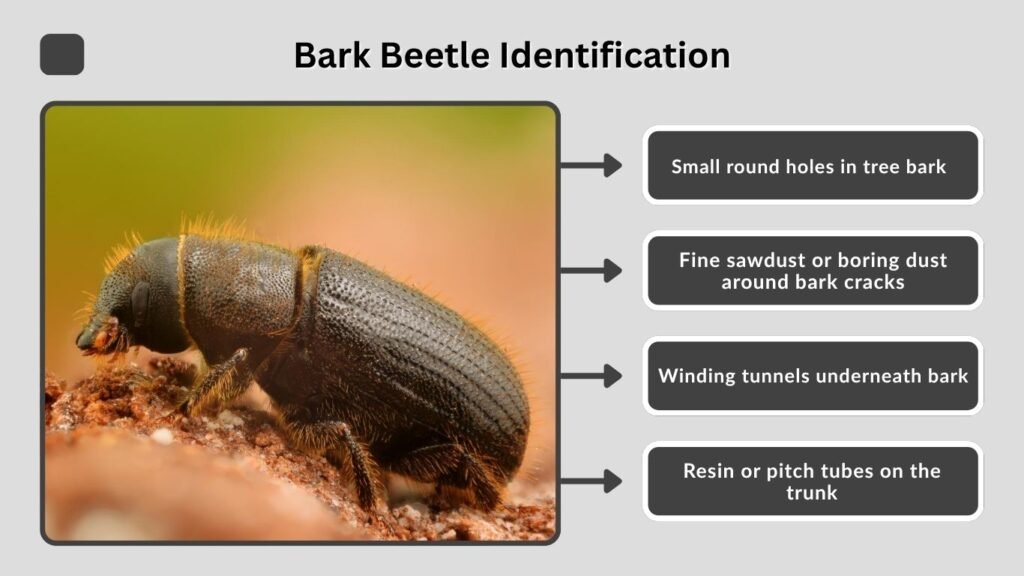
Bark beetle identification usually involves examining both the beetle and the affected tree.
One of the clearest signs is the presence of galleries underneath loose bark. These galleries may form straight, curved, branching, or winding patterns depending on the species.
Signs of Bark Beetles
Common signs include:
- Small round holes in tree bark
- Fine sawdust or boring dust around bark cracks
- Winding tunnels underneath bark
- Resin or pitch tubes on the trunk
- Yellowing or reddish-brown foliage
- Loose or peeling bark
- Woodpecker activity
- Dead branches or tree crowns
- Tiny beetles beneath bark
Small piles of reddish or brown boring dust may accumulate around tree crevices or near the base of an infested tree.
Bark Beetle Holes
Adults create small holes when entering or leaving trees. These holes can resemble pinholes and are frequently only a few millimeters wide.
Fresh entrance holes may sometimes be surrounded by resin, especially on conifer trees.
Some trees produce large amounts of resin as a defense against attacking beetles. Strong, healthy trees may successfully push invading beetles out with this resin.
Bark Beetle Larvae
Bark beetle larvae look very different from adults.
They are usually small, soft-bodied, cream-colored or white grubs with darker heads. Unlike adult beetles, the larvae typically do not have noticeable legs.
After eggs hatch beneath the bark, larvae begin feeding away from the main egg gallery.
What Do Bark Beetle Larvae Look Like?
Typical bark beetle larvae have:
- White or cream bodies
- Brownish head capsules
- Soft segmented bodies
- Curved or slightly C-shaped appearance
- Very small size
- Few or no visible legs
Larvae remain protected underneath bark while feeding.
Their feeding tunnels often branch outward from the adult gallery, producing patterns that can help specialists determine which bark beetle species is present.
Bark Beetle Life Cycle
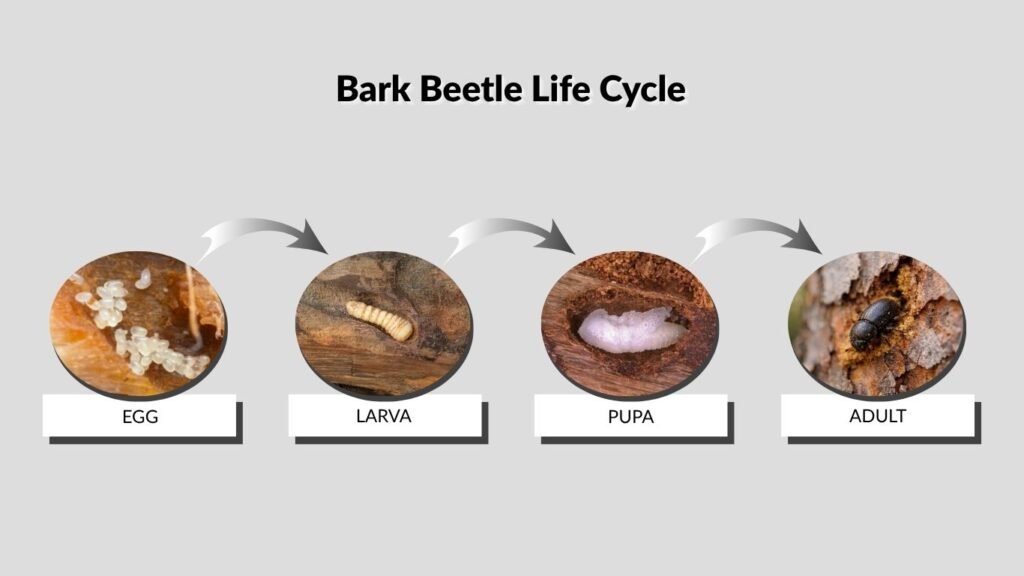
The bark beetle life cycle consists of four major stages:
Egg → Larva → Pupa → Adult
Development time varies depending on beetle species, temperature, tree condition, and climate.
Egg Stage
Adult females enter suitable trees and excavate galleries underneath the bark.
Eggs are deposited along the sides of these galleries. One female may lay numerous eggs during her lifetime.
Larval Stage
After hatching, larvae feed on tissue beneath the bark.
Each larva normally creates its own narrow tunnel extending away from the main adult gallery.
As larvae grow, their tunnels become progressively wider.
This feeding activity can disrupt the tree’s vascular tissues, reducing its ability to transport nutrients and water.
Pupal Stage
Once fully developed, the larva creates a small chamber where it transforms into a pupa.
During this stage, the insect gradually develops adult features such as legs, wings, and hardened body structures.
Adult Stage
New adults emerge from pupal chambers and eventually leave the tree through small exit holes.
They then fly to another suitable tree where the reproductive cycle begins again.
Depending on the species and climate, bark beetles may produce one or several generations each year.
Bark Beetle Diet
Bark beetles primarily feed on plant tissues located underneath tree bark.
Adults and larvae commonly consume:
- Inner bark tissue
- Phloem
- Cambium
- Plant juices
- Fungal material associated with galleries
The exact diet depends on the species.
Some bark beetles have close relationships with fungi. Adults may carry fungal spores from tree to tree, introducing fungi into their galleries.
The fungus can help alter tree tissue and sometimes provides additional food for developing beetles.
Bark Beetle Habitat
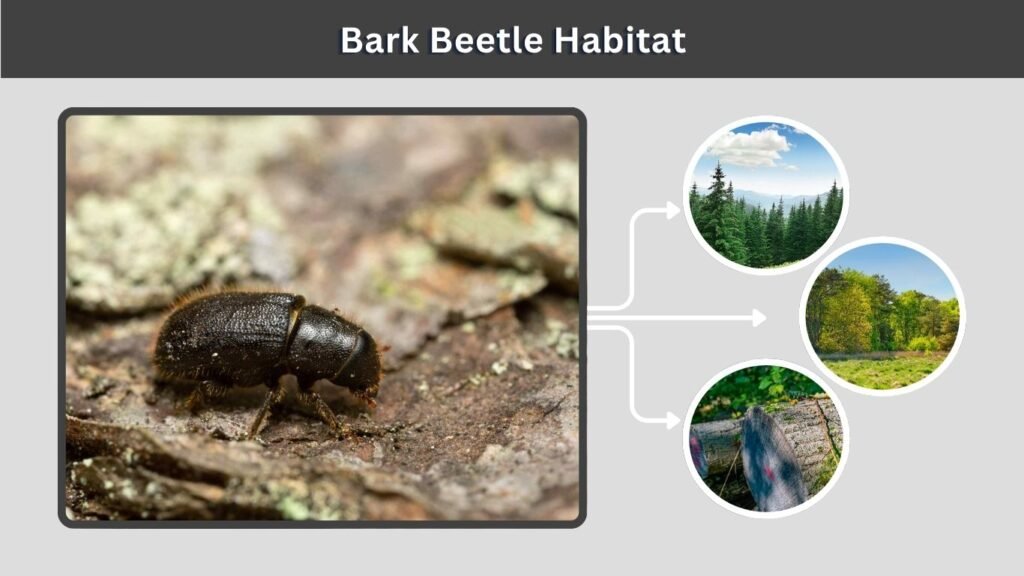
Bark beetles occur in forests, woodlands, plantations, orchards, parks, landscapes, and residential areas wherever suitable host trees are present.
They can inhabit:
- Pine forests
- Spruce forests
- Fir forests
- Hardwood forests
- Fallen logs
- Dead trees
- Dying branches
- Fire-damaged forests
- Drought-stressed trees
- Recently cut timber
Different species specialize in different tree species.
Some mainly attack conifers such as pine and spruce, while others live in hardwood trees.
Why Do Bark Beetles Attack Trees?
Many bark beetles are attracted to trees weakened by environmental stress.
Common factors include:
- Drought
- Fire damage
- Root injury
- Storm damage
- Disease
- Overcrowding
- Poor soil
- Lightning damage
- Mechanical wounds
- Aging
Stressed trees often have weaker natural defenses, making it easier for beetles to establish galleries.
Do Bark Beetles Bite Humans?
Bark beetles are not considered dangerous biting insects for humans.
Their mouthparts are designed primarily for chewing plant tissue rather than feeding on people or animals.
If handled or trapped against the skin, some beetles may potentially pinch slightly, but bark beetles do not normally seek humans out for blood meals.
They also do not behave like mosquitoes, fleas, horse flies, or other insects that routinely bite people.
Are Bark Beetles Dangerous?
Bark beetles are generally harmless to humans and pets.
Their primary threat involves trees rather than people.
During major outbreaks, however, bark beetles may kill large numbers of trees. Dead trees can eventually become hazardous because branches or entire trunks may fall.
Bark Beetle Damage
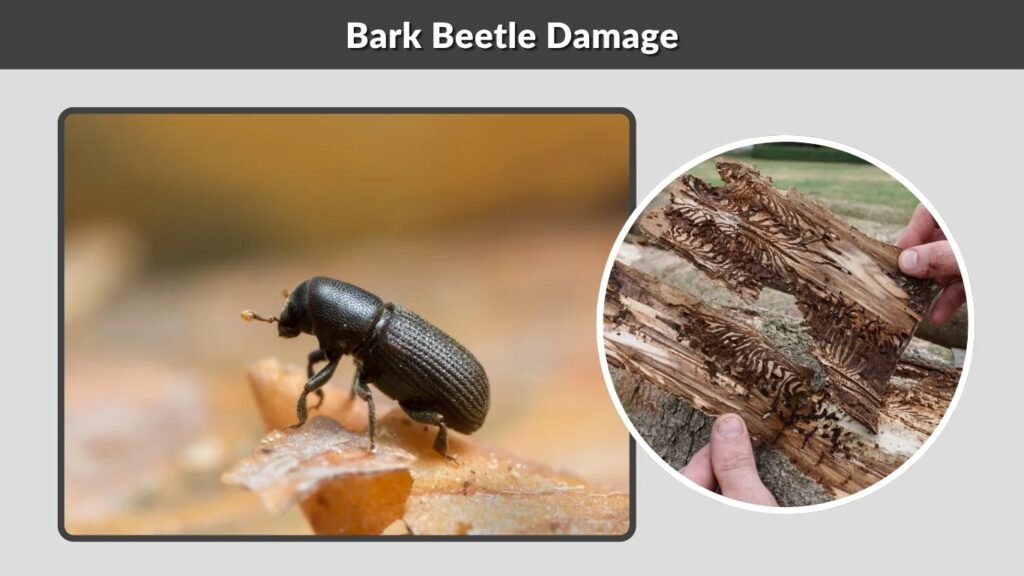
A few bark beetles usually do not destroy a healthy tree. Serious damage occurs when large numbers attack simultaneously or when trees are already weakened.
Beetles and larvae create galleries that interfere with tissues responsible for transporting nutrients.
When enough galleries surround the trunk, the tree may effectively become girdled.
This prevents normal movement of nutrients and can eventually kill the tree.
Symptoms of Bark Beetle Damage
An infested tree may show:
- Fading green needles
- Yellow foliage
- Red or brown needles
- Dead upper branches
- Resin flowing from the trunk
- Small bark holes
- Sawdust around the trunk
- Bark separation
- Extensive galleries underneath bark
The tree canopy may gradually change from green to yellow, then reddish-brown as damage progresses.
Bark Beetle Galleries
One of the most recognizable signs of bark beetles is the gallery system beneath the bark.
Adult beetles typically construct a main gallery, while larvae create smaller tunnels spreading outward.
Depending on species, galleries may appear:
- Vertical
- Horizontal
- Curved
- Star-shaped
- Forked
- Irregular
- Engraved-like
These patterns are sometimes so distinctive that bark beetles were historically called engraver beetles.
Where Are Bark Beetles Found?
Bark beetles occur throughout much of the world wherever trees grow.
They are especially well known in forests of North America, Europe, and Asia.
Some commonly discussed groups include mountain pine beetles, spruce beetles, southern pine beetles, engraver beetles, and European spruce bark beetles.
Each group has particular host trees and environmental preferences.
Bark Beetle vs Wood Borer
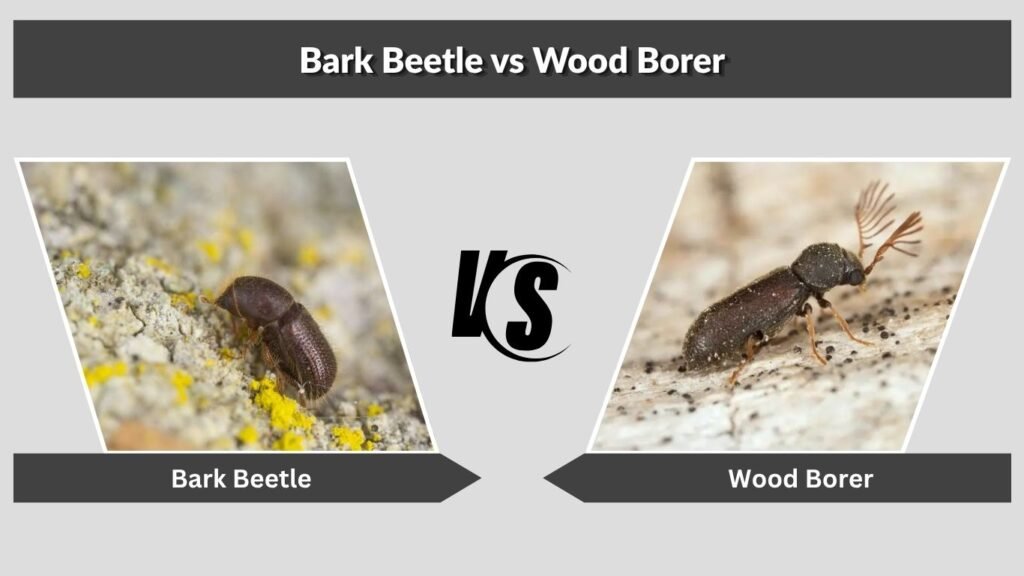
Bark beetles and wood borers both attack trees, but they typically occupy different parts of the tree.
| Feature | Bark Beetle | Wood Borer |
|---|---|---|
| Main location | Beneath bark | Inside wood |
| Adult size | Usually very small | Often larger |
| Larval tunnels | Inner bark and cambium | Deeper wood |
| Exit holes | Usually tiny and round | May be larger or differently shaped |
| Common targets | Stressed or weakened trees | Healthy, stressed, dying, or dead trees |
| Main damage | Disrupts vascular tissues | Weakens internal wood |
Examining tunnel depth and exit-hole shape can help distinguish the two groups.
How Long Do Bark Beetles Live?
Bark beetle lifespan varies considerably among species.
Many complete their development within several months to approximately one year. In warm climates, certain species may complete multiple generations during a single growing season.
Adults usually spend only part of their lives outside trees.
Temperature strongly influences development. Warm conditions can accelerate egg, larval, and pupal development, while cold conditions slow growth or cause beetles to overwinter beneath bark.
Are Bark Beetles Beneficial?
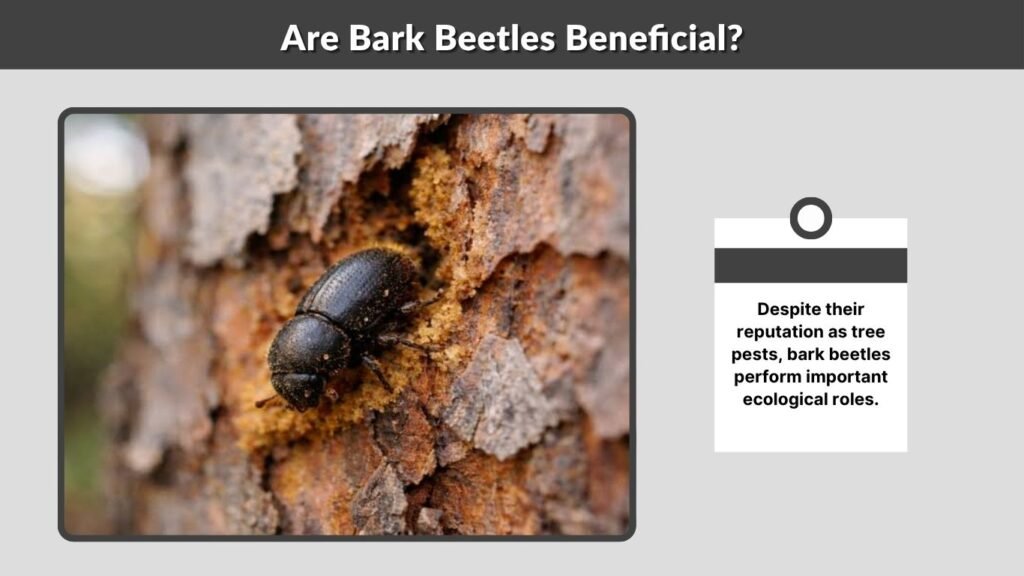
Despite their reputation as tree pests, bark beetles perform important ecological roles.
They help break down weakened and dead trees, making nutrients available to other organisms.
Their galleries also create habitat for fungi, mites, insects, and microorganisms.
In natural forests, bark beetles contribute to:
- Wood decomposition
- Nutrient cycling
- Forest regeneration
- Wildlife habitat
- Removal of weakened trees
Problems become most noticeable when beetle populations increase enough to overwhelm large numbers of living trees.
FAQs
1. How big are bark beetles?
Most bark beetles are approximately 1/16 to 1/4 inch long. They have small cylindrical bodies and are commonly brown, reddish-brown, or black. Because they are tiny, tree damage and galleries are often easier to notice than the beetles themselves.
2. What do bark beetle larvae look like?
Bark beetle larvae are usually white or cream-colored, soft-bodied grubs with darker brown heads. They live underneath tree bark and create narrow feeding tunnels extending from galleries constructed by adult beetles.
3. Can bark beetles bite humans?
Bark beetles do not normally bite humans. Their mouthparts are adapted for feeding on tree tissues. An individual beetle might occasionally pinch if handled, but they do not feed on blood or actively seek humans as hosts.
4. What do bark beetles eat?
Bark beetles feed primarily on inner bark, phloem, cambium tissues, and plant fluids. Some species are also associated with fungi growing inside their galleries, which may provide additional nutrition for adults or developing larvae.
5. How can you identify a bark beetle infestation?
Look for tiny holes in the bark, boring dust, resin or pitch tubes, peeling bark, yellowing foliage, woodpecker activity, and distinctive tunnels underneath the bark. Severe infestations may eventually cause branches or entire trees to die.
