The Asian lady beetle larva may look alarming at first glance, but this spiky insect is actually the young stage of one of the most common beetles in the world. These larvae are powerful predators that feed on garden pests like aphids and mites. However, their aggressive nature and invasive tendencies often make them a concern for homeowners and gardeners. Understanding how to identify and manage them is essential to maintaining balance in your outdoor spaces.
What Is an Asian Lady Beetle Larva?
The Asian lady beetle (Harmonia axyridis), also known as the multicolored Asian lady beetle, goes through four main life stages: egg, larva, pupa, and adult. The larval stage is one of the most active and recognizable phases, lasting about 10 to 14 days. During this period, the larva’s primary goal is to eat and grow before transforming into an adult beetle.
Asian lady beetle larvae are highly effective at pest control. They consume hundreds of small insects, especially aphids, that damage crops and gardens. However, unlike native ladybugs, their population can grow quickly, making them dominant and sometimes invasive in new environments.
Identification: What Does an Asian Lady Beetle Larva Look Like?

The appearance of Asian lady beetle larvae is distinct, helping you identify them easily in gardens or on plants.
Key Features:
- Size: About 6–10 millimeters long when fully grown.
- Shape: Long and alligator-like with a segmented, spiny body.
- Color: Dark gray or black with orange or yellow patches along the sides.
- Texture: Rough and slightly bristly, giving them a prickly appearance.
They may look intimidating, but these larvae are completely harmless to humans. Their strange look often causes confusion, leading people to mistake them for harmful pests or even small caterpillars.
A quick way to distinguish them from native ladybug larvae is by their markings. Native species are usually smoother, smaller, and less spiny, with more consistent coloration. Asian lady beetle larvae are darker, more elongated, and appear more aggressive in shape.
Multicolored Asian Lady Beetle Larva
The term “multicolored Asian lady beetle” refers to the same species, but this name highlights their incredible color variation. The larvae of this beetle are found across North America, Europe, and Asia, often adapting their appearance slightly depending on their environment.
In regions like Colorado, the UK, and warmer U.S. states, larvae may appear lighter or more orange as a result of temperature and diet differences. Regardless of color, all larvae share similar predatory behavior and grow into adult beetles with distinct white “M” or “W” markings behind their heads.
These larvae thrive in gardens, greenhouses, and crop fields — especially where aphids are plentiful. Their adaptability and fast development are key reasons why the species has become so successful (and sometimes invasive) worldwide.
Behavior and Feeding Habits
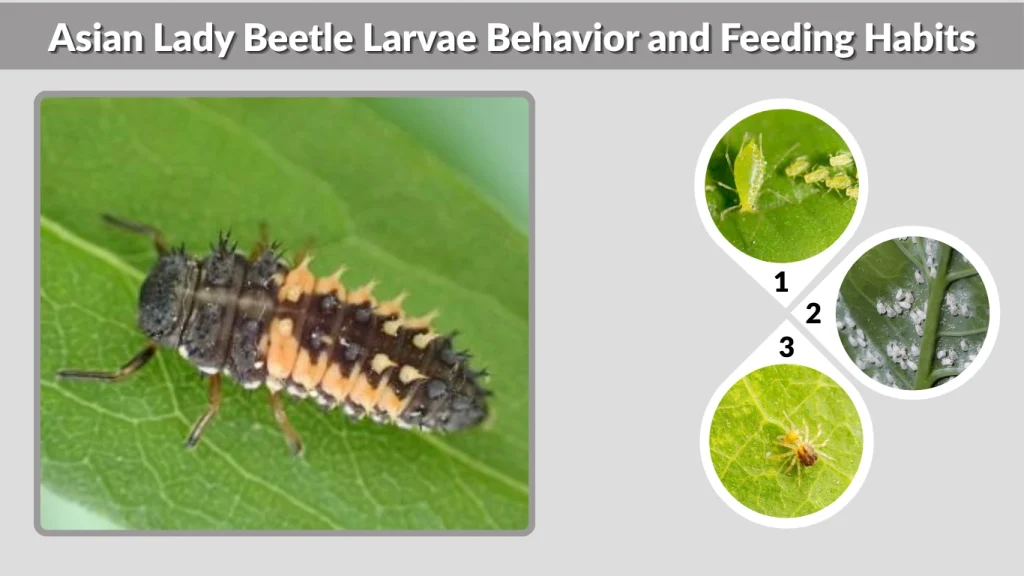
Asian lady beetle larvae are voracious predators. From the moment they hatch, they begin hunting soft-bodied insects such as:
- Aphids
- Whiteflies
- Mites
- Mealybugs
- Scale insects
A single larva can eat hundreds of aphids in just a few days. They are most active during daylight, moving quickly across leaves to find prey. After about two weeks of constant feeding and molting, the larva attaches itself to a surface and transforms into a pupa — the next stage before adulthood.
Their intense appetite makes them beneficial to farmers and gardeners. However, large populations can outcompete native ladybugs for food and space, disrupting local ecosystems. In some cases, larvae may even resort to cannibalism, feeding on unhatched eggs or weaker larvae if prey is scarce.
Do Asian Lady Beetle Larvae Bite or Harm Humans?
Despite their fearsome appearance, Asian lady beetle larvae do not bite. They lack the strong mandibles needed to pierce human skin. The tiny “pinch” some people feel when handling them is simply the larva trying to defend itself — it’s harmless and doesn’t break the skin.
It’s also important to note that Asian lady beetle larvae are not poisonous or venomous. They don’t carry toxins, nor do they cause allergic reactions like their adult counterparts occasionally do. Still, it’s best to avoid touching them unnecessarily, as their rough texture and defensive wriggling may cause mild skin irritation in sensitive individuals.
Asian Lady Beetle Larva vs. Native Ladybug Larva

One of the most common sources of confusion is distinguishing between Asian lady beetle larvae and native ladybug larvae. While both belong to the same beetle family (Coccinellidae), they differ significantly in appearance and behavior.
Key Differences:
- Body Texture: Asian lady beetle larvae are spiny and rough, while native larvae are smoother and softer-looking.
- Color Patterns: Native species are usually dark gray with orange spots, while Asian larvae have bright orange or yellow streaks along the sides.
- Size: Asian larvae grow slightly larger — up to 10 mm — compared to most native species, which average around 7 mm.
- Behavior: Asian larvae are more aggressive hunters, sometimes feeding on other larvae or eggs, while native ones focus solely on pests like aphids.
These differences make Asian larvae stronger competitors in environments where both species coexist. Unfortunately, their dominance has led to a decline in native ladybug populations in several regions, including the UK and parts of North America.
Life Cycle: From Egg to Adult

The larval stage is one part of the four-phase life cycle of the Asian lady beetle: egg, larva, pupa, and adult.
- Egg Stage: Female beetles lay clusters of 20–30 small, yellow eggs under leaves.
- Larval Stage: Eggs hatch in 3–5 days. Larvae feed aggressively for about two weeks, growing through four molting stages (called instars).
- Pupal Stage: The fully grown larva attaches to a leaf or stem and forms a pupa. Inside, it undergoes metamorphosis for about 5–7 days.
- Adult Stage: The adult beetle emerges with a pale orange shell that darkens over time. Adults live for several months, feeding, mating, and continuing the cycle.
The entire life cycle typically lasts 30–60 days, depending on temperature and food availability. Warm conditions accelerate growth, allowing up to five generations per year in some areas. During fall, adults seek indoor shelter to overwinter, while larvae and pupae generally die off when temperatures drop.
How to Get Rid of Asian Lady Beetle Larvae

Although Asian lady beetle larvae are not harmful, large populations can become bothersome, especially when they appear in gardens or near homes. Removing them safely helps maintain ecological balance without disrupting beneficial insects.
Natural and Safe Removal Methods:
- Remove Aphid Sources: Since larvae thrive where aphids are abundant, washing plants with water or insecticidal soap reduces their food supply.
- Vacuum Indoors: If larvae appear inside, gently vacuum them and release them outside, away from doors or windows.
- Seal Entry Points: Use caulk around windows, vents, and siding to prevent adults from laying eggs near or inside homes.
- Encourage Natural Predators: Birds, spiders, and predatory wasps help keep larvae populations under control naturally.
- Avoid Chemical Pesticides: Sprays can harm pollinators and native ladybugs. Instead, use targeted treatments like neem oil if absolutely necessary.
Garden Maintenance Tips:
Regularly inspect plants for both pests and larvae. If you notice Asian larvae outnumbering native ones, reduce aphid populations manually to discourage overgrowth. Maintaining healthy, balanced gardens naturally limits beetle breeding.
Are Asian Lady Beetle Larvae Dangerous or Poisonous?
Asian lady beetle larvae are neither dangerous nor poisonous. They don’t carry toxins or diseases, and they rarely come into direct contact with humans. In fact, their only defense mechanism is curling up or wiggling when touched.
They should not be confused with adult beetles, which can release a yellow, foul-smelling fluid when threatened. The larvae themselves do not produce this secretion. However, if handled roughly, they may pinch gently, but this action is completely harmless.
For people with sensitive skin, it’s advisable to use gloves when handling them, especially during gardening. The rough spines may cause minor irritation, but not serious reactions.
FAQs
Are Asian lady beetle larvae poisonous or harmful?
No. Asian lady beetle larvae are completely harmless to humans and pets. They do not contain venom or toxins. Their spiny bodies may look intimidating, but they are beneficial predators that help reduce pest populations naturally.
Do Asian lady beetle larvae bite people or pets?
They don’t bite. Occasionally, a larva may pinch skin if handled, but it doesn’t pierce or break it. The sensation is mild and harmless. Larvae focus entirely on hunting small insects like aphids, not interacting with humans or animals.
How can I tell an Asian lady beetle larva from a native ladybug larva?
Asian larvae are longer, spikier, and darker, often with orange or yellow side markings. Native ladybug larvae appear smoother, shorter, and less spiny. Behaviorally, Asian larvae are more aggressive feeders and can outcompete native species for food.
Where are Asian lady beetle larvae commonly found?
They’re most often found on plant leaves and stems, especially where aphids or mites are present. Gardens, orchards, and greenhouses are their preferred habitats. In some cases, larvae may appear indoors if adult beetles lay eggs near windows or plants.
How do I get rid of Asian lady beetle larvae safely?
Remove their food source — aphids — and maintain clean garden conditions. Vacuum or relocate larvae if they enter homes, and avoid pesticides to protect native species. Using neem oil or encouraging natural predators are effective eco-friendly control methods.