

Ladybugs are small, colorful beetles known for their beauty and role in natural pest control. Found worldwide, these insects come in various colors, patterns, and behaviors. From the familiar red-and-black Seven-Spotted Ladybug to the metallic Steelblue and spotless Polished Lady Beetle, each species plays a vital part in maintaining ecological balance and protecting plants from harmful pests.
1. Seven-Spotted Ladybug
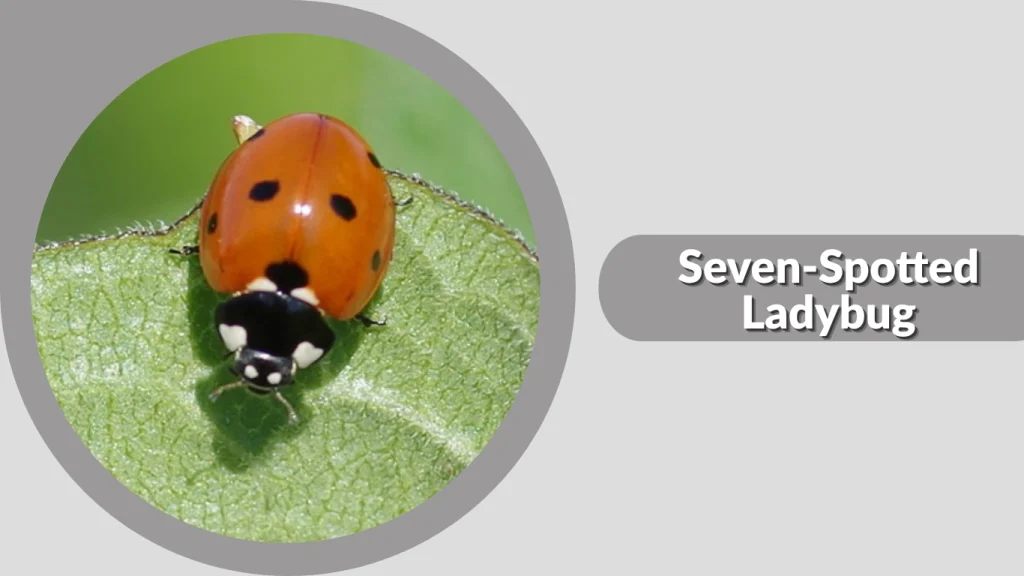
The Seven-Spotted Ladybug (Coccinella septempunctata) is one of the most recognizable and widespread ladybug species in the world. Known for its bright red color and seven distinct black spots, this beetle is a natural pest controller commonly found in gardens and farmlands.
Identification
- Bright red, dome-shaped body
- Three black spots on each wing cover and one central spot behind the head
- Black head with white patches on either side
- Typically 7–8 mm in length
Habitat
Seven-spotted ladybugs thrive in open habitats such as gardens, grasslands, and agricultural fields. They prefer areas rich in aphids and other small insects, often clustering in vegetation where prey is abundant. During winter, they hibernate in leaf litter or under tree bark.
Behavior
These ladybugs are active during warm months, often seen flying or crawling on plants. They are known for their defense mechanism of secreting a yellow fluid from their legs when threatened. This species also exhibits migratory behavior in search of food and favorable conditions.
Diet
Seven-spotted ladybugs primarily feed on aphids, making them beneficial to gardeners and farmers. They may also consume small soft-bodied insects, insect eggs, and mites. Larvae are equally voracious, consuming hundreds of aphids before maturing into adults.
2. Two-Spotted Ladybug
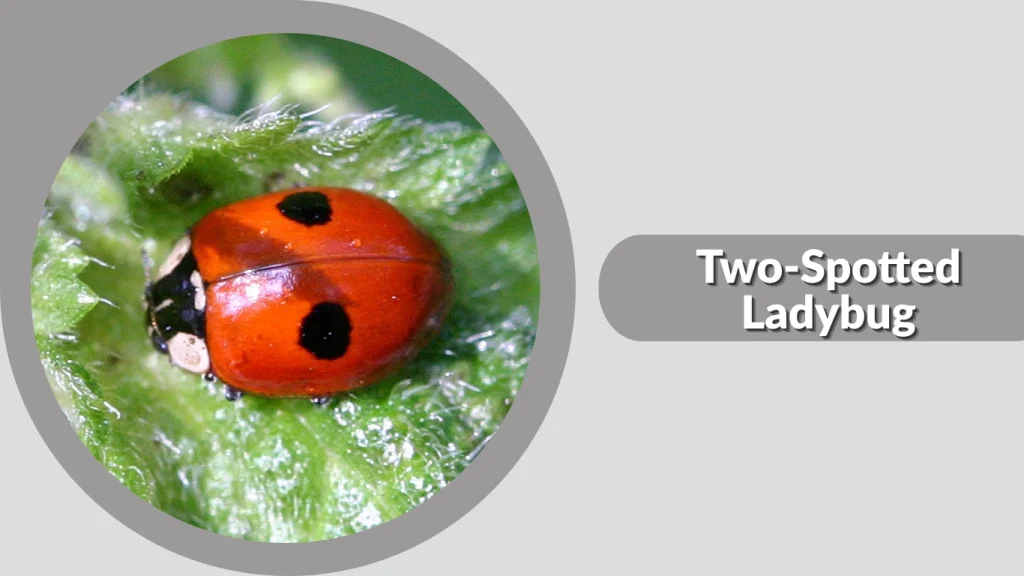
The Two-Spotted Ladybug (Adalia bipunctata) is a small yet striking beetle commonly found across North America, Europe, and parts of Asia. Known for its bright red or orange body with two distinct black spots, this species is a favorite among gardeners for its role in controlling aphid populations.
Identification
- Bright red or orange elytra (wing covers)
- Two large black spots—one on each wing cover
- Black head with white markings
- Oval-shaped body measuring around 4–5 mm in length
Habitat
Two-spotted ladybugs inhabit gardens, forests, meadows, and agricultural fields. They prefer environments rich in aphids, such as rose bushes, milkweed, and vegetable crops. During colder months, they often seek shelter under bark, rocks, or in buildings to overwinter.
Behavior
These ladybugs are active from spring through late autumn. They are strong fliers and can quickly move to new areas when food sources are depleted. When threatened, they release a foul-smelling fluid to deter predators. They also gather in groups during hibernation for protection.
Diet
The Two-Spotted Ladybug primarily feeds on aphids but also consumes other small soft-bodied insects, including whiteflies and mites. Both larvae and adults are efficient predators, making them valuable allies in natural pest control systems.
3. Thirteen-Spotted Ladybug
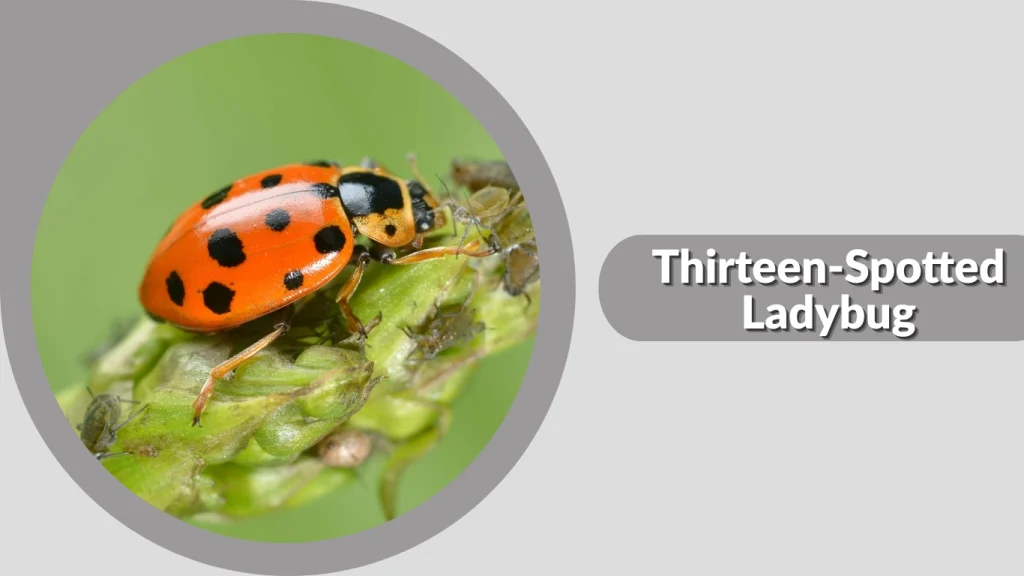
The Thirteen-Spotted Ladybug (Hippodamia tredecimpunctata) is a native North American species recognized for its vibrant coloration and distinctive pattern of 13 black spots. It plays an essential role in controlling crop pests and is often found in agricultural landscapes and wetlands.
Identification
- Orange to reddish body with 13 black spots (six on each wing cover and one central spot)
- Oval, elongated shape
- Black head with white markings near the eyes
- Approximately 5–6 mm long
Habitat
Thirteen-spotted ladybugs prefer open habitats like grasslands, gardens, and crop fields. They are commonly found near areas with high concentrations of aphids, such as corn, alfalfa, and clover. In colder seasons, they hibernate under debris, bark, or leaf litter.
Behavior
These ladybugs are highly mobile and often migrate to find food-rich areas. They exhibit aggregation behavior during overwintering and can withstand cooler temperatures. When disturbed, they release a defensive yellow fluid with an unpleasant odor.
Diet
Their diet mainly consists of aphids, but they also prey on other small insects, insect eggs, and larvae. The larvae are aggressive feeders and can consume large numbers of aphids during development.
4. Twenty-Two-Spotted Ladybug
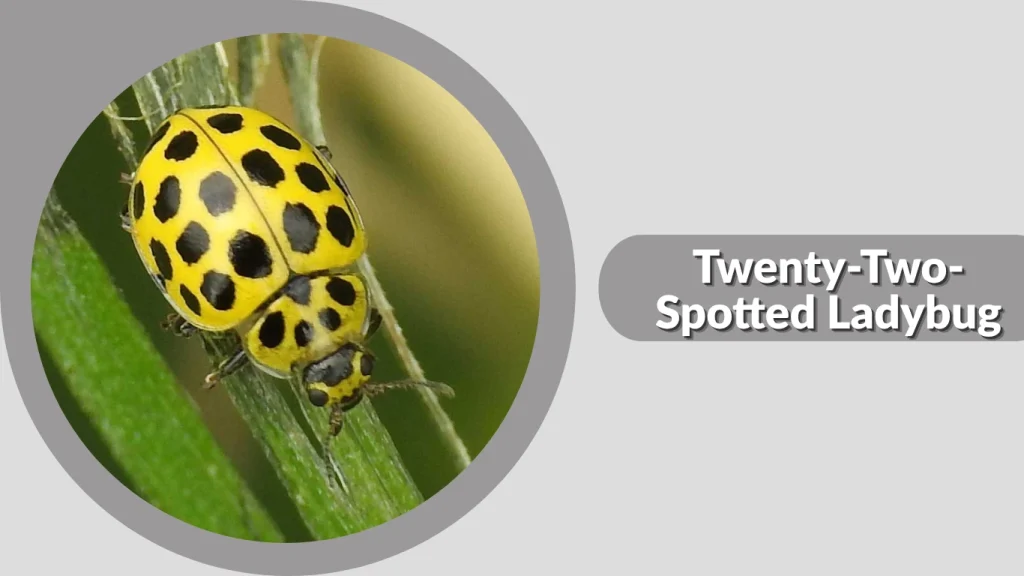
The Twenty-Two-Spotted Ladybug (Psyllobora vigintiduopunctata) is a unique yellow ladybug species commonly found in Europe and Asia. Unlike most ladybugs that prey on insects, this species primarily feeds on mildew fungi growing on plant surfaces.
Identification
- Bright yellow body with 22 small black spots (11 on each wing cover)
- Rounded, compact shape
- Black head with yellow markings
- Small size, typically around 3–4 mm in length
Habitat
This ladybug inhabits grasslands, meadows, and gardens, especially where mildew fungi thrive. It is often found on leaves of plants like nettles and hogweed, where it grazes on fungal growth.
Behavior
The Twenty-Two-Spotted Ladybug is less predatory and more specialized than most of its relatives. It is active during warm months and shelters under vegetation during winter. Its bright coloration acts as a warning signal to deter predators.
Diet
Unlike most ladybugs, this species feeds on mildew and fungal spores. It plays an important ecological role in controlling fungal growth on plants rather than insect pests. Both adults and larvae share this same diet.
5. Convergent Ladybug
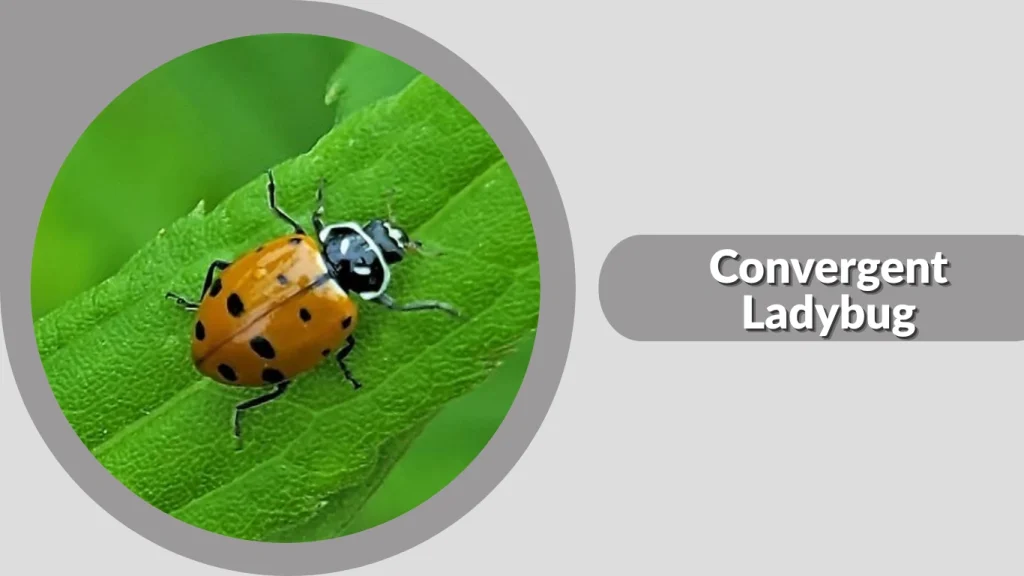
The Convergent Ladybug (Hippodamia convergens) is one of the most common and beneficial ladybugs in North America. Recognized for the two white lines on its pronotum that appear to “converge,” it is widely used in agriculture as a natural aphid control agent.
Identification
- Orange or red body with 12–13 small black spots
- Two converging white lines behind the head
- Oval, convex body about 6–7 mm long
- Black head with white patches on sides
Habitat
This species thrives in gardens, meadows, farmlands, and orchards. It favors plants infested with aphids, such as roses, milkweed, and alfalfa. In winter, large groups cluster in sheltered areas like under leaves or bark to hibernate.
Behavior
Convergent ladybugs are known for their mass migrations and overwintering gatherings. They are active during the warmer months and exhibit strong flight capability to locate aphid colonies. When threatened, they release a yellow defensive fluid.
Diet
Their diet mainly consists of aphids, scales, and small insect larvae. Larvae are especially voracious, consuming hundreds of aphids before reaching adulthood, making this species highly effective in biological pest control.
6. Asian Lady Beetle
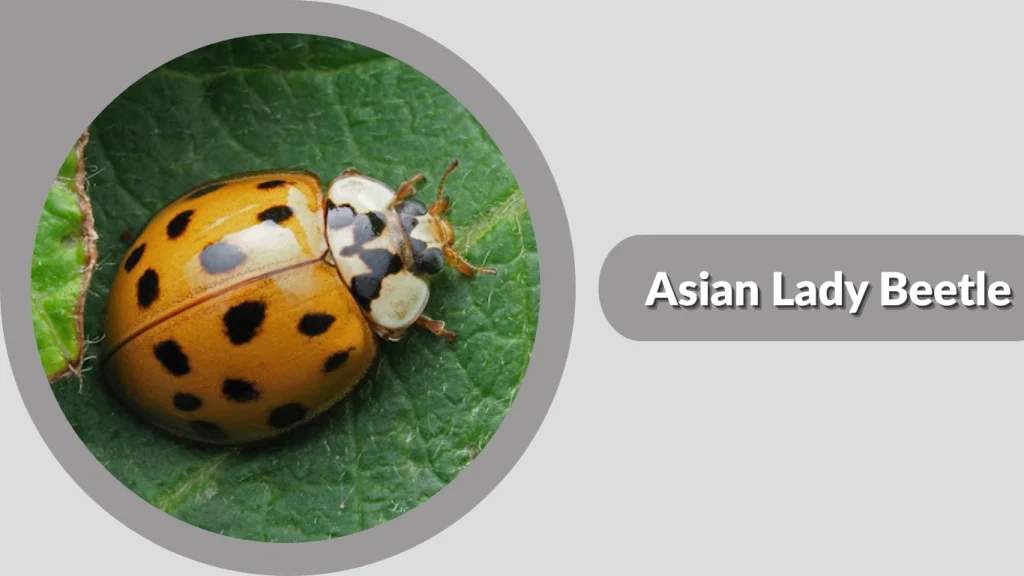
The Asian Lady Beetle (Harmonia axyridis) is a non-native species introduced for pest control but has since spread across many continents. It’s easily recognized by its variable coloration and distinctive black “M”-shaped marking on its pronotum.
Identification
- Color varies from yellow to red with 0–22 black spots
- Distinct black “M” or “W” mark behind the head
- Oval, slightly larger body (7–10 mm)
- White patches on each side of the head
Habitat
Asian lady beetles inhabit forests, gardens, and agricultural fields. They are commonly found on plants infested with aphids. During winter, they seek warmth indoors, often entering houses and buildings in large numbers.
Behavior
They are strong fliers and highly adaptable to different environments. When disturbed, they release a yellow fluid with a foul odor and can bite humans mildly. They tend to cluster in large numbers during overwintering, especially in man-made structures.
Diet
Asian lady beetles feed primarily on aphids and scale insects. They are also opportunistic feeders, consuming other soft-bodied insects and even fruit juices when prey is scarce. Their diverse diet helps them thrive in various ecosystems.
7. Pink Spotted Lady Beetle
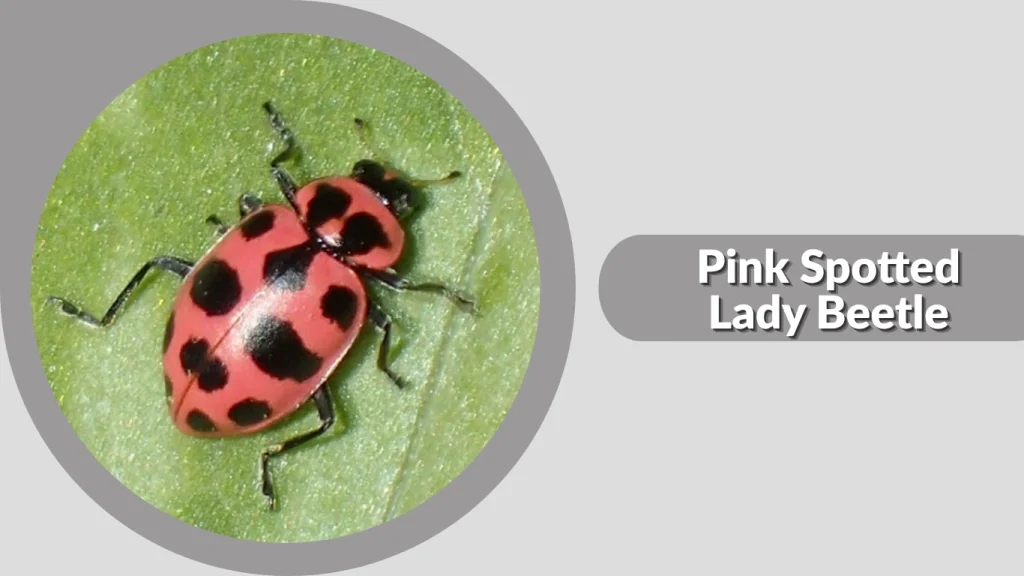
The Pink Spotted Lady Beetle (Coleomegilla maculata) is a striking species native to North America, recognized for its pinkish or reddish coloration with distinct black spots. It is highly valued in agriculture for its effectiveness in controlling crop pests, especially aphids and insect eggs.
Identification
- Pink to reddish body with 12 black spots (six on each wing cover)
- Elongated oval shape
- Black head with white markings
- About 5–6 mm in length
Habitat
This ladybug is commonly found in gardens, meadows, and crop fields such as corn and alfalfa. It prefers sunny, open areas with abundant insect prey. During winter, it seeks shelter under bark, rocks, and leaf litter for hibernation.
Behavior
The Pink Spotted Lady Beetle is active from spring through late summer. It is an agile flier and frequently moves between plants in search of prey. Unlike many ladybugs, it can also feed on pollen, which helps it survive when insect prey is limited.
Diet
Its diet primarily includes aphids, mites, and insect eggs. It also consumes pollen and nectar, making it a beneficial pollinator in addition to a pest controller. Both larvae and adults are efficient predators in crop ecosystems.
8. Eye-Spotted Ladybug
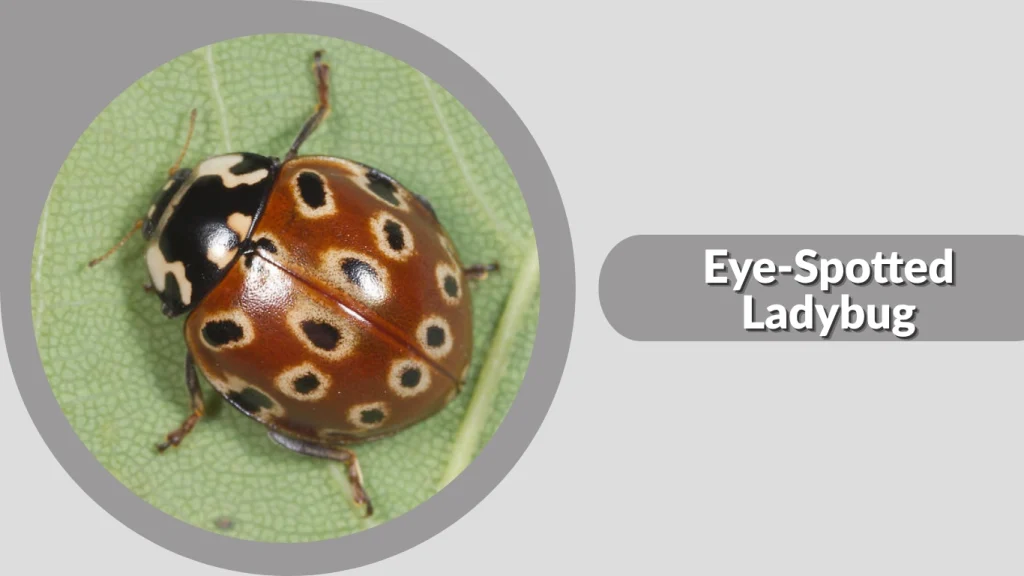
The Eye-Spotted Ladybug (Anatis ocellata) is a large and beautiful species known for its distinct black-ringed white spots resembling eyes. Found across North America and Europe, it is often seen on coniferous trees where it hunts aphids and scale insects.
Identification
- Reddish-orange body with 16 white “eye-like” spots ringed in black
- Large and dome-shaped body, about 7–9 mm long
- Black head with small white patches
- Smooth, shiny surface
Habitat
This species prefers forests, especially coniferous areas such as pine and spruce trees. It is also found in parks and gardens with evergreen vegetation. During colder months, it hibernates beneath bark or leaf litter near its feeding sites.
Behavior
The Eye-Spotted Ladybug is a solitary predator that climbs trees to locate prey. It uses its bright, eye-like markings as a defense mechanism to scare off predators. Adults become less active during cooler temperatures but resume feeding in spring.
Diet
Their main diet consists of aphids, scale insects, and mealybugs found on conifer trees. Both larvae and adults are efficient hunters and contribute significantly to the natural control of forest pests.
9. Fifteen-Spotted Ladybug
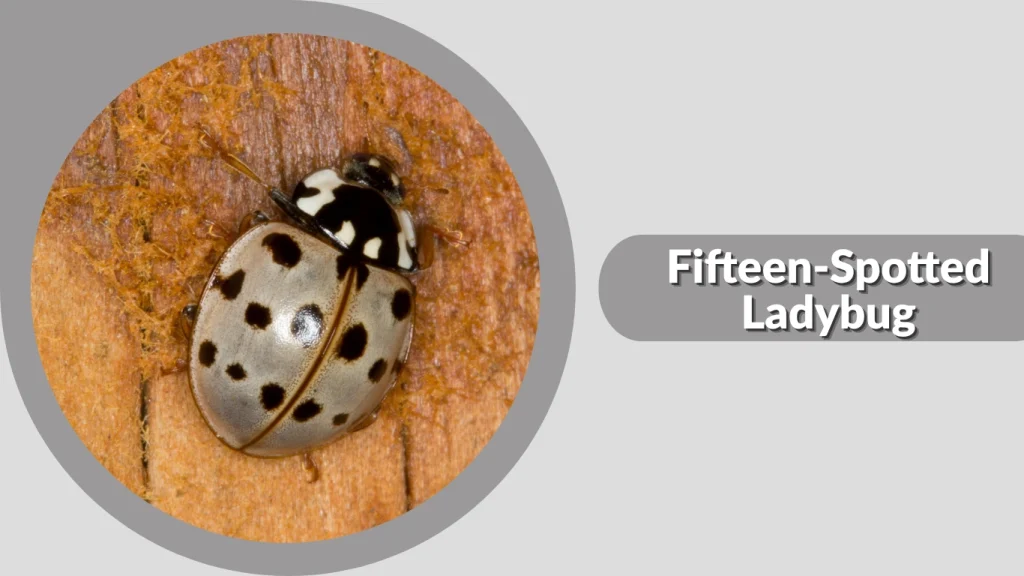
The Fifteen-Spotted Ladybug (Anatis labiculata) is a distinctive white or pale cream-colored beetle adorned with bold black spots. Found mostly in North America, it stands out for its unusual coloration compared to the more common red or orange ladybugs.
Identification
- White or light cream-colored body with 15 black spots
- Rounded, convex shape
- Black head with small white markings
- Size ranges from 7–9 mm in length
Habitat
This ladybug prefers moist woodlands, gardens, and meadows. It is often found on plants infested with aphids or scale insects. During the cold months, it seeks shelter under bark or leaf litter to overwinter.
Behavior
The Fifteen-Spotted Ladybug is an active predator throughout the growing season. It is slower-moving than some other species but thorough in searching for prey. When threatened, it releases a strong-smelling yellow defensive fluid to deter predators.
Diet
Its primary diet consists of aphids and other soft-bodied insects. Both larvae and adults consume large quantities of pests, making it an important natural control agent in many ecosystems.
10. Twenty-Spotted Lady Beetle
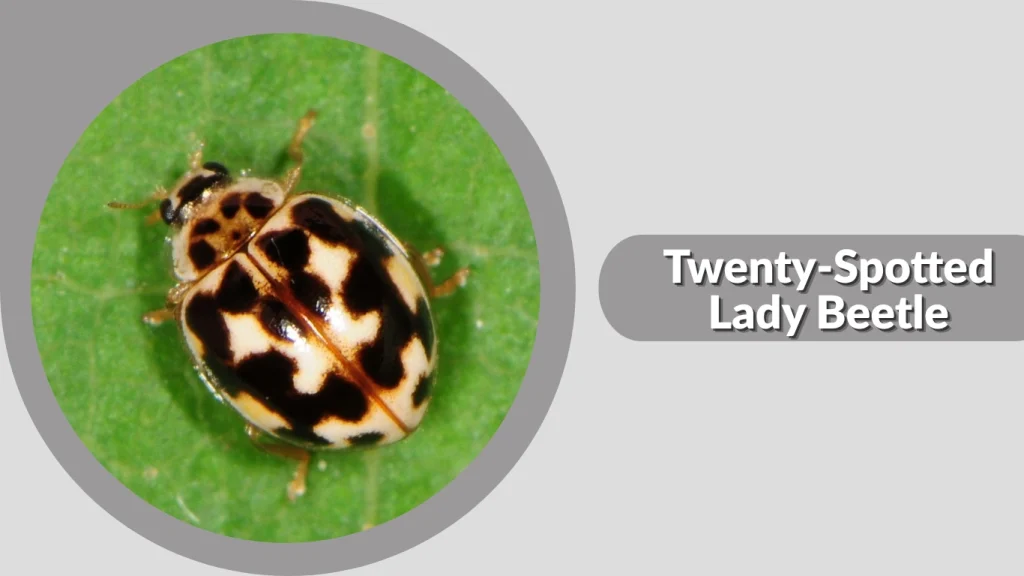
The Twenty-Spotted Lady Beetle (Psyllobora vigintimaculata) is one of the smallest ladybug species and is easily recognized by its delicate pattern of twenty black spots on a pale background. Unlike most ladybugs, it feeds primarily on mildew fungi rather than insects.
Identification
- Creamy white or yellow body with 20 small black spots
- Small, rounded body about 3–4 mm long
- Black head with white patches
- Delicate and lightly domed appearance
Habitat
This species is commonly found in humid environments such as gardens, grasslands, and forests. It prefers areas where mildew fungi grow on plant leaves, especially on low vegetation and shrubs.
Behavior
The Twenty-Spotted Lady Beetle is less aggressive than insect-eating species. It moves slowly across leaf surfaces, feeding on fungal spores. During cooler months, it hides in plant litter or under bark to overwinter.
Diet
Unlike other ladybugs, this species feeds exclusively on mildew and fungal growth. Both larvae and adults help control the spread of powdery mildew, making them beneficial for maintaining plant health.
11. Twice-Stabbed Lady Beetle
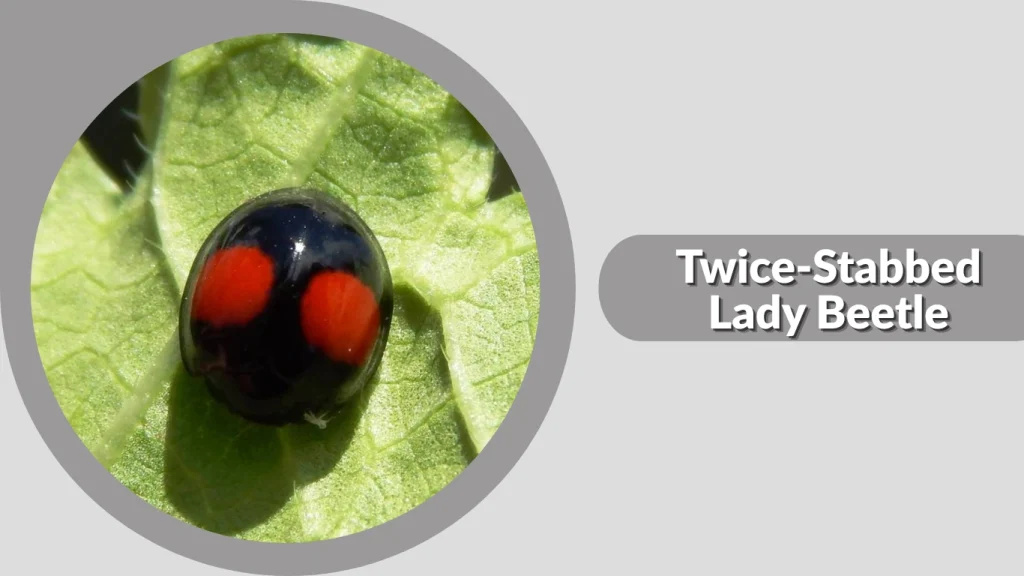
The Twice-Stabbed Lady Beetle (Chilocorus stigma) is a small, glossy black beetle easily recognized by its two bright red spots. Native to North America, this species is an important predator of scale insects and aphids, often used in biological pest control.
Identification
- Shiny black, rounded body with two red spots (one on each wing cover)
- Smooth, dome-shaped appearance
- Small size, about 4–5 mm long
- Black head and legs
Habitat
This lady beetle is commonly found in forests, orchards, and gardens, especially where scale insects infest trees and shrubs. It prefers fruit trees and evergreens but can adapt to various environments.
Behavior
The Twice-Stabbed Lady Beetle is active during spring and summer, often hiding under leaves or bark while hunting for prey. It releases a yellow defensive fluid when threatened and is known for its patience while stalking slow-moving insects.
Diet
This species primarily feeds on armored scale insects but also consumes aphids and mealybugs. Both larvae and adults are highly effective at reducing pest populations in orchards and ornamental plants.
12. Three-Banded Lady Beetle
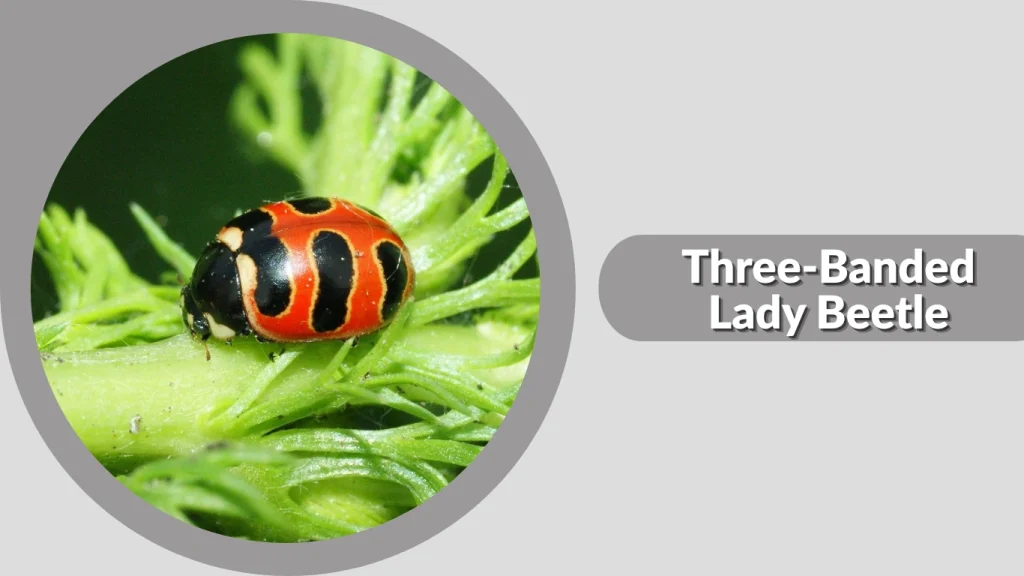
The Three-Banded Lady Beetle (Coccinella trifasciata) is a distinctive ladybug known for the three dark bands across its red or orange body. It is native to North America and is a frequent visitor to gardens and agricultural fields.
Identification
- Bright red or orange elytra with three dark horizontal bands
- Oval, slightly flattened shape
- Black head with white spots
- Medium size, about 5–6 mm long
Habitat
This species thrives in open areas such as gardens, fields, and meadows. It prefers habitats with abundant aphid populations and tends to rest on broadleaf plants. During winter, it seeks refuge under bark or plant debris.
Behavior
The Three-Banded Lady Beetle is an active hunter, often flying from plant to plant in search of prey. It is solitary in nature but may gather in groups during overwintering. When disturbed, it emits a yellow defensive secretion.
Diet
Its diet consists mainly of aphids, whiteflies, and soft insect larvae. The larvae are equally predatory and play a vital role in maintaining ecological balance by keeping pest populations low.
13. Orange-Spotted Ladybug
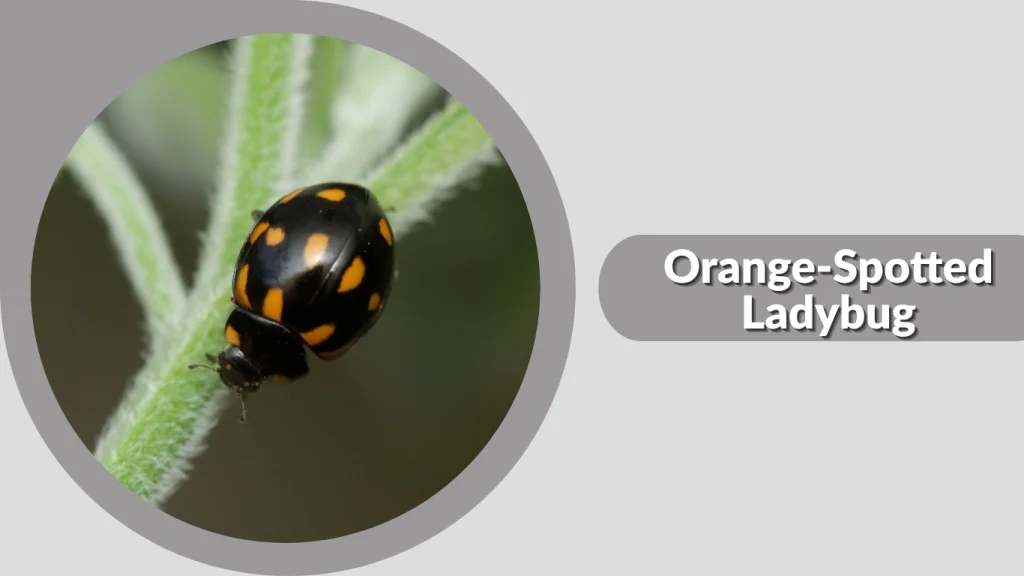
The Orange-Spotted Ladybug (Coccinella leonina) is a vibrant species native to New Zealand and parts of Australia. Known for its deep orange color and distinctive black spots, it’s a natural aphid predator and a frequent presence in gardens and open grasslands.
Identification
- Bright orange or reddish body with 10–12 black spots
- Smooth, rounded, dome-shaped body
- Black head with white side patches
- Medium size, around 5–6 mm in length
Habitat
This species prefers gardens, meadows, and agricultural areas rich in soft-bodied insect populations. It often rests on leaves and flowers, especially where aphids are abundant. During winter, it hides under bark, stones, or dense vegetation.
Behavior
The Orange-Spotted Ladybug is highly active in warm months and can fly long distances to find new food sources. It uses reflex bleeding as a defense mechanism and tends to cluster in sheltered areas during cold or rainy weather.
Diet
It primarily feeds on aphids, but also consumes mealybugs and small insect eggs. Its larvae are similarly aggressive feeders, contributing greatly to pest management in natural ecosystems and cultivated lands.
14. Steelblue Ladybird
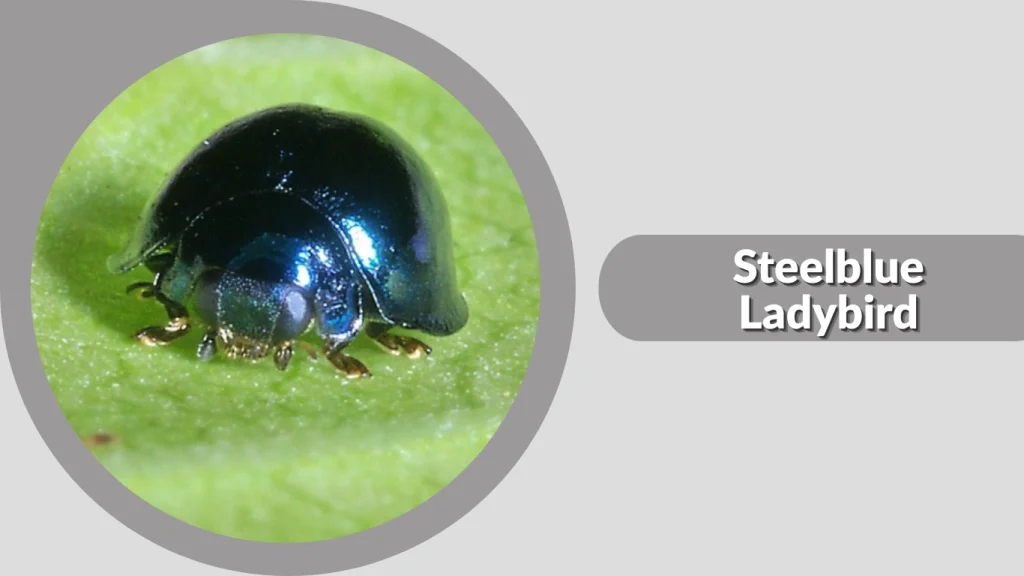
The Steelblue Ladybird (Halmus chalybeus) is a striking metallic-blue beetle native to Australia and New Zealand. It’s well known for its role in controlling scale insects and has been introduced in some regions for biological pest management.
Identification
- Shiny metallic blue or greenish-blue body
- Smooth, dome-shaped appearance
- Small to medium size, around 4–5 mm long
- Black legs and antennae
Habitat
This ladybird is often found on citrus trees, ornamentals, and native shrubs infested with scale insects. It thrives in both natural forests and cultivated gardens. In colder months, it shelters under bark or within leaf litter.
Behavior
Steelblue Ladybirds are solitary hunters that move slowly and deliberately when searching for prey. They are strong fliers and can disperse widely. Adults are most active during the warmer months and reproduce rapidly in favorable conditions.
Diet
Their diet mainly consists of scale insects, mealybugs, and other sap-sucking pests. Both adults and larvae are efficient predators, making this species valuable for integrated pest control in orchards and greenhouses.
15. Mealybug Destroyer
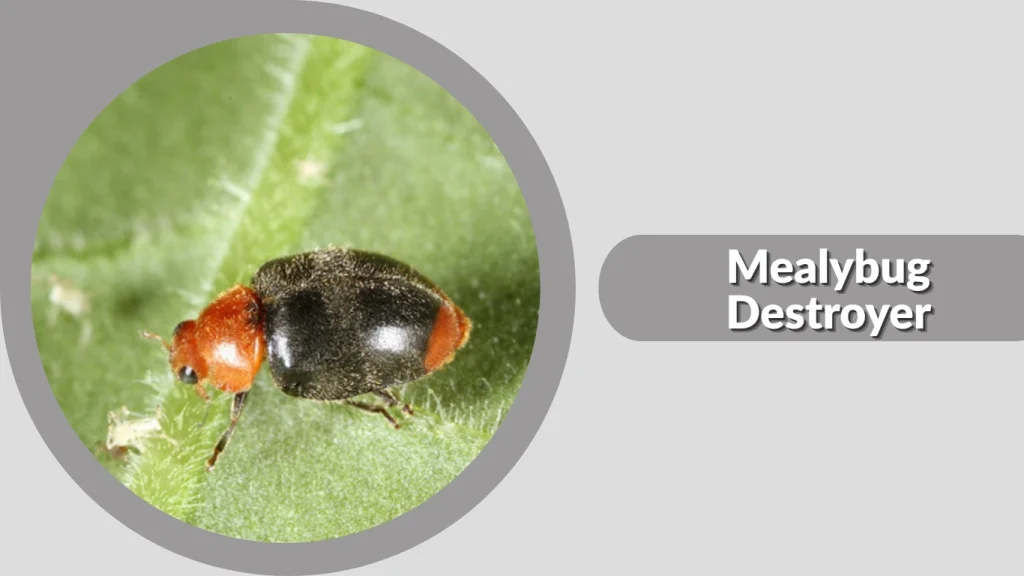
The Mealybug Destroyer (Cryptolaemus montrouzieri) is a small but powerful predatory ladybug native to Australia. It has been introduced worldwide for biological pest control due to its effectiveness against mealybugs and soft scales in greenhouses and orchards.
Identification
- Dark brown to black body with orange head and rear
- Oval, slightly elongated shape
- Fine hairs covering the body, giving a matte look
- Size about 4 mm in length
Habitat
This species thrives in warm, humid environments such as orchards, gardens, and indoor greenhouses. It is most abundant where mealybug infestations occur on citrus trees, ornamental plants, and fruit crops.
Behavior
The Mealybug Destroyer is an active and persistent predator. It can survive year-round in controlled environments and reproduces quickly under favorable conditions. It releases a defensive fluid when disturbed but is harmless to humans.
Diet
Its primary diet includes mealybugs and scale insects. Both larvae and adults are voracious feeders, capable of wiping out entire pest colonies. Larvae often mimic mealybugs in appearance, allowing them to approach prey undetected.
16. Fungus-Eating Ladybird
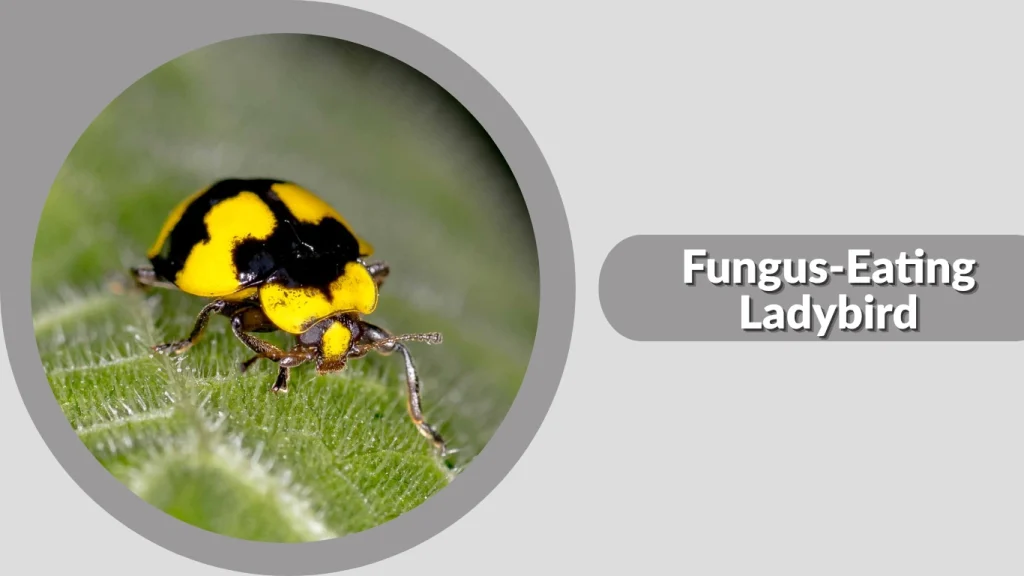
The Fungus-Eating Ladybird (Illeis galbula) is a small, brightly colored species known for feeding on powdery mildew rather than insects. Found mainly in Australia and parts of Asia, it is a helpful ally for gardeners combating fungal plant diseases.
Identification
- Yellow body with distinctive black markings on wing covers
- Rounded, glossy dome shape
- Black head and pronotum with yellow edges
- Small size, about 4 mm long
Habitat
This ladybird is found in gardens, agricultural fields, and forests where mildew fungi grow. It prefers humid environments and can often be seen on cucumber, pumpkin, and bean leaves affected by powdery mildew.
Behavior
The Fungus-Eating Ladybird is gentle in movement and non-aggressive. It spends much of its time feeding on the surface of leaves and reproduces during warm seasons. Adults and larvae both contribute to controlling fungal infections naturally.
Diet
Unlike most ladybugs, it feeds exclusively on fungal spores and mildew. Both adults and larvae graze on leaf surfaces, helping to reduce mildew spread and improve plant health without harming vegetation.
17. Transverse Ladybug
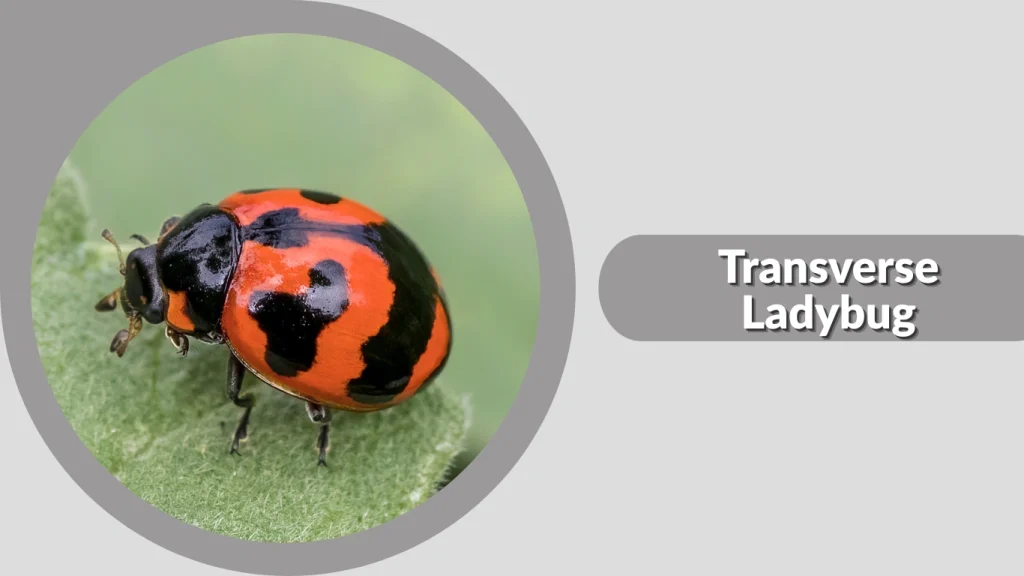
The Transverse Ladybug (Coccinella transversoguttata) is a native North American species known for its distinctive transverse black bands that stretch across its red or orange body. It is a vital predator in controlling aphid populations across meadows and farmlands.
Identification
- Bright red or orange elytra with two wide black transverse bands
- Oval, convex body around 5–7 mm long
- Black head with white markings
- Short legs and antennae typical of Coccinella species
Habitat
This ladybug prefers open habitats such as grasslands, gardens, and crop fields. It is often found on alfalfa, grains, and other plants heavily infested with aphids. In winter, it seeks shelter under bark, rocks, or dense vegetation.
Behavior
The Transverse Ladybug is highly active in spring and summer, often migrating to new fields in search of prey. It is a solitary hunter but sometimes gathers in groups for overwintering. It also secretes a defensive fluid when handled.
Diet
Its diet mainly consists of aphids, but it also feeds on other small soft-bodied insects and insect eggs. Both larvae and adults are efficient predators that play a significant role in pest suppression.
18. Variegated Lady Beetle
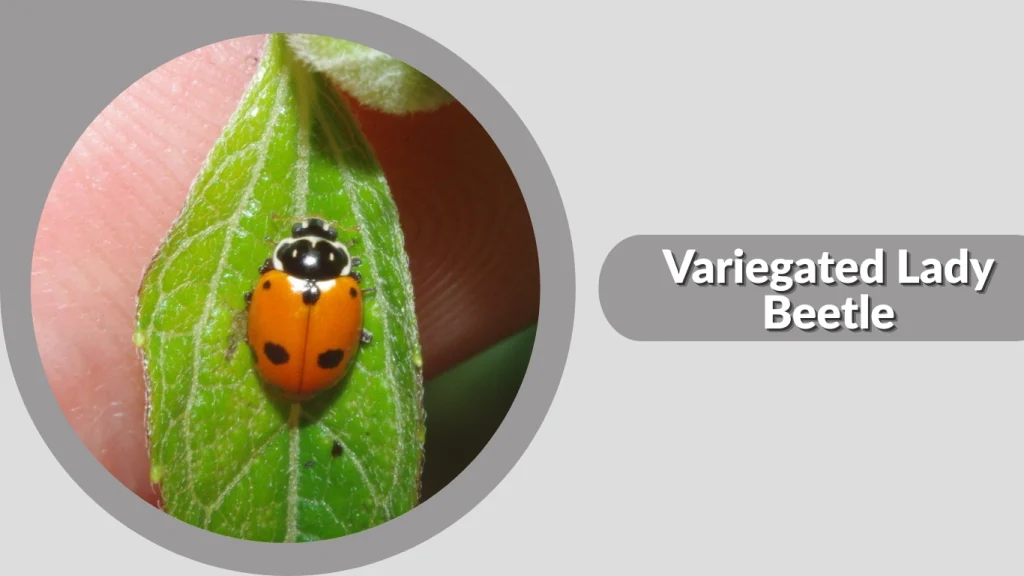
The Variegated Lady Beetle (Hippodamia variegata) is a small, widespread species originally from Europe but now found on multiple continents. Its name comes from the variation in spot patterns, making each beetle appear slightly unique.
Identification
- Red, orange, or yellow elytra with variable black spots (typically 5–13)
- Oval, slightly elongated body
- Black head with white markings and a pale pronotum
- Size about 4–6 mm in length
Habitat
This species is adaptable and found in gardens, fields, grasslands, and forests. It prefers plants infested with aphids, whiteflies, and small larvae. It thrives in temperate climates and shelters under bark or stones during cold months.
Behavior
Variegated Lady Beetles are strong fliers and spread rapidly in search of food. They are active during warm seasons and form overwintering clusters in sheltered places. Their color variability acts as camouflage from predators.
Diet
Their diet includes aphids, mealybugs, and other small insects. Both larvae and adults are aggressive feeders that help protect crops and ornamental plants from pest outbreaks.
19. Hieroglyphic Ladybug
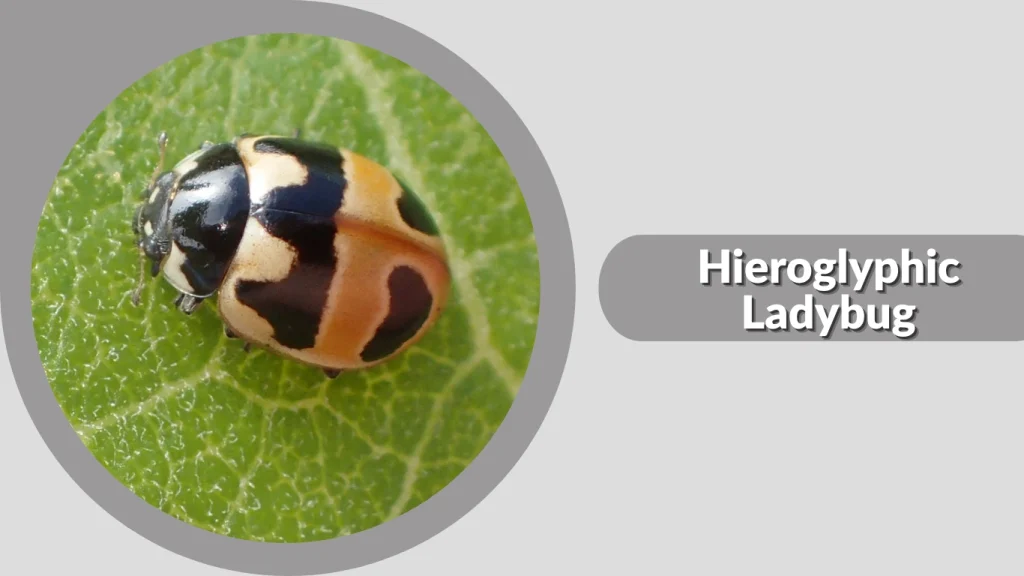
The Hieroglyphic Ladybug (Coccinella hieroglyphica) is a striking species native to Europe and Asia, named for the intricate black markings on its orange or yellow body that resemble ancient hieroglyphs. It thrives in cool, forested environments and is an important natural predator of aphids.
Identification
- Bright orange or yellow body with irregular black markings
- Distinct “hieroglyphic” patterns unique to each beetle
- Rounded, convex body around 5–7 mm long
- Black head with white patches on either side
Habitat
This ladybug prefers coniferous forests, heathlands, and moorlands. It is commonly found on pine and spruce trees, where aphids and scale insects are plentiful. During winter, it hides under bark, moss, or forest debris.
Behavior
The Hieroglyphic Ladybug is less social than other species, typically living alone or in small groups. It is most active in summer and known for its strong climbing ability. Its unusual pattern provides camouflage against predators.
Diet
This species mainly feeds on conifer aphids and small soft-bodied insects. Both larvae and adults play a key role in controlling aphid infestations in forest ecosystems.
20. Polished Lady Beetle
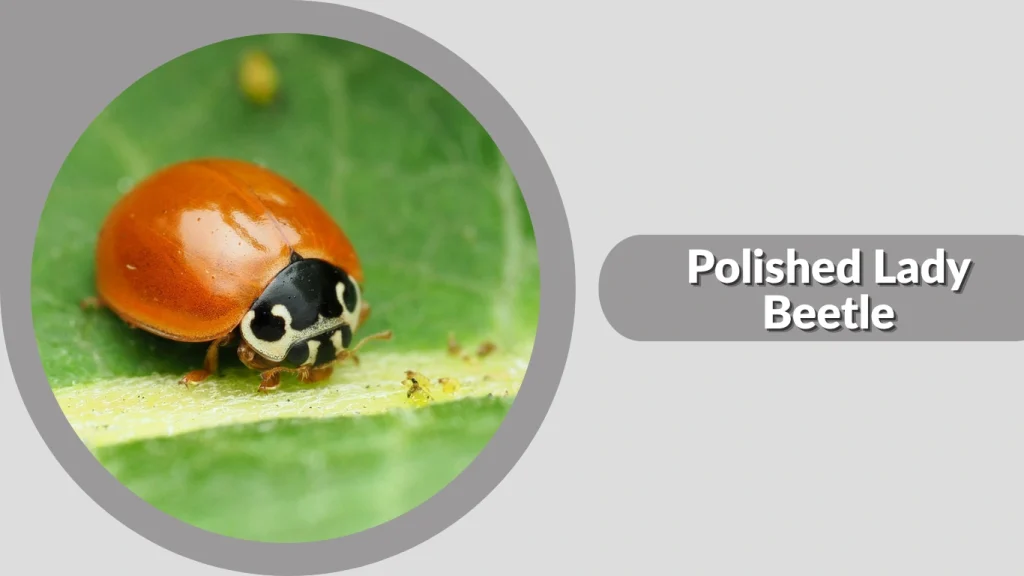
The Polished Lady Beetle (Cycloneda munda) is a smooth, shiny red beetle found throughout North America. Its spotless, mirror-like shell distinguishes it from most other ladybugs, giving it a sleek and elegant appearance.
Identification
- Glossy, spotless red or orange elytra
- Black head with white patches forming an “M” shape
- Smooth, oval body about 5–6 mm long
- Shiny, reflective surface resembling polished enamel
Habitat
This species inhabits gardens, grasslands, and crop fields where aphids are abundant. It prefers sunlit areas with dense vegetation. During winter, it overwinters in groups under leaf litter or bark.
Behavior
The Polished Lady Beetle is an active daytime hunter, often seen on flowering plants. It is a fast flier and disperses widely to locate aphid colonies. It also releases a foul-smelling fluid for defense when disturbed.
Diet
Its diet primarily includes aphids, mealybugs, and whiteflies. The larvae are equally predatory, consuming large numbers of pests during their development, making this species a valuable ally for farmers and gardeners alike.
