
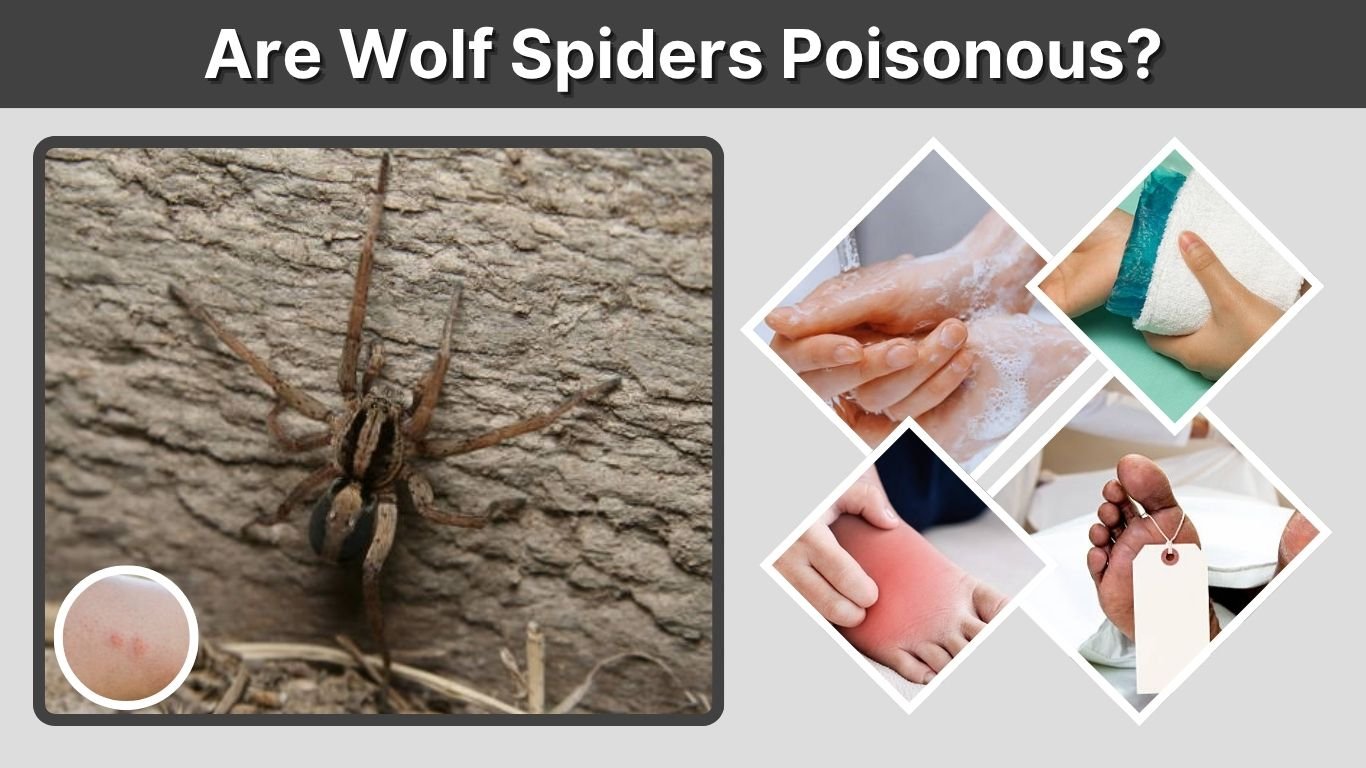
Wolf spiders can look intimidating because of their large bodies, hairy appearance, and fast movements. This often leads people to wonder, are wolf spiders poisonous? The short answer is no. Wolf spiders are not poisonous, although they are venomous because they use venom to subdue insects and other small prey. Their venom is generally not considered medically dangerous to healthy humans. Wolf spiders rarely bite unless they are trapped, handled, or threatened. Below, we explain their venom, bite symptoms, risks to people and pets, and when medical attention may be necessary.
Are Wolf Spiders Poisonous or Venomous?
Wolf spiders are venomous rather than poisonous. These terms are often used interchangeably, but they describe two different biological mechanisms.
A venomous animal injects a substance through a bite or sting. A poisonous animal causes harm when it is eaten, touched, or otherwise absorbed.
Wolf spiders belong to the family Lycosidae and possess venom glands connected to their fangs. They use this venom primarily for hunting small animals.
Why Do Wolf Spiders Have Venom?
Wolf spiders are active hunters. Unlike many spiders that build webs to catch prey, wolf spiders usually chase insects along the ground.
Their venom helps them quickly immobilize prey such as:
- Flies
- Crickets
- Grasshoppers
- Beetles
- Moths
- Cockroaches
- Other spiders
- Small arthropods
The venom is useful against animals much smaller than humans.
How Poisonous Are Wolf Spiders?
Wolf spiders are not poisonous, and their venom generally poses little danger to humans.
Most bites cause symptoms similar to those produced by many other non-medically significant spiders. Pain, redness, swelling, and itching can occur around the bite.
Severe complications are uncommon.
Are All Wolf Spiders Venomous?
Essentially all true wolf spiders possess venom because it plays an important role in capturing prey.
However, having venom does not automatically make an animal dangerous to humans. The venom of wolf spiders is primarily adapted for small prey rather than large mammals.
Are Wolf Spiders Poisonous to Humans?
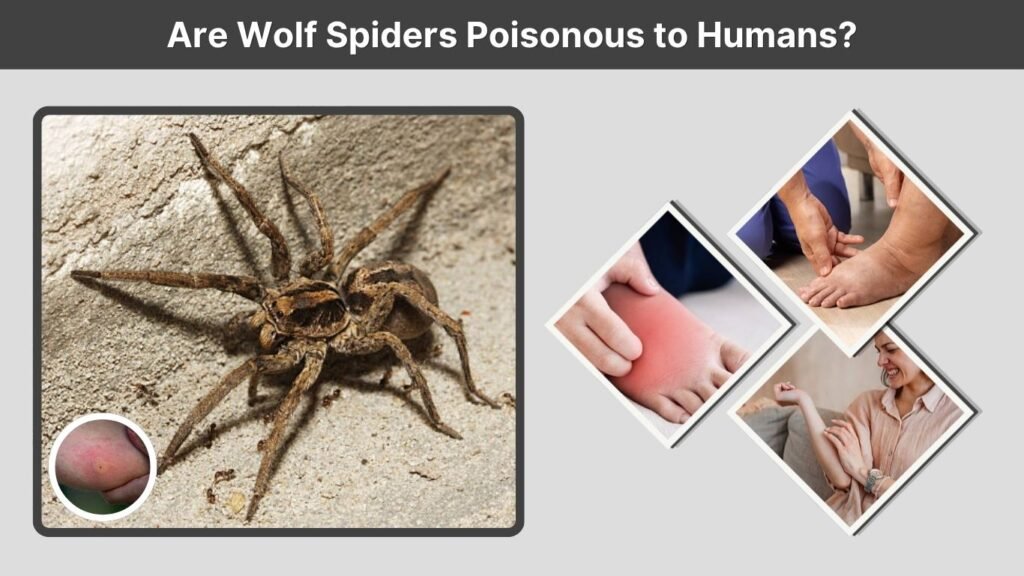
Wolf spiders are not considered poisonous to humans. Their bites can hurt, but serious systemic reactions are uncommon.
These spiders generally try to escape when approached. Biting is usually defensive rather than aggressive behavior.
What Happens If a Wolf Spider Bites You?
A wolf spider bite may initially feel like a small pinch or sting.
Common symptoms around the bite can include:
- Mild to moderate pain
- Redness
- Local swelling
- Itching
- Tenderness
- A small raised bump
- Warmth around the bite
Symptoms often improve gradually.
Because many different insect bites, skin infections, and spider bites can look alike, it can be difficult to identify the responsible animal unless the spider was actually seen.
Are Wolf Spider Bites Dangerous?
For most healthy adults, wolf spider bites are not considered medically dangerous.
However, any bite that produces worsening symptoms should be monitored carefully.
Seek medical attention if you develop symptoms such as:
- Rapidly increasing swelling
- Severe or persistent pain
- Widespread rash
- Difficulty breathing
- Swelling of the face, tongue, or throat
- Dizziness or fainting
- Fever
- Pus or signs of infection
Difficulty breathing or severe facial or throat swelling can indicate a serious allergic reaction and requires emergency medical care.
Are Wolf Spiders Poisonous to Babies?
Wolf spiders are not poisonous to babies, but infants and very young children are smaller and may react differently to bites than adults.
Any suspected spider bite in an infant should be monitored carefully.
Parents should consider contacting a healthcare professional if the child develops significant swelling, severe pain, unusual sleepiness, vomiting, widespread rash, breathing difficulty, or rapidly worsening symptoms.
Wolf Spider Bite vs. Brown Recluse Bite
Wolf spiders are sometimes mistaken for brown recluse spiders because both can be brown and may enter homes.
However, the medical significance of their bites is different.
| Feature | Wolf Spider | Brown Recluse |
|---|---|---|
| Venomous | Yes | Yes |
| Usually aggressive | No | No |
| Typical bite severity | Mild to moderate | Can sometimes be medically significant |
| Severe tissue damage | Unusual | Possible |
| Hairy appearance | Usually noticeable | Usually smoother |
| Hunting style | Active hunter | Primarily nocturnal hunter |
| Dangerous to healthy adults | Usually no | Potentially |
A skin wound should not automatically be assumed to be a brown recluse bite. Many bacterial infections and other conditions can cause similar lesions.
Are Wolf Spiders Poisonous to Dogs?
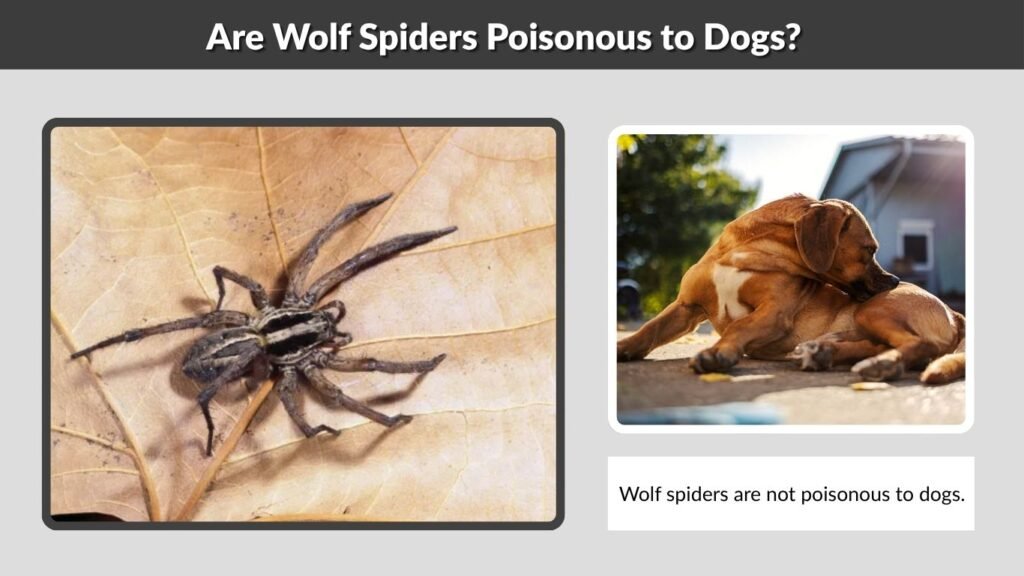
Wolf spiders are not poisonous to dogs. A curious dog may paw at, sniff, or even attempt to eat one.
The spider may bite defensively if it becomes trapped against the dog’s skin.
Symptoms of a Wolf Spider Bite on Dogs
Possible symptoms include:
- Local redness
- Mild swelling
- Tenderness
- Licking the affected area
- Pawing at the face
- Mild discomfort
Most mild reactions are localized.
However, veterinary attention is appropriate if your dog develops significant swelling, breathing problems, weakness, repeated vomiting, severe pain, or other unusual symptoms.
Are Wolf Spiders Poisonous to Dogs If Eaten?
Wolf spiders are not generally considered poisonous when swallowed.
Their venom is designed to be injected through their fangs rather than acting as a digestive poison.
Nevertheless, eating spiders or other wild arthropods is best discouraged because pets could encounter pesticides, parasites, bacteria, or another spider species that has been misidentified.
Are Wolf Spiders Poisonous to Cats?
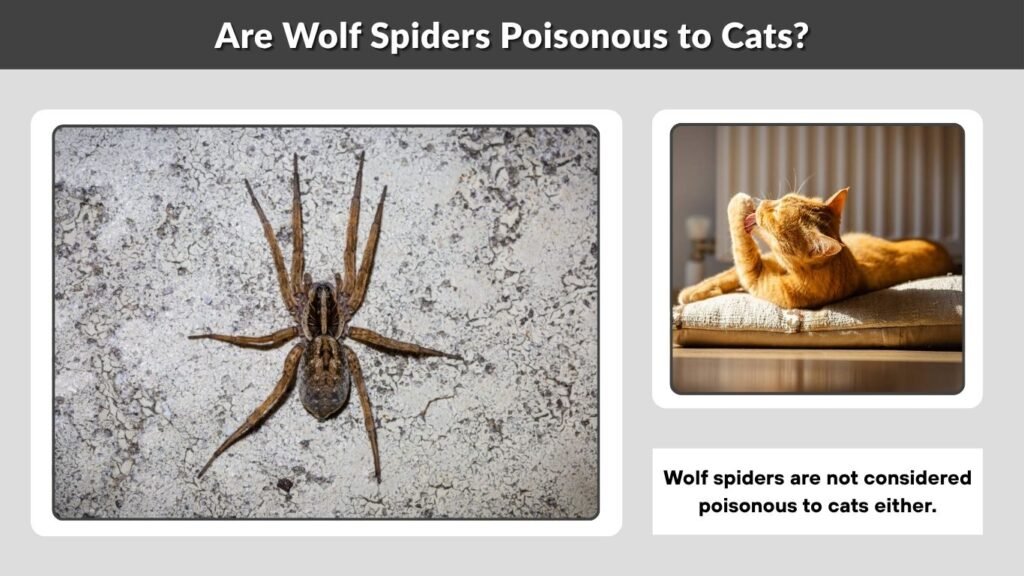
Wolf spiders are not considered poisonous to cats either.
Cats frequently chase spiders because their rapid movements trigger a hunting response. A spider that is cornered may bite the cat.
What Happens If a Cat Is Bitten?
A mild bite might cause:
- Swelling
- Redness
- Tenderness
- Excessive licking
- Limping if bitten on a paw
- Pawing at the mouth if bitten near the face
Most healthy cats are unlikely to experience serious effects from a typical wolf spider bite.
Contact a veterinarian if symptoms are severe, rapidly worsening, or accompanied by breathing difficulty, vomiting, weakness, or extensive swelling.
Are Wolf Spiders Poisonous to Cats If Eaten?
Eating a wolf spider is unlikely to result in venom poisoning because venom normally needs to be injected into tissue.
However, gastrointestinal irritation or other problems are still possible after eating insects or spiders.
Monitoring the cat for unusual symptoms is sensible.
Are Different Types of Wolf Spiders Poisonous?
There are thousands of wolf spider species worldwide, resulting in significant variation in their size, markings, and habitat.
Despite their differences, commonly encountered wolf spiders are generally not considered dangerously venomous to humans.
Are Rabid Wolf Spiders Poisonous?
The rabid wolf spider (Rabidosa rabida) is not poisonous.
Its dramatic name does not mean it carries rabies. “Rabid” refers to its fast movements and behavior.
It possesses venom for hunting, but its bite is generally not considered medically significant to healthy humans.
Are Carolina Wolf Spiders Poisonous?
The Carolina wolf spider (Hogna carolinensis) is one of the largest wolf spiders found in North America.
Its large size can make it particularly intimidating.
It is venomous but not poisonous, and its venom is generally not considered dangerous to healthy people.
Are Black Wolf Spiders Poisonous?
Some wolf spiders appear nearly black, especially under certain lighting conditions.
Dark coloration does not mean that a wolf spider has stronger venom.
Identification should be based on several physical characteristics rather than color alone.
Are Brown Wolf Spiders Poisonous?
Brown is one of the most common colors among wolf spiders.
Brown wolf spiders possess venom, but they are not poisonous and generally do not pose a serious medical threat to humans.
Their coloration helps them camouflage against soil, leaf litter, bark, and rocks.
Are Giant Wolf Spiders Poisonous?
Large wolf spiders may deliver a more noticeable mechanical bite because they have larger fangs.
Their impressive size does not necessarily indicate highly dangerous venom.
Large species generally use the same hunting strategy as smaller wolf spiders: capturing insects and other small animals.
Are Baby Wolf Spiders Poisonous?
Baby wolf spiders, known as spiderlings, are venomous predators but are not considered poisonous.
They are extremely small and primarily hunt tiny insects.
Female wolf spiders are famous for carrying their spiderlings on their abdomen after the young emerge from the egg sac.
Are Wolf Spiders in Different States Poisonous?
People frequently encounter wolf spiders throughout the United States, including Florida, Texas, California, Arizona, Michigan, Ohio, Georgia, Colorado, Virginia, Pennsylvania, Missouri, and many other states.
Wolf spiders from these locations are generally venomous predators but are not considered poisonous or highly dangerous to humans.
Are Texas Wolf Spiders Poisonous?
Texas has numerous wolf spider species.
They can become especially noticeable around yards, garages, gardens, and outdoor lights where insects are abundant.
They possess venom but are not considered dangerously venomous to people.
Are Florida Wolf Spiders Poisonous?
Florida’s warm climate supports many spider species, including wolf spiders.
Although large individuals can look frightening, they generally prefer escaping rather than confronting humans.
Their bites are usually defensive.
Are California Wolf Spiders Poisonous?
Wolf spiders found in California also possess venom used for catching insects.
They are not considered poisonous, and encounters normally do not require control unless spiders are repeatedly entering living spaces.
Are Arizona Wolf Spiders Poisonous?
Arizona residents may encounter wolf spiders around homes, gardens, deserts, and other dry environments.
These spiders should not be confused with more medically significant species that can also occur in the region.
Are Australian Wolf Spiders Poisonous?
Australia is famous for several medically significant spiders, which sometimes causes people to assume that every large Australian spider is dangerous.
Australian wolf spiders are venomous, but their bites are generally associated with localized pain and swelling rather than the severe effects associated with Australia’s most medically significant spider species.
It is still advisable to avoid handling unidentified spiders.
Do Wolf Spiders Attack People?
Wolf spiders do not normally hunt or attack humans.
Their primary response when disturbed is usually to run away.
A bite is more likely when someone:
- Handles the spider
- Traps it against the skin
- Steps on it barefoot
- Reaches into its hiding place
- Attempts to catch it by hand
- Accidentally presses it inside clothing or bedding
Giving the spider an escape route greatly reduces the chance of being bitten.
What Should You Do After a Wolf Spider Bite?
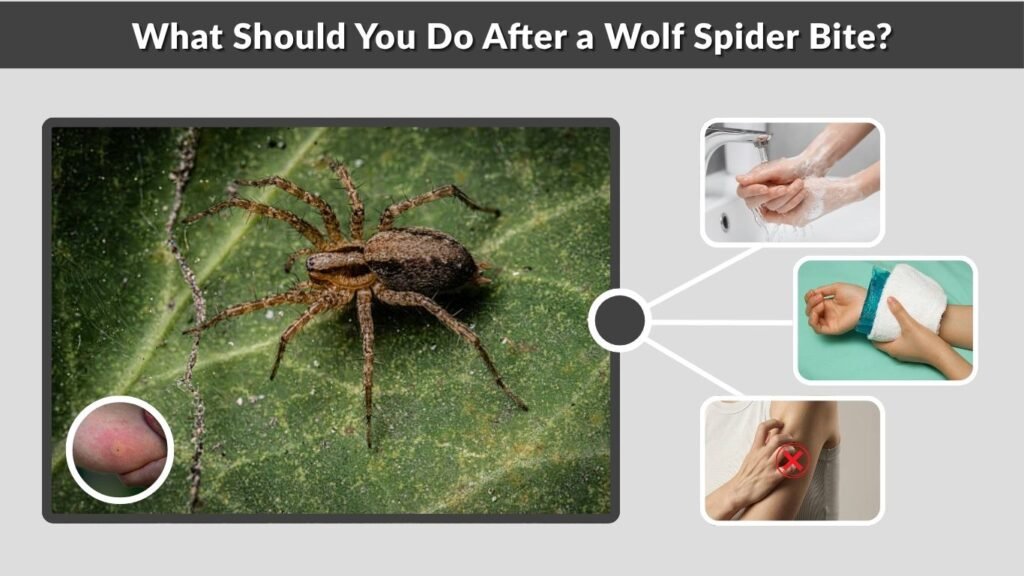
Most suspected wolf spider bites can initially be treated similarly to other minor skin injuries.
Basic First Aid
If bitten:
- Wash the area gently with soap and water.
- Apply a cold pack wrapped in cloth for short periods.
- Keep the affected area clean.
- Avoid scratching the bite.
- Monitor changes in redness, swelling, and pain.
Do not attempt to cut the bite, squeeze venom from it, or apply harmful substances to the skin.
When Should You See a Doctor?
Medical evaluation is advisable if symptoms become unusually severe or continue worsening.
Pay particular attention to bites involving young children, elderly individuals, or anyone experiencing signs of a severe allergic reaction.
An unidentified spider bite that develops significant blistering, tissue damage, spreading redness, fever, or severe pain should also be professionally evaluated.
Are Wolf Spiders Dangerous in the House?
Finding a large wolf spider running across the floor can be alarming, but its presence does not necessarily mean your home is infested.
Wolf spiders sometimes enter houses while searching for:
- Insect prey
- Shelter
- Moisture
- Warmth
- Suitable hiding locations
Because wolf spiders hunt cockroaches, crickets, flies, and other pests, they can actually help reduce insect populations outdoors.
How to Keep Wolf Spiders Outside
You can reduce indoor encounters by:
- Sealing cracks around windows and doors
- Installing intact window screens
- Adding door sweeps
- Reducing clutter in garages and basements
- Removing insects that attract spiders
- Keeping vegetation away from exterior walls
- Moving firewood away from the house
- Vacuuming spiders rather than handling them
Preventing prey insects from entering is especially important because abundant insects can attract hunting spiders.
Are Wolf Spiders Aggressive?
Wolf spiders are predators, but they are not normally aggressive toward humans.
Their speed sometimes creates the impression that they are chasing people. In reality, a frightened wolf spider may simply be trying to reach nearby cover.
They have little reason to confront an animal hundreds or thousands of times larger than themselves.
Can Wolf Spiders Kill Humans?
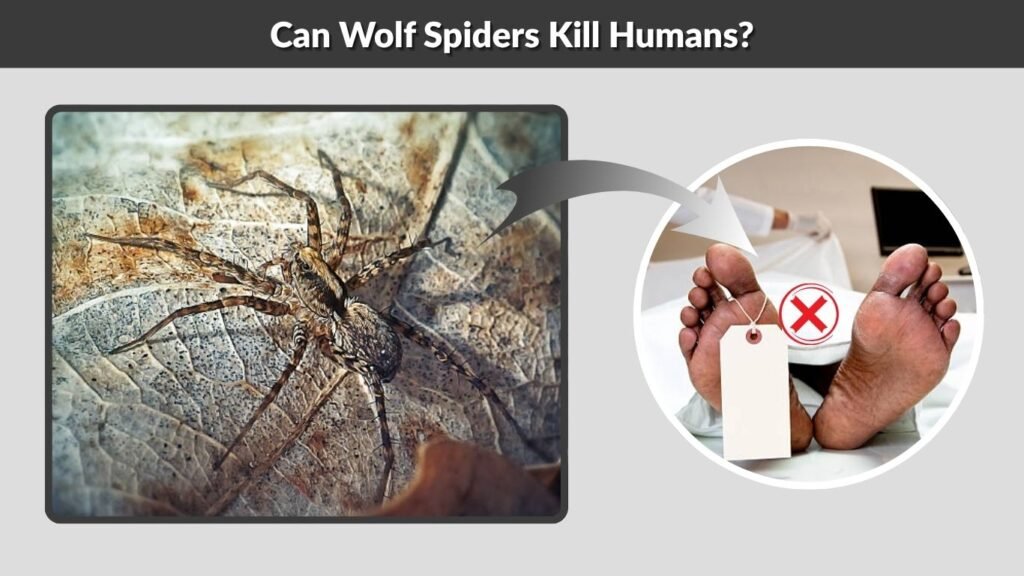
A normal wolf spider bite is not expected to kill a healthy human.
Wolf spider venom is primarily designed for small arthropod prey.
As with bites and stings from many animals, however, individual allergic reactions can vary. Severe allergic symptoms should always be treated as a medical emergency regardless of the suspected spider species.
FAQs
1. Are wolf spiders poisonous if they bite you?
No. Wolf spiders are venomous rather than poisonous because they inject venom through their fangs. Their venom helps immobilize small prey. A bite can cause pain, redness, itching, or swelling, but serious medical complications are uncommon in healthy adults.
2. Can a wolf spider bite hurt?
Yes. A wolf spider has relatively strong fangs, particularly larger species, so a defensive bite can be painful. The bite may produce localized redness, swelling, tenderness, or itching. Symptoms are generally temporary, although worsening reactions should receive medical attention.
3. Are wolf spiders poisonous to pets?
Wolf spiders are not considered poisonous to dogs or cats. They can bite pets when threatened, potentially causing local pain and swelling. Significant facial swelling, breathing difficulty, weakness, repeated vomiting, or other severe symptoms should be evaluated promptly by a veterinarian.
4. Should I kill a wolf spider in my house?
Usually, killing it is unnecessary. Wolf spiders generally avoid humans and help control insects. You can capture the spider with a container and release it outdoors or remove it using a vacuum if you prefer not to handle it directly.
5. What is the most dangerous thing about a wolf spider?
For most people, the greatest concern is a defensive bite rather than poisoning. Wolf spiders are not normally aggressive, and their venom is not considered highly dangerous to humans. More serious concern arises when severe allergic symptoms or an incorrectly identified spider is involved.
