
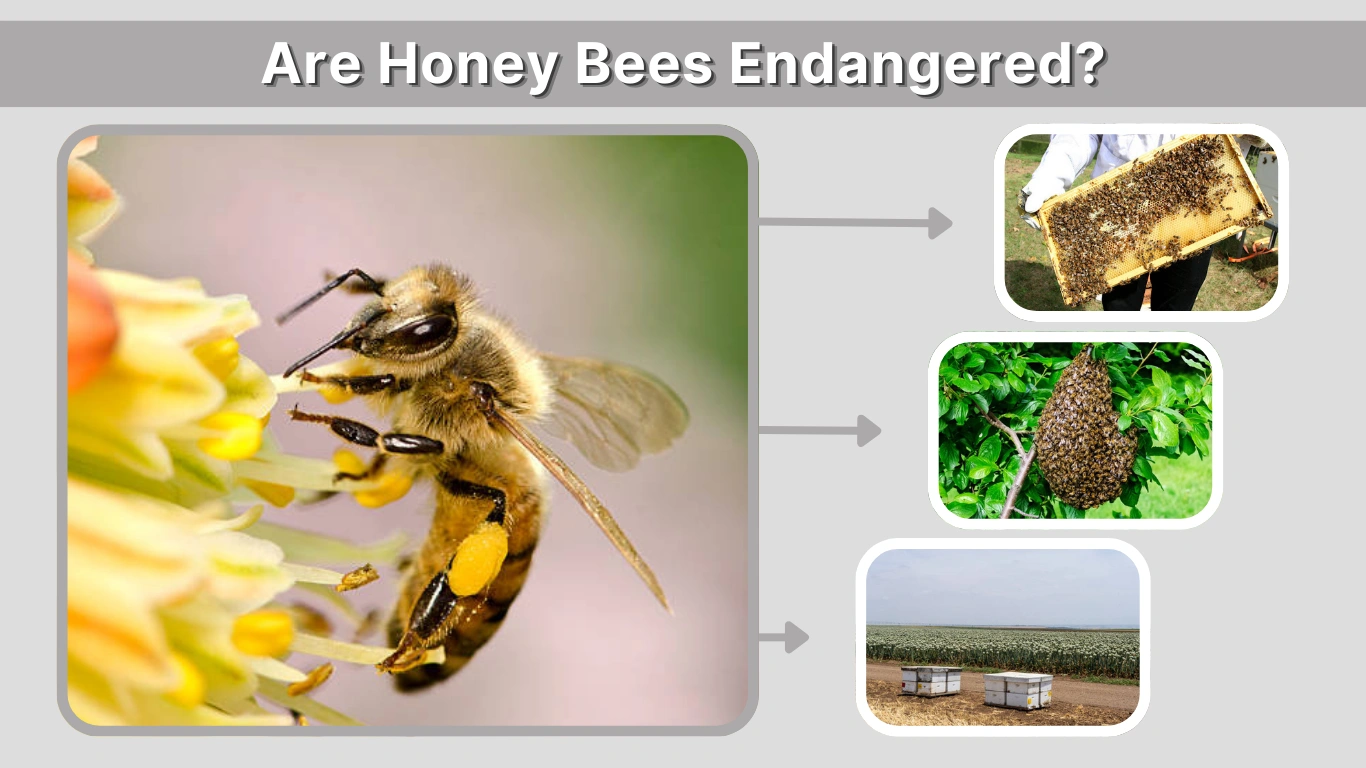
Honey bees have become one of the most frequently discussed insects in modern environmental conversations. Although they are often described as “endangered,” the truth is more nuanced. Honey bees are not officially classified as endangered, yet their long-term survival is threatened by widespread ecological and agricultural stressors. These pressures have fueled global concern about pollinator health, food security, and the future stability of plant ecosystems. Understanding the real status of honey bees is essential to separating fact from misconception.
Are Honey Bees Endangered?
Current Conservation Status
Honey bees are not considered endangered at the global or national level. In the United States, they are not listed under the Endangered Species Act, and globally they are categorized as widely distributed and stable. Their populations, particularly managed colonies kept by beekeepers, are generally maintained at levels high enough to meet agricultural pollination demands.
Wild honey bee colonies, however, face more difficulty. They lack human support, making them more vulnerable to parasites, habitat loss, and climate instability. This difference between wild and managed populations is one reason the public often receives mixed messages about honey bees’ true status.
Why the Confusion?
Many people believe honey bees are endangered because of dramatic headlines about Colony Collapse Disorder (CCD), viral news stories, and social media campaigns. CCD caused sudden colony losses between 2006 and 2010, and although it has declined, its memory remains strong in public perception.
Additionally, when media outlets report that “bees are endangered,” they often blur an important distinction: many wild bees, especially bumble bee species, are endangered, while honey bees are not. Marketing campaigns from cereal brands and nonprofit groups have also contributed to this misconception by using broad language about “bees” without clarifying species differences.
Honey Bee Identification
Key Identification Traits
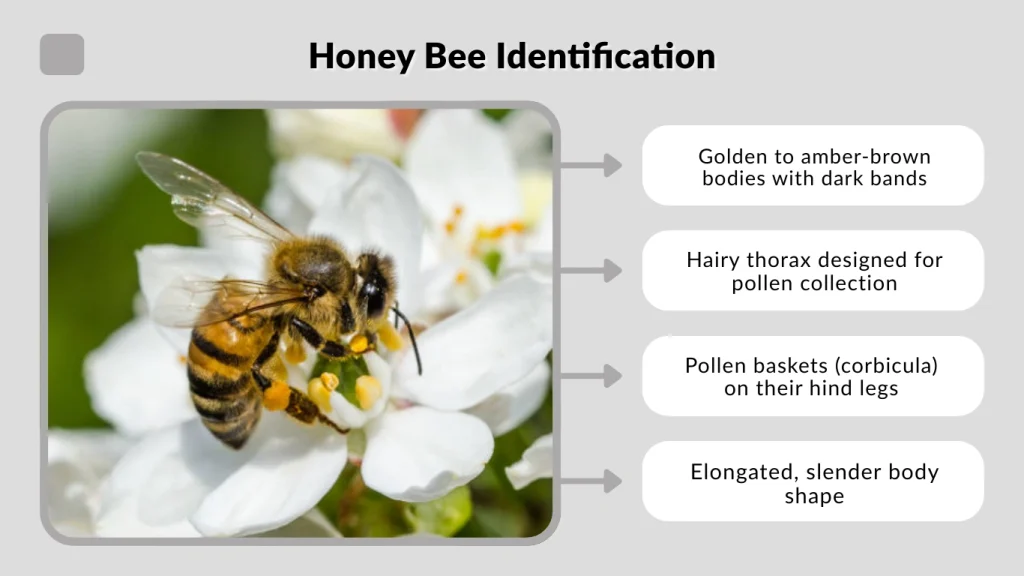
Honey bees are easy to distinguish from other stinging insects once you know their traits:
- Golden to amber-brown bodies with dark bands
- Hairy thorax designed for pollen collection
- Pollen baskets (corbicula) on their hind legs
- Elongated, slender body shape
- Non-aggressive behavior unless defending a hive
Their cooperative nature, structured caste system, and wax comb construction make them unique compared to solitary bee species.
Common Subspecies
There are several widely managed subspecies of Apis mellifera, each adapted to different climates:
- European (Western) Honey Bee – the most common worldwide
- Italian Honey Bee – gentle, productive, and widely used by beekeepers
- Carniolan Honey Bee – calm temperament and winter resilience
- Africanized Honey Bee – more defensive but highly adapted to warm regions
Each subspecies contributes differently to regional pollination and agricultural systems.
Why Honey Bees Are Not Officially Endangered
Population Stability
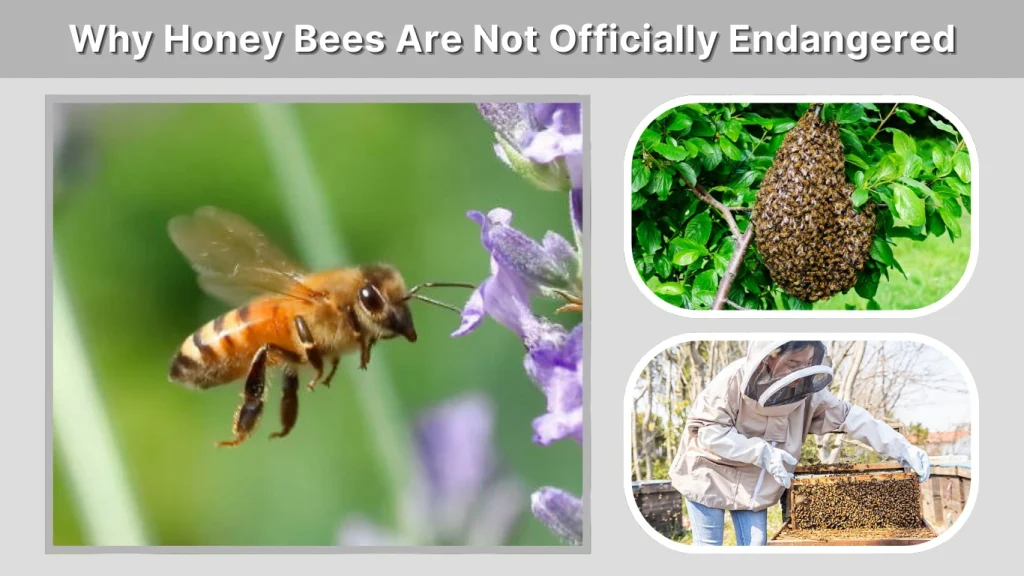
Despite stressors, global hive numbers have been increasing for decades. This rise is mostly due to managed colonies, which can be replenished and split by beekeepers. Lost hives can be replaced through methods like nucleus colonies or queen breeding. As a result, managed honey bee numbers remain largely stable even in years with high mortality rates.
Human Management
Honey bees are not wildlife in the traditional sense—they are closer to livestock. Beekeepers actively monitor, treat, and feed their colonies. They manage breeding, protect against parasites, and move hives for pollination contracts. This high level of human assistance makes honey bees resilient compared to wild bees that rely solely on natural conditions.
Why Honey Bees Are Still Considered “At Risk”
Even without endangered status, honey bees face significant ecological pressures that threaten their long-term health.
Environmental and Biological Threats
Parasites and Diseases
The Varroa destructor mite is widely considered the most destructive threat. It feeds on bees, spreads viral diseases, and weakens entire colonies. Viruses such as deformed wing virus (DWV) and chronic bee paralysis often escalate when mite levels rise. Nosema, a gut fungus, further reduces colony strength, especially during damp or cold seasons.
Pesticides
Neonicotinoid pesticides and other agricultural chemicals impair bees’ ability to navigate, forage, and return to the hive. Chronic exposure can weaken immunity and disrupt brood development. Even non-lethal doses can cause significant behavioral changes that accumulate over time.
Habitat Loss
As wildflower meadows, prairies, and hedgerows disappear, bees struggle to find diverse and consistent floral resources. Urbanization intensifies this issue, replacing natural forage with roads, buildings, and monoculture lawns. Habitat loss impacts nutrition, immunity, and colony growth.
Climate Change
Increased heatwaves, droughts, unpredictable rainfall, and shifting bloom cycles all affect honey bee survival. Climate stress reduces nectar flow, alters plant-pollinator timing, and places additional strain on colonies already battling disease and environmental toxins.
Regional Status of Honey Bees
United States
Honey bees are not endangered in the U.S., but annual hive losses often range from 20% to 40%. Much of American agriculture—including almonds, apples, melons, and berries—depends on managed colonies. Their stability relies heavily on beekeepers’ ability to replace winter losses.
Europe
European honey bees are widespread and stable, yet they face high disease pressure and stricter pesticide regulations. Several EU countries have implemented pollinator protection programs that indirectly help honey bees and directly aid declining wild bee species.
Canada
Canada’s long winters create high seasonal losses, but managed colonies are regularly rebuilt. Disease management and regional pesticide restrictions remain central to their conservation strategy.
Australia
Honey bees in Australia are not listed as endangered, but their status has become more uncertain due to recent detections of Varroa mites. Australia was long considered Varroa-free, giving its honey bee populations a unique advantage over other regions. With the arrival of the parasite, beekeepers now face new challenges. Strict biosecurity, rapid containment efforts, and improved hive management strategies will determine future colony stability.
United Kingdom
In the U.K., honey bees remain stable and widely kept by hobbyists and commercial apiaries. They are not part of the country’s endangered species lists. However, U.K. conservation campaigns frequently emphasize the decline of wild bees, including several bumble bee species reliant on flower-rich grasslands. This has contributed to widespread public confusion about the status of honey bees versus other bee types.
State-Level Comparisons in the U.S.
California
California houses one of the largest concentrations of managed honey bees in the world due to almond pollination. Although not endangered, colony stress levels are high because of pesticide exposure, intense agricultural demands, and long-distance transportation during pollination seasons.
Texas
Texas honey bees are stable but experience habitat fragmentation caused by sprawling development and extreme seasonal temperature variation. Varied climates across the state create mixed challenges depending on the region.
Florida
Florida honey bees contend with high humidity, widespread pests, and frequent disease pressures. Subtropical conditions can support year-round mite reproduction, making pest control a constant challenge for beekeepers.
Ohio & Midwest
Cold winters and declining wildflower meadows affect Midwestern honey bees. Habitat restoration projects—such as pollinator-friendly roadside corridors—play an important role in supporting local populations.
Honey Bees vs. Bumble Bees
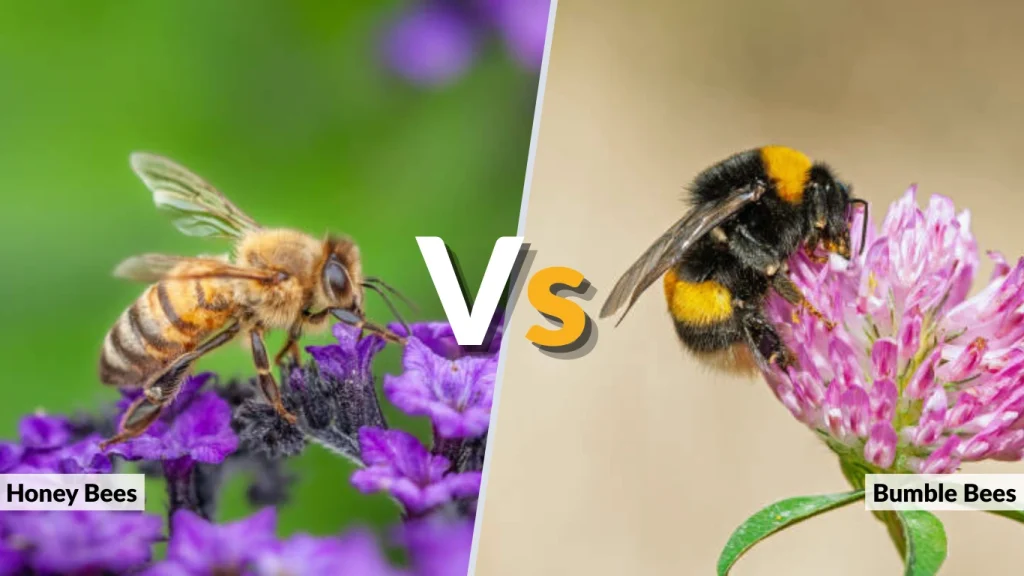
Honey bees and bumble bees are often discussed together, but their conservation statuses differ sharply. Bumble bees face a significantly higher risk of extinction because many species require specific habitats, bloom cycles, and nesting conditions.
Endangerment Differences Table
| Feature | Honey Bees | Bumble Bees |
| Legal Status | Not endangered | Several species endangered |
| Colony Size | 20k–80k | 50–400 |
| Domesticated? | Yes | No |
| Habitat Requirements | Flexible | Often specialized |
| Main Threats | Mites, pesticides | Habitat loss, climate |
Why Bumble Bees Decline Faster
Bumble bees have smaller colonies and less genetic diversity, making them more sensitive to environmental changes. Many species rely on specific wildflowers and nesting habitats such as undisturbed ground or hollow logs. When landscapes change—even slightly—bumble bee populations can collapse quickly. Honey bees, by contrast, enjoy widespread human support and adaptable foraging habits.
Major Causes of Decline in Honey Bees
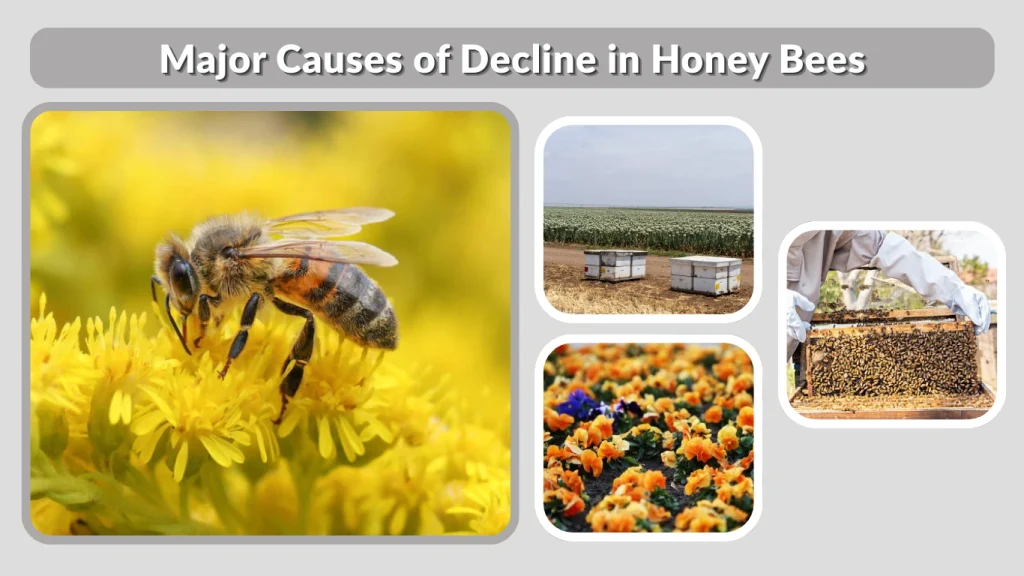
Agricultural Drivers
Monoculture Farming
Monoculture farms grow a single crop over vast acreage. This creates periods of intense nectar abundance followed by long periods of scarcity. Although bees can thrive during crop bloom, they struggle afterward due to a lack of diverse pollen sources needed for nutrition.
Migratory Beekeeping
To meet agricultural demands, beekeepers transport millions of bees across states. Constant movement exposes colonies to:
- Stress from confinement
- Disease exchange among large populations
- Harsh temperatures during travel
- Overcrowded pollination landscapes
Despite these drawbacks, migratory beekeeping remains essential for crops like almonds and berries.
Ecological Drivers
Disappearing Wildflower Corridors
Wildflower decline is one of the largest contributors to poor bee nutrition. Bees require varied pollen sources to maintain colony immunity and brood health. Urban expansion, road construction, and herbicide use all eliminate flowering plants critical for survival.
Water Scarcity
Bees need water for cooling the hive, processing nectar, and feeding brood. Drought conditions make water harder to find, increasing stress and reducing honey production. Severe heat can even melt wax combs if bees cannot regulate hive temperature effectively.
History of Honey Bee Decline Concerns (2014–2024)
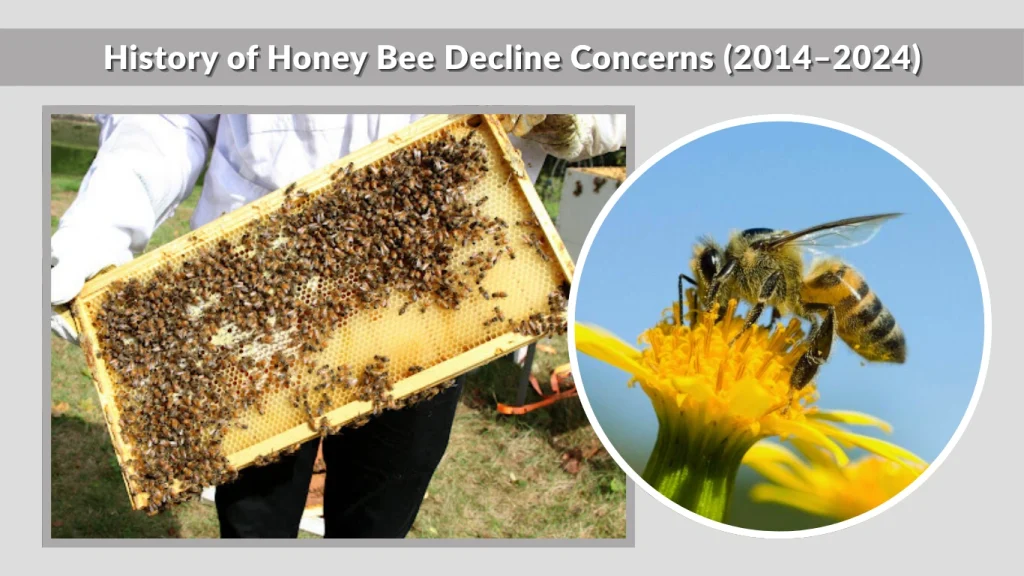
CCD Era (2014–2017)
After the discovery of Colony Collapse Disorder, global concern skyrocketed. During peak years, beekeepers reported unusually high losses and hive abandonment. Although CCD has since subsided, the emotional impact of the crisis still influences public perception.
Stabilization Period (2018–2020)
Beekeepers improved management techniques, pest treatment strategies, and queen breeding programs. As a result, overall hive numbers stabilized or increased in many regions. This period highlighted how managed honey bees benefit from human intervention.
Recent Trends (2021–2024)
While honey bee populations remain stable in terms of total colony numbers, annual losses persist. Climate variability, pesticide exposure, and habitat loss continue to create pressure. Greater scientific focus on wild bee declines also shapes today’s conservation messaging.
Why People Care When Honey Bees Are Threatened
Economic Importance
Honey bees contribute billions of dollars in global crop value. Fruits, nuts, vegetables, seeds, and specialty crops depend heavily on pollination. Without managed honey bees, production costs would increase dramatically, raising food prices and reducing agricultural profits.
Ecological Importance
Honey bees support ecosystems by pollinating wildflowers, maintaining plant diversity, and sustaining food sources for wildlife. While they are not the only pollinators, their large colony size makes them uniquely effective at pollinating high-acreage crops.
Cultural Importance
Honey bees are iconic symbols of productivity, cooperation, and environmental wellness. Their popularity in education, art, and community science contributes to widespread public awareness about pollinator conservation.
How to Protect Honey Bees
Practical Steps for Homeowners
- Plant native flowers that bloom across seasons
- Avoid pesticides or use bee-safe alternatives
- Provide shallow water dishes with stones for landing
- Buy honey from local beekeepers who support healthy hive practices
Farm-Level Solutions
- Integrated pest management systems
- Flowering hedgerows between fields
- Crop diversification to increase pollen variety
- Reduced tillage practices to protect soil health
Policy-Level Solutions
- Stricter limits on harmful pesticides
- Incentives for pollinator-friendly agriculture
- Funding for mite-resistant breeding research
- Urban planning that includes green corridors
FAQs
Are honey bees on the endangered species list?
Honey bees are not listed as endangered in the United States or globally. Their populations remain stable thanks to managed beekeeping, although they face ongoing health challenges.
Are honey bees endangered in the United States?
No. Honey bees in the U.S. are not endangered, though colony losses remain high. Beekeepers play a crucial role in rebuilding hive numbers every season.
Why are honey bees becoming endangered?
They are not legally endangered but are threatened by pesticides, parasites, habitat loss, and climate change. These factors weaken colonies and increase seasonal mortality.
Are bumble bees endangered or just honey bees?
Many bumble bee species are endangered due to habitat loss and climate shifts. Honey bees are not endangered but still face serious environmental stress.
How can people help bees?
Planting native flowers, reducing pesticides, supporting local beekeepers, and advocating for pollinator-friendly policies all contribute to healthier bee populations.
