
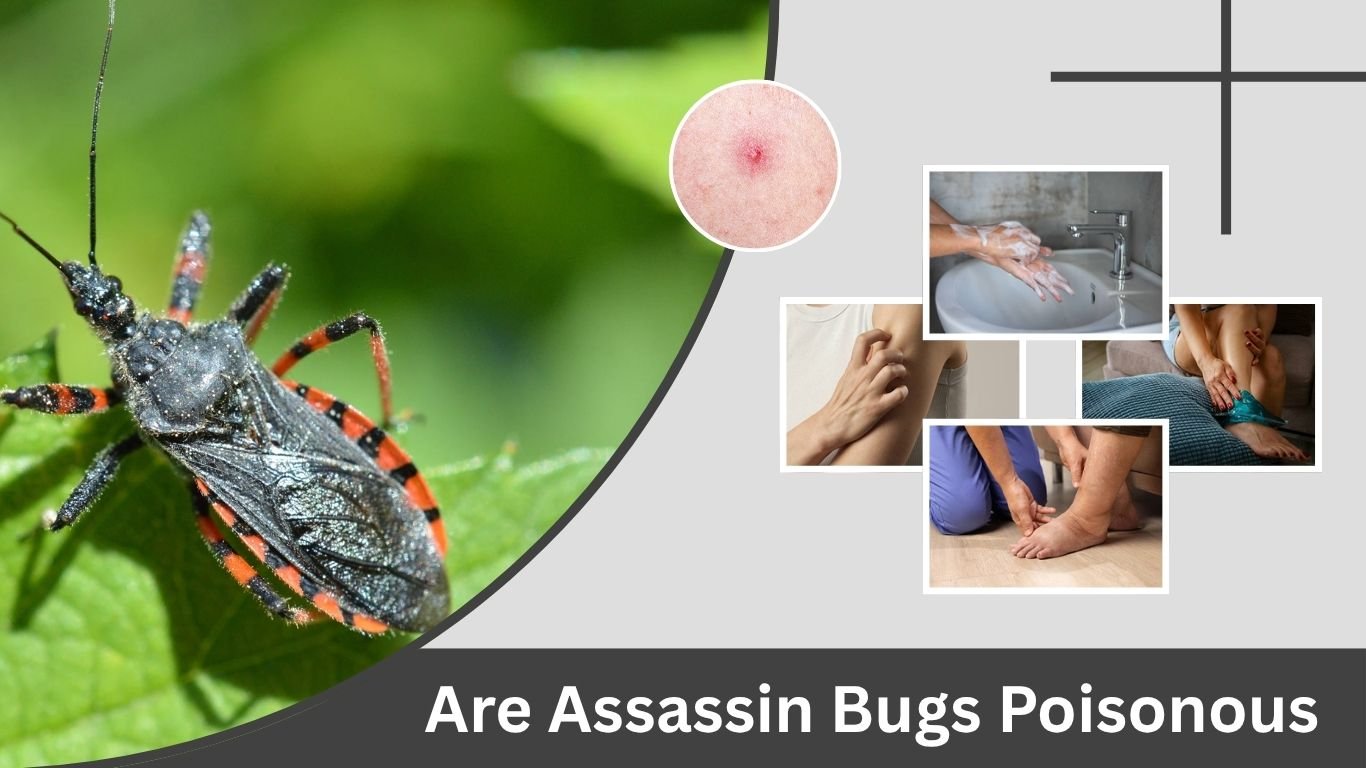
Assassin bugs are not poisonous in the usual sense, meaning that simply touching their outer body does not expose you to poison. However, many predatory assassin bugs produce potent saliva used to paralyze and digest prey. They can inject this material through a sharp, beak-like mouthpart if they bite defensively. Most species avoid humans, but a bite may cause immediate pain, burning, redness, numbness, or swelling. Kissing bugs require separate attention because some can spread the parasite responsible for Chagas disease.
Are Assassin Bugs Poisonous or Venomous?
“Poisonous” and “venomous” do not mean the same thing. A poisonous organism causes harm when its toxins are touched, swallowed, or otherwise absorbed. A venomous animal actively injects a harmful substance through structures such as fangs, stingers, or piercing mouthparts.
Predatory assassin bugs use a sharp mouthpart called a rostrum to inject venomous saliva into insects. The secretion immobilizes prey and begins digesting its tissues before the bug consumes them. Research has identified specialized venom components involved in prey capture, digestion, and—in some species—defense.
Therefore, the clearest answer is:
| Question | Answer |
| Are assassin bugs poisonous to touch? | No |
| Can they inject venomous saliva? | Yes, especially predatory species |
| Do they normally attack humans? | No |
| Can they bite when handled? | Yes |
| Can the bite hurt? | Yes, sometimes considerably |
| Do all assassin bugs spread Chagas disease? | No |
Although their saliva is effective against insect prey, most ordinary encounters with people result in a localized defensive bite rather than systemic poisoning.
How Does an Assassin Bug Bite?
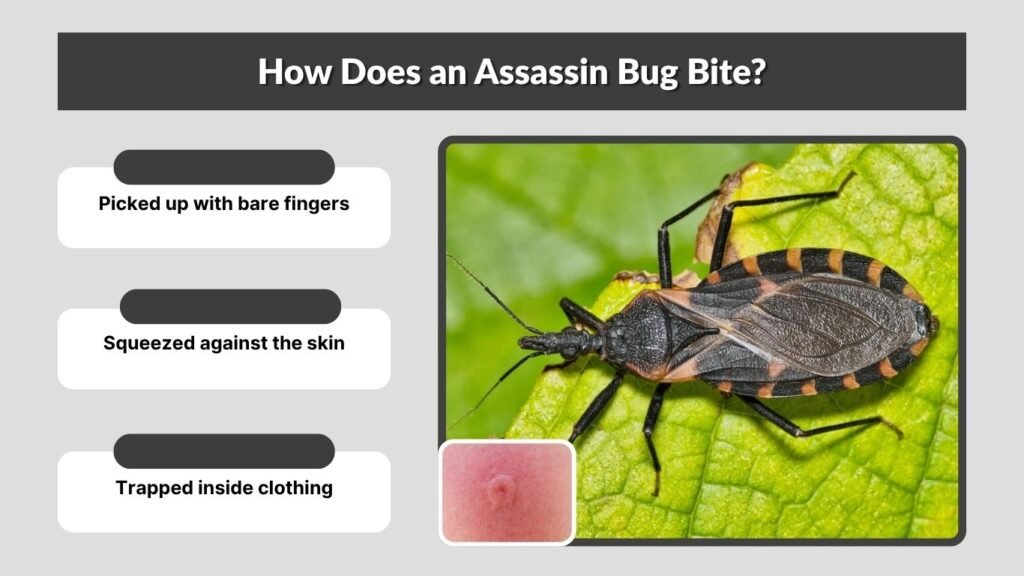
Assassin bugs do not have jaws that chew human skin, and they do not sting. Instead, they puncture the skin with their strong, curved rostrum.
A bite usually occurs when an assassin bug is:
- Picked up with bare fingers
- Squeezed against the skin
- Trapped inside clothing
- Accidentally stepped or sat on
- Disturbed while hiding beneath an object
Assassin bugs are generally beneficial predators, but extension specialists warn that they can deliver a painful bite when mishandled. Wheel bugs, masked hunters, milkweed assassin bugs, nymphs and other species should all be observed without direct handling.
Assassin Bug Bite Symptoms
The reaction depends on the species, where the bite occurred and the person’s sensitivity. Common effects may include immediate sharp pain, burning, redness, localized swelling, tenderness or temporary numbness.
For example, a masked hunter’s bite has been compared with a bee sting and may be followed by numbness and swelling. The insect does not normally feed on human blood and bites mainly when disturbed or picked up.
Most reactions remain near the bite site. Severe allergic reactions are possible after many types of insect bites, however, so rapidly worsening symptoms should not be ignored.
Are Assassin Bugs Dangerous to Humans?
Most predatory assassin bugs are not considered a serious danger to humans. They hunt other insects and generally try to escape rather than confront a person. Their main human-health risk is an accidental defensive bite.
The level of concern depends partly on the type of assassin bug:
Ordinary Predatory Assassin Bugs
Wheel bugs, leafhopper assassin bugs, milkweed assassin bugs, pale green assassin bugs, corsairs and masked hunters primarily eat insects. They do not deliberately seek humans for food, although they can bite when handled.
Kissing Bugs
Kissing bugs are a specialized blood-feeding group within the assassin bug family. Some carry Trypanosoma cruzi, the parasite that causes Chagas disease.
The parasite is generally not injected directly through the bite. An infected kissing bug may defecate after feeding, and infection can occur when contaminated feces enter the bite wound, eyes, mouth or another break in the skin.
Not every assassin bug is a kissing bug, and ordinary garden species such as wheel bugs and Zelus assassin bugs should not automatically be treated as Chagas vectors. Identification should be based on body shape and anatomical features rather than color alone.
Are Milkweed Assassin Bugs Poisonous?
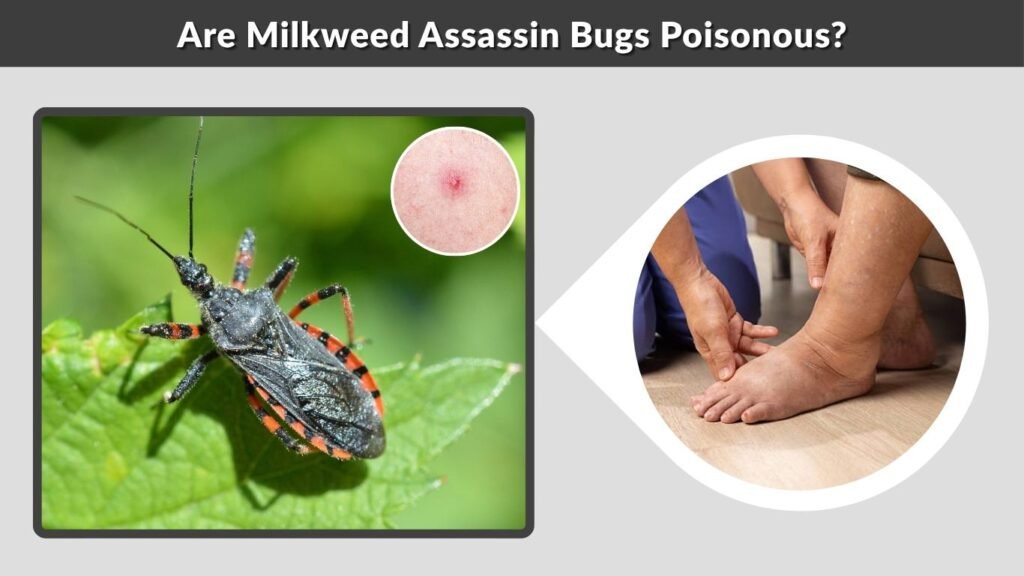
Milkweed assassin bugs, Zelus longipes, are not poisonous simply because they are orange, red or associated with plants called milkweed. They are predators and do not acquire milkweed toxins by feeding on the plant. Instead, they hunt flies, caterpillars, beetles and other small animals.
UF/IFAS describes the milkweed assassin bug as not normally threatening to humans, but notes that improper handling can result in a bite producing burning and swelling that may continue for several days.
The name can be misleading: milkweed assassin bugs resemble some milkweed-feeding insects, but their primary food is other arthropods.
Are Pale Green Assassin Bugs Poisonous?
Pale green assassin bugs are not known as poisonous insects. Like other predatory members of the family, they use piercing mouthparts and saliva to capture prey.
Their green color does not make them more or less dangerous than red, orange or black assassin bugs. The practical rule is the same: leave them undisturbed and avoid holding adults or nymphs with bare hands. Assassin bugs of many colors can bite defensively if mishandled.
Are Assassin Bug Nymphs Poisonous?
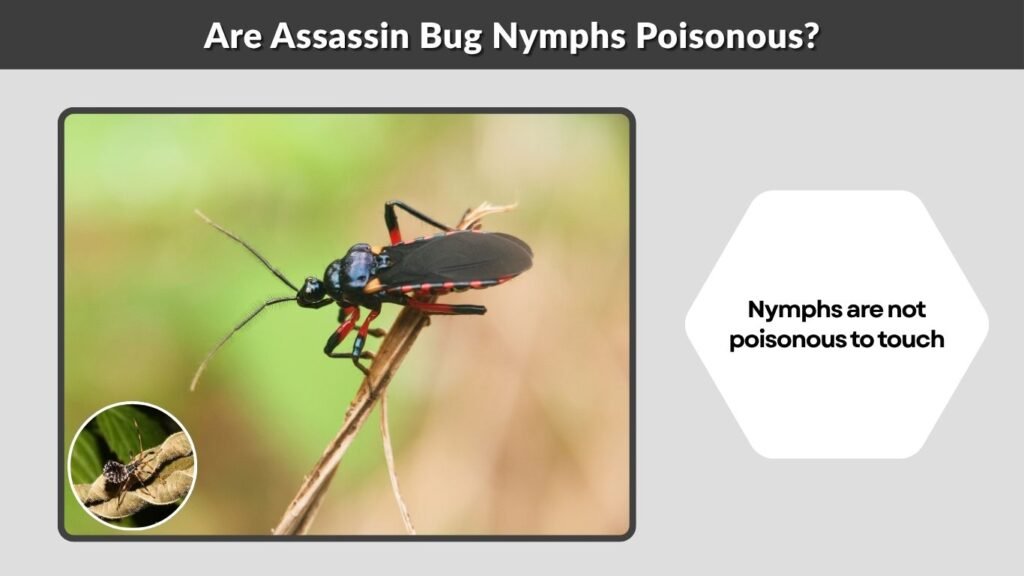
A nymph is an immature assassin bug. It lacks fully developed wings but already has functional piercing mouthparts and hunts prey.
Nymphs are not poisonous to touch, but they can potentially puncture skin in self-defense. Small size should not be taken as proof that an insect is safe to handle. Use a cup, jar or folded paper to move one rather than touching it.
Are Assassin Bugs Poisonous to Dogs?
Assassin bugs are not generally considered a conventional poisoning hazard to dogs. The more plausible risk is that a curious dog may be bitten on the mouth, nose or paw after sniffing, licking or chewing the insect.
Species-specific veterinary evidence is limited, so monitor a pet closely after suspected contact. Contact a veterinarian promptly for pronounced facial swelling, persistent pawing at the mouth, vomiting, weakness, breathing difficulty or severe discomfort. Do not allow a pet to play with an assassin bug, even when the insect appears dead.
What to Do After an Assassin Bug Bite
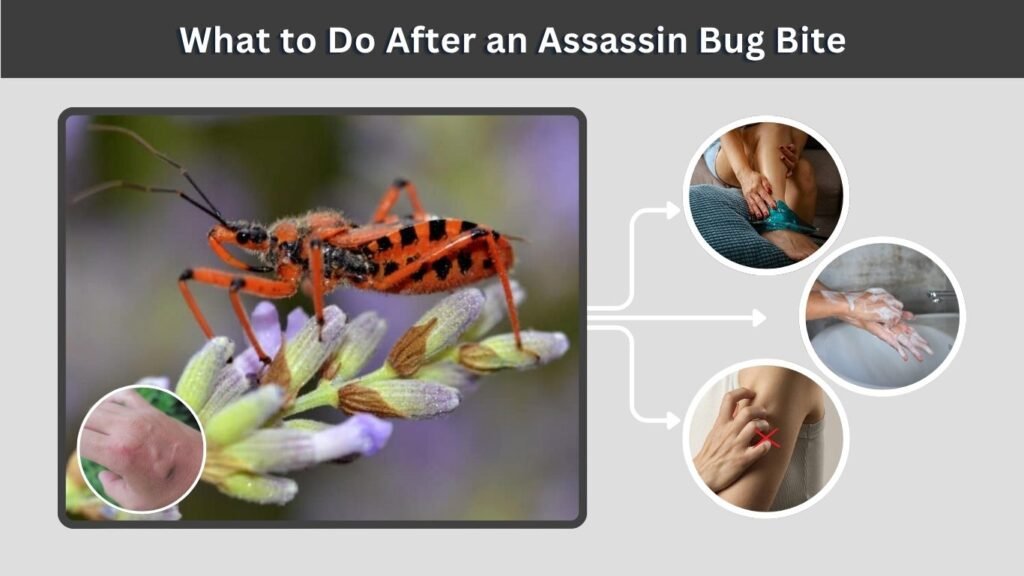
For a mild local reaction:
- Wash the skin gently with soap and water.
- Place a cold, damp cloth or wrapped ice pack over the area for 10–20 minutes.
- Elevate the affected arm or leg when practical.
- Avoid scratching, squeezing or repeatedly touching the wound.
- Monitor it for increasing pain, warmth, redness or drainage.
These are standard first-aid measures for mild insect bites and can help reduce pain and swelling.
Get emergency medical assistance for difficulty breathing, swelling of the face, lips, tongue or throat, fainting, widespread hives, a weak rapid pulse or severe vomiting. These may indicate a serious allergic reaction.
Medical evaluation is also sensible when symptoms become unusually severe, the bite is near the eye or inside the mouth, or redness and swelling continue to spread.
How to Handle Assassin Bugs Safely
Avoid crushing an assassin bug against your skin. When one enters a house, cover it with a cup, slide firm paper underneath and release it outdoors.
Wear gloves when moving firewood, boards, rocks or outdoor objects where insects may hide. Repair torn screens and seal openings around doors and windows if assassin bugs repeatedly enter the home.
A suspected kissing bug should be captured without bare-hand contact and placed in a secure container for identification by a local health department, extension service or qualified entomologist.
FAQs
Can touching an assassin bug poison you?
No. Touching its outer body does not normally cause poisoning. The danger arises when the insect punctures the skin and injects saliva through its beak. Avoid direct handling because a defensive bite can be painful.
Can an assassin bug bite kill a human?
An ordinary predatory assassin bug bite is not normally fatal. Most reported effects are localized pain and swelling. Nevertheless, emergency care is necessary if a person develops breathing problems, facial swelling, faintness or another sign of a severe allergic reaction.
Do orange, green and black assassin bugs have poison?
Color does not determine whether an assassin bug can bite. Predatory species of different colors use biologically active saliva to subdue insects. They are not poisonous to touch, but adults and nymphs should still be handled cautiously.
Do assassin bugs carry disease?
Most predatory assassin bugs are not recognized as human disease vectors. The important exception is the kissing bug group, some members of which can carry the parasite responsible for Chagas disease. Transmission usually involves infected feces rather than the bite itself.
Should I kill an assassin bug?
Usually not. Most species are beneficial predators that help reduce populations of caterpillars, beetles and other pests. Leave the insect alone outdoors or relocate it safely if it enters a house.
