
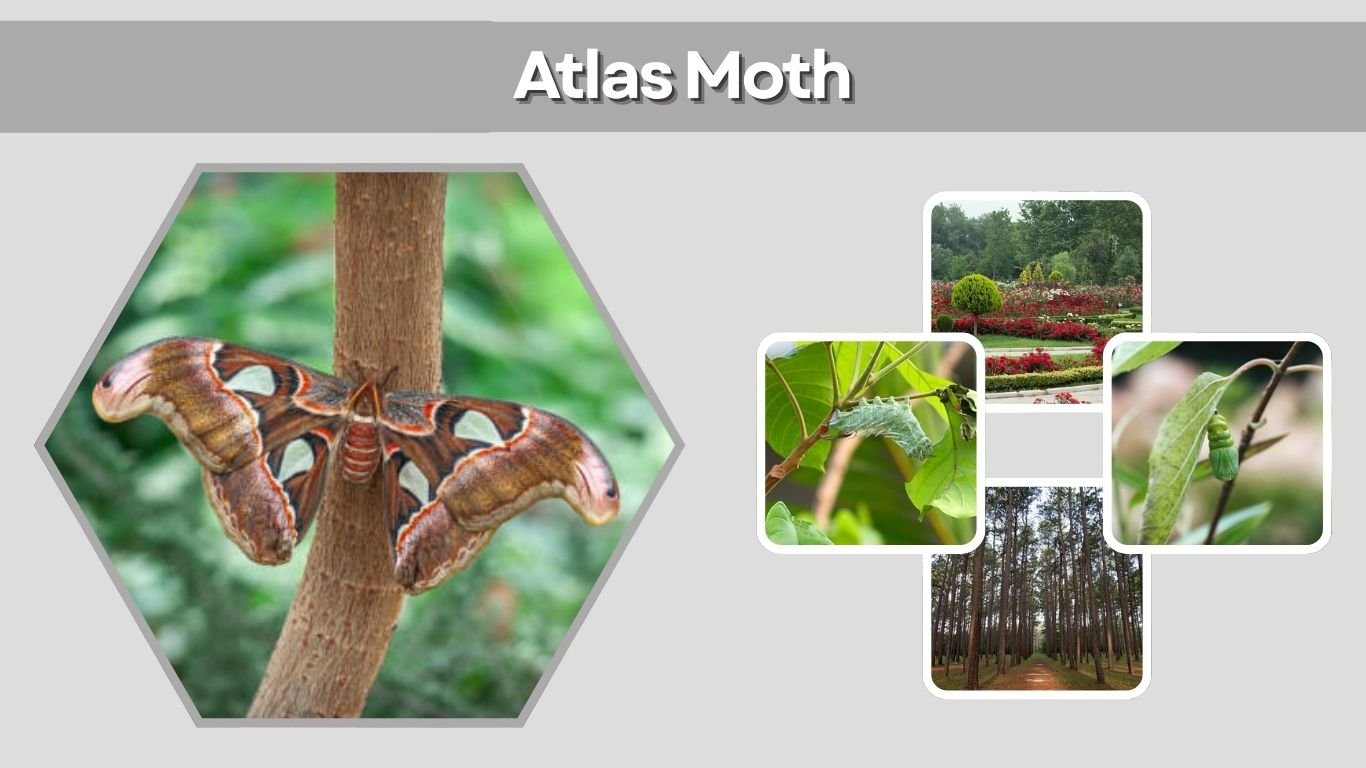
The atlas moth (Attacus atlas) is one of the most fascinating insects on Earth, known for its enormous wings and striking appearance. Found mainly in Asia, this giant moth captures attention with its size and unique wing patterns that resemble snake heads. Despite its intimidating look, it is completely harmless. Its short adult life and unusual biology make it a subject of curiosity for nature lovers, researchers, and enthusiasts alike.
What Is the Atlas Moth?
The atlas moth is a species of giant silk moth belonging to the Saturniidae family. It is widely recognized as one of the largest moths in the world in terms of wing surface area. Native to tropical and subtropical forests, this species plays an important role in local ecosystems. Its life cycle, appearance, and behavior make it stand out among other insects.
Scientific Classification
- Scientific name: Attacus atlas
- Family: Saturniidae
- Common names: giant atlas moth, Asian atlas moth
Why It Is Called “Atlas”
- Named after Atlas from Greek mythology
- Refers to its large, “heavy” wing size
- Symbolizes something massive and powerful
Atlas Moth Size and Wingspan
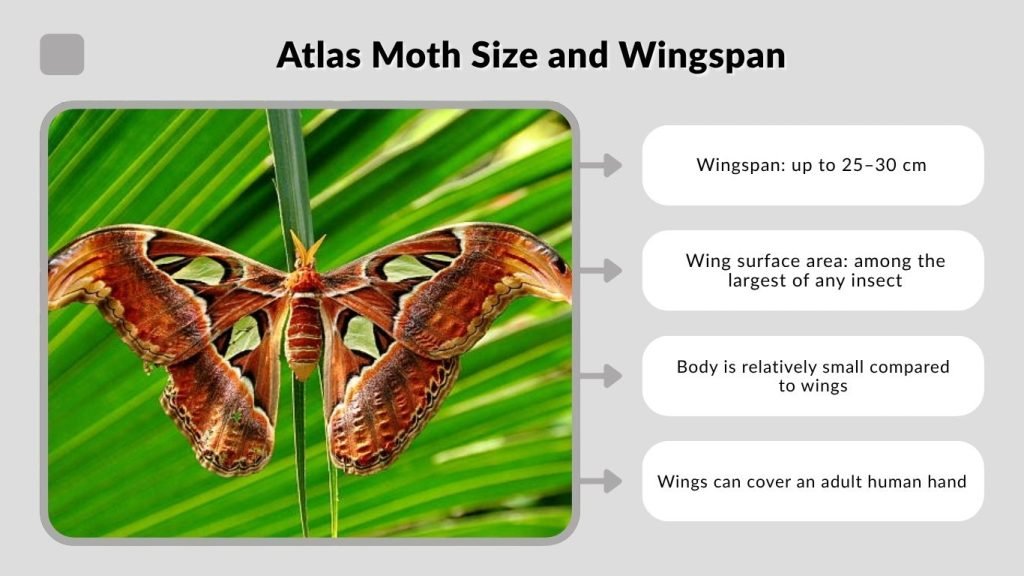
The atlas moth is famous for its massive size, making it one of the largest moth species in existence. Its wingspan can reach impressive dimensions, often surprising people who encounter it for the first time. This size plays a role in both survival and mating behavior in the wild.
How Big Is the Atlas Moth?
- Wingspan: up to 25–30 cm
- Wing surface area: among the largest of any insect
- Body is relatively small compared to wings
Comparison With Humans
- Wings can cover an adult human hand
- Sometimes compared to a small bird in size
- Often mistaken for a butterfly due to its scale
Atlas Moth Appearance and Unique Features
The atlas moth is easily recognizable due to its distinctive wings and patterns. Its appearance is not just beautiful but also serves practical purposes in nature. The colors and shapes help it survive in environments filled with predators.
Wing Shape and Patterns
- Large triangular wings with curved edges
- Patterns resemble snake heads at the tips
- Helps scare away predators
Color Variations
- Common colors: brown, orange, reddish tones
- Rare variations: pale or lighter shades
- Patterns vary slightly between individuals
Atlas Moth Life Cycle

The life cycle of the atlas moth is a complete metamorphosis, consisting of four main stages. Each stage has a specific role and contributes to the development of the adult moth. This process is relatively short but highly efficient.
Egg Stage
- Eggs laid on leaves of host plants
- Hatch within a short period
Caterpillar Stage
- Rapid growth phase
- Consumes large amounts of leaves
Pupa Stage
- Forms a strong silk cocoon
- Transformation into adult moth
Adult Stage
- Emerges with fully developed wings
- Does not feed during this stage
Atlas Moth Caterpillar
The caterpillar stage is one of the most active and important phases in the atlas moth’s life. During this period, it grows quickly and stores energy that will later sustain the adult moth. Its appearance is quite different from the adult form.
Key Characteristics
- Large, green body with soft texture
- Covered with a waxy coating
- Can grow significantly in size
Feeding Behavior
- Eats leaves from various plants
- Requires constant feeding for growth
- Stores energy for later stages
Atlas Moth Lifespan
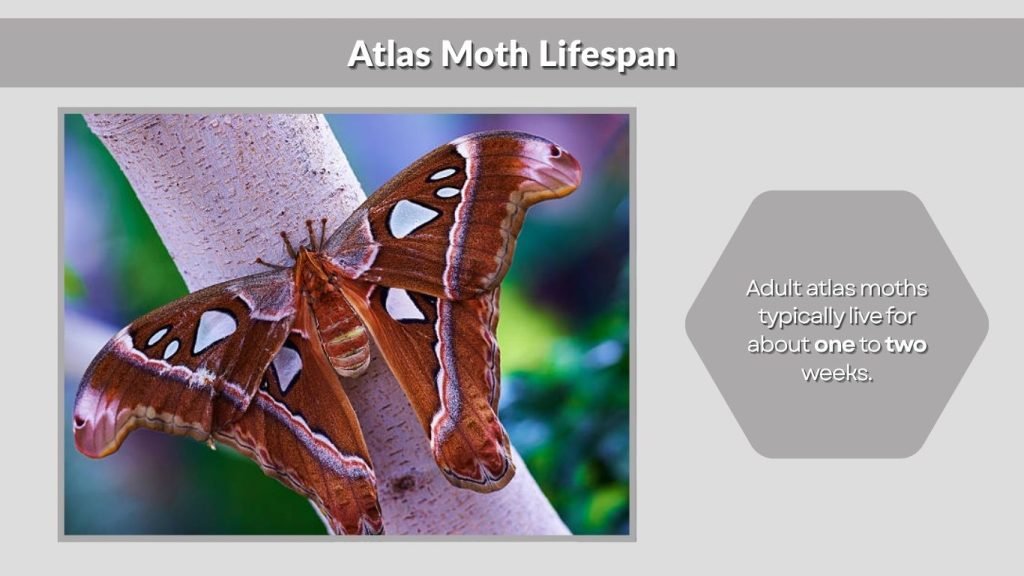
The lifespan of the atlas moth is relatively short, especially in its adult stage. Most of its life is spent growing as a caterpillar, while the adult phase focuses mainly on reproduction. This unique lifecycle makes it different from many other insects.
Adult atlas moths typically live for about one to two weeks. During this time, they do not eat and rely entirely on stored energy from their caterpillar stage. Their main goal is to reproduce before their energy runs out. This short lifespan highlights the importance of each stage in their development.
Atlas Moth Habitat and Distribution
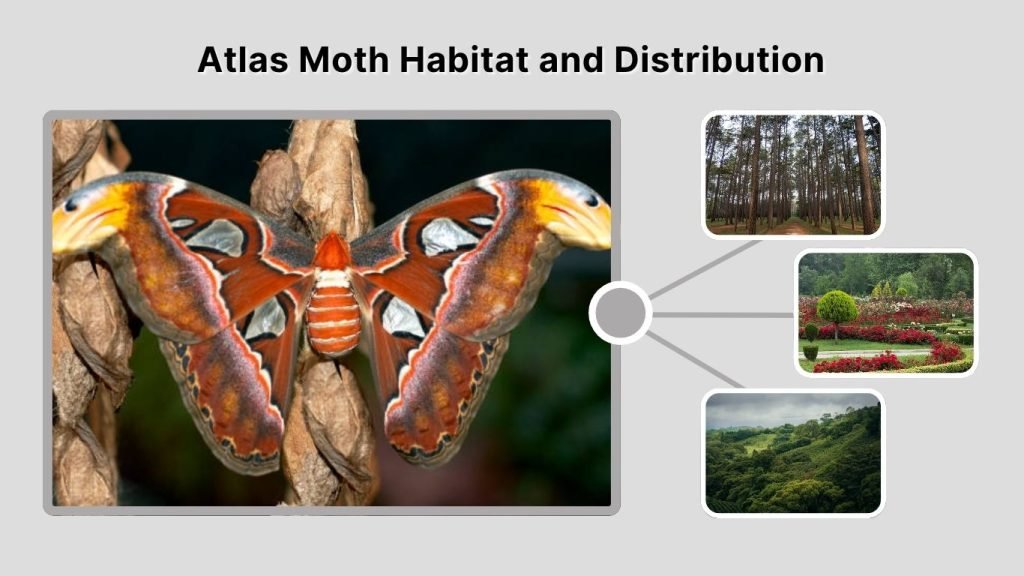
The atlas moth is primarily found in warm, tropical regions where environmental conditions support its growth and survival. These moths thrive in areas with abundant vegetation, which provides food for caterpillars and shelter for development. Their distribution across Asia makes them an important part of local ecosystems.
Where Do Atlas Moths Live?
- Found across South and Southeast Asia
- Common in India, China, Thailand, and Indonesia
- Also seen in tropical forests and rural areas
Preferred Environment
- Humid, warm climates
- Forests, gardens, and plantations
- Areas rich in host plants for caterpillars
Behavior and Survival
Atlas moths display unique behaviors that help them survive despite their short adult lifespan. They are mostly active at night and rely on natural adaptations rather than speed or strength. Their large wings may look powerful, but they are actually slow and gentle flyers.
These moths use camouflage as a primary defense mechanism. Their wing patterns, especially the snake-like shapes at the tips, help deter predators such as birds. By blending into tree bark and leaves during the day, they reduce the risk of being attacked. Their quiet and non-aggressive nature makes them harmless to humans and other animals.
Are Atlas Moths Dangerous or Poisonous?
Despite their large size and bold appearance, atlas moths are completely harmless. They do not possess any venom or stinging ability, and they are not aggressive in nature. Their intimidating look is purely a survival adaptation designed to scare off predators.
Safety Facts
- Do not bite or sting humans
- No venom or toxic substances
- Safe to observe closely
Why They Look Scary
- Snake-like wing tips create illusion of danger
- Large size can appear threatening
- Natural defense without actual harm
Male vs Female Atlas Moth
Male and female atlas moths show noticeable differences in size, structure, and behavior. These differences play a key role in reproduction and survival. Observing these variations helps in understanding how the species functions in the wild.
Physical Differences
- Females are larger with broader wings
- Males are smaller and lighter
- Wing shapes slightly differ
Behavioral Differences
- Males are more active flyers
- Females remain mostly stationary
- Males locate females using antennae
Atlas Moth vs Other Giant Moths
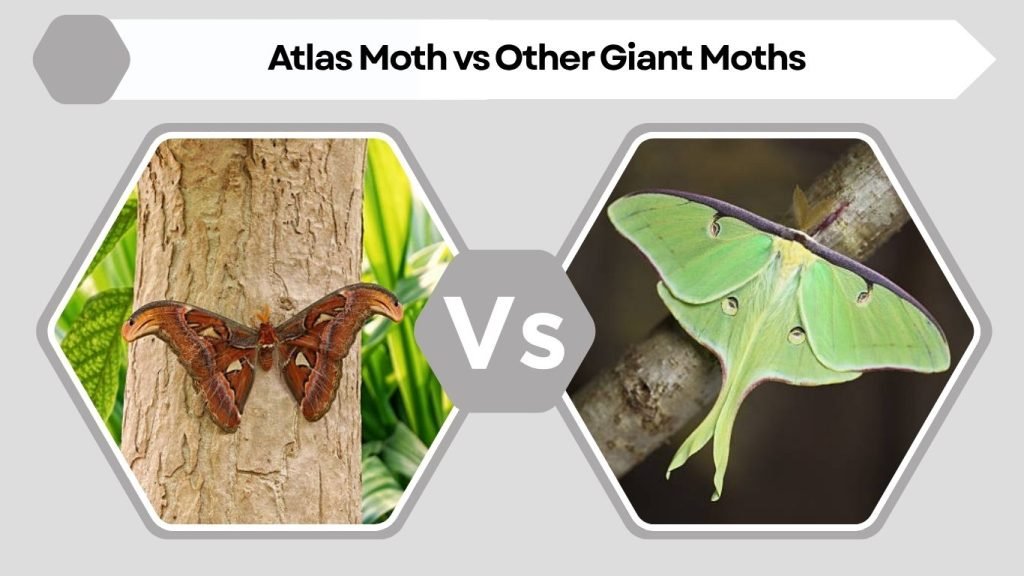
The atlas moth is often compared with other large moth species due to its size and appearance. While it shares similarities with some species, it stands out in several ways, especially in wing surface area and unique patterns.
Comparison With Luna Moth
- Luna moth has bright green wings
- Atlas moth is larger in surface area
- Different habitats and regions
Comparison With Polyphemus Moth
- Polyphemus moth has eye-like wing spots
- Atlas moth features snake-like patterns
- Both belong to the same family
Atlas Moth Symbolism and Meaning
The atlas moth holds symbolic meaning in various cultures, often representing transformation and the fleeting nature of life. Its short adult lifespan and dramatic appearance make it a powerful symbol in art and storytelling. In some regions, it is admired as a sign of natural beauty and balance.
Atlas Moth in Games and Pop Culture
The atlas moth has also appeared in modern entertainment, especially in simulation and life-style games. Its rarity and high value in games reflect its real-world uniqueness. These appearances have introduced the species to a wider audience.
Atlas Moth in Animal Crossing (ACNH)
- Appears on trees during specific months
- Considered rare and valuable
- Sold for a high in-game price
Other Appearances
- Featured in Coral Island
- Referenced in nature-based games
- Popular among collectors and gamers
Atlas Moth Facts (Quick Highlights)
- One of the largest moths in the world
- Adults do not eat
- Wing tips resemble snake heads
- Produces strong silk cocoons
- Completely harmless to humans
FAQs
What is the scientific name of the atlas moth?
The atlas moth is scientifically known as Attacus atlas. It belongs to the Saturniidae family, a group known for large and visually striking moth species found mostly in tropical regions.
How big can an atlas moth get?
Atlas moths can reach a wingspan of up to 25–30 cm. This makes them one of the largest moths in the world, especially in terms of total wing surface area.
Where are atlas moths found?
They are mainly found in tropical and subtropical regions of Asia, including countries like India, China, and across Southeast Asia where the climate supports their life cycle.
Are atlas moths dangerous to humans?
No, atlas moths are completely harmless. They do not bite, sting, or produce venom, and they pose no threat to humans in any way.
What do atlas moths eat?
Atlas moth caterpillars feed on plant leaves, but adult moths do not eat. They survive on energy stored during the caterpillar stage.
