

Weaver ants are fascinating social insects best known for their unique ability to build nests by stitching leaves together using larval silk. Found mainly in tropical and subtropical regions, these ants are highly organized, aggressive defenders, and efficient predators. This guide highlights 15 different types of weaver ants, helping with identification through their distinct traits and evolutionary background.
1. Oecophylla smaragdina (Asian Weaver Ant)
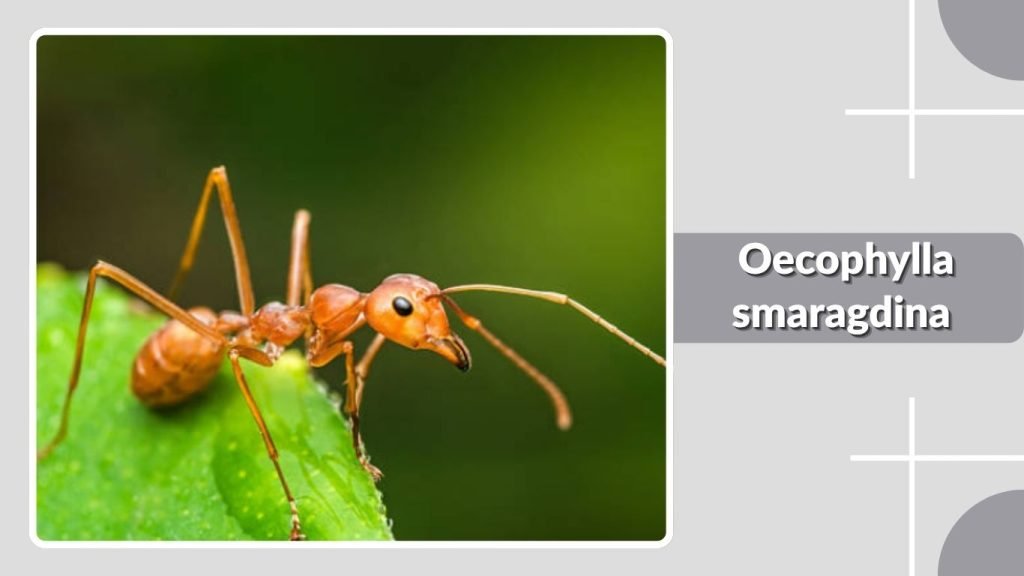
A well-known weaver ant species famous for building nests by stitching leaves together using silk produced by its larvae. It is commonly found in tropical regions and is highly social, forming large and organized colonies.
Characteristics
- Medium-sized ant, typically 5–10 mm in length
- Bright green to orange body coloration
- Slender body with long legs
- Strong mandibles for holding and weaving leaves
- Excellent climbing ability on trees and plants
Habitat and Distribution
Oecophylla smaragdina is widely distributed across South and Southeast Asia, as well as northern Australia. It prefers tropical forests, orchards, gardens, and plantations. Colonies are usually found in trees, where workers construct nests by pulling leaves together and binding them with silk.
Behavior and Diet
This species is highly active during the day and is known for its aggressive defense behavior. It feeds on small insects, nectar, and honeydew. Workers cooperate closely, forming chains to pull leaves together during nest construction. They are also beneficial in agriculture as natural pest controllers.
Life Cycle
The colony begins with a queen that lays eggs after mating. Eggs develop into larvae, which produce silk used for nest building. These larvae grow into pupae and then adult workers. Mature colonies can contain thousands of individuals and multiple nests spread across trees.
2. Oecophylla longinoda (African Weaver Ant)
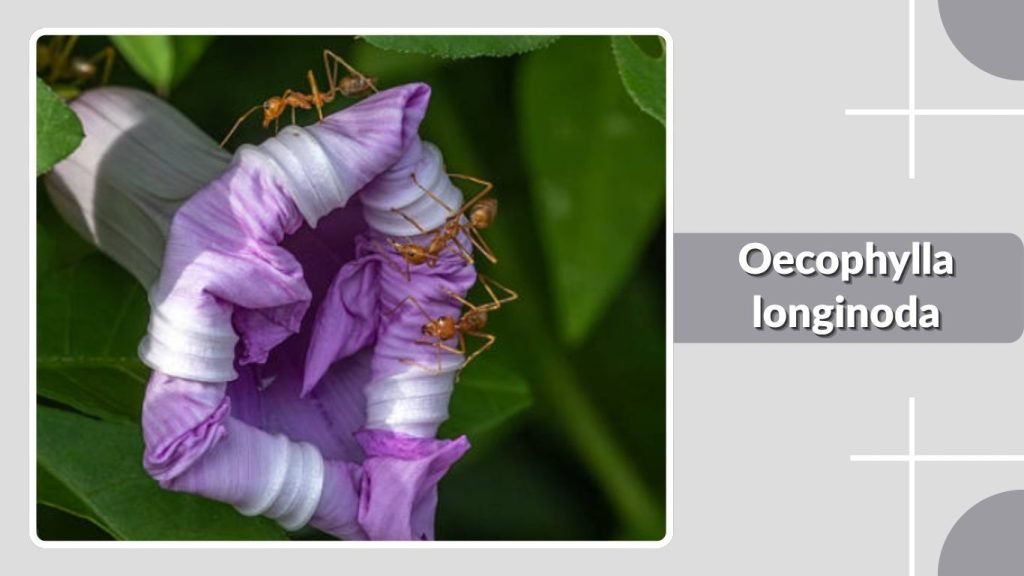
A closely related species to the Asian weaver ant, this ant is widely known for its advanced nest-building behavior and strong colony structure. It is commonly found in tropical Africa, where it plays an important ecological and agricultural role.
Characteristics
- Medium-sized ant, typically 5–10 mm in length
- Orange to reddish-brown body coloration
- Slender body with long legs for climbing
- Strong mandibles used for gripping and weaving leaves
- Highly flexible body allowing coordination during nest building
Habitat and Distribution
Oecophylla longinoda is widely distributed across sub-Saharan Africa. It thrives in tropical forests, savannas, orchards, and agricultural landscapes. This species prefers trees and shrubs, where it constructs nests by pulling leaves together. Colonies often occupy multiple trees, forming interconnected nest networks. Its presence is especially common in fruit-growing regions, where it naturally controls pest populations.
Behavior and Diet
This species is highly social and cooperative, with complex communication systems. Workers are active during the day and are extremely territorial, aggressively defending their nests. They feed on insects, nectar, and honeydew from sap-feeding insects. One of their most fascinating behaviors is leaf weaving—workers form chains using their bodies to pull leaves together, while others use larvae as living tools to produce silk for binding. This teamwork allows them to build strong, durable nests suspended in vegetation.
Life Cycle
The colony starts with a fertilized queen that establishes a nest. She lays eggs that develop into larvae, which are crucial for silk production during nest construction. The larvae pupate and emerge as adult workers, taking on roles such as foraging, defense, and nest building. As the colony grows, it expands by creating additional nests across nearby trees. Mature colonies can contain hundreds of thousands of individuals and maintain a highly organized social structure.
3. Oecophylla brevinoda (Short-node Weaver Ant)
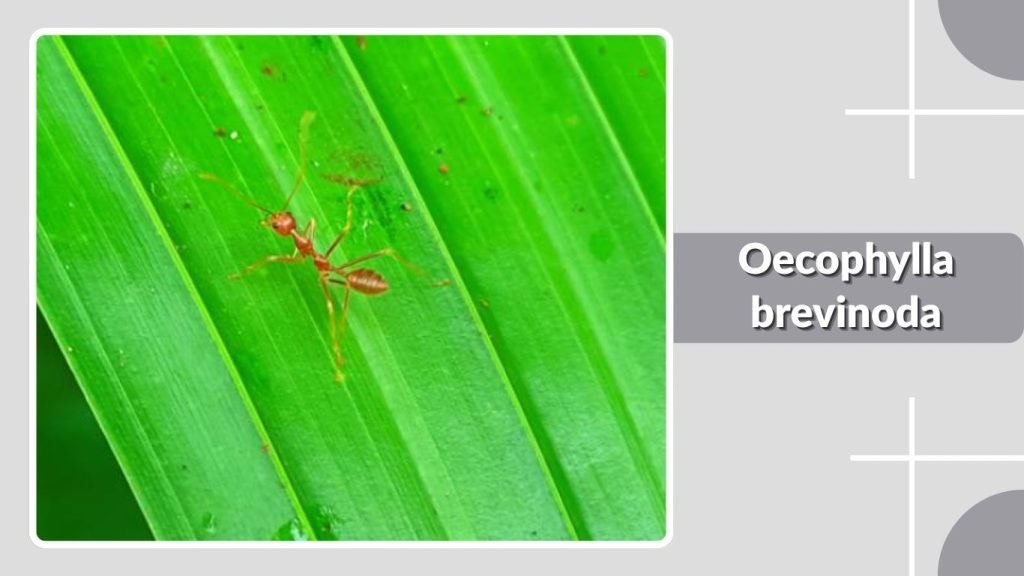
A lesser-known weaver ant species recognized mainly from historical and fossil records. It shares many structural traits with modern weaver ants and provides insight into the evolutionary history of this unique group.
Characteristics
- Medium-sized ant with a slender body structure
- Likely orange-brown coloration based on related species
- Elongated legs suited for arboreal movement
- Strong mandibles adapted for gripping plant material
- Body structure similar to modern weaver ants
Habitat and Distribution
Oecophylla brevinoda is primarily known from fossil records, suggesting it once existed in regions with warm climates and abundant vegetation. These environments likely included ancient forests where arboreal nesting behavior was possible. Its distribution provides evidence that weaver ants were once more widespread than they are today.
Behavior and Diet
Although direct observation is not possible, scientists infer that this species behaved similarly to modern weaver ants. It likely lived in trees and built nests using leaves and larval silk. Its diet probably included small insects, nectar, and honeydew. Cooperative behavior and strong colony organization were likely key features of its survival.
Life Cycle
The life cycle of Oecophylla brevinoda is believed to have been similar to that of present-day weaver ants. A queen would establish a colony, laying eggs that developed into larvae and pupae before becoming adult workers. Larvae likely played a role in silk production for nest construction, indicating that complex social behavior existed even in ancient species.
4. Oecophylla leakeyi (Leakey’s Weaver Ant)

A prehistoric weaver ant species known from fossil evidence, offering insight into the early evolution of leaf-weaving ants. It likely shared many physical and behavioral traits with modern weaver ants found in tropical regions today.
Characteristics
- Medium-sized ant with a slender, elongated body
- Likely orange or reddish-brown coloration
- Long legs adapted for tree movement
- Strong mandibles for gripping and manipulating leaves
- Body structure similar to modern Oecophylla species
Habitat and Distribution
Oecophylla leakeyi is known from fossil records discovered in regions that were once warm and forested. It likely lived in dense, tropical or subtropical forests with abundant tree cover. These environments would have supported arboreal nesting and cooperative colony life.
Behavior and Diet
Although not directly observed, this species likely behaved similarly to modern weaver ants. It probably built nests by weaving leaves together using larval silk. Its diet likely included insects, nectar, and honeydew. Cooperative behavior and strong colony coordination were likely key survival traits.
Life Cycle
The life cycle was likely similar to living weaver ants. A queen would establish the colony and lay eggs, which developed into larvae and pupae. Larvae may have produced silk used in nest construction. Workers would manage foraging, defense, and expansion of the colony.
5. Oecophylla brischkei (Brischke’s Weaver Ant)
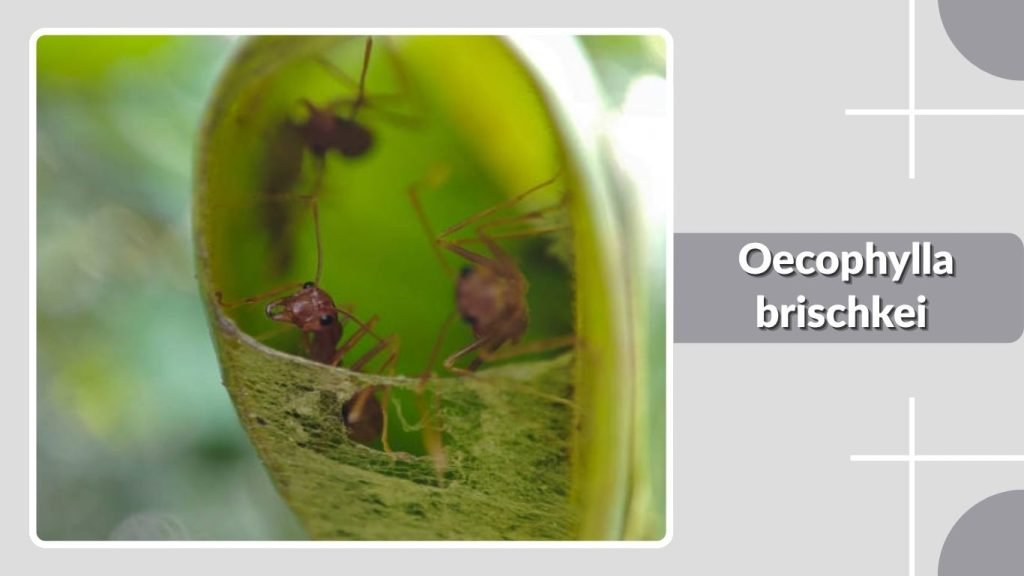
An extinct weaver ant species identified from fossil deposits, providing valuable information about the historical diversity of the Oecophylla genus. It represents an early form of leaf-weaving ants.
Characteristics
- Medium-sized ant with a slim body shape
- Presumed orange-brown coloration
- Long legs suited for arboreal activity
- Strong mandibles for manipulating plant material
- Structural features similar to modern weaver ants
Habitat and Distribution
Oecophylla brischkei is known from fossil records, suggesting it lived in ancient forest ecosystems. These habitats likely included warm, humid environments with dense vegetation, ideal for tree-dwelling ants and leaf-based nest construction.
Behavior and Diet
This species likely exhibited advanced social behavior similar to modern weaver ants. It probably built nests by weaving leaves together using silk produced by larvae. Its diet likely consisted of insects, nectar, and honeydew. Cooperative foraging and defense were likely important behaviors.
Life Cycle
The life cycle likely followed the typical ant development pattern: egg, larva, pupa, and adult. A queen would establish the colony, and larvae may have contributed silk for nest building. Workers would take over colony duties, including feeding, defense, and nest construction.
6. Oecophylla sicula (Sicilian Weaver Ant)
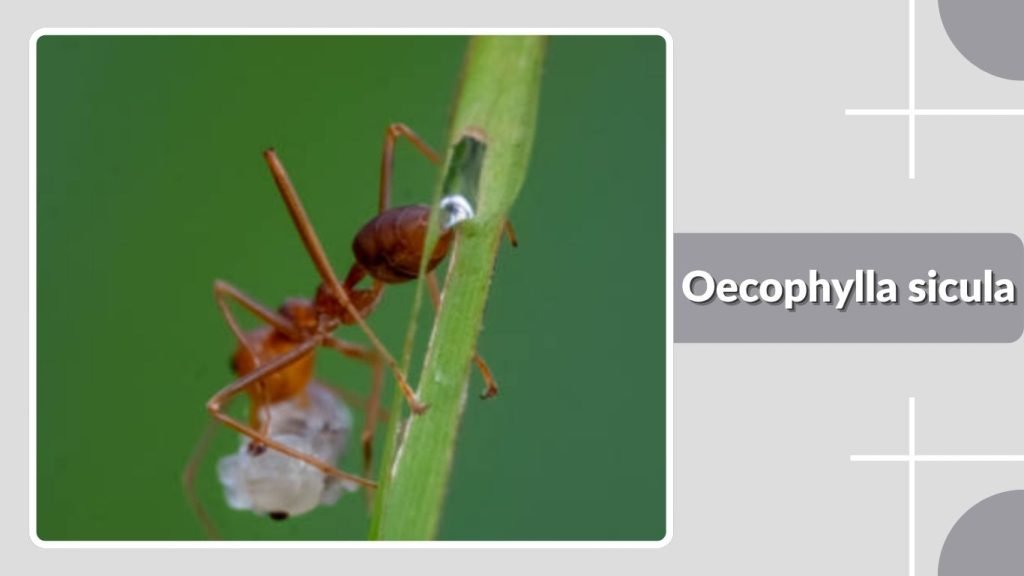
An extinct weaver ant species known from fossil records, offering insight into the historical spread of the Oecophylla genus. It is believed to have lived in warm prehistoric environments where tree-based nesting was possible.
Characteristics
- Medium-sized ant with a slender body
- Likely reddish or orange-brown coloration
- Long legs adapted for arboreal movement
- Strong mandibles for handling leaves
- Body structure similar to modern weaver ants
Habitat and Distribution
Oecophylla sicula is known from fossil evidence found in regions that were once warm and forested, including parts of ancient Europe. It likely inhabited dense forests with abundant trees, providing ideal conditions for arboreal nesting and colony expansion.
Behavior and Diet
Although extinct, this species likely displayed behaviors similar to modern weaver ants. It probably built nests by weaving leaves together using silk produced by larvae. Its diet likely consisted of insects, nectar, and honeydew. Cooperative behavior and strong colony organization were likely essential for survival.
Life Cycle
The life cycle likely followed the standard ant development stages: egg, larva, pupa, and adult. A queen would establish the colony, and larvae may have produced silk for nest construction. Workers would take on roles such as foraging, defense, and maintaining the nest.
7. Oecophylla crassinoda (Thick-node Weaver Ant)
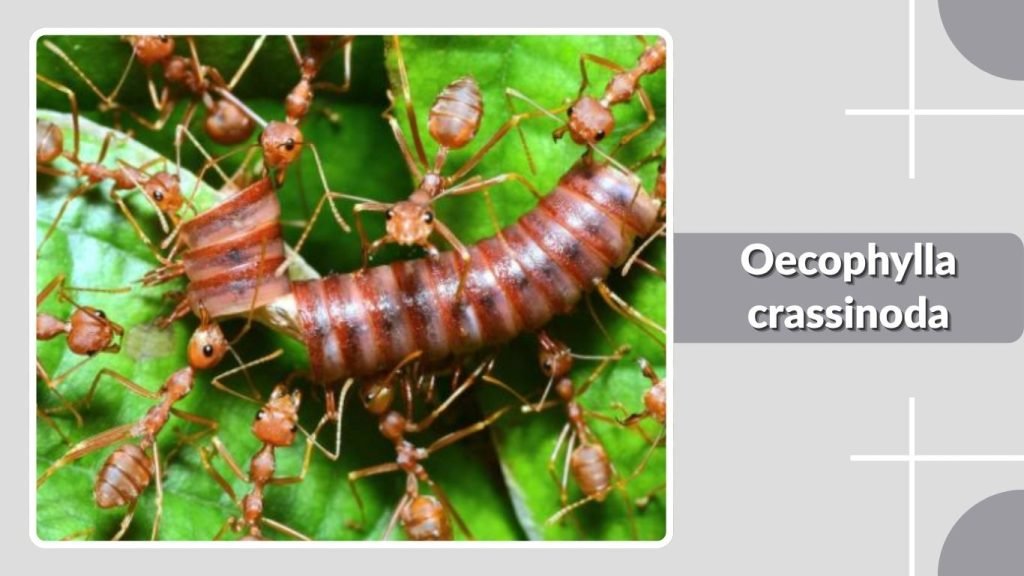
A prehistoric weaver ant species identified through fossil records, contributing to the understanding of early ant evolution. It is believed to have shared many similarities with modern leaf-weaving ants.
Characteristics
- Medium-sized ant with a slightly robust body
- Likely brown to reddish coloration
- Strong mandibles for gripping plant material
- Long legs adapted for movement in trees
- Distinct body node structure compared to related species
Habitat and Distribution
Oecophylla crassinoda is known from fossil deposits, suggesting it lived in ancient tropical or subtropical forests. These environments would have provided the necessary vegetation and climate for arboreal nesting and colony development.
Behavior and Diet
This species likely exhibited advanced social behavior similar to modern weaver ants. It probably constructed nests by weaving leaves together using larval silk. Its diet likely included insects, nectar, and honeydew. Cooperative foraging and defense were likely key behaviors.
Life Cycle
The life cycle likely followed typical ant development: egg, larva, pupa, and adult. A queen would establish the colony, and larvae may have contributed silk for nest building. Workers would handle tasks such as feeding, protection, and nest construction, ensuring colony growth and survival.
8. Oecophylla atavina (Ancient Weaver Ant)
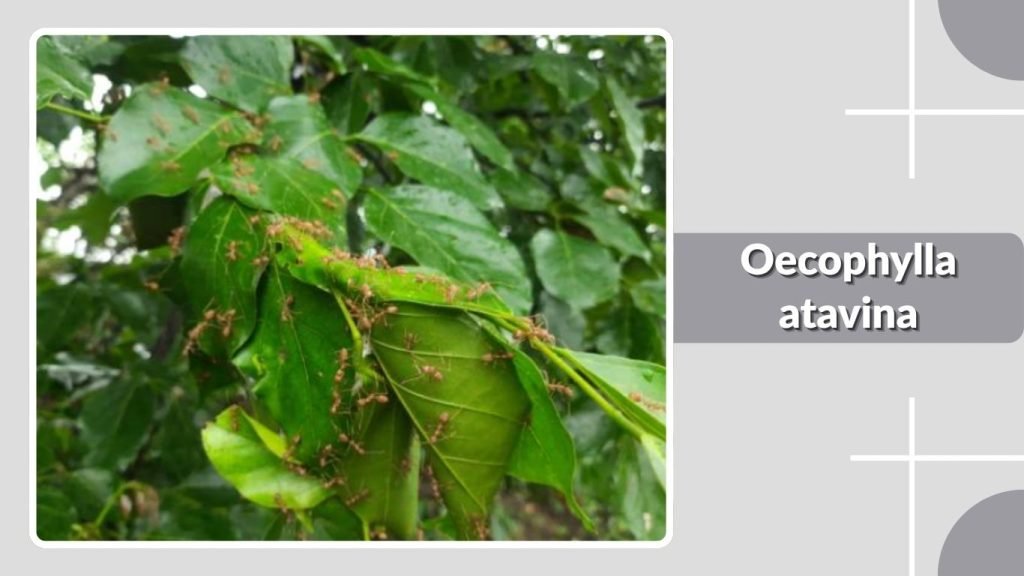
An extinct weaver ant species known from fossil records, providing valuable insight into the early evolution of leaf-weaving ants. It represents one of the ancestral forms of modern Oecophylla species and helps scientists understand how complex social behavior developed over time.
Characteristics
- Medium-sized ant with a slender and elongated body
- Likely orange to reddish-brown coloration based on related species
- Long legs adapted for efficient movement in trees
- Strong mandibles for gripping and manipulating plant material
- Body structure resembling early forms of modern weaver ants
Habitat and Distribution
Oecophylla atavina is known from fossil discoveries in regions that were once warm and densely forested. These prehistoric environments likely included tropical or subtropical forests with abundant tree cover. Such habitats would have provided ideal conditions for arboreal living and the development of leaf-based nesting behavior. Fossil evidence suggests that this species had a wider historical distribution compared to modern weaver ants, indicating that the genus was once more widespread across ancient ecosystems.
Behavior and Diet
Although direct observation is not possible, scientists infer that Oecophylla atavina exhibited behavior similar to modern weaver ants. It likely lived in trees and constructed nests by weaving leaves together using silk produced by its larvae. This cooperative behavior would have required strong communication and coordination among workers. Its diet likely consisted of small insects, nectar, and honeydew produced by sap-feeding insects. These food sources would have supported large and organized colonies, similar to those seen in present-day species.
Life Cycle
The life cycle of Oecophylla atavina was likely comparable to that of modern ants. A fertilized queen would establish a colony and lay eggs, which developed into larvae and then pupae. The larvae may have produced silk used in nest construction, a defining trait of weaver ants. Once mature, worker ants would take over responsibilities such as foraging, defense, and nest building. Over time, the colony would produce reproductive individuals that participated in mating flights, ensuring the continuation of the species.
9. Oecophylla bartoniana (Barton’s Weaver Ant)

A fossil weaver ant species that contributes to understanding the diversity and evolutionary history of the Oecophylla genus. It is considered an important link between ancient and modern weaver ants, showing early development of complex social structures.
Characteristics
- Medium-sized ant with a streamlined body shape
- Presumed reddish or orange-brown coloration
- Long legs suited for arboreal movement
- Strong mandibles for handling leaves and nest materials
- Body features closely aligned with modern weaver ants
Habitat and Distribution
Oecophylla bartoniana is known from fossil records found in regions that were once covered by dense forests. These environments likely provided the necessary conditions for tree-dwelling ants, including abundant foliage and a warm climate. The species likely inhabited tropical or subtropical ecosystems, where it could build nests and establish large colonies. Fossil findings suggest that this species was part of a broader distribution of weaver ants in ancient times.
Behavior and Diet
This species likely displayed advanced social behavior similar to modern weaver ants. It probably constructed nests by weaving leaves together using silk produced by larvae. Workers would have coordinated closely, forming chains to pull leaves together during nest building. Its diet likely included insects, nectar, and honeydew, providing both protein and energy for colony growth. Cooperative foraging and strong territorial defense were likely important aspects of its behavior.
Life Cycle
The life cycle of Oecophylla bartoniana likely followed the typical ant pattern: egg, larva, pupa, and adult. A queen would establish the colony after mating and lay eggs that developed into larvae. These larvae may have played a role in silk production for nest construction. As the colony matured, workers would manage tasks such as feeding, nest expansion, and defense. Eventually, reproductive ants would be produced for mating flights, ensuring the spread of the species.
10. Oecophylla megarche (Large-arch Weaver Ant)
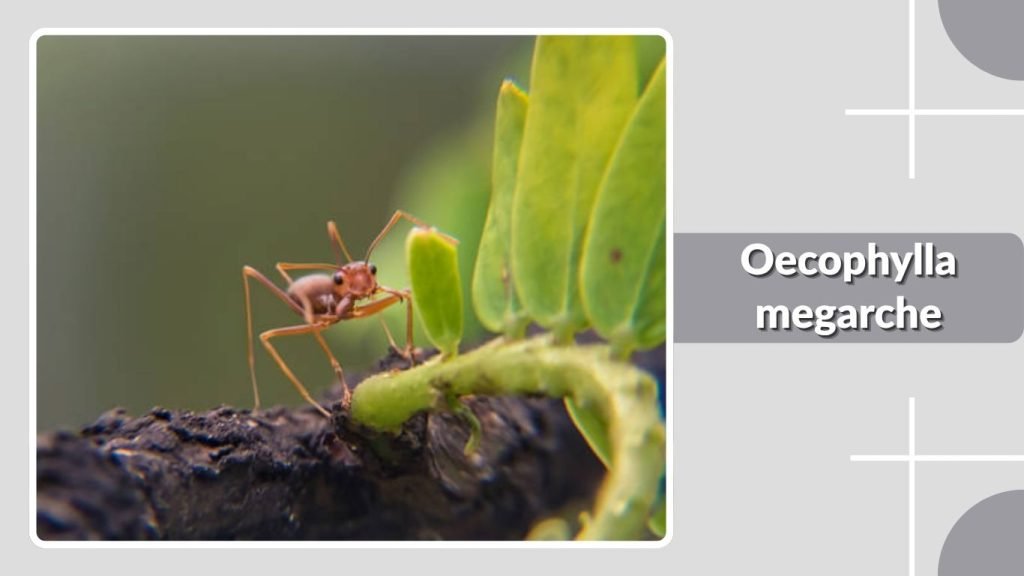
An extinct weaver ant species identified from fossil records, known for its relatively larger body structure and strong resemblance to modern leaf-weaving ants. It provides important clues about the evolution of complex ant societies.
Characteristics
- Medium to large size with a slightly robust body
- Likely reddish-brown coloration
- Long legs adapted for arboreal movement
- Strong mandibles for gripping and manipulating leaves
- Body form similar to modern weaver ants
Habitat and Distribution
Oecophylla megarche is known from fossil discoveries in regions that were once warm and forested. It likely inhabited tropical or subtropical environments with dense vegetation. These habitats would have supported tree-based nesting and large colony development. Fossil evidence suggests that this species lived in ecosystems rich in plant life, ideal for leaf-weaving behavior.
Behavior and Diet
Although extinct, this species likely exhibited cooperative behavior similar to modern weaver ants. It probably constructed nests by weaving leaves together using silk produced by larvae. Its diet likely consisted of insects, nectar, and honeydew. Workers would have worked together in groups, forming chains to pull leaves together and maintain nest structures.
Life Cycle
The life cycle likely followed the standard ant development stages. A queen would establish a colony and lay eggs, which developed into larvae and pupae. Larvae may have produced silk for nest construction. Adult workers would take on roles such as foraging, defense, and nest building, ensuring colony growth and survival.
11. Oecophylla obesa (Robust Weaver Ant)
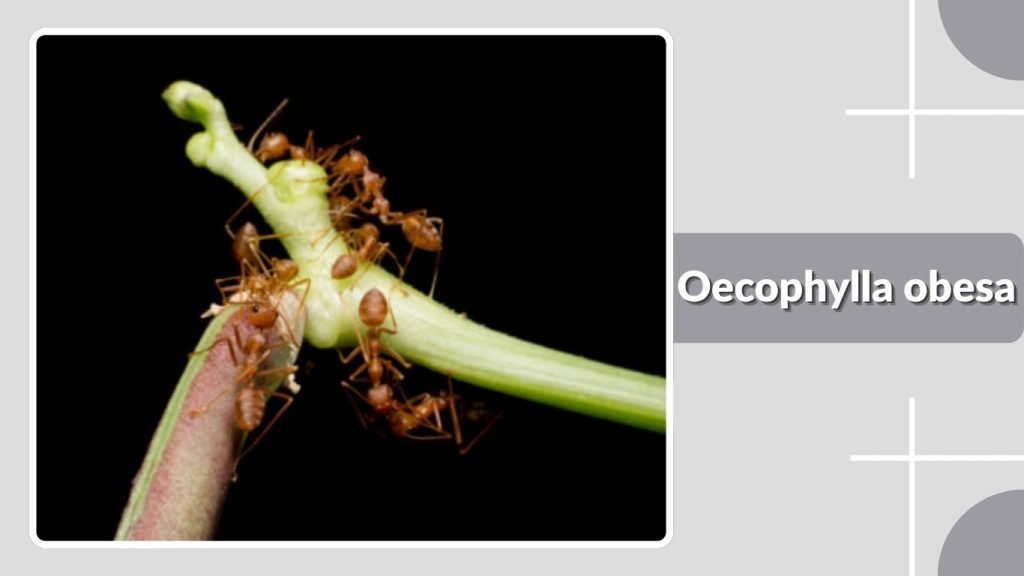
A prehistoric weaver ant species recognized for its comparatively thicker body structure. It is known from fossil records and is considered part of the evolutionary lineage of modern weaver ants.
Characteristics
- Medium-sized ant with a robust, compact body
- Likely orange-brown to dark brown coloration
- Strong mandibles suited for handling plant material
- Long legs adapted for movement in trees
- Slightly heavier build compared to related species
Habitat and Distribution
Oecophylla obesa is known from fossil records found in regions that were once covered by dense forests. These areas likely had warm, humid climates suitable for arboreal ant species. The presence of abundant vegetation would have supported leaf-based nest construction and colony expansion.
Behavior and Diet
This species likely demonstrated advanced social behavior similar to modern weaver ants. It probably built nests by weaving leaves together using larval silk. Its diet likely included insects, nectar, and honeydew. Workers would have coordinated closely to forage efficiently and defend their territory from threats.
Life Cycle
The life cycle likely followed the typical ant pattern of egg, larva, pupa, and adult. A queen would establish the colony and produce offspring. Larvae may have contributed silk for nest construction. As the colony matured, workers would manage all essential tasks, including feeding, defense, and nest maintenance, while reproductive ants ensured the continuation of the species.
12. Oecophylla eckfeldiana (Eckfeld Weaver Ant)
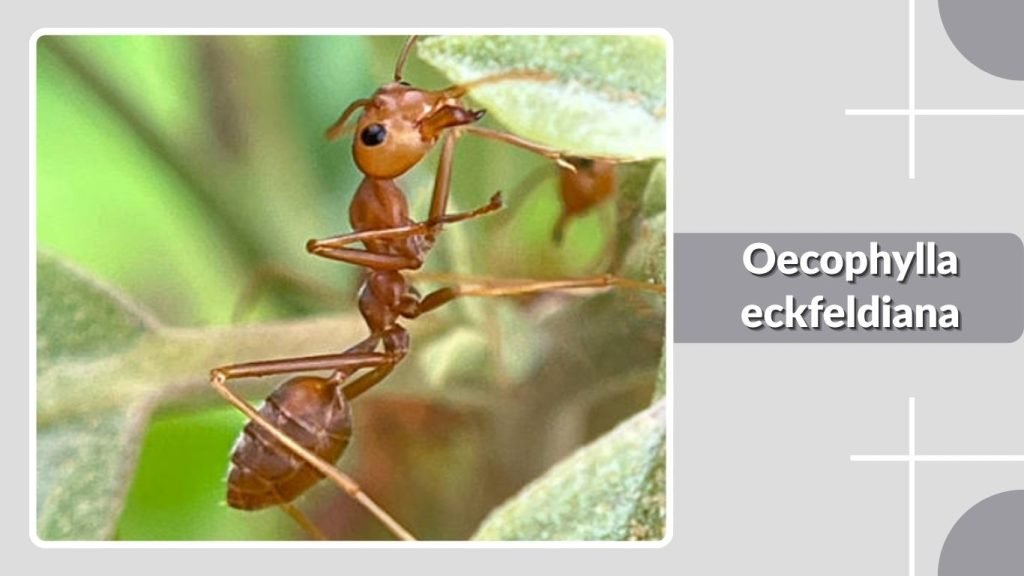
An extinct weaver ant species known from fossil evidence, contributing to the understanding of early ant evolution. It shares many structural similarities with modern weaver ants, suggesting advanced social behavior even in ancient times.
Characteristics
- Medium-sized ant with a slender body
- Likely reddish-brown coloration
- Long legs adapted for tree movement
- Strong mandibles for handling leaves
- Body structure similar to modern weaver ants
Habitat and Distribution
Oecophylla eckfeldiana is known from fossil records discovered in regions that were once warm and forested. It likely inhabited tropical or subtropical forests with dense vegetation. These environments would have supported arboreal nesting and complex colony structures.
Behavior and Diet
This species likely behaved similarly to modern weaver ants. It probably built nests by weaving leaves together using silk produced by larvae. Its diet likely included insects, nectar, and honeydew. Cooperative behavior and organized foraging were likely key traits.
Life Cycle
The life cycle likely followed the standard stages of egg, larva, pupa, and adult. A queen would establish the colony, and larvae may have produced silk for nest construction. Workers would take on tasks such as feeding, defense, and maintaining the nest.
13. Oecophylla tertiaria (Tertiary Weaver Ant)
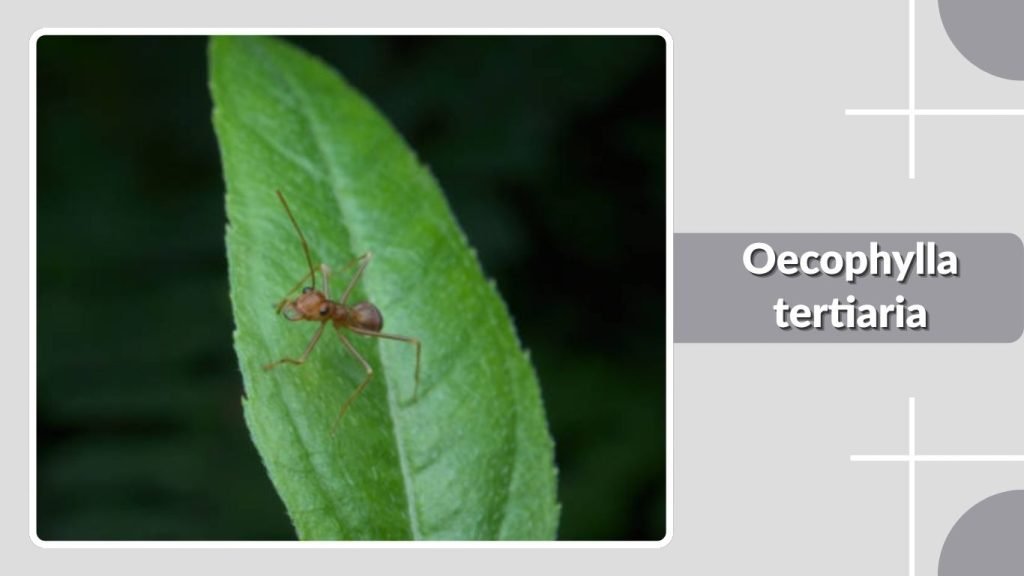
A fossil weaver ant species from the Tertiary period, offering valuable insight into the long evolutionary history of leaf-weaving ants. It represents an early stage in the development of complex social insects.
Characteristics
- Medium-sized ant with a slender, elongated body
- Presumed orange-brown coloration
- Long legs suited for arboreal living
- Strong mandibles for gripping plant material
- Body features resembling modern weaver ants
Habitat and Distribution
Oecophylla tertiaria is known from fossil deposits in regions that once had warm, forested climates. These habitats likely included dense vegetation, providing suitable conditions for tree-dwelling ants and leaf-based nest construction.
Behavior and Diet
Although extinct, this species likely exhibited cooperative behavior similar to modern weaver ants. It probably constructed nests by weaving leaves together using larval silk. Its diet likely included insects, nectar, and honeydew, supporting colony growth.
Life Cycle
The life cycle likely followed typical ant development: egg, larva, pupa, and adult. A queen would establish the colony, and larvae may have contributed silk for nest building. Workers would manage foraging, defense, and nest expansion, ensuring colony survival.
14. Oecophylla grandimandibula (Large-mandible Weaver Ant)
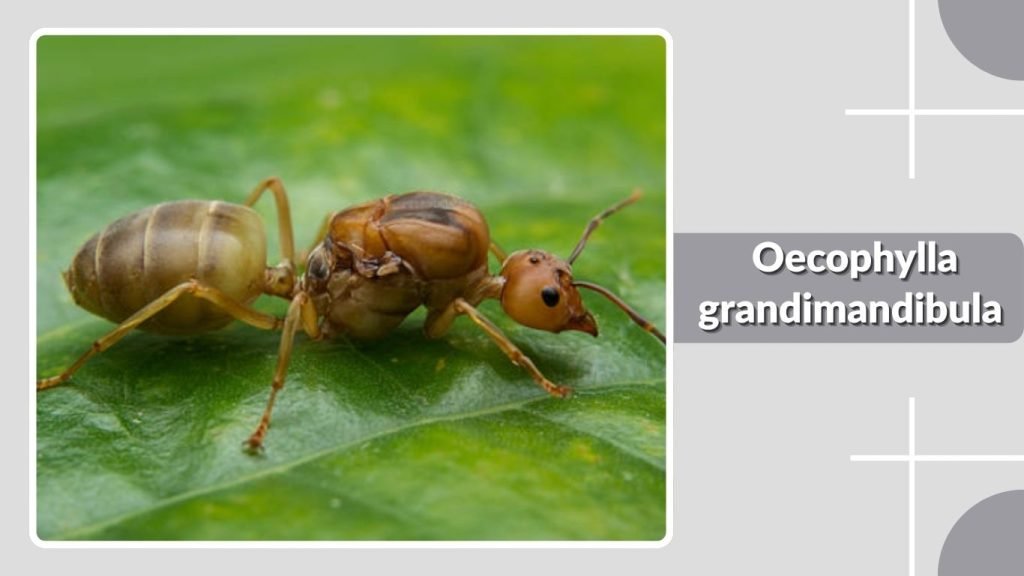
An extinct weaver ant species known for its notably large mandibles. It provides important insight into the structural adaptations of early weaver ants and their ability to manipulate leaves during nest construction.
Characteristics
- Medium-sized ant with a slender body
- Likely reddish-brown coloration
- Exceptionally large mandibles compared to related species
- Long legs adapted for arboreal movement
- Body structure similar to modern weaver ants
Habitat and Distribution
Oecophylla grandimandibula is known from fossil records found in regions that were once warm and forested. It likely lived in tropical or subtropical environments with dense vegetation. These habitats would have supported tree-dwelling behavior and leaf-based nest construction.
Behavior and Diet
This species likely exhibited cooperative behavior similar to modern weaver ants. It probably used its large mandibles to grip and manipulate leaves during nest building. Its diet likely included insects, nectar, and honeydew. Workers would have worked together to forage and defend their colonies.
Life Cycle
The life cycle likely followed the typical ant stages: egg, larva, pupa, and adult. A queen would establish the colony, and larvae may have produced silk for nest construction. Workers would take on roles such as feeding, defense, and maintaining the nest structure.
15. Oecophylla koningsbergeri (Koningsberger’s Weaver Ant)
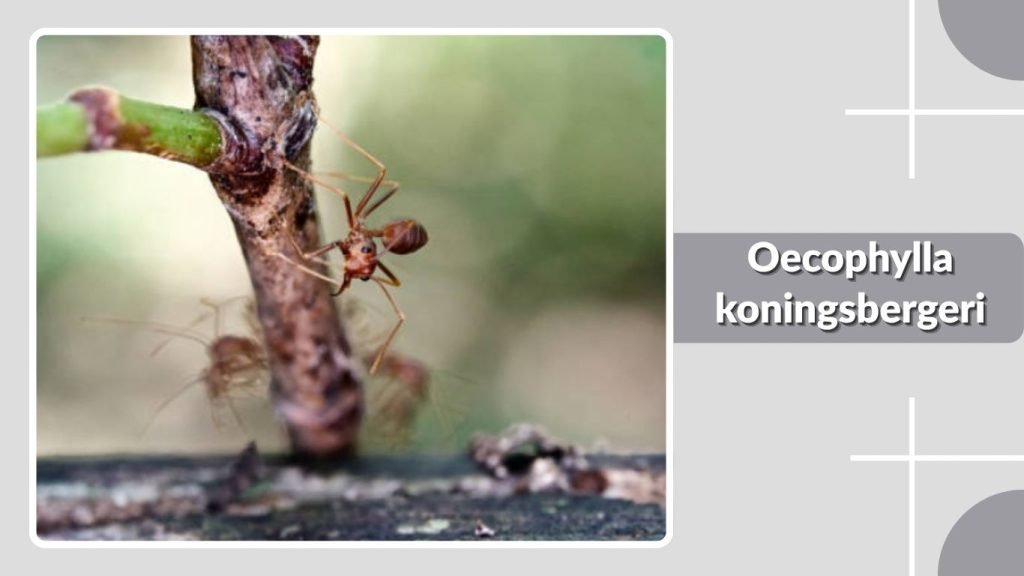
A fossil weaver ant species that contributes to understanding the diversity and distribution of ancient Oecophylla ants. It is considered part of the evolutionary lineage leading to modern weaver ants.
Characteristics
- Medium-sized ant with a streamlined body
- Likely orange to brown coloration
- Long legs suited for life in trees
- Strong mandibles for handling plant material
- Body features closely related to modern weaver ants
Habitat and Distribution
Oecophylla koningsbergeri is known from fossil deposits in regions that were once rich in vegetation and warm climates. It likely inhabited forested environments where tree-based nesting was possible. These conditions would have supported large, organized colonies.
Behavior and Diet
Although extinct, this species likely behaved similarly to modern weaver ants. It probably built nests by weaving leaves together using silk from larvae. Its diet likely consisted of insects, nectar, and honeydew. Cooperative foraging and strong colony coordination were likely key traits.
Life Cycle
The life cycle likely followed the standard ant development process. A queen would establish the colony and lay eggs, which developed into larvae and pupae. Larvae may have produced silk used in nest construction. Adult workers would manage all colony activities, ensuring survival and growth.
FAQs
What are weaver ants?
Weaver ants are arboreal ants known for building nests by weaving leaves together using silk produced by their larvae. They live in trees and form highly organized colonies, often spreading across multiple nests within the same area.
Where are weaver ants commonly found?
Weaver ants are mainly found in tropical and subtropical regions, including Asia, Africa, and Australia. They prefer forests, orchards, and gardens where trees and vegetation provide suitable nesting sites and food sources.
Are weaver ants aggressive?
Yes, weaver ants are highly aggressive, especially when defending their nests. They can bite strongly and often work together to attack intruders. This defensive behavior helps protect their colony from predators and threats.
What do weaver ants eat?
Weaver ants primarily feed on small insects, nectar, and honeydew produced by sap-feeding insects. They are also known for controlling pest populations, making them beneficial in agricultural environments.
How do weaver ants build their nests?
Weaver ants build nests by pulling leaves together and using silk produced by their larvae to bind them. Workers cooperate by forming chains to hold leaves in place while others apply the silk, creating strong and secure leaf nests.
