
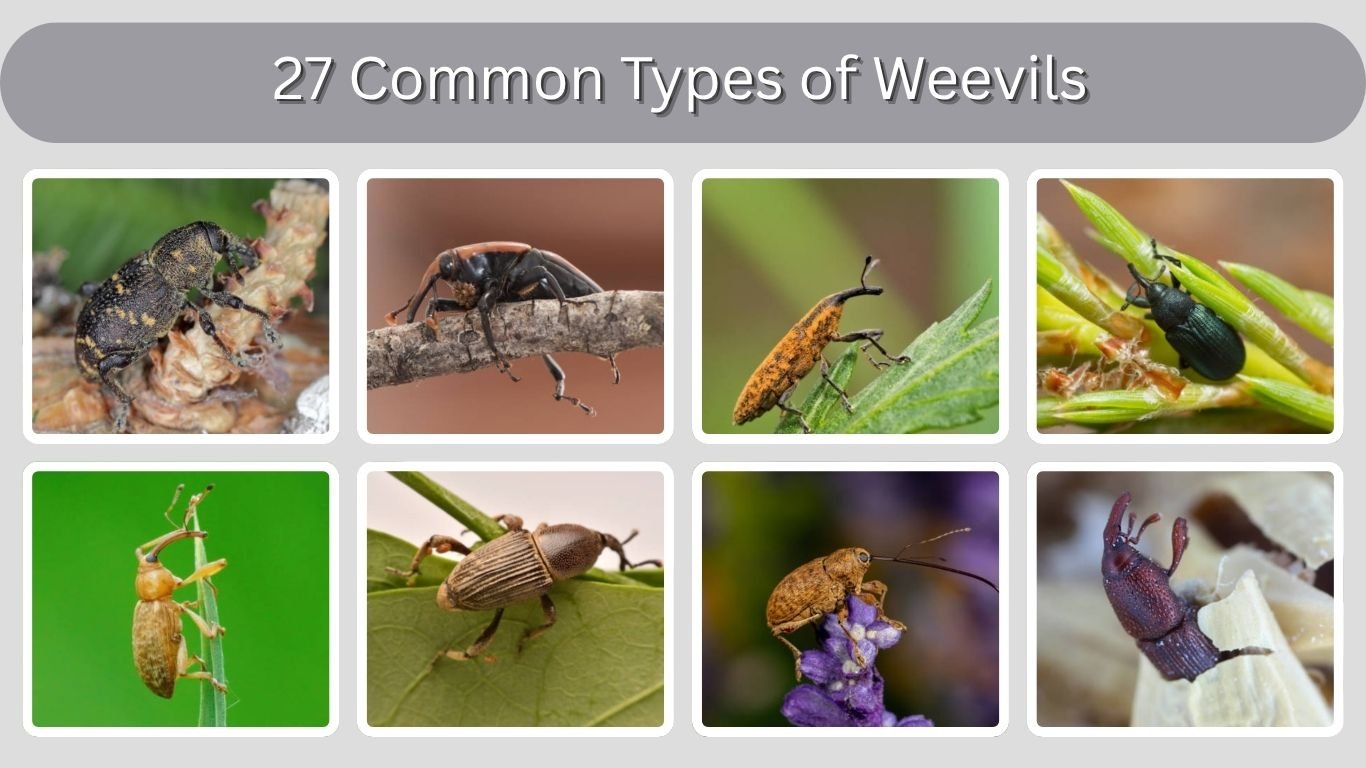
Weevils are a diverse group of beetles known for their elongated snouts and plant-feeding habits. Found across gardens, forests, farms, and even stored food supplies, these insects can range from minor nuisances to highly destructive pests. Some species target crops like cotton, rice, and bananas, while others infest trees, nuts, or household grains.
This guide highlights 27 common types of weevils, helping you identify them based on their appearance, habitat, and behavior. Understanding these species is essential for recognizing infestations early and protecting plants, crops, and stored food from damage.
1. Boll Weevil
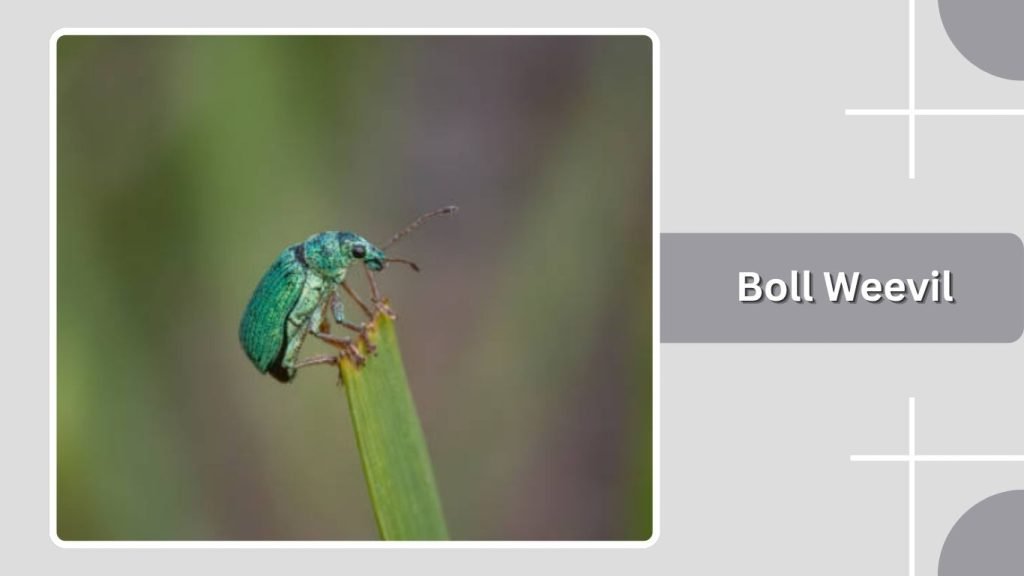
The boll weevil is one of the most well-known agricultural pests, especially in cotton-growing regions. Native to Central America, it spread across the United States and other parts of the world, causing severe damage to cotton crops. This small beetle is recognized for its long snout and destructive feeding habits.
Identification
The boll weevil is a small, grayish-brown beetle measuring about 6 mm long. It has a distinctive elongated snout (rostrum) and elbowed antennae. Its body is oval-shaped with a rough texture, helping it blend into plant surfaces.
Habitat and Distribution
Boll weevils thrive in warm climates where cotton is cultivated. They are commonly found in fields, farms, and storage areas where cotton plants are present. Originally from Mexico, they have spread to many cotton-producing regions worldwide.
Key Characteristics
- Long, curved snout used for feeding and egg-laying
- Gray to brown body with fine hairs
- Strong association with cotton plants
- Capable of rapid reproduction in warm conditions
Damage and Impact
Boll weevils primarily attack cotton plants by feeding on flower buds and laying eggs inside them. This causes the buds to fall off prematurely, reducing crop yield significantly. Their infestation has historically led to major economic losses for farmers and continues to require careful pest management strategies.
2. Rice Weevil
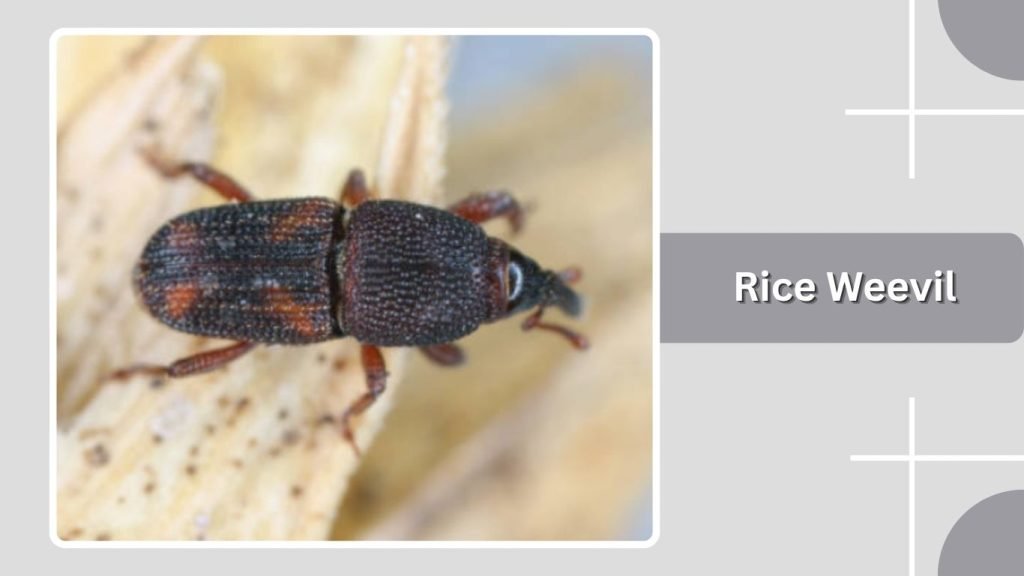
The rice weevil is a common stored-product pest that attacks grains such as rice, wheat, and corn. It is widely known for infesting food storage areas, making it a major concern in households and agricultural storage facilities. This small beetle can quickly multiply and contaminate large quantities of food.
Identification
The rice weevil is a tiny beetle, about 2–3 mm long, with a reddish-brown to dark brown body. It has a long snout and four lighter spots on its wing covers, which help distinguish it from similar species.
Habitat and Distribution
Rice weevils are found worldwide, especially in warm and humid environments. They commonly infest stored grains in pantries, warehouses, and silos. Their ability to fly allows them to spread easily between storage locations.
Key Characteristics
- Small size with a noticeable elongated snout
- Four pale spots on the wing covers
- Strong flier compared to other grain weevils
- Infests a wide range of stored grains
Damage and Impact
Rice weevils damage grains by boring into kernels to lay eggs. The larvae develop inside, hollowing out the grain from within. This not only reduces food quality but also leads to contamination, making the grains unsuitable for consumption or sale.
3. Maize Weevil
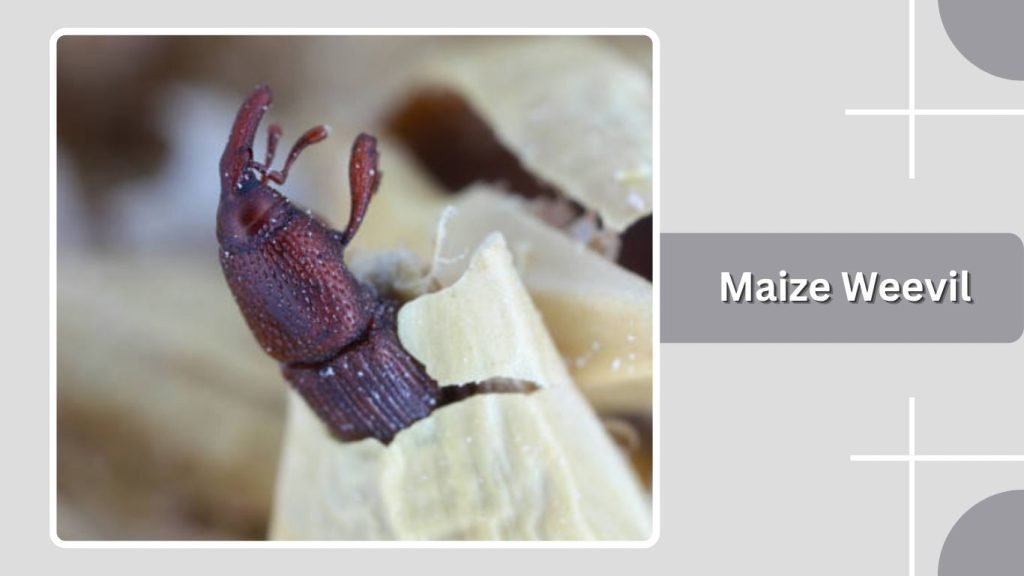
The maize weevil is a destructive pest that primarily targets stored grains, especially corn. It is closely related to the rice weevil and is a major problem in both household storage and large-scale grain facilities. Its ability to infest grains quickly makes it a serious agricultural concern.
Identification
The maize weevil is small, about 3–5 mm long, with a dark brown to black body. It has a long snout and often shows faint reddish or yellowish markings on its wing covers. Its body is slightly larger than the rice weevil.
Habitat and Distribution
Maize weevils are found in tropical and subtropical regions worldwide. They thrive in warm, humid environments and are commonly found in grain storage areas, silos, and warehouses.
Key Characteristics
- Slightly larger than rice weevils
- Long snout used for feeding and egg-laying
- Can fly, aiding rapid spread
- Infests corn, wheat, and other grains
Damage and Impact
Maize weevils bore into grains to lay eggs, and the larvae feed inside the kernels. This results in hollowed grains, reduced weight, and contamination. Heavy infestations can lead to significant post-harvest losses, especially in poorly managed storage conditions.
4. Granary Weevil
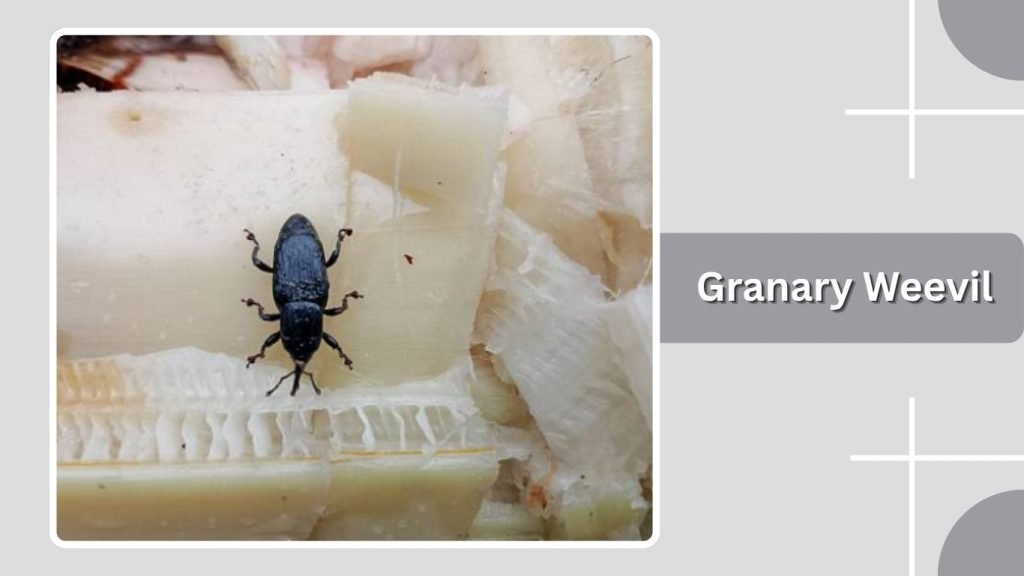
The granary weevil is a well-known pest of stored grains, particularly in cooler climates. Unlike some other weevils, it cannot fly, but it still spreads efficiently through infested grain supplies. It is a serious threat to stored food products.
Identification
Granary weevils are small, about 3–4 mm long, with a shiny reddish-brown to black body. They have a pronounced snout but lack the light spots seen on rice or maize weevils, giving them a more uniform appearance.
Habitat and Distribution
They are commonly found in temperate regions and prefer indoor environments such as grain storage facilities, mills, and household pantries. They spread through contaminated grain shipments.
Key Characteristics
- Cannot fly, relies on crawling for movement
- Smooth, shiny body without wing spots
- Strong association with stored grains
- Prefers cooler storage conditions
Damage and Impact
Granary weevils damage grains by drilling holes to lay eggs. The larvae feed inside, destroying the kernel from within. Infestations can go unnoticed until significant damage has occurred, leading to major losses in stored food supplies.
5. Strawberry Root Weevil
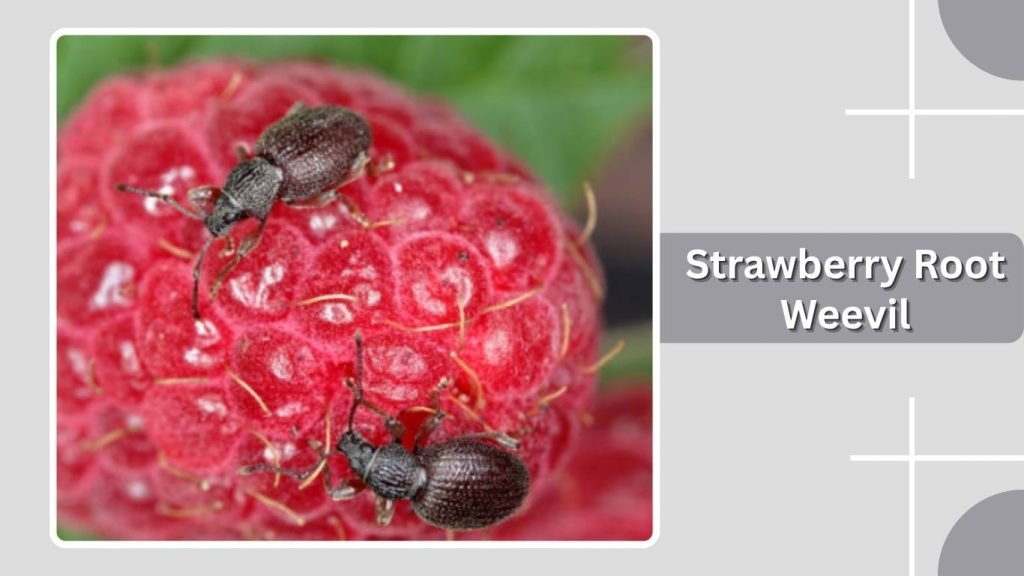
The strawberry root weevil is a common garden pest that affects strawberries and various ornamental plants. Although the adults feed on leaves, the larvae cause more serious damage by attacking plant roots, which can weaken or kill the plant over time.
Identification
Adult strawberry root weevils are small, about 7–8 mm long, with a black or dark brown body. They have a rough, textured surface and a short snout. Their larvae are white, legless, and C-shaped.
Habitat and Distribution
These weevils are widely found in North America and Europe. They thrive in gardens, nurseries, and landscaped areas where host plants like strawberries, mint, and ornamentals are grown.
Key Characteristics
- Flightless beetles with a rough, dark body
- Nocturnal feeding behavior
- Larvae live in soil and feed on roots
- Wide host plant range
Damage and Impact
While adults create notches along leaf edges, the larvae feed on roots beneath the soil. This root damage can stunt plant growth, reduce yields, and even cause plant death in severe infestations.
6. Black Vine Weevil
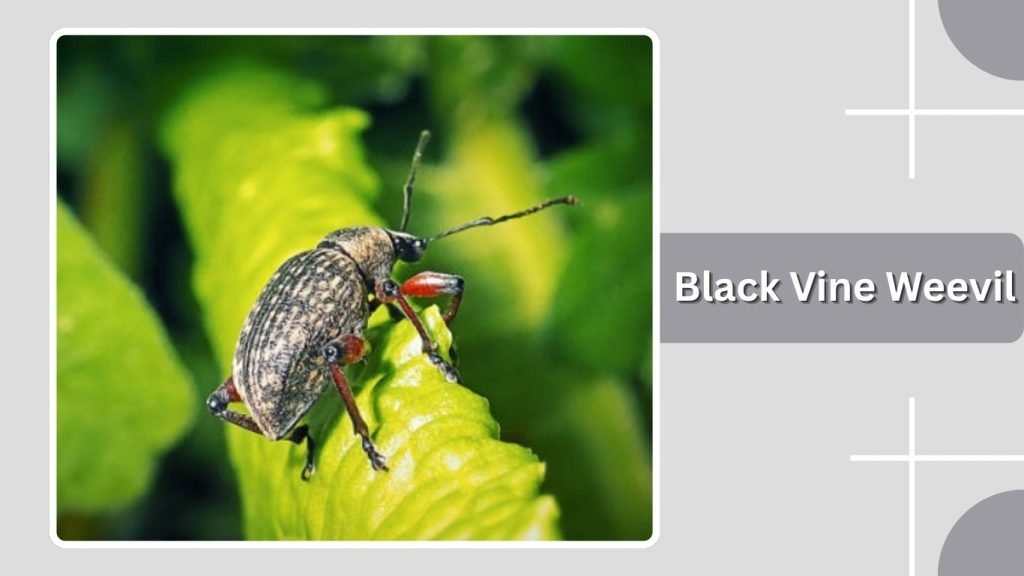
The black vine weevil is a serious pest of ornamental plants, especially in gardens and nurseries. It is known for damaging a wide variety of plants, including rhododendrons, yews, and strawberries, making it a major concern for horticulture.
Identification
Black vine weevils are about 8–10 mm long with a dull black body covered in tiny yellowish specks. They have a short snout and are wingless, meaning they cannot fly.
Habitat and Distribution
This species is found in many parts of the world, especially in temperate regions. It prefers gardens, greenhouses, and nursery environments where host plants are abundant.
Key Characteristics
- Wingless and unable to fly
- Nocturnal leaf-feeding behavior
- Larvae are white, C-shaped grubs
- Attacks a wide range of ornamental plants
Damage and Impact
Adult weevils feed on leaf edges, leaving a distinctive notched pattern. However, the larvae cause the most harm by feeding on plant roots, often leading to wilting, poor growth, and plant death if left uncontrolled.
7. Fuller Rose Beetle (Weevil)
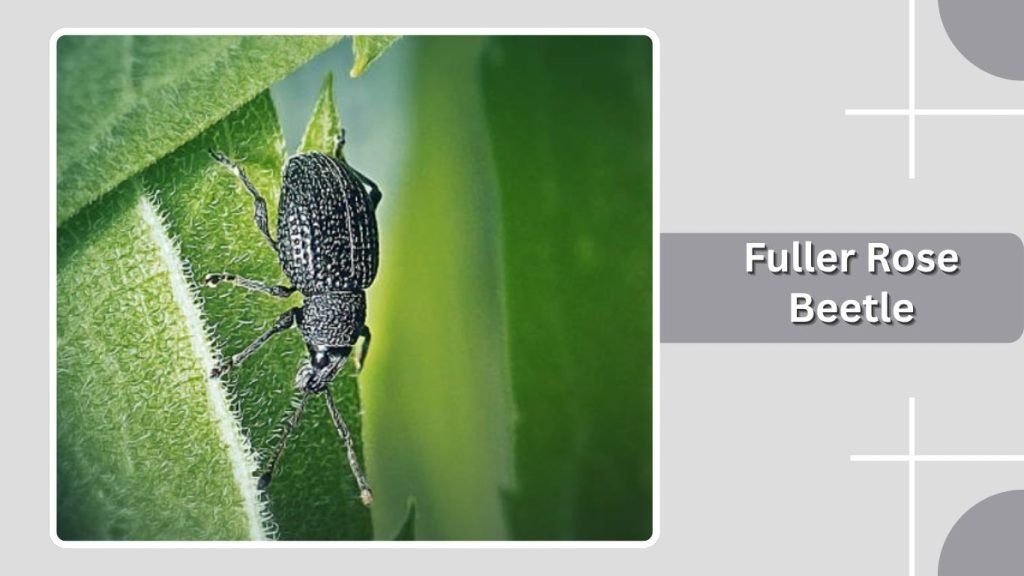
The Fuller rose beetle, also known as a type of weevil, is a widespread pest that primarily affects ornamental plants and fruit trees. Despite its name, it does not limit itself to roses and is known for feeding on a wide variety of plant species. This pest is particularly problematic in gardens, nurseries, and agricultural settings where it can cause both aesthetic and economic damage.
Identification
The Fuller rose beetle is a medium-sized weevil, typically measuring around 6–8 mm in length. It has a grayish-brown body with a rough, scaly texture that helps it blend into its surroundings. Unlike many other beetles, it is wingless and cannot fly, which means it spreads mainly by crawling. Its body is oval-shaped with a short, broad snout. The larvae are legless, white grubs that live in the soil and are often curved in a C-shape.
Habitat and Distribution
This weevil is found in many warm regions around the world, including North America, Australia, and parts of Asia. It thrives in gardens, orchards, vineyards, and landscaped areas. Fuller rose beetles are highly adaptable and can survive in both urban and rural environments. They are especially active in areas with abundant host plants such as citrus, roses, and various ornamental shrubs.
Key Characteristics
- Wingless beetle that cannot fly
- Gray-brown body with a rough, scaly surface
- Nocturnal feeding habits
- Larvae develop in soil and feed on roots
Damage and Impact
Adult Fuller rose beetles feed on leaves, creating irregular notches along the edges, which can make plants look unsightly. However, the more serious damage is caused by the larvae, which feed on plant roots underground. This root feeding can weaken plants, reduce nutrient uptake, and stunt growth. In severe cases, it may lead to plant decline or death. Because the larvae are hidden in the soil, infestations can go unnoticed until significant damage has already occurred. Additionally, these weevils can contaminate harvested crops, making them less marketable. Effective management often requires a combination of cultural practices and biological control methods to reduce their population.
8. Pine Weevil
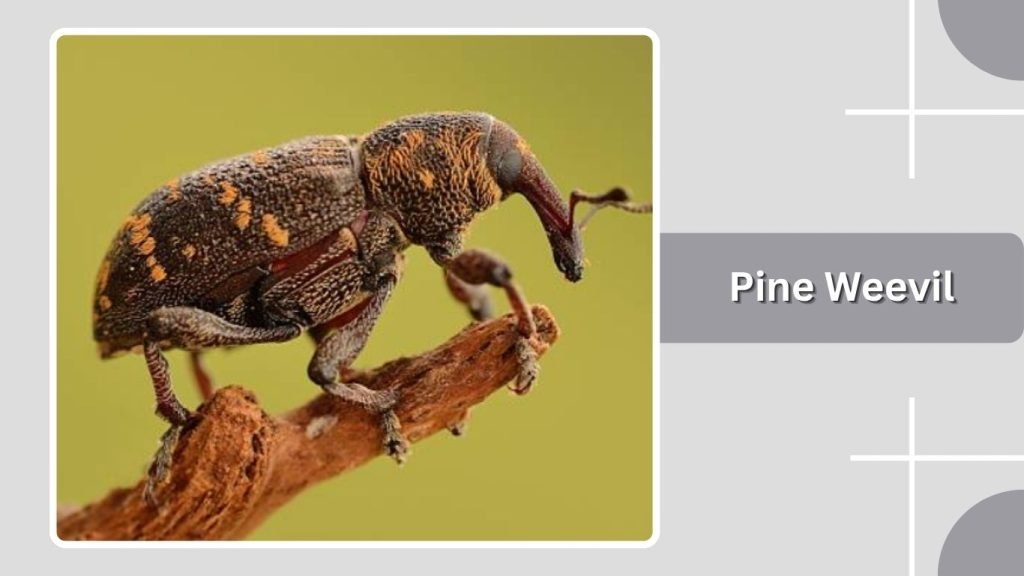
The pine weevil is a significant forestry pest known for damaging young conifer trees, especially pine species. It plays a major role in affecting forest regeneration, particularly in areas where trees have been recently planted or harvested. This weevil is notorious for targeting seedlings, making it a serious concern for forest management.
Identification
Pine weevils are relatively large compared to many other weevil species, measuring about 10–14 mm in length. They have a dark brown to black body with patches of yellow or light-colored scales scattered across their backs. Their elongated snout is prominent and used for feeding. The larvae are creamy white, legless, and typically found beneath the bark or in the soil near tree roots.
Habitat and Distribution
Pine weevils are commonly found across Europe and parts of Asia, especially in forested regions. They prefer coniferous forests and are particularly abundant in areas where trees have been recently cut, as these environments provide ideal breeding conditions. Logging sites and reforestation areas are especially vulnerable to infestations.
Key Characteristics
- Large size compared to other weevils
- Distinctive yellow patches on a dark body
- Strong association with conifer trees
- Larvae develop in tree stumps and roots
Damage and Impact
Adult pine weevils feed on the bark of young trees, particularly seedlings and saplings. They chew through the outer bark layer, often girdling the stem, which disrupts the flow of nutrients and water within the plant. This can quickly kill young trees, making reforestation efforts difficult and costly. Larvae contribute to the problem by feeding on roots and decaying wood, further weakening the ecosystem. Severe infestations can lead to large-scale tree loss, impacting timber production and forest health. Managing pine weevils often involves protective treatments for seedlings and careful monitoring of affected forest areas.
9. Acorn Weevil
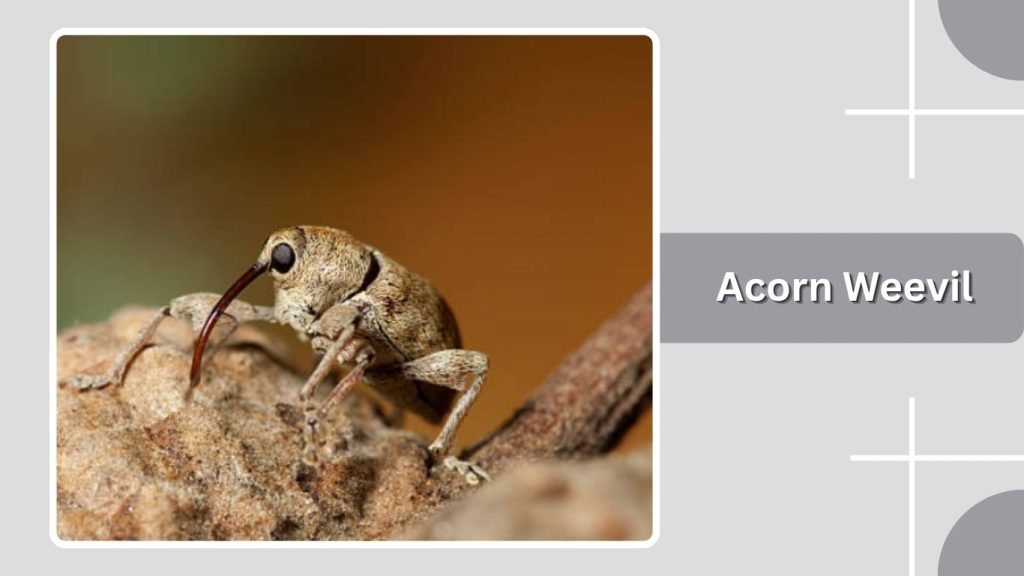
The acorn weevil is a specialized pest that targets oak trees by infesting their acorns. It plays a notable role in forest ecosystems but can significantly affect oak regeneration when populations are high. This weevil is best known for its long snout and its habit of developing inside acorns.
Identification
Acorn weevils vary in size, typically measuring 5–10 mm long. They have a brown to reddish-brown body and a very long, curved snout, especially in females, which is used to drill into acorns. Their bodies are oval and slightly textured.
Habitat and Distribution
These weevils are commonly found in regions where oak trees grow, including North America, Europe, and parts of Asia. They live in forests, woodlands, and areas with abundant oak populations.
Key Characteristics
- Extremely long snout, especially in females
- Strong association with oak trees
- Larvae develop inside acorns
- Seasonal life cycle tied to acorn production
Damage and Impact
Female acorn weevils lay eggs inside developing acorns. The larvae feed within, consuming the nut and eventually exiting through a hole. This reduces viable seeds, affecting oak tree reproduction and forest regeneration.
10. Nut Weevil
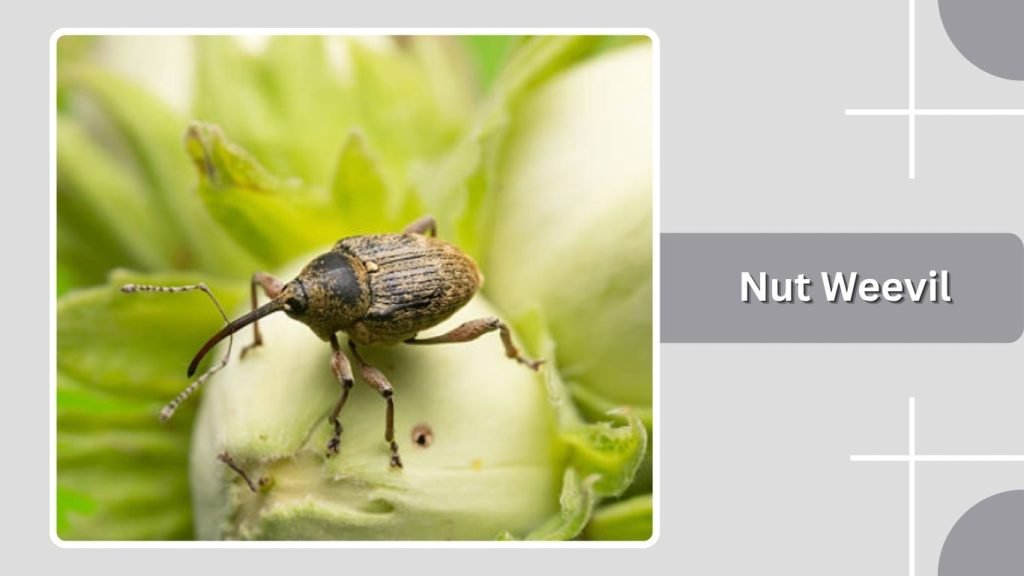
Nut weevils are closely related to acorn weevils and are known for infesting a variety of nuts, including hazelnuts, chestnuts, and pecans. They are significant pests in both natural forests and commercial nut production.
Identification
Nut weevils are medium-sized beetles, about 5–9 mm long, with a brown or grayish body. They have a long snout, though typically shorter than that of acorn weevils. Their bodies are oval and slightly rough in texture.
Habitat and Distribution
They are widely distributed across temperate regions where nut-producing trees grow. Nut weevils are commonly found in orchards, forests, and rural landscapes with abundant host plants.
Key Characteristics
- Long snout adapted for boring into nuts
- Strong preference for nut-bearing trees
- Larvae develop inside nuts
- Life cycle synchronized with nut formation
Damage and Impact
Nut weevils lay eggs inside developing nuts. The larvae feed on the interior, destroying the edible portion. Infested nuts often drop prematurely or become unsuitable for consumption, leading to economic losses in commercial nut production.
11. Carrot Weevil
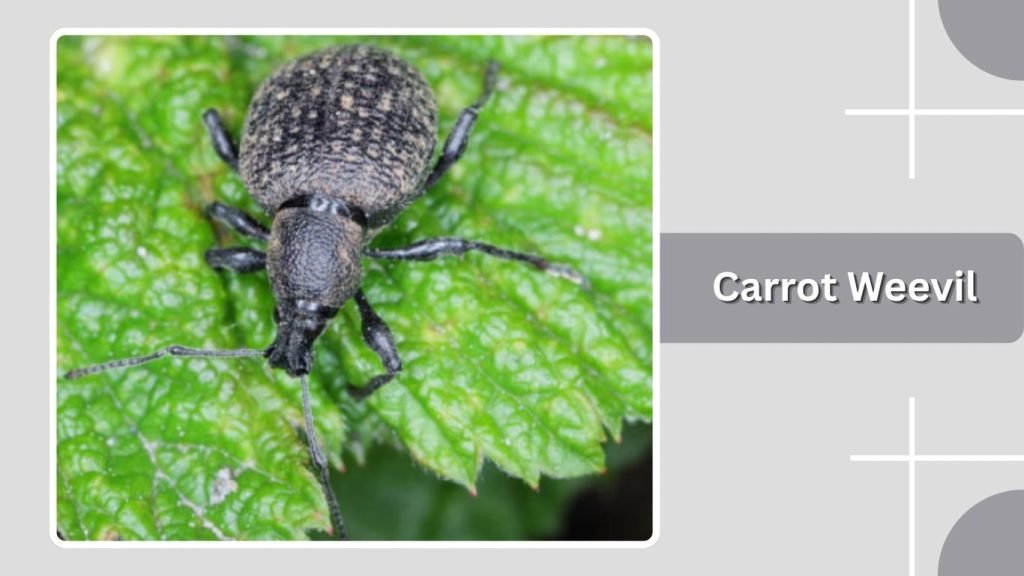
The carrot weevil is a destructive pest that mainly targets root vegetables, especially carrots. It is a serious problem for gardeners and farmers because its larvae attack the edible parts of the plant below the soil surface, often going unnoticed until damage is severe.
Identification
Carrot weevils are small, about 5–7 mm long, with a dark brown to black body. They have a curved snout and a slightly rough texture. The larvae are white, legless, and C-shaped, typically found inside roots.
Habitat and Distribution
This weevil is commonly found in North America and other temperate regions. It thrives in vegetable gardens, farms, and fields where carrots, parsley, celery, and related crops are grown.
Key Characteristics
- Dark-colored body with a curved snout
- Targets root vegetables
- Larvae develop inside plant roots
- Active in moist soil environments
Damage and Impact
Carrot weevils lay eggs near the base of plants. After hatching, larvae burrow into the roots, creating tunnels and causing rot. This damage makes the vegetables unmarketable and reduces overall yield, especially in commercial farming.
12. Sweet Potato Weevil
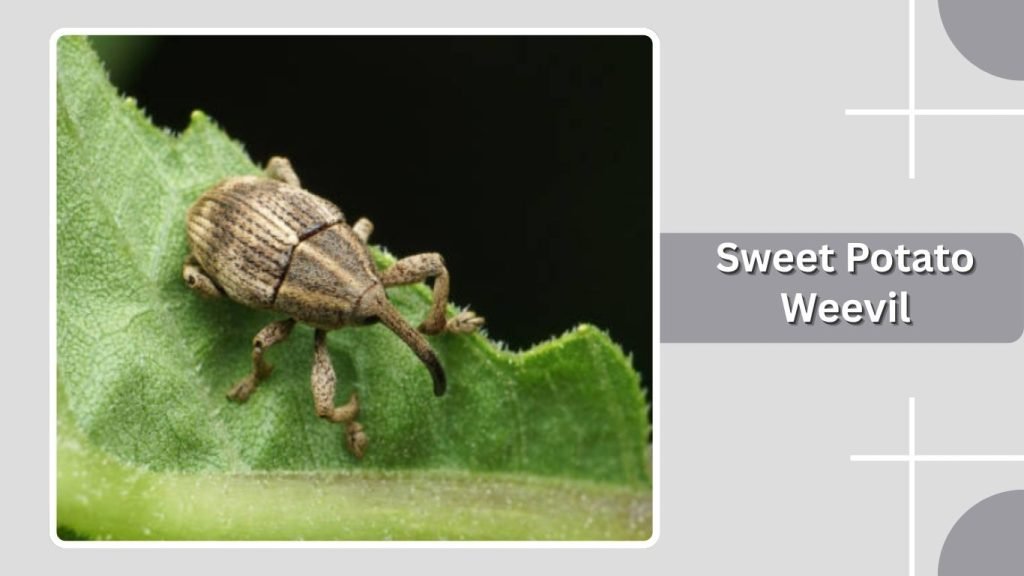
The sweet potato weevil is one of the most destructive pests of sweet potato crops worldwide. It not only damages the plant but also affects the quality of harvested tubers, making them unsuitable for consumption.
Identification
Sweet potato weevils are small, about 5–6 mm long, with a distinctive appearance. They have a metallic blue head and thorax with a reddish-orange abdomen and legs. Their elongated snout is clearly visible.
Habitat and Distribution
They are widely distributed in tropical and subtropical regions. Sweet potato weevils thrive in warm climates and are commonly found in fields where sweet potatoes and related plants are cultivated.
Key Characteristics
- Bright coloration with blue and reddish tones
- Strong association with sweet potato plants
- Larvae live inside stems and tubers
- Rapid reproduction in warm climates
Damage and Impact
Both adult and larval stages cause damage. Adults feed on leaves and stems, while larvae tunnel into tubers, creating extensive internal damage. Infested sweet potatoes often develop a bitter taste and are unsuitable for sale or consumption, leading to significant agricultural losses.
13. Pepper Weevil
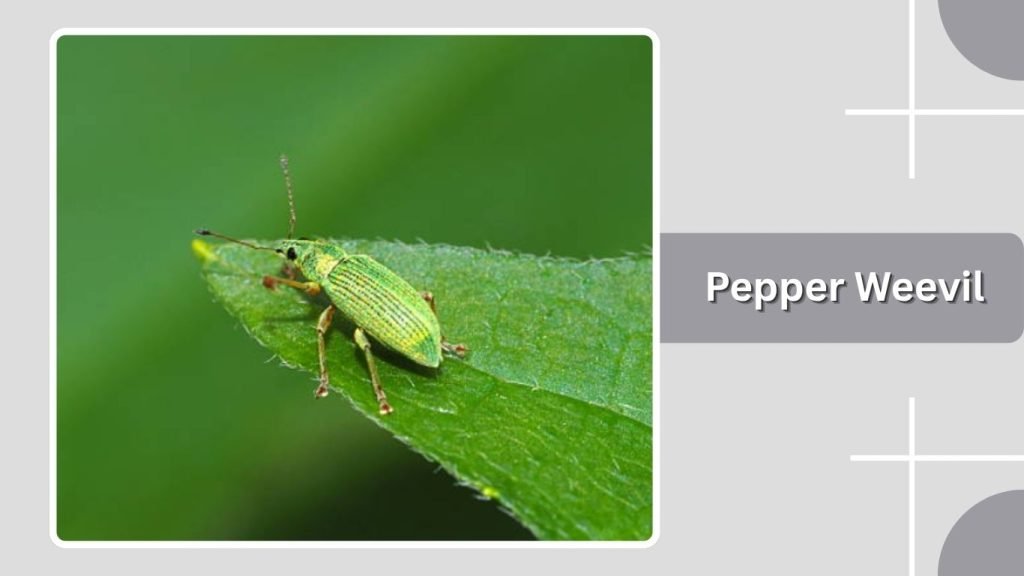
The pepper weevil is a major pest of pepper crops, particularly in warm climates. It primarily attacks plants in the nightshade family, including peppers and sometimes eggplants. Due to its hidden feeding habits, infestations are often difficult to detect until significant crop damage has occurred.
Identification
Pepper weevils are small, about 2–3 mm long, with a dark brown to black body. They have a short snout and a smooth, oval shape. Their small size allows them to easily hide בתוך buds and fruits.
Habitat and Distribution
They are commonly found in tropical and subtropical regions, especially in areas where peppers are cultivated. Pepper weevils thrive in farms, greenhouses, and gardens with suitable host plants.
Key Characteristics
- Very small and dark-colored body
- Short snout compared to other weevils
- Strong preference for pepper plants
- Difficult to detect due to hidden lifestyle
Damage and Impact
Pepper weevils lay eggs inside flower buds and young fruits. The larvae develop בתוך, feeding on internal tissues. This causes buds and fruits to drop prematurely, reducing yield and affecting crop quality significantly.
14. Plum Curculio
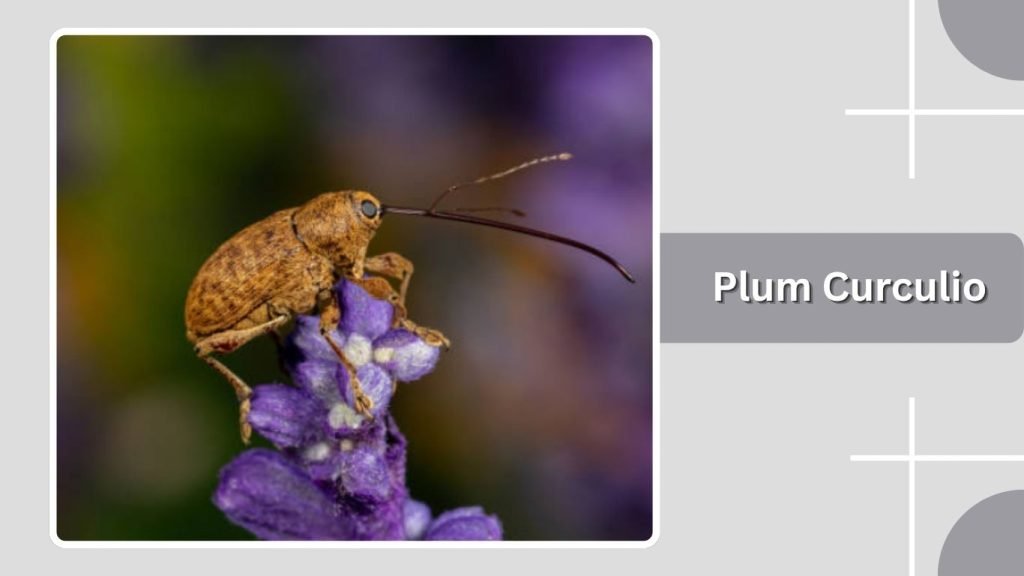
The plum curculio is a well-known pest of fruit trees, especially those producing stone fruits like plums, peaches, and cherries. It is notorious for causing direct damage to fruits, making it a serious concern for orchard growers.
Identification
Plum curculios are small, about 4–6 mm long, with a mottled brown and gray body. They have a curved snout and a rough, bumpy texture. Their irregular appearance helps them blend into tree bark.
Habitat and Distribution
This species is primarily found in North America. It inhabits orchards, gardens, and wild areas where fruit trees are present, particularly in temperate climates.
Key Characteristics
- Mottled brown and gray coloration
- Curved snout used for feeding and egg-laying
- Active during the growing season
- Strong association with fruit trees
Damage and Impact
Female plum curculios cut crescent-shaped scars on fruit surfaces to lay eggs. The larvae feed בתוך the fruit, causing it to become deformed or drop early. This leads to reduced fruit quality and yield, posing economic challenges for growers.
15. Apple Curculio
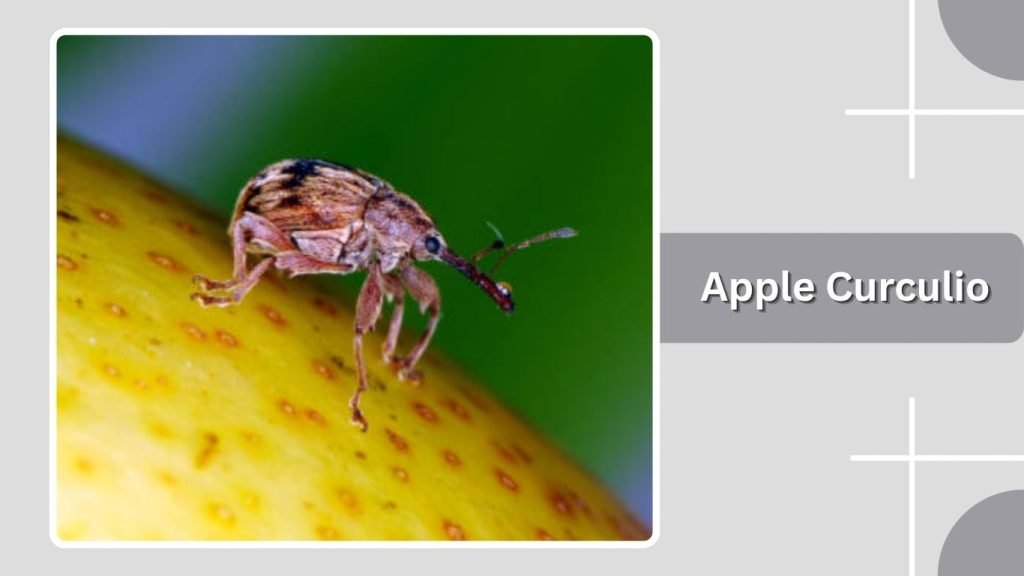
The apple curculio is a lesser-known but important pest that affects apple trees and other fruit-bearing plants. Although not as destructive as some related species, it can still cause noticeable damage in orchards if populations are not controlled.
Identification
Apple curculios are small beetles, typically 4–6 mm long, with a dark brown to nearly black body. They have a short, curved snout and a slightly rough surface. Their compact shape allows them to blend into bark and foliage.
Habitat and Distribution
They are mainly found in North America, particularly in regions where apple trees and other fruit crops are cultivated. Apple curculios prefer orchards, wooded edges, and areas with wild host plants.
Key Characteristics
- Small, dark-colored body
- Short curved snout
- Associated with apple and fruit trees
- Active during the growing season
Damage and Impact
Apple curculios feed on developing fruits and buds. Females lay eggs inside plant tissues, and the larvae feed within. This can lead to fruit deformities, early fruit drop, and reduced crop quality, affecting both yield and market value.
16. Pecan Weevil
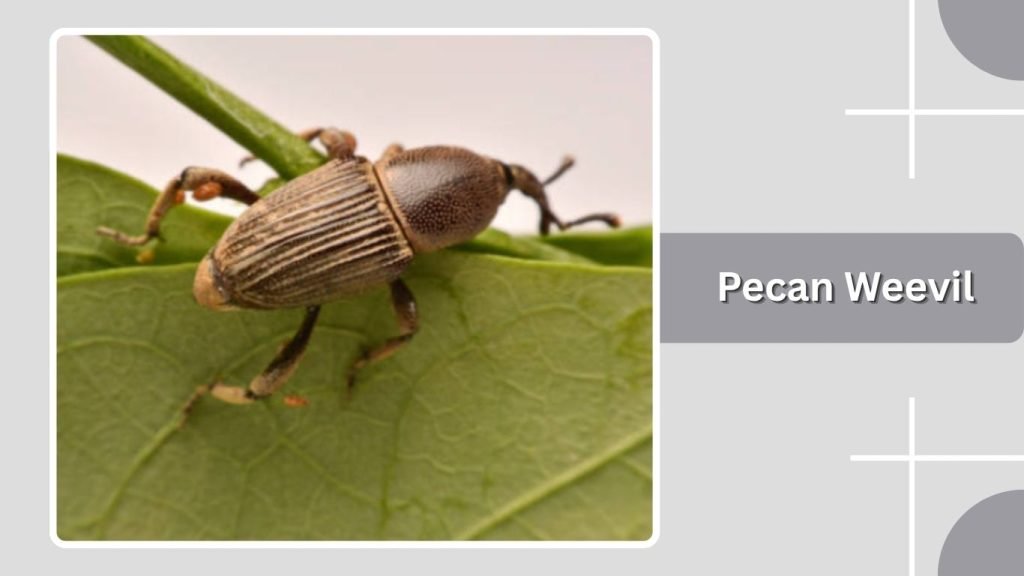
The pecan weevil is a serious pest of pecan trees and other nut-producing species. It is especially problematic in commercial orchards, where infestations can significantly reduce nut production and quality.
Identification
Pecan weevils are medium to large beetles, measuring about 6–10 mm long. They have a brown body often covered with fine hairs. Females have an extremely long, slender snout used for drilling into nuts, while males have shorter snouts.
Habitat and Distribution
They are primarily found in North America, especially in regions where pecan trees are grown. Pecan weevils inhabit orchards, forests, and areas with suitable host trees.
Key Characteristics
- Long snout, especially in females
- Brown, slightly hairy body
- Strong link to pecan and nut trees
- Life cycle tied to nut development
Damage and Impact
Female pecan weevils bore into developing nuts to lay eggs. The larvae feed inside, consuming the kernel. Infested nuts often fall prematurely or become hollow and unusable. Severe infestations can lead to major economic losses in pecan production.
17. Cotton Root Weevil
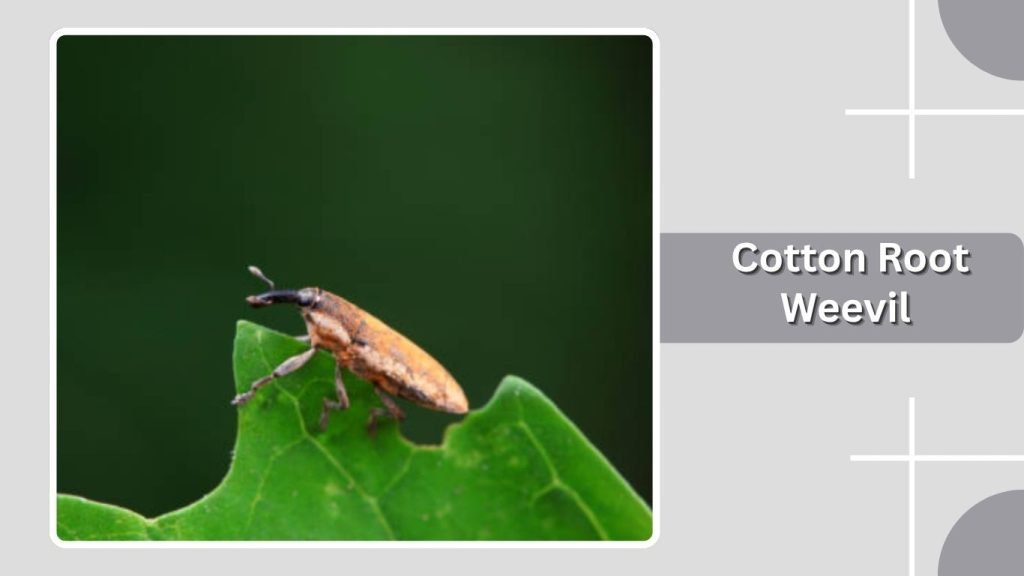
The cotton root weevil is a significant agricultural pest known for damaging cotton crops and other plants by attacking their root systems. Unlike many weevils that focus on fruits or seeds, this species primarily affects plants from below the soil, making it particularly difficult to detect and control.
Identification
Cotton root weevils are medium-sized beetles, typically around 5–8 mm long. They have a grayish to dark brown body with a slightly rough texture. Their snout is moderately long, and their overall appearance allows them to blend well with soil and plant debris.
Habitat and Distribution
This weevil is commonly found in warm agricultural regions where cotton is grown. It prefers fields with loose, moist soil that supports root development. Cotton root weevils are mainly distributed in areas with active cotton farming.
Key Characteristics
- Medium-sized, gray-brown body
- Root-feeding larval stage
- Strong association with cotton crops
- Difficult to detect due to underground activity
Damage and Impact
The larvae feed on plant roots, disrupting water and nutrient uptake. This leads to stunted growth, wilting, and reduced crop yields. In severe infestations, plants may die. Because the damage occurs underground, farmers often notice problems only after significant loss has occurred.
18. Alfalfa Weevil
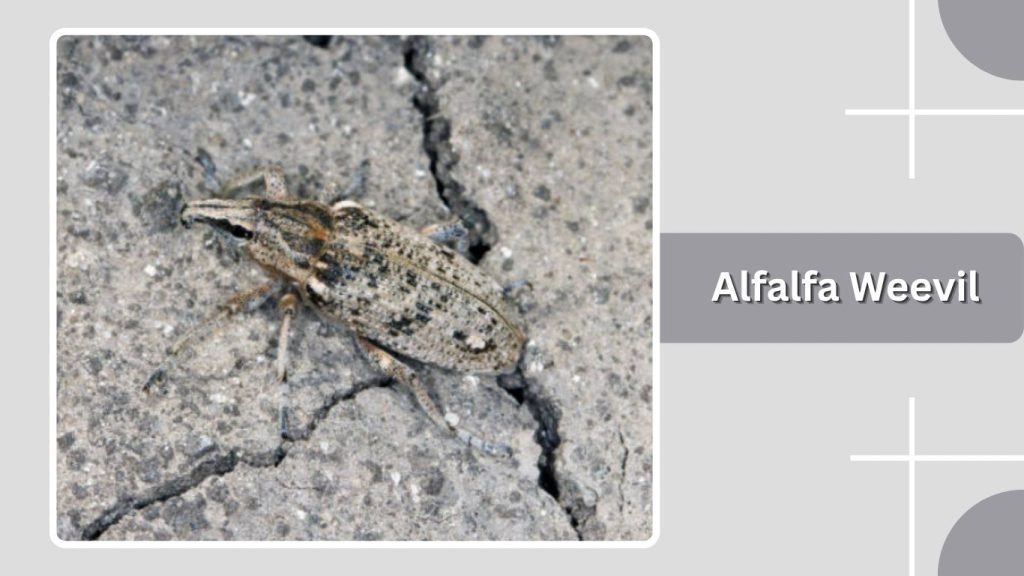
The alfalfa weevil is one of the most important pests of alfalfa crops, widely known for its impact on forage production. It primarily damages plants during the larval stage, which feeds heavily on foliage and reduces plant quality.
Identification
Alfalfa weevils are small, about 4–6 mm long, with a brown body and a darker stripe running along the back. They have a short snout and a slightly elongated shape. The larvae are green with a white stripe along their back and a black head.
Habitat and Distribution
They are widely distributed across North America, Europe, and parts of Asia. Alfalfa weevils thrive in fields where alfalfa and similar forage crops are cultivated, especially in temperate climates.
Key Characteristics
- Brown body with a distinct dorsal stripe
- Larvae are green with a white back stripe
- Strong association with alfalfa crops
- Active during cooler growing seasons
Damage and Impact
Larvae feed on alfalfa leaves, creating small holes and skeletonizing the foliage. Heavy infestations can significantly reduce crop yield and quality, affecting livestock feed production. Early detection and management are crucial to prevent widespread damage.
19. Clover Root Weevil
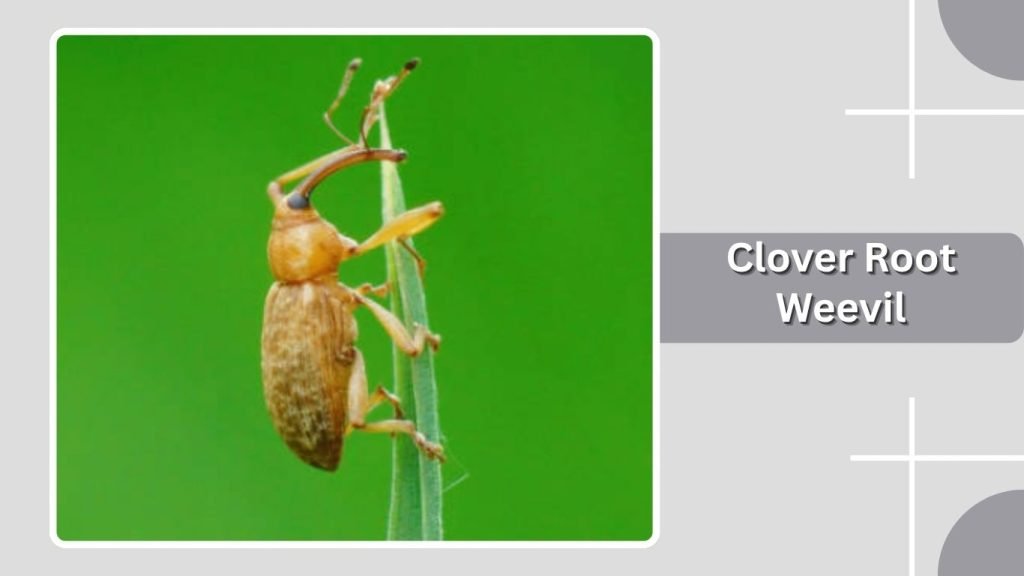
The clover root weevil is an important agricultural pest that affects clover and other legume crops. It is particularly concerning for pasture systems, as it can reduce the productivity of forage plants used for livestock grazing.
Identification
Clover root weevils are small, about 3–5 mm long, with a grayish-brown body. They have a short snout and a slightly oval shape. The larvae are white, legless, and C-shaped, commonly found in the soil near plant roots.
Habitat and Distribution
This species is found in many parts of the world, including Europe, North America, and New Zealand. It thrives in grasslands, pastures, and agricultural fields where clover and legumes are grown.
Key Characteristics
- Small gray-brown body
- Larvae feed on roots and nitrogen-fixing nodules
- Strong association with clover crops
- Common in pasture ecosystems
Damage and Impact
The larvae feed on clover roots and nodules, which are essential for nitrogen fixation. This reduces soil fertility and weakens plant growth. As a result, pasture quality declines, impacting livestock production and overall farm productivity.
20. Bluegrass Billbug (Weevil)
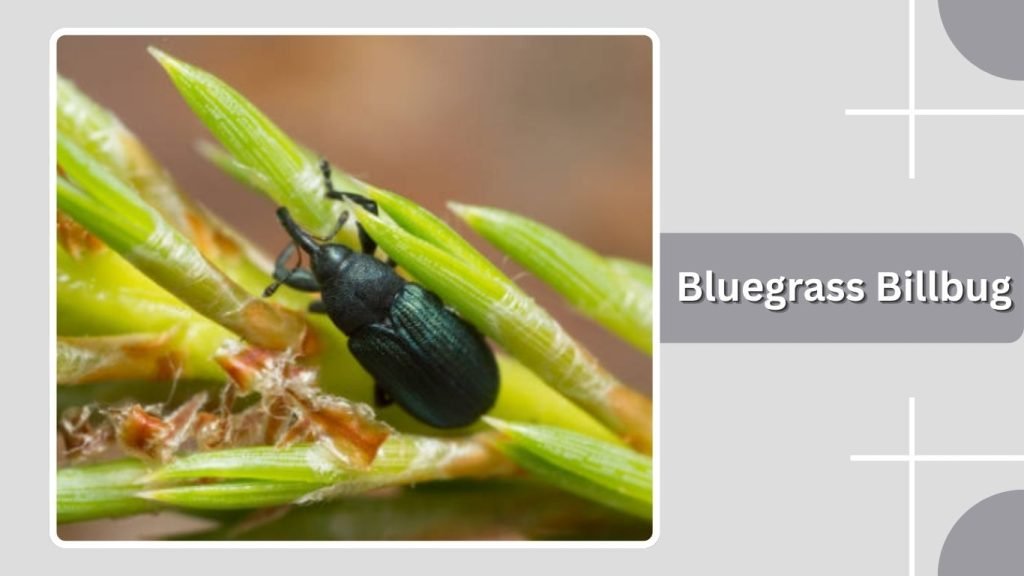
The bluegrass billbug is a type of weevil that primarily affects turfgrass, especially Kentucky bluegrass. It is a common pest in lawns, golf courses, and sports fields, where it can cause significant turf damage.
Identification
Adult bluegrass billbugs are about 6–9 mm long with a dark brown to black body. They have a long snout and a cylindrical shape. Their larvae are white, legless grubs with a characteristic curved body.
Habitat and Distribution
They are widely found in North America, particularly in regions where turfgrass is cultivated. Bluegrass billbugs thrive in lawns, parks, golf courses, and other grassy environments.
Key Characteristics
- Dark, cylindrical body with a long snout
- Larvae develop داخل grass stems and soil
- Strong preference for turfgrass
- Common in managed lawns and fields
Damage and Impact
Adult billbugs feed on grass stems, while larvae tunnel داخل stems and roots. This causes grass to wilt, turn brown, and eventually die. Damage often appears as irregular patches, which can be mistaken for drought stress, making early detection challenging.
21. Billbug Weevil
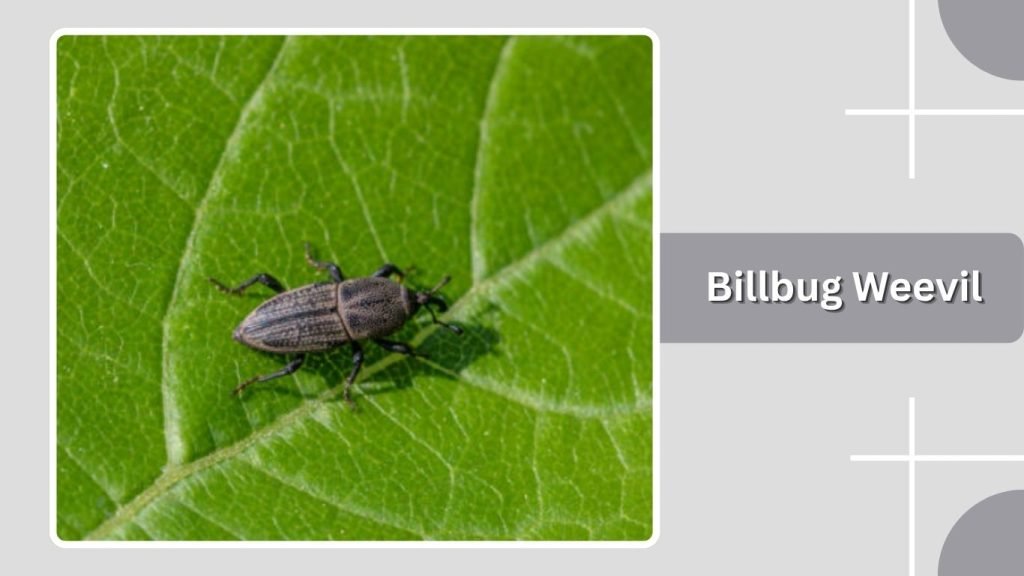
The billbug weevil is a general term used for several closely related species that are known for damaging turfgrass and cereal crops. These pests are especially problematic in lawns, golf courses, and agricultural fields where they can cause widespread damage if not properly managed. Their hidden life cycle makes them difficult to detect until visible symptoms appear.
Identification
Billbug weevils are medium-sized beetles, typically ranging from 6–10 mm in length. They have a cylindrical, elongated body with a hard outer shell that is usually dark brown to black. A defining feature is their long, downward-curving snout, which they use for feeding and boring into plant tissues. The larvae are white, legless grubs with brown heads and are often found داخل stems or in the soil near plant roots. Adults are slow-moving and tend to remain close to host plants.
Habitat and Distribution
Billbug weevils are widely distributed across North America and are commonly found in managed turf environments such as lawns, golf courses, parks, and sports fields. They also occur in agricultural settings where cereal crops like corn and wheat are grown. These weevils prefer dry, sunny areas with well-maintained grass or crops. Their populations tend to increase in areas with poor soil health or stressed vegetation.
Key Characteristics
- Cylindrical body with a hard, dark exoskeleton
- Prominent curved snout used for boring
- Larvae develop inside stems and in soil
- Common in turfgrass and cereal crop environments
Damage and Impact
Adult billbug weevils feed on grass stems, creating small holes and weakening the plant structure. However, the most severe damage is caused by the larvae. After hatching, larvae tunnel inside stems and move downward to the roots, where they feed extensively. This disrupts the plant’s ability to absorb water and nutrients, leading to yellowing, wilting, and eventual death. Damage often appears as irregular brown patches in lawns, which can easily be mistaken for drought stress or disease. In agricultural crops, infestations can reduce plant vigor and yield. Effective management typically involves monitoring adult activity and applying targeted treatments before larvae cause significant harm.
22. Wheat Weevil
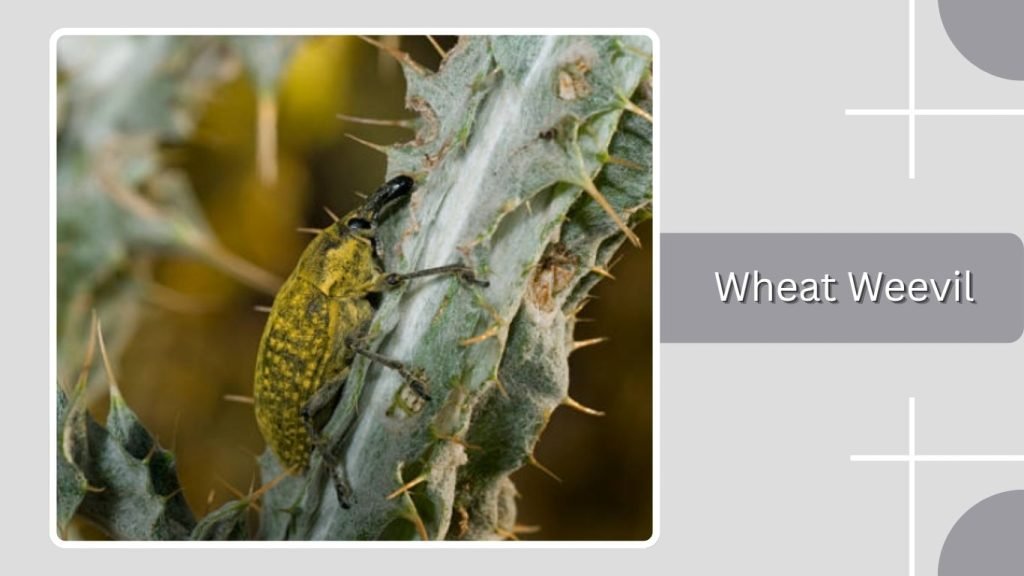
The wheat weevil is a common pest of stored grains, particularly wheat, and is closely related to other grain-infesting weevils such as the rice and granary weevils. It is a major concern in both household storage and large-scale grain facilities due to its ability to rapidly infest and spoil stored products.
Identification
Wheat weevils are small beetles, usually about 3–4 mm long, with a reddish-brown to dark brown body. They have a slender, elongated snout and a smooth, slightly shiny surface. Their compact size allows them to easily проник inside grain kernels. The larvae are tiny, white, legless grubs that develop entirely within the grain.
Habitat and Distribution
These weevils are found worldwide, especially in regions where wheat and other grains are stored. They thrive in warm, humid conditions and are commonly found in silos, warehouses, granaries, and household pantries. Because they live inside grains, they can be transported easily through infested supplies.
Key Characteristics
- Small size with a slender snout
- Infests stored wheat and other grains
- Larvae develop داخل grain kernels
- Rapid reproduction in favorable conditions
Damage and Impact
Wheat weevils cause damage by boring into grains to lay eggs. The larvae feed inside the kernel, hollowing it out from within. This reduces grain weight, nutritional value, and overall quality. Infested grains may appear intact externally but are often empty inside, making detection difficult. Heavy infestations can lead to significant post-harvest losses and contamination, rendering the grain unsuitable for consumption or sale. Proper storage practices, including temperature and humidity control, are essential to prevent infestations and protect stored food supplies.
23. Palm Weevil
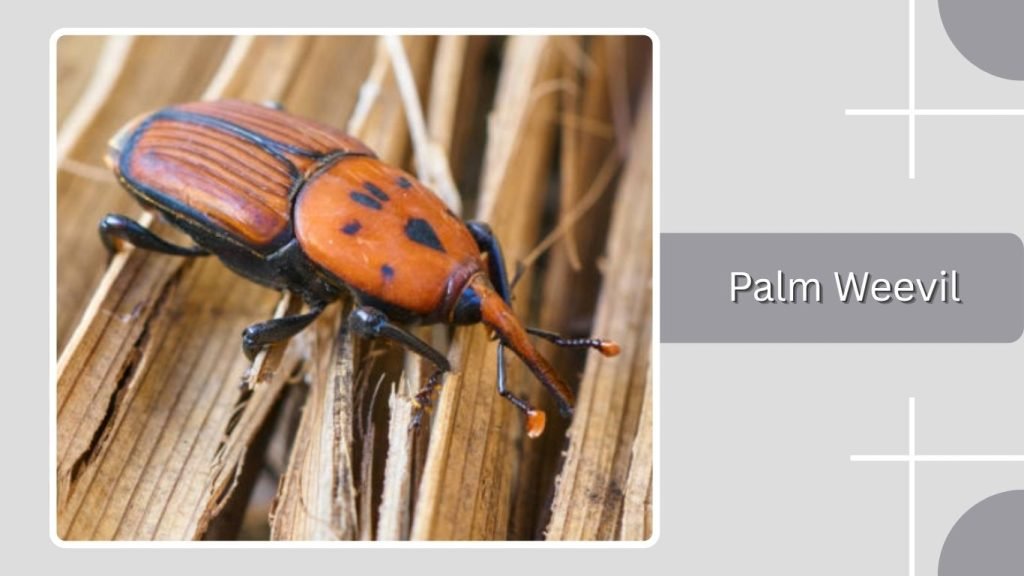
The palm weevil is a highly destructive pest that targets various palm species. It is especially problematic in tropical and subtropical regions, where palms are widely grown for ornamental and agricultural purposes. This weevil is known for causing internal damage that often goes unnoticed until the tree is severely affected.
Identification
Palm weevils are relatively large beetles, measuring about 2–5 cm long. They have a robust, elongated body that is usually dark brown to black, though some species may appear reddish. Their long snout is prominent and used for boring into plant tissue. Larvae are large, creamy-white grubs.
Habitat and Distribution
Palm weevils are found in tropical and subtropical regions across Asia, Africa, and the Americas. They thrive in areas where palm trees are abundant, including plantations, gardens, and urban landscapes.
Key Characteristics
- Large body with a strong, elongated snout
- Strong association with palm trees
- Larvae develop inside trunks
- Difficult to detect early infestation
Damage and Impact
Female weevils lay eggs داخل palm trunks. The larvae tunnel through internal tissues, weakening the structure. Infested trees may show wilting, collapse, or death. Damage is often severe because it occurs inside the tree, making early control difficult.
24. Red Palm Weevil
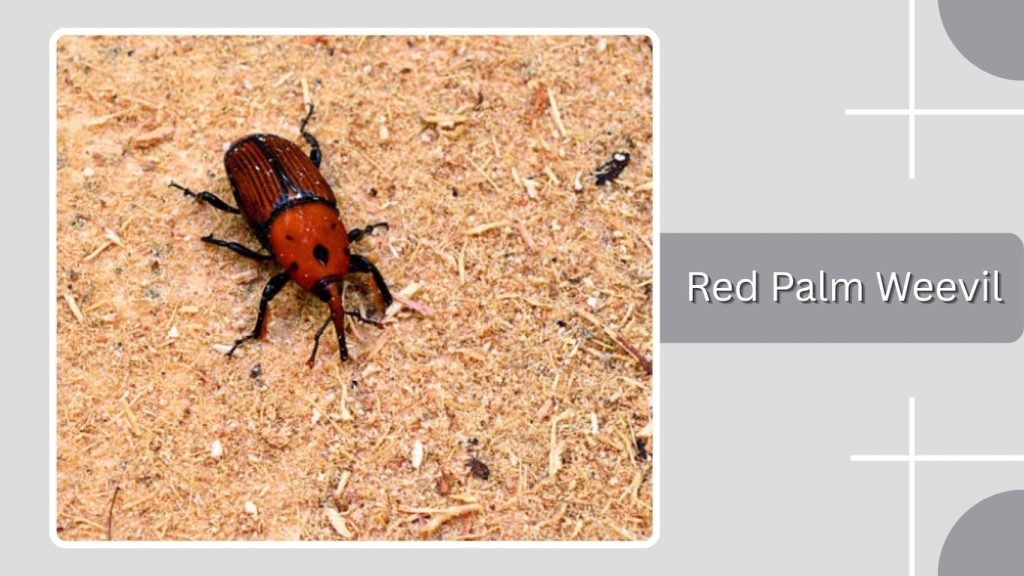
The red palm weevil is one of the most notorious and destructive palm pests in the world. It is responsible for widespread damage to date palms, coconut palms, and ornamental species, causing major economic and environmental losses.
Identification
Red palm weevils are large, about 2–4 cm long, with a reddish-orange body marked by black spots. They have a long, curved snout and strong legs. The larvae are thick, legless, and creamy in color.
Habitat and Distribution
This species is widely distributed across the Middle East, Asia, Africa, and parts of Europe. It thrives in warm climates and is commonly found in palm plantations and landscaped areas.
Key Characteristics
- Bright reddish body with black markings
- Long snout used for boring into palm tissue
- Larvae live inside trunks
- Highly invasive and fast-spreading species
Damage and Impact
Red palm weevils lay eggs inside palm trees, and the larvae tunnel extensively through the trunk. This internal feeding weakens the tree structure, often leading to sudden collapse. Infestations are difficult to detect early, making management challenging and costly for growers and landscapers.
25. Banana Weevil
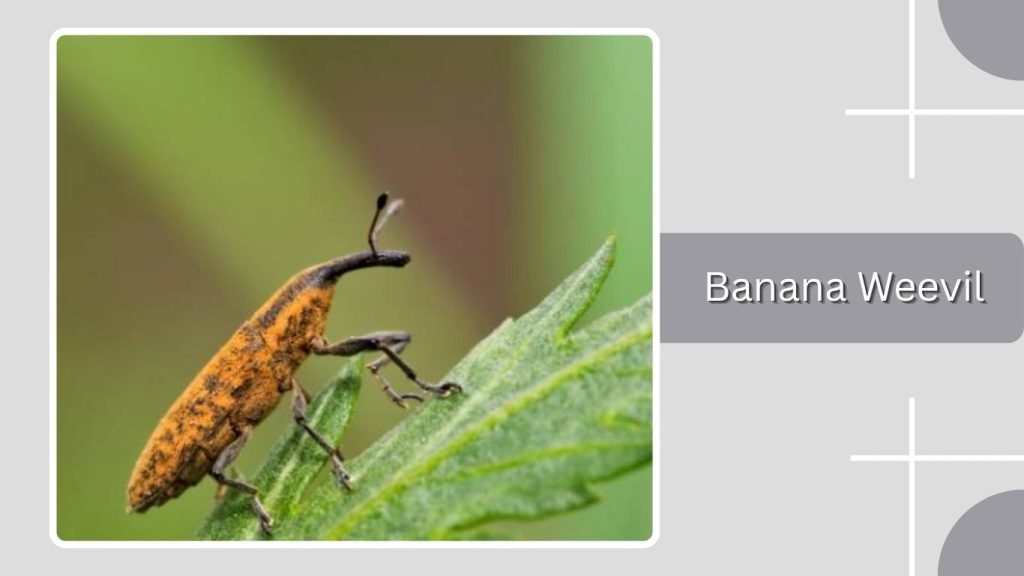
The banana weevil is a major pest of banana plants, particularly in tropical regions where bananas are a staple crop. It is considered one of the most destructive pests affecting banana production due to its ability to damage the plant at its base, weakening overall growth and yield.
Identification
Banana weevils are medium-sized beetles, typically about 10–15 mm long. They have a dark brown to black body with a hard, rough texture. Their snout is short compared to other weevils, and they are mostly active at night. The larvae are white, legless, and cylindrical.
Habitat and Distribution
This weevil is widely distributed in tropical and subtropical regions across Africa, Asia, and Latin America. It thrives in banana plantations, especially in moist soils and areas with dense plant growth.
Key Characteristics
- Dark, robust body with rough texture
- Nocturnal behavior
- Larvae live inside the plant base (corm)
- Strong association with banana crops
Damage and Impact
Banana weevils lay eggs at the base of the plant. The larvae bore into the corm, creating tunnels that weaken the plant structure. This leads to reduced nutrient uptake, poor growth, and increased risk of plant toppling. Severe infestations can significantly reduce banana yield and plantation productivity.
26. Eucalyptus Weevil
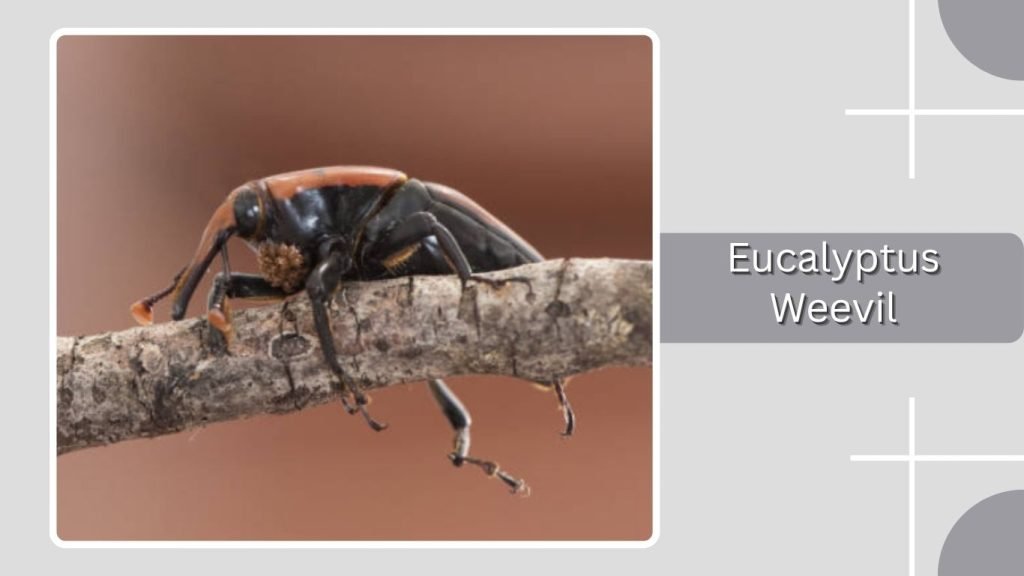
The eucalyptus weevil is a pest that primarily affects eucalyptus trees, which are widely grown for timber, paper production, and ornamental purposes. It is especially problematic in regions where eucalyptus has been introduced outside its native range.
Identification
Eucalyptus weevils are small to medium-sized beetles, about 5–8 mm long. They typically have a grayish or brown body with a slightly rough texture. Their snout is short to moderately long, and their larvae are greenish or yellowish with a soft body.
Habitat and Distribution
Native to Australia, eucalyptus weevils have spread to many parts of the world, including Europe, Africa, and the Americas. They are commonly found in plantations, forests, and urban areas where eucalyptus trees are grown.
Key Characteristics
- Gray-brown body with a rough appearance
- Strong preference for eucalyptus leaves
- Larvae feed on foliage
- Common in both natural and planted forests
Damage and Impact
Both adults and larvae feed on eucalyptus leaves, causing defoliation. Heavy infestations can reduce tree growth, weaken overall health, and impact timber production. In severe cases, repeated defoliation can lead to long-term damage or tree death, especially in young plantations.
27. White Pine Weevil
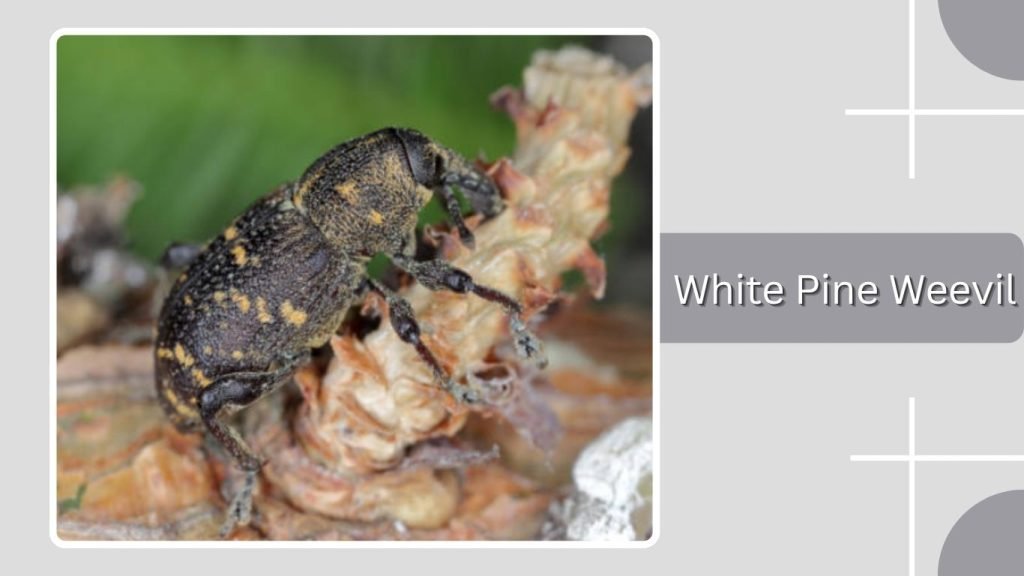
The white pine weevil is a serious forest pest that primarily targets conifer trees, especially white pine and spruce species. It is well known for damaging the terminal leaders (top shoots) of young trees, which affects their growth form and overall timber quality.
Identification
White pine weevils are medium-sized beetles, about 4–7 mm long. They have a reddish-brown body with patches of white scales, giving them a mottled appearance. Their snout is moderately long and curved. The larvae are white, legless grubs found under the bark.
Habitat and Distribution
This weevil is commonly found across North America, particularly in forested regions where pine and spruce trees grow. It thrives in cooler climates and is often seen in plantations, natural forests, and reforestation areas.
Key Characteristics
- Reddish-brown body with white patches
- Targets the top leader of trees
- Larvae develop under bark
- Strong association with pine and spruce
Damage and Impact
Adult weevils lay eggs in the terminal shoots of trees. The larvae tunnel under the bark, feeding on inner tissues and killing the leader. This causes the tree to develop multiple stems, reducing its quality and value for timber production.
