
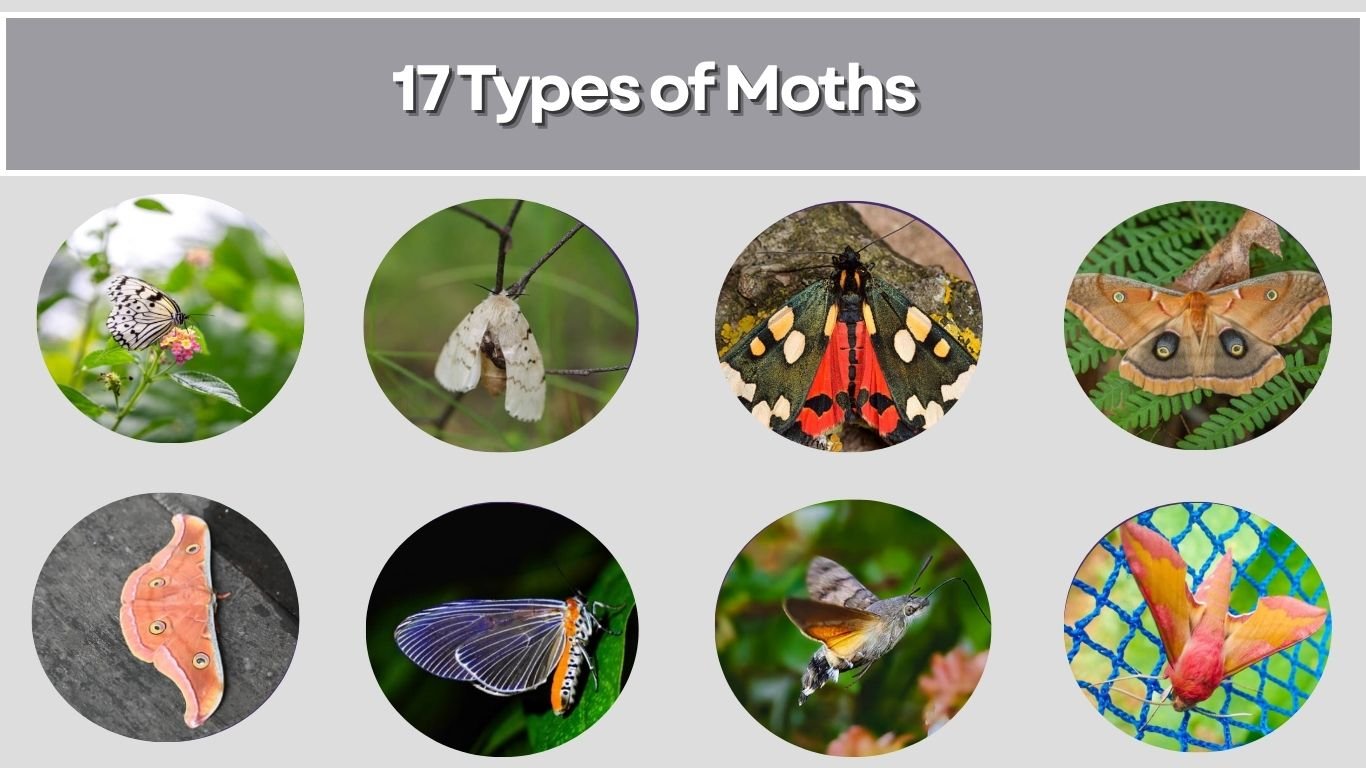
Moths are fascinating insects that come in a wide range of sizes, colors, and behaviors. From giant species like the Atlas moth to tiny household pests like the clothes moth, each type has unique features that make it easy to identify. They can be found in forests, gardens, and even inside homes, playing important roles in ecosystems as pollinators or, in some cases, pests.
In this guide, you’ll discover 17 different types of moths, along with key details about their identification, habitat, diet, and behavior. This will help you better understand and recognize these diverse and often overlooked insects.
1. Atlas Moth
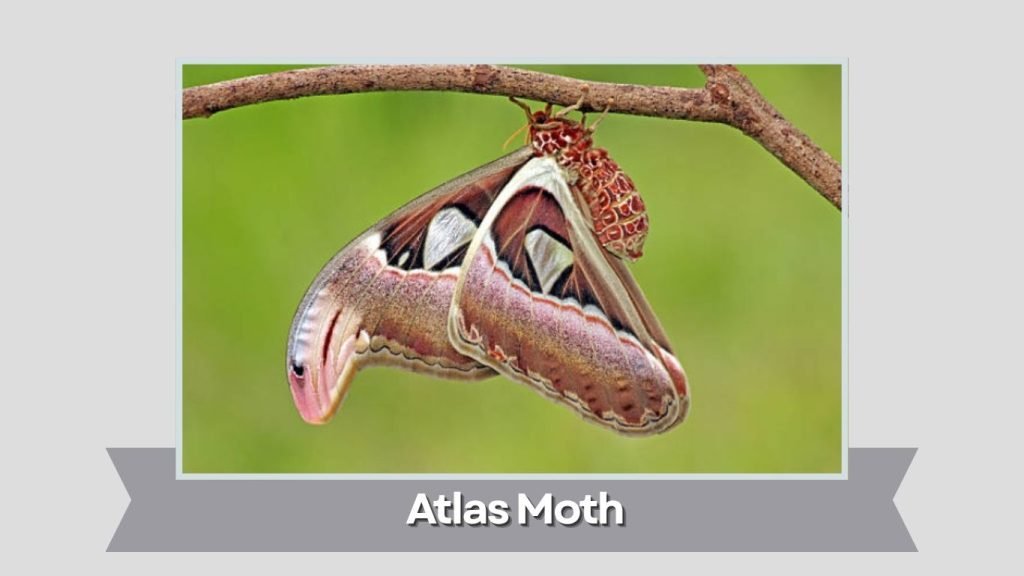
The Atlas moth is one of the largest moth species in the world, known for its impressive wingspan and striking patterns. Native to tropical and subtropical forests, it is often admired for its snake-head wing tips and gentle nature.
Identification
- Wingspan can reach up to 25–30 cm, making it among the largest moths globally
- Reddish-brown wings with white, black, and pink patterns
- Distinctive wing tips resemble a snake’s head
- Thick, furry body with relatively small head compared to wings
Habitat
Atlas moths are commonly found in tropical and subtropical forests across Southeast Asia, including countries like India, China, and Indonesia. They prefer areas with plenty of trees and vegetation, where their larvae can find host plants.
Diet
Adult Atlas moths do not eat because they lack fully developed mouthparts. They survive on stored energy from their caterpillar stage. The larvae feed on leaves of various trees such as citrus, guava, and cinnamon.
Behavior
These moths are mostly nocturnal and are attracted to light. Their large wings help them glide rather than actively flap for long distances. As adults, they live for about one to two weeks, focusing mainly on reproduction.
2. Luna Moth
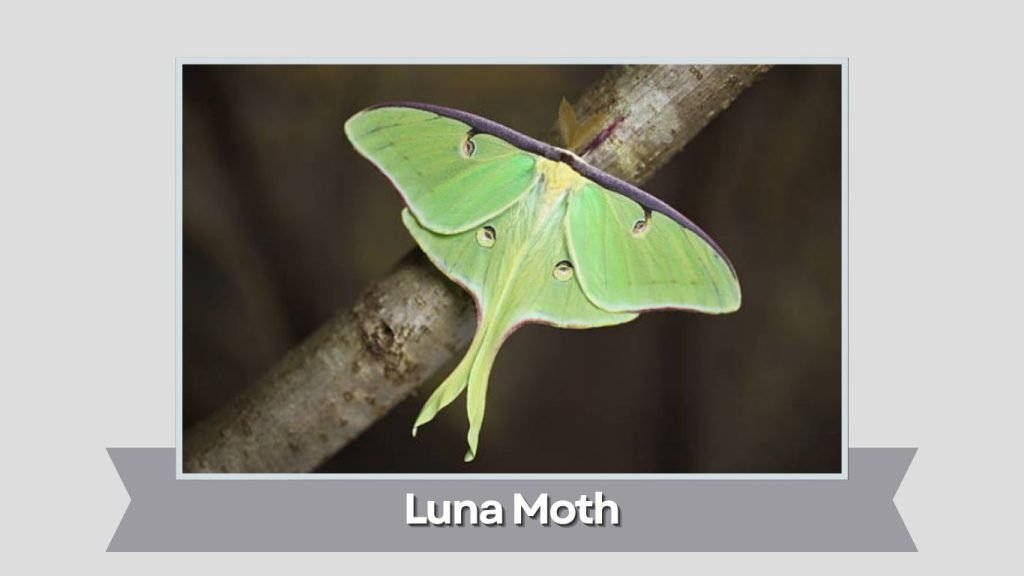
The Luna moth is a large, pale-green moth famous for its ethereal appearance and long, flowing tail-like extensions on its wings. It is commonly found in North America and is often considered one of the most beautiful moth species due to its soft color and graceful shape.
Identification
- Light green wings with long, curved tails on the hindwings
- Wingspan ranges from 8–12 cm
- Distinct eyespots on each wing, often used to deter predators
- Soft, fuzzy white body with feathery antennae
Habitat
Luna moths are typically found in deciduous forests, woodlands, and suburban areas across North America. They prefer environments with plenty of host trees such as walnut, hickory, and sweetgum, where they can lay eggs and support larval growth.
Diet
Adult Luna moths do not feed, as they lack functional mouthparts. Their energy comes entirely from reserves built during the caterpillar stage. The caterpillars feed on the leaves of hardwood trees, helping them grow quickly before pupating.
Behavior
Luna moths are nocturnal and are most active at night, especially during late spring and early summer. Their long tails may help confuse bat echolocation, offering some protection from predators. Adults live for only about a week, focusing mainly on mating and reproduction.
3. Cecropia Moth
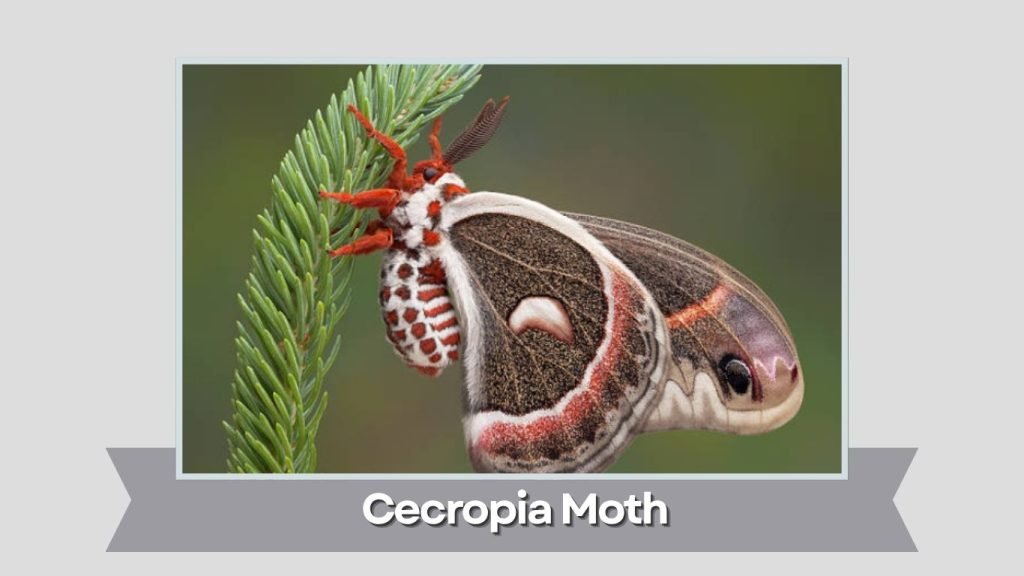
The Cecropia moth is the largest native moth in North America, easily recognized by its bold colors and striking wing patterns. It is a member of the giant silk moth family and is often seen during late spring and early summer.
Identification
- Wingspan ranges from 13–18 cm
- Reddish-brown wings with white bands and crescent-shaped spots
- Distinct red and white markings near the body
- Large, hairy body with a reddish thorax
Habitat
Cecropia moths are found throughout North America, especially in deciduous forests, gardens, and suburban areas. They prefer regions with plenty of trees such as maple, cherry, and birch, which serve as host plants for their larvae.
Diet
Adult Cecropia moths do not eat due to the absence of functional mouthparts. During the caterpillar stage, they feed on a variety of tree leaves, storing enough energy to sustain them through adulthood.
Behavior
These moths are nocturnal and are attracted to lights at night. They have a short adult lifespan of about one to two weeks, during which their main purpose is reproduction. Males use their large, feathery antennae to detect female pheromones from long distances.
4. Polyphemus Moth
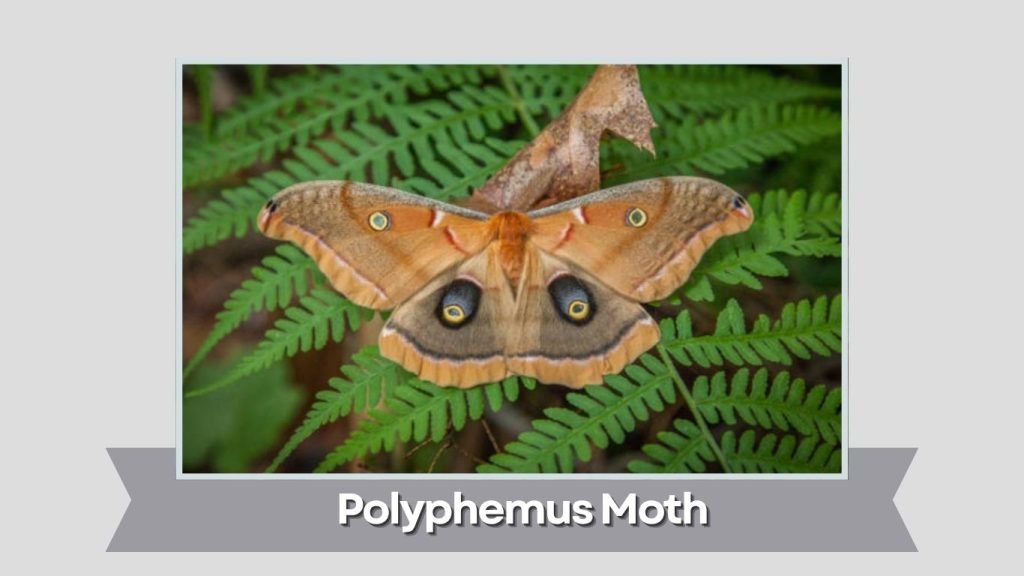
The Polyphemus moth is a large and eye-catching species known for the prominent eyespots on its wings. These markings help scare off predators, making it easier for the moth to survive in the wild.
Identification
- Wingspan ranges from 10–15 cm
- Tan to light brown wings with large, dark eyespots on the hindwings
- Subtle wavy patterns across the wings
- Thick, furry body with feathery antennae
Habitat
Polyphemus moths are widely distributed across North America. They inhabit forests, orchards, and even urban areas where suitable host plants like oak, birch, and willow are available.
Diet
Adult Polyphemus moths do not feed and rely on energy stored from their larval stage. The caterpillars consume leaves from a wide variety of trees, allowing them to grow rapidly before forming cocoons.
Behavior
These moths are nocturnal and often come to artificial lights. When threatened, they flash their large eyespots to startle predators. Adults live for about a week, dedicating their time primarily to mating and laying eggs.
5. Io Moth
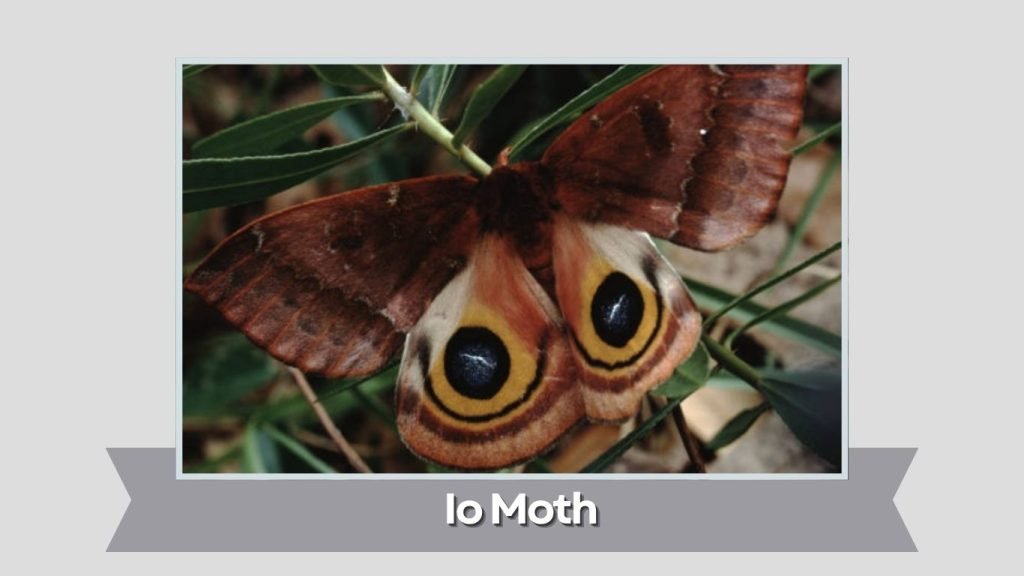
The Io moth is a colorful species known for its bright yellow wings and bold eyespots, which serve as a defense mechanism against predators. It belongs to the giant silk moth family and is commonly found in North America.
Identification
- Bright yellow wings in males; females may appear more brownish
- Large, dark eyespots with bluish centers on hindwings
- Wingspan ranges from 5–8 cm
- Furry body with feathery antennae in males
Habitat
Io moths are found across North America, especially in forests, fields, and suburban areas. They thrive in places where host plants such as oak, elm, and mesquite are available for their larvae.
Diet
Adult Io moths do not feed, as they lack functional mouthparts. Their caterpillars, however, actively consume leaves from a variety of plants and trees, storing energy for the adult stage.
Behavior
These moths are nocturnal and are often attracted to light sources at night. When threatened, they suddenly reveal their eyespots to startle predators. The caterpillars are also known for having stinging spines as a form of protection.
6. Rosy Maple Moth
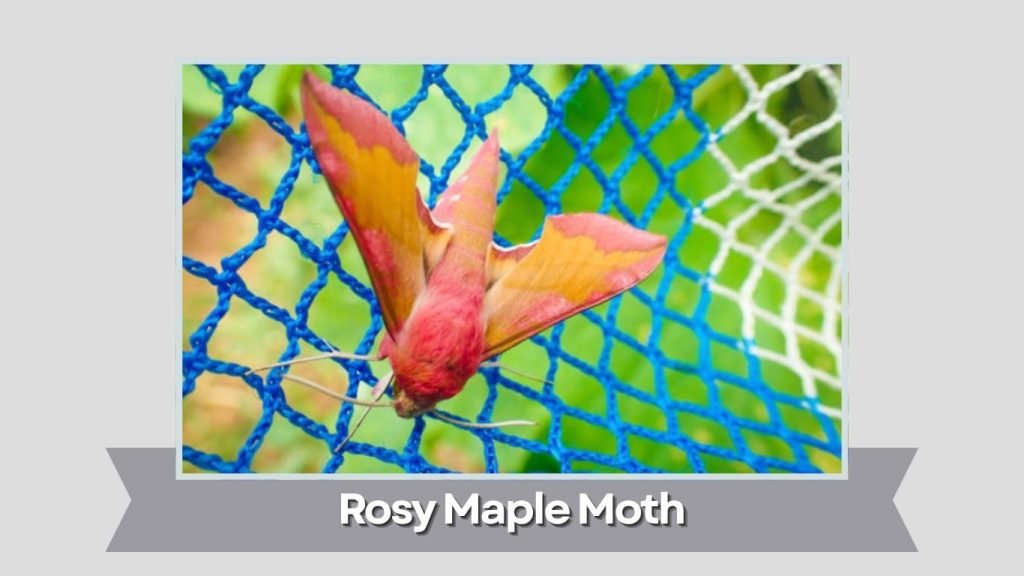
The rosy maple moth is a small but striking species, admired for its vibrant pink and yellow coloration. It is one of the most visually distinctive moths found in North America.
Identification
- Bright pink and yellow wings with soft, fuzzy texture
- Wingspan ranges from 3–5 cm
- Short, stout body covered in fine hairs
- Color pattern resembles cotton candy
Habitat
Rosy maple moths are commonly found in eastern North America. They prefer deciduous forests, suburban areas, and anywhere maple trees are abundant, as these are essential for their life cycle.
Diet
Adult rosy maple moths do not eat and rely on energy stored from their larval stage. The caterpillars, often called greenstriped mapleworms, feed primarily on maple leaves.
Behavior
These moths are nocturnal and are frequently attracted to artificial lights. They are relatively short-lived as adults, focusing mainly on reproduction. Their bright coloration may help them blend into certain environments or confuse predators.
7. White Ermine Moth
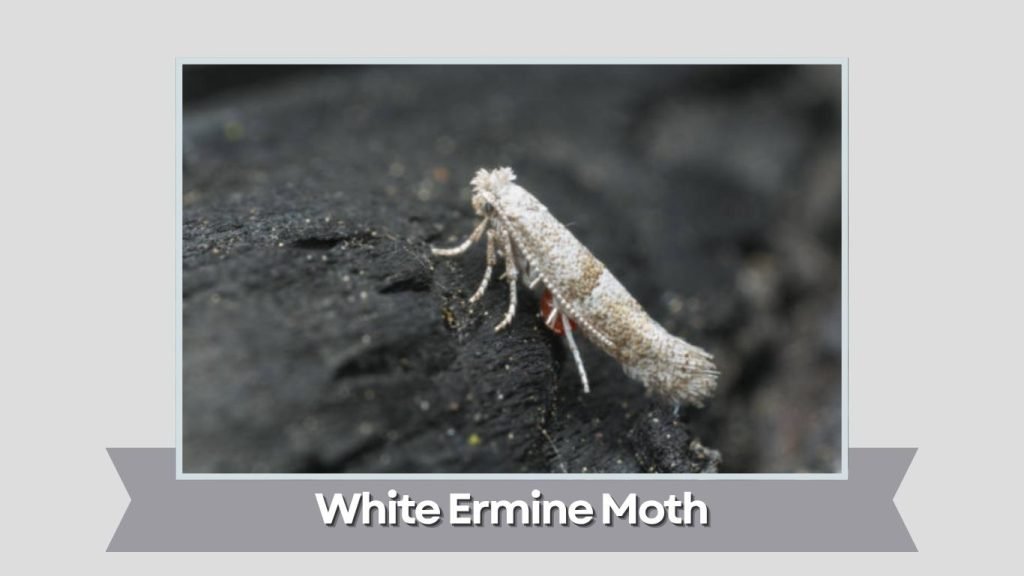
The White ermine moth is a delicate and attractive species known for its white wings dotted with small black spots. It belongs to the tiger moth family and is commonly seen in various parts of Europe and North America.
Identification
- White wings with scattered black spots
- Wingspan ranges from 4–6 cm
- Yellowish or orange body with black markings
- Fine, slightly hairy body and legs
Habitat
White ermine moths are found in gardens, meadows, woodlands, and hedgerows. They are adaptable and thrive in both rural and urban environments where vegetation is abundant.
Diet
Adult moths feed on nectar from flowers, unlike many larger moth species. The caterpillars feed on a wide range of low-growing plants, including dandelion, nettle, and dock, making them highly adaptable.
Behavior
These moths are mostly nocturnal but can sometimes be active during the day. They are attracted to light and are often seen resting on vegetation. Their simple coloration provides camouflage against predators.
8. Garden Tiger Moth
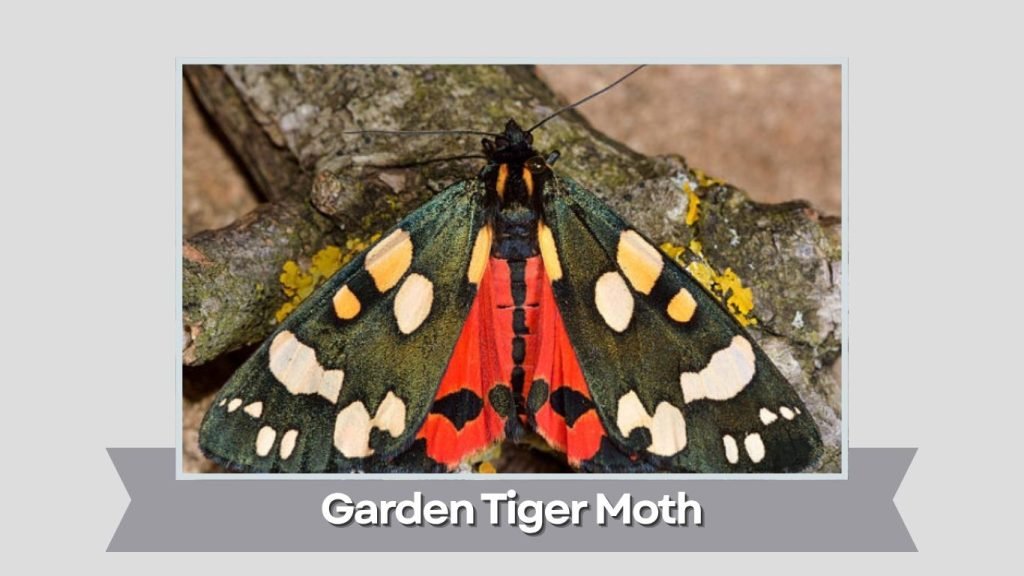
The garden tiger moth is a bold and colorful species known for its striking contrast between its forewings and hindwings. It is widely distributed and belongs to the tiger moth group.
Identification
- Brown forewings with white or cream irregular patterns
- Bright orange hindwings with bold black spots
- Wingspan ranges from 5–7 cm
- Hairy body, often reddish-brown or orange
Habitat
Garden tiger moths are commonly found in gardens, grasslands, woodlands, and coastal areas. They prefer environments with a variety of plants that can support their caterpillars.
Diet
Adult garden tiger moths feed on nectar from flowers. The caterpillars, known as “woolly bears,” feed on a wide range of plants, including herbs and grasses.
Behavior
These moths are mainly nocturnal and are attracted to artificial lights. When disturbed, they reveal their brightly colored hindwings to warn predators. Their caterpillars are also well-known for their dense, hairy appearance, which offers protection.
9. Hummingbird Hawk-Moth
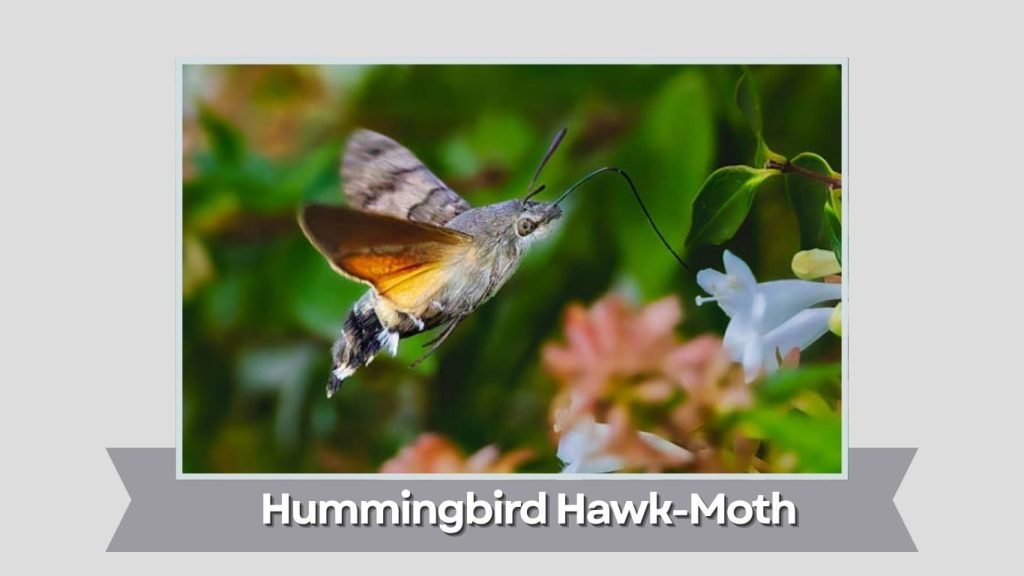
The hummingbird hawk-moth is a unique species known for its ability to hover in mid-air while feeding, much like a hummingbird. Its fast wing movement and daytime activity make it one of the most fascinating moths to observe.
Identification
- Gray-brown wings with orange hindwings
- Wingspan ranges from 4–5 cm
- Long proboscis used for feeding on nectar
- Thick, streamlined body resembling a small bird
Habitat
These moths are found across Europe, Asia, and parts of North Africa. They prefer gardens, meadows, and open areas rich in flowering plants where nectar is readily available.
Diet
Adult hummingbird hawk-moths feed on nectar from flowers using their long proboscis. Their larvae feed on plants such as bedstraw, which provide the nutrients needed for development.
Behavior
Unlike many moths, they are active during the day. They hover while feeding and rarely land on flowers. Their rapid wing beats and hovering ability closely resemble hummingbirds, helping them avoid predators.
10. Elephant Hawk-Moth
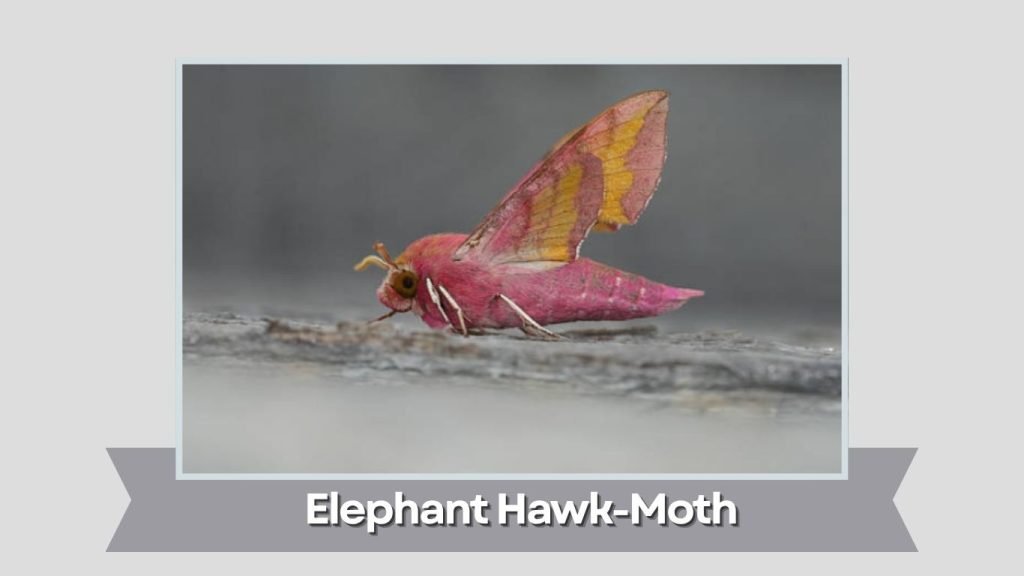
The elephant hawk-moth is a striking species known for its vibrant pink and olive-green coloration. It gets its name from the caterpillar, which resembles an elephant’s trunk.
Identification
- Pink and olive-green wing patterns
- Wingspan ranges from 5–7 cm
- Slender body with streamlined shape
- Caterpillar has a trunk-like extension
Habitat
Elephant hawk-moths are found across Europe and parts of Asia. They inhabit gardens, woodland edges, and grasslands, especially where host plants like willowherb are present.
Diet
Adult moths feed on nectar from flowers, particularly those that bloom at night. The caterpillars feed on plants such as willowherb and fuchsia.
Behavior
These moths are mostly nocturnal and are attracted to light. Their caterpillars use mimicry to appear like small snakes, which helps deter predators. Adults are strong fliers and are often seen during warm evenings.
11. Death’s-Head Hawkmoth
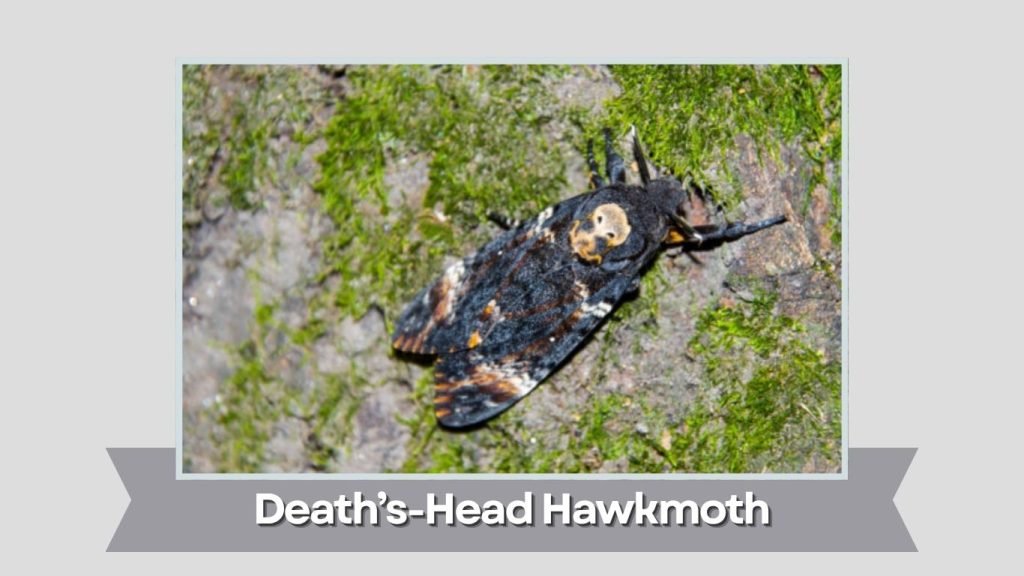
The Death’s-head hawkmoth is one of the most famous moth species, known for the skull-like marking on its thorax. It has a mysterious appearance and is often associated with folklore and superstition.
Identification
- Large, heavy-bodied moth with a wingspan of 9–13 cm
- Dark brown wings with yellow and black patterns
- Distinct skull-shaped marking on the thorax
- Strong, robust body with short antennae
Habitat
This moth is found across Europe, Asia, and Africa. It prefers warm regions with access to farmland, woodlands, and gardens where suitable food sources are available.
Diet
Unlike many large moths, adult Death’s-head hawkmoths can feed. They often enter beehives to drink honey. Their caterpillars feed on plants such as potatoes and other members of the nightshade family.
Behavior
They are nocturnal and capable of producing a squeaking sound when disturbed. Their ability to invade beehives without being attacked is unique, possibly due to chemical mimicry. They are strong fliers and can migrate over long distances.
12. Peppered Moth
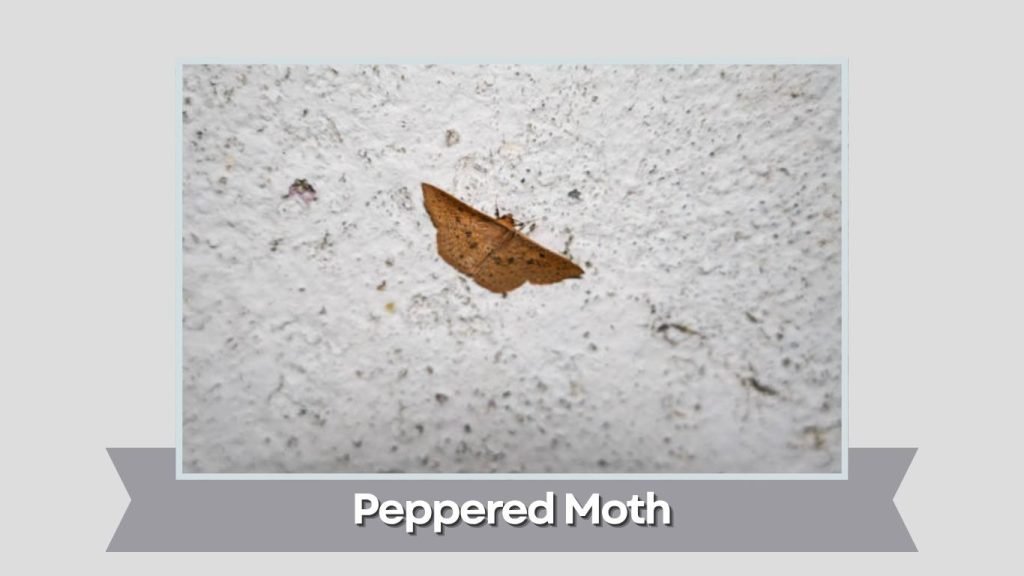
The peppered moth is a well-known species in the study of evolution, particularly for its role in demonstrating natural selection during the Industrial Revolution.
Identification
- Light-colored wings with black speckled patterns
- Wingspan ranges from 3–5 cm
- Also has a darker “melanic” form
- Slender body with subtle markings
Habitat
Peppered moths are commonly found in Europe, North America, and Asia. They inhabit woodlands, parks, and urban areas where trees and lichens are present.
Diet
Adult moths feed on nectar, while caterpillars feed on the leaves of various deciduous trees such as oak, birch, and willow.
Behavior
These moths are nocturnal and rest on tree bark during the day, using camouflage to avoid predators. The species became famous for changing color in polluted areas, demonstrating adaptation to environmental changes.
13. Gypsy Moth
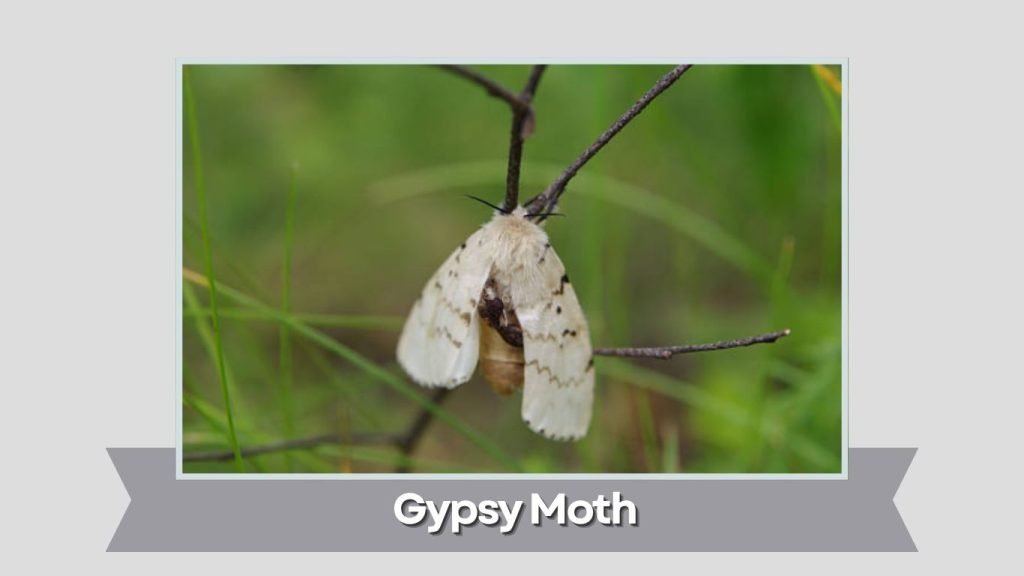
The gypsy moth is a well-known species, particularly for its impact on forests as an invasive pest in some regions. It is recognized for its ability to defoliate large areas of trees during its caterpillar stage.
Identification
- Wingspan ranges from 3–6 cm
- Males are brown with darker markings; females are white with black patterns
- Females are larger but less capable of flight
- Fuzzy body with distinctive coloration differences between sexes
Habitat
Gypsy moths are found in Europe, Asia, and North America. They thrive in forests, especially those dominated by oak and other hardwood trees, but can also be found in suburban and urban areas.
Diet
Adult gypsy moths do not feed. The caterpillars are highly voracious and feed on the leaves of hundreds of tree species, with a strong preference for oak.
Behavior
These moths are mostly nocturnal. Males actively fly in search of females, while females often remain stationary. Large infestations can cause severe damage to forests due to extensive leaf consumption by caterpillars.
14. Codling Moth
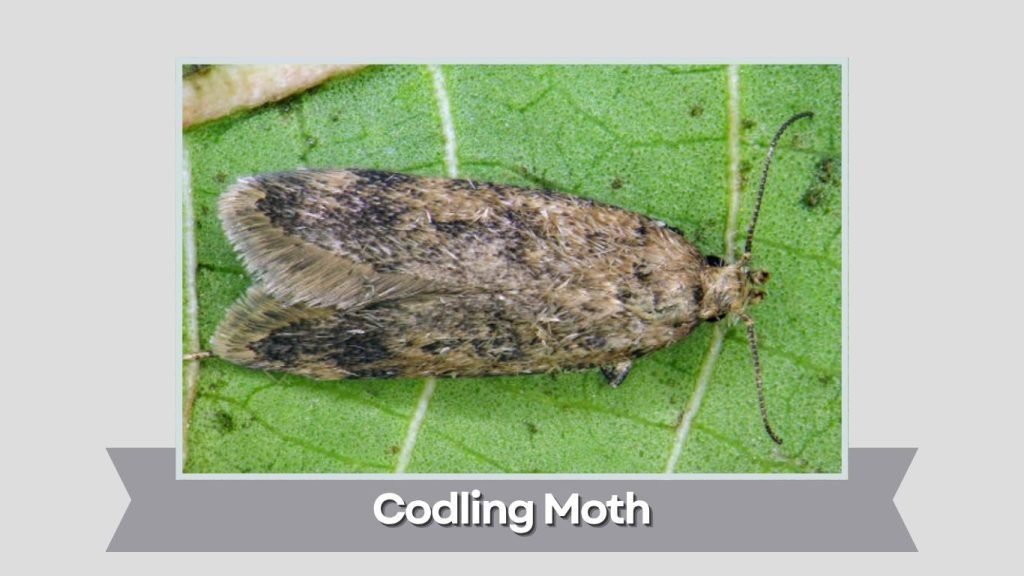
The codling moth is a small but economically significant species known for damaging fruit crops, especially apples. It is considered a major agricultural pest in many parts of the world.
Identification
- Small moth with a wingspan of 1–2 cm
- Grayish-brown wings with subtle patterns
- Distinct coppery patch near the wing tips
- Slender body with narrow wings
Habitat
Codling moths are found worldwide, especially in regions where apple and pear orchards are cultivated. They prefer temperate climates and areas with abundant fruit trees.
Diet
Adult moths feed on small amounts of nectar. The larvae, however, burrow into fruits like apples and pears, feeding inside and causing significant damage.
Behavior
These moths are nocturnal and lay eggs on or near developing fruits. After hatching, the larvae tunnel into the fruit, making them difficult to detect. Their life cycle is closely tied to the fruit-growing season, making them a major concern for farmers.
15. Indianmeal Moth
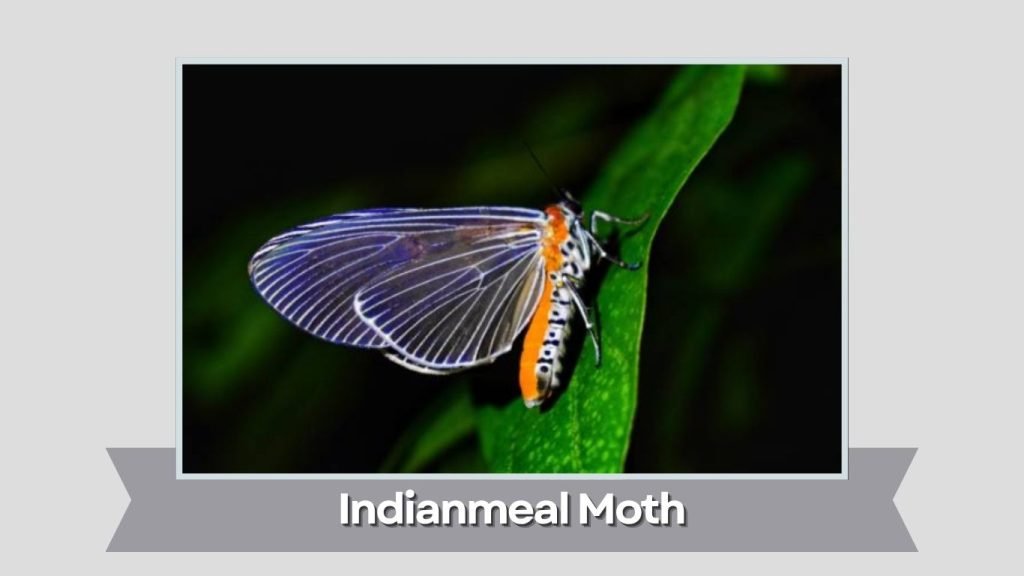
The Indianmeal moth is a common household pest known for infesting stored food products. It is frequently found in kitchens and pantries, where it can contaminate a wide range of dry goods.
Identification
- Small moth with a wingspan of 1–2 cm
- Forewings are reddish-brown on the outer half and gray on the inner half
- Distinct two-toned wing pattern
- Slender body with narrow wings
Habitat
Indianmeal moths are found worldwide, especially in homes, grocery stores, and food storage areas. They thrive in warm indoor environments where dry food products are easily accessible.
Diet
Adult moths do not feed on stored food. The larvae are the primary feeders, consuming grains, flour, cereals, nuts, and dried fruits, often leaving behind webbing in infested items.
Behavior
These moths are mostly nocturnal and are attracted to light. Females lay eggs directly on food sources, and the larvae spread quickly, making infestations difficult to control if not addressed early.
16. Silk Moth
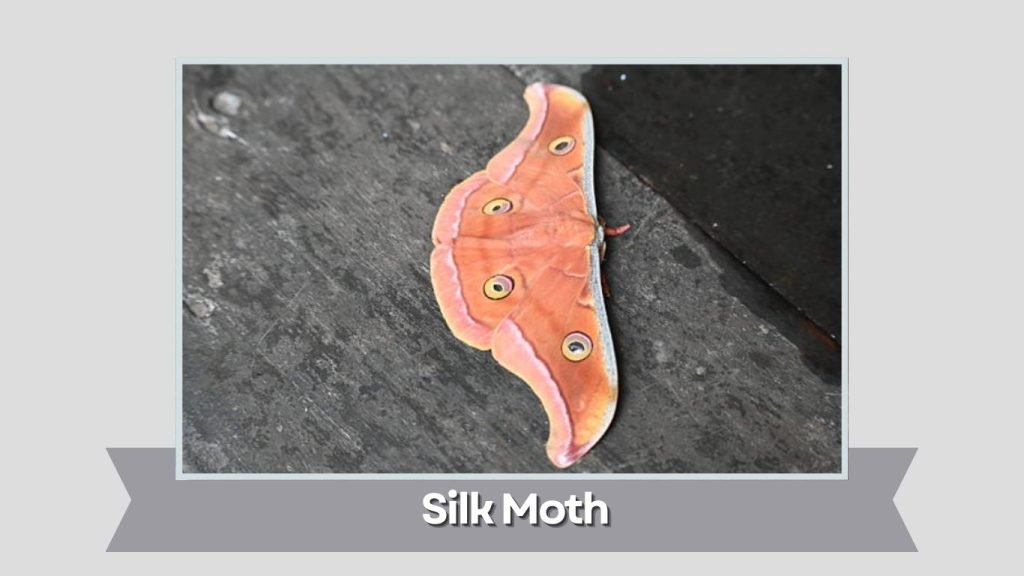
The silk moth is widely known for its role in silk production. It has been domesticated for thousands of years and is essential to the textile industry.
Identification
- Creamy white wings with faint markings
- Wingspan ranges from 4–6 cm
- Thick, fuzzy body
- Reduced ability to fly due to domestication
Habitat
Silk moths are primarily found in controlled environments such as farms and rearing facilities. Originally native to Asia, they are now raised worldwide for silk production.
Diet
Adult silk moths do not eat. The caterpillars, known as silkworms, feed exclusively on mulberry leaves, which are essential for producing high-quality silk.
Behavior
Silk moths are not active fliers and spend most of their adult life reproducing. After emerging from cocoons, they mate and lay eggs. Their life cycle has been heavily managed by humans for silk harvesting.
17. Clothes Moth
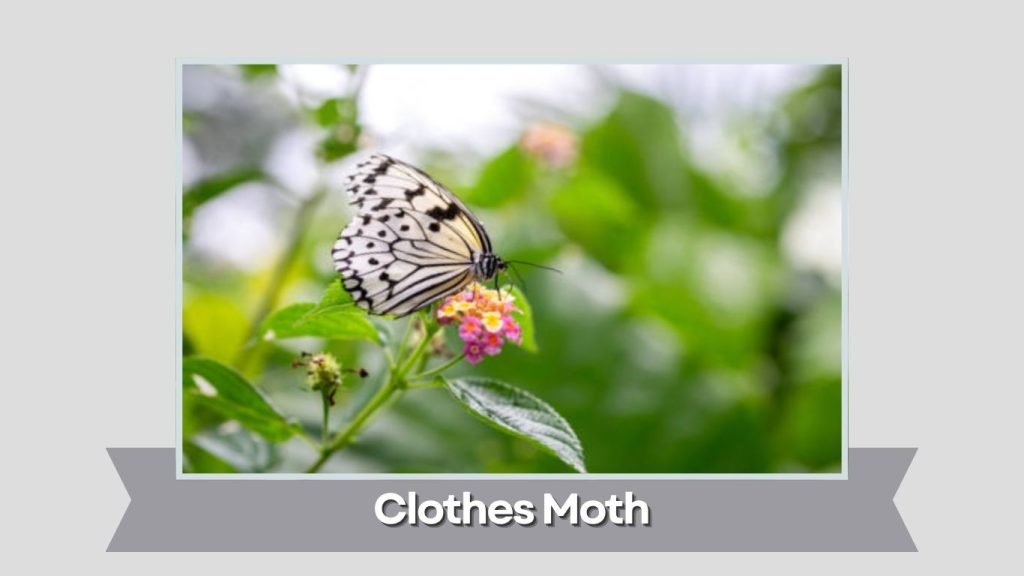
The clothes moth is a small but destructive species known for damaging fabrics, especially those made from natural fibers. It is commonly found in homes, particularly in closets and storage areas.
Identification
- Small moth with a wingspan of 1–1.5 cm
- Pale golden or buff-colored wings
- Narrow wings with fringed edges
- Slender, delicate body
Habitat
Clothes moths are found worldwide, especially in indoor environments. They prefer dark, undisturbed areas such as closets, drawers, and storage boxes where fabrics are kept.
Diet
Adult clothes moths do not feed on fabrics. The larvae are responsible for damage, feeding on materials like wool, silk, fur, and feathers, as well as items contaminated with sweat or food stains.
Behavior
These moths avoid light and are rarely seen flying openly. Females lay eggs directly on suitable fabrics, and the larvae create silken tubes or patches as they feed. Infestations often go unnoticed until visible damage appears.
