
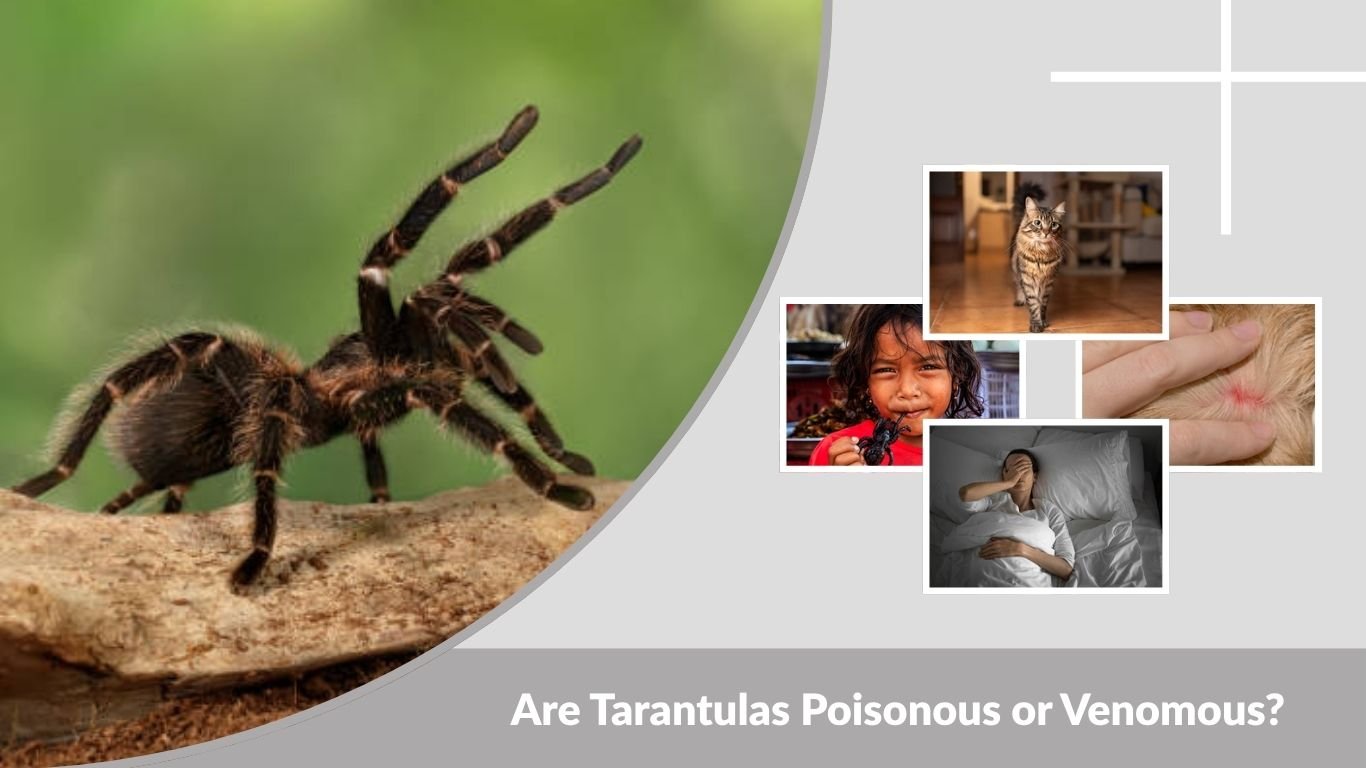
Tarantulas often look intimidating because of their large size and hairy bodies, but many people wonder: are tarantulas poisonous? The short answer is no—tarantulas are not poisonous. Instead, they are venomous spiders, meaning they inject venom through their bite rather than harming you through touch or consumption.
For most humans, tarantulas are not dangerous, and their bites are typically mild. However, understanding how their venom works and what risks they pose can help clear up common fears and misconceptions.
Poisonous vs Venomous – What’s the Difference?
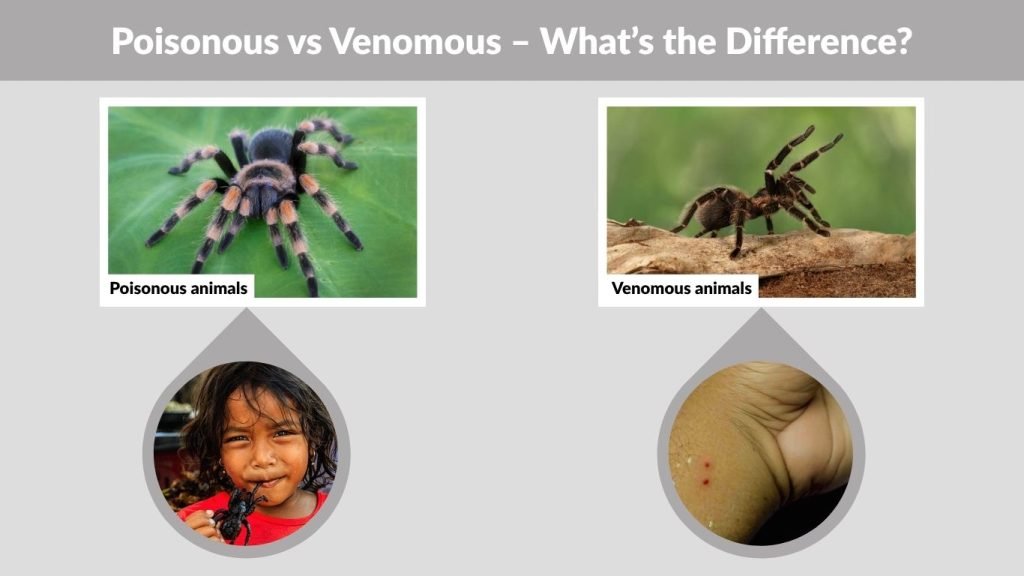
One of the biggest reasons for confusion around tarantulas comes from misunderstanding these two terms.
- Poisonous animals are harmful if you eat them or touch them
- Venomous animals inject toxins through bites or stings
- Tarantulas fall into the venomous category
This means you won’t get poisoned by touching a tarantula. However, if one bites you, it can inject venom as a defense mechanism. This distinction is important because it explains why tarantulas are often feared more than they actually deserve.
Are All Tarantulas Poisonous?
Many people ask whether all tarantulas are poisonous, but the reality is simple: none of them are poisonous. However, almost all tarantulas are venomous to some degree.
The strength of their venom varies depending on the species. Some key points include:
- Most tarantulas have mild venom that affects insects more than humans
- A few species have stronger venom, especially those from Africa and Asia (Old World tarantulas)
- Even stronger species are rarely dangerous to humans
So while all tarantulas can bite and inject venom, the vast majority pose very little threat.
How Dangerous Are Tarantulas to Humans?
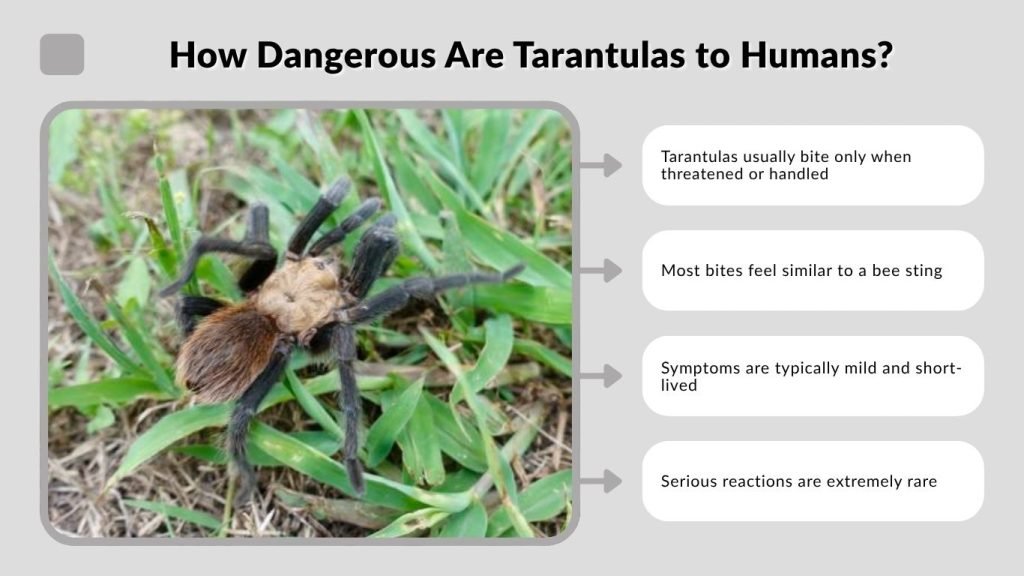
Despite their scary appearance, tarantulas are generally not dangerous to humans. In fact, bites are uncommon because these spiders prefer to avoid conflict.
Here’s what you should know:
- Tarantulas usually bite only when threatened or handled
- Most bites feel similar to a bee sting
- Symptoms are typically mild and short-lived
- Serious reactions are extremely rare
Some species, especially Old World tarantulas, can cause more intense symptoms such as muscle cramps or stronger pain. Still, life-threatening situations are very uncommon.
For most people, the biggest risk isn’t the bite—it’s actually their defensive hairs, which can cause irritation (covered later).
What Happens If a Tarantula Bites You?
If a tarantula bites you, the experience can be uncomfortable but is usually not severe. Their venom is designed to subdue small prey, not harm large animals like humans.
Common symptoms include:
- Localized pain at the bite site
- Mild swelling and redness
- Itching or irritation
Less common symptoms:
- Muscle cramps
- Nausea
- Slight fever
In most cases, symptoms fade within a few hours to a couple of days. However, you should seek medical attention if:
- You experience severe pain or spreading swelling
- You have difficulty breathing
- You suspect an allergic reaction
Overall, tarantula bites are far less dangerous than many people assume.
Are Tarantulas Poisonous to Dogs and Cats?
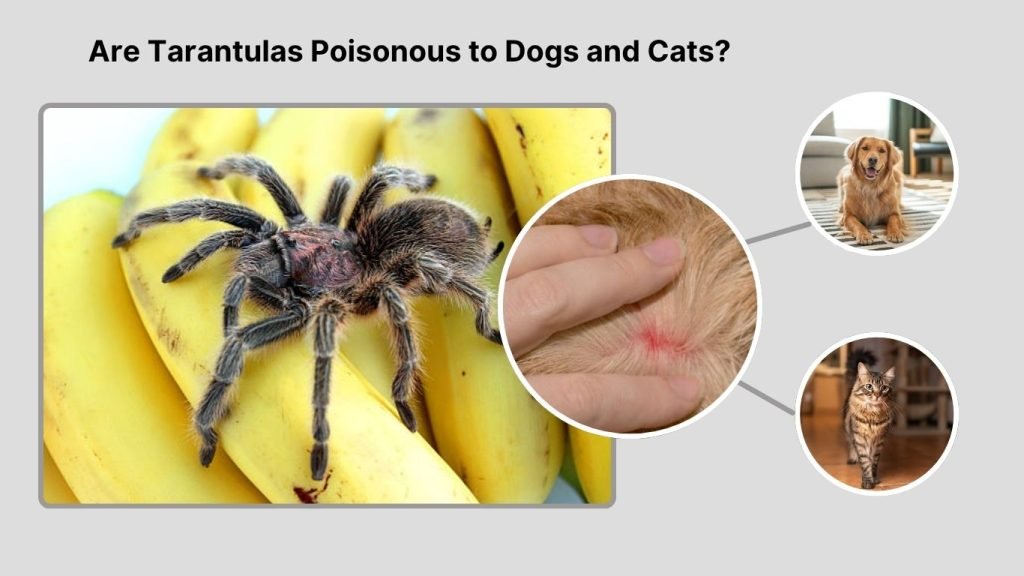
Pet owners often worry about whether tarantulas are dangerous to animals like dogs and cats. The answer is similar to humans—they are usually not highly dangerous, but caution is still necessary.
Here’s what to keep in mind:
- A tarantula bite can cause pain and swelling in pets
- Smaller animals may react more strongly
- Allergic reactions, though rare, are possible
Another risk comes from the tarantula’s urticating hairs, which can irritate a pet’s eyes, nose, or skin.
If your pet is bitten or shows unusual symptoms such as excessive drooling, swelling, or lethargy, it’s best to consult a veterinarian.
Are Tarantulas Dangerous to Touch?
Tarantulas are not poisonous to touch, but that doesn’t mean handling them is completely safe. In fact, touching a tarantula can sometimes cause more irritation than a bite.
The main reason is their urticating hairs—tiny, barbed hairs that they can flick off their bodies when threatened.
These hairs can cause:
- Skin irritation and itching
- Redness or rash
- Eye irritation if they come into contact
Because of this, handling tarantulas is generally discouraged unless you are experienced. Even pet tarantulas can release these hairs if they feel stressed or threatened.
Which Tarantulas Are More Dangerous?
Not all tarantulas are the same when it comes to venom strength. While most species are harmless to humans, some are known to have more potent venom and stronger defensive behavior.
Tarantulas are generally divided into two groups:
- New World tarantulas (found in the Americas)
- Old World tarantulas (found in Africa, Asia, and Australia)
Key differences:
- New World species have milder venom and rely more on urticating hairs for defense
- Old World species lack these hairs and instead depend on stronger venom and faster bites
- Old World tarantulas tend to be more defensive and unpredictable
Examples of relatively stronger species include the Orange Baboon Tarantula and some Asian forest species. Even so, their bites are still rarely life-threatening, though they may cause more intense pain and discomfort.
Are Pet Tarantulas Safe?
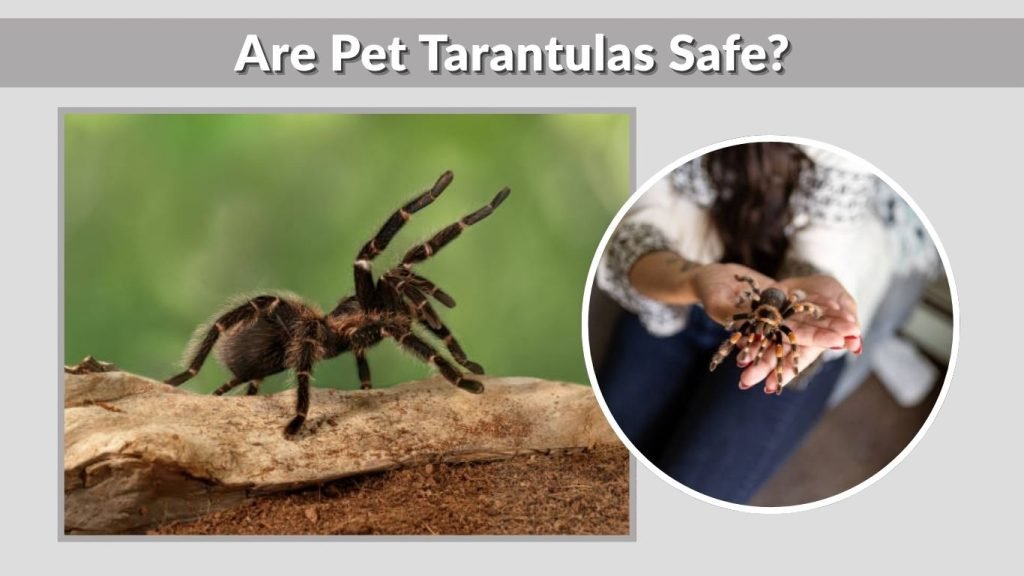
Tarantulas have become increasingly popular as exotic pets, and many beginners wonder if they are safe to keep at home. The good news is that most pet tarantulas are considered low-risk.
Popular pet species are typically chosen for their calm nature and mild venom.
Why pet tarantulas are generally safe:
- They are not aggressive and prefer to hide rather than attack
- Their venom is usually too weak to cause serious harm to humans
- They require minimal handling, reducing the chance of bites
However, safety depends on proper care and respect for the animal. Even a calm tarantula may bite if it feels threatened.
It’s also important to avoid frequent handling. Tarantulas are fragile creatures, and falls can harm them more than they can harm you.
Common Myths About Tarantulas
Tarantulas are surrounded by myths that exaggerate their danger. Let’s clear up some of the most common misconceptions.
Myth 1: Tarantulas are deadly to humans
In reality, tarantulas are rarely dangerous. There are no widely confirmed deaths caused by tarantula bites in modern records.
Myth 2: All tarantulas are highly venomous
While all tarantulas have venom, most species have mild venom that causes only minor symptoms in humans.
Myth 3: Tarantulas actively attack people
Tarantulas are defensive, not aggressive. They bite only when they feel threatened or provoked.
Myth 4: Touching a tarantula will poison you
Tarantulas are not poisonous. However, their hairs can cause irritation, which is often mistaken for poisoning.
Understanding these myths helps reduce unnecessary fear and promotes a more accurate view of these fascinating spiders.
Quick Safety Tips Around Tarantulas
Whether you encounter a tarantula in the wild or keep one as a pet, basic precautions can help you stay safe.
Simple safety tips:
- Avoid handling wild tarantulas
- Do not provoke or corner them
- Wear gloves if you are in areas where they are common
- Keep pets at a safe distance
- Wash your hands after contact with their enclosure
By following these steps, the risk of bites or irritation becomes extremely low.
FAQs
Are tarantulas poisonous or venomous?
Tarantulas are venomous, not poisonous. They deliver venom through their fangs when they bite, but they do not release toxins through touch or by being eaten. This distinction is important because it shows that casual contact with a tarantula is not inherently dangerous.
Can a tarantula bite kill a human?
A tarantula bite is very unlikely to kill a human. Most bites cause mild pain similar to a bee sting, along with slight swelling. Severe reactions are rare and usually linked to allergies or sensitive individuals rather than the venom itself.
Are tarantulas dangerous to pets?
Tarantulas are generally not highly dangerous to pets, but bites can still cause discomfort, swelling, or irritation. Smaller pets may be more sensitive to venom or defensive hairs. If a pet shows unusual symptoms after contact, veterinary care is recommended.
Do tarantulas attack humans?
Tarantulas do not attack humans without reason. They are shy and prefer to avoid confrontation. Most bites happen only when they are handled improperly or feel threatened, making them far less aggressive than many people believe.
Are tarantulas safe to keep as pets?
Yes, tarantulas are considered safe pets when properly cared for. Most species kept as pets have mild venom and calm temperaments. However, they should not be handled frequently, as this can stress the spider and increase the risk of defensive behavior.
Conclusion
So, are tarantulas poisonous? The answer is clear: no, they are not poisonous—but they are venomous. Fortunately, their venom is usually mild and poses little threat to humans.
Despite their intimidating appearance, tarantulas are generally harmless, non-aggressive creatures that prefer to stay hidden rather than confront people. Most bites are rare and mild, and the biggest risk often comes from their irritating hairs rather than their venom.
By understanding the facts and separating myths from reality, you can see tarantulas for what they truly are—fascinating spiders that are far less dangerous than their reputation suggests.
