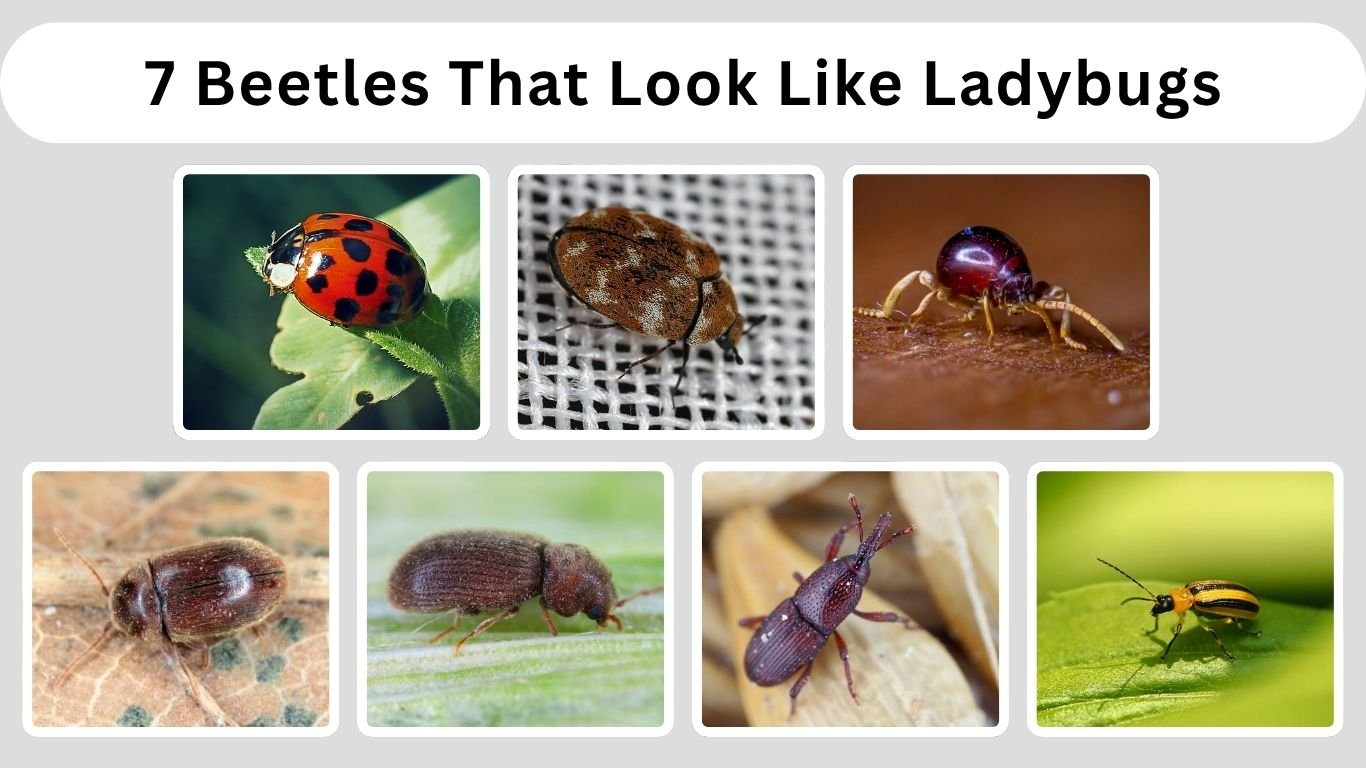
Many small beetles are often mistaken for ladybugs because of their rounded shape and similar size. However, these lookalikes can differ greatly in color, behavior, and impact. While true ladybugs are beneficial predators, some of these beetles are harmless, and others can even be household or storage pests. Learning to identify them correctly helps you understand whether they are helpful insects or something you may need to manage indoors or around your home.
1. Asian Lady Beetle
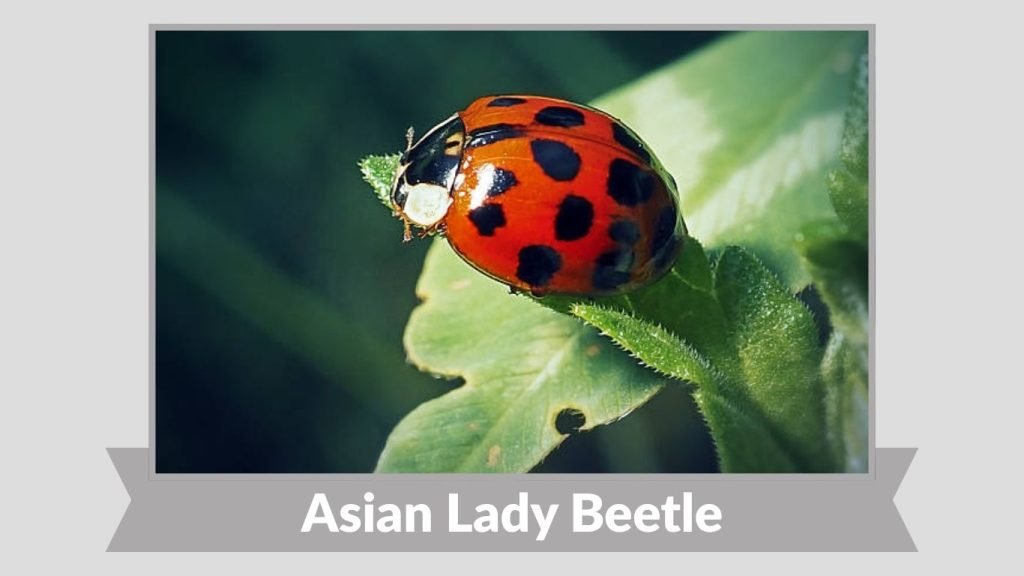
The Asian lady beetle closely resembles a typical ladybug and is often confused with it. While they belong to the same family, this species is more aggressive and commonly found inside homes. Their color and spot patterns can vary widely, making identification slightly tricky. Unlike true ladybugs, they can become a nuisance when they gather indoors in large numbers, especially during cooler seasons.
Identification
- Round, dome-shaped body similar to a ladybug
- Color ranges from orange to red, sometimes yellow
- Variable number of black spots (or sometimes none)
- Distinct “M” or “W” shaped marking behind the head
- Head is partially visible with white markings on the sides
- Smooth, shiny wing covers
- Slightly larger than most native ladybugs
- Can release a yellow fluid when disturbed
Habitat
Asian lady beetles are commonly found in gardens, fields, forests, and around buildings. They prefer areas with plenty of plants where aphids and other small insects are present. During colder months, they seek shelter indoors, often gathering in large numbers in walls, attics, or window frames.
Behaviors
These beetles are active during the day and are known for clustering behavior, especially in autumn when they look for warm places to overwinter. Unlike typical ladybugs, they may bite humans occasionally, although the bites are not harmful. They are also attracted to light and light-colored surfaces.
Diet
Asian lady beetles primarily feed on aphids and other soft-bodied insects, making them beneficial in controlling garden pests. However, when food is scarce, they may also feed on fruits or plant material.
Lifecycle
They undergo complete metamorphosis: egg, larva, pupa, and adult. Eggs are laid on plant surfaces near food sources. Larvae are active predators, feeding on pests before pupating. Adults emerge and continue feeding and reproducing, with multiple generations possible in a year depending on climate.
2. Carpet Beetle
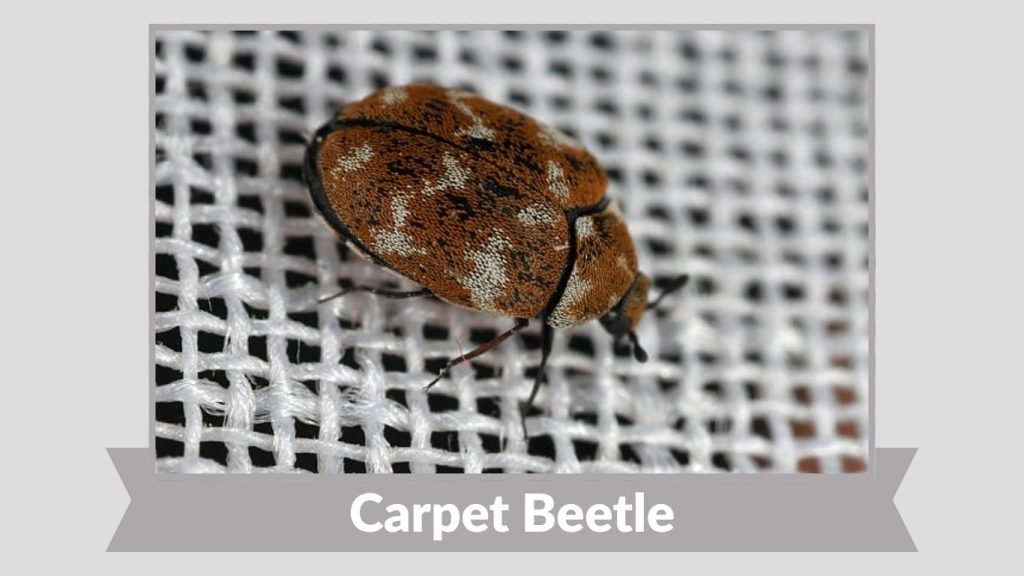
Carpet beetles can sometimes be mistaken for ladybugs due to their small, rounded shape and patterned appearance. However, they are much smaller and have a mottled color rather than the bright red with clear spots seen in ladybugs. These beetles are common household pests and are often found indoors. While they may look harmless, their larvae can damage fabrics and other materials.
Identification
- Small, round to oval-shaped body
- Color is a mix of black, white, brown, or yellow patterns
- Mottled or speckled appearance instead of distinct spots
- Covered with tiny scales or hairs
- Short antennae with a slight club at the end
- Much smaller than a typical ladybug (about 2–5 mm)
- Body appears slightly flattened compared to ladybugs
- Slow-moving and not brightly colored like true ladybugs
Habitat
Carpet beetles are commonly found indoors in homes, especially in carpets, clothing, upholstery, and storage areas. They prefer dark, undisturbed places where natural fibers are present. Outdoors, they may live in bird nests, flowers, or areas with organic debris, but they often enter homes in search of food.
Behaviors
Adult carpet beetles are often seen near windows because they are attracted to light. They move slowly and do not fly as frequently as ladybugs. The larvae tend to hide in dark areas and avoid light. Unlike ladybugs, they do not gather on plants in large numbers or actively hunt pests.
Diet
Larvae feed on natural materials such as wool, silk, leather, fur, and even dead insects. This makes them destructive in homes. Adult beetles, however, feed on pollen and nectar and are often found outdoors on flowers.
Lifecycle
Carpet beetles undergo complete metamorphosis: egg, larva, pupa, and adult. Eggs are laid on suitable food sources. Larvae feed for an extended period and cause most of the damage. After pupation, adults emerge and live for a shorter time, focusing on reproduction.
3. Spider Beetle
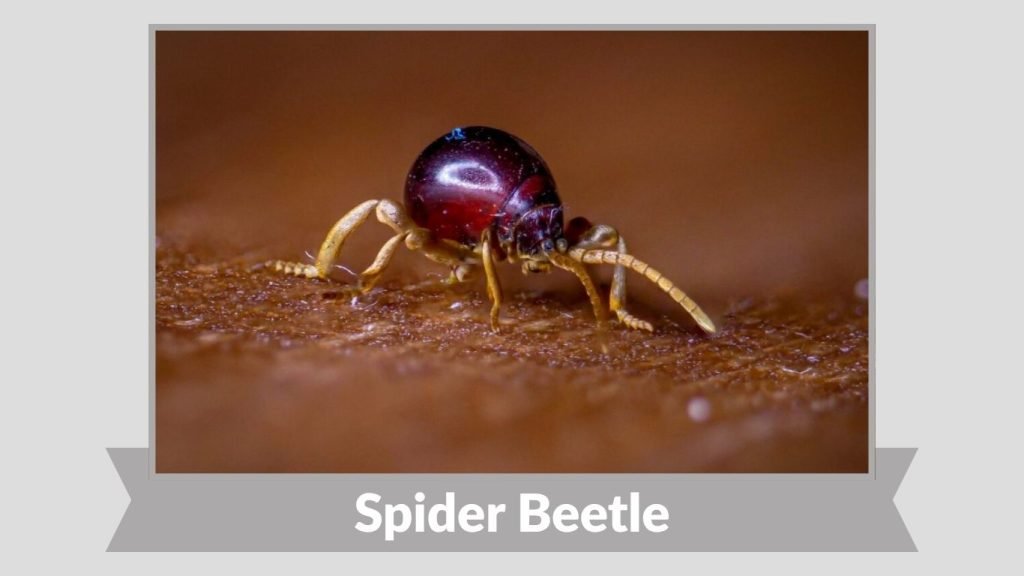
Spider beetles can be confused with ladybugs because of their small, rounded bodies and shiny appearance. However, they differ in color, structure, and behavior. These beetles are more closely associated with stored products and indoor environments rather than gardens. Their name comes from their long legs, which give them a spider-like look when viewed closely.
Identification
- Small, round or oval-shaped body
- Reddish-brown, dark brown, or black color
- Smooth, shiny surface without distinct spots
- Long, thin legs that resemble a spider’s legs
- Small head with long antennae
- Body appears more spherical than a ladybug
- No bright red coloration or clear black spots
- Size typically around 2–4 mm
Habitat
Spider beetles are commonly found indoors in pantries, storage areas, warehouses, and places with stored food or organic materials. They prefer dark, undisturbed environments. Outdoors, they may live in bird nests or animal debris, but they are more often associated with human structures.
Behaviors
These beetles are mostly nocturnal and avoid light. They move slowly and do not actively fly around like ladybugs. Instead, they tend to crawl in search of food. They are not social insects and are usually found alone or in small numbers near food sources.
Diet
Spider beetles are scavengers and feed on a wide variety of dried organic materials. Their diet includes grains, cereals, spices, dried fruits, and even animal-based materials. This makes them common pests in stored food products.
Lifecycle
Spider beetles undergo complete metamorphosis: egg, larva, pupa, and adult. Eggs are laid near food sources, allowing larvae to begin feeding immediately after hatching. The larvae develop and eventually pupate before emerging as adults. The lifecycle length depends on environmental conditions.
4. Drugstore Beetle
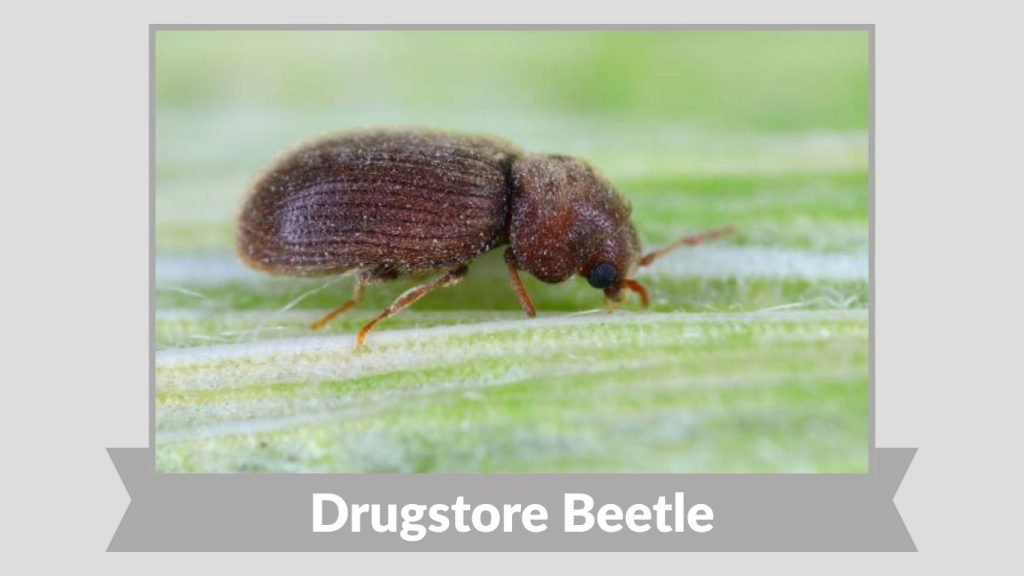
Drugstore beetles may resemble ladybugs at a glance due to their small, rounded shape and brown coloration. However, they lack the bright colors and distinct spots of true ladybugs. These beetles are commonly found in stored food products and household items. While they may look harmless, they are known pests in pantries and storage areas.
Identification
- Small, oval-shaped body (about 2–3 mm long)
- Light brown to reddish-brown color
- Smooth, humpbacked appearance
- Head hidden under a hood-like thorax
- Fine grooves on the wing covers
- Antennae are serrated (saw-like)
- No bright coloration or bold spots like ladybugs
- Compact and slightly elongated compared to ladybugs
Habitat
Drugstore beetles are typically found in kitchens, pantries, warehouses, and storage areas. They infest dry goods such as flour, spices, grains, and packaged foods. Unlike ladybugs, they are not associated with plants or outdoor vegetation but prefer indoor environments with accessible food sources.
Behaviors
These beetles are capable of flight and are often attracted to light. They move slowly and are not as active or visible as ladybugs. Instead of gathering on plants, they remain close to food sources. They do not exhibit the same daytime activity patterns as ladybugs and are more discreet in their movements.
Diet
Drugstore beetles feed on a wide range of dried materials, including grains, flour, spices, herbs, and even non-food items like paper or pharmaceuticals. Their ability to consume many types of organic material makes them persistent pests in stored products.
Lifecycle
They undergo complete metamorphosis: egg, larva, pupa, and adult. Eggs are laid directly in food sources. Larvae feed and develop within the material before pupating. The lifecycle can be completed in a few weeks under favorable conditions, allowing populations to grow quickly.
5. Cigarette Beetle
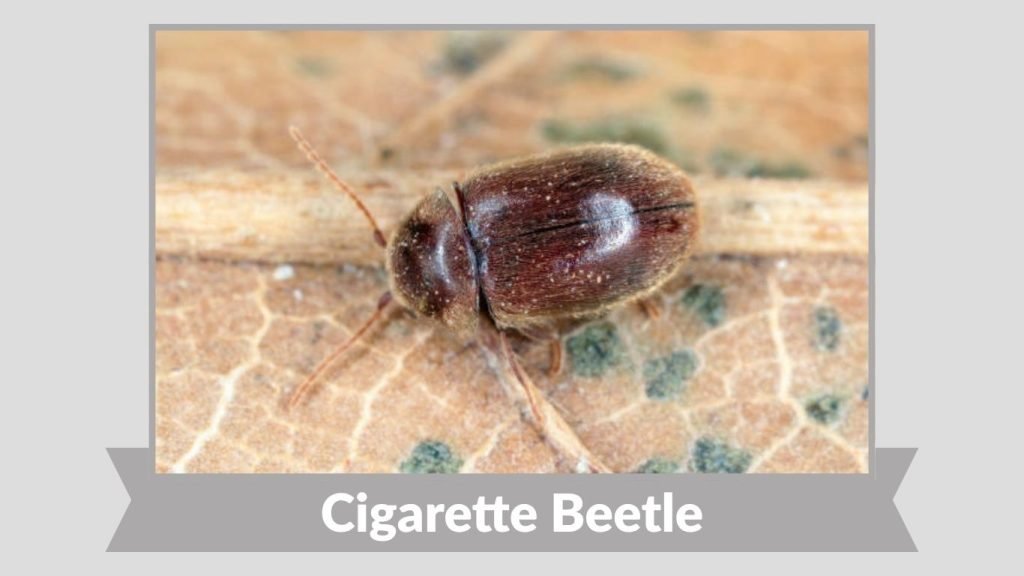
Cigarette beetles can sometimes be mistaken for ladybugs because of their small, rounded bodies and light brown color. However, they lack the bright red color and distinct spots of true ladybugs. These beetles are common pests in stored products and are often found in dry food items and tobacco products.
Identification
- Small, oval-shaped body (about 2–3 mm long)
- Light brown to yellowish-brown color
- Smooth, shiny surface without spots
- Humpbacked appearance
- Head hidden under a hood-like thorax
- Antennae are serrated (saw-like)
- No bright colors or contrasting patterns like ladybugs
- More uniform color compared to ladybugs
Habitat
Cigarette beetles are commonly found in pantries, storage areas, warehouses, and places where dried goods are stored. They thrive in warm, dry environments and are often associated with tobacco, spices, grains, and packaged foods. Unlike ladybugs, they are not found on plants or in gardens.
Behaviors
These beetles are active flyers and are attracted to light sources, especially at night. They move slowly and tend to stay near their food sources rather than roaming openly. Unlike ladybugs, they do not gather on plants or actively hunt pests and are rarely seen outdoors in large numbers.
Diet
Cigarette beetles feed on a wide range of dried organic materials. Their preferred food is tobacco, but they also consume spices, grains, flour, pet food, and dried plant materials. Their feeding habits make them common pests in stored products.
Lifecycle
They undergo complete metamorphosis: egg, larva, pupa, and adult. Eggs are laid directly on food sources. Larvae feed and develop within the material before pupating. The lifecycle is relatively short, allowing populations to grow quickly under suitable conditions.
6. Leaf Beetle
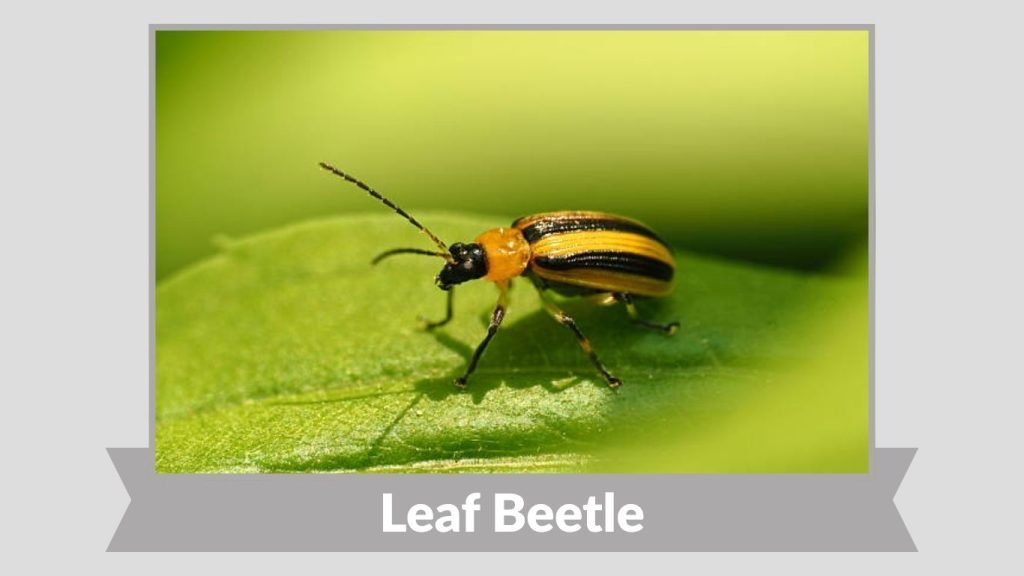
Leaf beetles can sometimes resemble ladybugs due to their rounded shape and, in some species, bright coloration. However, they are more varied in color and pattern, and many lack the classic red-and-black spotted look. These beetles belong to the family Chrysomelidae and are commonly found on plants, where they feed on leaves.
Identification
- Small to medium-sized, rounded or oval body
- Colors vary: green, yellow, brown, or sometimes reddish
- Smooth, often shiny wing covers
- May have stripes, spots, or plain coloration
- Short to medium-length antennae
- Body is slightly flatter than a typical ladybug
- Head is small and partially tucked under the thorax
- Appearance is more varied and less uniform than ladybugs
Habitat
Leaf beetles are commonly found on plants, including trees, shrubs, crops, and garden vegetation. They live in areas where leaves are abundant and often remain on or near their host plants. Unlike ladybugs, they are not usually found inside homes and prefer outdoor environments.
Behaviors
These beetles are generally active during the day and are often seen resting or feeding on leaves. They move slowly and may fly short distances when disturbed. Unlike ladybugs, they do not actively hunt pests and are more focused on feeding on plant material.
Diet
Leaf beetles primarily feed on plant leaves. Both adults and larvae consume foliage, which can sometimes cause visible damage to plants. Some species are considered agricultural pests due to their feeding habits.
Lifecycle
Leaf beetles undergo complete metamorphosis: egg, larva, pupa, and adult. Eggs are usually laid on the underside of leaves. Larvae hatch and feed on plant tissue before pupating either on the plant or in the soil. Adults emerge and continue the cycle.
7. Seed Beetle
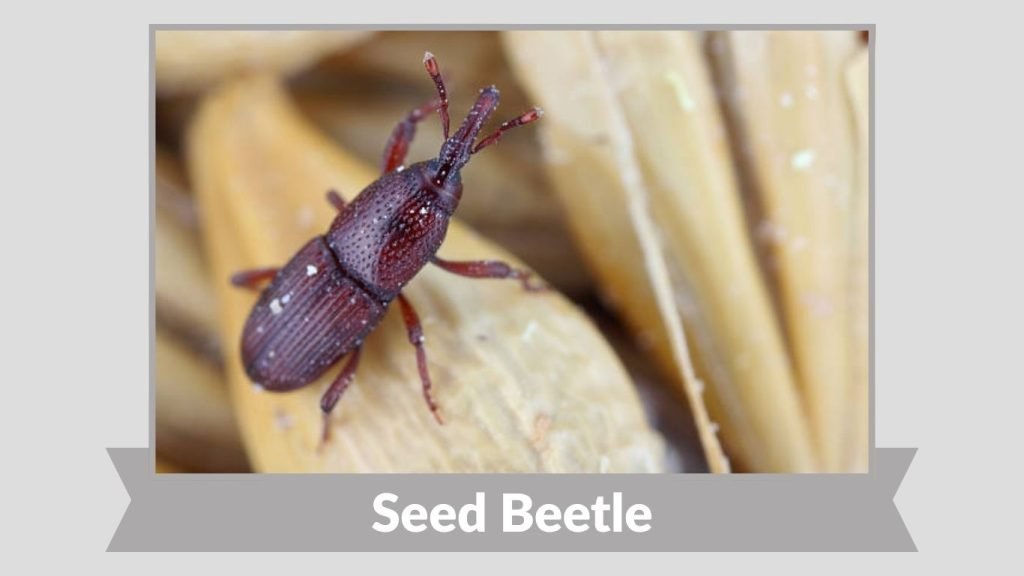
Seed beetles are sometimes mistaken for ladybugs because of their small, rounded shape and compact body. However, they are usually dull in color and lack the bright red and black spotted pattern of true ladybugs. These beetles are commonly associated with seeds and stored legumes rather than plants or gardens.
Identification
- Small, oval to rounded body
- Brown, gray, or mottled coloration
- Short wing covers that may not fully cover the abdomen
- Slightly humped back appearance
- Head is partially visible from above
- Antennae are short and slightly serrated
- Body is more compact and less glossy than ladybugs
- Lacks bright colors and distinct spots
Habitat
Seed beetles are commonly found in stored seeds, beans, lentils, and other legumes. They are often present in pantries, storage containers, and agricultural settings. Outdoors, they may be found around plants that produce seeds, but they are more commonly associated with stored products than garden environments.
Behaviors
These beetles are not very active and tend to stay within or near their food sources. They do not fly frequently and are often discovered when infested seeds are opened. Unlike ladybugs, they do not gather on plants or move around visibly during the day.
Diet
Seed beetles primarily feed on seeds and legumes. Both larvae and adults consume the inside of seeds, which can damage stored food products. Their feeding habits make them common pests in stored grains and pulses.
Lifecycle
Seed beetles undergo complete metamorphosis: egg, larva, pupa, and adult. Eggs are laid directly on seeds. Larvae bore into the seed and develop inside it, feeding as they grow. After pupation within the seed, adults emerge, leaving small exit holes.
FAQs
Are beetles that look like ladybugs harmful?
Most beetles that resemble ladybugs are not harmful to humans. However, some species like carpet beetles and seed beetles can damage fabrics or stored food. Unlike true ladybugs, which are beneficial, these lookalikes are often neutral or minor pests depending on their habitat.
How can I tell a real ladybug from a lookalike beetle?
True ladybugs are usually bright red or orange with clear black spots and a smooth, dome-shaped body. Lookalike beetles often have duller colors, irregular patterns, or lack distinct spots. Their behavior also differs, as ladybugs are active predators on plants.
Do these beetles infest homes like pests?
Some species, such as carpet beetles and drugstore beetles, can infest homes by targeting fabrics or stored food. Others, like leaf beetles, are outdoor insects and rarely enter homes. Their presence indoors depends on their food source and environment.
Why are these beetles confused with ladybugs?
They are often confused because of their small, rounded shape and similar size. From a distance, their body structure can look like a ladybug. However, differences in color, markings, and behavior become clear upon closer inspection.
Are any of these beetles beneficial like ladybugs?
Yes, some beetles, like certain leaf beetles or Asian lady beetles, can have beneficial roles in ecosystems. However, many lookalike species do not control pests like true ladybugs and instead feed on plants or stored materials.