
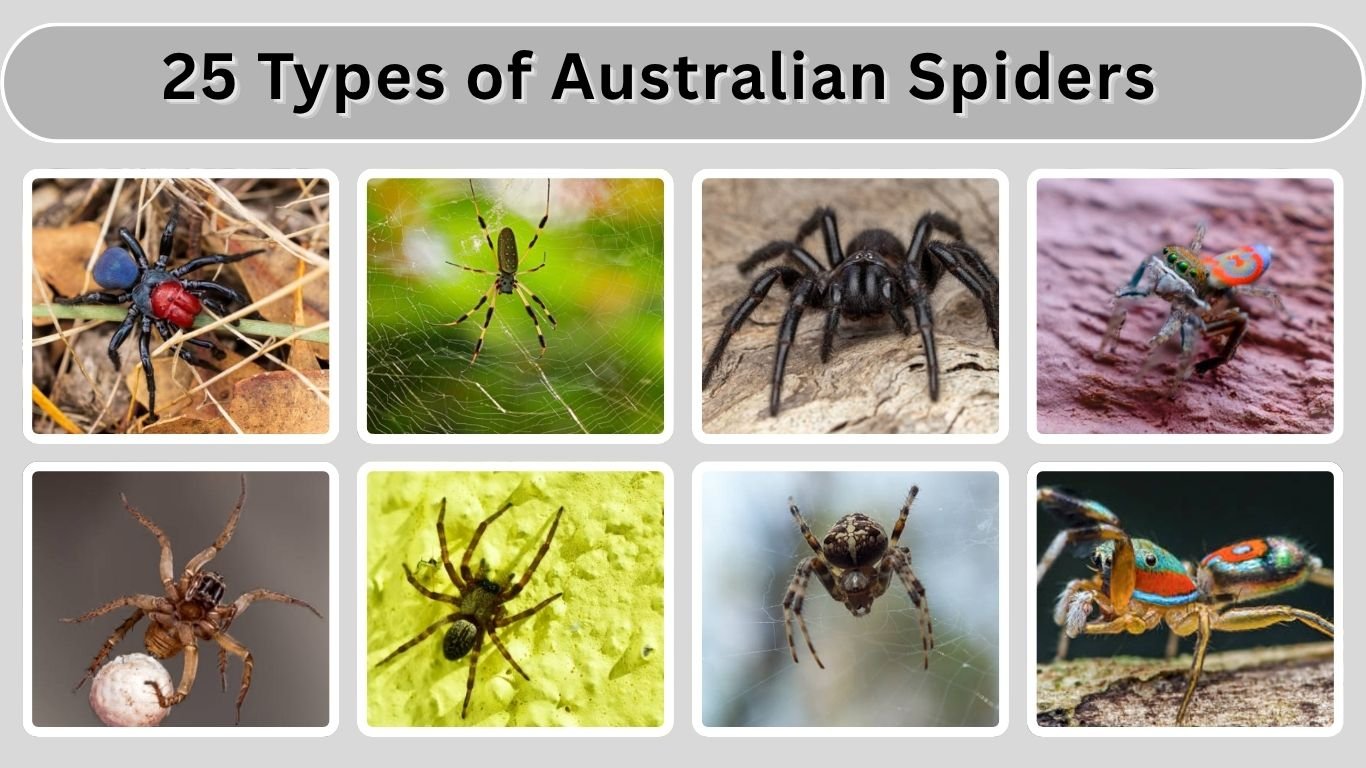
Australia is home to a diverse range of spider species, many of which are unique in appearance, behavior, and habitat. From ground-dwelling hunters to intricate web builders, these spiders play an important role in maintaining ecological balance by controlling insect populations. While some species are known for their venom, most are harmless to humans and prefer to avoid contact. Understanding these spiders helps reduce fear and promotes appreciation of their importance in Australia’s natural environment.
1. Sydney funnel-web spider
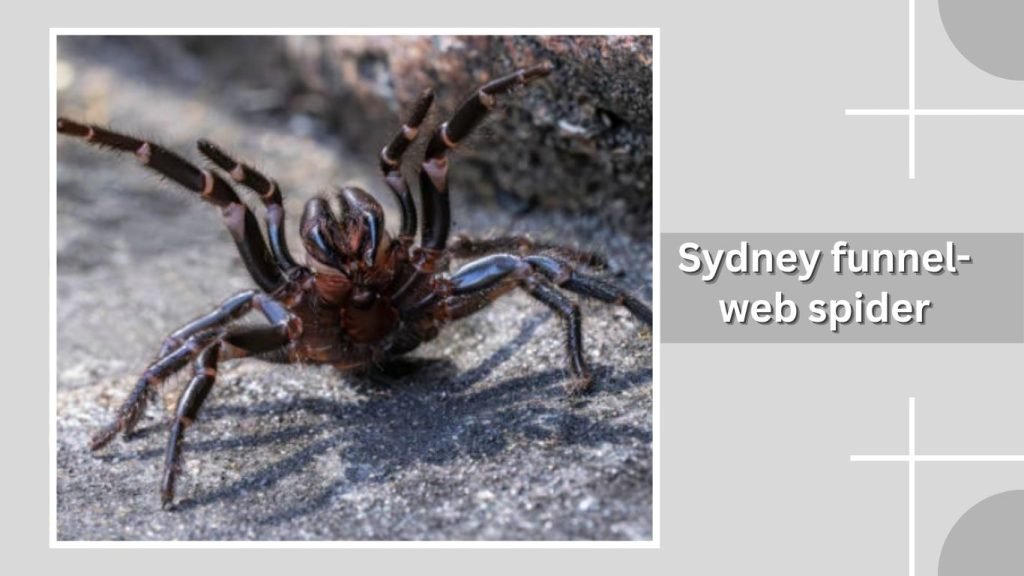
The Sydney funnel-web spider is one of the most well-known and medically significant spiders in Australia. Found mainly in eastern regions, it is recognized for its robust body, aggressive defensive behavior when threatened, and potent venom. Despite its reputation, it typically avoids human contact and prefers moist, sheltered environments such as forests, gardens, and urban backyards. Its funnel-shaped web serves both as a retreat and a trap for prey.
Identification
- Large, glossy black or dark brown body
- Stout legs with a strong, sturdy appearance
- Body length typically ranges from 1 to 5 cm
- Males are more slender and often wander during mating season
- Distinctive downward-facing fangs
Habitat
The Sydney funnel-web spider inhabits humid environments such as bushlands, forests, and suburban gardens. It builds burrows lined with silk, often under rocks, logs, or in soft soil. These burrows are equipped with funnel-shaped entrances that help capture prey and provide shelter from predators and environmental conditions.
Behaviors
This spider is primarily nocturnal and highly defensive when disturbed. It remains inside its burrow during the day and emerges at night to hunt. When threatened, it may rear up and display its fangs as a warning. Males are more active during warmer months as they search for mates.
Diet and Lifecycle
The Sydney funnel-web spider feeds on insects and occasionally small vertebrates such as frogs or lizards. It uses its venom to immobilize prey before consumption. Females live longer than males and remain in their burrows, while males often die shortly after mating. The lifecycle includes egg sacs, spiderlings, juvenile stages, and adulthood, with development influenced by environmental conditions.
2. Northern tree funnel-web spider
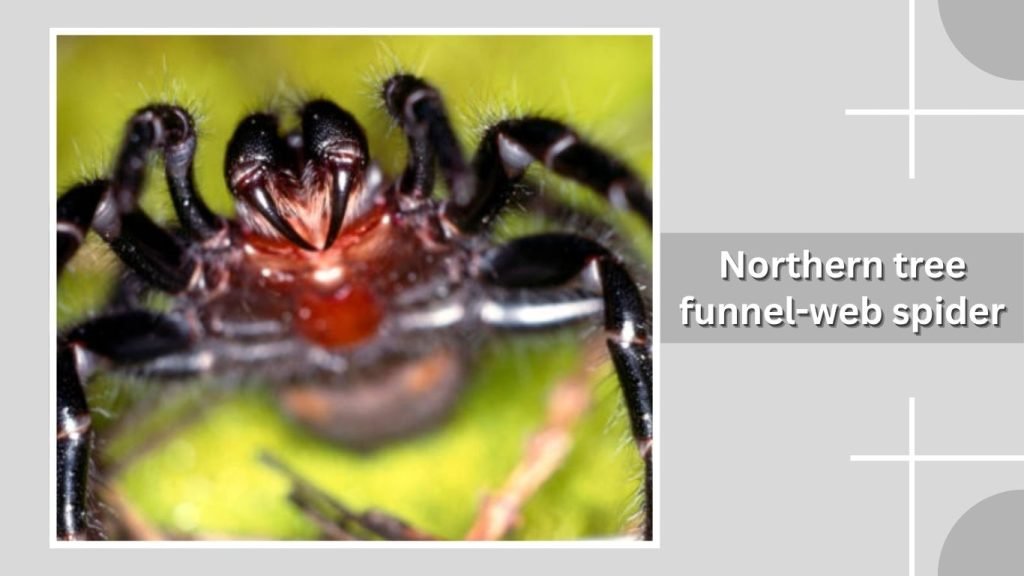
The Northern tree funnel-web spider is a large, highly venomous species native to parts of northern Australia. It is closely related to other funnel-web spiders but is distinguished by its preference for arboreal habitats. This spider is typically found in trees, logs, and elevated crevices, where it constructs silk-lined retreats rather than ground burrows.
Identification
- Dark-colored body, usually black or dark brown
- Robust build with strong legs
- Males are more slender than females
- Prominent fangs that point downward
- Body length generally ranges from medium to large for funnel-web species
Habitat
This species prefers humid forested areas, particularly in tropical and subtropical regions. Unlike ground-dwelling funnel-webs, it lives in trees, hollow branches, and bark crevices. It builds silk-lined shelters in elevated locations, often near water sources where humidity is high.
Behaviors
The Northern tree funnel-web spider is nocturnal and primarily ambushes prey. It remains hidden in its retreat during the day and becomes active at night. When threatened, it may display defensive postures similar to other funnel-web spiders, including raising its front body and exposing its fangs.
Diet and Lifecycle
It feeds mainly on insects and other small arthropods, capturing prey that comes within reach of its web or retreat. The lifecycle includes egg sacs laid in protected silk nests, followed by spiderlings that disperse after hatching. Males leave their shelters upon maturity to search for mates, while females remain in their established retreats for most of their lives.
3. Eastern mouse spider
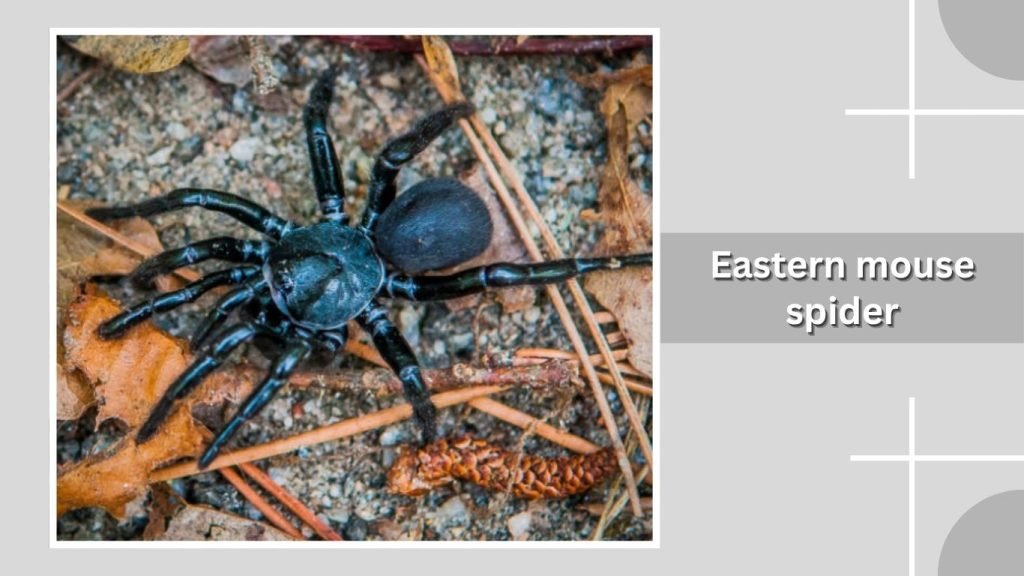
The Eastern mouse spider is a medium to large, ground-dwelling spider found across eastern Australia. It is often mistaken for the more dangerous funnel-web spiders due to its similar appearance, but it has distinct behavioral and habitat differences. This species is known for its burrowing lifestyle and its tendency to remain hidden unless disturbed.
Identification
- Shiny, dark black or bluish-black body
- Stocky build with a relatively broad abdomen
- Males often have a lighter patch on the head region
- Strong, downward-facing fangs
- Body length typically ranges from moderate to large
Habitat
Eastern mouse spiders prefer dry to moderately moist environments such as woodlands, grasslands, and suburban gardens. They construct silk-lined burrows in soil, often covered with a trapdoor or camouflaged entrance. These burrows provide protection from predators and environmental extremes.
Behaviors
This spider is primarily nocturnal and spends most of its time inside its burrow. It emerges at night to hunt or when conditions are suitable. It is generally shy but can become defensive if threatened. Males may wander during the breeding season in search of females, increasing the chances of encountering humans.
Diet and Lifecycle
The Eastern mouse spider feeds on insects and other small invertebrates. It uses its venom to subdue prey before consuming it. The lifecycle includes egg sacs produced by the female, which are kept within the burrow. Spiderlings remain under maternal protection for a period before dispersing to establish their own burrows.
4. Red-headed mouse spider
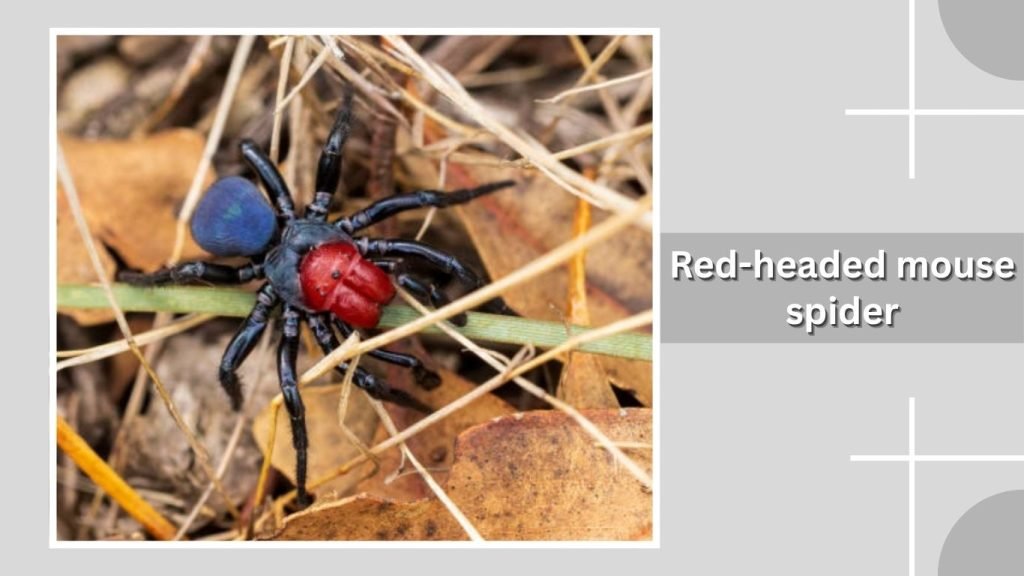
The Red-headed mouse spider is a ground-dwelling species found in parts of Australia. It is closely related to other mouse spiders and is known for its distinctive coloration, with a contrasting red or reddish-brown head region. Like other members of its group, it prefers to stay hidden in burrows and is not commonly encountered unless disturbed.
Identification
- Dark body with a reddish or reddish-brown head region
- Sturdy, compact body structure
- Strong, downward-facing fangs
- Males are typically more slender than females
- Medium to large size compared to similar ground spiders
Habitat
This species inhabits dry forests, grasslands, and shrublands. It constructs silk-lined burrows in soil, often concealed under leaf litter, rocks, or logs. The entrance may be camouflaged to protect against predators and environmental exposure.
Behaviors
The Red-headed mouse spider is mostly nocturnal and remains within its burrow during the day. It emerges at night to hunt. While generally reclusive, it can display defensive behavior if threatened. Males are more mobile during the mating season as they search for females.
Diet and Lifecycle
It primarily feeds on insects and small invertebrates. Prey is captured and immobilized using venom before consumption. The life cycle begins with eggs laid in a protected burrow, followed by spiderlings that stay with the mother for a time before dispersing to establish their own shelters.
5. Redback spider
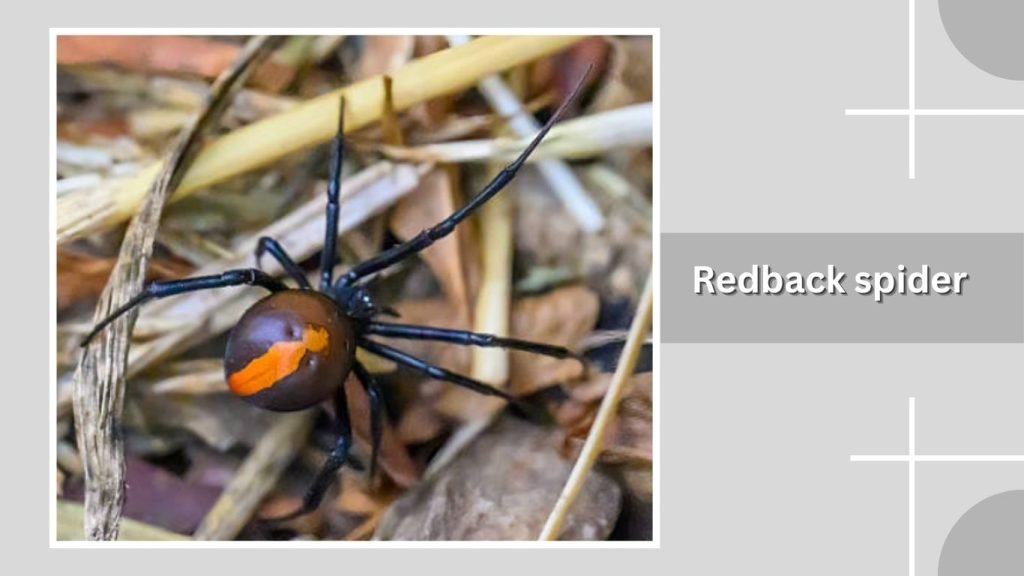
The Redback spider is one of Australia’s most recognizable spiders, known for its distinctive markings and close association with human environments. It is commonly found in urban areas, often living in sheltered locations such as sheds, garages, and outdoor furniture. Although its bite can be medically significant, the spider is generally shy and avoids confrontation.
Identification
- Black body with a prominent red or orange stripe on the abdomen (females)
- Females are larger and more noticeable than males
- Slender legs and small head region
- Males are smaller and lighter in color with less visible markings
- Size varies, with females being significantly larger than males
Habitat
Redback spiders are commonly found in dry, sheltered environments such as gardens, under rocks, inside debris, and within human-made structures. They build irregular, tangled webs close to the ground, often in corners or hidden spaces where prey is likely to pass.
Behaviors
This species is largely nocturnal and remains in its web during the day. It relies on its web to capture prey and rarely leaves its retreat. Females are more sedentary, while males may wander in search of mates. When threatened, the spider typically stays still or retreats rather than acting aggressively.
Diet and Lifecycle
Redback spiders feed on insects and small arthropods that become trapped in their webs. They immobilize prey with venom before consuming it. Females produce egg sacs that are placed within or near the web. Spiderlings emerge and disperse after hatching, with males maturing faster and living shorter lives compared to females.
6. White-tailed spider
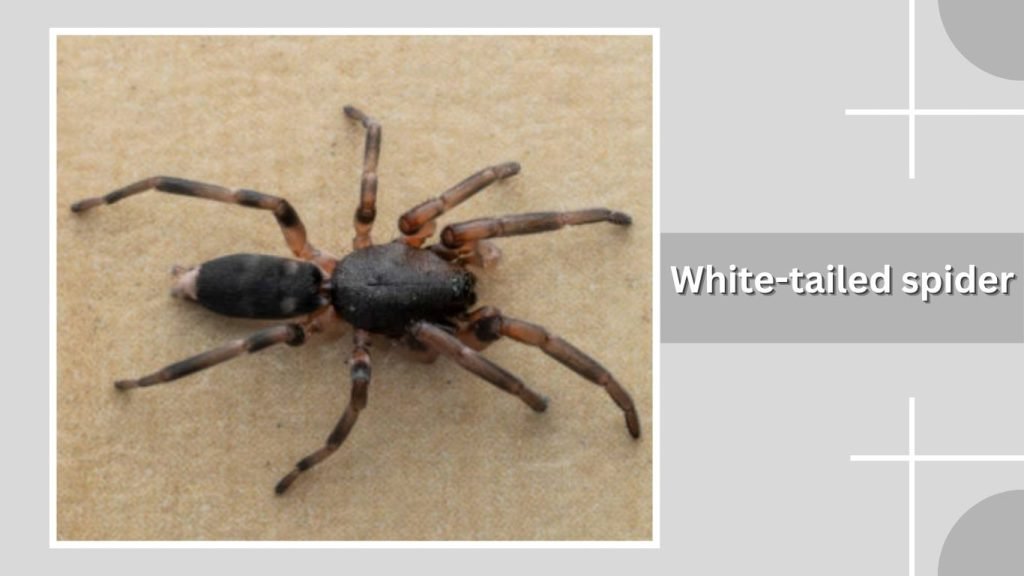
The White-tailed spider is a common Australian species often found in homes and gardens. It is known for its elongated body and the small white marking at the tip of its abdomen, which gives it its name. Although frequently misunderstood, it is generally not considered highly dangerous to humans and prefers to avoid contact.
Identification
- Dark grey to brown body with a distinct white tip on the abdomen
- Long, slender legs
- Cylindrical body shape
- Medium size, with females typically larger than males
- No prominent web; appears more like a roaming hunter
Habitat
White-tailed spiders are commonly found in both natural and urban environments. They often inhabit leaf litter, bark, garden areas, and inside houses. Indoors, they may be found in bedding, clothing, or quiet corners where they can hide during the day.
Behaviors
This species is primarily nocturnal and actively hunts at night rather than relying on webs. It is a wandering predator that searches for prey on the ground or within crevices. During the day, it hides in sheltered locations. It is generally shy but may bite if trapped or handled.
Diet and Lifecycle
The White-tailed spider feeds mainly on other spiders and small insects. It uses its speed and hunting ability rather than webs to capture prey. Females lay eggs in silken sacs and guard them until the spiderlings hatch. The young disperse shortly after emerging and grow through successive molts into adulthood.
7. Huntsman spider
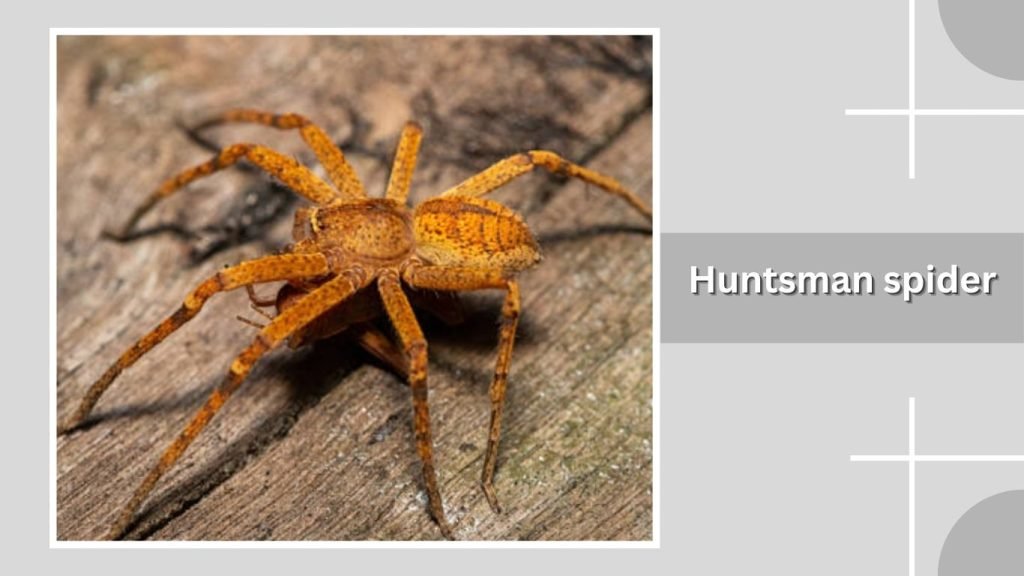
The Huntsman spider is a large, fast-moving spider commonly found across Australia. It is well known for its wide, flattened body and long legs that extend outward, giving it a crab-like appearance. Despite its intimidating size, it is generally harmless to humans and plays an important role in controlling insect populations.
Identification
- Large, flattened body with legs that extend sideways
- Brown, grey, or tan coloration with subtle markings
- Leg span can be very wide, often much larger than the body
- Hairy appearance with a somewhat crab-like posture
- Eyes arranged in two rows on the front of the head
Habitat
Huntsman spiders are found in a wide range of environments including forests, woodlands, and urban areas. They often live under loose bark, inside cracks, behind rocks, or on walls and ceilings in homes. They do not build webs for trapping prey but instead use their surroundings as shelter.
Behaviors
This species is primarily nocturnal and highly active at night. It is known for its speed and ability to run sideways. Huntsman spiders are generally shy and prefer to flee rather than confront threats. During the day, they hide in tight crevices or flat surfaces where they can remain concealed.
Diet and Lifecycle
Huntsman spiders feed on insects and other small arthropods, which they hunt and capture directly rather than using webs. Females produce egg sacs that they often guard until the spiderlings hatch. The young remain in the vicinity for a short time before dispersing to find their own shelters and food sources.
8. Golden orb-weaver spider
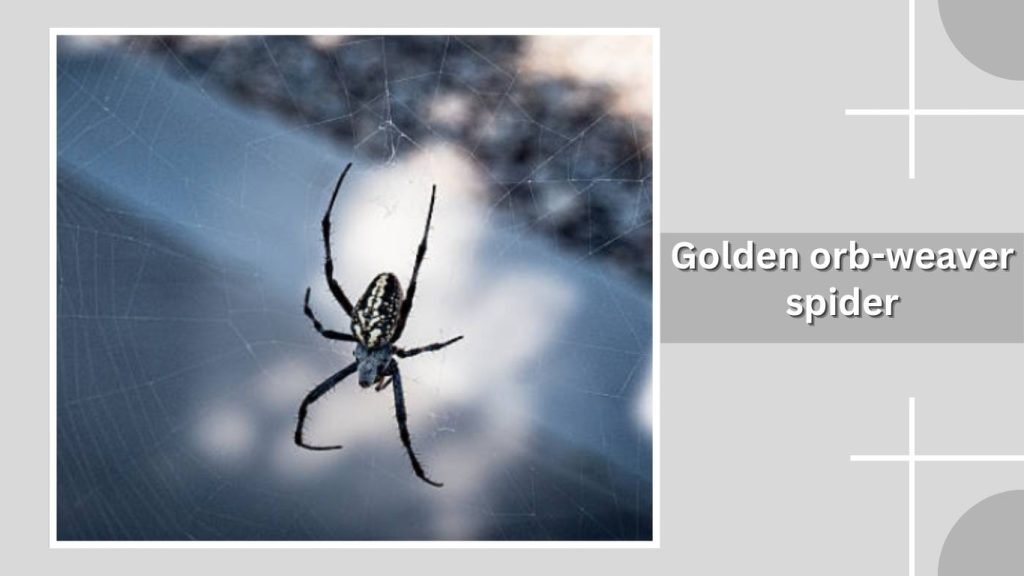
The Golden orb-weaver spider is a large and visually striking spider commonly found in Australia. It is best known for its strong, golden-colored silk and large, circular webs that can span several meters. Despite its size, it is harmless to humans and is admired for its impressive web-building abilities.
Identification
- Large body with long, slender legs
- Females are significantly larger than males
- Yellow, brown, or silver coloration with patterned abdomen
- Distinctive golden silk in its web
- Legs often have banded or tufted appearance
Habitat
Golden orb-weaver spiders are typically found in warm, humid environments such as forests, gardens, and near water sources. They build large orb-shaped webs between trees, shrubs, or man-made structures where flying insects are abundant.
Behaviors
This species is diurnal and spends much of its time sitting in the center or edge of its web. It remains relatively still, waiting for prey to become trapped. When disturbed, it may vibrate its web to confuse predators or drop quickly to the ground as an escape tactic.
Diet and Lifecycle
Golden orb-weavers feed mainly on flying insects such as flies, moths, and beetles that get caught in their webs. The female lays egg sacs that are carefully placed within or near the web. Spiderlings hatch and disperse by ballooning on silk threads carried by the wind. Males are much smaller and typically live shorter lives after mating.
9. Garden orb-weaver spider
The Garden orb-weaver spider is a common and beneficial spider found throughout Australia, especially in gardens and natural vegetation. It is known for its classic circular web and its role in controlling insect populations. Despite its size, it is harmless to humans and typically avoids contact.
Identification
- Medium to large body with a rounded abdomen
- Coloration ranges from brown, orange, to patterned shades
- Long legs often banded with darker markings
- Distinct circular orb-shaped web
- Females are larger and more robust than males
Habitat
Garden orb-weavers are commonly found in gardens, forests, parks, and shrublands. They build their webs between plants, trees, fences, or outdoor structures where flying insects are abundant. The web is usually positioned in open spaces to maximize prey capture.
Behaviors
This species is mainly nocturnal and constructs or repairs its web at night. During the day, it often rests in a hidden retreat near the web. When prey is caught, the spider quickly rushes out to wrap and immobilize it. If disturbed, it may retreat or drop from the web as a defensive response.
Diet and Lifecycle
Garden orb-weavers feed primarily on flying insects such as moths, flies, and mosquitoes. Females lay egg sacs that are often hidden in foliage or attached near the web. Spiderlings emerge and disperse using silk threads carried by the wind. Males are smaller, shorter-lived, and spend much of their time searching for mates.
10. St Andrew’s cross spider
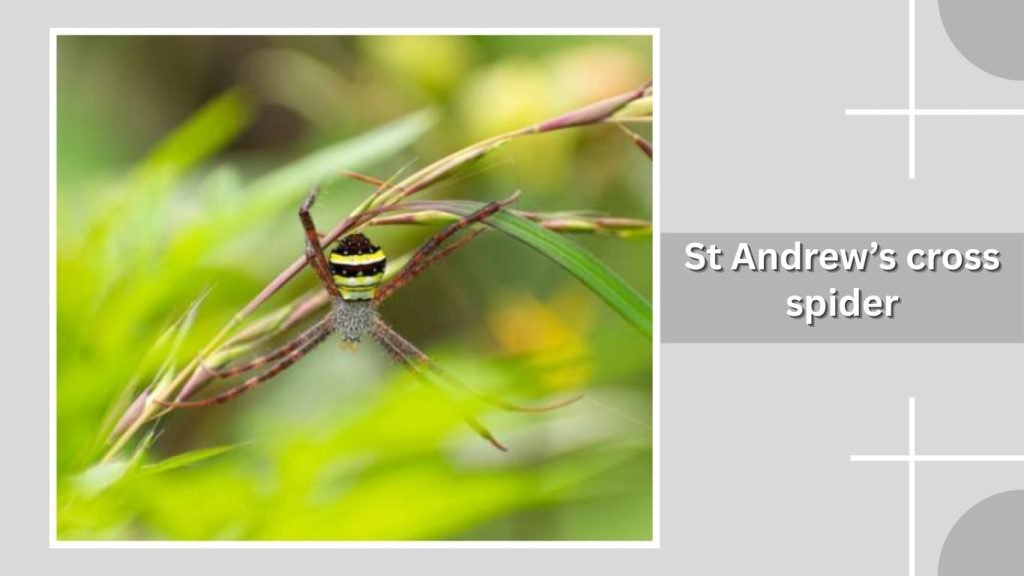
The St Andrew’s cross spider is a distinctive orb-weaving spider found in Australia, easily recognized by the unique zigzag patterns it forms in its web. These decorative silk bands, known as stabilimenta, often resemble the shape of a St Andrew’s cross, giving the spider its common name. It is generally harmless to humans and plays an important ecological role in controlling insect populations.
Identification
- Medium to large orb-weaving spider
- Abdomen often features bold black, yellow, or white markings
- Long legs with banded coloration
- Web includes a prominent zigzag “cross” pattern of silk
- Females are larger and more brightly patterned than males
Habitat
This species is commonly found in gardens, forests, grasslands, and urban areas. It builds large orb webs between shrubs, trees, or man-made structures. The web is typically positioned in open spaces where flying insects are likely to be trapped.
Behaviors
St Andrew’s cross spiders are mostly diurnal and remain in the center of their webs during the day. The zigzag stabilimenta may serve multiple purposes, such as attracting prey, deterring predators, or strengthening the web. When disturbed, the spider may shake its web or retreat to a hidden corner.
Diet and Lifecycle
The spider feeds on flying insects such as flies, moths, and small beetles that become entangled in its web. Females lay egg sacs that are attached to vegetation or hidden near the web. After hatching, spiderlings disperse by ballooning on silk threads. Males are smaller, less conspicuous, and primarily focused on locating females for mating.
11. Black house spider
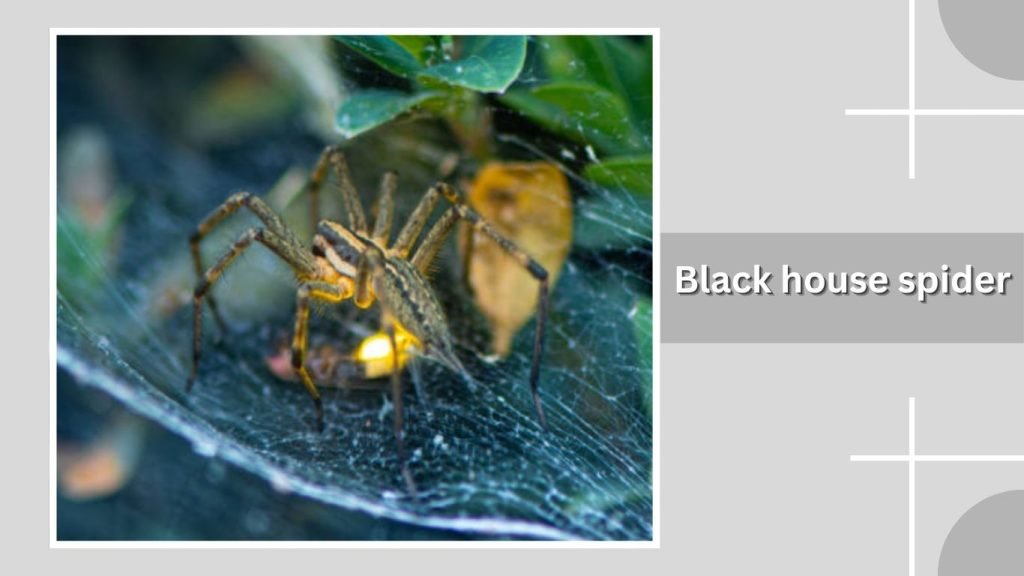
The Black house spider is a common species found throughout Australia, often living in and around human dwellings. It is known for building messy, lace-like webs in quiet, undisturbed areas. While it may appear intimidating due to its dark coloration, it is generally not aggressive and poses little risk to humans.
Identification
- Dark brown to black body with a velvety appearance
- Stocky body with relatively short legs
- Females are larger and more robust than males
- Web is irregular and funnel-like rather than orb-shaped
- Size is small to medium compared to other house spiders
Habitat
Black house spiders are commonly found in window frames, doorways, corners of buildings, sheds, and fences. Outdoors, they may inhabit bark crevices, rocks, and other sheltered locations. Their webs are often built in protected areas where insects are likely to pass.
Behaviors
This species is mainly nocturnal and remains hidden in its web during the day. It waits for prey to become trapped in its web and quickly responds to vibrations. When disturbed, it may retreat into its funnel retreat rather than confront threats directly.
Diet and Lifecycle
The Black house spider feeds on insects such as flies, moths, and mosquitoes that become entangled in its web. Females produce multiple egg sacs over their lifetime, placing them within the web or nearby sheltered spots. Spiderlings emerge and disperse after hatching, while males typically roam in search of mates and have shorter lifespans.
12. Grey house spider
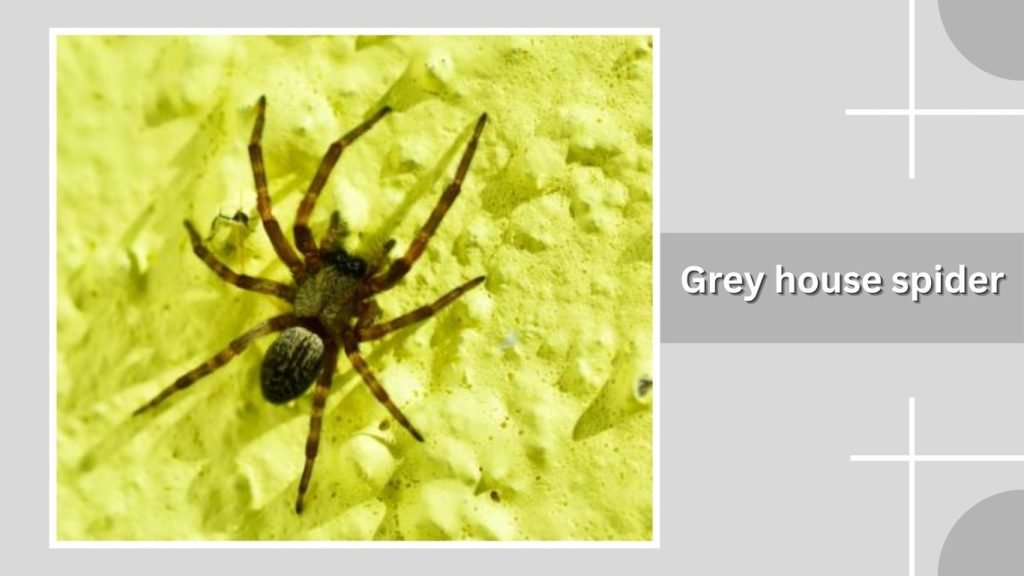
The Grey house spider is a common Australian species often found in and around homes, similar to the black house spider but typically lighter in color. It builds irregular, messy webs in quiet, sheltered areas and is generally harmless to humans, preferring to avoid interaction.
Identification
- Grey to brownish body with a slightly mottled appearance
- Medium-sized body with relatively short legs
- Females are larger and more robust than males
- Web is irregular and funnel-shaped with a retreat area
- Less glossy appearance compared to darker house spiders
Habitat
Grey house spiders are commonly found in urban environments, including walls, ceilings, window frames, sheds, and fences. Outdoors, they may inhabit bark, rocks, and crevices. They prefer dry, sheltered locations where their webs can remain undisturbed.
Behaviors
This species is primarily nocturnal and spends most of the day hidden within its funnel-like retreat. It waits for prey to land on or become trapped in its web. When disturbed, it quickly retreats into its hiding place rather than acting aggressively.
Diet and Lifecycle
Grey house spiders feed on insects such as flies, moths, and small flying arthropods that become caught in their webs. Females produce egg sacs that are placed within or near the web and may guard them. Spiderlings hatch and disperse after emerging, while males roam in search of mates and typically have shorter lifespans than females.
13. Wolf spider
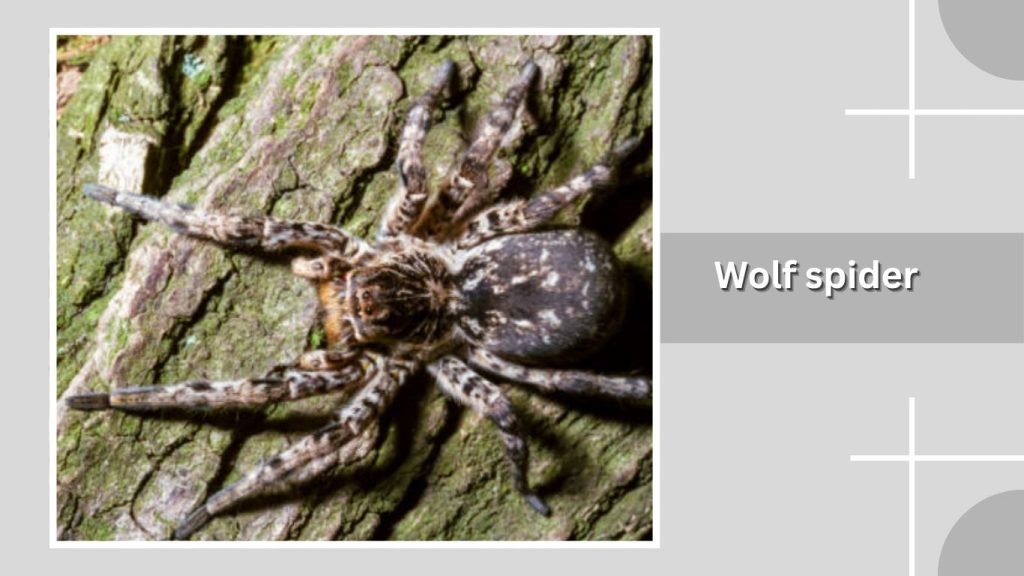
The Wolf spider is a widespread and active hunting spider found throughout Australia. Unlike many other spiders, it does not rely on webs to capture prey. Instead, it is known for its speed, agility, and excellent vision, which it uses to chase and ambush prey on the ground.
Identification
- Medium to large, robust body with strong legs
- Brown, grey, or black coloration with subtle patterns
- Eyes arranged in three distinct rows, with prominent forward-facing eyes
- Hairy appearance with a stocky build
- Females are larger than males and often carry egg sacs attached to their abdomen
Habitat
Wolf spiders are commonly found in grasslands, forests, gardens, and suburban areas. They live in burrows in the ground or hide under rocks, logs, and leaf litter. Some species may also be found wandering across open ground, especially at night.
Behaviors
This species is primarily nocturnal and actively hunts at night. It relies on its keen eyesight to locate prey and does not spin capture webs. Females are known to carry their egg sacs attached to their spinnerets and later carry spiderlings on their backs after hatching.
Diet and Lifecycle
Wolf spiders feed on a variety of insects and small invertebrates, which they capture by chasing or ambushing. The lifecycle includes egg sacs guarded by the female, followed by spiderlings that remain with the mother for a period before dispersing. Males typically roam in search of females and have shorter lifespans compared to females.
14. Trapdoor spider
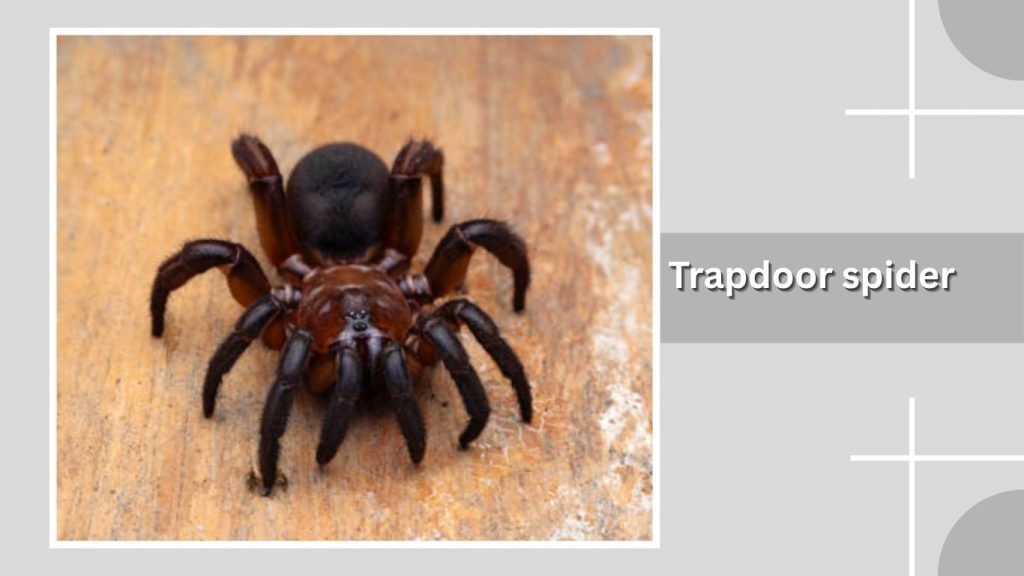
The Trapdoor spider is a burrowing species found across Australia, known for its unique method of hiding beneath a camouflaged “trapdoor” made of silk, soil, and debris. It is a sit-and-wait predator that ambushes prey from within its burrow. Although it may appear intimidating, it is generally not aggressive toward humans.
Identification
- Stocky, dark-colored body (brown to black)
- Robust legs with a heavy build
- Short, thick fangs adapted for grabbing prey
- Body size varies from small to relatively large depending on species
- Often not seen fully due to its burrow-dwelling nature
Habitat
Trapdoor spiders live in burrows dug into soil, often lined with silk for reinforcement. These burrows are typically found in forests, grasslands, and gardens. The entrance is covered with a hinged trapdoor that blends into the surrounding environment, making it difficult to detect.
Behaviors
This species is mostly nocturnal and spends the majority of its life inside its burrow. It waits just beneath the trapdoor, sensing vibrations from passing prey. When an insect comes near, it quickly lunges out to capture it. The trapdoor also helps protect the spider from predators and environmental conditions.
Diet and Lifecycle
Trapdoor spiders feed on insects and other small invertebrates that pass near their burrow entrance. The female remains in the burrow for most of her life, while males leave their burrows upon maturity to search for mates. Females lay eggs inside the burrow, and spiderlings stay with the mother for a period before dispersing to create their own burrows.
15. Net-casting spider
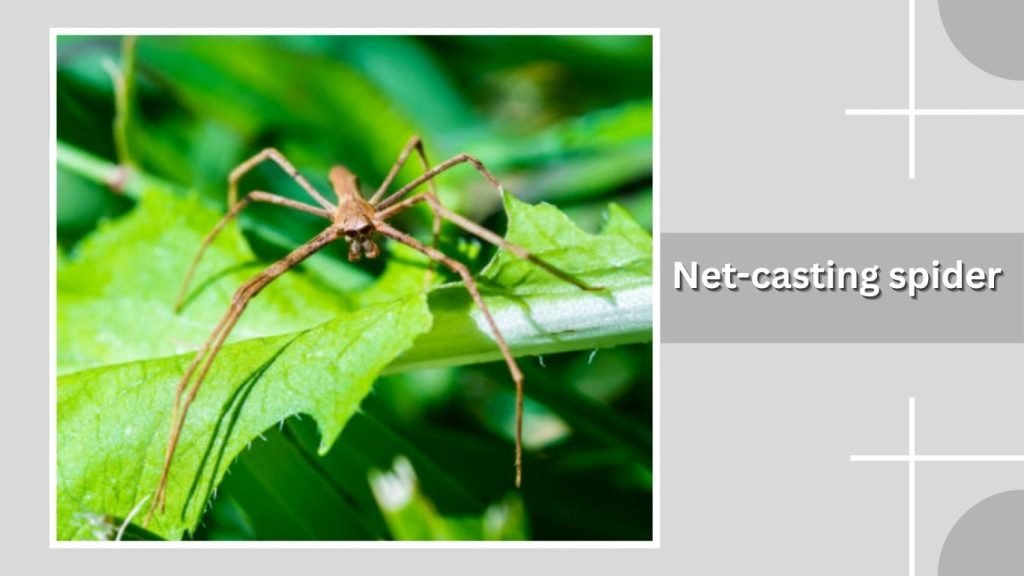
The Net-casting spider is a unique and fascinating species found in Australia, known for its extraordinary hunting technique. Instead of using a traditional web, it creates a small, stretchy silk net that it throws over prey. This specialized behavior makes it one of the most distinctive spiders in the region.
Identification
- Medium-sized spider with a slender body
- Typically brown or grey with subtle markings
- Long legs adapted for holding and casting its silk net
- Large forward-facing eyes for improved night vision
- Body shape suited for a stationary ambush lifestyle
Habitat
Net-casting spiders are usually found in forested and bushland areas where there is enough cover and humidity. They often position themselves on tree trunks, branches, or leaf litter, where they can hang suspended while waiting for prey. They prefer sheltered environments that support their ambush strategy.
Behaviors
This species is nocturnal and relies heavily on its specialized hunting method. It stretches a small sheet of silk between its front legs and waits motionless for prey to pass beneath it. When a target is detected, it quickly expands and casts the net to trap the prey. The spider then wraps and immobilizes the victim before feeding.
Diet and Lifecycle
Net-casting spiders feed on insects that walk or fly within range, such as moths and beetles. Females lay egg sacs in protected areas, often near their hunting site. Spiderlings hatch and disperse after emergence. Males are typically smaller and actively search for females during the breeding season, while females remain in their hunting positions for extended periods.
16. Crab spider
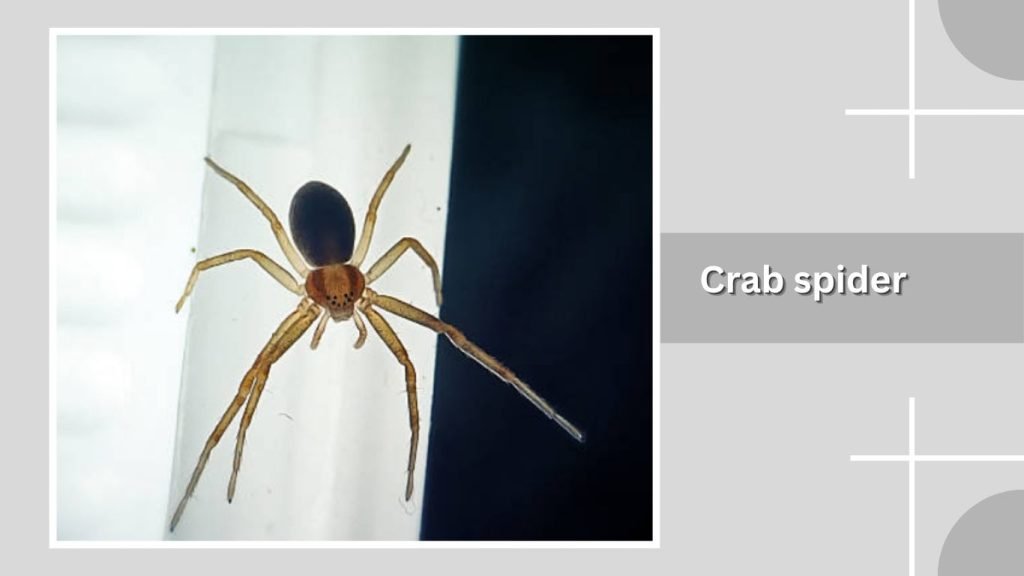
The Crab spider is a small but highly adaptable spider found throughout Australia. It gets its name from its crab-like appearance and ability to move sideways and backward. These spiders are commonly seen on flowers, where they ambush pollinating insects without the need for a web.
Identification
- Small, compact body with a flattened appearance
- Legs splayed outward, resembling a crab stance
- Coloration varies (white, yellow, green, or brown) depending on species and environment
- Front legs are often longer and stronger than the others
- Eyes arranged in a compact cluster on the head
Habitat
Crab spiders are commonly found on flowers, leaves, shrubs, and grasses in gardens, forests, and grasslands. Many species are well-camouflaged, blending in with the color of the flowers they inhabit. They do not build webs for capturing prey but instead rely on concealment.
Behaviors
This species is a sit-and-wait ambush predator. It remains motionless on flowers or foliage, waiting for insects such as bees, butterflies, or flies to approach. When prey comes within range, it quickly grabs and immobilizes it using its strong front legs. Crab spiders can also slowly change their position to maintain optimal camouflage.
Diet and Lifecycle
Crab spiders feed primarily on insects that visit flowers for nectar or pollen. The female lays eggs in a silken sac, often hidden within foliage, and guards them until they hatch. Spiderlings disperse after emerging and go through several growth stages before reaching adulthood. Males are typically smaller and roam in search of mates.
17. Nursery web spider
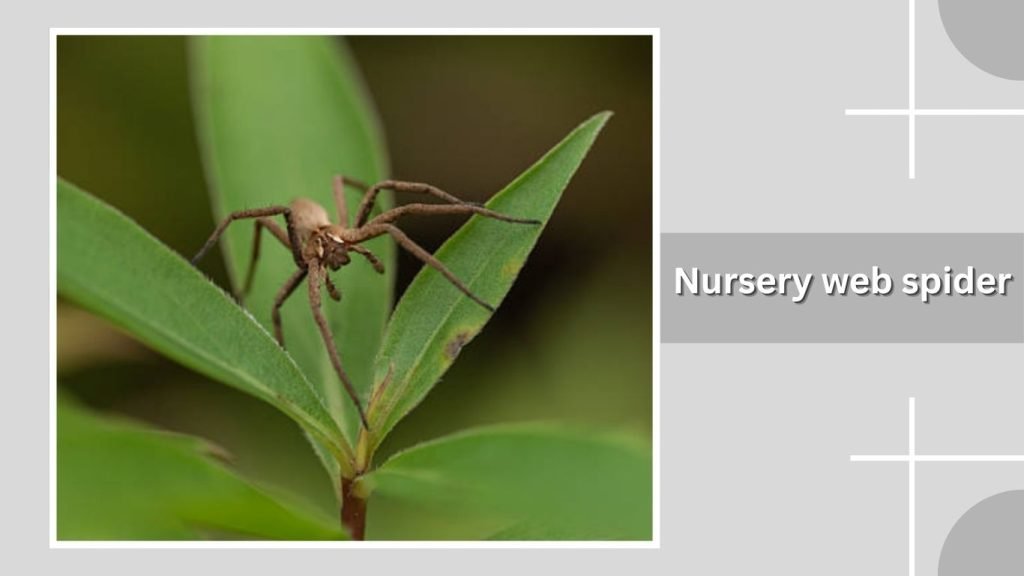
The Nursery web spider is a common Australian species known for its unique maternal behavior, where the female builds a protective silk “nursery” for her eggs and young. These spiders are active hunters and are often found near water or in vegetation, where they search for prey rather than relying on webs to capture it.
Identification
- Medium-sized spider with a slender, elongated body
- Brown or grey coloration with subtle striping or markings
- Long legs adapted for active hunting
- Females carry egg sacs with their mouthparts
- Eyes arranged in two rows, giving good forward vision
Habitat
Nursery web spiders are typically found in gardens, forests, grasslands, and near water sources such as streams and ponds. They often inhabit vegetation, shrubs, and low plants where prey is abundant. They do not build capture webs but may create temporary silk structures for shelter.
Behaviors
This species is a wandering hunter and does not rely on webs to catch prey. Females exhibit strong maternal care by carrying the egg sac with their mouthparts until hatching. Before the eggs hatch, the female constructs a protective silk nursery web where she places the egg sac and guards the emerging spiderlings.
Diet and Lifecycle
Nursery web spiders feed on insects and other small arthropods, which they actively hunt and capture using speed and agility. After hatching, spiderlings remain in the nursery web for a short period under the protection of the mother. Once ready, they disperse to begin independent lives. Males typically roam in search of mates and have shorter lifespans than females.
18. Jumping spider
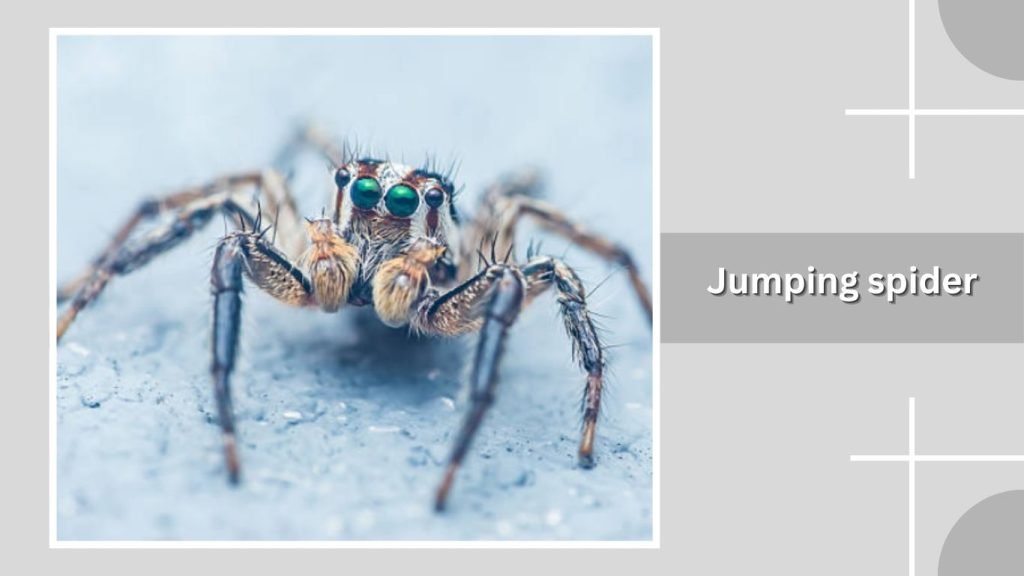
The Jumping spider is a small but highly intelligent and agile spider found throughout Australia. It is best known for its excellent vision and ability to jump significant distances relative to its body size. These spiders are active hunters and do not rely on webs to capture prey.
Identification
- Small, compact body with short, stout legs
- Large, forward-facing eyes that provide excellent vision
- Often brightly colored or patterned depending on the species
- Hairy appearance with a distinctive “face-like” front
- Capable of precise, controlled jumping movements
Habitat
Jumping spiders are commonly found in gardens, forests, grasslands, and urban environments. They inhabit plants, walls, fences, and leaf litter. They may create small silk shelters where they rest at night or during unfavorable conditions.
Behaviors
This species is diurnal and highly active during the day. It relies on its sharp vision to locate and stalk prey before making a quick, accurate jump to capture it. Jumping spiders are curious and may observe movement in their surroundings. They use silk as a safety line when jumping to prevent falls.
Diet and Lifecycle
Jumping spiders feed mainly on small insects and other arthropods. They actively hunt rather than using webs to trap prey. Females lay eggs in a silken sac and often guard them until they hatch. Spiderlings emerge and disperse shortly after. Males perform visual courtship displays to attract females, and their lifespans are typically shorter than those of females.
19. Sac spider
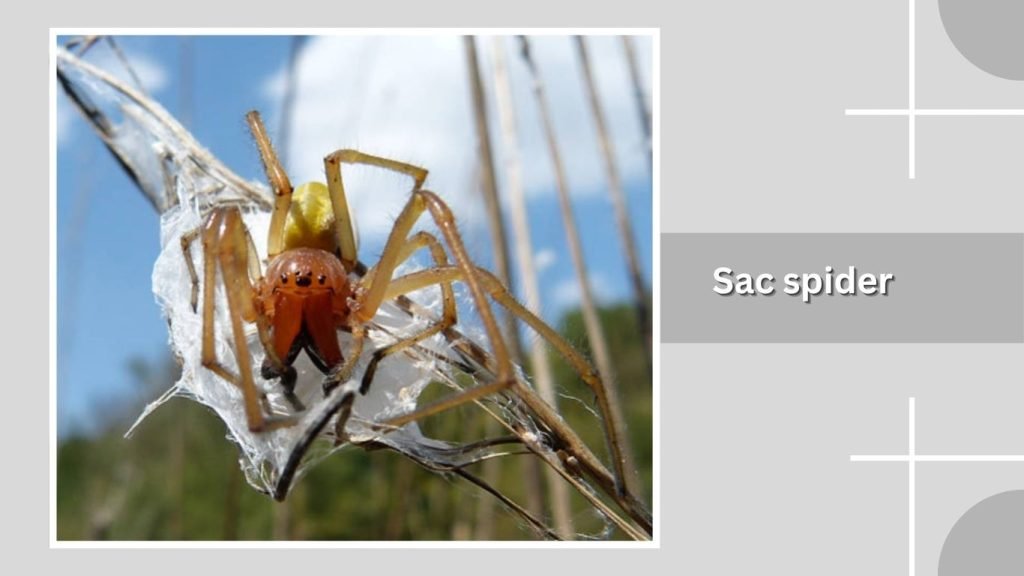
The Sac spider is a common group of spiders found across Australia, known for creating small silk sacs where they rest rather than building webs for capturing prey. These spiders are active hunters and are often encountered in homes, gardens, and outdoor vegetation. They are generally shy and avoid human interaction.
Identification
- Small to medium-sized spider with a pale yellow, beige, or light brown body
- Elongated abdomen with relatively long legs
- Lacks prominent markings compared to other spiders
- No large orb web; instead uses small silk retreats
- Moves quickly and appears agile when disturbed
Habitat
Sac spiders are commonly found in homes, under furniture, along walls, in corners, and in gardens among leaves and plant stems. They build small silk sacs in sheltered locations where they rest during the day. Outdoors, they may inhabit foliage, bark, and debris.
Behaviors
This species is primarily nocturnal and actively hunts at night. During the day, it remains hidden inside its silk sac. It does not rely on a web to catch prey but instead roams in search of food. If threatened, it may run quickly to escape rather than confront danger.
Diet and Lifecycle
Sac spiders feed on small insects and other arthropods that they capture through active hunting. Females lay egg sacs inside their silk retreats and may guard them until the spiderlings hatch. After emerging, the young disperse to find their own shelters. Males typically wander in search of mates and have shorter lifespans compared to females.
20. Australian tarantula
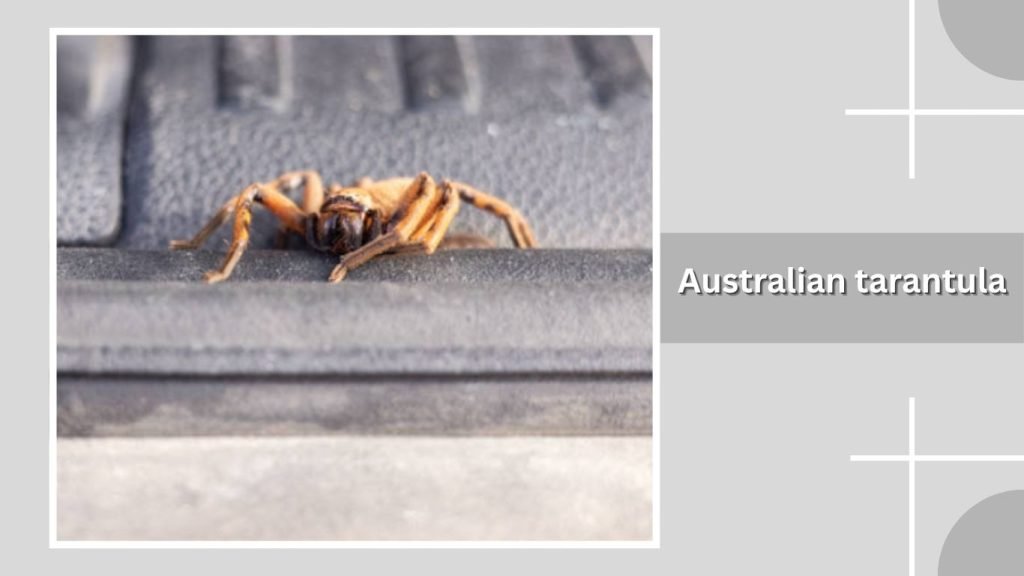
The Australian tarantula is one of the largest spiders found in Australia, known for its impressive size and powerful appearance. Despite its intimidating look, it is generally not considered highly dangerous to humans, though its bite can be painful. These spiders are secretive and typically avoid contact with people.
Identification
- Large, heavy-bodied spider with thick legs
- Covered in dense hair, giving a furry appearance
- Dark brown to black coloration
- Leg span can be quite wide compared to body size
- Prominent fangs visible when threatened
Habitat
Australian tarantulas are found in forests, woodlands, and tropical or subtropical regions. They live in burrows in the ground, often lined with silk for stability. These burrows are usually hidden under logs, rocks, or leaf litter to provide protection and humidity.
Behaviors
This species is primarily nocturnal and spends most of its time inside its burrow. It emerges at night to hunt. Tarantulas are ambush predators and rely on vibration to detect nearby prey. When threatened, they may raise their front legs and display their fangs as a defensive warning.
Diet and Lifecycle
Australian tarantulas feed on insects, small reptiles, frogs, and other invertebrates. They capture prey using their strong fangs and inject venom to immobilize it. Females lay eggs inside the burrow and guard them until hatching. Spiderlings remain in the burrow for some time before dispersing. Females live longer than males, with males often dying shortly after reaching maturity and mating.
21. Peacock spider
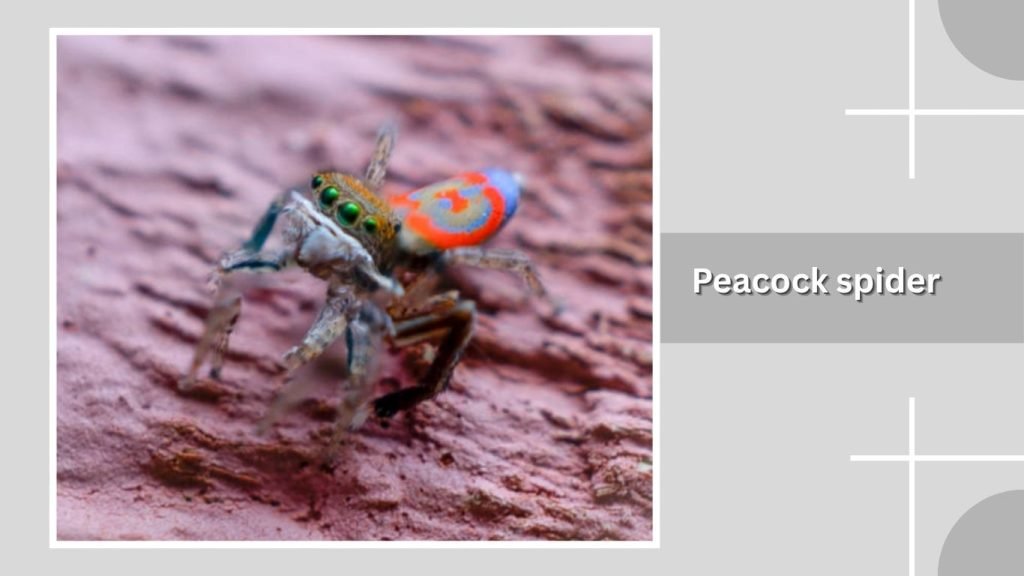
The Peacock spider is a small but brightly colored spider native to Australia, famous for its vibrant patterns and elaborate courtship displays. Despite its striking appearance, it is harmless to humans and is one of the most visually captivating spider species.
Identification
- Very small body size (only a few millimeters long)
- Bright, iridescent coloration, especially in males
- Distinctive abdominal flaps in males used during displays
- Large forward-facing eyes typical of jumping spiders
- Compact body with short, strong legs
Habitat
Peacock spiders are commonly found in leaf litter, low vegetation, grasslands, and shrublands across Australia. They prefer dry environments and are often seen on the ground or on plants where they hunt and display their behaviors. They do not build webs for catching prey.
Behaviors
This species is diurnal and highly active during the day. Males are known for their elaborate courtship dances, where they raise and fan their colorful abdominal flaps while performing rhythmic movements to attract females. They rely on excellent vision to navigate, hunt, and communicate visually. Like other jumping spiders, they can leap to capture prey.
Diet and Lifecycle
Peacock spiders feed mainly on small insects and other tiny arthropods. They actively hunt rather than using webs. Females lay eggs in a small silk retreat and guard them until hatching. Spiderlings disperse after emerging. Males typically have shorter lifespans as they invest much of their energy in reproduction and courtship displays.
22. Bolas spider
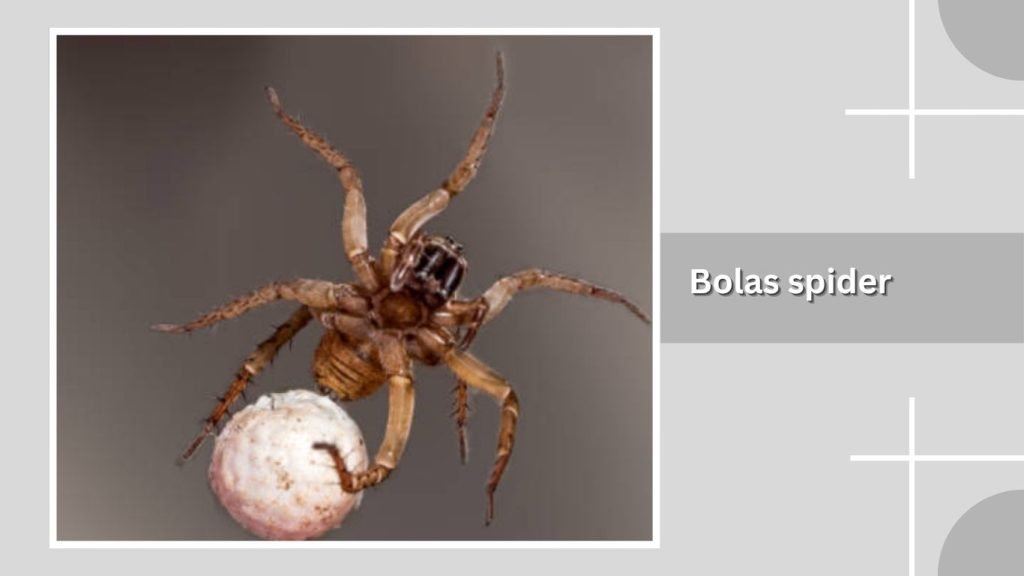
The Bolas spider is a unique Australian spider known for its unusual hunting technique, where it uses a sticky silk “bola” to capture flying prey. Instead of building a traditional web, it relies on chemical mimicry and precise swinging of its silk line to catch moths, making it one of the most specialized hunters among spiders.
Identification
- Medium-sized spider with a stout body
- Coloration typically brown or grey with camouflage patterns
- Females are larger and more robust than males
- Rounded abdomen and relatively short legs
- Does not have a visible web structure like orb-weavers
Habitat
Bolas spiders are usually found in forests, woodlands, and areas with dense vegetation. They often rest on branches or leaves where moths are likely to pass by. Their camouflage helps them blend into their surroundings while they wait for prey.
Behaviors
This species is primarily nocturnal. Instead of spinning a web, the female produces a single silk line with a sticky droplet at the end, which she swings like a bolas weapon. She also releases pheromones that mimic female moths to attract male moths within striking distance. When prey approaches, she swings the bolas to snare it.
Diet and Lifecycle
Bolas spiders feed mainly on moths, particularly male moths attracted by the spider’s chemical mimicry. Females lay egg sacs in sheltered locations, often within vegetation. Spiderlings hatch and disperse after emerging. Males are much smaller and do not use bolas; they primarily focus on locating females for mating.
23. Spiny orb-weaver spider
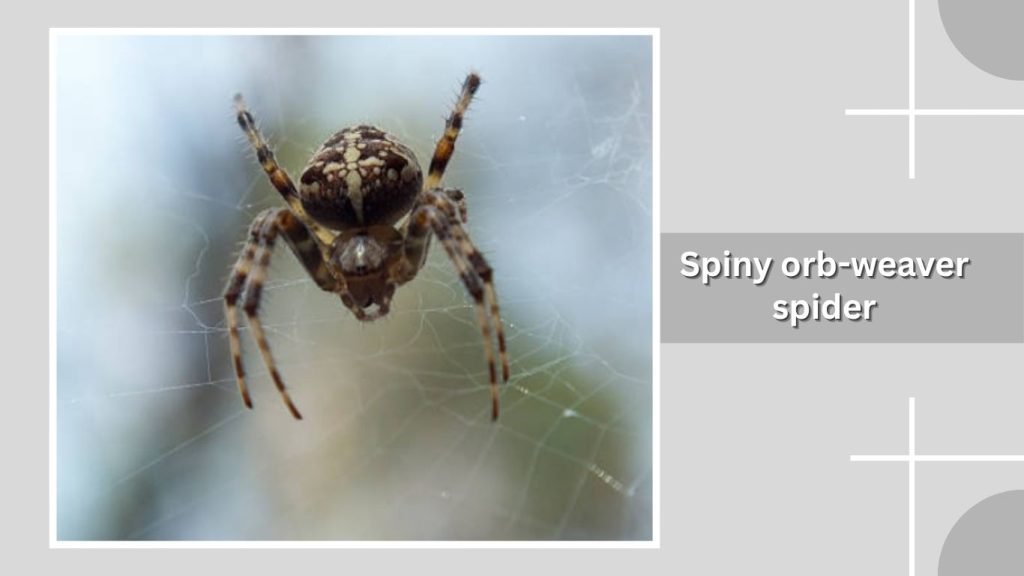
The Spiny orb-weaver spider is a distinctive Australian species known for its hardened, spiky abdomen and brightly patterned body. It builds intricate orb-shaped webs and is commonly found in gardens and forests. Despite its striking appearance, it is harmless to humans and helps control insect populations.
Identification
- Small to medium-sized spider with a very spiny, hardened abdomen
- Bright coloration, often white, red, orange, or black with patterns
- Six prominent spines (varies by species) protruding from the abdomen
- Short legs compared to body size
- Females are larger and more visually striking than males
Habitat
Spiny orb-weavers are typically found in gardens, forests, and shrublands. They build orb-shaped webs between plants, trees, or fences. The web is usually placed in open areas where flying insects are likely to become trapped.
Behaviors
This species is mainly active during the night when it builds or repairs its web. During the day, it often rests nearby or hides within foliage. The spiny appearance may serve as a defense mechanism against predators. When disturbed, it may remain still or retreat rather than engage.
Diet and Lifecycle
Spiny orb-weavers feed on flying insects such as flies, moths, and small beetles that are caught in their webs. Females produce egg sacs that are often hidden within vegetation or near the web. Spiderlings hatch and disperse using silk threads carried by the wind. Males are smaller, less conspicuous, and typically live shorter lives focused on reproduction.
24. Bark spider
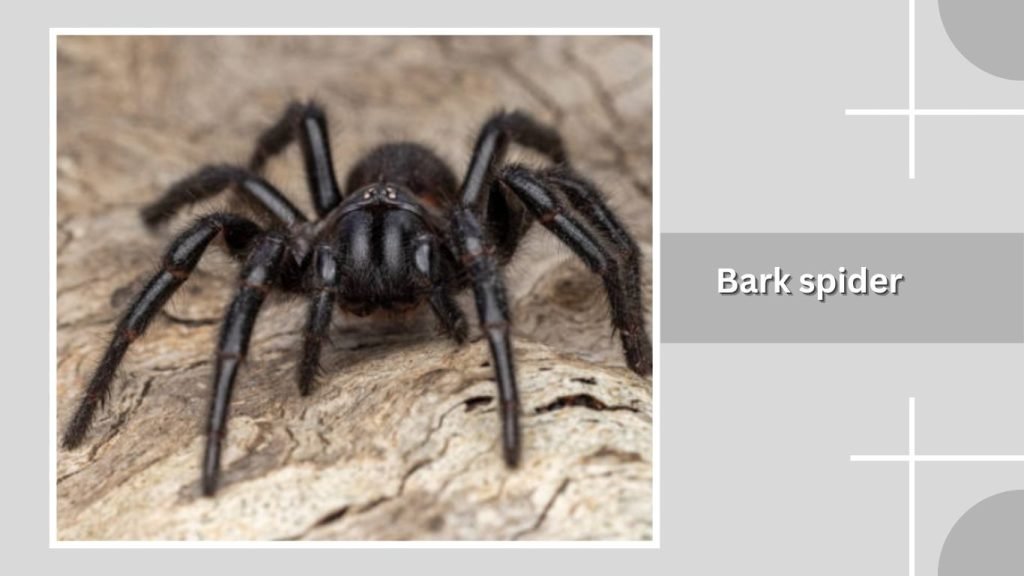
The Bark spider is a camouflaged species found in Australia, known for blending seamlessly with tree bark. It builds webs on tree trunks and branches, using its coloration and texture to remain hidden from both predators and prey. It is generally harmless to humans and plays a role in controlling insect populations in forested environments.
Identification
- Brown or grey body that closely resembles tree bark
- Flattened body with subtle patterns for camouflage
- Medium-sized with relatively long, slender legs
- Legs may have slight banding or mottling
- Often difficult to spot due to effective camouflage
Habitat
Bark spiders are commonly found on tree trunks, branches, and woody vegetation in forests, woodlands, and gardens. They prefer areas where their bark-like appearance allows them to remain concealed. Their webs are typically built against tree surfaces, blending into the surroundings.
Behaviors
This species is primarily nocturnal. During the day, it remains motionless on bark, relying on camouflage for protection. At night, it becomes more active, maintaining or repairing its web and waiting for prey. It remains still when threatened, using its appearance as a defense mechanism.
Diet and Lifecycle
Bark spiders feed on insects such as flies, moths, and beetles that become trapped in their webs. Females lay egg sacs in protected areas on or near tree bark. Spiderlings hatch and disperse after emerging. Males are smaller and roam in search of females during the breeding season, while females tend to stay in a fixed location near their webs.
25. Southern tree funnel-web spider
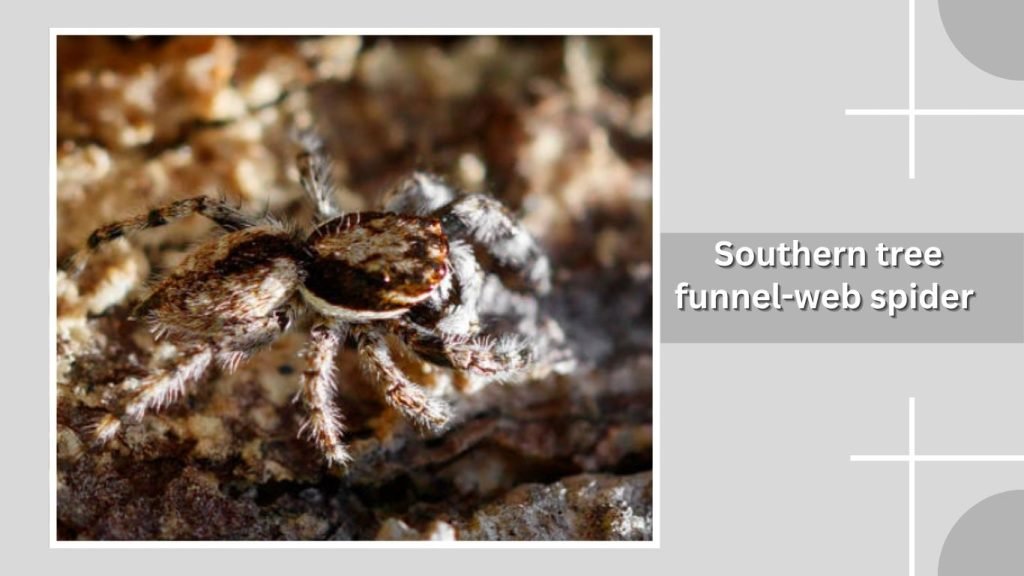
The Southern tree funnel-web spider is a large and venomous species found in parts of Australia, closely related to other funnel-web spiders but adapted to an arboreal lifestyle. As its name suggests, it lives in trees and elevated locations rather than burrows in the ground. It is generally reclusive and avoids human contact.
Identification
- Dark black or dark brown glossy body
- Robust, stocky build with strong legs
- Prominent downward-facing fangs
- Medium to large size compared to other funnel-web spiders
- Males are typically more slender and may wander in search of mates
Habitat
This species inhabits forests and wooded areas, particularly in humid environments. It is commonly found in tree hollows, bark crevices, and elevated silk-lined retreats. Unlike ground-dwelling funnel-webs, it constructs its shelter above ground, often in protected vertical spaces.
Behaviors
The Southern tree funnel-web spider is primarily nocturnal and spends most of the day hidden in its retreat. It emerges at night to hunt. When threatened, it may adopt a defensive posture, raising its front body and exposing its fangs. Males become more active during the breeding season as they search for females.
Diet and Lifecycle
This spider feeds on insects and other small arthropods that come within reach of its retreat or web. It uses venom to immobilize prey before consumption. Females remain in their arboreal shelters and lay egg sacs in secure locations. Spiderlings hatch and disperse after emerging, while males typically have shorter lifespans, often dying after mating.
FAQs
What is the most dangerous spider in Australia?
The Sydney funnel-web spider is widely considered one of the most medically significant spiders in Australia due to its potent venom. However, antivenom is available, and fatalities are extremely rare with proper medical treatment.
Are Australian spiders aggressive toward humans?
Most Australian spiders are not aggressive and will avoid humans whenever possible. Species like the Huntsman spider or Jumping spider typically flee rather than attack.
Do all Australian spiders build webs?
No, not all spiders build webs. For example, the Wolf spider actively hunts its prey instead of using webs, while orb-weavers rely heavily on web structures to catch insects.
Where are spiders commonly found in Australia?
Spiders in Australia can be found in a wide range of environments including forests, gardens, homes, grasslands, and trees. Species like the Redback spider are often found in sheltered urban areas.
What should I do if I find a spider at home?
If you find a spider indoors, it is usually best to leave it alone or gently relocate it using a container. Avoid handling unknown spiders, and if concerned about potentially dangerous species, contact local pest control or wildlife services for assistance.
