

Mosquitoes are tiny insects that have a huge impact on human health due to their ability to spread diseases like malaria and dengue. One common question people ask is: how long do mosquitoes actually live? Understanding the lifespan of mosquitoes is important because it helps explain how they reproduce and transmit diseases. This article explores the average lifespan of mosquitoes, differences between males and females, and how their life cycle affects their survival.
What is the Average Lifespan of a Mosquito?
General Lifespan Overview
The lifespan of a mosquito varies depending on the species and environmental conditions. On average, mosquitoes live for a short period, but their life cycle is fast and efficient. Most mosquitoes complete their development from egg to adult within a few days, but their adult lifespan can differ significantly.
Generally, adult mosquitoes can live from a few days to several weeks. Female mosquitoes tend to live longer than males, which allows them to reproduce multiple times.
Why Lifespan Matters
The lifespan of a mosquito is important because it directly affects its ability to spread diseases. The longer a mosquito lives, the more chances it has to bite humans and transmit infections.
For example, certain diseases require time to develop inside the mosquito before they can be passed on to humans. If the mosquito dies early, it may not be able to transmit the disease. Therefore, lifespan plays a key role in public health.
Male vs Female Mosquito Lifespan

Female Mosquito Lifespan
Female mosquitoes typically live for about 2 to 4 weeks, depending on environmental conditions. Their longer lifespan allows them to feed on blood multiple times and lay eggs repeatedly. Each blood meal helps them produce a new batch of eggs, which contributes to rapid population growth.
Because females are responsible for biting humans and spreading diseases, their longer lifespan makes them more dangerous.
Male Mosquito Lifespan
Male mosquitoes have a much shorter lifespan, usually living for a few days to about a week. They do not bite humans and feed only on nectar and plant juices. Their main role is reproduction, after which they die relatively quickly.
Key Differences
The main differences between male and female mosquitoes include:
- Lifespan: Females live longer than males
- Feeding habits: Females require blood; males feed on nectar
- Role: Females reproduce and spread diseases
These differences are important for understanding mosquito behavior and control methods.
Lifespan Across Mosquito Life Cycle

Egg Stage Duration
The mosquito life cycle begins with the egg stage. Female mosquitoes lay eggs in or near water. These eggs usually hatch within 1 to 3 days under suitable conditions such as warmth and moisture.
Larva Stage Duration
After hatching, mosquito larvae live in water and feed on microorganisms. This stage lasts around 4 to 7 days. During this time, larvae grow rapidly and go through several molting stages.
Pupa Stage Duration
The pupa stage is a short transitional phase where the mosquito prepares to become an adult. This stage typically lasts 1 to 3 days. Although pupae do not feed, they remain active in water.
Adult Stage Lifespan
Once the adult mosquito emerges, it begins its active life. The adult stage is when mosquitoes fly, feed, and reproduce. This stage can last from a few days (for males) to several weeks (for females), depending on environmental conditions.
Factors Affecting Mosquito Lifespan
Temperature and Climate
Temperature is one of the most important factors affecting mosquito lifespan. Warm temperatures help mosquitoes grow faster and live longer. In contrast, cold weather slows down their development and can reduce their survival rate.
Mosquitoes are most active in warm and humid climates, which is why they are more common in tropical regions.
Food Availability
Food plays a crucial role in mosquito survival. Male mosquitoes depend on nectar and plant juices, while females need both nectar and blood meals. A lack of food can shorten their lifespan significantly.
Factors Affecting Mosquito Lifespan (Continued)

Predators and Natural Threats
Mosquitoes face many natural threats that can shorten their lifespan. Birds, fish, frogs, and other insects feed on mosquitoes at different stages of their life cycle. For example, fish often eat mosquito larvae in water, while birds and bats catch adult mosquitoes in the air.
Environmental conditions such as strong winds, heavy rain, and lack of shelter can also reduce their survival. These natural factors help control mosquito populations to some extent.
Human Interventions
Humans play a major role in reducing mosquito lifespan. The use of insecticides, sprays, and mosquito repellents can kill mosquitoes or prevent them from feeding. Sleeping under mosquito nets and using protective measures can also limit their survival.
In addition, removing breeding sites like stagnant water prevents mosquitoes from completing their life cycle, effectively reducing their population.
Lifespan in Different Environments
Seasonal Changes
Mosquito lifespan varies with seasons. During summer and rainy seasons, mosquitoes live longer and reproduce more because of warm temperatures and abundant water. In contrast, during winter or colder periods, their development slows down, and many mosquitoes die or become inactive.
Indoor vs Outdoor Survival
Mosquitoes living indoors may survive longer because they are protected from harsh weather and predators. They also have easier access to human hosts for feeding. Outdoor mosquitoes, on the other hand, face more environmental risks, which can shorten their lifespan.
Urban vs Rural Differences
In urban areas, mosquitoes often find breeding sites in containers, drains, and construction areas. In rural environments, they breed in natural water sources like ponds and fields. Depending on these conditions, their lifespan and population density may vary.
Mosquito Lifespan and Disease Transmission
Why Lifespan Affects Disease Spread
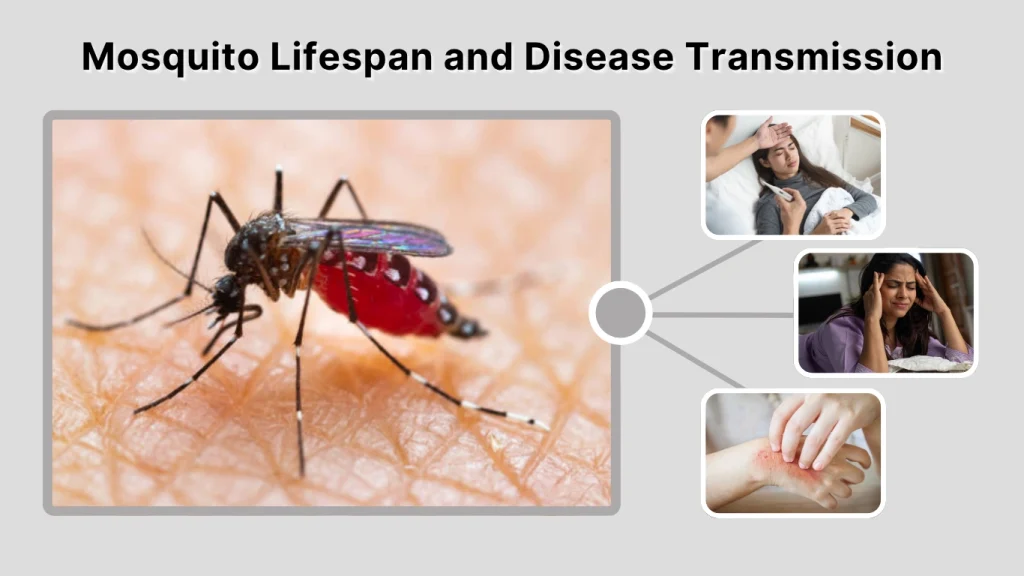
The lifespan of a mosquito directly influences its ability to spread diseases. A mosquito must live long enough for the disease-causing organism to develop inside its body before it can transmit the infection to humans.
Incubation Period of Diseases
After a mosquito becomes infected, the pathogen needs time to grow inside it. This period is known as the incubation period. If the mosquito dies before this period is complete, it cannot spread the disease.
Examples
- Malaria: Requires several days to develop inside the mosquito
- Dengue: Also needs time before transmission becomes possible
This is why longer-living mosquitoes pose a greater risk to human health.
How to Reduce Mosquito Lifespan
Eliminating Breeding Sites
The most effective way to control mosquitoes is to remove their breeding grounds. This includes:
- Emptying stagnant water from containers
- Cleaning drains and gutters
- Properly disposing of waste materials
Without water, mosquitoes cannot complete their life cycle.
Personal Protection Methods
Individuals can reduce mosquito exposure by:
- Using mosquito repellents
- Wearing protective clothing
- Sleeping under mosquito nets
These methods not only prevent bites but also reduce mosquito survival.
Community Control Strategies
Large-scale mosquito control requires community effort. Public awareness campaigns, regular cleaning drives, and government actions such as fogging can help reduce mosquito populations. Cooperation among communities is essential for long-term control.
Interesting Facts About Mosquito Lifespan
Survival Without Food
Mosquitoes can survive for a short time without food, but their lifespan decreases significantly without access to nectar or blood meals.
Do Mosquitoes Die After Biting?
A common myth is that mosquitoes die after biting, but this is not true. Female mosquitoes can bite multiple times during their lifespan, which increases the risk of disease transmission.
Longest Living Mosquitoes
In ideal conditions, some female mosquitoes can live longer than usual, especially in warm and protected environments. This increases their chances of reproduction and spreading diseases.
FAQs
How long do mosquitoes live on average?
Mosquitoes typically live from a few days to several weeks. Female mosquitoes usually live longer (about 2–4 weeks), while males live for only a few days to a week.
Do mosquitoes die after biting a human?
No, mosquitoes do not die after biting. Female mosquitoes can bite multiple times during their lifespan to produce eggs.
Why do female mosquitoes live longer than males?
Female mosquitoes live longer because they need time to feed on blood and lay eggs multiple times. Males mainly focus on mating and die sooner.
Can mosquitoes live inside the house for a long time?
Yes, mosquitoes can live longer indoors because they are protected from predators and harsh weather, and they have easier access to human hosts.
What factors affect mosquito lifespan the most?
The main factors include temperature, humidity, food availability, predators, and human control methods like sprays and repellents.
Conclusion
Mosquito lifespan may be short, but it plays a critical role in their ability to reproduce and spread diseases. Female mosquitoes, which live longer than males, are responsible for most health risks. Factors like temperature, food, and environment greatly influence how long mosquitoes survive. By understanding their lifespan and life cycle, we can take effective steps to control their population. Simple actions such as removing stagnant water and using protective measures can significantly reduce mosquito-related risks and create a healthier living environment.
