
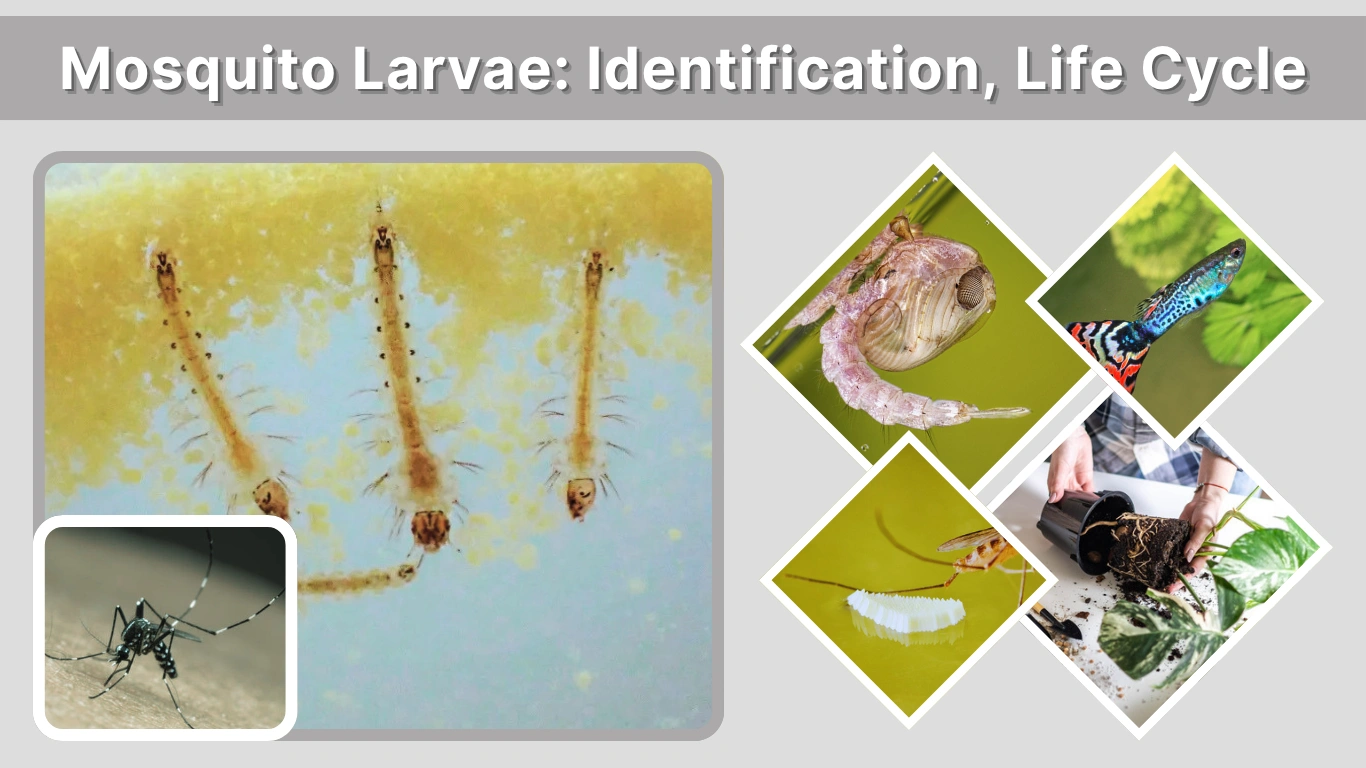
Mosquito larvae are the early stage of mosquitoes that develop in water and play a crucial role in the spread of mosquito populations. Although small and often overlooked, these larvae are the root cause of mosquito infestations that lead to diseases like dengue, malaria, and chikungunya. Understanding how mosquito larvae live, where they are found, and how to control them is essential for effective prevention. By targeting larvae early, you can stop mosquitoes before they become a serious problem.
What Are Mosquito Larvae?
Mosquito larvae are immature mosquitoes that hatch from eggs and live in water before becoming adult mosquitoes. They are commonly referred to as “wrigglers” because of their distinctive movement.
Definition and Appearance
Mosquito larvae are small, thin, worm-like organisms that are usually visible to the naked eye. They:
- Have elongated bodies
- Hang just below the water surface
- Move in a wriggling or jerking motion
They come to the surface frequently to breathe, which makes them easy to spot in still water.
Where Mosquito Larvae Are Found
Mosquito larvae thrive in stagnant or slow-moving water. Common places include:
- Buckets, containers, and flower pots
- Old tires and discarded items
- Ponds, ditches, and puddles
- Water storage tanks and drains
Even a small amount of water can support larvae growth, making household inspection very important.
Mosquito Life Cycle Explained
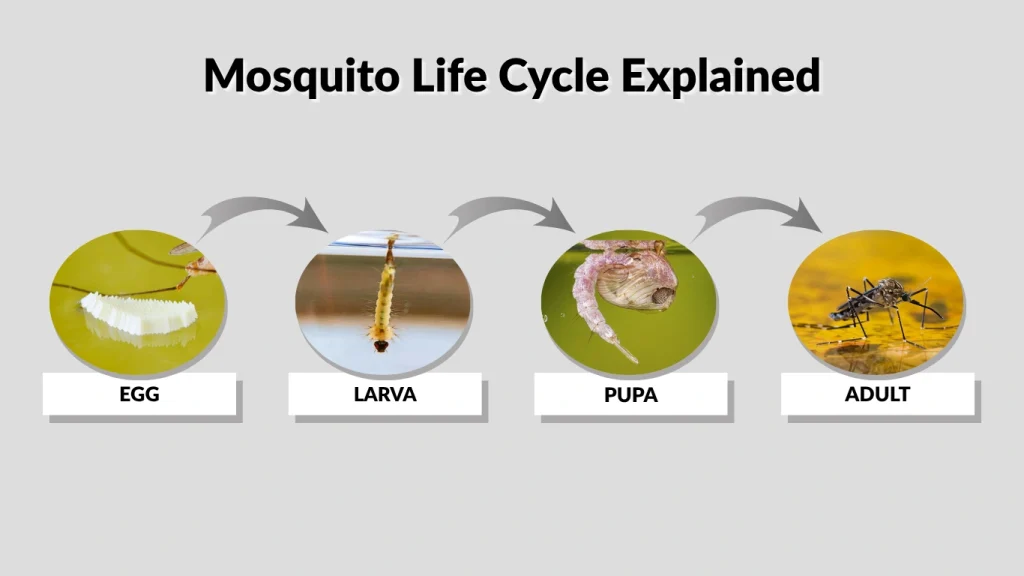
Understanding the mosquito life cycle helps in targeting larvae effectively before they mature into biting adults.
Four Stages of Development
Mosquitoes go through four stages:
- Egg
- Larva
- Pupa
- Adult
The larval stage is one of the most active phases, where mosquitoes feed and grow rapidly in water.
How Long Mosquito Larvae Live
Mosquito larvae typically live for 5 to 14 days, depending on environmental conditions such as temperature and water quality. Warm weather speeds up their development, allowing them to become adults more quickly. This is why mosquito problems are more severe in hot and humid climates.
How to Identify Mosquito Larvae in Water
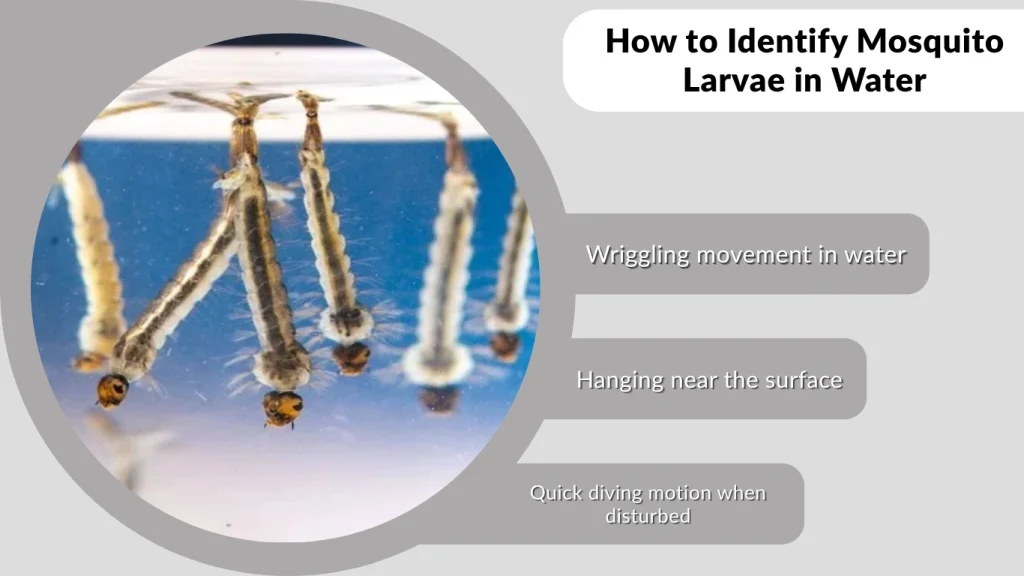
Identifying mosquito larvae early can help you take action before they turn into adult mosquitoes.
Key Identification Signs
You can recognize mosquito larvae by observing:
- Wriggling movement in water
- Hanging near the surface
- Quick diving motion when disturbed
They often appear in groups, especially in untreated standing water.
Mosquito Larvae vs Other Water Worms
Mosquito larvae are often confused with other small aquatic organisms. Here’s how to tell the difference:
- Mosquito larvae: Stay near the surface and move in a jerky motion
- Other worms: Usually move smoothly and stay deeper in the water
Correct identification ensures you apply the right control methods.
Why Mosquito Larvae Are Dangerous
Mosquito larvae themselves do not bite or spread diseases, but they are the starting point of a much bigger problem. Each larva has the potential to become an adult mosquito capable of transmitting harmful diseases.
- A single breeding site can produce hundreds of mosquitoes
- Rapid reproduction increases infestation quickly
- Leads to higher risk of dengue, malaria, and other illnesses
Controlling larvae early is one of the most effective ways to reduce mosquito populations and protect public health.
How to Get Rid of Mosquito Larvae
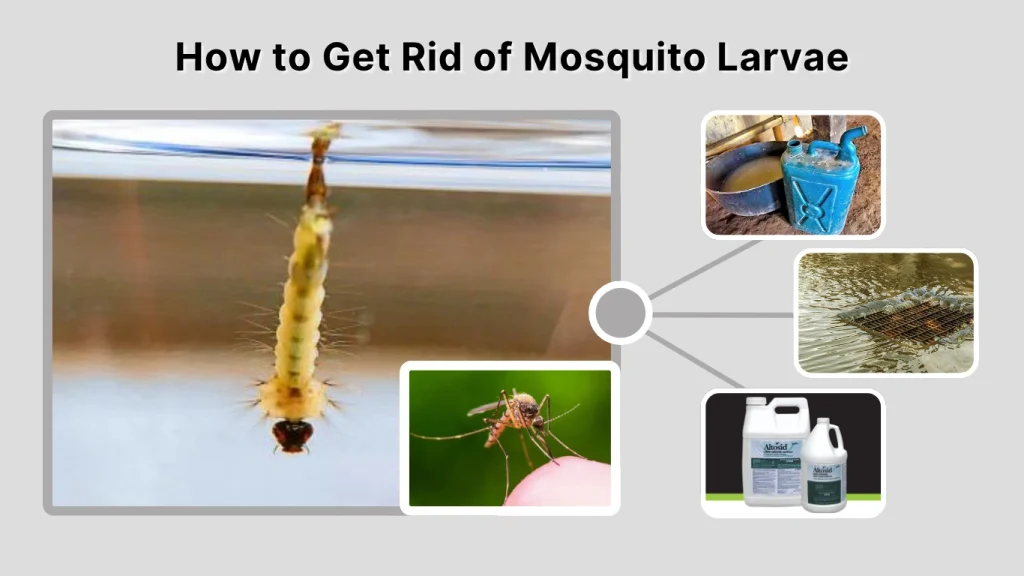
Eliminating mosquito larvae requires a combination of physical, chemical, and natural methods.
Physical Control Methods
The simplest and most effective way to control larvae is by removing their breeding environment:
- Empty and clean water containers regularly
- Dispose of unused items that collect water
- Improve drainage to prevent water accumulation
Without water, larvae cannot survive, making this method highly effective.
Chemical Control Methods
In situations where water cannot be removed, chemical solutions may be used:
- Larvicides: Special chemicals designed to kill larvae
- Oils: Form a thin layer on water surface, preventing larvae from breathing
These methods are commonly used in large-scale mosquito control programs.
Natural Ways to Kill Mosquito Larvae
For those who prefer eco-friendly solutions, natural options are available:
- Neem oil: Acts as a natural larvicide
- Soap solution: Disrupts the water surface
- Vinegar: May reduce larvae survival (limited effectiveness)
Natural methods are safer for households and the environment, though they may require repeated use.
Biological Mosquito Larvae Control
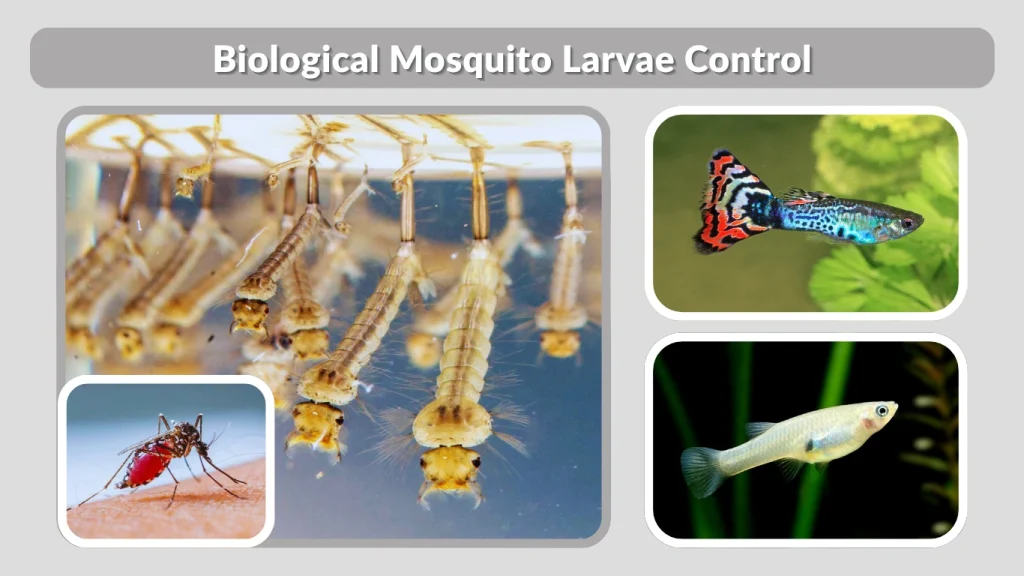
Biological control is an eco-friendly and sustainable way to reduce mosquito larvae without harming the environment. These methods focus on natural predators and bacteria that specifically target larvae.
Larvae-Eating Fish
Certain fish species feed on mosquito larvae and are commonly used in ponds and water bodies:
- Guppy fish: Small, easy to maintain, and highly effective
- Mosquito fish (Gambusia): Known for consuming large numbers of larvae daily
Introducing these fish into ponds or water tanks can naturally control mosquito populations.
Bacteria-Based Solutions
Biological larvicides like Bacillus thuringiensis israelensis (BTI) are widely used:
- Targets mosquito larvae specifically
- Safe for humans, pets, and other wildlife
- Available in granules or tablets
BTI is one of the most effective and environmentally safe solutions for controlling larvae in standing water.
Preventing Mosquito Larvae Growth
Preventing larvae from developing is the most effective long-term mosquito control strategy. Consistent maintenance can stop infestations before they start.
Eliminate Breeding Sites
Removing potential breeding areas is essential:
- Conduct weekly inspections for standing water
- Empty containers and clean water storage areas
- Keep surroundings dry and clutter-free
Even small water collections should not be ignored.
Home and Outdoor Prevention Tips
Simple preventive measures can significantly reduce larvae growth:
- Cover water tanks and containers tightly
- Ensure proper drainage in yards and rooftops
- Clean drains and gutters regularly
- Store items in dry places to avoid water accumulation
These steps help create an environment where mosquitoes cannot breed.
Best Mosquito Larvae Control Tips for Homes and Gardens
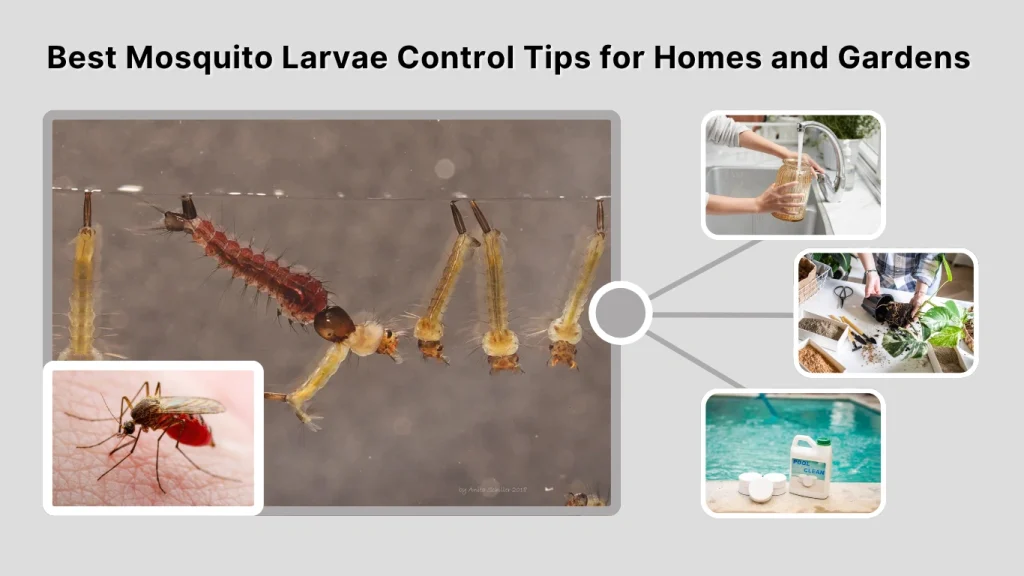
Here are some practical tips to keep your home and garden free from mosquito larvae:
- Change water in flower pots and vases every 2–3 days
- Use sand in plant trays to absorb excess water
- Keep swimming pools clean and chlorinated
- Use larvicide tablets in unavoidable standing water
- Maintain garden hygiene by trimming plants and removing debris
Consistency in these practices ensures long-term protection.
Common Mistakes to Avoid
Avoiding common errors can make your mosquito larvae control efforts more effective:
- Ignoring small water sources: Even tiny amounts of water can support larvae
- Delaying action: Waiting too long allows larvae to become adult mosquitoes
- Overusing chemicals: Can harm the environment and reduce effectiveness over time
- Inconsistent monitoring: Skipping regular checks leads to repeated infestations
Awareness and timely action are key to successful control.
FAQs
Can mosquito larvae survive in clean water?
Yes, mosquito larvae can survive in both clean and dirty water. Clean water in containers is often a common breeding site.
What instantly kills mosquito larvae?
Larvicides, oils that block oxygen, and biological agents like BTI can quickly kill mosquito larvae.
Are mosquito larvae harmful to humans?
Mosquito larvae do not bite or directly harm humans, but they develop into adult mosquitoes that can spread diseases.
How fast do mosquito larvae turn into adults?
Mosquito larvae typically develop into adults within 7 to 14 days, depending on environmental conditions.
Conclusion
Mosquito larvae are the foundation of mosquito infestations, making them the most important stage to target for effective control. By identifying larvae early, eliminating breeding sites, and using a combination of natural, biological, and chemical methods, you can significantly reduce mosquito populations. Prevention remains the best strategy—regular inspection and proper water management can stop mosquitoes before they become a threat. Taking consistent action ensures a safer, healthier environment for you and your family.
