
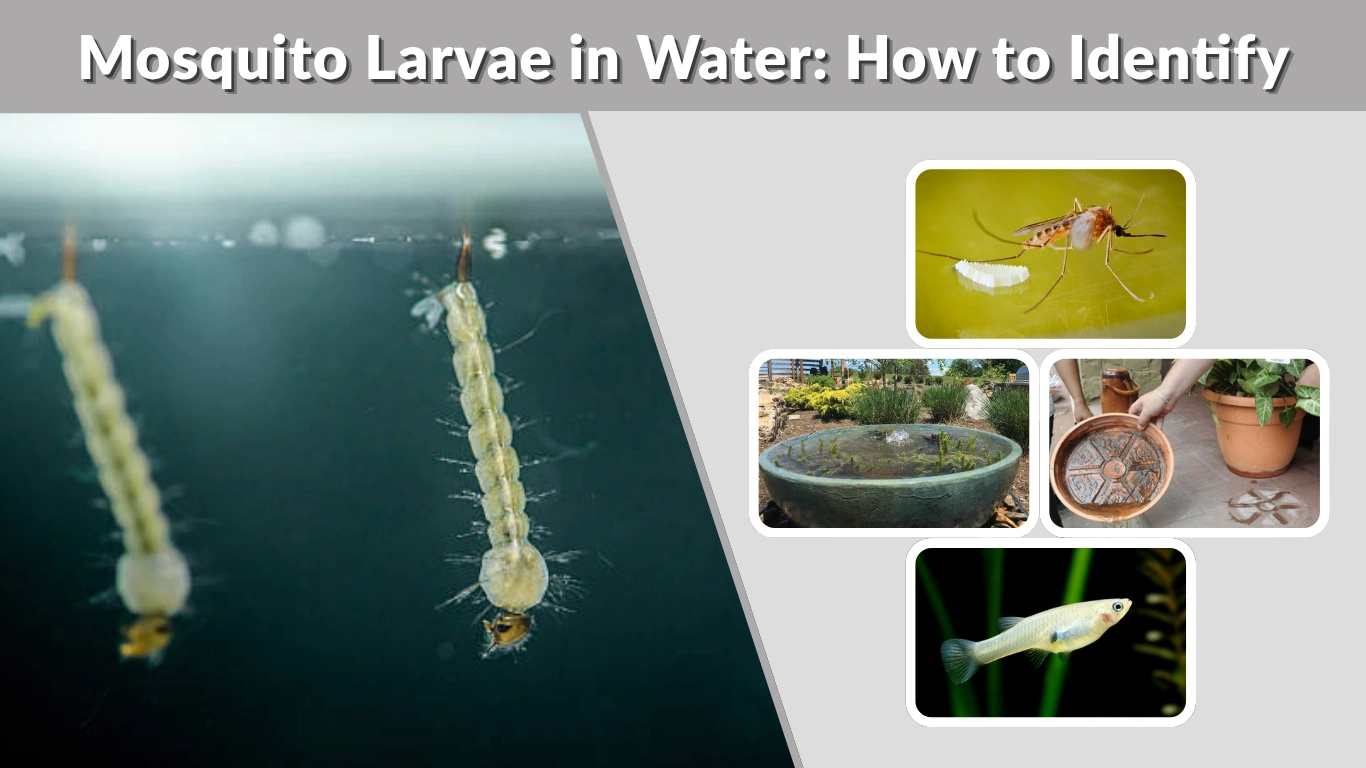
Mosquito larvae in water are a common but often overlooked problem that can quickly lead to serious mosquito infestations. These tiny, wriggling organisms develop in stagnant water and eventually turn into adult mosquitoes capable of spreading diseases like dengue, malaria, and chikungunya. Whether found in household containers or outdoor puddles, mosquito larvae signal the beginning of a larger issue. Understanding how to identify, remove, and prevent them is essential for maintaining a safe and healthy environment.
What Are Mosquito Larvae in Water?
Mosquito larvae are the immature stage of mosquitoes that live and grow in water before becoming adults. They are commonly seen in still water sources and are an early sign of mosquito breeding.
Definition and Appearance
Mosquito larvae are small, thin, worm-like creatures that are visible to the naked eye. They:
- Hang just below the surface of the water
- Move in a wriggling or jerking motion
- Frequently come to the surface to breathe
Because of their movement, they are often referred to as “wrigglers.”
Why Mosquitoes Lay Eggs in Water
Water is essential for mosquito reproduction. Female mosquitoes lay eggs in or near water because:
- Larvae need water to survive and grow
- It provides food and protection during early stages
- Still water offers a stable environment
Mosquitoes prefer stagnant or slow-moving water, making neglected containers ideal breeding sites.
Common Places Where Mosquito Larvae Are Found
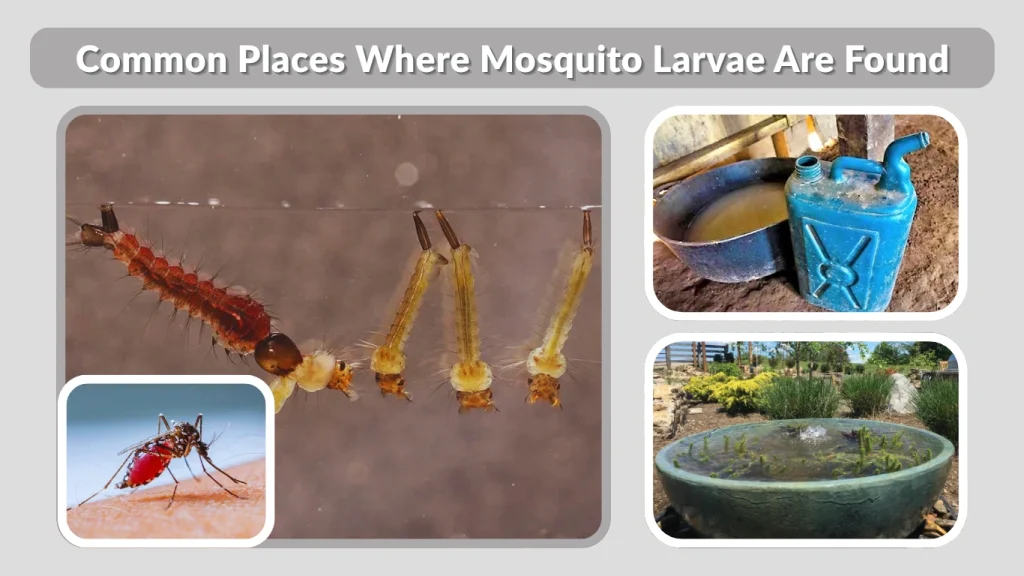
Mosquito larvae can develop in both indoor and outdoor water sources. Even small amounts of water can support their growth.
Household Water Sources
Inside homes, larvae are often found in:
- Water storage containers and tanks
- Buckets, flower pots, and trays
- Uncovered drinking water vessels
- Bathroom corners or unused containers
Improperly stored water is one of the main causes of indoor mosquito breeding.
Outdoor Water Sources
Outside the home, common breeding areas include:
- Puddles and rainwater collections
- Blocked drains and gutters
- Old tires, cans, and discarded items
- Ponds and construction sites
These areas can quickly become hotspots for mosquito larvae if not managed properly.
How to Identify Mosquito Larvae in Water
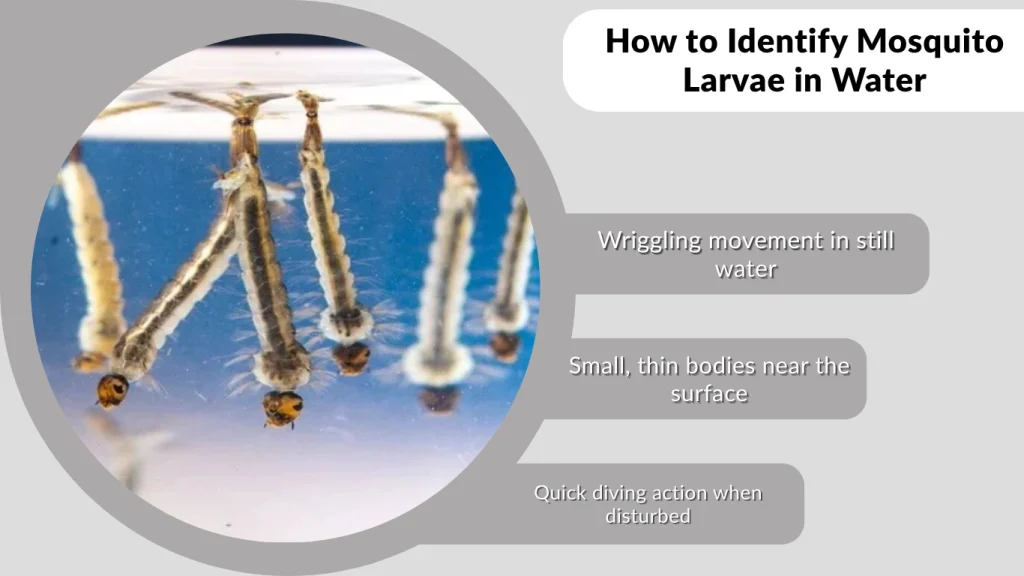
Early identification is key to stopping mosquitoes before they mature and spread.
Key Signs to Look For
You can identify mosquito larvae by observing:
- Wriggling movement in still water
- Small, thin bodies near the surface
- Quick diving action when disturbed
They often gather in groups, especially in undisturbed water.
Mosquito Larvae vs Other Organisms
Mosquito larvae are sometimes mistaken for other small aquatic creatures. Here’s how to distinguish them:
- Mosquito larvae: Stay near the surface and move in a jerky, wriggling motion
- Other organisms: Move smoothly and may stay deeper in the water
Recognizing these differences helps ensure proper treatment.
Are Mosquito Larvae in Water Dangerous?
Mosquito larvae themselves do not bite or directly harm humans. However, they are dangerous because they develop into adult mosquitoes that can spread serious diseases.
- A single container can produce hundreds of mosquitoes
- Rapid breeding increases infestation quickly
- Leads to higher risk of dengue, malaria, and other illnesses
If larvae are present in water, it means mosquitoes are actively breeding nearby, which requires immediate action.
How to Get Rid of Mosquito Larvae in Water
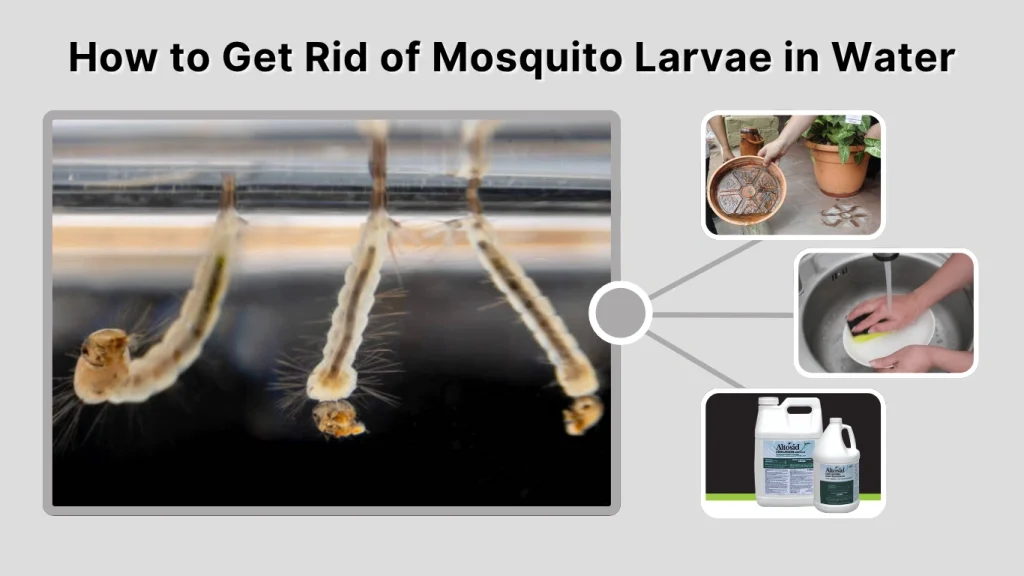
Eliminating mosquito larvae is the most effective way to prevent future infestations. Several methods can be used depending on the situation.
Physical Methods
The simplest and safest approach is to remove their breeding environment:
- Empty standing water regularly
- Clean containers thoroughly
- Scrub surfaces to remove eggs
- Cover water storage tightly
Without water, larvae cannot survive, making this method highly effective.
Chemical Treatments
When water cannot be removed, chemical options can help:
- Larvicides: Specifically designed to kill mosquito larvae
- Oils: Create a thin layer on water, blocking oxygen supply
These methods are often used in larger water bodies or public health programs.
Natural Methods
For eco-friendly control, natural solutions can be applied:
- Neem oil: Acts as a natural larvicide
- Soap solution: Disrupts the water surface tension
- Vinegar: May reduce larvae survival (limited effectiveness)
Natural methods are safer for home use but may require repeated application.
Safe Treatment for Mosquito Larvae in Drinking Water
Mosquito larvae in drinking water can be concerning, but proper treatment can make the water safe again.
Is It Safe to Drink?
Water containing mosquito larvae is not immediately toxic, but it is not hygienic and should not be consumed without treatment. The presence of larvae indicates contamination and poor storage conditions.
Safe Removal Methods
To ensure water safety:
- Boil the water: Kills larvae and harmful microorganisms
- Filter the water: Use a fine cloth or proper filtration system
- Clean the container: Scrub and wash thoroughly before refilling
- Keep containers covered: Prevent future contamination
Maintaining clean and covered storage is essential for safe drinking water.
Biological Control Methods in Water
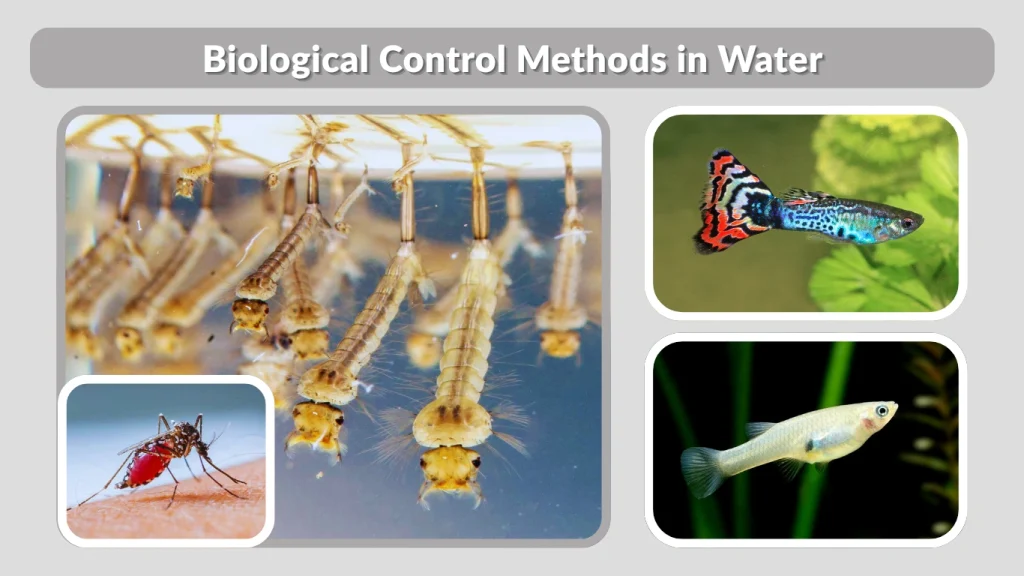
Biological methods are effective and environmentally friendly ways to control mosquito larvae in water bodies.
Larvae-Eating Fish
Introducing natural predators can help control larvae:
- Guppies: Small fish that feed actively on larvae
- Mosquito fish (Gambusia): Known for high larvae consumption
These fish are commonly used in ponds and large water containers.
Bacterial Solutions
Biological larvicides like Bacillus thuringiensis israelensis (BTI) are widely used:
- Targets mosquito larvae specifically
- Safe for humans, pets, and beneficial insects
- Available in tablet or granular form
BTI is highly effective for treating standing water without harming the environment.
Preventing Mosquito Larvae in Water
Prevention is the most reliable way to control mosquito larvae and avoid repeated infestations.
Eliminate Standing Water
Regularly inspect and remove stagnant water:
- Empty containers weekly
- Dispose of unused items that collect water
- Ensure proper drainage in and around your home
Even small water sources should not be ignored.
Water Storage Safety Tips
Proper storage practices can prevent larvae growth:
- Always cover water tanks and containers
- Clean storage units regularly
- Use tight-fitting lids or mesh covers
- Avoid leaving water exposed for long periods
Good water management is key to long-term prevention.
Best Tips for Controlling Mosquito Larvae in Water
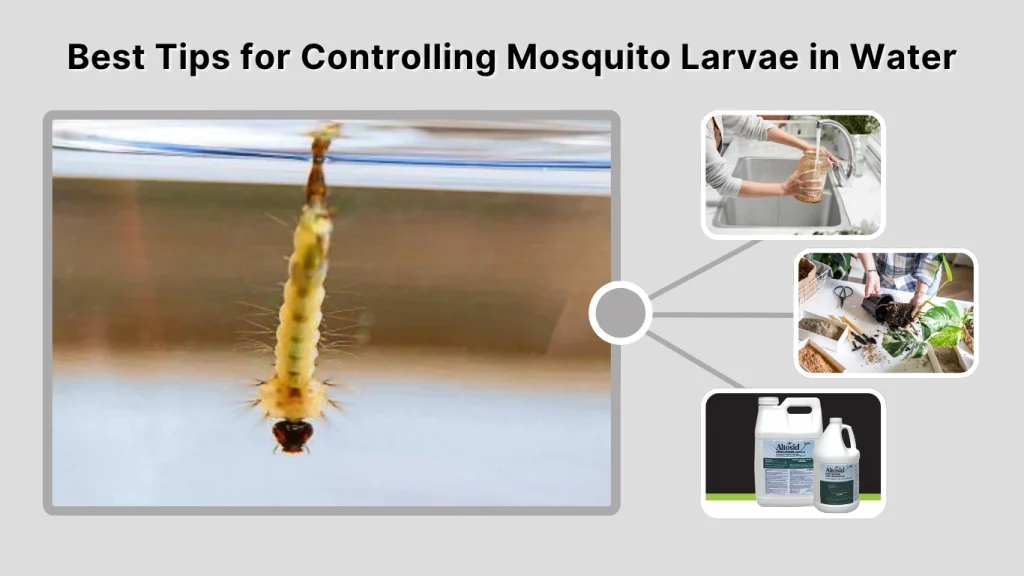
Here are some practical tips to keep water sources larvae-free:
- Change water in flower pots and vases every 2–3 days
- Add sand to plant trays to absorb excess water
- Keep swimming pools clean and treated
- Use larvicide tablets in unavoidable standing water
- Maintain cleanliness in both indoor and outdoor areas
Consistency in these habits ensures effective control.
Common Mistakes to Avoid
Avoiding these mistakes can improve your mosquito control efforts:
- Leaving water uncovered: Encourages mosquitoes to lay eggs
- Ignoring small containers: Even tiny amounts of water can breed larvae
- Delayed cleaning: Allows larvae to develop into adult mosquitoes
- Overusing chemicals: Can harm the environment and reduce effectiveness
Being proactive and consistent is essential for success.
FAQs
Can mosquito larvae live in clean water?
Yes, mosquito larvae can thrive in both clean and dirty water, especially in undisturbed containers.
What kills mosquito larvae instantly in water?
Larvicides, oils that block oxygen, and biological agents like BTI are effective in killing larvae quickly.
How long can larvae survive in water?
Mosquito larvae typically survive for 5 to 14 days before turning into adult mosquitoes.
Can larvae grow in drinking water tanks?
Yes, if tanks are not properly covered or maintained, they can become breeding grounds for mosquito larvae.
Conclusion
Mosquito larvae in water are an early warning sign of potential mosquito infestations and should never be ignored. By identifying larvae quickly, using safe and effective removal methods, and maintaining proper water hygiene, you can prevent mosquitoes from multiplying. Whether through physical cleaning, natural remedies, or biological control, consistent action is the key to success. Keeping water sources clean and covered ensures a healthier, safer environment for everyone.
