
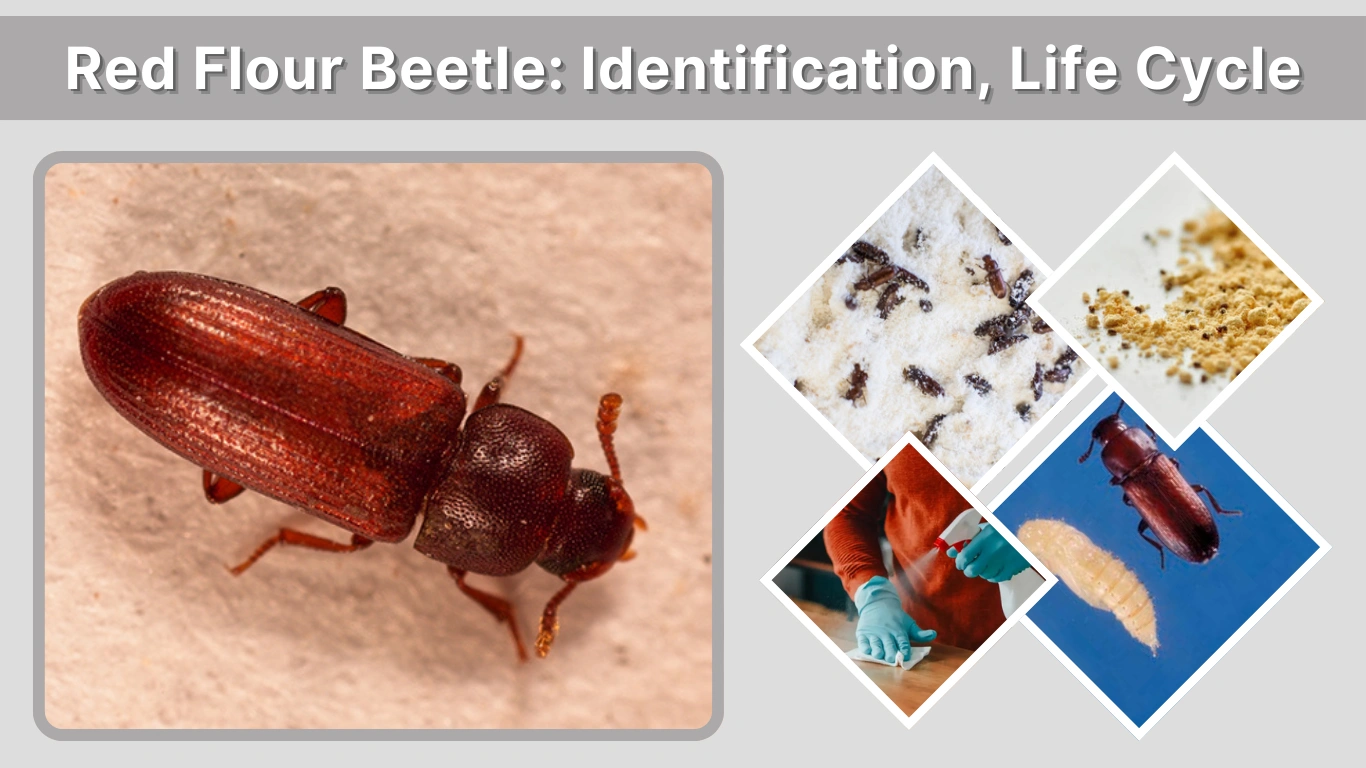
The red flour beetle is one of the most common pantry pests found in homes, grocery stores, and food storage facilities. These small reddish-brown insects infest flour, cereals, and other grain-based products, contaminating food and causing unpleasant odors. Although they are not harmful to humans directly, they can spoil large amounts of stored food. Learning how to identify red flour beetles, understand their life cycle, and recognize early infestation signs can help prevent them from spreading throughout your pantry.
What Is a Red Flour Beetle?
The red flour beetle (Tribolium castaneum) is a tiny pantry pest that commonly infests stored grain products. It belongs to a group of insects known for contaminating processed foods such as flour, cereal, and cornmeal.
These beetles thrive in environments where dry food is stored for long periods. Because flour and grain products are commonly kept in kitchen pantries, homes often become ideal habitats for these insects.
Red flour beetles are found worldwide and are especially common in warm climates and indoor food storage areas. They are frequently seen in:
- Kitchen pantries
- Grocery stores
- Bakeries
- Grain storage warehouses
- Food processing facilities
Unlike some grain pests, red flour beetles usually feed on processed grain products rather than whole grains. This is why they are commonly found in flour bags and other milled food products.
Why They Are Called Flour Beetles
The name “flour beetle” comes from their strong preference for flour and finely milled grain products. These insects are particularly attracted to foods that produce fine dust particles, which provide an ideal feeding environment.
Flour beetles are capable of surviving in small quantities of flour that accumulate in pantry corners or cracks in storage shelves. Even tiny food residues can support a growing population of beetles if the conditions are warm and suitable.
Red Flour Beetle Identification
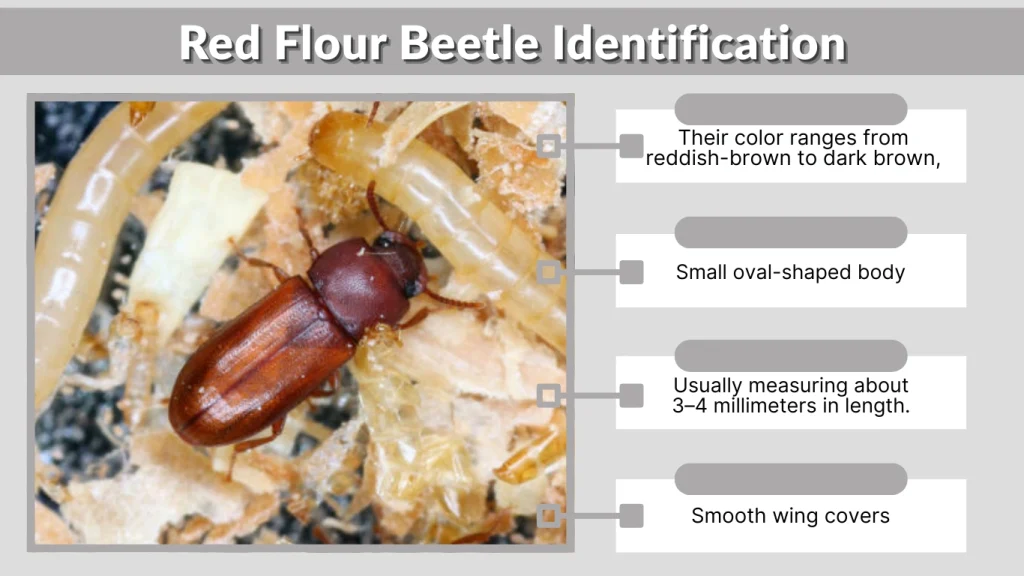
Correctly identifying red flour beetles is important because they are often confused with other pantry pests, especially the confused flour beetle. Although the two species look very similar, careful observation can help distinguish them.
What Does a Red Flour Beetle Look Like?
Adult red flour beetles are small insects with a flat, elongated body. Their color ranges from reddish-brown to dark brown, and their bodies have a shiny appearance.
Key identifying characteristics include:
- Small oval-shaped body
- Flat and elongated structure
- Smooth wing covers
- Long antennae
- Reddish-brown color
Adult beetles are very active and can often be seen crawling quickly across pantry shelves or inside food containers.
Because of their small size, many infestations go unnoticed until large numbers of beetles appear.
Red Flour Beetle Size
Red flour beetles are very small insects, usually measuring about 3–4 millimeters in length. This size is roughly equal to about one-eighth of an inch.
Despite their tiny size, these insects can quickly become a serious pantry problem because they reproduce rapidly. A few beetles can multiply into a large infestation within a short period if contaminated food is not removed.
Their flat body shape allows them to hide easily inside food packages, cracks in pantry shelves, and small gaps in storage containers.
Red Flour Beetle Eggs and Larvae
The life cycle of the red flour beetle begins with extremely small eggs that are difficult to see with the naked eye.
Eggs
Red flour beetle eggs are:
- Tiny and white
- Sticky on the outer surface
- Often coated with flour particles
Female beetles lay their eggs directly in flour or grain products. Because the eggs blend in with food particles, they are rarely noticed during early infestation stages.
Larvae
After hatching, the beetles enter the larval stage. The larvae resemble small worms and are usually cream or yellowish in color.
Characteristics of larvae include:
- Thin cylindrical body
- Brown head capsule
- Length of about 5–6 mm when fully grown
The larval stage is responsible for most of the food contamination associated with red flour beetle infestations.
Larvae feed actively on flour, grain dust, and other processed foods. During this stage, they leave behind waste material, shed skins, and body fragments that contaminate stored food products.
Red Flour Beetle Life Cycle
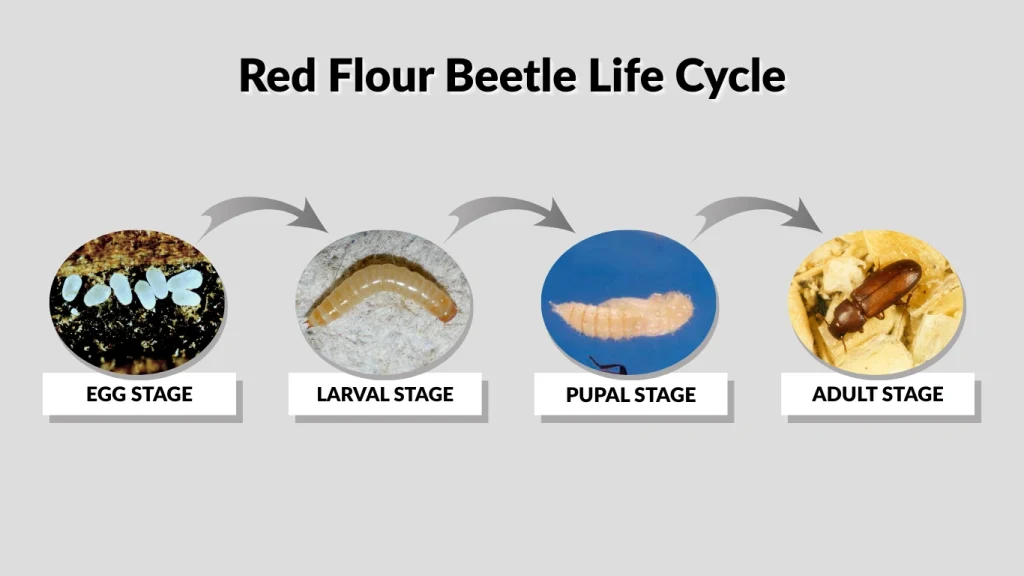
The red flour beetle has a complete metamorphosis life cycle, which means it develops through four stages:
- Egg
- Larva
- Pupa
- Adult
Under warm indoor conditions, the entire life cycle can be completed in about 4 to 8 weeks. This rapid development allows infestations to grow quickly if the insects are not detected early.
Egg Stage
Female red flour beetles lay their eggs directly into food sources such as flour, cereal, or grain products.
A single female may lay 300 to 500 eggs during her lifetime.
Egg development usually takes 5 to 12 days, depending on temperature and humidity levels.
Warm kitchens and storage areas provide ideal conditions for eggs to hatch quickly.
Larval Stage
Once the eggs hatch, the larvae begin feeding immediately on available food sources.
Common foods consumed during this stage include:
- Flour
- Grain dust
- Cornmeal
- Processed cereals
The larval stage typically lasts two to three weeks.
During this period, larvae molt several times as they grow larger. Because they remain hidden inside food products, infestations often develop unnoticed until the number of insects becomes large.
Pupal Stage
After completing the larval stage, the insect enters the pupal stage, during which it transforms into an adult beetle. During this period, the insect does not feed and remains relatively inactive while its body develops adult features.
The pupal stage typically lasts about 5–7 days, depending on environmental conditions such as temperature and humidity. Pupae are often found hidden inside flour particles, food debris, or small cracks within pantry shelves.
Once development is complete, the adult beetle emerges and begins searching for food and mating opportunities.
Adult Stage
Adult red flour beetles are fully developed insects capable of reproducing and spreading infestations. These beetles can live several months to over a year under favorable conditions.
Unlike some other pantry pests, red flour beetles can fly, allowing them to spread more easily between food sources. Adults actively search for food and suitable places to lay eggs.
During their lifespan, adult beetles continue feeding on flour and other processed grain products while producing the next generation of insects. Because of their rapid reproduction, infestations can grow quickly if the problem is not addressed early.
Red Flour Beetle Habitat
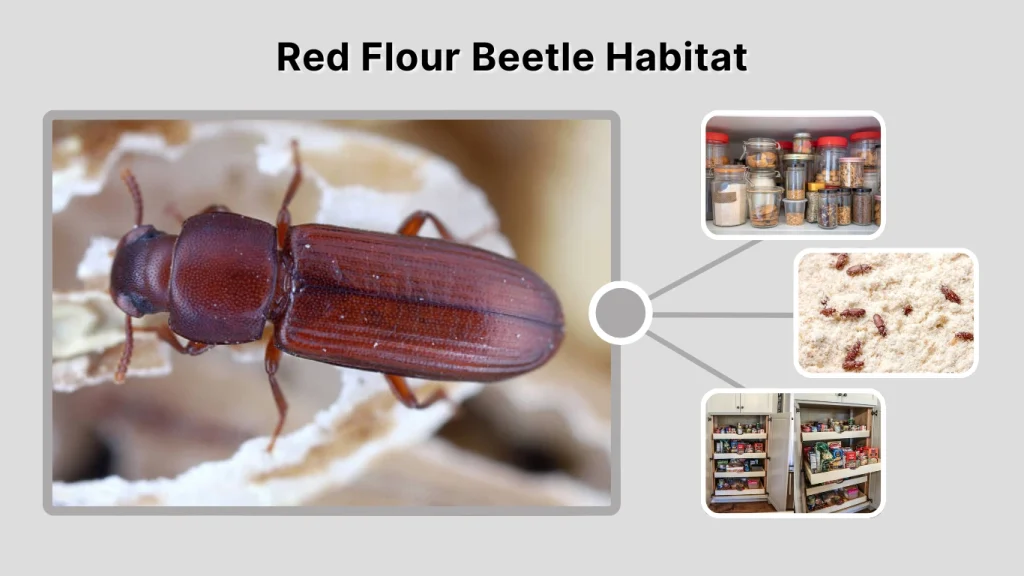
Red flour beetles prefer warm environments where dry food products are stored for extended periods. These insects thrive in places that provide both food sources and shelter.
Where Red Flour Beetles Live
Common locations where red flour beetles are found include:
- Kitchen pantries
- Food storage cabinets
- Grocery stores
- Bakeries
- Grain warehouses
- Food processing facilities
Because these beetles can survive on very small food particles, they may also live in pantry cracks, corners, and behind shelving where flour dust accumulates.
Foods That Attract Red Flour Beetles
Red flour beetles infest a wide variety of stored foods, especially products made from processed grains.
Common foods they infest include:
- Flour
- Rice
- Pasta
- Breakfast cereals
- Cornmeal
- Cake mixes
- Spices
- Nuts
- Pet food
Open packaging or poorly sealed containers make it easier for beetles to access these foods.
Signs of Red Flour Beetle Infestation
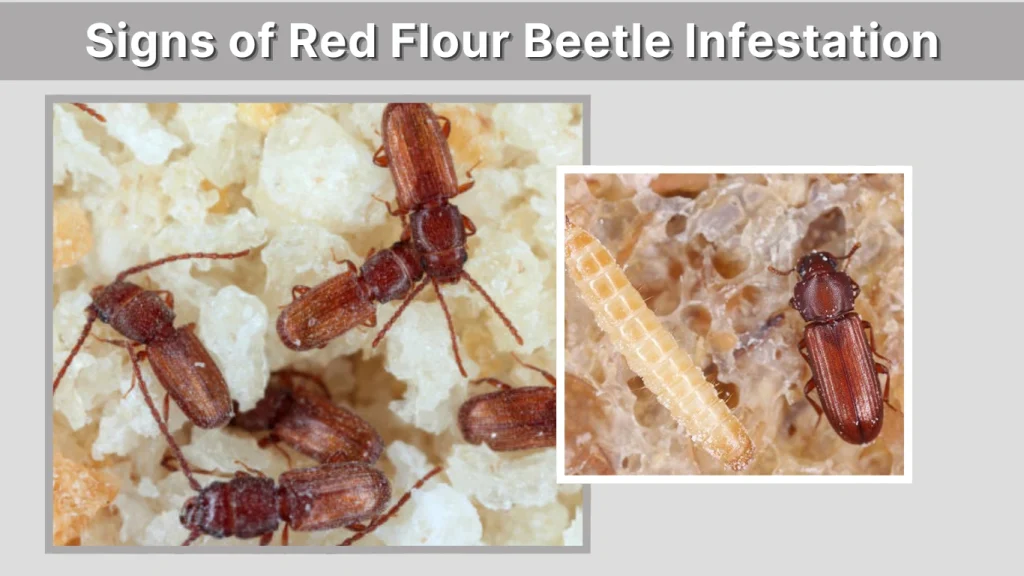
Detecting an infestation early can help prevent serious pantry contamination. Several warning signs may indicate the presence of red flour beetles.
Small Reddish-Brown Beetles in Flour
One of the most noticeable signs is seeing tiny reddish-brown beetles crawling inside flour or grain products. Adult beetles may also appear on pantry shelves or food packaging.
Presence of Larvae in Food
Larvae may appear as small cream-colored worms inside flour, cereals, or other stored foods. Their presence usually indicates that the infestation has been developing for some time.
Clumped or Discolored Flour
Infested flour may appear clumpy or discolored. This change in texture occurs because insects leave behind waste materials, shed skins, and body fragments.
Musty or Unpleasant Odor
Large infestations may cause stored foods to develop a musty or unpleasant smell. This odor results from chemicals released by the beetles and contamination from their waste products.
Red Flour Beetle vs Confused Flour Beetle
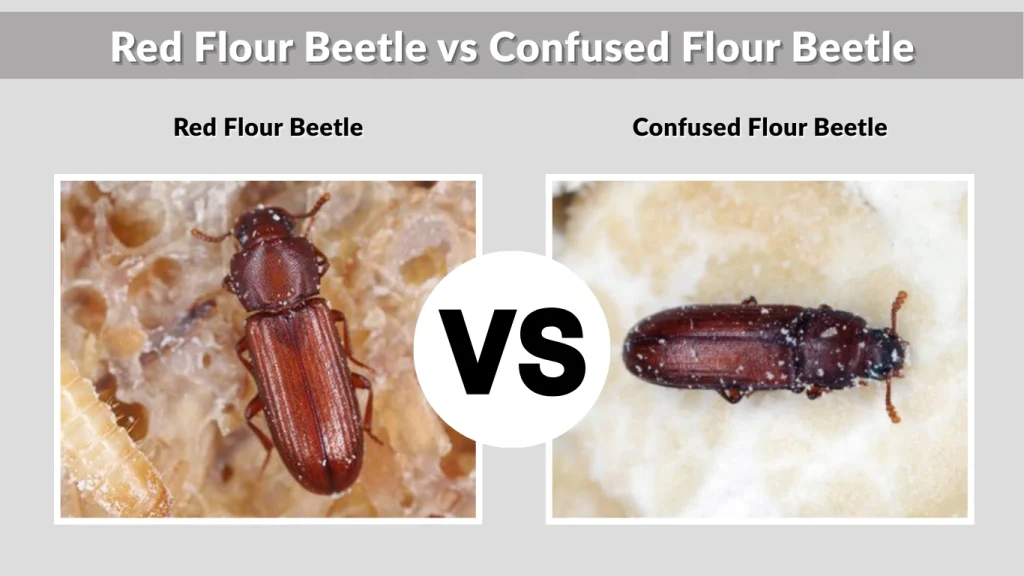
The red flour beetle is often mistaken for another pantry pest known as the confused flour beetle. While they look very similar, there are a few key differences.
Physical Differences
One of the easiest ways to distinguish between them is by examining their antennae.
- Red flour beetle: Antennae end with a distinct three-segment club
- Confused flour beetle: Antennae gradually enlarge toward the tip
These differences are small and sometimes difficult to see without magnification.
Flight Ability
Another important difference is their ability to fly.
- Red flour beetles can fly, especially in warm environments.
- Confused flour beetles cannot fly and move mainly by crawling.
Because red flour beetles can fly, they may spread more quickly between food sources.
How to Get Rid of Red Flour Beetles
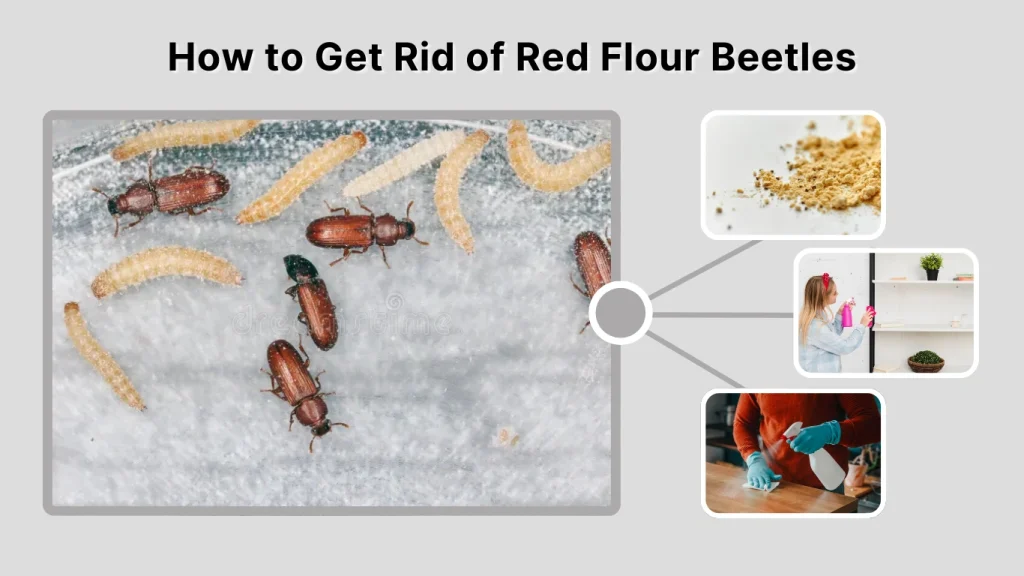
Eliminating red flour beetles requires removing contaminated food and thoroughly cleaning the pantry.
Remove Infested Food
Start by inspecting all stored food items. Any product showing signs of beetles, larvae, unusual odor, or clumped flour should be discarded immediately.
Seal infested food in a bag before throwing it away to prevent insects from spreading.
Clean the Pantry Thoroughly
After removing contaminated items, clean the entire pantry carefully.
Steps include:
- Vacuum shelves and corners
- Remove crumbs and food dust
- Wash shelves with warm soapy water
- Wipe surfaces with vinegar solution
Pay close attention to cracks and corners where insects may hide.
Freeze or Heat Stored Food
If you suspect that food may contain hidden eggs, temperature treatment can help eliminate pests.
- Freezing: Place food in a freezer for 3–4 days to kill eggs and larvae.
- Heating: Heating grains at about 60°C (140°F) for 15 minutes can also destroy insects.
How to Prevent Red Flour Beetle Infestation
Preventive measures are the best way to protect your pantry from future infestations.
Store Food in Airtight Containers
Transfer flour, rice, and cereals into airtight glass or plastic containers. This prevents beetles from entering the food.
Inspect Groceries Before Storage
Check newly purchased food products for signs of insects before placing them in your pantry.
Maintain Clean Pantry Conditions
Regularly clean pantry shelves and remove food crumbs or flour dust that may attract insects.
Buy Smaller Quantities of Flour
Buying smaller amounts of flour reduces the chance of insects developing in long-stored food products.
Are Red Flour Beetles Harmful to Humans?
Red flour beetles do not bite or sting humans, and they are not known to spread serious diseases. However, they contaminate food products with waste materials, shed skins, and body fragments.
For this reason, most people prefer to discard infested food rather than consume it.
Conclusion
The red flour beetle is a common pantry pest that infests stored grain products such as flour, cereals, and pasta. Although these insects are small, their rapid life cycle allows infestations to grow quickly in warm food storage environments. Recognizing early infestation signs, removing contaminated food, and storing products in airtight containers can help eliminate red flour beetles and prevent them from returning to your pantry.
