
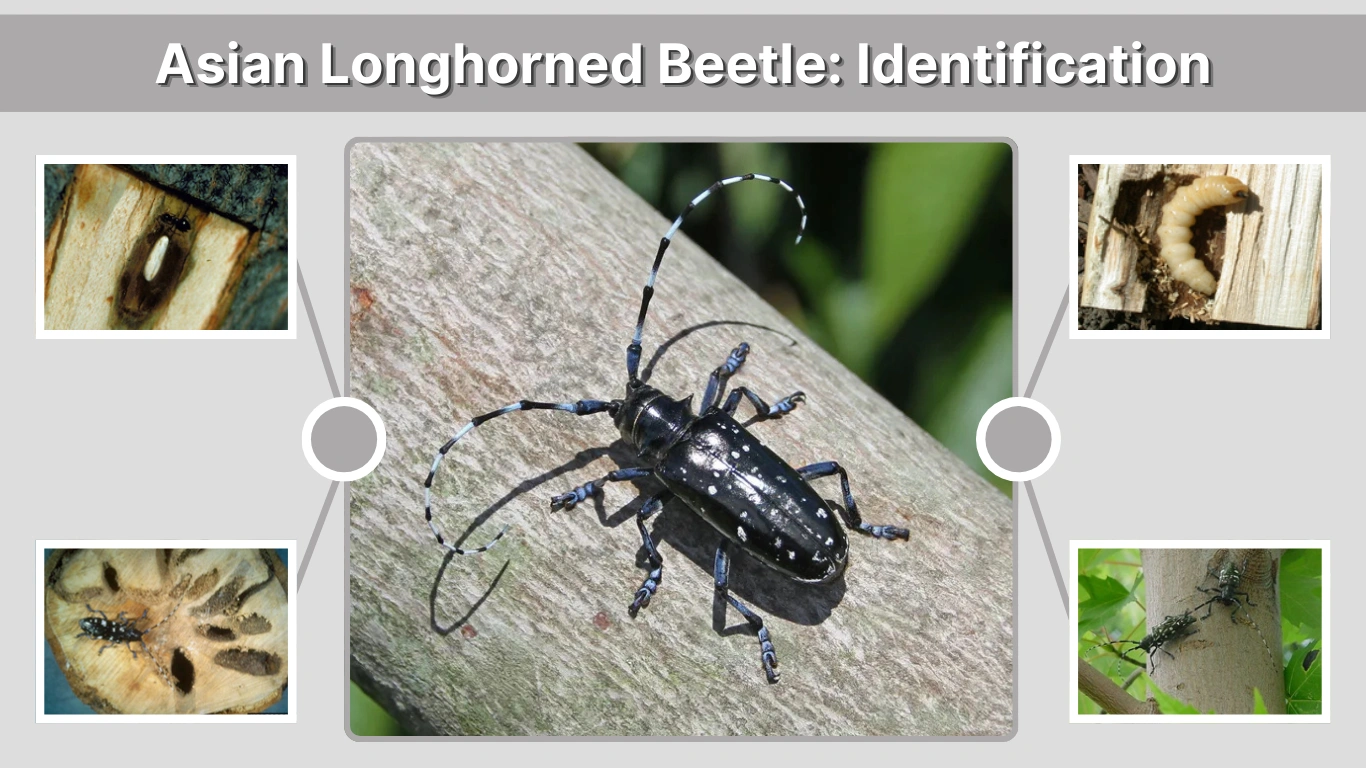
The Asian longhorned beetle is a destructive wood-boring insect that has become a serious threat to forests and urban trees in several parts of the world. Native to parts of Asia, this beetle is known for its striking black body with white spots and extremely long antennae. Its larvae tunnel deep inside tree trunks, weakening and often killing healthy trees. Because of the severe damage it can cause, early identification and proper management are essential to protect forests, landscapes, and hardwood tree species.
What Is the Asian Longhorned Beetle?
The Asian longhorned beetle (ALB) is an invasive insect belonging to the beetle family Cerambycidae, also known as longhorn beetles. Its scientific name is Anoplophora glabripennis. This species is particularly dangerous because its larvae bore into the wood of living trees, disrupting the flow of water and nutrients.
Originally, the Asian longhorned beetle is native to China and Korea, where natural predators and environmental conditions help keep its population under control. However, when it spreads to new regions without those natural controls, it can quickly become a destructive pest.
The beetle was accidentally introduced into several countries through wood packaging materials, such as pallets and crates used in international shipping. Once established in a new area, the insect can spread to nearby trees and cause significant ecological and economic damage.
Physical Characteristics of the Asian Longhorned Beetle
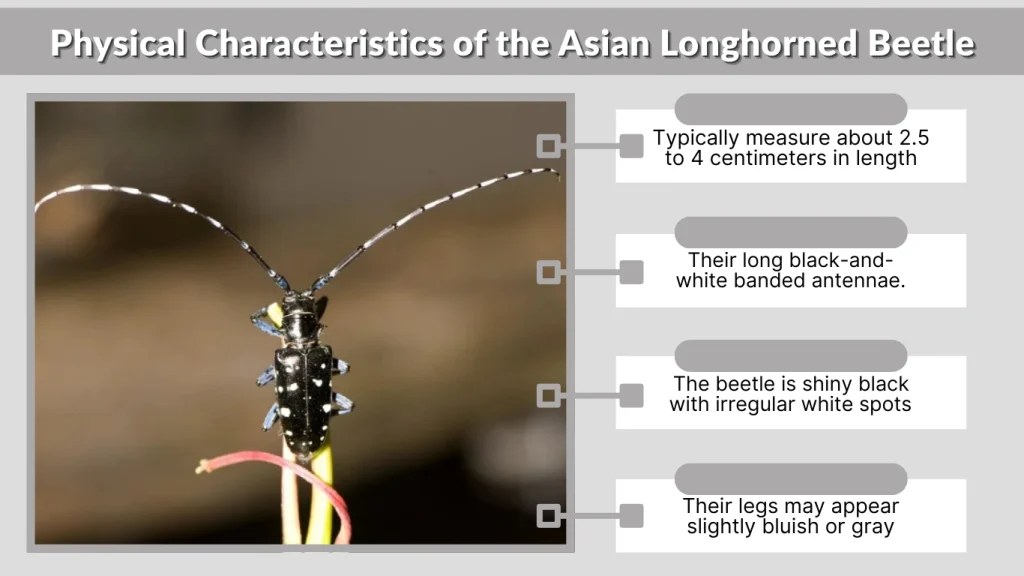
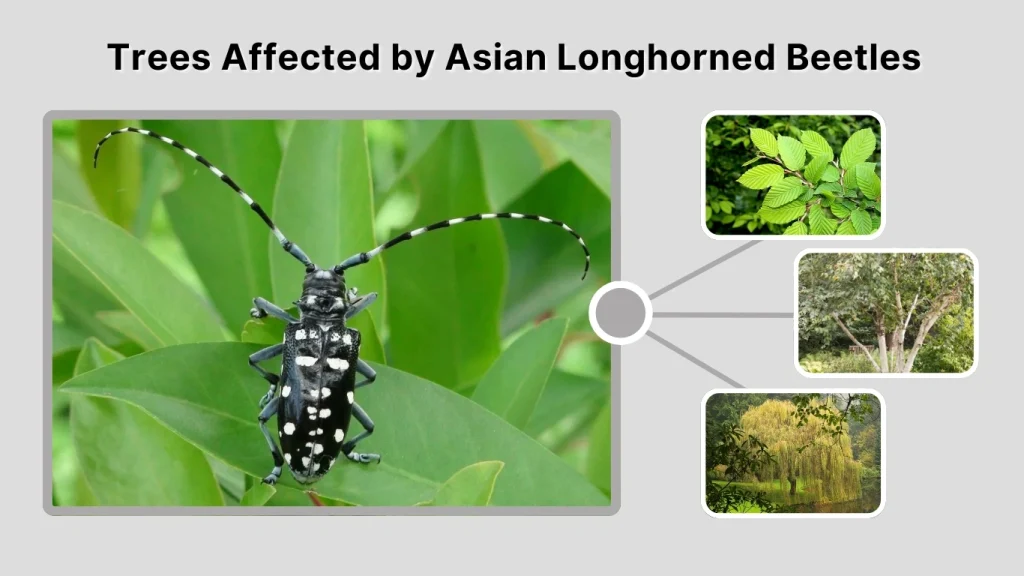
The Asian longhorned beetle is relatively easy to recognize because of its distinctive appearance. Adult beetles typically measure about 2.5 to 4 centimeters in length, making them fairly large compared to many other beetles.
One of their most striking features is their long black-and-white banded antennae. In males, the antennae can be nearly twice the length of the body, while females usually have slightly shorter antennae.
The body of the beetle is shiny black with irregular white spots scattered across its wing covers. These markings make the insect visually distinctive and easier to identify compared to many other wood-boring beetles.
Their legs may appear slightly bluish or gray, and the body is strong and hard, allowing the beetle to survive in harsh outdoor environments. Despite their intimidating appearance, Asian longhorned beetles do not bite or sting humans.
Life Cycle of the Asian Longhorned Beetle
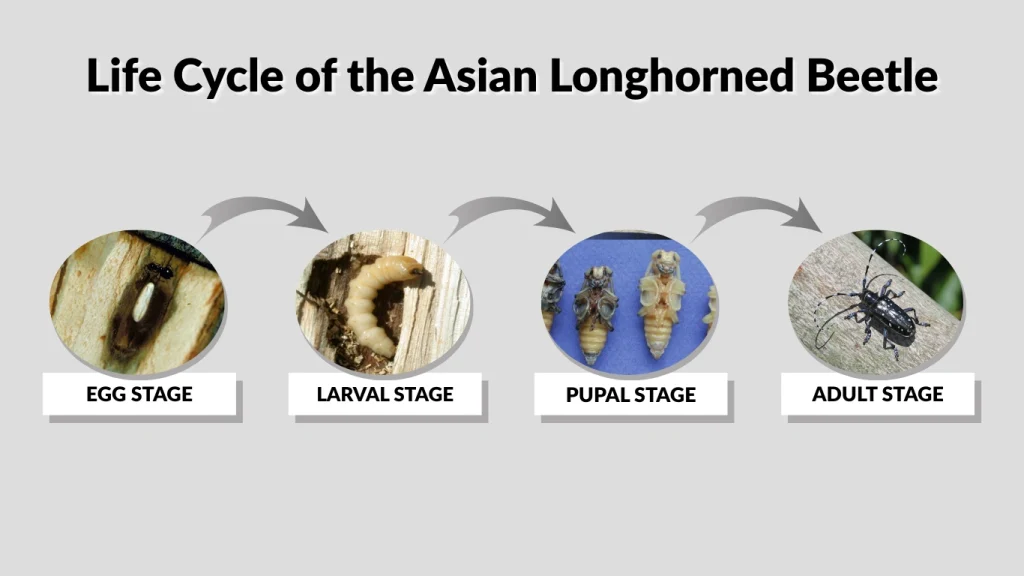
Like other beetles, the Asian longhorned beetle undergoes complete metamorphosis, which includes four main stages: egg, larva, pupa, and adult. This life cycle can take one to two years, depending on environmental conditions.
Egg Stage
Female beetles lay their eggs on the bark of host trees. Before laying an egg, the female chews a small depression in the bark called an egg-laying pit. She then deposits a single egg inside the pit and seals it for protection.
Each female can lay dozens of eggs during her lifetime, which allows populations to grow quickly if conditions are favorable.
Larval Stage
Once the egg hatches, the larva begins boring into the tree. This stage is the most destructive part of the beetle’s life cycle. The larvae feed on the inner wood of the tree, creating tunnels that weaken the tree’s structure.
The larvae are cream-colored, legless, and worm-like, and they spend most of their development hidden inside the wood. As they grow, the tunnels they create become larger and more damaging to the tree.
Pupal Stage
After completing the larval stage, the insect forms a chamber inside the wood and transforms into a pupa. During this stage, the insect develops the body structure of an adult beetle.
The pupal stage usually lasts several weeks before the adult beetle is fully formed.
Adult Stage
Adult Asian longhorned beetles chew their way out of the tree, leaving behind large round exit holes. These exit holes are one of the most recognizable signs of infestation.
Adult beetles emerge mainly during the summer months, when they feed, mate, and lay eggs on nearby trees, continuing the life cycle.
Trees Affected by Asian Longhorned Beetles
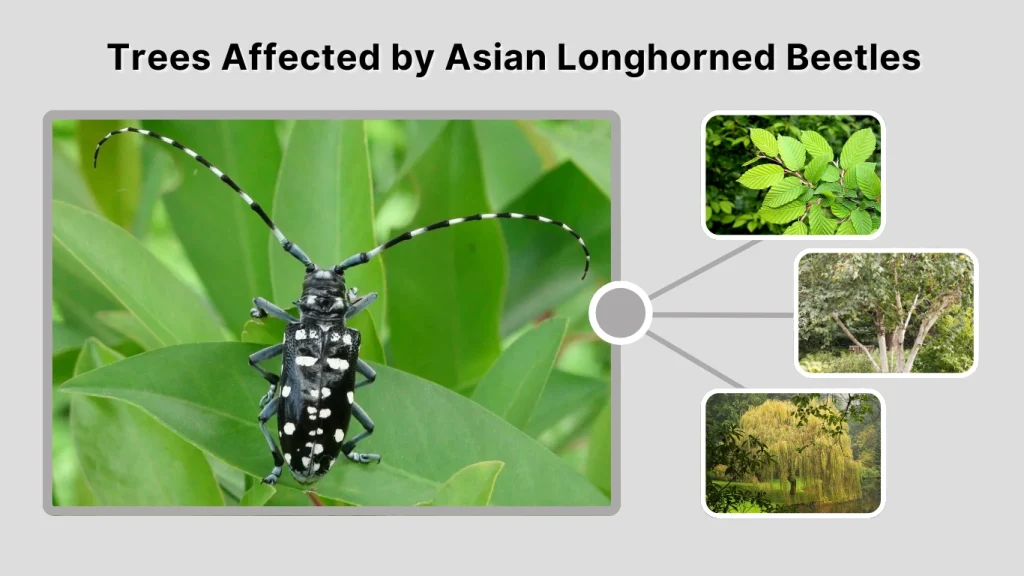
The Asian longhorned beetle primarily attacks hardwood trees. Unlike many other wood-boring insects that target weak or dying trees, this beetle often attacks healthy trees, which makes it especially dangerous.
One of the most commonly affected trees is the maple tree. Because maples are widely planted in cities and parks, the beetle can cause significant damage to urban landscapes.
Other commonly attacked trees include:
- Elm trees
- Birch trees
- Willow trees
- Poplar trees
In some regions, these trees make up a large portion of the local forest or urban canopy. When Asian longhorned beetles infest these trees, the damage can spread quickly and lead to large-scale tree loss.
Habitat and Distribution
The Asian longhorned beetle originally comes from eastern Asia, particularly China and the Korean Peninsula. In its native range, natural predators and environmental factors help control its population. However, when introduced into other regions, the beetle can spread rapidly and cause serious damage to local forests and urban trees.
This invasive insect has been detected in several countries, including the United States, Canada, and parts of Europe. In these areas, it often appears in cities, parks, and suburban neighborhoods where hardwood trees are abundant.
The spread of the Asian longhorned beetle is strongly linked to global trade. Infested wooden packing materials such as crates, pallets, and shipping boxes have allowed the beetle to travel long distances. Once introduced to a new area, adult beetles can fly short distances to nearby trees, starting new infestations.
Because many cities rely heavily on maple and other hardwood trees for shade and landscaping, the presence of this beetle poses a serious risk to urban forests and natural ecosystems.
What Do Asian Longhorned Beetles Eat?
Asian longhorned beetles feed on different parts of trees during different stages of their life cycle.
Larval Feeding Habits
The larval stage causes the most serious damage. After hatching, larvae tunnel deep into the tree trunk and branches. They feed on the inner wood tissues, including the sapwood and heartwood.
As the larvae continue feeding, they create long tunnels that weaken the tree’s internal structure. These tunnels disrupt the tree’s ability to transport water and nutrients, which can eventually lead to tree decline or death.
Adult Feeding Habits
Adult beetles feed mainly on leaves, bark, and small twigs of host trees. Compared to larvae, adult feeding causes relatively minor damage. However, adults are responsible for spreading the infestation because they lay eggs on healthy trees.
Damage Caused by Asian Longhorned Beetles
The Asian longhorned beetle is considered one of the most destructive invasive tree pests. Because its larvae feed inside living trees, the damage often goes unnoticed until it becomes severe.
Over time, the internal tunnels created by the larvae weaken the tree’s structure. This can cause branches to break easily, especially during storms or strong winds.
Heavy infestations may lead to:
- Branch dieback
- Loss of leaves and canopy
- Cracks in the bark
- Complete tree death
In urban environments, the loss of large shade trees can significantly affect city landscapes, wildlife habitats, and property values. In forests, widespread infestations could lead to major ecological changes.
Signs of Asian Longhorned Beetle Infestation
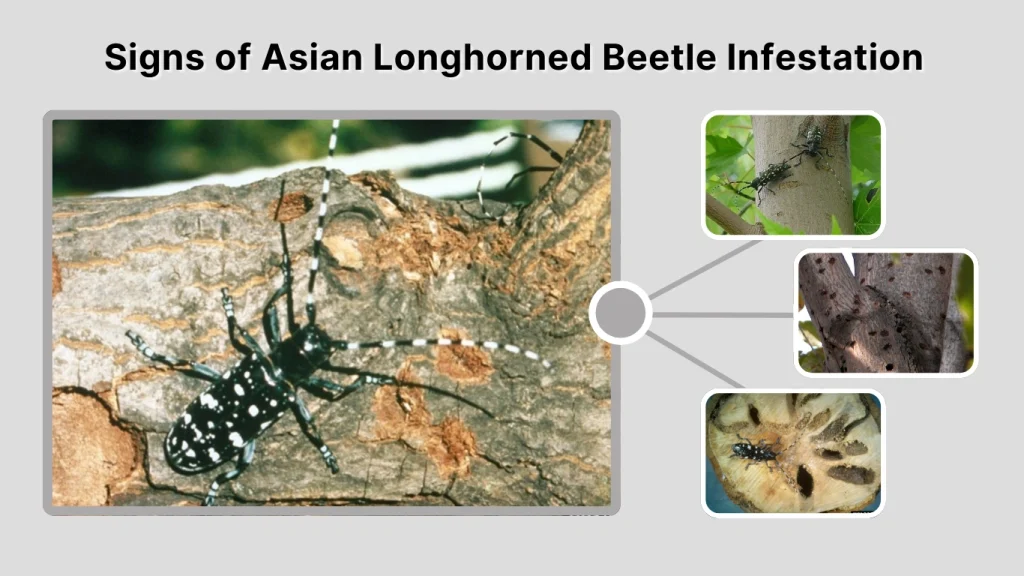
Early detection is crucial for controlling the spread of this invasive insect. There are several visible signs that may indicate the presence of Asian longhorned beetles.
Round Exit Holes
Adult beetles create large, round exit holes when they emerge from trees. These holes are usually about the size of a pencil and can often be found on tree trunks or large branches.
Sawdust-Like Frass
Infested trees often produce frass, a mixture of sawdust and insect waste. This material may collect around the base of the tree or in branch joints.
Egg-Laying Pits
Female beetles chew small oval depressions in the bark where they lay their eggs. These pits may appear as dark scars on the tree surface.
Sap Leakage
Sometimes sap may ooze from the wounds where eggs were laid or where larvae are feeding beneath the bark.
How the Asian Longhorned Beetle Spreads
The spread of the Asian longhorned beetle occurs through both natural movement and human activities.
Adult beetles are capable of flying short distances to nearby trees. However, the most significant spread occurs when humans transport infested wood products.
Common ways the beetle spreads include:
- Moving infested firewood
- Transporting untreated wooden packaging materials
- Shipping wood pallets and crates across countries
Because of this, many governments have implemented strict quarantine and inspection programs to prevent the beetle from spreading to new areas.
How to Prevent Asian Longhorned Beetle Infestations
Preventing infestations is the most effective way to protect forests and urban trees.
One important rule is to avoid moving firewood long distances, especially from areas where the beetle has already been detected. Infested firewood can easily transport hidden larvae to new locations.
Regular tree inspections can also help detect early signs of infestation. Property owners and city officials often monitor trees for exit holes, frass, or other symptoms.
Public awareness is also essential. Many countries encourage citizens to report suspicious beetles or tree damage to agricultural or forestry authorities.
Control and Management Methods
Managing Asian longhorned beetle infestations can be challenging. In many cases, the most effective solution is removing and destroying infested trees to stop the insect from spreading.
Other control methods include:
- Chemical treatments applied to protect high-value trees
- Tree injections with systemic insecticides
- Monitoring programs to track beetle populations
Eradication programs often involve cooperation between government agencies, scientists, and local communities.
Environmental and Economic Impact
The Asian longhorned beetle poses a serious threat to forests, wildlife habitats, and urban landscapes. Hardwood trees such as maple, elm, and birch provide shade, oxygen, and habitat for many species.
If large numbers of these trees are lost, the effects can include:
- Reduced forest biodiversity
- Increased costs for tree removal and replacement
- Loss of valuable timber resources
- Changes in local ecosystems
The financial cost of controlling this pest can reach millions of dollars, especially in regions where large eradication programs are required.
Interesting Facts About the Asian Longhorned Beetle
The Asian longhorned beetle has several unique characteristics that make it one of the most recognizable invasive insects.
- Its antennae can grow longer than the entire body.
- The beetle’s distinctive black body with white spots makes it easier to identify than many other tree pests.
- One female beetle can lay dozens of eggs during her lifetime.
- Early detection is the most important factor in preventing large infestations.
FAQs
How do you identify an Asian longhorned beetle?
Asian longhorned beetles have a shiny black body with white spots and extremely long black-and-white antennae. They are larger than many other beetles and often found on hardwood trees.
Are Asian longhorned beetles dangerous to humans?
No, they are not harmful to humans. They do not bite or sting, but they can cause serious damage to trees.
What trees do Asian longhorned beetles attack?
They mainly attack hardwood trees, including maple, elm, birch, willow, and poplar.
How do you get rid of Asian longhorned beetles?
Control usually involves removing infested trees, monitoring nearby trees, and using insecticide treatments when necessary.
