
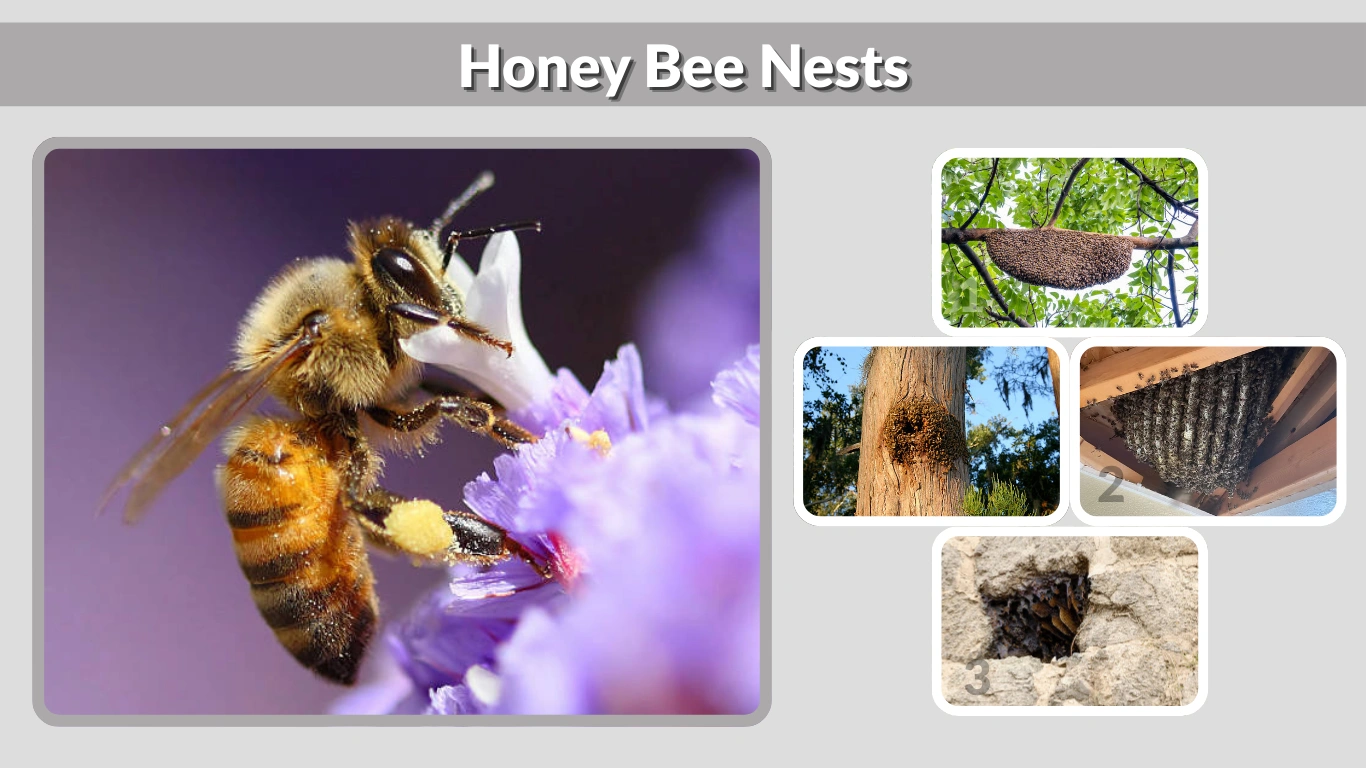
Honey bee nests play a crucial role in the life cycle of a colony, but they can also become a concern when built inside homes, trees, or unexpected places. Many people confuse honey bee nests with wasp nests or with ground-nesting insects, leading to unnecessary fear or incorrect removal attempts. Understanding what honey bee nests look like, where they form, and how to manage them safely is essential for both homeowners and nature lovers. This guide explains nesting behavior, indoor and outdoor nest locations, identification tips, and removal options.
What Is a Honey Bee Nest?
Nest vs Hive (Terminology)
A honey bee nest refers to a natural cavity where a colony establishes itself. A hive, on the other hand, usually refers to a man-made structure—like the wooden boxes used by beekeepers. While both serve the same purpose, natural nests tend to be irregular in shape, adapting to the space available in a tree hollow, wall cavity, or chimney.
How Honey Bees Build Nests
Honey bees build nests using beeswax, which worker bees produce from glands on their abdomen. They chew and mold this wax into hexagonal cells that form combs. These combs serve different purposes: brood rearing, pollen storage, and honey storage. Inside the nest, bees maintain a stable temperature and humidity level, regulating the environment through fanning, clustering, and controlled ventilation.
What Does a Honey Bee Nest Look Like?
Identification Checklist
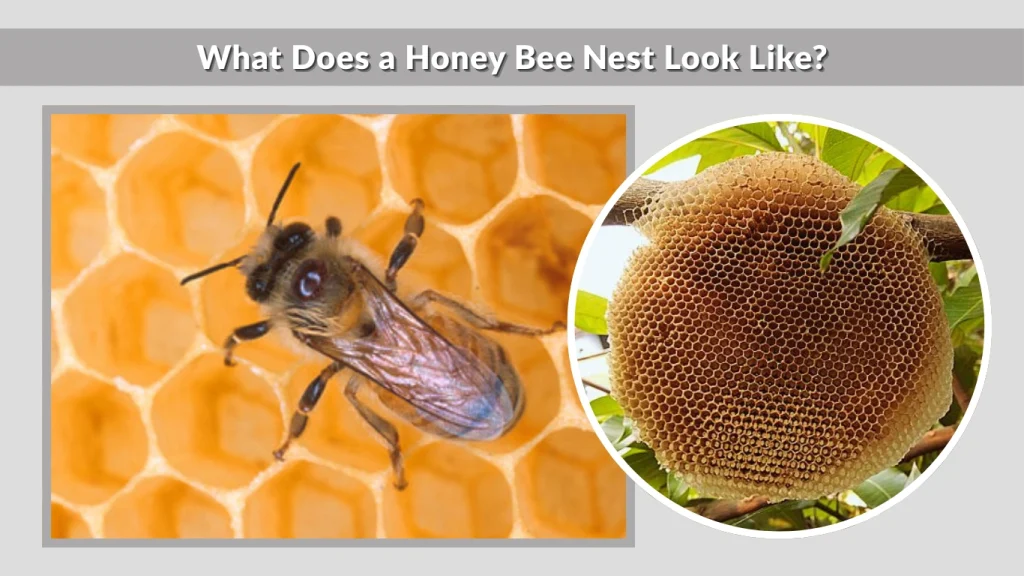
You can identify a honey bee nest using these visible features:
- Flat, layered sheets of wax comb
- Golden yellow, light brown, or white coloring
- Thousands of bees clustering across comb surfaces
- Open brood cells and capped honey cells
- Warm humming sound
- Sticky scent of honey or wax
- No paper-like layers (wasps make those)
Common Misidentifications
Many people mistake wasp nests for honey bee nests. Wasp nests are gray, papery, and usually exposed. Yellow jackets build paper nests underground. Bumble bees often nest in grassy, mossy cavities, while carpenter bees leave single round holes in wooden structures. Honey bee nests are always made of wax—not paper—and are usually inside cavities instead of exposed outside.
Where Do Honey Bees Nest?
Natural Nesting Locations
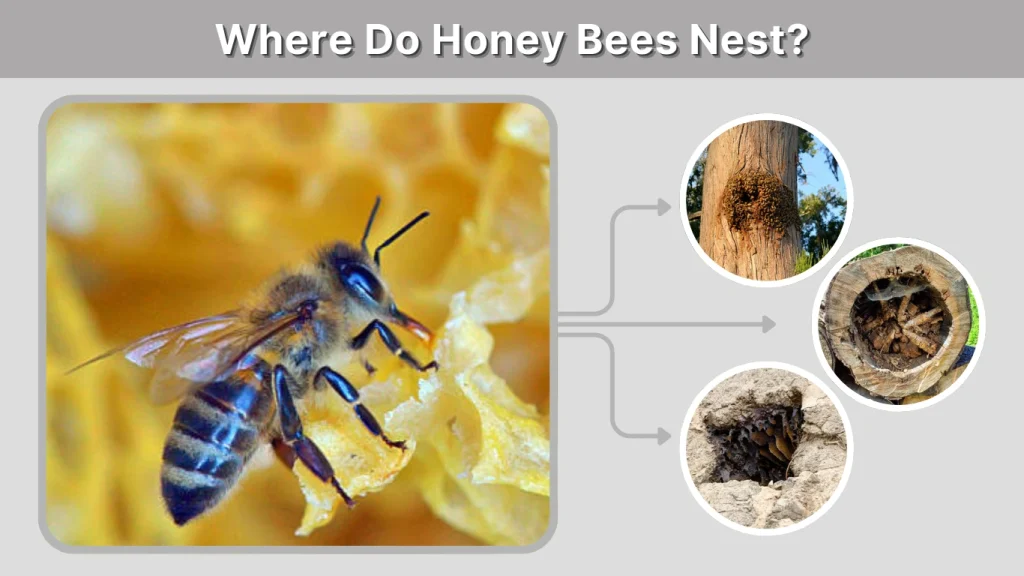
Honey bees prefer sheltered, enclosed spaces that protect them from weather and predators. Common natural nesting places include:
- Hollow tree trunks
- Fallen logs
- Rock crevices
- Naturally formed cavities in hillsides or caves
These sites offer stable temperatures, dry interiors, and protection from wind and rain.
Human Structures They Use
When natural cavities are limited, honey bees readily move into man-made structures. You may find nests in:
- House walls
- Siding gaps
- Attics and roof soffits
- Barns, garages, and sheds
- Chimneys
- Hollow fence posts or deadwood
Bees prefer small, defensible entrances and warm interiors, which is why home walls are particularly attractive.
Do Honey Bees Nest in the Ground?
Why Most Honey Bees Avoid Ground Nests
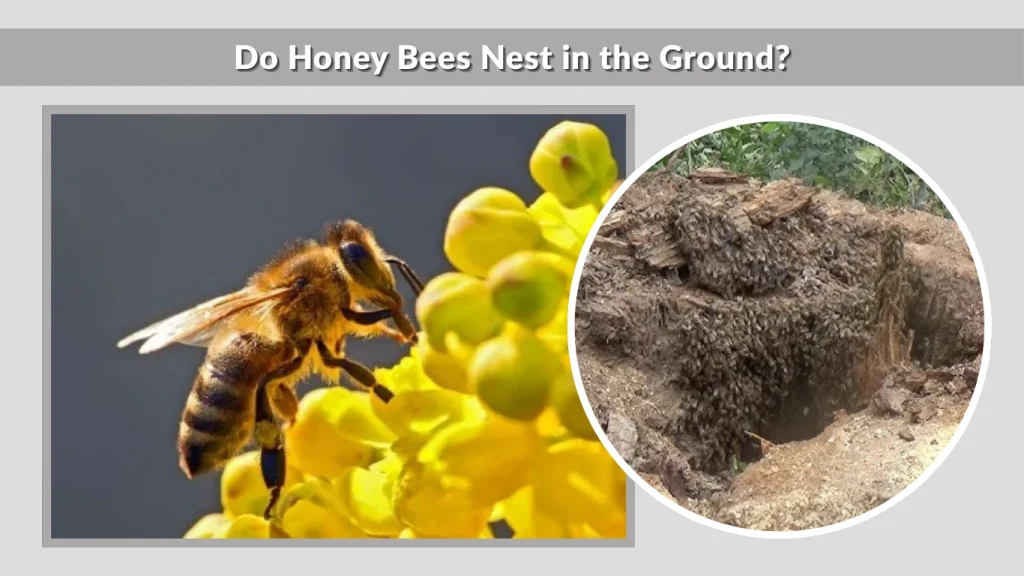
Honey bees rarely nest underground because soil retains moisture, attracts predators, and may collapse on the comb structure. Their nests require dry, enclosed spaces where wax can stay intact and ventilation can be maintained.
When Underground Honey Bee Nests Do Happen
Although rare, there are instances where honey bees nest in ground cavities. This can occur when:
- A dense forest or desert area has few tree cavities
- A large dry underground chamber, like an abandoned burrow, is available
- Africanized honey bees select ground-level hollows due to their adaptability
Still, these cases remain statistically uncommon.
Species Commonly Mistaken for “Ground Honey Bees”
Most “ground honey bee nests” are actually:
- Yellow jacket wasp nests, which are aggressive and truly underground
- Miner bees, small solitary bees that dig tiny burrows
- Digger bees, solitary ground-nesting pollinators
- Bumble bees, which often use abandoned rodent holes
Understanding these distinctions prevents accidental harm to beneficial species.
Honey Bee Nests in Homes
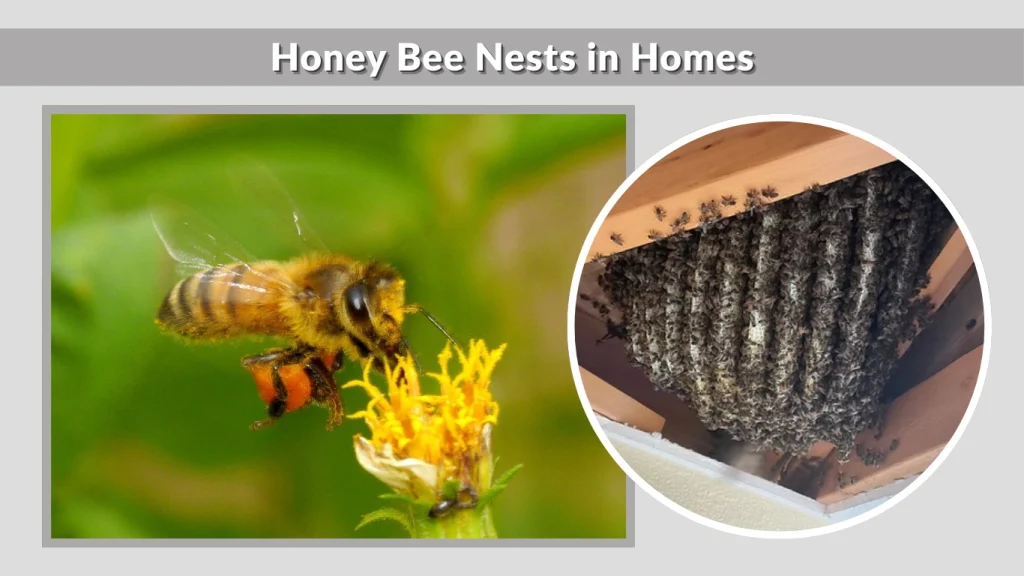
How Honey Bees Enter Houses
Honey bees can squeeze through openings as small as ⅛ inch. Common entry points include:
- Cracks between siding panels
- Gaps in roofing or soffits
- Chimney openings
- Holes around vents or utility lines
Once inside a cavity, bees begin building wax combs rapidly, expanding the nest within days.
Signs of a Nest in Your Home
Indicators of a honey bee nest indoors include:
- A concentrated stream of bees entering one spot
- A steady humming sound in walls or ceilings
- Warm areas on interior drywall
- Honey seepage or dark stains
- Increased bee presence around windows or lights
Early detection helps prevent large-scale structural damage.
Is a Honey Bee Nest in Your Home Dangerous?
While honey bees are not aggressively territorial, a nest inside the home can create serious issues. Melting honey can leak into drywall, attracting ants, rodents, and mold. The weight of wax and honey may damage walls. If the colony is Africanized, defensiveness increases significantly. Proper removal is recommended for all indoor nests.
Honey Bee Nests in Trees
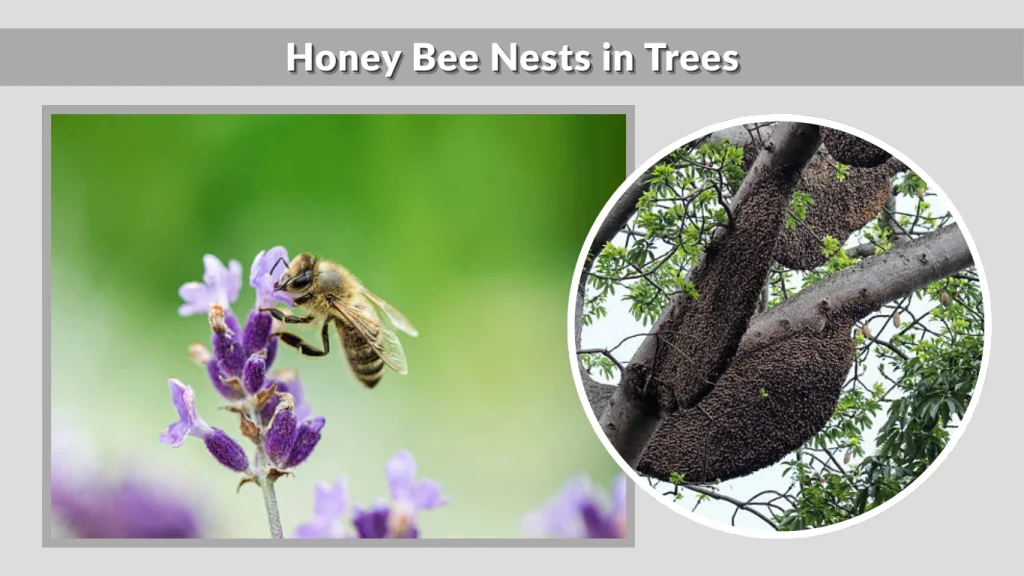
How Tree Cavities Support Colonies
Tree hollows provide insulation, protection from predators, and stable interior humidity. These natural cavities are the preferred nesting sites for wild honey bees.
Wild Nest Appearance
A honey bee nest inside a tree may show:
- Bees entering a round or irregular entrance hole
- Guard bees near the opening
- Occasional visible comb if the cavity is shallow
- A constant flight path of workers returning with pollen
These nests usually remain stable unless the tree becomes damaged or diseased.
Africanized Honey Bee Nests
Structural Differences
Africanized honey bees, sometimes called “killer bees,” often build nests in smaller cavities than European honey bees. They may construct combs closer to the entrance and adapt quickly to unusual spaces, including water meter boxes, ground-level hollows, or small gaps around buildings. Their nests may appear more exposed and less organized due to rapid expansion.
Behavioral Differences
Africanized colonies are significantly more defensive. Disturbances near the nest can trigger aggressive behavior, with bees pursuing threats over longer distances. They also swarm more frequently and may relocate their nest multiple times per year. Their adaptability allows them to inhabit spaces European honey bees avoid, including ground cavities.
Honey Bee Nest vs Wasp Nest (Comparison Table)
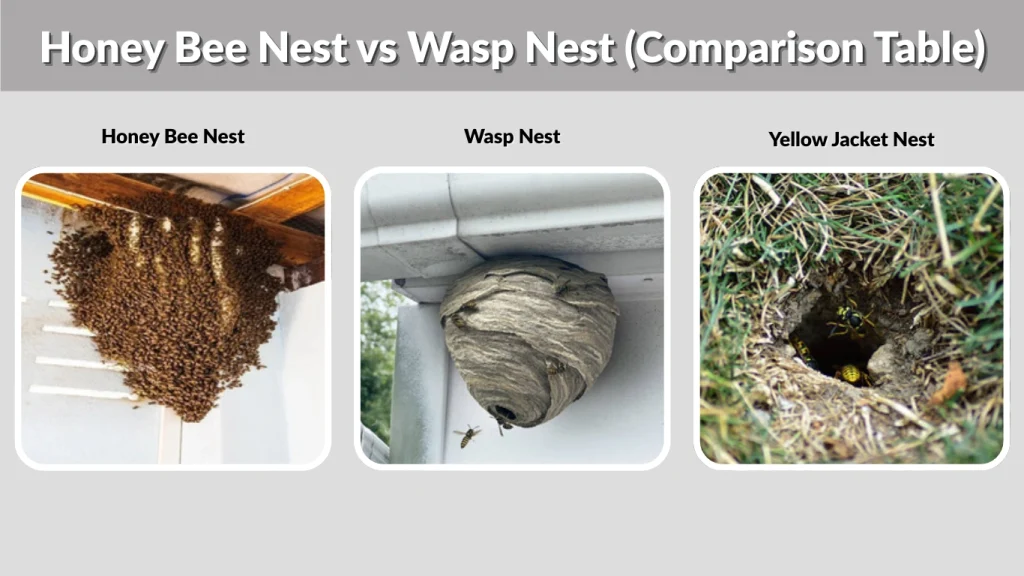
Key Visual and Behavioral Differences
| Feature | Honey Bee Nest | Wasp Nest | Yellow Jacket Nest |
| Material | Wax comb | Paper-like pulp | Paper underground |
| Shape | Flat comb sheets | Umbrella or ball-shaped | Layered chambers |
| Color | Golden/yellow | Gray or brown | Gray underground |
| Location | Inside cavities (trees, walls) | Eaves, branches | Burrows in the ground |
| Aggression | Defensive near nest | More aggressive | Highly aggressive |
| Visibility | Hidden in cavities | Usually exposed | Hidden underground |
Understanding these differences is crucial for safe removal. Treating a wasp nest like a honey bee nest can lead to dangerous mistakes.
How to Find a Honey Bee Nest
Visual Clues
To locate a honey bee nest, watch for patterns of bee movement. Bees returning to the nest carry pollen, making them easier to spot. Look at fences, roof edges, tree trunks, holes in siding, and chimneys for entry activity. Indoors, you may hear buzzing or notice warm spots on walls where the nest sits behind the surface.
Tracking Bee Flight Paths
Honey bees often fly in straight or semi-straight paths to their nest. Observe them during early morning or late afternoon when flight traffic is high. By standing back at a distance and watching the direction of their movement, you can estimate the nest’s general location. Repeating this from several angles helps triangulate the exact spot.
How Far Do Honey Bees Travel From Their Nest?

Foraging Range
Honey bees commonly travel 2–3 miles from their nest in search of nectar and pollen. Under stress or when resources are limited, they may extend their range up to 5–6 miles. Their powerful navigation abilities allow them to return precisely to the same cavity each time.
Why Distance Matters
Understanding their range helps in:
- Locating wild nests
- Managing colonies for crop pollination
- Determining removal responsibilities
- Preventing nests from being mistaken for another colony
If bees are present in your yard, the actual nest may be located several miles away.
Honey Bee Nest Removal
When Removal Is Necessary
Not all honey bee nests need to be removed. Outdoor nests in trees or natural cavities should be left alone unless they pose a safety risk. Removal becomes necessary when:
- The nest is inside a home
- The colony is Africanized
- Honey leakage causes structural issues
- Bees threaten pets or children
Removal Methods
Live removal is the most ethical and environmentally responsible option. Professional beekeepers or removal specialists can gently extract comb and relocate the colony.
Trap-outs coax bees out over time without killing them.
Cut-outs require opening a wall or structure to remove the entire nest safely.
Avoid extermination; it is harmful to the environment and may be illegal in some areas.
Post-Removal Prevention
After removing a nest, sealing entry points is essential. Use caulk, expanding foam, or wood patches to block gaps. Repair damaged siding, soffits, and roofing. Removing residual wax and honey is important because the scent can attract new colonies or pests.
How to Remove a Honey Bee Nest Safely
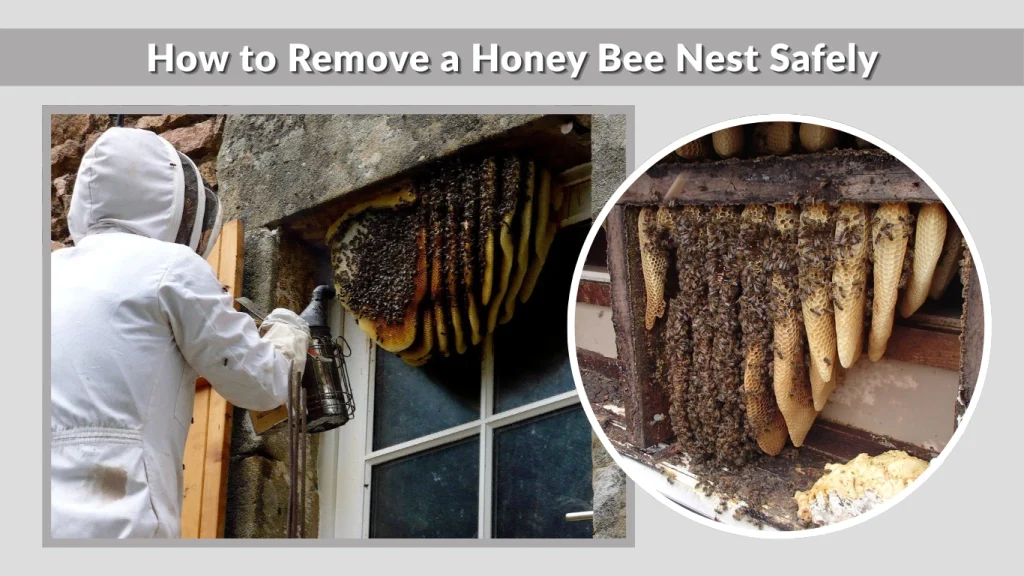
Step-By-Step Overview
- Identify the species. Confirm that it’s a honey bee nest, not wasps or yellow jackets.
- Call a licensed remover. Professionals have protective gear and specialized tools.
- Prepare the site. Ensure pets and people stay clear.
- Perform live removal. The colony is relocated instead of killed.
- Clean the area. Remove leftover wax, honey, and debris.
- Seal openings. Prevent future infestations.
Why DIY Removal Is Dangerous
Attempting removal yourself can lead to multiple stings, falls, property damage, or provoking a defensive colony. Indoor nests are especially hazardous because cutting into walls requires skill and may expose electrical wiring or hidden structural issues. Many areas also have regulations protecting honey bees, making professional removal necessary.
Cavity-Nesting Honey Bees
Why Honey Bees Prefer Cavities
Cavities offer stable temperatures, predator protection, and enough space to store honey reserves. These sheltered areas keep the nest insulated and allow bees to regulate airflow effectively, which is crucial for brood development.
Ideal Nest Requirements
Honey bees prefer spaces:
- Around 30–60 liters
- Completely dry
- With a small, defensible entrance
- Surrounded by insulating material such as wood or dense walls
These preferences guide swarm decisions when selecting new nesting sites.
Bumble Bee Nest vs Honey Bee Nest
Quick Comparison List
- Bumble bee nests are small, messy clusters of wax pots
- Honey bee nests are large, structured sheets of wax comb
- Bumble bees often nest underground; honey bees prefer cavities
- Bumble bees produce little to no honey; honey bees store large reserves
- Bumble bee colonies die yearly; honey bee colonies survive with winter stores
Wild Honey Bee Nests
How They Differ From Managed Hives
Wild honey bee nests form organically inside cavities without the uniform structure of man-made frames. Combs may be curved, uneven, or molded around irregular surfaces. The colony manages ventilation and comb space without human assistance.
Largest Wild Nests Recorded
Some of the largest known honey bee nests have filled entire tree trunks, occupying many feet of vertical space. In Asia, giant honey bee species build massive open-air combs on cliffs, visible from great distances. These natural structures demonstrate the remarkable adaptability of honey bees.
FAQs
Where do honey bees normally make their nests?
Honey bees typically nest in sheltered cavities such as hollow trees, wall cavities, chimneys, and other enclosed spaces. They prefer locations with dry interiors and a small, defensible entrance. Natural cavities offer protection from predators and weather, making them ideal nesting sites.
Do honey bees ever nest in the ground?
While rare, honey bees sometimes use underground cavities if conditions are dry and spacious. More commonly, people mistake yellow jackets or miner bees for honey bees. True ground nests by honey bees usually occur only when cavity options are limited or in Africanized bee regions.
Is a honey bee nest in the house dangerous?
A nest inside a home can cause structural damage, honey seepage, mold, and increased pest activity. Although honey bees are not naturally aggressive, indoor colonies can become defensive. Professional live removal is always recommended to avoid hazards and protect the colony.
How can I tell a honey bee nest from a wasp nest?
Honey bee nests are made of wax comb and hidden inside cavities, while wasp nests are papery and often exposed. Honey bees create golden parallel combs; wasps build gray, lightweight layers. Behavior, nest location, and material are the strongest indicators of which insect you’re dealing with.
Will honey bees return after a nest is removed?
Honey bees usually do not return once the nest and scent are removed and the entry point is sealed. However, if gaps remain unsealed, new swarms may be attracted by lingering odors. Proper cleaning and closing of openings prevent reinfestation.
