
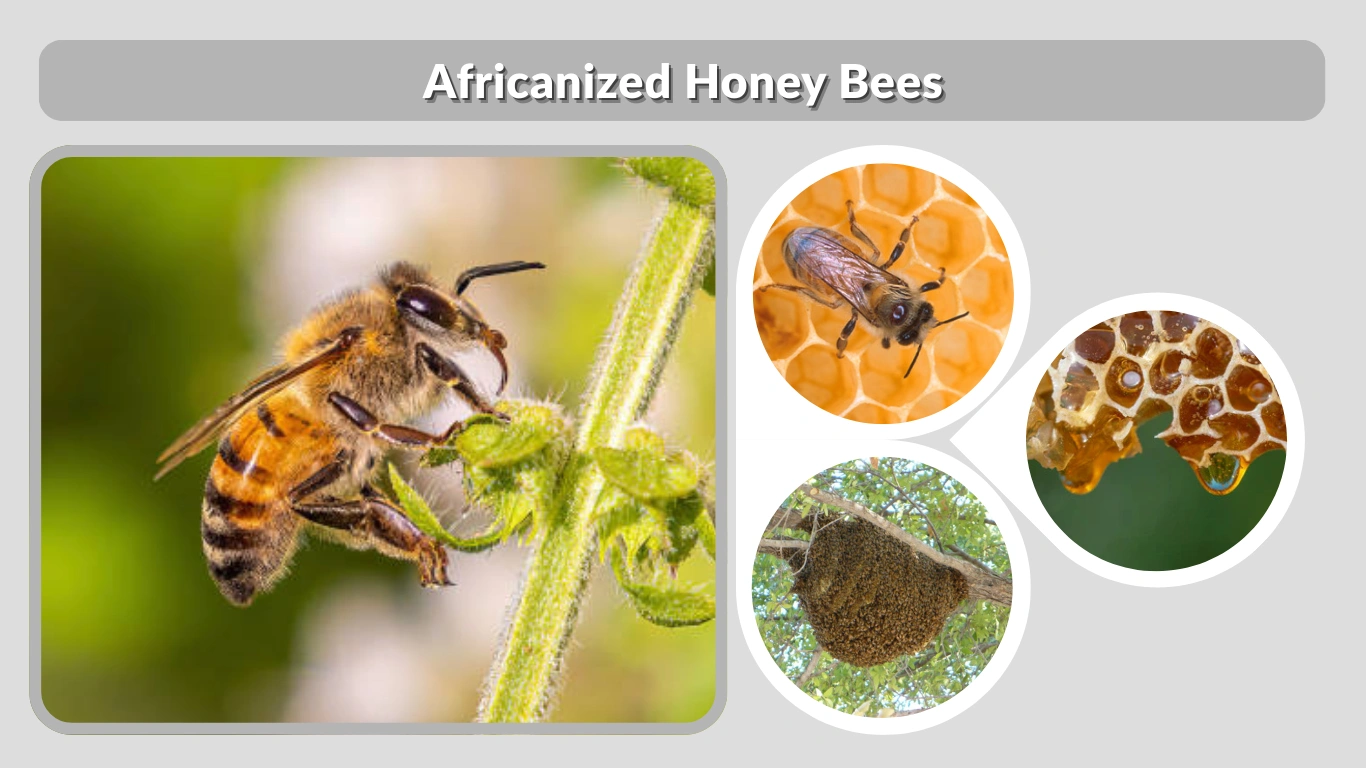
Africanized honey bees—popularly known as “killer bees”—are one of the most misunderstood insects in the Americas. Despite their alarming reputation, these bees are not a separate species but a hybrid of African and European honey bees. Their defensive behavior, rapid spread, and adaptability have contributed to both fear and fascination. Understanding their origin, appearance, behavior, and habitat is essential for reducing risk, recognizing warning signs, and protecting ecosystems.
What Are Africanized Honey Bees?
Definition & Background
Africanized honey bees are a hybrid of African Apis mellifera scutellata and several European honey bee subspecies. They were originally bred in Brazil during the 1950s to create a more productive tropical honey bee capable of thriving in hot climates. However, after several queens escaped from containment, they began interbreeding with local bees and rapidly expanding northward. Within decades, these hybrids migrated through South America, Central America, Mexico, and eventually into the southern United States.
Why They Spread So Quickly
Africanized honey bees are exceptionally adaptable. They swarm more frequently than European honey bees, allowing them to create new colonies at a faster rate. Their ability to defend nests aggressively also helps them outcompete gentler bees in tropical and subtropical environments. Additionally, their tolerance for warm temperatures makes them highly successful in regions where winters are mild.
Identification
What Africanized Honey Bees Look Like
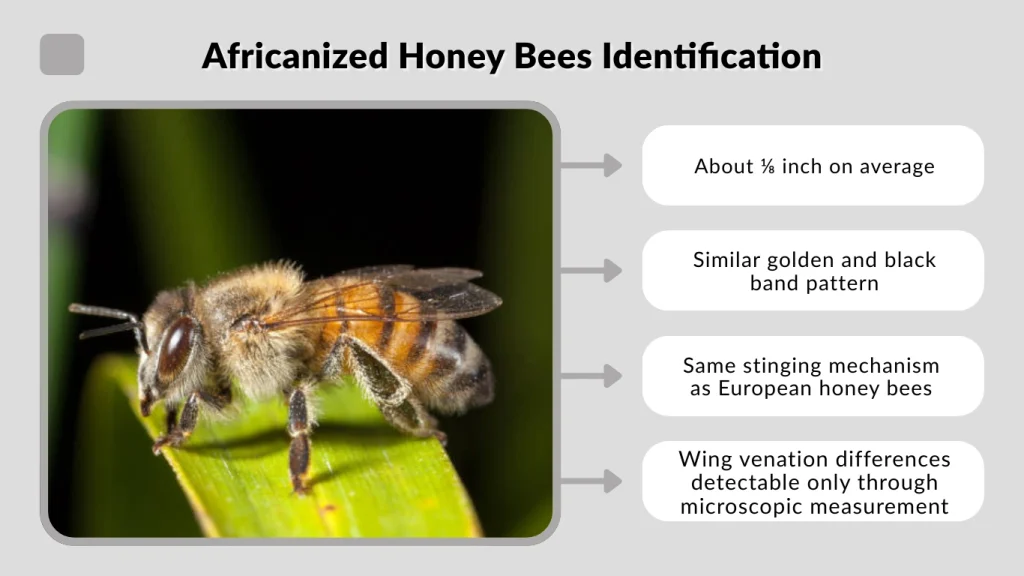
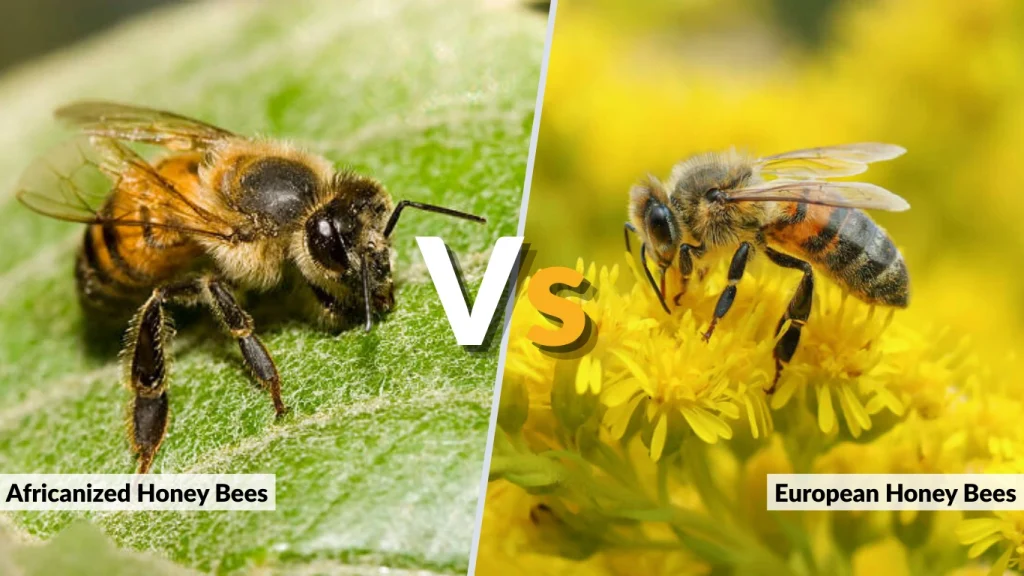
Africanized honey bees look almost identical to European honey bees. They share the familiar golden-brown coloration, banded abdomen, and fuzzy thorax. Because they are only slightly smaller—about ⅛ inch on average—visual identification is unreliable. The subtle differences are often invisible to the naked eye, making behavior a much more accurate indicator.
Physical Characteristics
- Slightly smaller body size
- Narrower thorax
- Similar golden and black band pattern
- Same stinging mechanism as European honey bees
- Wing venation differences detectable only through microscopic measurement
These similarities are why trained professionals rely on genetics and behavior, not appearance, to confirm Africanized colonies.
How to Tell Africanized from European Honey Bees
Unlike European honey bees, Africanized bees show clear behavioral differences:
- They respond faster to disturbances—within 3–5 seconds.
- They deploy more defenders to protect the hive.
- They chase perceived threats for much longer distances.
- They nest in smaller and more unusual spaces, such as irrigation boxes, grills, or sheds.
These behavioral traits are often the first and most reliable clues that a colony may be Africanized.
Origin & History of Spread
Native Range of African Honey Bees
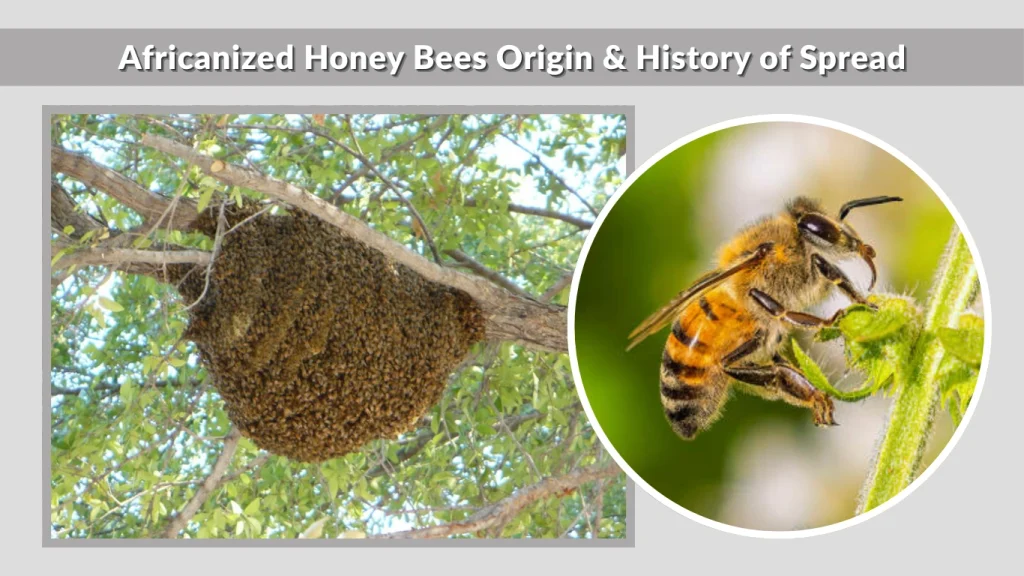
African honey bees are originally native to the warm, dry regions of eastern and southern Africa. These environments presented numerous threats—from predators to extreme temperatures—leading to the evolution of bees with heightened defensive instincts and exceptional survival strategies. These evolutionary pressures shaped the traits now seen in Africanized honey bees.
Accidental Introduction in Brazil (1956)
Breeding Experiments
In the 1950s, Brazilian scientists sought to improve honey production in tropical climates by crossbreeding African bees with European breeds. The goal was to produce bees that were productive, resilient, and better suited for warm environments than European honey bees, which struggled under tropical conditions.
Escape & Initial Spread
In 1956, several African queens accidentally escaped from experimental hives. These queens quickly bred with local bee colonies, creating hybrids that soon spread uncontrollably. Their rapid reproduction, swarming frequency, and adaptability allowed them to expand across vast regions of South America within only a few decades.
Arrival in North America
Africanized honey bees reached Mexico in the 1980s, crossed into Texas in 1990, and continued spreading throughout the American Southwest. Their presence is now confirmed in several U.S. states, particularly those with warm climates that prevent winter die-offs. Their expansion has slowed in recent years due to colder northern climates acting as natural barriers.
Current Range & Maps
Distribution Across the Americas
Africanized honey bees are now widespread in:
- Brazil and most of South America
- Central America
- Mexico
- The southern regions of the United States
Their distribution closely follows temperature patterns. They thrive in regions where winter temperatures do not drop low enough to kill colonies or interrupt brood cycles.
U.S. States With Africanized Honey Bees
Texas
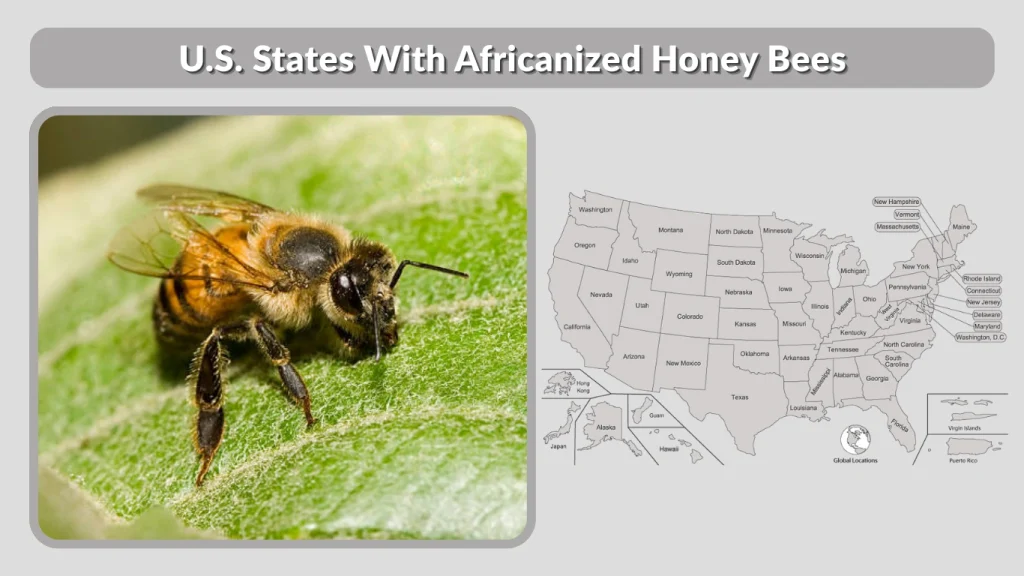
Texas has some of the highest Africanized bee populations due to its warm climate and abundant nesting sites. They are commonly found in both rural and urban areas.
Arizona
A major Africanized honey bee hotspot. Frequent encounters occur in deserts, residential neighborhoods, and natural parks.
California
Established mainly in the southern and central regions, where mild weather supports year-round bee activity.
Florida
Africanized honey bees thrive in Florida’s hot, humid environment, though dense vegetation can make nests harder to detect.
Other States
Occasional detections in Georgia, Alabama, Oklahoma, Arkansas, and Nevada occur, but populations remain limited by climate.
Habitat & Nesting Behavior

Preferred Habitat
Africanized honey bees thrive in warm, dry, and subtropical environments. They prefer regions with consistent nectar sources and mild winters, which allow colonies to remain active year-round. Their natural climate preferences closely resemble the savannas and semi-arid landscapes of their African ancestors. As a result, they are well-established in deserts, grasslands, forest edges, and urban zones where human structures provide abundant nesting sites.
Nesting Sites
Common Locations
Africanized bees are highly flexible in choosing nesting sites. Unlike European honey bees, which prefer large cavities such as hollow trees or spacious structures, Africanized bees often nest in:
- Irrigation boxes
- Sheds and garages
- Abandoned vehicles
- Utility meters
- Tree hollows
- Mailboxes or outdoor grills
- Underground cavities
Their ability to occupy small spaces allows them to live in areas where European honey bees typically would not.
Differences from European Nests
Africanized honey bees:
- Select smaller cavities
- Move their nests more often
- Swarm more frequently
- Maintain smaller but more defensive colonies
These traits contribute to their rapid spread and greater visibility, particularly in populated neighborhoods.
Behavior & Temperament
Defensive Behavior
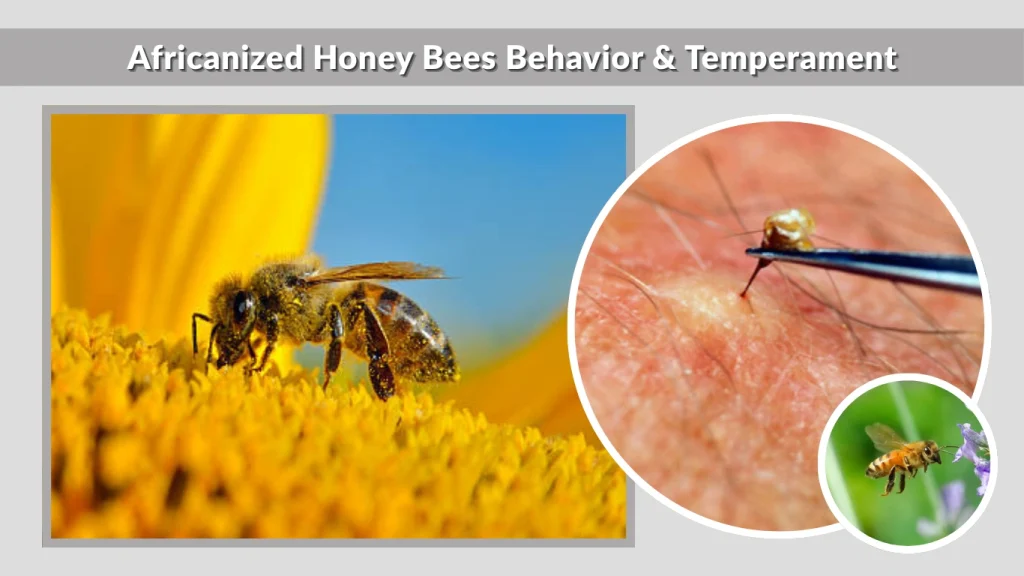
Africanized honey bees are not inherently more venomous than European honey bees, but their defensive behavior is significantly more intense. They respond to disturbances almost instantly and with much larger numbers. This collective behavior evolved as a survival mechanism in Africa, where predators such as honey badgers and birds frequently attacked hives.
Africanized bees can pursue perceived threats for up to ¼ mile, and they remain agitated for longer periods after an encounter. This heightened defensiveness is the primary reason they are considered dangerous.
Sting & Risk
Sting Effects
The sting of an Africanized honey bee is identical to that of a European honey bee in both toxicity and pain level. The difference lies in the quantity of stings, not their venom. A European colony may send out a few defenders, while an Africanized colony may deploy hundreds.
Why They’re Called “Killer Bees”
The term “killer bees” arises from rare but highly publicized cases involving multiple stings. Most fatalities occur when humans or animals unintentionally disturb a nest in a confined space, triggering a full defensive response. Pets and livestock are particularly vulnerable because they cannot escape quickly.
Africanized vs European Honey Bees
Key Differences (Comparison Table)
| Feature | Africanized Honey Bee | European Honey Bee |
| Temperament | Very defensive | Gentle |
| Swarming Frequency | Very high | Moderate |
| Nest Size | Small cavities | Larger cavities |
| Response Time | Seconds | Longer delay |
| Pursuit Distance | Up to ¼ mile | Short distance |
| Climate Preference | Warm, tropical | Broad climates |
| Honey Production | Variable | Generally higher |
Behavior Differences Explained
Africanized bees evolved under harsher environmental pressures. Their survival strategy relies on rapid colony reproduction, frequent swarming, and aggressive nest defense. European honey bees, by contrast, were bred over centuries for calm behavior and high honey production, especially in temperate climates.
These behavioral distinctions create challenges for beekeepers managing hives in regions where Africanized genetics have become widespread.
Do Africanized Honey Bees Make Honey?
Honey Production Facts
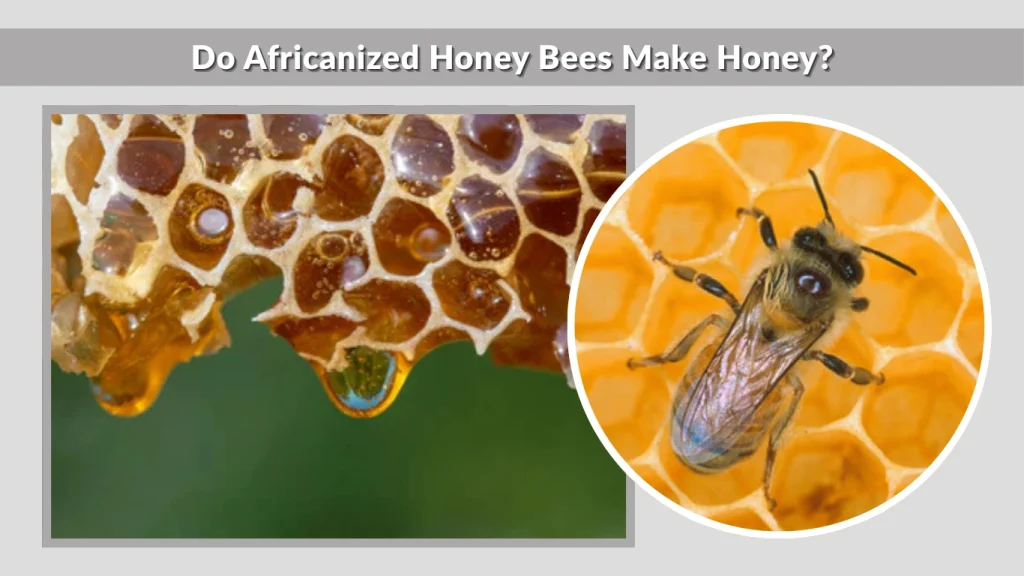
Yes—Africanized honey bees produce honey just like European honey bees. Their honey is chemically identical, with the same sugars, enzymes, and flavor potential. However, honey yield can vary widely depending on climate and behavior.
Advantages
In tropical climates, Africanized bees may produce more honey because they forage aggressively and maintain activity longer throughout the year.
Disadvantages
Frequent swarming reduces colony size, which lowers honey storage. Their defensive behavior also makes hive management more difficult for beekeepers, often resulting in lower harvests.
Diet & Foraging
What They Eat
Like all honey bees, they consume:
- Nectar
- Pollen
- Water
- Small amounts of propolis
Foraging Behavior
Africanized bees forage earlier in the day, explore wider areas, and are more persistent. These traits make them efficient pollinators but can also intensify competition with other bee species.
Invasive Species Impact
Impact on Native and Domestic Bees
Africanized honey bees outcompete European honey bees in warm regions by dominating nest sites and reproducing faster. Their aggressive behavior makes it difficult for beekeepers to manage docile European colonies, often leading to “Africanization” of managed hives.
Impact on the Environment
Positive Impacts
- High pollination efficiency
- Strong resilience to heat and some diseases
Negative Impacts
- Displacement of native pollinators
- Increased human-bee conflicts in populated areas
- Higher costs for hive management and removal services
Their invasive nature means they reshape local ecosystems—sometimes beneficially, often disruptively.
Management & Control
How to Reduce Risk at Home
Property owners can reduce nesting opportunities by:
- Sealing wall gaps and holes
- Removing old appliances and equipment
- Keeping sheds and garages closed
- Inspecting outdoor structures regularly
- Avoiding loud vibrations near known bee sites
Professional Removal
Why Removal Must Be Done by Experts
Africanized colonies should never be disturbed by untrained individuals. Licensed bee removal professionals understand how to safely relocate or eliminate colonies depending on local regulations. They use protective gear, smoke tools, and specialized techniques to prevent aggressive responses.
Preventing Spread
Beekeepers can reduce Africanization through:
- Routine requeening with European queens
- Maintaining strong hive genetics
- Monitoring hive temperament
- Participating in state-level breeding programs
Public education also remains crucial in high-risk regions to prevent accidental encounters.
FAQs
What is an Africanized honey bee?
Africanized honey bees are hybrids of African and European honey bees known for their intense defensive behavior. They originated in Brazil in the 1950s and spread across the Americas due to their adaptability and frequent swarming.
Are Africanized honey bees dangerous?
They are dangerous because they react quickly and attack in large numbers, not because their venom is stronger. Most problems occur when people accidentally disturb a nest.
Do Africanized bees make honey?
Yes. Their honey is identical to that of European bees. In tropical climates, they may even produce more, though frequent swarming often reduces harvests.
Where do Africanized honey bees live?
They live in warm climates across South America, Central America, Mexico, and the southern United States. They prefer small cavities in urban and natural environments.
How do I identify Africanized honey bees?
Identification relies on behavior—fast aggression, numerous defenders, and nesting in small spaces. Physical traits are nearly identical to European honey bees, so appearance alone is unreliable.
