
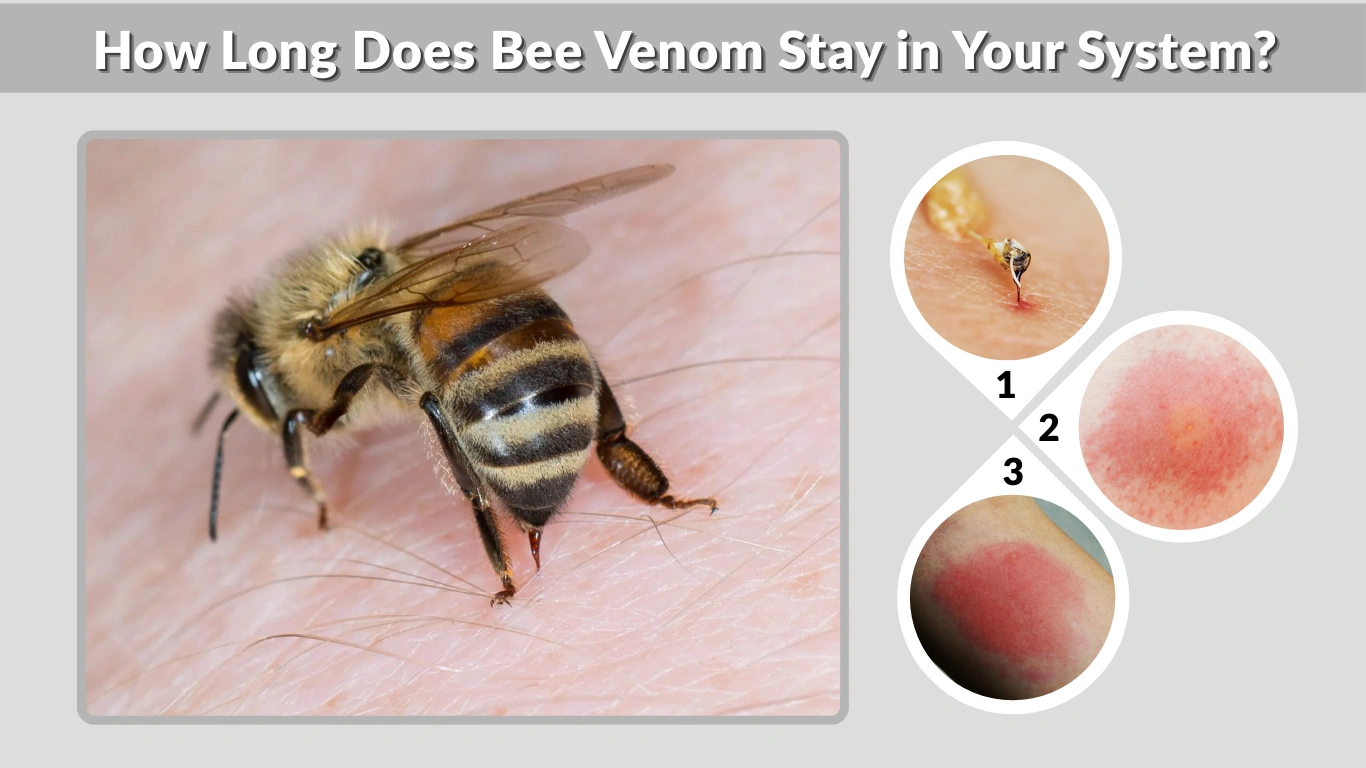
Bee stings are a common outdoor concern, but many people are unsure how long the venom actually stays in their system. While the pain, swelling, and redness may last for days, the venom itself behaves differently. Understanding how bee venom works—and how long it remains active—can help you manage symptoms, avoid complications, and know when to seek medical attention. This guide explains what happens during a sting, how the body clears venom, and why reactions can last longer than the venom itself.
What Happens When a Bee Stings You
When a bee stings, it injects venom containing a mix of peptides, enzymes, and inflammatory chemicals. Honey bees have a barbed stinger, meaning the stinger becomes lodged in the skin and continues pumping venom for 30–60 seconds until removed. Bumble bees and carpenter bees have smooth stingers and inject a smaller amount of venom, usually only once.
Bee venom is designed to trigger immediate inflammation. This response helps the bee defend its colony or itself by deterring predators—including humans.
How Long Does Bee Venom Stay in Your System?
Average Duration in the Body
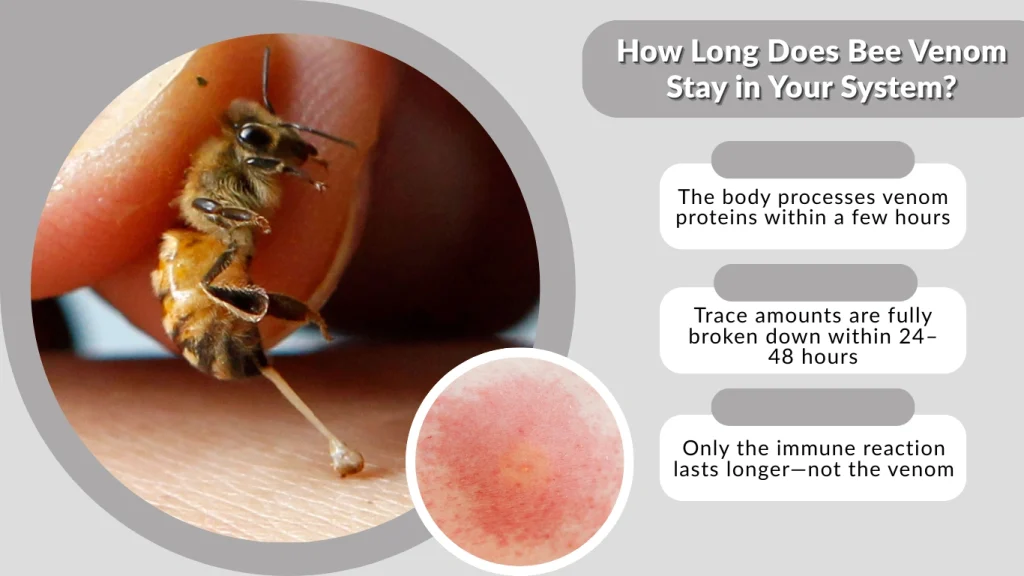
Bee venom generally does not stay in your system for very long. Most venom compounds break down quickly:
- The body processes venom proteins within a few hours
- Trace amounts are fully broken down within 24–48 hours
- Only the immune reaction lasts longer—not the venom
When people feel swollen or itchy for several days, it is because their immune system continues responding even after the venom is gone.
How Long Symptoms Last
Although venom clears quickly, symptoms can linger:
- Normal reaction: 1–3 days
- Moderate swelling: 3–7 days
- Large local reaction: 7–10 days
Some people develop a firm, painful lump that can last for a week or more. This doesn’t mean venom is still present—it’s inflammation.
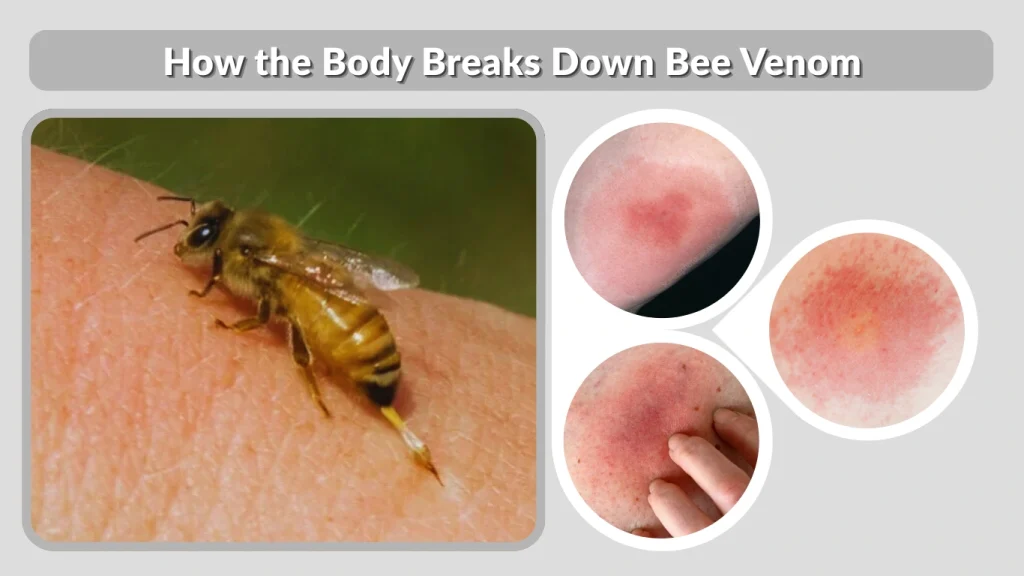
How the Body Breaks Down Bee Venom
Venom Components
Bee venom contains several compounds that affect the skin instantly:
- Melittin: causes sharp pain and destroys cells
- Phospholipase A2: triggers inflammation
- Histamines: cause redness and itching
- Other enzymes: break down cell membranes
These substances work fast but are short-lived once the immune system begins clearing them.
How the Immune System Responds
After a sting, the body reacts in stages:
- Immediate burning sensation
- Swelling from fluid buildup
- Local redness from blood vessel dilation
- Itching during healing
Even after venom is gone, your immune system may stay active for days. This is why symptoms last longer than venom.
When the Body Fully Clears Venom
Most of the venom is cleared within:
- 24 hours for mild stings
- 48 hours for larger reactions
The lymphatic system breaks down and removes remaining molecules, leaving only inflammation behind.
Pain, Swelling & Reaction Timeline
Bee sting symptoms follow a predictable pattern.
First 10 Minutes
- Sharp pain
- Small red bump appears
- Venom spreads only a short distance around the sting site
Pain usually peaks quickly and fades within minutes.
First 24 Hours
- Swelling increases
- Itching begins
- The area may feel warm
The immune system is actively responding.
Day 2–7
- Symptoms gradually improve
- Swelling reduces
- A hard lump may remain
Large local reactions take longer to calm down.
Day 7–10
- Redness resolves
- Skin may peel slightly as it heals
- Lump softens and disappears
If symptoms worsen instead of improving, it could indicate infection or allergic reaction
How Long Can Bee Sting Symptoms Last?
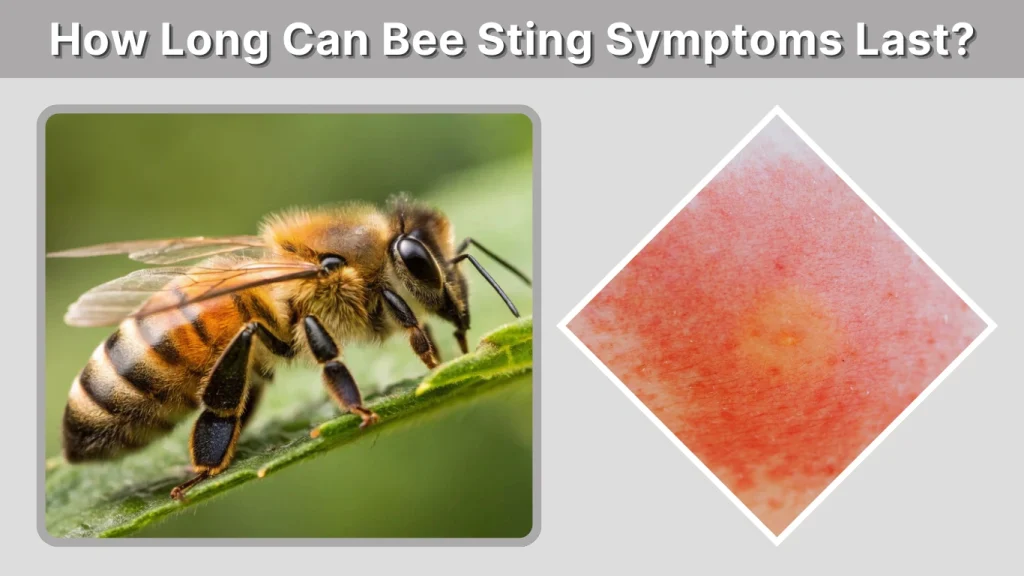
A quick comparison helps clarify the difference between venom duration and symptoms:
| Reaction Type | Venom Cleared | Symptoms Last |
| Mild reaction | 24–48 hours | 1–3 days |
| Moderate swelling | 24–48 hours | 3–7 days |
| Large local reaction (LLR) | 24–48 hours | 7–10 days |
| Allergic reaction | Hours | Varies; needs treatment |
Venom doesn’t stay long—your immune system does the rest.
Do Different Bees Leave Venom Longer?
Honey Bees
Honey bees inject the largest dose of venom because:
- Their barbed stinger stays in your skin
- The venom sac continues pumping venom until removed
The venom enters only once, but because of the mechanical pumping, it can be a stronger dose. Still, the venom clears from your system within 24–48 hours.
Bumble Bees
Bumble bees have smooth stingers:
- They do not leave a stinger behind
- They typically sting only once
- Venom dose is smaller
Their venom clears at the same rate as honey bee venom.
Carpenter Bees and Venom Duration
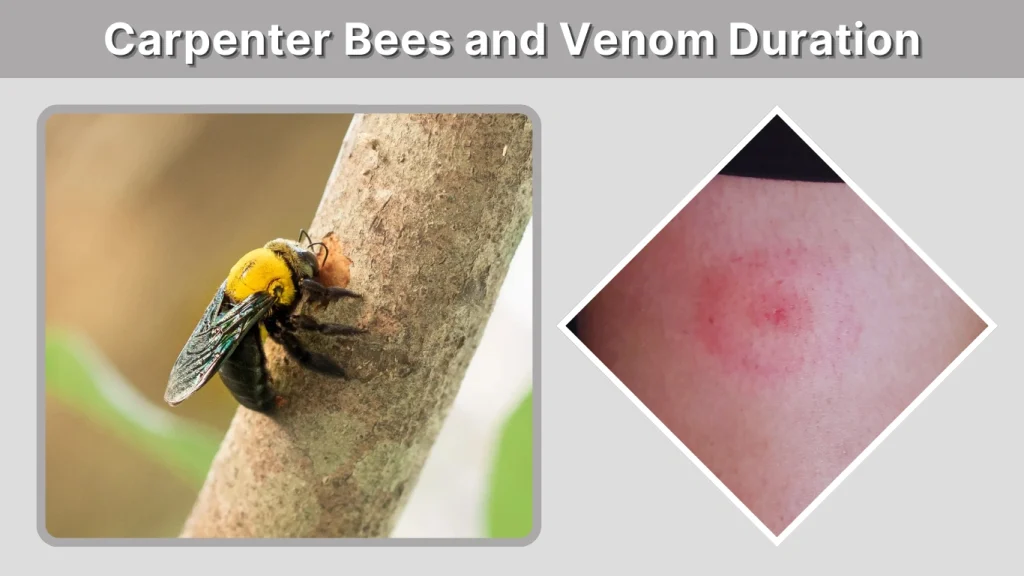
Carpenter bees rarely sting, but when they do, their venom behaves similarly to bumble bee venom. They have smooth stingers and inject a moderate amount of venom in a single sting.
Key points:
- Venom clears within 24–48 hours
- Symptoms usually last 1–3 days
- Carpenter bee stings are generally milder than honey bee stings
Because carpenter bees do not leave a stinger behind, the venom does not continue pumping after the initial injection.
Wasp and Yellow Jacket Venom (Important Comparison)
Though wasps are not bees, their stings often get mixed into the same questions.
Wasps and yellow jackets:
- Can sting repeatedly
- Inject venom with different chemistry
- Cause sharper and more immediate pain
However, the venom still clears from the body within 24–48 hours, similar to bee venom.
Symptoms may last slightly longer because their venom contains strong pain-inducing compounds like acetylcholine.
Factors That Affect How Long Venom Stays (or Feels Like It Stays)
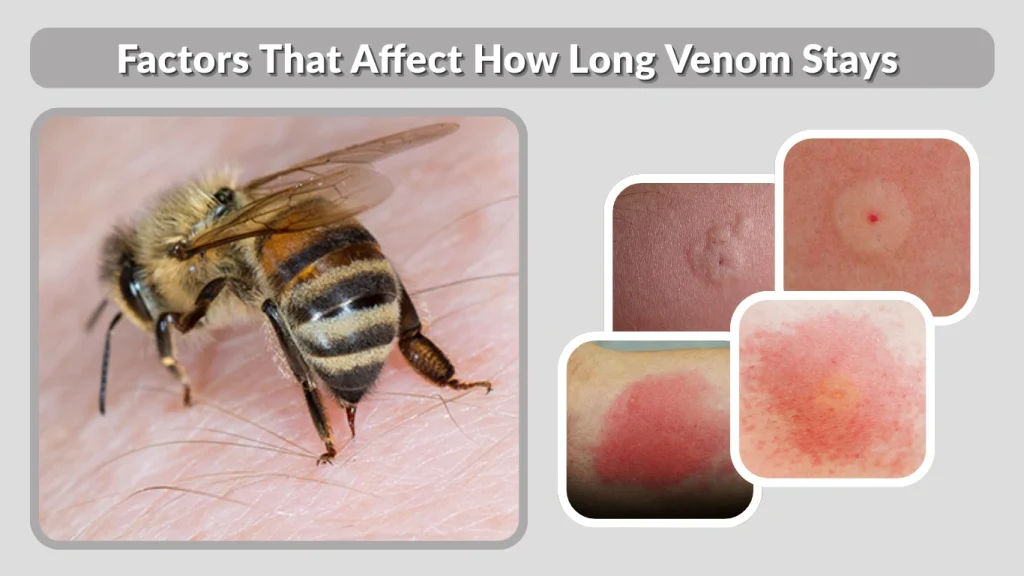
1. Immune System Sensitivity
People with highly reactive immune systems may experience:
- More redness
- Longer-lasting swelling
- Itching that continues after venom is gone
This does not mean venom is still present—only that the inflammation persists.
2. Age
Children often swell more, while older adults may experience slower healing.
3. Type of Sting
- Honey bees deliver more venom
- Multiple stings amplify swelling
- Leaving a stinger in longer increases venom dose
4. Medications
Immune suppressants, steroids, and antihistamines change the duration and intensity of symptoms.
5. Location of the Sting
Soft tissues—like the face, neck, or hands—tend to swell more and may take longer to heal.
How Long Does Bee Venom Stay in the Bloodstream?
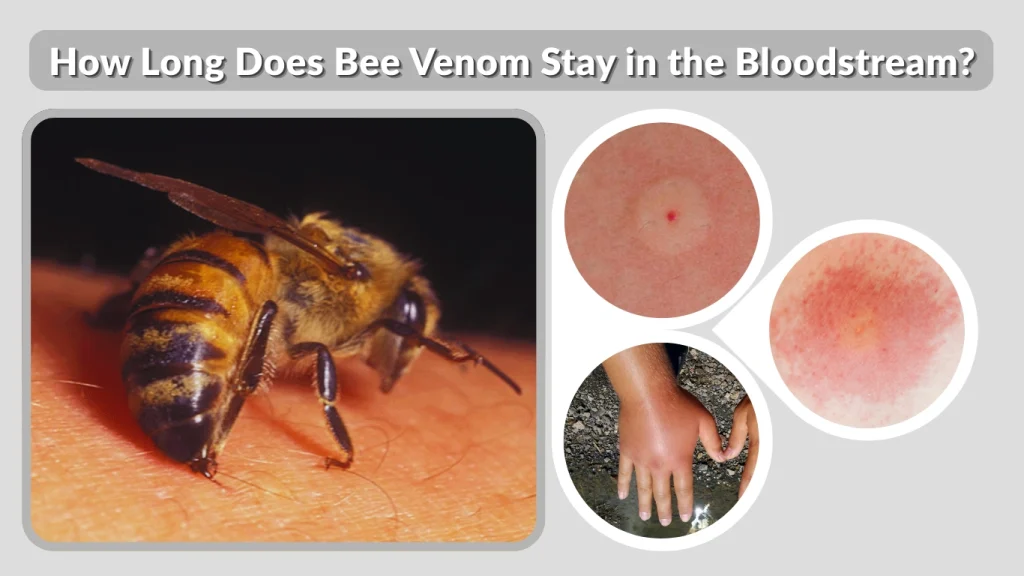
One of the biggest misconceptions is that bee venom circulates through the entire bloodstream.
Here’s the reality:
- Bee venom remains localized near the sting site
- Only trace amounts enter the bloodstream
- The body breaks down these molecules in a few hours
- No venom remains circulating after 24–48 hours
If symptoms appear on other parts of the body—hives, itching, swelling—this is an allergic reaction, not systemic venom.
Large Local Reactions (LLR)
Some people experience strong swelling that spreads 3 inches or more from the sting site. This is called a large local reaction.
How long does venom last in LLR?
- Venom is still cleared within 48 hours
- Symptoms last 7–10 days
- The swelling is immune-driven, not venom-driven
LLR stings can look alarming but are generally not dangerous unless accompanied by systemic symptoms.
Allergic Reactions & Anaphylaxis
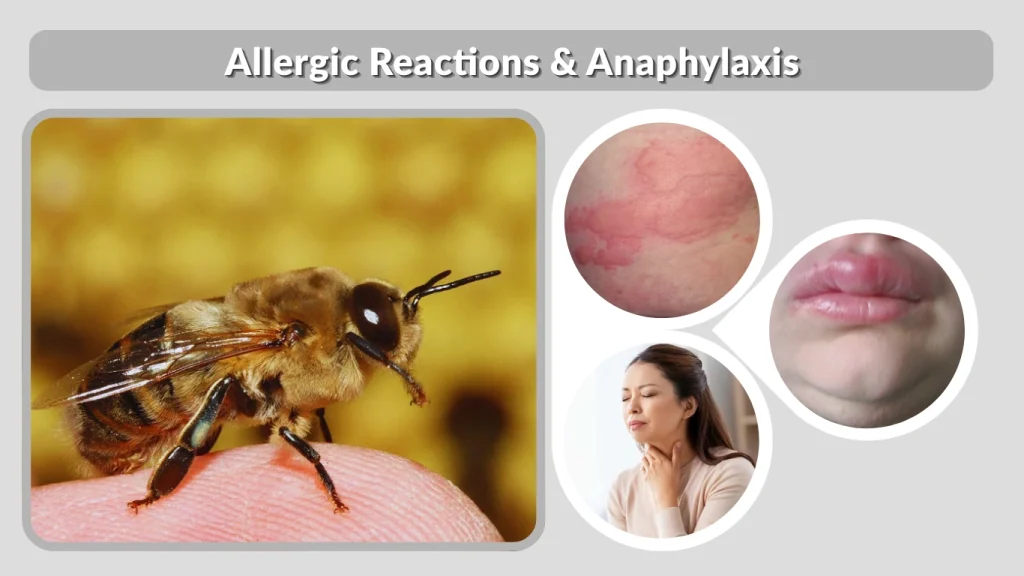
An allergic reaction is not caused by venom remaining in the body—it’s caused by your immune system overreacting to venom proteins.
Symptoms of an allergic reaction
- Hives far from the sting site
- Swelling of lips, eyes, or tongue
- Difficulty breathing or swallowing
- Drop in blood pressure
- Dizziness or fainting
How long allergic symptoms last
- Immediate symptoms appear within minutes
- Epinephrine works within moments
- Residual symptoms may last hours to days
- Medical supervision is required
People with bee venom allergies often undergo venom immunotherapy to reduce future reactions.
Bee Sting Venom vs Wasp Venom
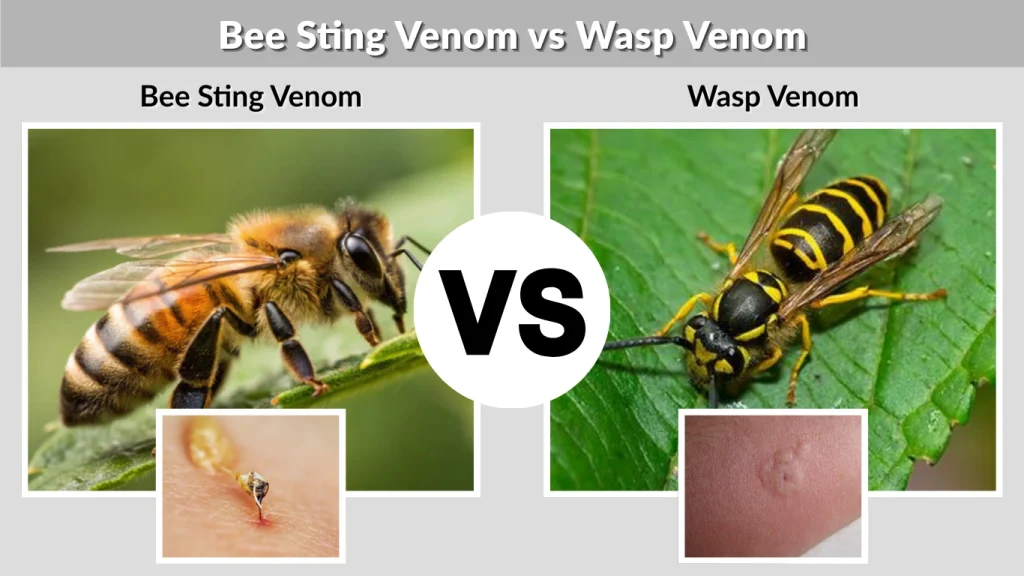
Understanding the difference helps explain symptom duration.
Bee Venom
Contains:
- Melittin (pain + cell damage)
- Phospholipase A2 (inflammation)
- Histamines
Wasp Venom
Contains:
- Kinins (cause burning pain)
- Acetylcholine (sharp sting)
- Serotonin (pain intensifier)
Which lasts longer?
Both bee and wasp venom clear within 24–48 hours, but:
- Bee stings usually leave longer-lasting itching
- Wasp stings cause sharper but shorter-lived pain
How to Reduce Venom Effects Quickly
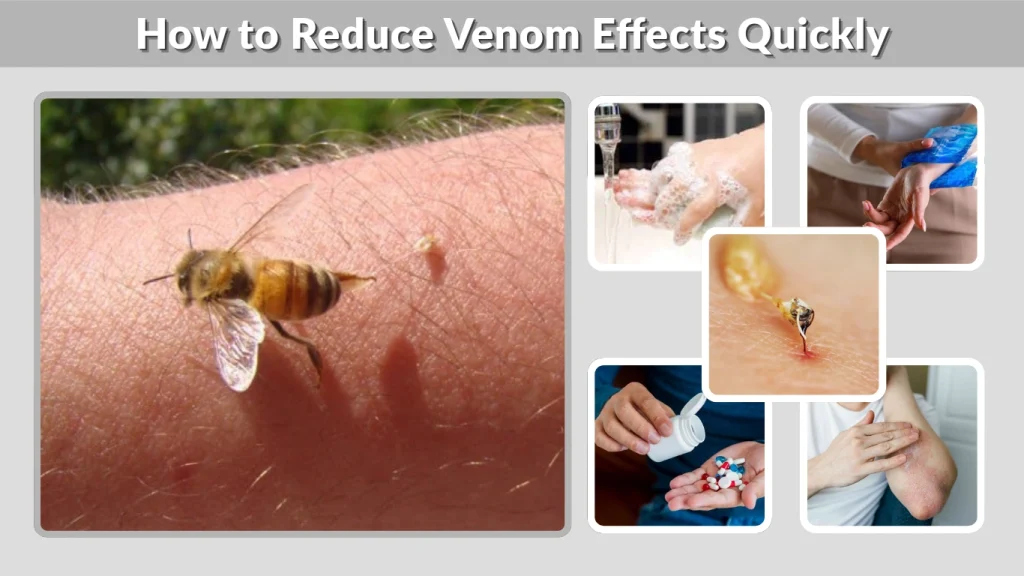
First Aid Steps
- Remove the stinger immediately (for honey bees)
- Wash the area with soap and water
- Apply a cold compress 10–20 minutes
- Take an antihistamine (cetirizine, loratadine, or diphenhydramine)
- Use hydrocortisone cream to reduce inflammation
Removing the stinger quickly prevents additional venom from entering your body.
Home Remedies
- Baking soda paste
- Aloe vera gel
- Apple cider vinegar compress
- Honey dab on sting site
- Calamine lotion
These won’t remove venom but help reduce symptoms.
Medical Treatment Options
- Prescription-strength antihistamines
- Oral steroids for large local reactions
- Antibiotics if infection develops
When to Seek Medical Help
Immediate emergency symptoms
- Trouble breathing
- Facial or throat swelling
- Hives spreading rapidly
- Dizziness or fainting
- Vomiting after a sting
Call emergency services immediately if these occur.
Call a doctor if:
- Symptoms worsen after 48 hours
- Swelling lasts more than 10 days
- The sting site appears infected
- You’ve had previous allergic reactions
FAQs
Does bee venom stay in your body for days?
No. Venom breaks down within 24–48 hours. Lingering symptoms are inflammation.
Why does swelling last a week?
Your immune system continues reacting even after venom is gone.
Do honey bee stings inject more venom than bumble bees?
Yes—honey bees inject more venom and continue pumping it if the stinger isn’t removed.
Does bee venom enter the bloodstream?
Only tiny trace amounts do, and they are cleared within hours.
How long does bee venom stay in your system after stinging?
Most venom is gone in 24 hours; all venom is gone within 48 hours.
