
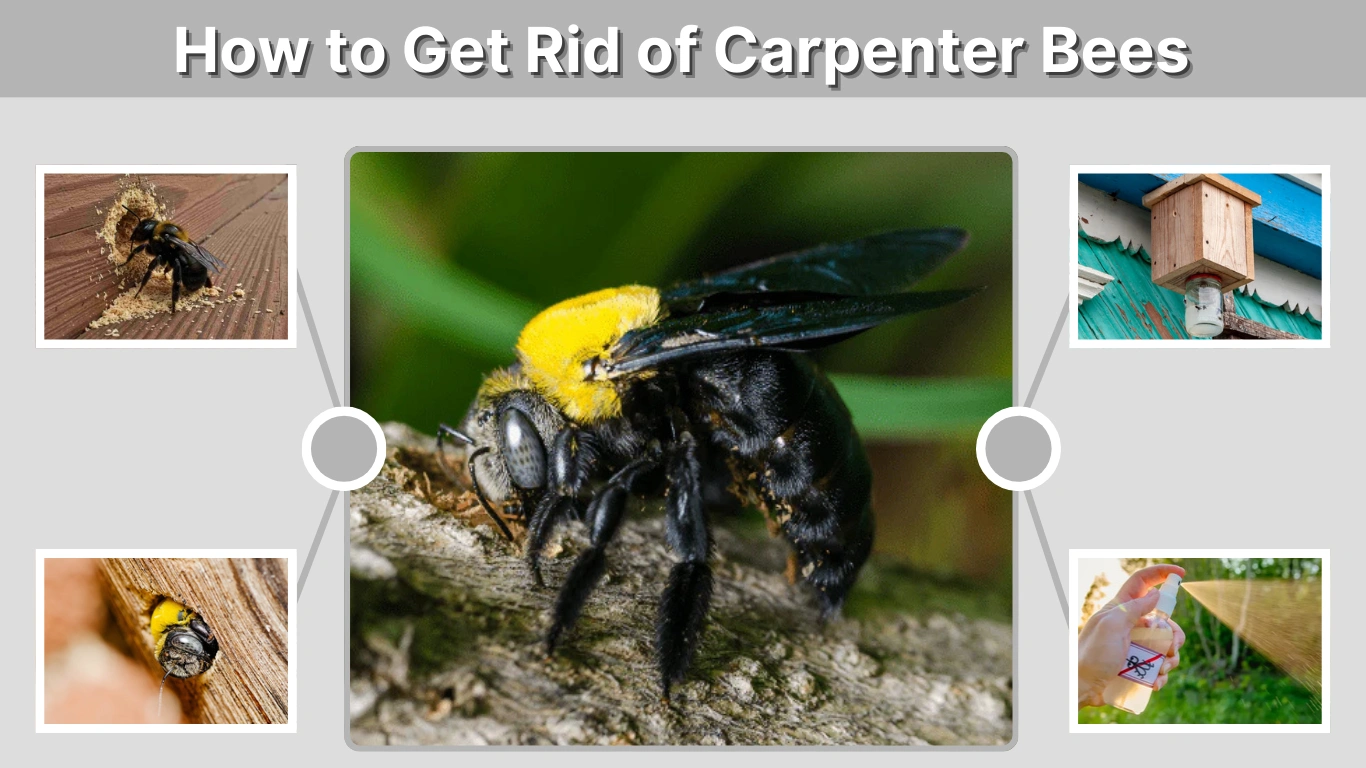
Carpenter bees are large, shiny-backed bees that often hover around decks, porches, siding, and roof edges in spring and summer. Although they are beneficial pollinators, they become a nuisance when they drill round holes into wood to create nesting tunnels. Many homeowners search for humane, natural, or fast ways to get rid of carpenter bees—and to prevent them from returning year after year. This guide covers safe methods, natural remedies, DIY techniques, and long-term prevention.
What Are Carpenter Bees?
Carpenter bees are often confused with bumble bees, but they have key differences. While bumble bees have fuzzy, rounded bodies, carpenter bees have smooth, shiny black abdomens. Their size can be intimidating—especially the large males that hover near people—but their behavior is mostly harmless.
Male carpenter bees cannot sting at all. They hover to defend territory, but they have no stinger. Female carpenter bees can sting but rarely do unless handled or threatened.
These bees become active in early spring, drilling into wood to create nesting tunnels. Although the damage begins small, repeated nesting seasons can cause long-term structural issues.
Why Carpenter Bees Drill Into Wood
Understanding Their Nesting Behavior
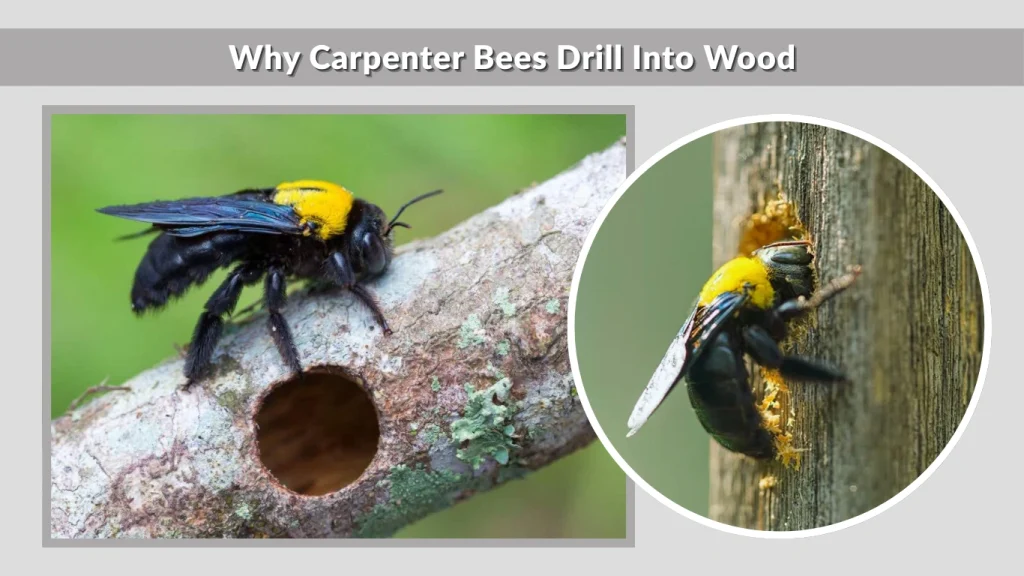
Carpenter bees do not eat wood—they excavate it to create tunnels where they lay eggs. A female bee drills a perfectly round hole, then carves a narrow tunnel that can extend several inches or more. Over the years, bees may reuse these tunnels, making them deeper and causing more damage.
They prefer:
- Untreated wood
- Soft woods like pine, cedar, redwood
- Exposed edges, railings, eaves, fascia, and porch ceilings
Signs of Carpenter Bee Activity
Carpenter bee infestations are easy to identify. Look for:
- Round, clean-cut entry holes (like drilled with a bit)
- Sawdust piles—called “frass”—beneath holes
- Bees hovering around wooden structures
- Scraping or buzzing sounds from inside wood during nesting season
These signs usually appear in spring when females begin building new tunnels.
How to Get Rid of Carpenter Bees (Overview)
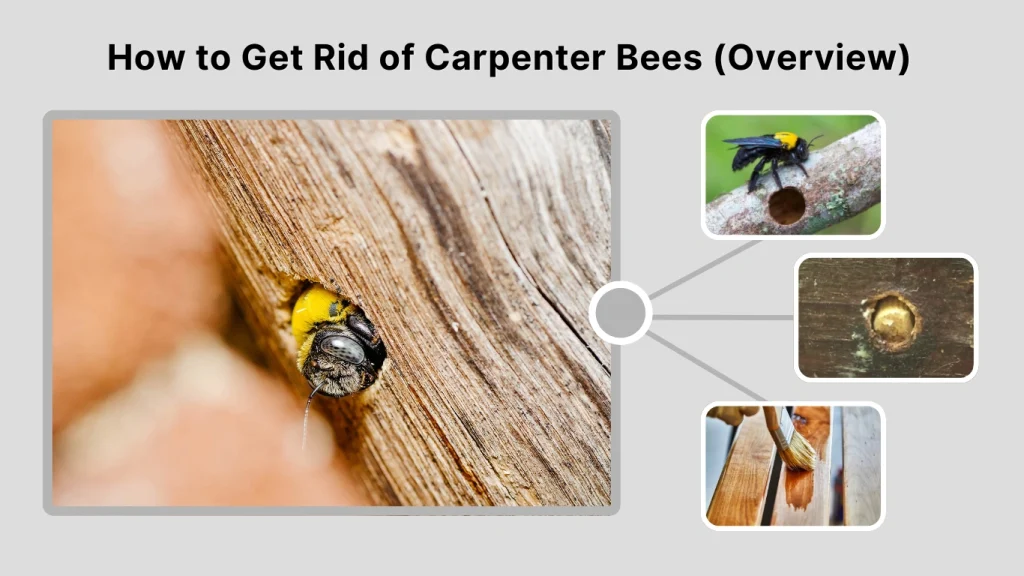
Removing carpenter bees requires a combination of repelling them, sealing their holes, and preventing them from returning. You can use natural remedies, safe sprays, traps, or deterrents depending on your preference. Before starting, it’s important to check whether tunnels are currently active.
A basic removal plan includes:
- Apply a deterrent or treatment to active holes
- Let the bees exit the tunnel
- Seal the holes with wood filler or plugs
- Paint or stain wood surfaces
- Install deterrents to stop future nesting
Proper timing is crucial. Treatments are most effective in early spring before eggs are laid or late fall when tunnels are empty.
Natural Ways to Get Rid of Carpenter Bees
Vinegar Spray Method
White vinegar is a popular natural carpenter bee repellent. Its strong smell irritates the bees, encouraging them to leave their tunnels. Mix equal parts vinegar and water in a spray bottle, then spray directly into holes and onto surrounding wood. Repeat daily until bee activity decreases. This method works best for small infestations or as an early-season preventative.
Citrus Oil & Essential Oils
Carpenter bees dislike citrus and strong essential oils. You can make a natural repellent by boiling lemon or orange peels in water, then spraying the liquid into holes and onto wood surfaces. Alternatively, mix peppermint, clove, or eucalyptus oil with water to create a potent deterrent spray.
These oils evaporate over time, so reapply them every few days during peak activity.
Noise & Light Deterrents
Carpenter bees avoid noisy and bright environments. Installing wind chimes, hanging aluminum foil strips, or placing solar lights near nesting areas can disrupt their activity. These methods work best as supplemental deterrents alongside sealing and treating holes.
How to Get Rid of Carpenter Bees Without Killing Them
Letting Bees Exit Before Sealing
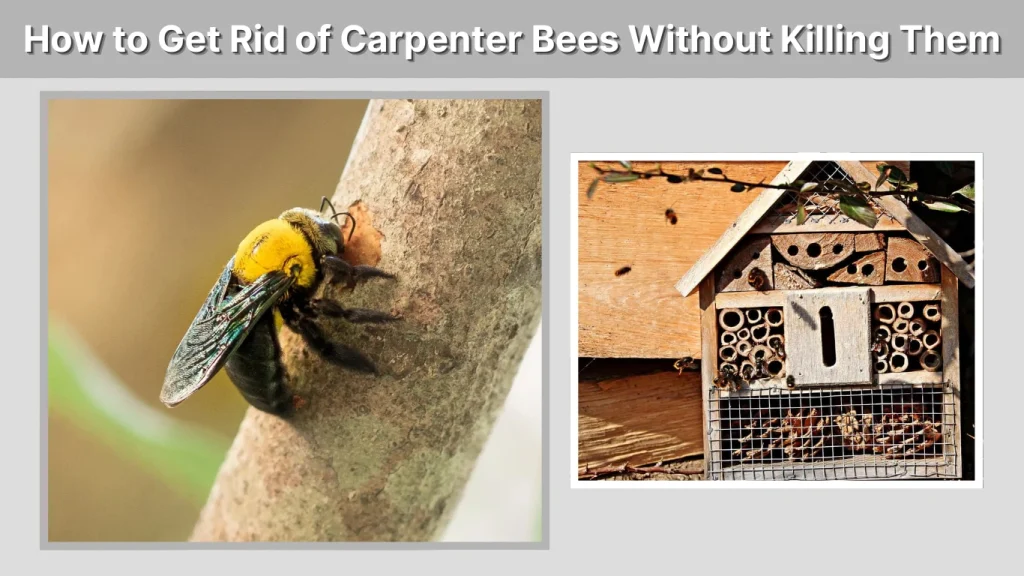
If you prefer a humane method, the key is ensuring bees have left the tunnel before sealing it. Apply a natural repellent such as citrus spray to encourage them to exit. Once you’re sure the tunnel is empty, plug the hole using a wooden dowel, cork, or exterior wood putty. This prevents the bees from returning while avoiding harm.
The most humane time for sealing holes is late fall, once all larvae have matured and left the nest.
Providing Alternative Nesting Sites
Giving carpenter bees an alternative place to nest can significantly reduce drilling in your home’s wood. DIY carpenter bee houses—blocks of untreated wood with pre-drilled holes—can lure bees away from decks and siding. Place these houses at least 15–20 feet away from your structures for best results.
Using WD-40 to Get Rid of Carpenter Bees
Why WD-40 Works
WD-40 is commonly used because of its strong odor and penetrating spray. When applied directly into a carpenter bee tunnel, it kills both the female and any larvae inside. It also coats the wood with a smell bees avoid.
How to Use WD-40 Safely
Spray WD-40 directly into each entry hole for one to two seconds. After waiting 24 hours, plug and seal the holes with dowels or wood filler. This method is highly effective but should be used cautiously because WD-40 can stain certain woods and is not ideal near pets or children.
How to Get Rid of Carpenter Bees Fast (Quick Results)
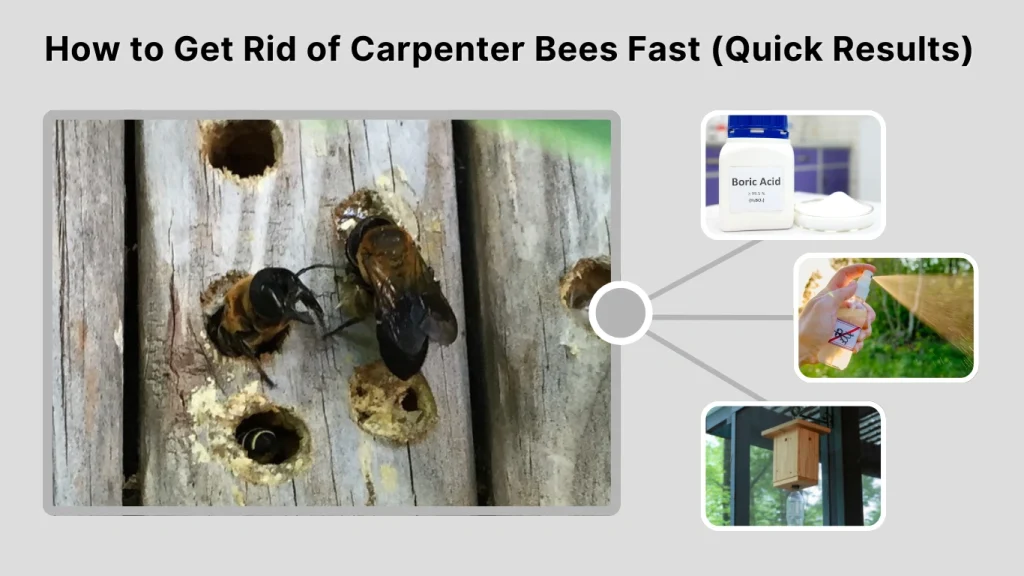
Carpenter bees can become destructive quickly, especially during spring when females begin drilling new tunnels. If you need rapid results, a combination of deterrents, traps, and hole treatments works best. Quick-action tips include:
- Applying insecticidal dust (boric acid or labeled bee dust)
- Spraying repellents into active holes
- Installing carpenter bee traps immediately
- Sealing holes within 24–48 hours
- Adding wind chimes or foil strips for instant deterrence
These methods work together to disrupt the bees’ nesting cycle and force them to relocate.
Carpenter Bee Traps
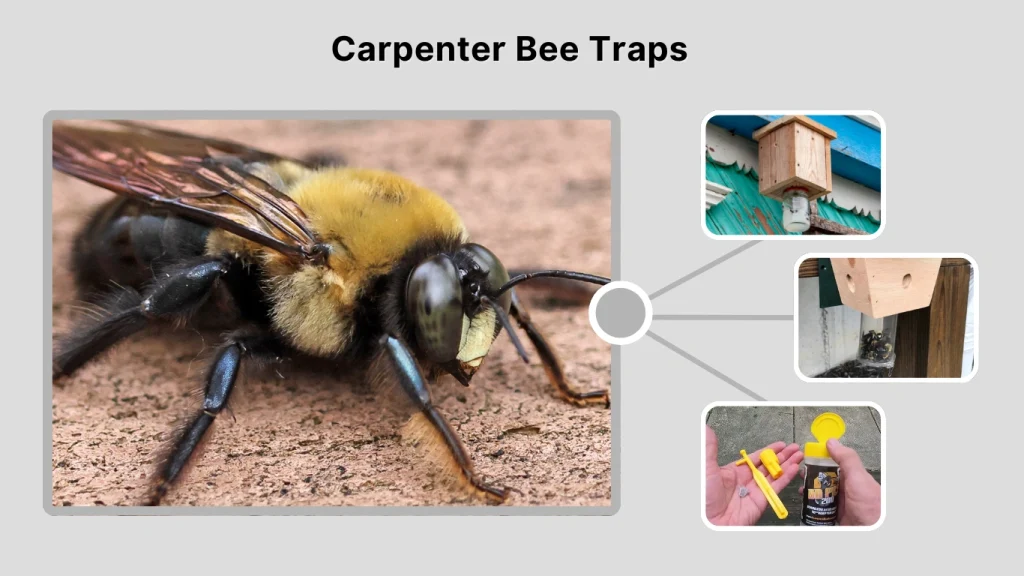
How Carpenter Bee Traps Work
Carpenter bee traps are popular because they require no chemicals and work continuously. Each trap has angled wooden tunnels leading into a clear container. Bees enter the holes thinking they’re suitable nesting sites. Once inside, they become disoriented and cannot escape, eventually falling into the catch chamber.
Traps attract mostly male carpenter bees, which hover protectively around nesting areas.
DIY vs Store-Bought Traps
DIY traps can be made using scrap wood and a jar or bottle. Drilled ½-inch holes mimic natural nesting tunnels, and the internal chamber leads bees downward into the jar.
Store-bought traps are typically more durable and more effective because they use optimized angles and wood shapes that attract carpenter bees.
For maximum effectiveness:
- Hang traps under eaves and deck rails
- Install them near existing holes
- Leave traps out from early spring through summer
Effectiveness & Limitations
Traps work best when paired with:
- Wood sealing
- Natural repellents
- Plugging old tunnels
They won’t eliminate all bees alone, but they significantly reduce activity.
How to Get Rid of Carpenter Bee Holes
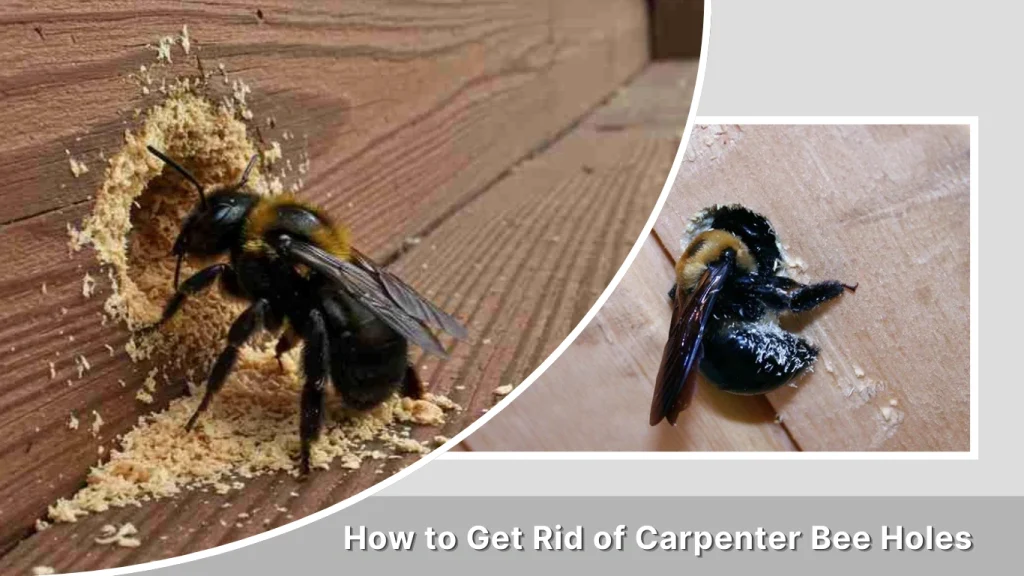
Inspecting & Cleaning Holes
Before sealing, examine each hole to ensure it’s no longer active. Look for:
- Ongoing buzzing
- Fresh sawdust
- Bees entering or exiting
Use a flashlight or pipe cleaner to check tunnel depth. Clear out sawdust so your filler material bonds properly.
Filling & Sealing
Once confident the bees are gone:
- Insert steel wool deep into the tunnel
- Add a wood dowel, fitting tightly into the hole
- Seal the opening with wood filler or putty
- Sand the surface smooth
- Paint or stain the wood
Painting provides long-term protection since bees avoid finished wood.
How to Get Rid of Carpenter Bees in Specific Areas
Decks, Railings & Patio Covers
Carpenter bees love the exposed edges of decks and railings. Treat and seal holes promptly to prevent deeper tunnels. Use natural sprays or WD-40 early in the season, then paint or stain the deck to prevent future drilling.
Under Eaves, Siding & Soffits
These shaded areas are prime nesting spots. Use a long-nozzle spray or dust applicator to reach high entry holes. After treatment, plug holes tightly and repaint the wood. Adding wind chimes or reflective tape discourages bees from returning.
In Walls, Attics & Roof Edges
Bees may tunnel through exterior wood into hollow areas. Listen for buzzing or scratching. If the tunnel penetrates deeply, consider calling a professional. Still, the general process remains the same: treat, wait, seal, repaint.
On Porches, Gazebos & Swing Sets
For child-friendly areas, use natural sprays (vinegar, citrus, peppermint oil). Avoid harsh chemicals near playsets. Seal holes and apply a durable outdoor paint to protect the wood. Replace rotting boards to eliminate attractive nesting spots.
Carpenter Bee Larvae, Nests & Infestations
Treating Active Nests
If larvae are still developing, dust insecticide or boric acid works best because it permeates the entire tunnel. Apply dust in the evening when bees are inside, then wait 24–48 hours before sealing.
Severe Infestation Signs
You may have a large infestation if you notice:
- Dozens of holes in one area
- Large piles of frass
- Hollow or weakened wood
- Increased bee activity each year
In such cases, combine multiple treatments or call a professional to prevent structural damage.
Long-Term Carpenter Bee Prevention
Protecting Wood for Good
Carpenter bees rarely drill into painted or sealed wood. To prevent future problems:
- Apply oil-based exterior paint
- Use high-quality outdoor stain
- Refinish exposed wood annually
- Seal cracks and gaps
Using Hardwoods & Treated Lumber
Because carpenter bees prefer softwoods like pine, replacing damaged areas with hardwoods can drastically reduce drilling. Alternatively, use pressure-treated lumber or cover exposed beams with vinyl or aluminum wrap.
Seasonal Prevention Steps
Early spring is the best time to stop carpenter bees before they begin nesting. Conduct a full inspection, repair any holes from last year, and apply deterrent sprays. Add traps and repaint surfaces as needed.
Carpenter Bees vs Bumble Bees (Quick ID Guide)
Although often mistaken for each other, these two insects behave very differently:
- Carpenter bees have smooth, shiny abdomens and nest in wood.
- Bumble bees have fuzzy bodies and nest in the ground or old rodent burrows.
- Carpenter bees cause wood damage; bumble bees do not.
- Carpenter bees rarely sting; bumble bees sting only when threatened near their nest.
Identifying the right species ensures you use the correct control method.
FAQs
Do carpenter bees sting?
Male carpenter bees cannot sting, and females only sting when directly handled or threatened.
Does vinegar get rid of carpenter bees?
Yes—vinegar irritates bees and works as a natural repellent, though it needs frequent reapplication.
What kills carpenter bees instantly?
WD-40 or insecticidal dust can kill bees on contact, but natural alternatives are safer for long-term use.
How do I fill carpenter bee holes?
Insert steel wool or a dowel into the tunnel, then seal with wood filler and repaint the surface.
How do I keep carpenter bees away permanently?
Paint all exposed wood, seal cracks, use deterrent sprays, add traps in spring, and offer alternative nesting sites away from your home.
