
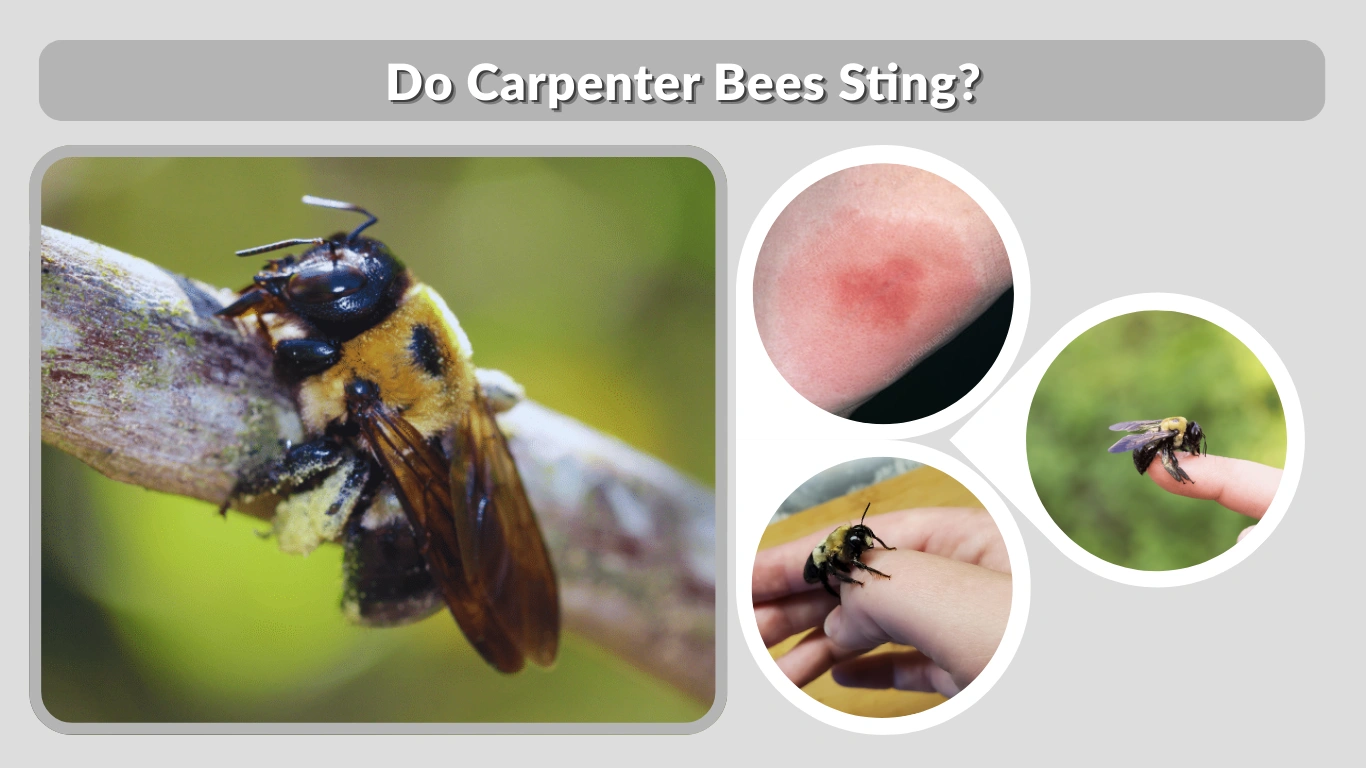
Carpenter bees are commonly seen buzzing around wooden fences, decks, rafters, and porches. Their large size and bold flight patterns cause many people to worry about whether these bees sting or behave aggressively toward humans and pets. While carpenter bees resemble bumblebees, their stinging behavior is very different. Understanding which carpenter bees can sting, when they sting, how painful the sting is, and how to treat one can help reduce fear and prevent unnecessary encounters. This guide covers everything you need to know about carpenter bee stinging habits, species variations, and safety precautions.
Do Carpenter Bees Sting?
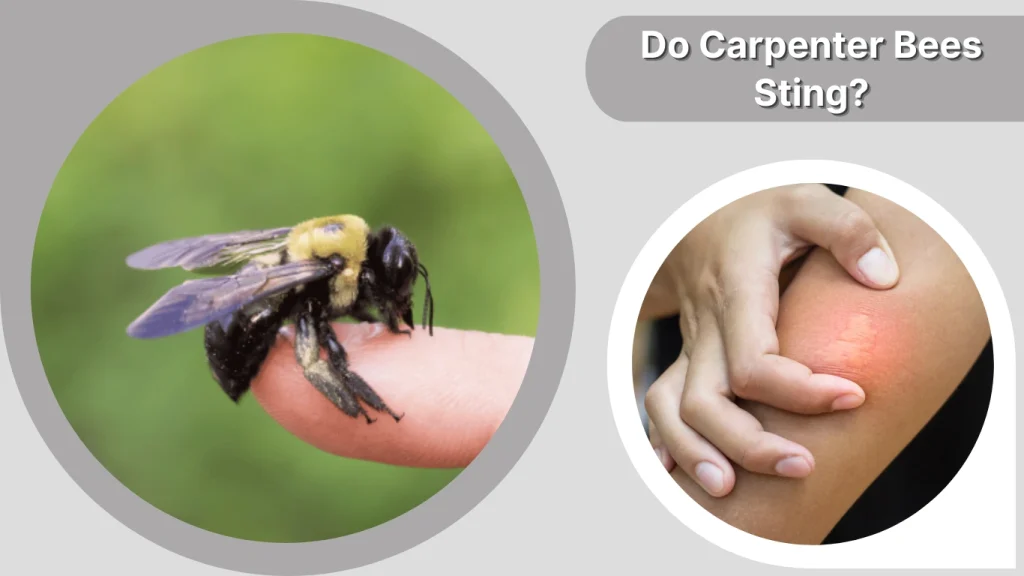
Carpenter bees can sting, but not all of them are capable of doing so. Only female carpenter bees have a stinger, and even then, they are not naturally aggressive insects. Unlike wasps or yellow jackets, which defend their nests aggressively, female carpenter bees sting only when they feel physically threatened or mishandled. This makes stings relatively uncommon unless the bee is grabbed, pressed against the skin, or surprised inside clothing.
Many people mistakenly believe carpenter bees are aggressive because the males hover close to humans and seem confrontational. This behavior is purely territorial and not a sign of attack. In reality, male carpenter bees cannot sting at all. Their intimidating approach is simply a defense display meant to protect the nest entrance.
While carpenter bees can sting, they almost always avoid doing so. They prefer retreat, escape, or hovering behavior rather than actual contact. Most stings occur during accidental encounters rather than intentional attacks.
Male vs. Female Carpenter Bees
Do Male Carpenter Bees Sting?
Male carpenter bees do not have a stinger, which means they are completely harmless. Their role involves patrolling nest entrances and chasing away anything that appears to be a threat. Because males hover near people, pets, and other animals, many assume they are preparing to sting, but they lack the physical ability to do so. Their behavior is strictly defensive posturing.
Do Female Carpenter Bees Sting?
Female carpenter bees possess a functional stinger and are capable of stinging. However, they rarely use it unless directly provoked. Females tend to stay near the nest and spend most of their energy gathering pollen, laying eggs, and maintaining tunnels. They are not aggressive by nature. Most female carpenter bees will only sting if squeezed, picked up, or if their nesting tunnel is disturbed.
How to Identify Male vs. Female Carpenter Bees
Males and females can often be distinguished visually. Male carpenter bees usually have a light-colored patch on the face—often yellow or white—while females have darker, usually black faces. Behavior is another clue: males hover boldly, while females usually avoid confrontations altogether.
Do Carpenter Bees Bite or Sting?
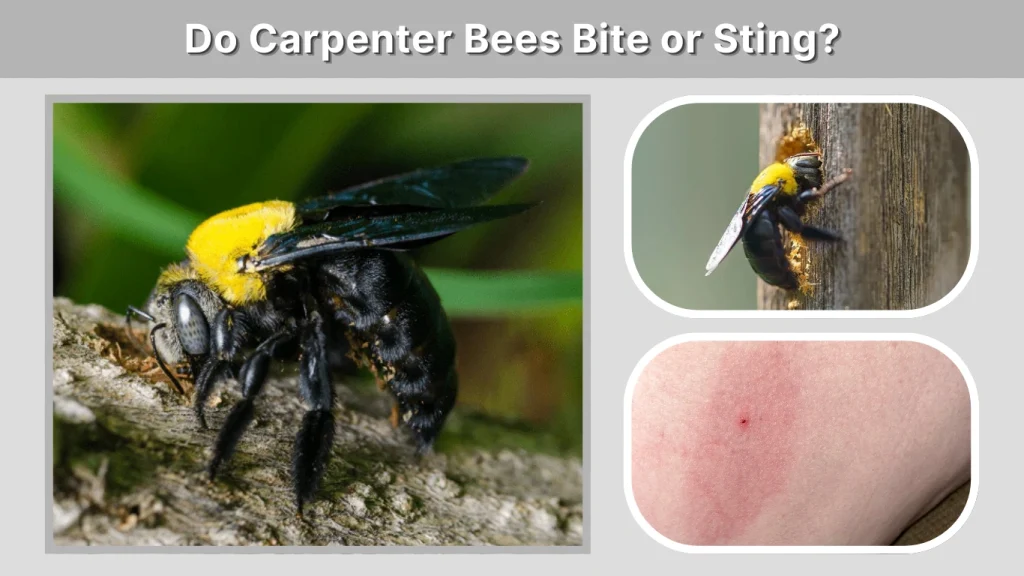
Carpenter bees technically bite wood, not humans. Their jaws are designed for chewing through lumber to create nesting tunnels. These bites are not harmful to people but can cause damage to wooden structures if left unchecked.
When it comes to humans, the primary defensive mechanism is their sting, not their bite. Female carpenter bees use their stinger to defend against threats, while males rely on bluffing behavior to scare off intruders. People sometimes misunderstand wood-boring sounds or hovering behavior as biting or preparation to sting, but these actions are part of their natural nesting process rather than aggression.
Do Carpenter Bees Sting Humans, Pets, or Animals?
Humans
Carpenter bees rarely sting humans unless physically provoked. When a sting does occur, it is painful but usually not severe. The pain is often compared to a mild wasp sting. Since females can sting more than once, repeated stings are possible but not common. Carpenter bee stings do not leave behind a stinger like honeybees do.
Dogs & Cats
Pets occasionally get too curious about carpenter bees hovering around decks or garden areas. Since male carpenter bees aggressively hover but cannot sting, pets are usually not at risk from them. Female carpenter bees may sting a dog or cat if the animal paws at or bites them, but such cases are rare. Pet owners should monitor for swelling or allergic reactions if a sting is suspected.
Livestock & Wildlife
Livestock are generally too large and slow-moving to disturb carpenter bees. Stings to horses, goats, or farm animals are extremely uncommon, as the bees prefer to avoid large creatures. Wildlife interactions are minimal, as carpenter bees spend most of their time near their tunnels rather than feeding on open flowers like bumblebees.
How Painful Is a Carpenter Bee Sting?
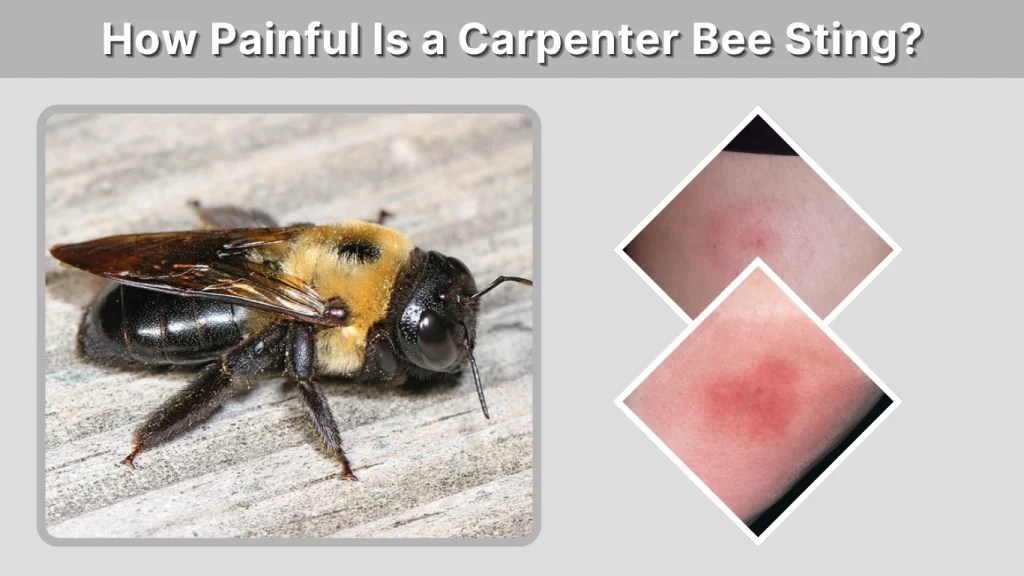
A carpenter bee sting typically causes mild to moderate pain, comparable to a small wasp sting. Because they have smooth stingers, the pain tends to fade faster than a honeybee sting. Most people feel a brief burning sensation followed by redness, swelling, and mild itching. Those with sensitive skin may experience more intense swelling. Carpenter bee venom is not particularly potent, so severe reactions are rare unless the person is allergic. The majority of stings resolve naturally within a few hours to a day.
Do Carpenter Bees Die After Stinging?
Unlike honeybees, carpenter bees do not die after stinging. Honeybees possess a barbed stinger that gets lodged in the skin, which ultimately leads to the bee’s death. Carpenter bees, however, have smooth stingers, allowing females to sting repeatedly without harm to themselves. This means a defensive female carpenter bee can sting more than once if she perceives an ongoing threat.
The ability to sting multiple times doesn’t make them more aggressive. In fact, their natural instinct is still to avoid conflict. Their reproductive energy is focused on tunneling, laying eggs, and ensuring the success of their brood, not defending their nest through repeated attacks. Therefore, although they technically can sting repeatedly, they seldom choose to.
What Do Carpenter Bee Stings Look Like?
Immediate Symptoms
A typical carpenter bee sting causes an instant sharp pain, followed by a red or slightly raised welt. The area may become warm to the touch and begin to swell gradually. Itching or mild burning is common in the minutes immediately after the sting, and the discomfort usually peaks within the first hour.
Delayed Symptoms
Over several hours, the sting site may become more swollen, red, or tender, especially for individuals with sensitive skin. Some people may experience a small, firm lump under the skin. These reactions are normal and often fade within 24–48 hours. Cool compresses, antihistamines, or hydrocortisone cream can speed up relief.
Severe Reactions
Though rare, allergic reactions can occur. Symptoms may include widespread swelling, difficulty breathing, hives, dizziness, or nausea. Anaphylactic reactions require immediate medical attention. Individuals with known bee sting allergies should carry an epinephrine auto-injector and seek emergency care if symptoms escalate.
Why Carpenter Bees Sting (Trigger Conditions)
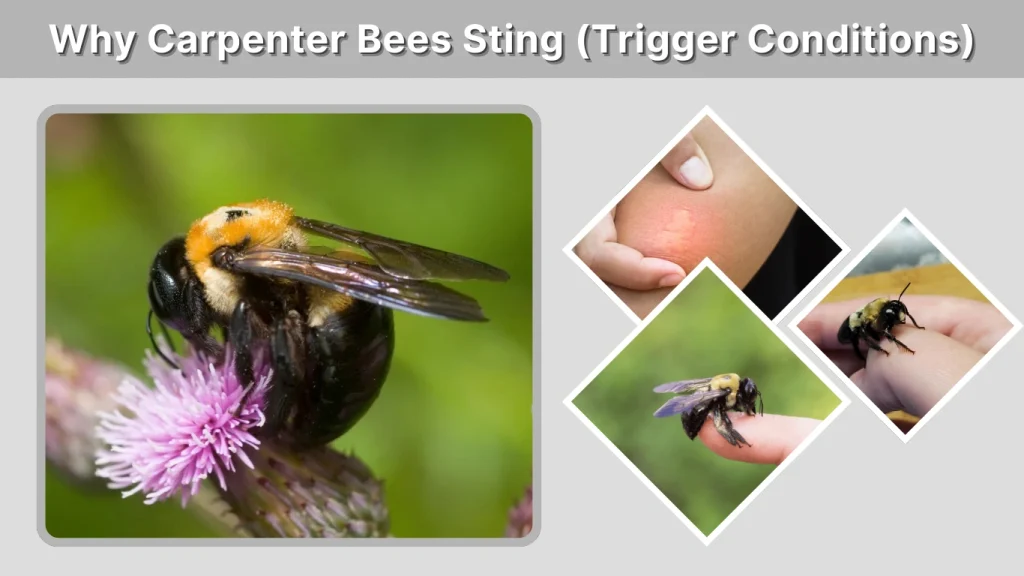
Carpenter bees generally behave calmly and avoid confrontation. However, certain circumstances increase the likelihood of a sting:
- Handling the bee: Picking up or accidentally grabbing a female can provoke her.
- Disturbing the nest: Tapping, drilling, or opening a carpenter bee tunnel may trigger defensive responses.
- Trapping or pinching: A bee caught in clothing or pressed against skin may sting instinctively.
- Swatting motions: Rapid movements can make a female bee feel threatened.
- Nest guarding: While male bees cannot sting, their aggressive hovering may prompt accidental contact with females.
Understanding these triggers helps reduce unwanted stings and encourages safer interactions with these insects around the home.
Seasonal and Regional Sting Likelihood
Do Carpenter Bees Sting in Winter?
Winter typically brings extremely low sting risk. Carpenter bees become dormant and retreat into their tunnels to conserve energy. They rarely interact with humans during cold months, except in warm-climate regions where short warm spells may momentarily wake them from inactivity. They do not sting unless physically disturbed inside their nesting chamber.
Specific Regions
Carpenter bee behavior varies slightly depending on species and climate:
- Eastern Carpenter Bee (Xylocopa virginica) – Found in the eastern U.S., active in late spring; stings are rare.
- Valley Carpenter Bee (Xylocopa sonorina) – Common in California and the Southwest; large but docile.
- Sonoran Carpenter Bee – Native to the desert regions of Arizona; mostly calm around people.
- Violet Carpenter Bee (Xylocopa violacea) – European species; gentle but intimidating due to size.
- Blue Carpenter Bee – Found in Southeast Asia and Australia; rarely stings unless handled.
In warmer climates, longer active seasons may create more opportunities for human encounters, but aggression remains low.
Major Carpenter Bee Species & Sting Risk
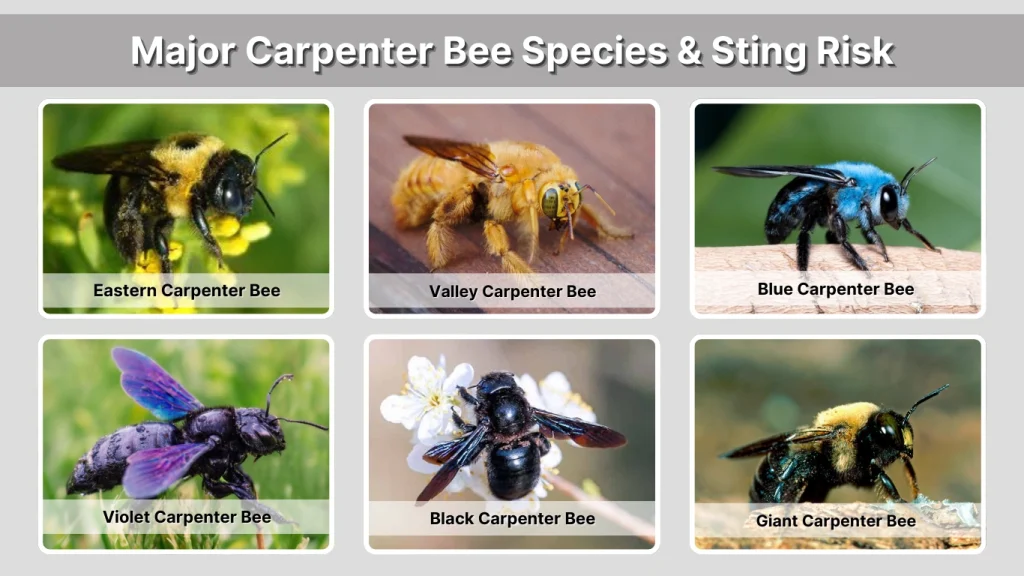
Eastern Carpenter Bee
One of the most common species in North America, the Eastern carpenter bee features females that sting only when threatened. Males hover protectively but are harmless. Their sting risk is considered very low.
Valley Carpenter Bee
Known as one of the largest bee species in the U.S., the Valley carpenter bee’s size often leads to fear. Despite their intimidating appearance, females rarely sting, and males cannot.
Blue Carpenter Bee
Brilliant blue in color, this species attracts attention but remains gentle. Stings occur only with direct provocation.
Violet Carpenter Bee
A large, dark-purple species found in Europe, it behaves similarly to American carpenter bees—docile, solitary, and low-risk.
Black Carpenter Bee
A general term for several carpenter bee species with black bodies. Females can sting, but they seldom act aggressively unless a nest is disturbed.
Giant Carpenter Bee
Found in tropical climates, these oversized bees look frightening but possess a calm temperament. Only females can sting, and rarely do.
Carpenter Bees vs. Bumblebees — Which Stings More?
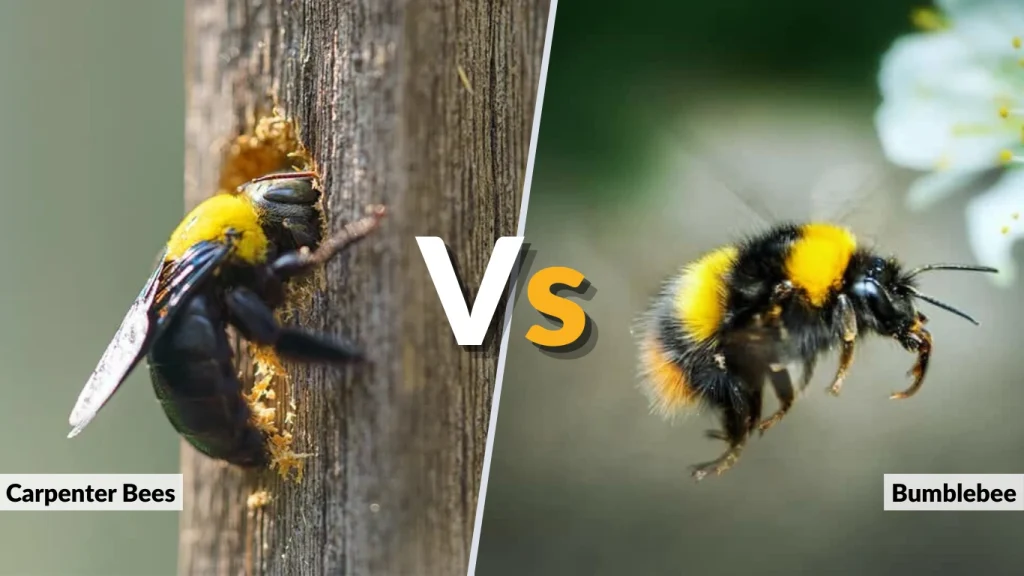
Side-by-Side Comparison Table
| Feature | Carpenter Bee | Bumblebee |
| Male Sting? | No | No |
| Female Sting? | Yes | Yes |
| Aggression | Low | Moderate |
| Pain Level | Mild–Moderate | Moderate |
| Sting Repetition | Multiple | Multiple |
| Stinger Left Behind | No | No |
Behavioral Differences
Bumblebees are more defensive of their nests because they live in structured colonies. Carpenter bees are solitary nesters, which means they have far less reason to protect their territory. While bumblebees may sting to defend their queen and workers, carpenter bees rely on escape and camouflage, resulting in fewer stings overall.
Do Carpenter Bees Leave a Stinger?
Carpenter bees do not leave a stinger behind when they sting. Their smooth stinger retracts cleanly from the skin, unlike honeybees whose barbed stinger lodges and tears from the bee’s body. This smooth stinger also allows female carpenter bees to sting multiple times, though they seldom choose to. Because no stinger remains in the skin, aftercare is simpler and rarely requires stinger removal.
What to Do If a Carpenter Bee Stings You
Immediate Steps
If stung, wash the area with soap and warm water to prevent infection. Apply a cold compress to reduce swelling and ease pain. Over-the-counter lotions containing hydrocortisone or calamine can soothe itching.
Monitoring for Reactions
Keep an eye on the sting site for several hours. Some redness or swelling is normal, but expanding swelling, worsening pain, or fever may signal infection. Antihistamines can help reduce itching and localized allergic responses.
When to Seek Medical Help
Seek professional care if symptoms include difficulty breathing, dizziness, facial swelling, or hives. These may indicate an allergic reaction requiring urgent treatment.
Preventing Carpenter Bee Stings
Avoiding Aggressive Encounters
Stay calm when a male carpenter bee hovers nearby. Avoid swatting or waving your hands, which can escalate defensive behavior. Wear smooth-textured, solid-colored clothing when near wooden structures during bee season.
Managing Carpenter Bee Activity
Seal gaps in wood, repaint exposed lumber, and consider using decoy nests to discourage new tunnels. If infestation is severe, professional pest control may be necessary to relocate bees safely.
FAQs
Do carpenter bees sting humans?
Yes, but only female carpenter bees can sting, and they do so only when threatened or handled. Males cannot sting at all. Most interactions with carpenter bees result in no harm because they are naturally non-aggressive.
Do male carpenter bees sting?
No. Male carpenter bees lack a stinger and are completely harmless. They may hover close to people, but this is only territorial behavior and not a sign of aggression.
Do carpenter bees die after stinging?
No. Carpenter bees have smooth stingers that do not get stuck in the skin. Because they do not lose their stinger, they can sting more than once, although they rarely choose to.
Do carpenter bee stings hurt?
Carpenter bee stings cause mild to moderate pain similar to a small wasp sting. Most people experience temporary redness, swelling, and itching. Pain usually fades within a few hours.
What should I do for a carpenter bee sting?
Clean the area immediately, apply a cold compress, and use hydrocortisone cream or antihistamines if needed. Seek medical help if swelling spreads, breathing becomes difficult, or allergic reactions develop.
