
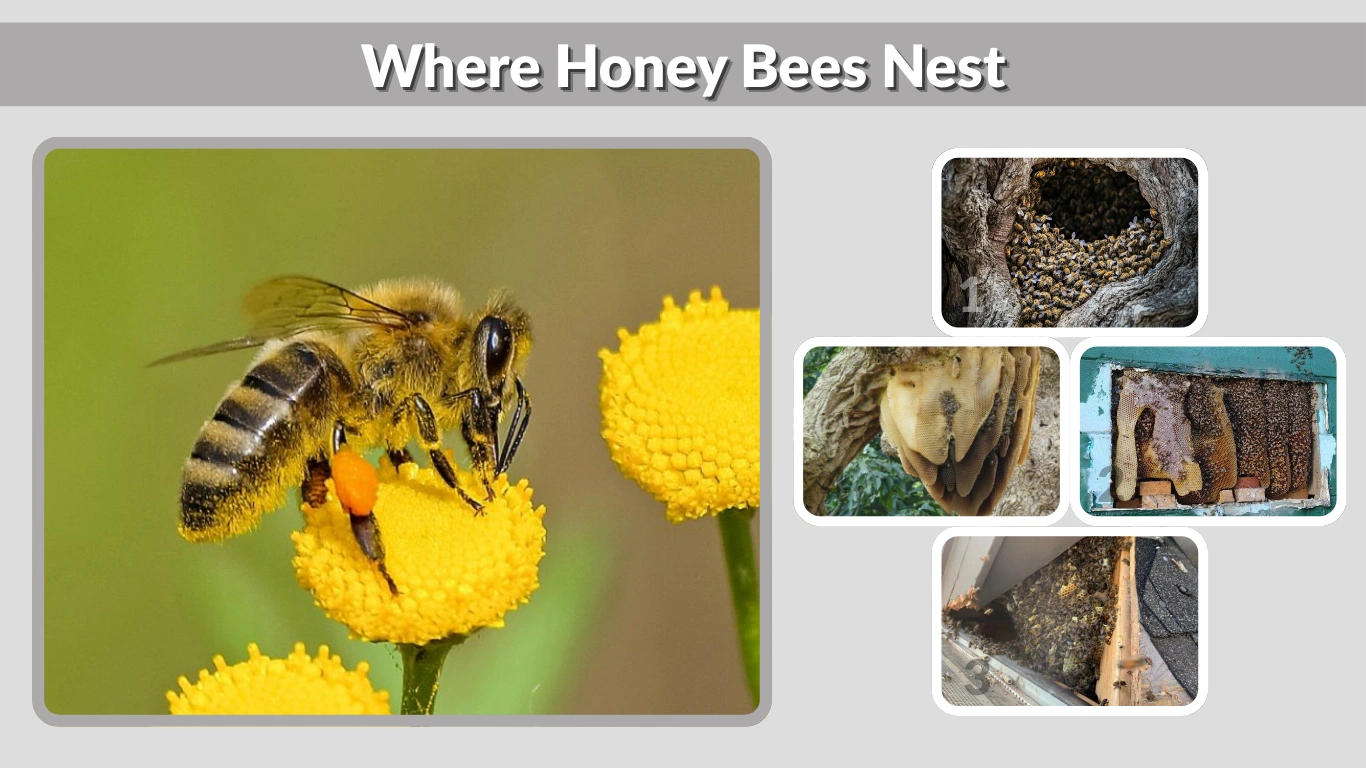
Honey bee nests are found in more places than most people expect, from tree hollows and house walls to abandoned structures and even shallow underground cavities. Understanding how honey bees choose nesting sites helps homeowners, gardeners, and nature lovers identify nests quickly and respond safely. This guide explains what honey bee nests look like, where they form, how they differ from wasp or bumblebee nests, and what to do if one appears near your home.
Species Identification
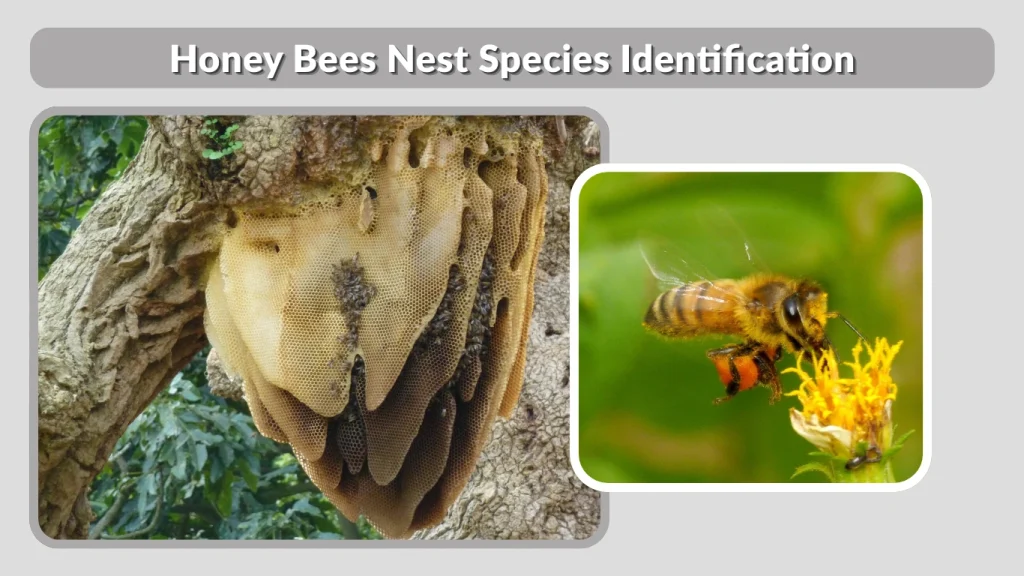
Honey bee nests are built from wax, not paper or mud, which immediately distinguishes them from wasp or hornet nests. The comb appears in parallel sheets of golden hexagonal cells, often warm-colored and slightly translucent. These combs are arranged vertically and are usually hidden inside cavities instead of exposed in open areas. Unlike wasps, honey bees rarely attach nests to branches or roof edges.
Africanized honey bee nests look nearly identical to European honey bee nests, but the colonies tend to establish in smaller cavities and react more defensively when disturbed. Asian honey bee nests vary by species and may build small, open-comb nests in sheltered outdoor spots. All true honey bees, however, create wax comb rather than paper-like structures.
Ground “honey bee nests” are often misidentified. True honey bees can occasionally occupy shallow underground cavities, but most ground nests belong to miner bees, yellow jackets, or bumblebees, which require different handling.
Bite & Venom
Honey bees don’t bite—they sting. A honey bee sting delivers venom containing compounds that cause pain, swelling, and redness. Unlike wasps, honey bees typically sting only when they feel the nest is threatened. The barbed stinger detaches, which is why each bee can sting once.
Africanized honey bees are more defensive and may respond collectively if their nest is disturbed. Their venom isn’t stronger than that of European honey bees; the danger comes from the number of stings, not the toxin itself. This is why identifying nest placement early is important, especially in warm regions where Africanized bees are common.
Size
Honey bee nests vary dramatically in size depending on age and location. A newly established colony might have only a few small comb sheets, while a mature wild nest can grow to hundreds of thousands of bees with several pounds of honey. In houses, nests hidden inside walls or attics can quietly expand for months, reaching several feet long and weighing more than most homeowners expect.
Tree-hollow nests often become large because they have stable temperatures and plenty of storage space. In rare cases, giant honey bee nests in the wild can stretch across large cavities, forming dozens of comb layers. Nest size also increases in warm climates where bees build year-round.
Range & Habitat
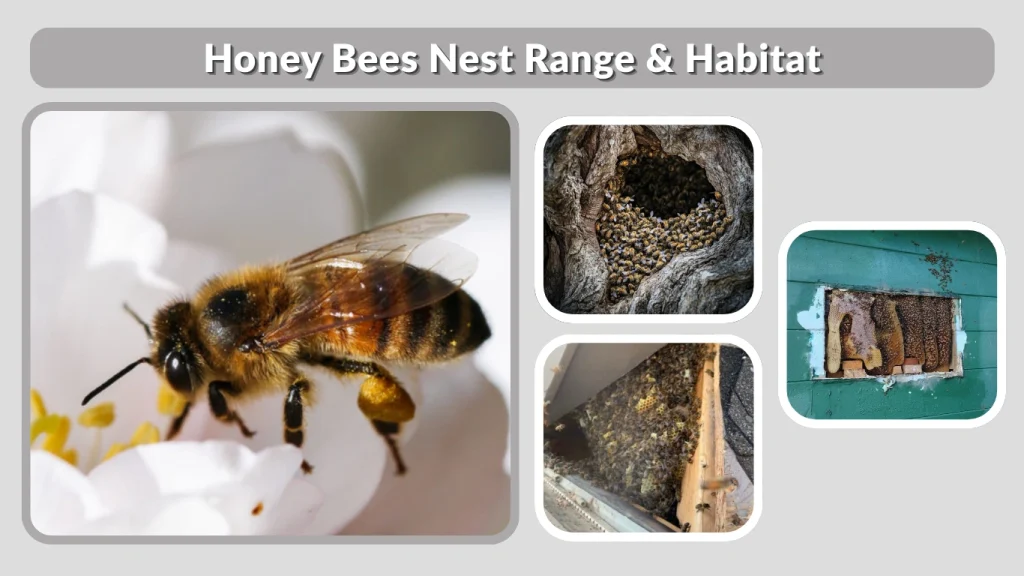
Honey bees are flexible nesters and adapt to almost any sheltered cavity. They commonly choose:
- Hollow trees and natural cavities
- Wall voids and siding gaps
- Attics, chimneys, and roofs
- Underground pockets or old rodent tunnels
- Abandoned structures or sheds
Honey bees generally prefer enclosed spaces because these protect the comb from weather, pests, and predators. Wild honey bees often choose tree hollows, while urban bees frequently move into house walls, roofing gaps, and sheds. In some cases, they’ll reuse abandoned nests, though this usually happens only if the wax and scent remain intact.
Honey bees may travel 2–5 miles from the nest daily to forage, which means many nests remain hidden even when bees are constantly visible in a garden.
Behavior
Honey bees prefer stable, sheltered environments and rarely expose their nests openly. They build vertical wax combs, expanding the nest outward as the colony grows. Each comb layer serves a purpose: brood rearing, pollen storage, or honey storage. Colonies organize themselves efficiently, with workers regulating temperature, guarding entrances, and coordinating nectar foraging.
Honey bees typically stay in the same nest for years unless the cavity becomes overcrowded or damaged. When this happens, they may swarm—a natural process where the queen and half the colony leave to form a new nest. Contrary to myths, honey bees do not create paper nests, and they avoid open-air construction unless forced by environment or species. Africanized bees may change nests more frequently and occupy smaller spaces.
While honey bees rarely nest underground, they sometimes occupy shallow abandoned burrows or voids beneath structures. More often, “ground honey bee nests” are actually yellow jacket colonies, which explains why many homeowners see aggressive behavior that true honey bees typically do not display.
Comparison Table
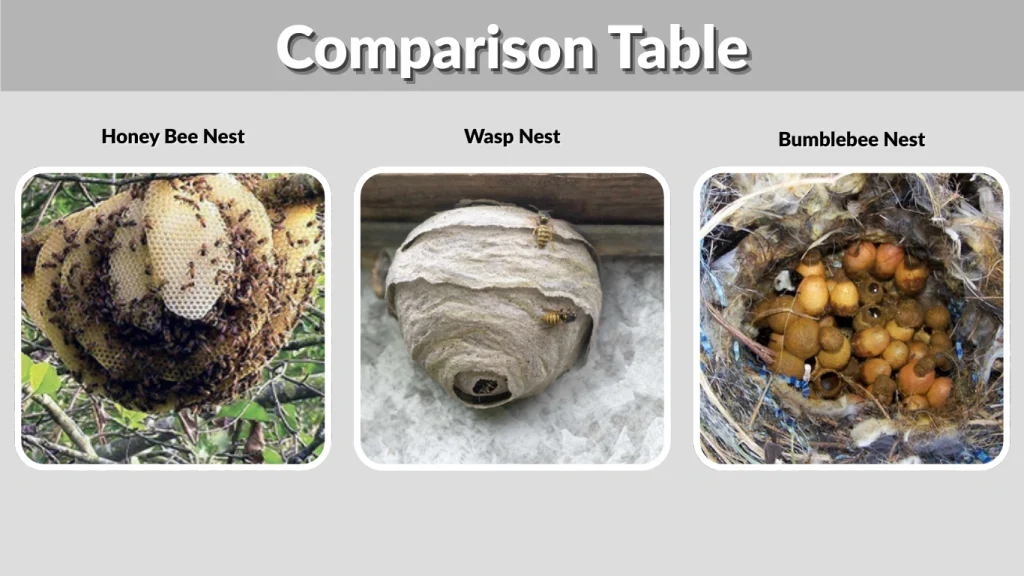
| Feature | Honey Bee Nest | Wasp Nest | Bumblebee Nest |
| Material | Wax comb | Paper-like pulp | Soft waxy ball in cavity |
| Shape | Vertical comb sheets | Round/umbrella-shaped | Lumpy sphere |
| Common Location | Trees, walls, attics, cavities | Eaves, branches, walls | Ground burrows, compost |
| Behavior | Defensive only near nest | More aggressive | Mild, shy |
| Colony Size | Large | Medium | Small |
Additional Notes
Wild honey bee nests offer major ecological benefits by pollinating thousands of flowers daily. However, nests inside homes can cause structural damage when wax and honey melt into walls. It’s important not to seal entrances without professional evaluation—doing so traps bees inside and worsens the problem.
Many people confuse honey bee nests with yellow jacket or hornet nests. Honey bees never build papery, umbrella-like nests. Their wax comb structure is unique and typically hidden. Minecraft players may know “bee nest honey,” but real-world nests are far more complex, regulated by heat, scent, and colony coordination.
FAQs
Do honey bees nest in the ground?
Honey bees rarely nest underground, but they may occupy shallow cavities under structures or abandoned burrows. Most “ground bee nests” people see are actually yellow jackets or solitary miner bees, not honey bees. True honey bees prefer protected cavities above ground where they can build stable wax comb.
Where do honey bees normally make nests?
Honey bees prefer sheltered spaces such as tree hollows, wall voids, attics, sheds, and natural cavities. They choose sites that offer protection from predators, stable temperatures, and space to expand their wax comb. In urban areas, they often move into houses, roofs, and siding gaps.
What does a honey bee nest look like?
A honey bee nest contains vertical sheets of golden wax comb arranged in parallel layers. Each comb is filled with honey, pollen, or brood. Unlike wasp nests, honey bee nests are never papery or exposed. They are usually hidden inside cavities such as trees, chimneys, or walls.
How do I find a honey bee nest near my home?
Watch the direction bees fly when they leave flowers; they often travel straight toward the nest. Look for consistent bee traffic entering cracks in walls, roofs, chimneys, or tree holes. Buzzing inside walls, honey leaks, or warm “hot spots” in structures can also indicate a hidden nest.
How do I remove or get rid of a honey bee nest safely?
Removing a honey bee nest should be handled by a professional beekeeper or pest specialist who performs a live removal. Sealing the entrance or spraying chemicals can trap bees and cause structural damage. Proper removal involves safely extracting the colony, removing comb, and sealing the cavity afterward.
