Understanding what honey bees eat is essential for beekeepers, gardeners, and anyone curious about how these small insects stay energized while pollinating our world. Honey bees rely on a nutrient-rich diet that changes depending on the season, their life stage, and the environment around them. From nectar and pollen to honey and even sugary substitutes provided by beekeepers, their diet is more diverse than many people realize.
Below is a detailed, beginner-friendly guide answering all major questions—from what adult honey bees eat to what Africanized bees eat and what bees eat when we take their honey.
Honey Bee Diet Basics
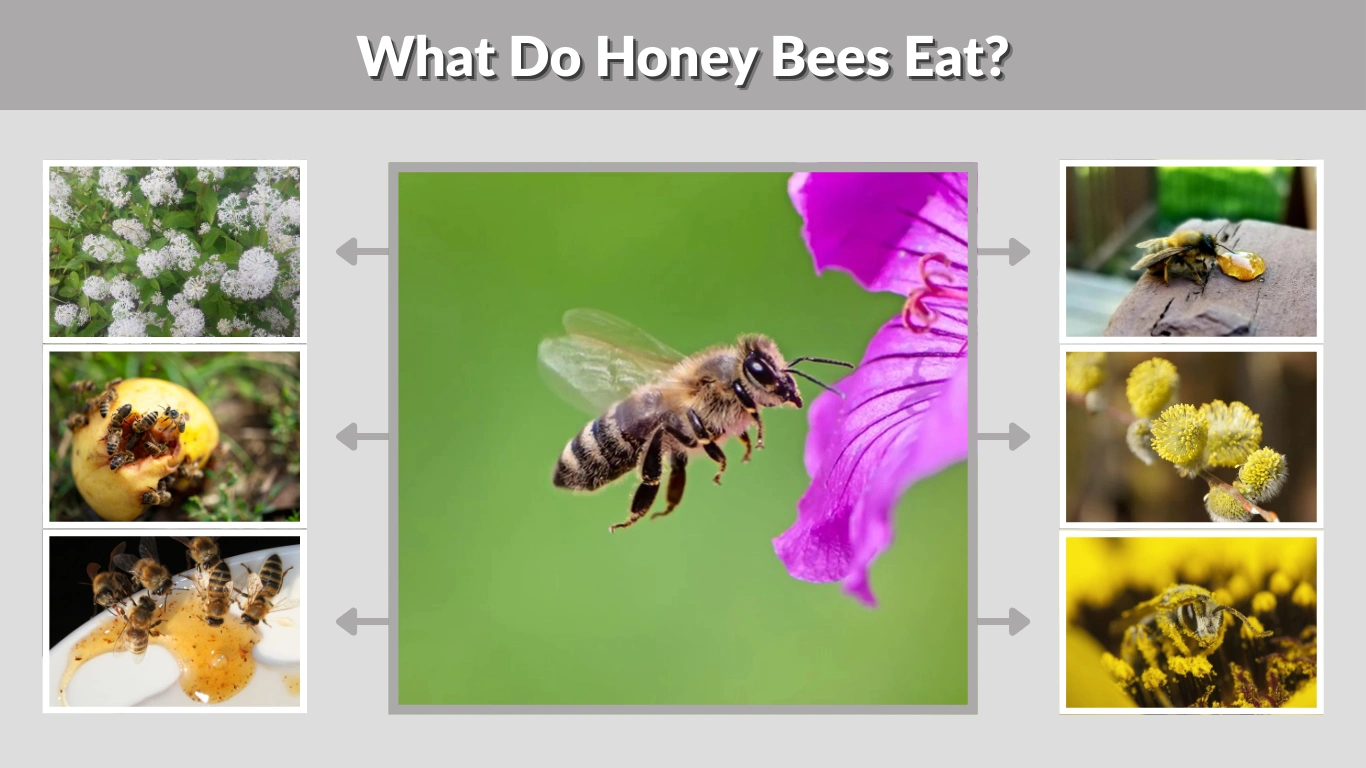
Honey bees eat a combination of nectar, pollen, honey, and water. These core food sources give them the energy and nutrients they need for flying, foraging, building wax, feeding larvae, cleaning the hive, and surviving winter.
- Nectar gives bees carbohydrates.
- Pollen provides proteins, vitamins, minerals, and fats.
- Honey is long-term energy storage.
- Water helps regulate hive temperature and dilute honey.
Although honey bees are famous for producing honey, they also consume a portion of it for energy—especially during cold months.
What Do Adult Honey Bees Eat?
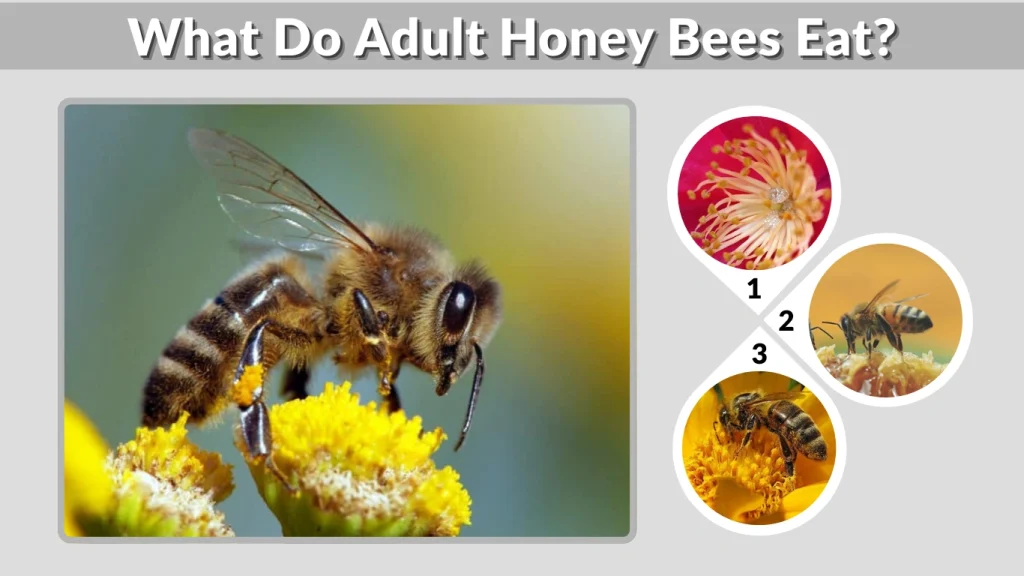
Adult honey bees eat differently based on their role in the hive:
1. Worker Bees
Worker bees have the busiest diet. They consume:
- Nectar
- Honey
- Pollen
- Water
Young worker bees often eat more pollen because they need protein to develop glands that produce royal jelly. Older forager bees rely heavily on nectar and honey for quick energy while flying long distances.
2. Drone Bees
Drone bees primarily eat:
- Honey
- Nectar
They require high energy since their main purpose is mating flights, which demand powerful wings and strength.
3. Queen Bee
Unlike workers and drones, the queen eats only royal jelly, a nutrient-dense secretion produced by nurse bees. This special diet helps her grow larger, live longer, and remain fertile.
What Do Honey Bee Larvae Eat?
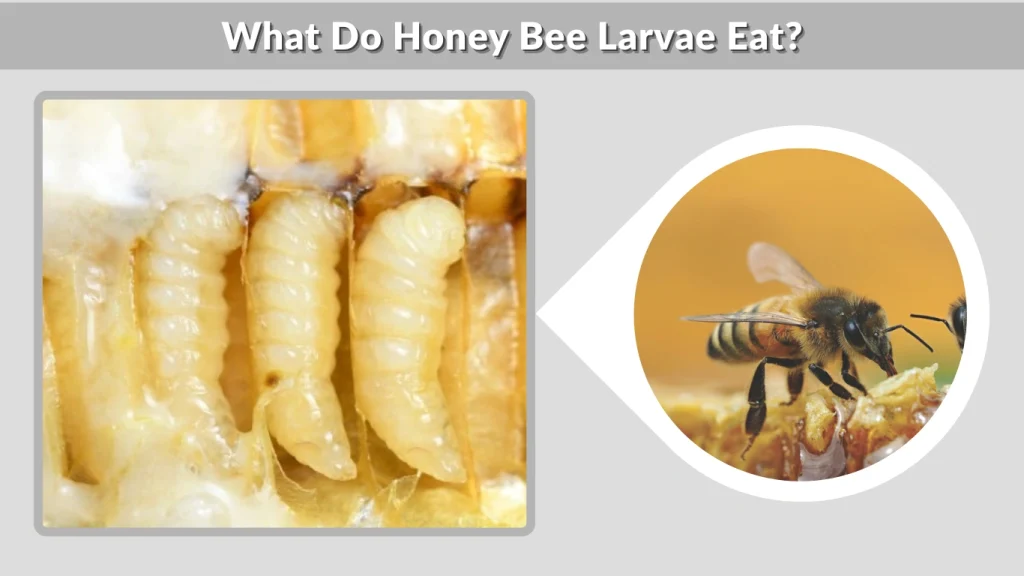
Honey bee larvae have a different diet than adults. Their food changes depending on whether they’re developing into workers, drones, or queens.
- Worker larvae: Royal jelly for 2–3 days, then a mix of honey and pollen (called bee bread).
- Drone larvae: Similar diet to workers, with extra nutrition for larger body size.
- Queen larvae: Fed royal jelly exclusively throughout development.
Royal jelly is rich in proteins, sugars, and hormones that accelerate growth. This is why queen bees grow larger and live years longer than workers.
Do Bees Eat Honey?
Yes—honey is a major food source for honey bees. Bees make honey not just for humans, but primarily for themselves. Honey is their winter survival food when flowers are not available.
Bees eat honey:
- During cold weather
- At night
- During rainy days
- When nectar flow is low
- To maintain energy during hive work
Honey provides stable carbohydrates that sustain bees for long periods.
What Do Bees Eat Besides Honey?
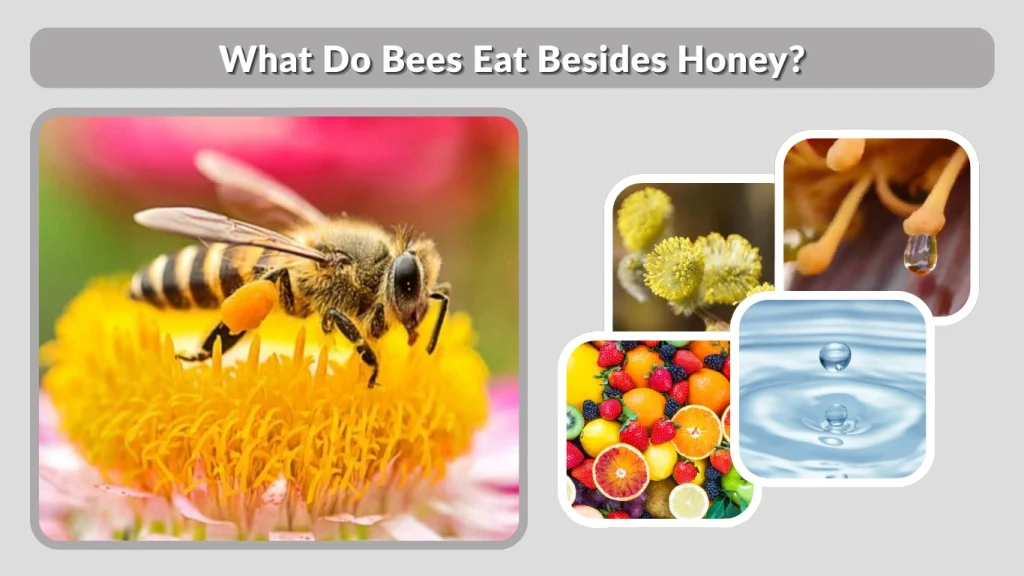
While honey is important, honey bees also eat:
1. Nectar
Their main source of natural sugar and energy.
2. Pollen
Provides essential protein for growth and brood rearing.
3. Water
Helps cool the hive and dilute thick honey.
4. Fruits (like grape jelly)
Some beekeepers attract bees with grape jelly, especially in late summer when nectar is scarce.
5. Sugar water
Beekeepers often feed sugar syrup to bees during drought or after honey harvesting.
Bees never rely on a single food source—their diet is balanced based on the colony’s needs.
What Do African & Africanized Honey Bees Eat?
African and Africanized honey bees have the same diet as Western honey bees (Apis mellifera). They eat:
- Nectar
- Pollen
- Honey
- Water
- Tree sap
- Floral secretions
The difference is not what they eat but how they forage. Africanized bees forage more aggressively, travel farther, and gather food faster. This makes them highly efficient in tropical areas like Brazil.
What Happens When We Take Honey From Bees?
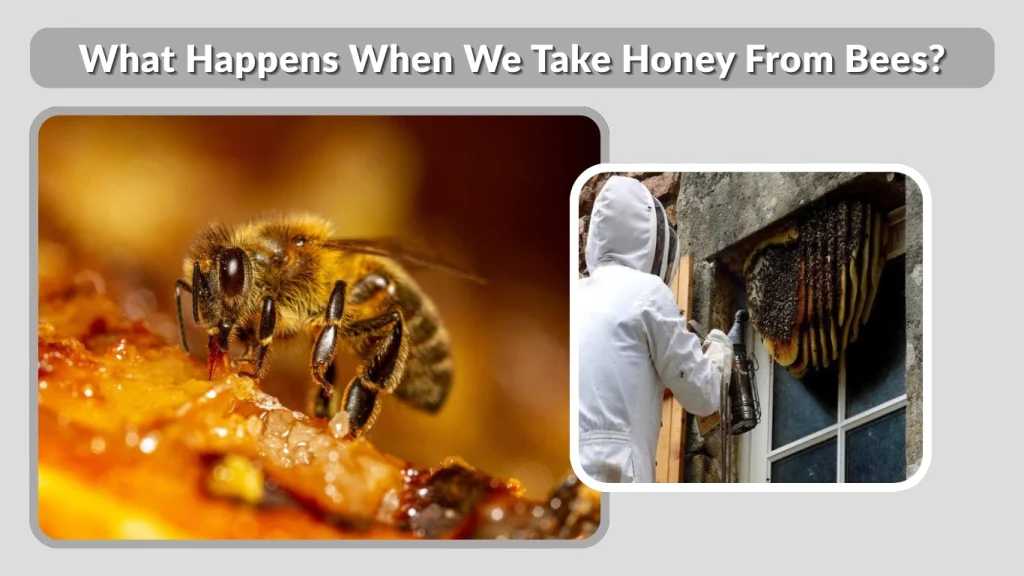
If humans harvest honey, bees still need food to survive. Ethical beekeeping means:
1. Leaving Enough Honey
Beekeepers usually leave:
- 40–60 lbs (18–27 kg) of honey for winter in cold climates
- 20–30 lbs (9–14 kg) in warm climates
2. Feeding Sugar Syrup
When honey stores are low, beekeepers feed bees:
- 1:1 sugar water in spring
- 2:1 sugar water in fall
This gives bees the carbohydrates they normally get from honey.
3. Emergency Feeding
In extreme cases (starvation risk), beekeepers offer:
- Fondant sugar
- Dry sugar
- Pollen patties
This ensures bees never go hungry even if we take some of their honey.
What Do Honey Bees Eat and Drink?
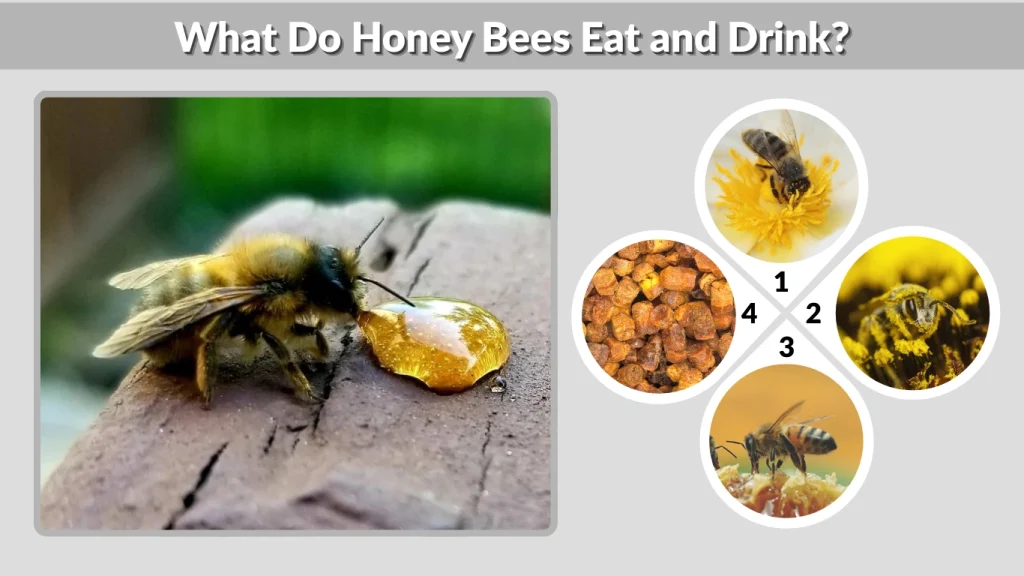
Honey bees require both food and liquids:
Food Sources
- Nectar
- Pollen
- Honey
- Bee bread
- Royal jelly (for larvae and queens)
Liquids
- Water
- Nectar
- Diluted honey
Bees use water to:
- Cool the hive
- Digest food
- Maintain humidity for larvae
A safe water source is crucial for a healthy hive.
What Do Honey Bees Eat in Each Season?
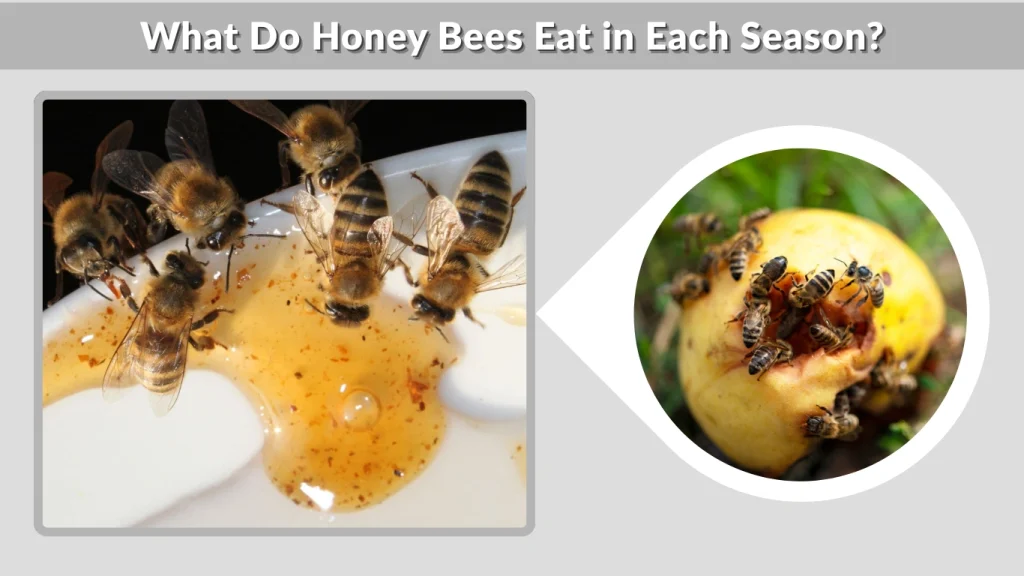
The honey bee diet shifts dramatically depending on the time of year.
Spring
Spring is a time of growth and brood expansion. Bees eat:
- Fresh nectar
- Pollen from early-blooming trees
- Remaining honey stores
This high-protein diet helps nurse bees feed rapidly growing larvae.
Fall (Autumn)
In fall, bees prepare for winter. They eat:
- Late-blooming flowers
- Stored honey
- Supplemental syrup if needed
Fall food is crucial for building fat winter bees.
Winter
In winter, bees rely almost entirely on:
- Honey
- Sugar feed (if provided by beekeepers)
They cluster together and eat honey to maintain heat.
What Do Honey Bees Eat in Different Regions?
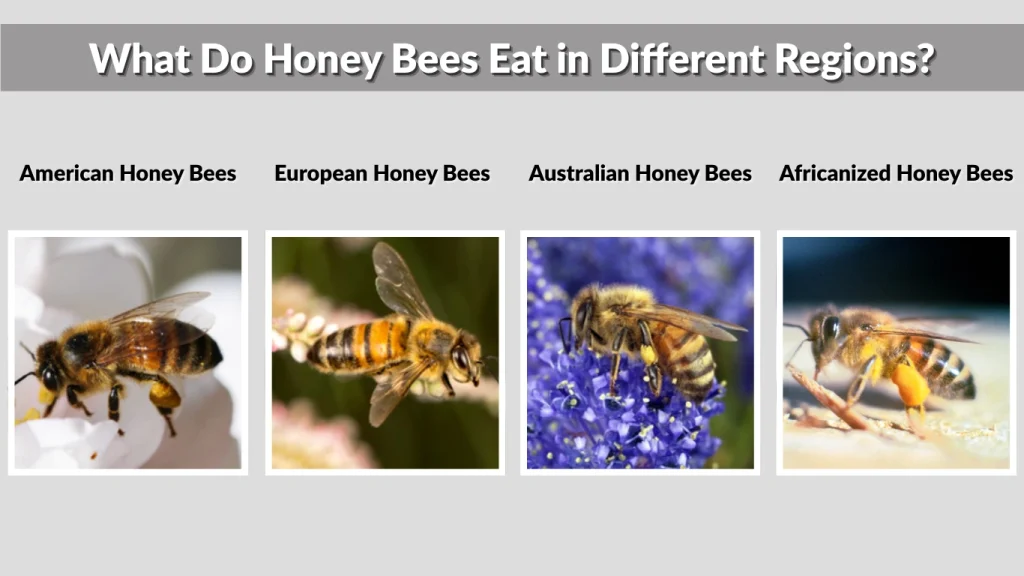
Honey bee diets vary depending on local climate and available plants. While nectar and pollen remain the foundation, specific flowers and trees change around the world.
United States (American Honey Bees)
American honey bees feed on a wide mix of native and cultivated plants, including:
- Clover (white, red, sweet clover)
- Goldenrod
- Fruit blossoms (apple, cherry, peach)
- Wildflowers like asters and sunflowers
- Maple and poplar trees
The U.S. offers a diverse landscape, so bee diets vary by region—from citrus groves in Florida to alfalfa fields in the Midwest.
Europe (European Honey Bees)
European honey bees have access to rich pollen and nectar sources such as:
- Lavender
- Heather
- Rosemary and thyme
- Linden trees
- Canola (rapeseed) fields
Europe’s cool climate means bees rely heavily on honey stores during winter.
Australia (Australian Honey Bees)
In Australia, honey bees feed on:
- Eucalyptus varieties
- Melaleuca (paperbark trees)
- Banksia and grevillea
- Bottlebrush plants
These native plants produce strong, aromatic nectar and unique honey flavors.
Brazil (Brazilian & Africanized Honey Bees)
Brazilian honey bees—often Africanized—feed on lush tropical plants:
- Mango
- Guava
- Passionflower
- Acacia
- Orchid blossoms
Their high activity levels help them gather food quickly in hot climates.
Hawaii (Hawaiian Honey Bees)
Hawaii’s climate allows year-round blooming. Honey bees eat from:
- Ohia lehua
- Macadamia flowers
- Kiawe trees
- Tropical fruits and wildflowers
Hawaii produces distinct honey varieties thanks to its unique flora.
Desert Regions
Honey bees in deserts survive on drought-resistant plants like:
- Mesquite
- Acacia
- Desert willow
- Cactus flowers
- Creosote bush
These plants provide concentrated nectar that withstands extreme temperatures.
What Do Manuka Honey Bees Eat?
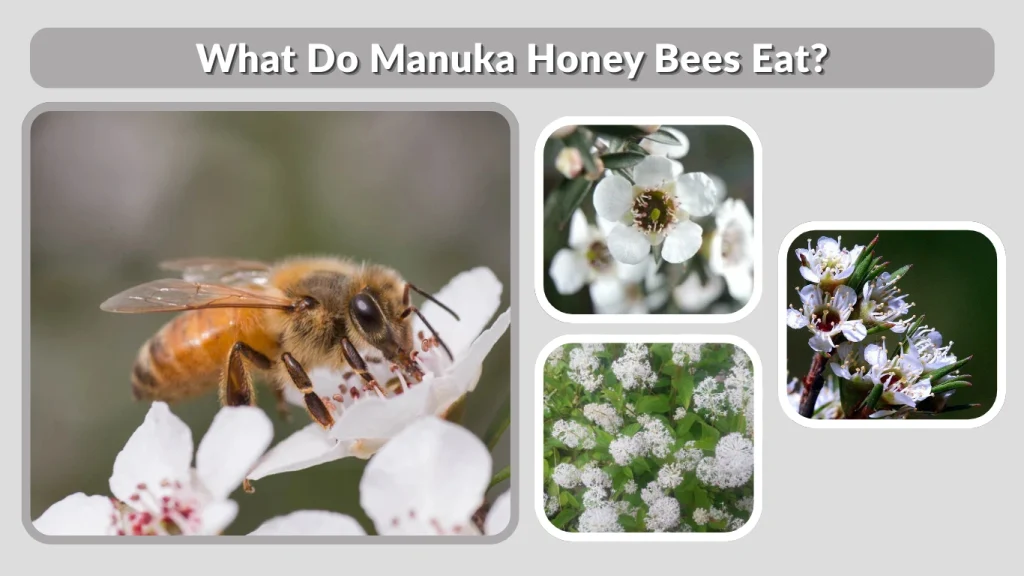
Manuka honey bees are simply European honey bees that live in regions where manuka (Leptospermum scoparium) grows.
They eat:
- Manuka flower nectar
- Kanuka nectar
- Other native shrubs
Manuka nectar contains special natural compounds that create highly valued Manuka honey.
What Flowers Do Honey Bees Eat From?
Honey bees love flowers that are rich in nectar and pollen. Some of the best bee-friendly plants include:
- Clover
- Lavender
- Sunflowers
- Borage
- Wildflower mixes
- Fruit blossoms
- Dandelions
- Sage and mint
- Willow and maple trees
These flowers provide both energy (nectar) and protein (pollen).
What Do Non-Honey Bees Eat?
Not all bees make honey. Non-honey bees include bumblebees, carpenter bees, mason bees, and solitary species.
Depending on species, they eat:
- Nectar
- Pollen
- Floral oils (some species)
- Fruit juices
- Tree sap
Even though their diets are similar, non-honey bees don’t store honey on the scale that honey bees do.
What Do Honey Bees Eat During Winter?
Winter is the toughest period for bees. They survive cold months by consuming:
- Stored honey
- Sugar syrup (if fed by beekeepers)
- Fondant or emergency winter patties
Bees cluster tightly to stay warm and move slowly across the comb consuming honey as a group.
What Do Honey Bees Like to Eat That Might Surprise You?
Some unexpected foods bees enjoy include:
- Grape jelly
- Ripe fruits like peaches and plums
- Sugar syrup
- Jellies used in hummingbird feeders
- Sap from damaged trees
These sources are usually supplemental and appear when natural nectar is low.
What Time of Day Do Honey Bees Eat or Forage?
Honey bees eat throughout the day, but they forage mostly between:
- 9 AM and 4 PM, when flowers produce the most nectar.
However, bees consume honey inside the hive day and night, especially when caring for brood or maintaining warmth.