
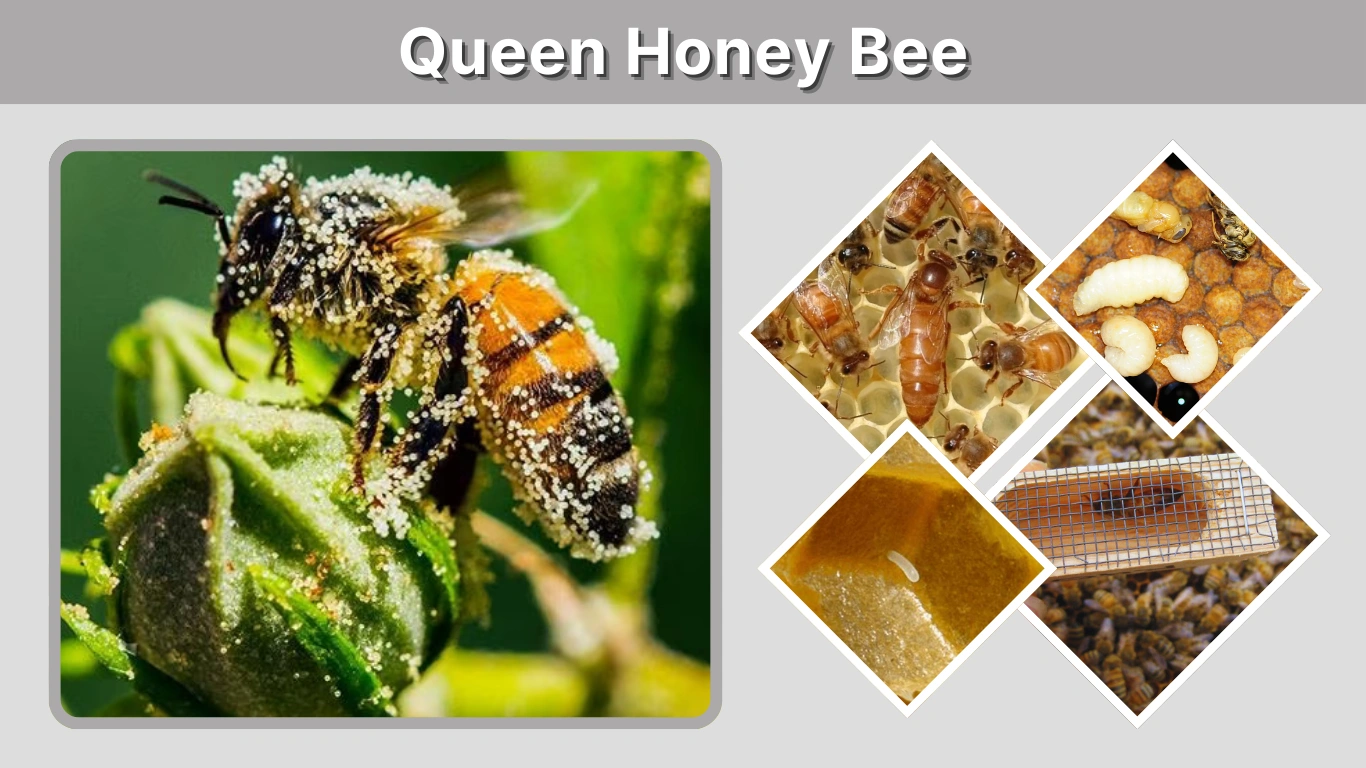
The queen honey bee is the heart of every hive, the single bee responsible for laying nearly every egg that becomes a worker, drone, or future queen. While most people imagine the queen as a ruler controlling the hive, her real role is far more biological and instinct-driven. Many wonder what a queen honey bee looks like, how long she lives, whether she can sting, and why beekeepers sometimes purchase queens. This first half of the guide explores the queen’s appearance, behavior, and life cycle—revealing why she is essential to the survival of the colony.
What Is a Queen Honey Bee?
A queen honey bee is the sole reproductive female in a honey bee colony. Unlike the tens of thousands of worker bees, who are all female but infertile, the queen has fully developed reproductive organs, enabling her to lay up to 1,000–2,000 eggs per day during peak seasons.
She differs significantly from worker and drone bees:
- Workers: Female but sterile, responsible for labor tasks
- Drones: Male bees whose only role is to mate
- Queen: Fertile female whose life revolves around egg-laying and pheromone production
Her pheromones guide the colony, helping regulate worker behavior, prevent other queens from developing, and maintain overall hive unity.
Some consumers confuse “queen bee honey” or “honey queen bee” with special honey types, but these are usually brand names or product labels—not a different form of honey.
What Does a Queen Honey Bee Look Like?
Physical Characteristics
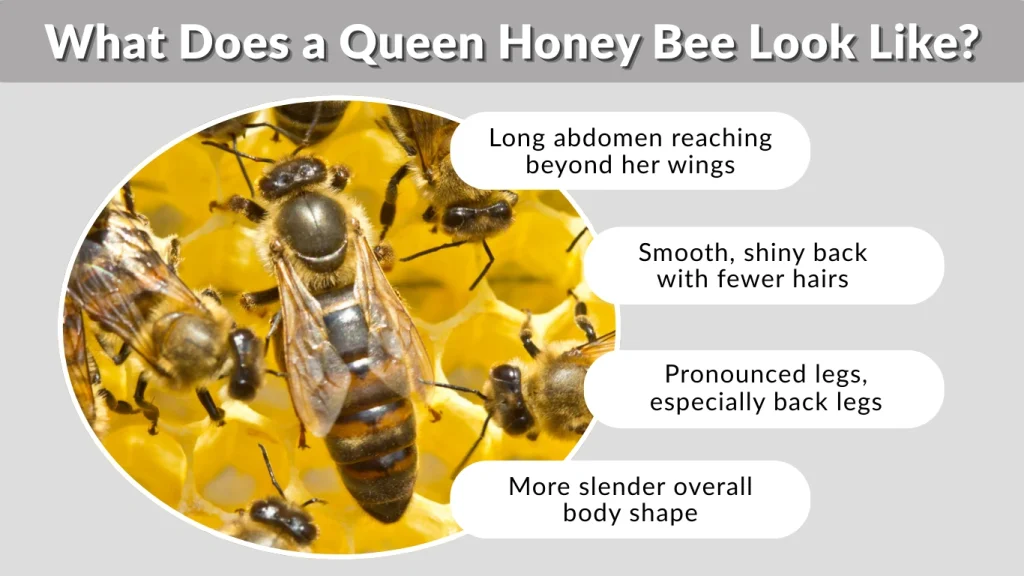
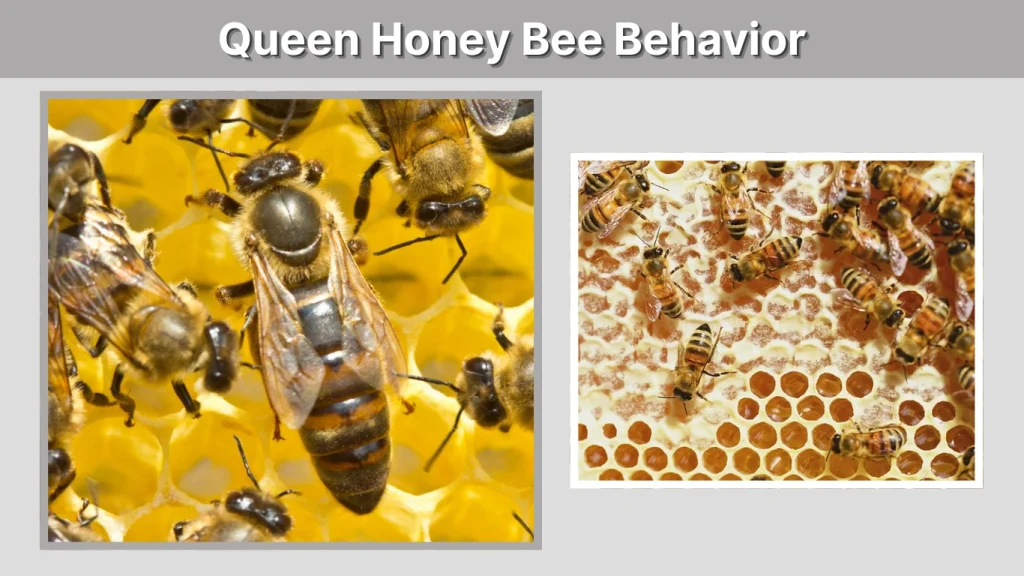
The queen honey bee has a distinct appearance, making her easier to spot once you know what to look for. Her abdomen is longer and more tapered, extending well past her wings—something worker bees never exhibit. Her thorax is slightly larger and smoother, giving her a sleek, elongated look compared to the rounder worker bees.
Key features include:
- Long abdomen reaching beyond her wings
- Smooth, shiny back with fewer hairs
- Pronounced legs, especially back legs
- More slender overall body shape
- Steady, slow movement, unlike the rapid pace of workers
These traits make her stand out once you train your eye.
Images & Identification Tips
Photos of queen honey bees typically show:
- A large, pointed abdomen
- Surrounding workers forming a subtle “retinue circle”
- A slightly darker or lighter color, depending on genetic line
Beekeepers sometimes mark queens with a small colored dot to help identify them quickly during inspections. However, even unmarked queens can be recognized once their longer abdomen and distinctive behavior become familiar.
Common mistakes include confusing oversized worker bees or drones with the queen. Drones are bigger but have big eyes and short abdomens—opposite of the queen’s form.
Queen Honey Bee Biology & Life Cycle
Egg to Adult: Development Stages
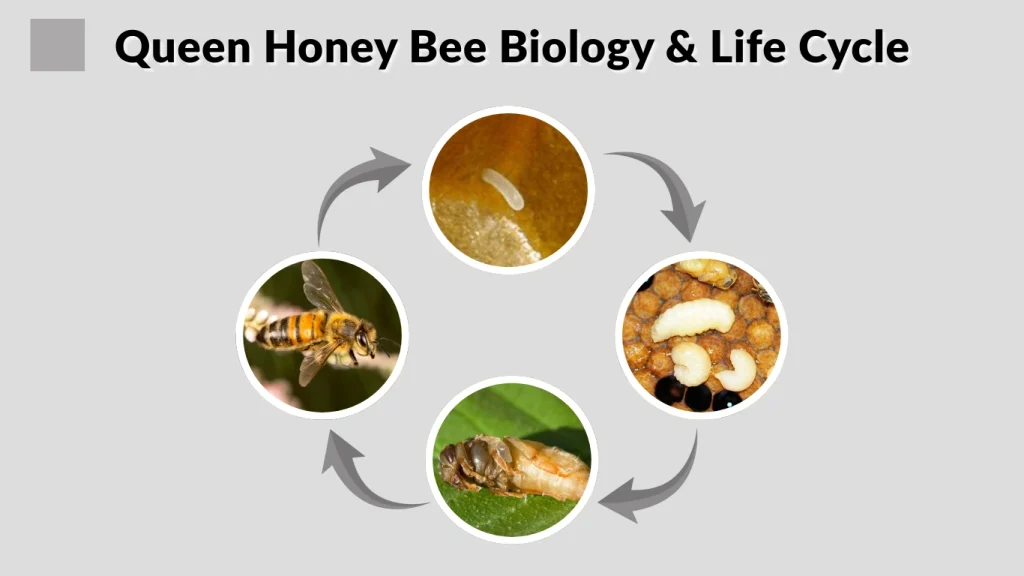
Queen development is one of the most fascinating processes in the hive. A queen begins just like any worker: as a fertilized egg. However, the difference arises in how workers feed her exclusively with royal jelly, triggering her ovaries to develop and transforming her into a fertile queen.
Stages include:
- Egg (3 days)
- Larva fed only royal jelly
- Queen cell capping
- Pupa inside a vertical peanut-shaped queen cell
- Emergence as an adult queen
Queens develop faster than workers, emerging in about 16 days, compared to 21 days for worker bees.
Mating Flights
A newly emerged queen must take a series of mating flights to collect the sperm she will use for her entire life. She flies to drone congregation areas, mates with 10–20 drones, and stores sperm in her spermatheca. This enables her to lay eggs for years without mating again.
These flights are dangerous—birds, weather, and predators can kill her. If a queen fails to mate, she becomes a “drone-layer” and the colony must replace her.
Egg-Laying Stage
Once mated, the queen begins laying eggs rapidly. She lays:
- Fertilized eggs → worker bees or new queens
- Unfertilized eggs → drones
A healthy queen ensures the colony has a balanced population of workers, drones, and brood. Her productivity determines the entire hive’s success.
Queen Honey Bee Lifespan
How Long Do Queens Live?
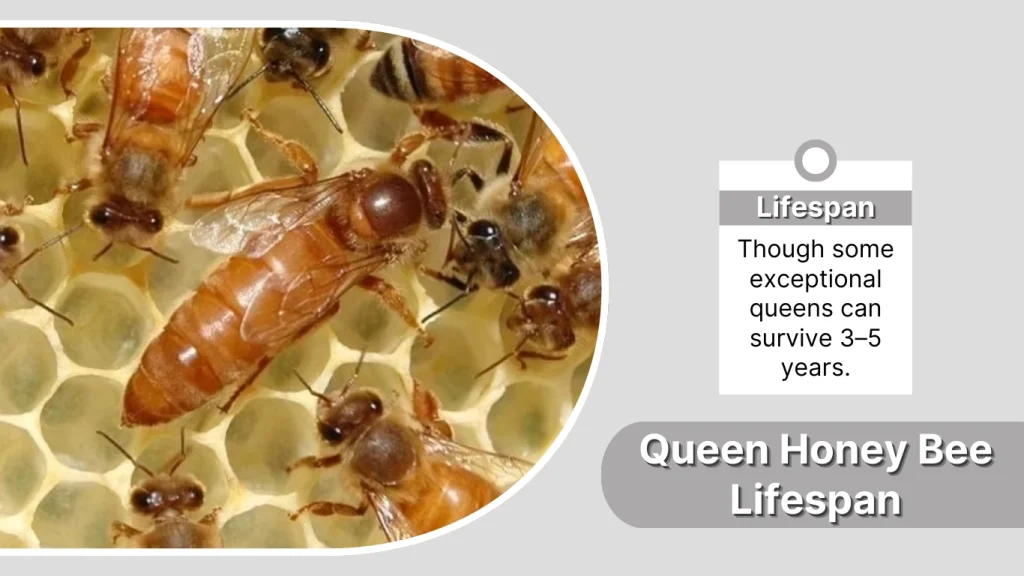
A queen honey bee typically lives 1–2 years, though some exceptional queens can survive 3–5 years. This makes her lifespan much longer than a worker bee, which lives only weeks in summer or months in winter.
Factors That Affect Queen Lifespan
Several conditions influence how long a queen lives:
- Genetics (e.g., Carniolan queens often live longer)
- Colony health and disease levels
- Pheromone strength (fades with age)
- Beekeeper interventions and hive maintenance
- Environmental stresses such as pesticides or poor forage
As her pheromone levels decline, workers may begin preparing to replace her through a process called supersedure.
Queen Honey Bee Behavior
Queen Pheromones
A queen’s influence comes not from authority but from her pheromones. These chemical signals help maintain colony unity and order. Her pheromones:
- Inhibit workers from raising new queens
- Signal that the colony is queen-right (healthy queen present)
- Coordinate worker tasks
- Reduce aggression within the hive
- Encourage workers to groom and feed her
These pheromones are spread throughout the hive via the workers who tend to her. Once her pheromone output weakens—often due to age or disease—the colony begins preparing to raise a new queen.
Queen Replacement (Supersedure)
Supersedure occurs when bees decide their queen is failing. Workers identify declining pheromone levels, spotty brood patterns, or reduced egg-laying. In response, they build supersedure queen cells, usually on the face of the comb. A new queen will eventually replace the old one, often without conflict.
If the queen dies suddenly, the colony creates emergency queen cells around young larvae to quickly raise a replacement.
Swarming Behavior
Another reason bees raise new queens is swarming. Before a swarm, workers build several queen cells known as swarm cells. The old queen leaves with a large portion of the hive to start a new colony, while the new queens emerge to take leadership of the original hive.
Do Queen Honey Bees Sting?
Can a Queen Sting?
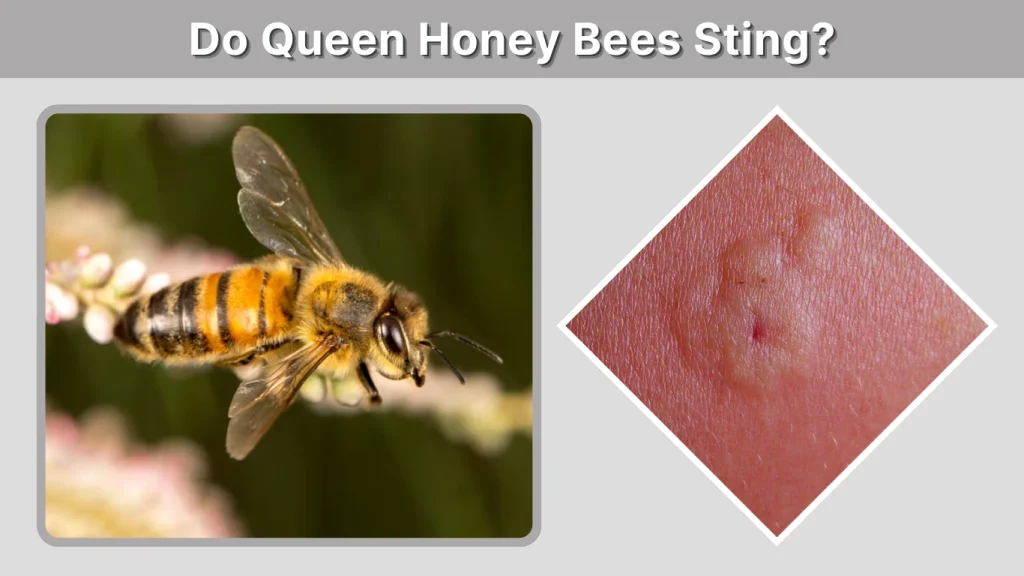
Yes—a queen honey bee does have a stinger. However, a queen’s stinger is smooth, unlike the barbed stinger of worker bees. This means she can sting multiple times without dying.
When Queens Sting
Queen stings are not defensive. Instead, queens use their stingers for:
- Fighting rival queens
- Killing unhatched queens
- Establishing dominance
A queen almost never stings humans. She remains deep inside the hive, surrounded by attendants, and her instinct is focused on reproduction, not defense.
Queen Honey Bee Breeds
Carniolan Honey Bee Queens
Carniolan queens are popular among beekeepers for their:
- Gentle temperament
- Rapid spring buildup
- High resilience in cold climates
- Strong resistance to pests and disease
Their calm behavior makes them desirable for beginner beekeepers.
Other Common Queen Lines
Many beekeepers choose queens based on genetics and specific traits:
- Italian Queens – gentle, excellent honey production
- Russian Queens – mite resistant, winter hardy
- Saskatraz Queens – bred for resistance and productivity
- Buckfast Queens – disease-resistant and adaptable
Each breed influences hive temperament, productivity, and survival.
Queen Honey Bees for Sale
Where Queens Are Sold
Queen honey bees can be purchased from:
- Professional queen breeders
- Apiaries
- Lappe’s Bee Supply (specific keyword)
- Local beekeeping shops
- Online suppliers during spring/summer
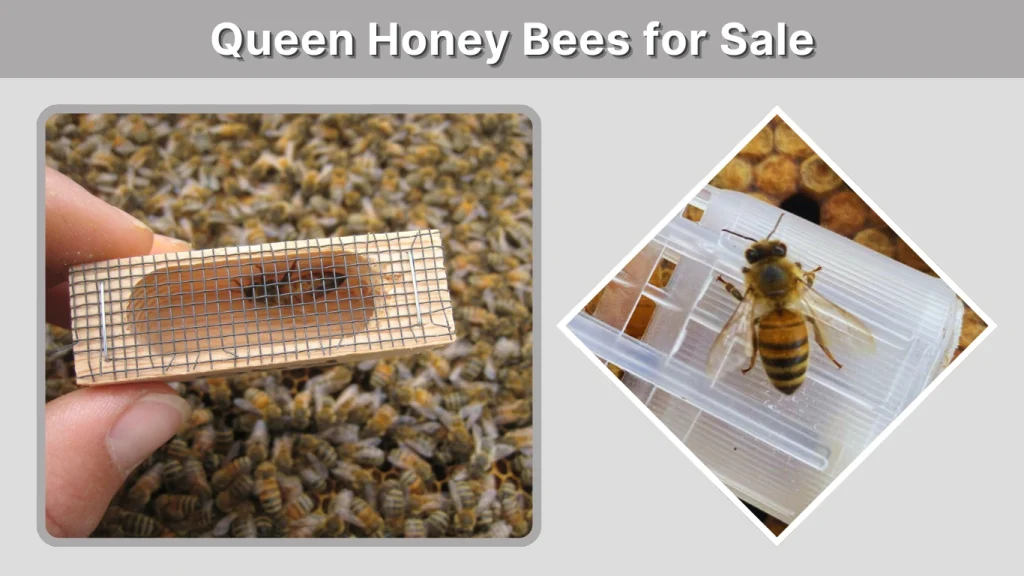
These queens are typically shipped in ventilated cages with attendants.
Queen Pricing & Shipping
Prices vary depending on:
- Breed quality
- Mating type (open-mated vs. instrumentally inseminated)
- Lineage (Carniolan, Italian, etc.)
- Supply and season
Shipping requires temperature control and careful handling to ensure queen survival.
How to Introduce a New Queen
When introducing a purchased queen, beekeepers:
- Place her cage inside the hive.
- Allow workers to get used to her pheromones.
- Wait for them to chew through the sugar plug.
- Release her safely once acceptance is confirmed.
Proper introduction prevents rejection or queen death.
Queen Honey Bee in Culture & Symbolism
“Honey Queen Bee” in Media & Apparel
The queen bee has become a cultural symbol representing:
- Feminine power
- Leadership
- Independence
- Beauty and boldness
Clothing and women’s wellness brands often use names like “Honey Queen Bee” for marketing.
Myths & Facts
- The queen does not rule the hive.
- Most hive decisions are driven by workers.
- The queen’s primary job is reproduction, not governance.
FAQs
What does a queen honey bee look like?
A long abdomen, smooth back, and distinct shape set her apart.
How long does a queen bee live?
Typically 1–2 years, sometimes up to 5.
Does a queen bee sting?
Yes, but only other queens.
Can you buy a queen honey bee?
Yes—many breeders and suppliers sell them.
What is a queen cell?
A large vertical wax cell used to raise queens.
