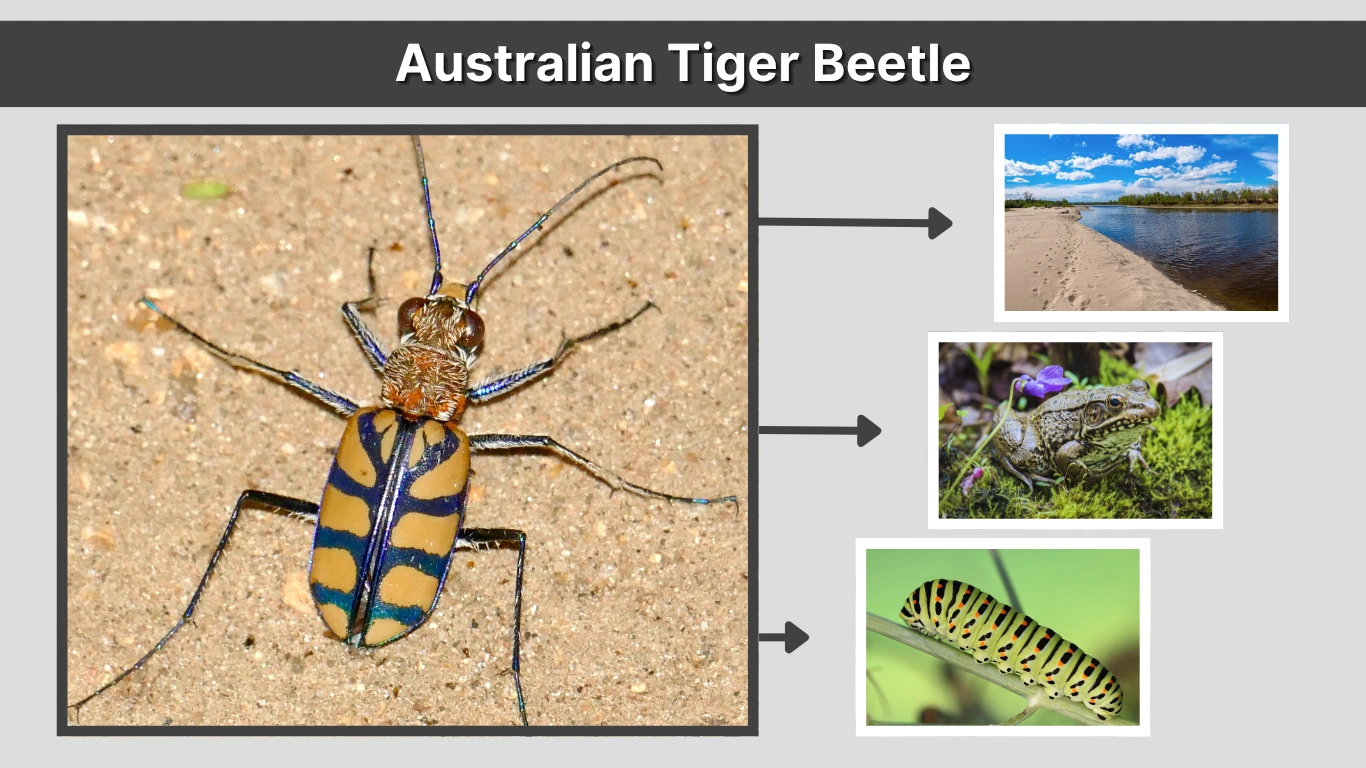
The Australian tiger beetle, known scientifically as Cicindela hudsoni, is one of the most remarkable insects in the world. Famous for its incredible running speed, sharp hunting skills, and dazzling metallic appearance, this beetle has earned a special place in entomology. Found across the sandy and sunlit habitats of Australia, it is admired both for its beauty and its role as a predator. This article explores the speed, size, habitat, diet, and fascinating behaviors of this unique beetle.
What is the Australian Tiger Beetle?
The Australian tiger beetle belongs to the subfamily Cicindelinae, which includes more than 2,600 species worldwide. Among these, Cicindela hudsoni is one of the most celebrated because of its extraordinary speed. Like other tiger beetles, it gets its name from its aggressive hunting style, using large mandibles to overpower prey in a manner similar to big cats.
These beetles are small in size but highly efficient predators. Their keen eyesight, long legs, and sprinting ability make them top hunters among insects. While they are not dangerous to humans, they are highly effective in controlling populations of smaller insects in their environment.
Australian Tiger Beetle Speed

One of the most fascinating facts about the Australian tiger beetle is its speed. It is considered one of the fastest running insects in the world, reaching speeds of up to 9 km/h (5.6 mph). While that may not sound impressive compared to humans, for its body size, it is the equivalent of a human running at more than 400 km/h.
How Speed Works for Hunting
- Their long, slender legs allow rapid bursts of running.
- They chase down prey using a start-and-stop sprinting style.
- During high-speed chases, their vision temporarily blurs, forcing them to stop briefly before resuming the chase.
This running technique makes them effective predators, able to track and capture fast-moving insects such as ants and flies. Their hunting speed has fascinated scientists and earned them recognition as a “super-athlete” of the insect world.
Size and Physical Appearance

Australian tiger beetles are relatively small, with an average length of 10–20 millimeters. Despite their small size, their build is perfectly adapted for both speed and strength.
Key Physical Traits:
- Body size: Compact but elongated, making them aerodynamic while running.
- Legs: Long and slender, specialized for rapid sprinting.
- Eyes: Large compound eyes that detect movement from a distance.
- Mandibles: Sickle-shaped jaws used to grab, crush, and consume prey.
- Wings: They possess wings and can fly short distances, though they rely more on running than flying.
Many individuals display metallic or iridescent colors, including shades of green, bronze, or blue, depending on the angle of sunlight. These shimmering colors help them blend into sandy or earthy environments, acting as camouflage from predators.
Habitat and Distribution
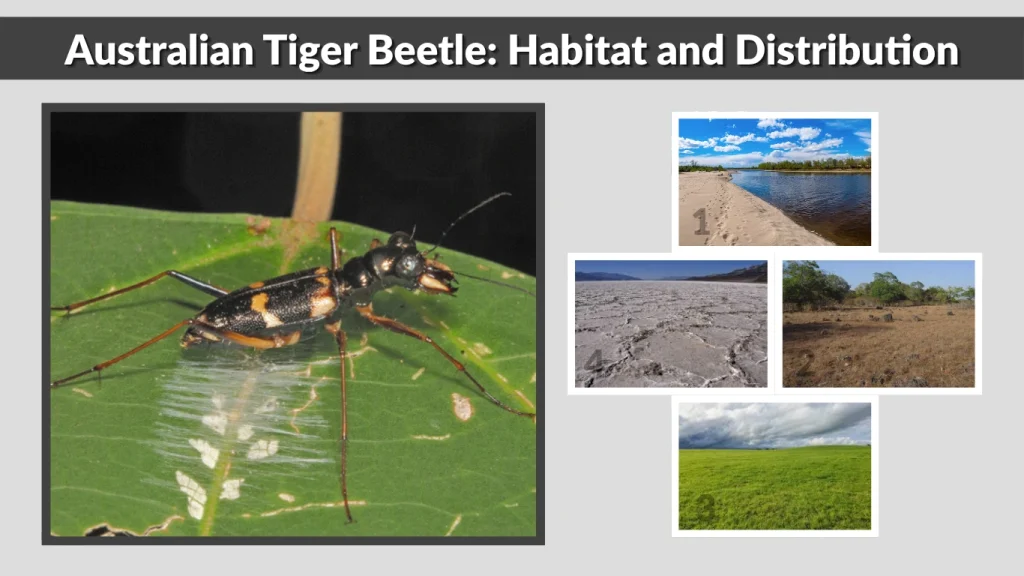
The Australian tiger beetle is widespread across different regions of Australia. It thrives in open, sandy, and sunny habitats, where running and hunting are most effective.
Common Habitats:
- Sandy riverbanks and coastal areas
- Dry open woodlands
- Grasslands and meadows
- Arid inland regions with loose soil
These beetles prefer environments with little vegetation that allow them to sprint without obstacles. They are most active during warm seasons, particularly in spring and summer, when prey is abundant.
Because of their sensitivity to environmental changes, their presence often indicates a healthy ecosystem with balanced insect populations and clean soil.
Identification Guide
Tiger beetles are fairly easy to identify in the field, especially when compared to other beetle species. Their unique movements and bright colors make them stand out.
Identification Traits:
- Behavior: Rapid sprinting and sudden pauses while hunting
- Body shape: Slender and elongated, unlike slower ground beetles
- Eyes: Large and prominent, positioned for wide-angle vision
- Coloration: Metallic shine with distinct patterns, spots, or stripes
- Mandibles: Visible and powerful, even in small specimens
A notable behavior is their tendency to take short flights when disturbed. If approached, they quickly fly a short distance, land, and immediately resume running. This combination of running and flight makes them difficult for predators to capture.
Diet and Hunting Behavior
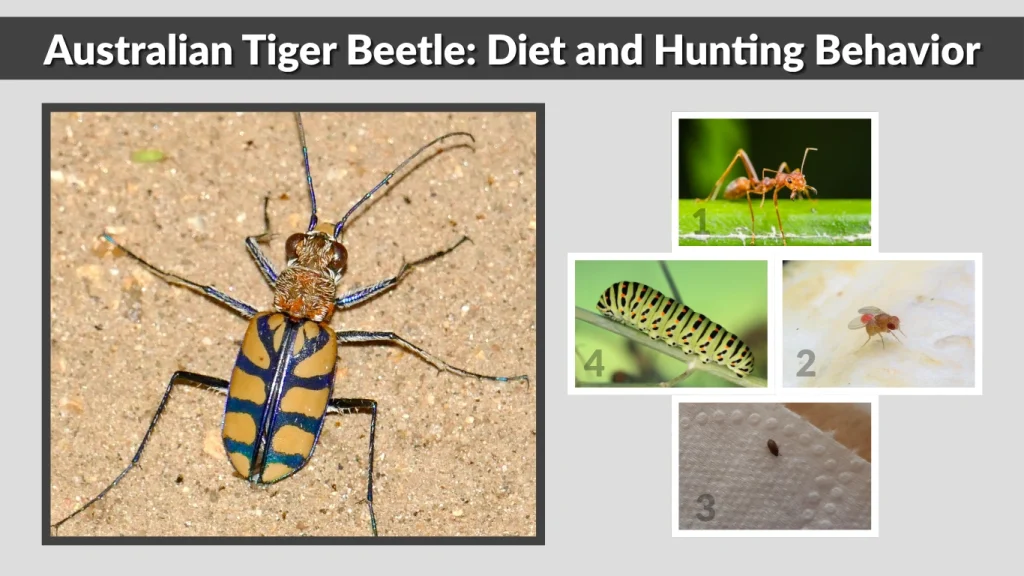
Like other tiger beetles, the Australian species is a carnivorous predator. Both adults and larvae feed on live prey, playing an important role in regulating insect populations.
Adult Diet
Adult Australian tiger beetles typically feed on:
- Ants
- Flies and gnats
- Small beetles
- Caterpillars and larvae
- Spiders and other soft-bodied invertebrates
They rely on their speed to chase and overpower prey, then use their mandibles to crush and consume them. Their hunting is primarily visual, as they detect movement quickly with their large eyes.
Larval Hunting Behavior
The larvae of Australian tiger beetles are equally formidable. They live in burrows dug into sandy soil and act as ambush predators. By lying in wait near the burrow entrance, they grab passing insects with their strong jaws and drag them underground for consumption.
This dual predatory strategy—adults as active hunters and larvae as ambushers—makes tiger beetles one of the most efficient insect predators throughout their life cycle.
Life Cycle and Reproduction
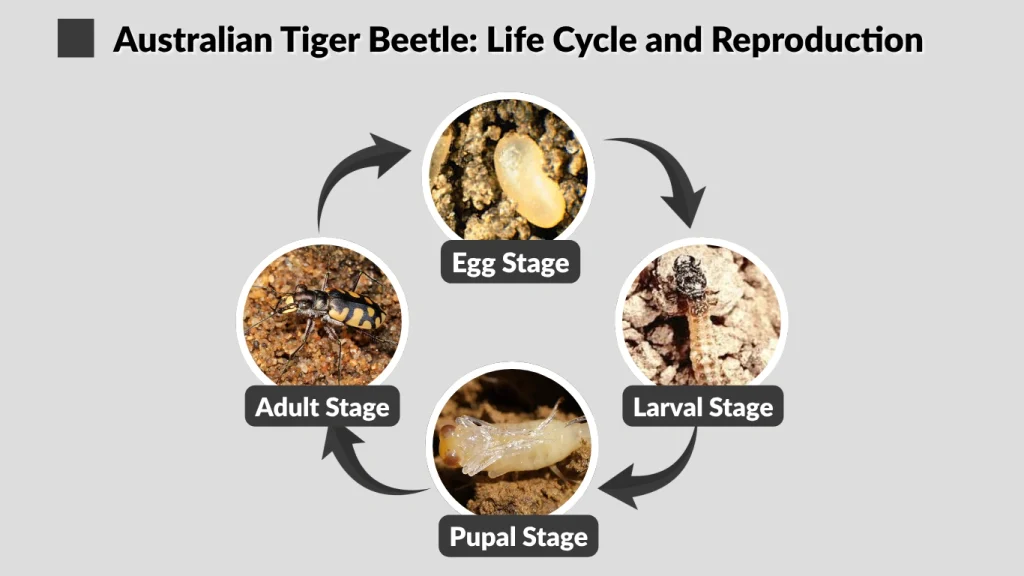
The Australian tiger beetle follows a complete metamorphosis, like other beetles. Its life cycle has four distinct stages:
- Egg Stage – Female beetles lay eggs in sandy or loose soil, selecting spots that allow larvae to dig easily.
- Larval Stage – After hatching, the larvae dig burrows and remain hidden. They are ambush predators, striking insects that walk too close to their burrow entrances.
- Pupal Stage – When fully grown, larvae seal their burrows and transform into pupae, eventually emerging as adults.
- Adult Stage – Adults are active hunters that feed, mate, and repeat the cycle. Their lifespan is shorter compared to the larval stage, which may last several months to years depending on conditions.
This life cycle ensures survival through different environments, as larvae are well protected underground until they are strong enough to emerge.
Predators and Threats

Although the Australian tiger beetle is a powerful predator in its own right, it is also prey for many larger creatures.
Natural Predators
- Birds – Insect-eating birds often hunt adults during daylight.
- Lizards and frogs – Opportunistically eat beetles found on the ground.
- Larger insects – Some predatory beetles and mantises may attack tiger beetle larvae.
- Spiders – Ground-dwelling spiders sometimes ambush tiger beetles.
Environmental and Human Threats
- Habitat loss from urbanization and agriculture reduces their natural range.
- Climate change alters soil conditions and prey availability.
- Over-collection for insect trade, as their metallic colors make them appealing to collectors.
- Pollution in soil and water can disrupt their hunting grounds.
Some Australian tiger beetle populations are closely monitored to ensure long-term survival.
Fascinating Australian Tiger Beetle Facts
- One of the fastest insects – Their running speed is unmatched in proportion to their body size.
- Vision limitations at high speed – They pause mid-chase because their eyes can’t process images clearly when running too fast.
- Dual hunting strategies – Adults chase prey actively, while larvae use ambush burrows.
- Shiny appearance – Their metallic sheen makes them a favorite among insect photographers and researchers.
- Ecosystem importance – They are natural pest controllers, helping reduce populations of crop-damaging insects.
These facts highlight why the beetle is not only fascinating but also ecologically valuable.
Importance in Ecosystems
The Australian tiger beetle contributes significantly to natural ecosystems.
- Pest control – By preying on ants, caterpillars, and flies, they naturally reduce harmful insect populations.
- Food source – They serve as prey for birds, reptiles, and amphibians, ensuring balance in the food chain.
- Biodiversity indicators – Their presence signals healthy, well-functioning ecosystems, particularly in sandy habitats.
Because of these roles, they are highly regarded by scientists studying predator-prey dynamics and environmental health.
Visuals and Resources
The Australian tiger beetle’s beauty and speed make it a popular subject for photos and videos. Many wildlife enthusiasts document them in action, capturing their metallic bodies and lightning-fast chases. While images and videos are widely available, some individuals are also sold for entomological collections.
Key Takeaways
- The Australian tiger beetle (Cicindela hudsoni) is one of the fastest insects in the world.
- It can run up to 9 km/h, equivalent to a human sprinting at over 400 km/h relative to body size.
- Small but powerful, they measure 10–20 mm in length.
- They live in sandy, sunny habitats across Australia, thriving in spring and summer.
- Both adults and larvae are carnivorous hunters, feeding on ants, flies, caterpillars, and other insects.
- Despite their hunting skills, they face threats from birds, lizards, habitat loss, and climate change.
- Their role as pest controllers and ecosystem indicators makes them ecologically important.
FAQs
How fast are Australian tiger beetles?
Australian tiger beetles can run up to 9 km/h (5.6 mph). While this may seem modest, their speed relative to body size makes them one of the fastest insects on Earth. They often sprint in short bursts, pausing to reorient before chasing prey again.
What is the scientific name for the Australian tiger beetle?
The scientific name of the Australian tiger beetle is Cicindela hudsoni. It belongs to the beetle family Carabidae, within the subfamily Cicindelinae, which includes more than 2,600 tiger beetle species worldwide.
Where does the Australian tiger beetle live?
These beetles are found across Australia in open, sandy habitats such as riverbanks, coastal regions, grasslands, and woodlands. They prefer warm, sunny environments where they can hunt effectively.
What do Australian tiger beetles eat?
They are carnivorous predators that feed on ants, flies, caterpillars, spiders, and other small insects. Larvae live in burrows and ambush prey that pass by, while adults sprint across the ground to capture moving targets.
Are Australian tiger beetles dangerous to humans?
No, Australian tiger beetles are not dangerous to humans. While they have strong mandibles capable of delivering a defensive nip, they do not bite people unless handled. They carry no venom and pose no threat to human health.