

Spotting a fast-moving insect on the floor can often cause instant panic, but not every insect that resembles a cockroach is one. Ground beetles are frequently mistaken for cockroaches due to their speed and body shape. However, these two insects differ greatly in behavior, habitat, and impact on humans. Knowing these differences not only helps reduce unnecessary fear but also ensures proper pest management. Let’s explore seven key differences between ground beetles and cockroaches.
Ground Beetle vs Cockroach: Quick Comparison
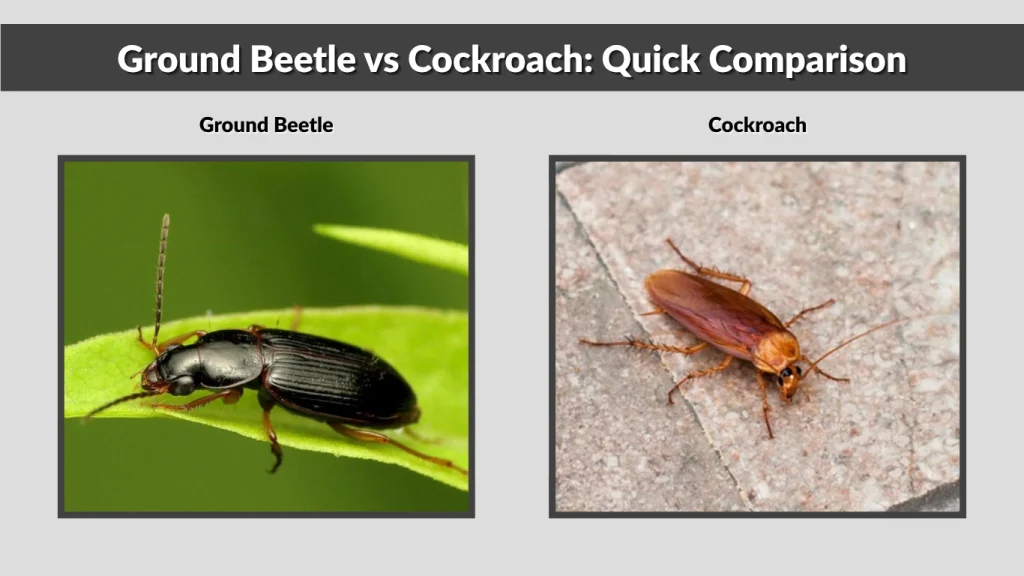
| Feature | Ground Beetle | Cockroach |
| Body Shape | Elongated, narrow with hard wing covers | Oval, flattened with softer wing covers |
| Color | Often metallic or shiny black | Brown, reddish, or dark with dull texture |
| Wings | Hard elytra (protective covers) over wings | Membranous wings, sometimes used for flight |
| Diet | Predatory, feeding on insects | Omnivorous, scavenging on food and waste |
| Habitat | Outdoors in soil, gardens, under rocks | Indoors in kitchens, bathrooms, basements |
| Impact on Humans | Beneficial, controlling pests | Harmful, spreading bacteria and allergens |
| Infestation Risk | Do not infest homes | High infestation potential indoors |
1. Physical Appearance
At first glance, cockroaches and ground beetles may look alike, but a closer look reveals obvious distinctions. Ground beetles are longer and slimmer, with a more defined separation between the head and body. Their wing covers (elytra) are hard and glossy, often metallic. In contrast, cockroaches appear broader, oval-shaped, and generally brown or reddish, with a soft, leathery wing texture.
2. Behavior and Activity
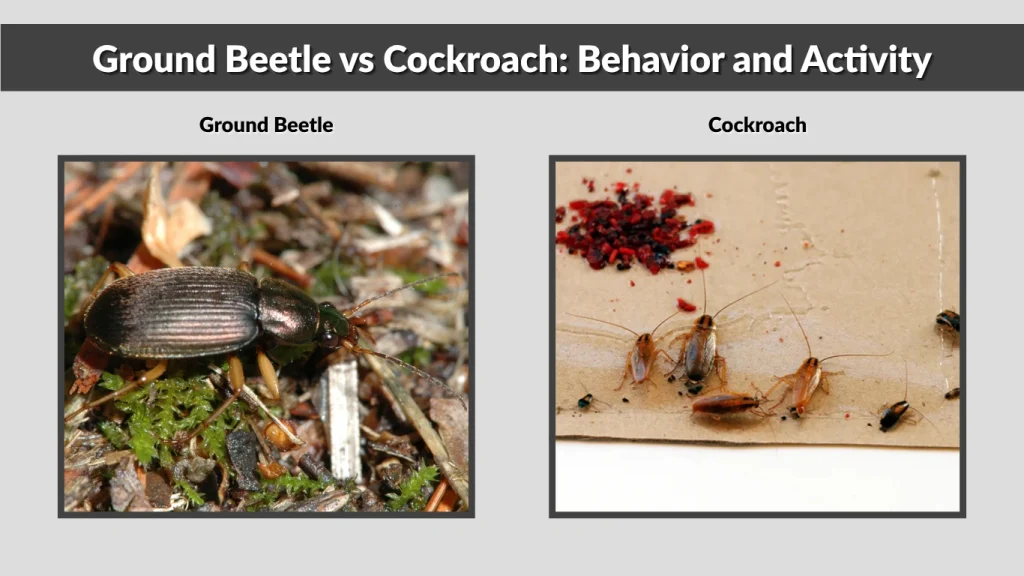
Cockroaches are well-known nocturnal scavengers, moving quickly in search of food scraps. Their behavior is heavily linked to survival indoors, where they find warmth and shelter. Ground beetles, on the other hand, are also mostly nocturnal but play a different role: they actively hunt other insects. While cockroaches scurry nervously, beetles move with purpose, targeting prey rather than crumbs.
3. Habitat Preferences
Habitat differences are one of the clearest ways to tell these two apart. Cockroaches thrive in human-made environments like kitchens, bathrooms, and dark crevices where moisture is present. They quickly adapt to homes and can live in walls or cupboards. Ground beetles prefer natural outdoor habitats, such as garden soil, under rocks, or logs. They rarely enter homes, and if they do, it’s usually accidental.
4. Diet and Feeding Habits
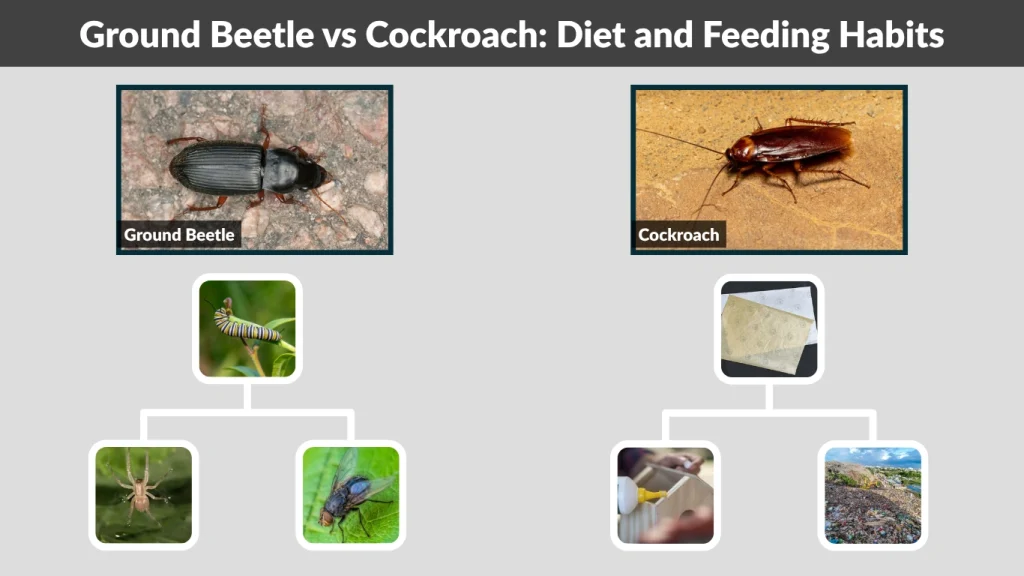
Diet is a defining difference between ground beetles and cockroaches. Cockroaches are omnivorous scavengers, consuming everything from leftover food and grease to paper, glue, and waste. This feeding behavior makes them efficient survivors indoors. Ground beetles, however, are natural predators. They hunt smaller insects, larvae, and even garden pests like caterpillars and aphids. Their diet contributes positively to the ecosystem, reducing harmful pest populations.
5. Reproduction and Life Cycle
Cockroaches reproduce rapidly, which is why infestations escalate quickly. A single female can produce multiple egg cases (oothecae), each holding dozens of nymphs. These young look like miniature cockroaches and mature fast, spreading through homes. Ground beetles, on the other hand, reproduce more slowly. Their life cycle includes eggs, larvae, pupae, and adult stages, but they don’t breed indoors. This makes them far less of a nuisance to humans.
6. Human Interaction and Impact
For humans, the impact of cockroaches is overwhelmingly negative. They contaminate food, spread bacteria, and trigger allergies or asthma through shed skin and droppings. Their presence often signals poor sanitation or hidden moisture problems. Ground beetles are the opposite. They do not pose health risks, do not invade pantries, and are generally considered beneficial because they control harmful pests outdoors. Finding one indoors is uncommon and usually accidental.
7. Pest Control Approaches
When it comes to pest control, strategies differ greatly between these two insects. Cockroach infestations often require professional intervention since they breed quickly and hide in difficult-to-reach places. Preventative measures include sealing cracks, maintaining cleanliness, and reducing moisture. Ground beetles rarely need removal, as they do not infest homes. If they wander indoors, simply guiding them outside is usually enough. Outdoor, they are allies in pest management.
Conclusion
Although cockroaches and ground beetles may appear similar at first, their differences are significant. Cockroaches are resilient household pests, spreading disease and thriving in indoor environments. Ground beetles, however, are outdoor predators that help control insect populations and rarely cause trouble for humans. Recognizing these seven key differences makes it easier to handle pest situations effectively and without unnecessary concern.
FAQs
What is the easiest way to tell a ground beetle from a cockroach?
The quickest way to differentiate them is by body shape and shine. Ground beetles are slim, glossy, and often metallic, while cockroaches are oval, flat, and typically brown. Also, cockroaches are commonly found indoors, whereas ground beetles live outdoors in soil or under rocks.
Are ground beetles harmful to humans?
No, ground beetles are not harmful to humans. They do not bite, sting, or spread disease. In fact, they are considered beneficial insects because they prey on garden pests like caterpillars, slugs, and aphids. Their presence in outdoor environments helps maintain natural pest control.
Why do cockroaches infest homes but not ground beetles?
Cockroaches adapt well to human environments because they feed on a wide range of scraps and thrive in damp, dark areas. Ground beetles, however, prefer natural habitats and hunt live insects, not food waste. As a result, they rarely seek shelter indoors or cause infestations.
Can ground beetles fly like cockroaches?
Some ground beetle species have wings beneath their protective covers, but most are poor fliers and rarely take flight. Cockroaches, however, often have functional wings and may glide short distances, though not all species fly actively. Their quick scurrying movement is more typical.
What should I do if I find ground beetles inside my house?
If you encounter ground beetles indoors, there’s no need to panic. They likely entered by accident through open doors or windows. The best solution is to gently catch and release them outside. Unlike cockroaches, they won’t infest your home or cause sanitation issues.
