
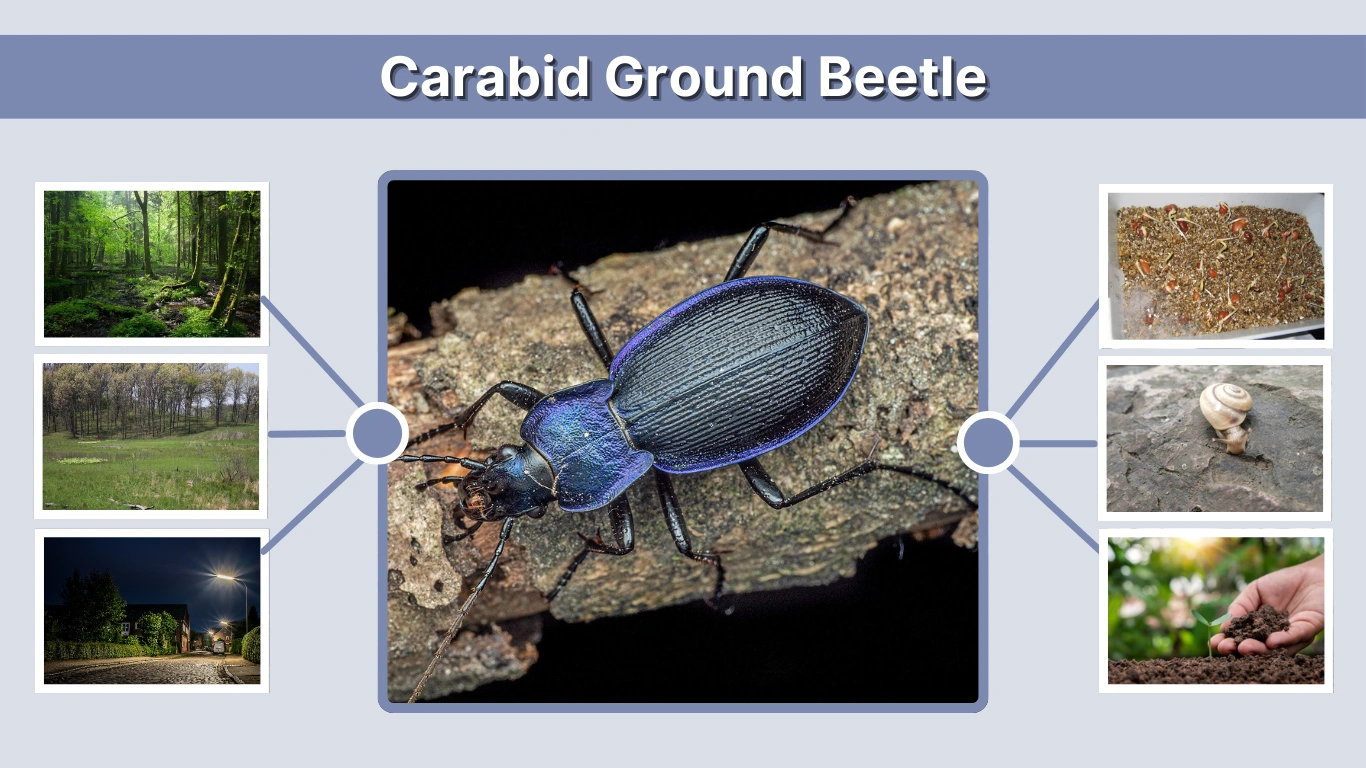
Carabid ground beetles are one of the most diverse and fascinating groups of beetles, belonging to the family Carabidae. With more than 40,000 species described worldwide, they are among the largest beetle families. These beetles are not only striking in appearance but also play a vital role in maintaining ecological balance. Known for their speed, hunting abilities, and adaptability, they thrive in various environments, from forests to gardens. Understanding their characteristics helps us appreciate their importance in biodiversity and pest control.
Identification
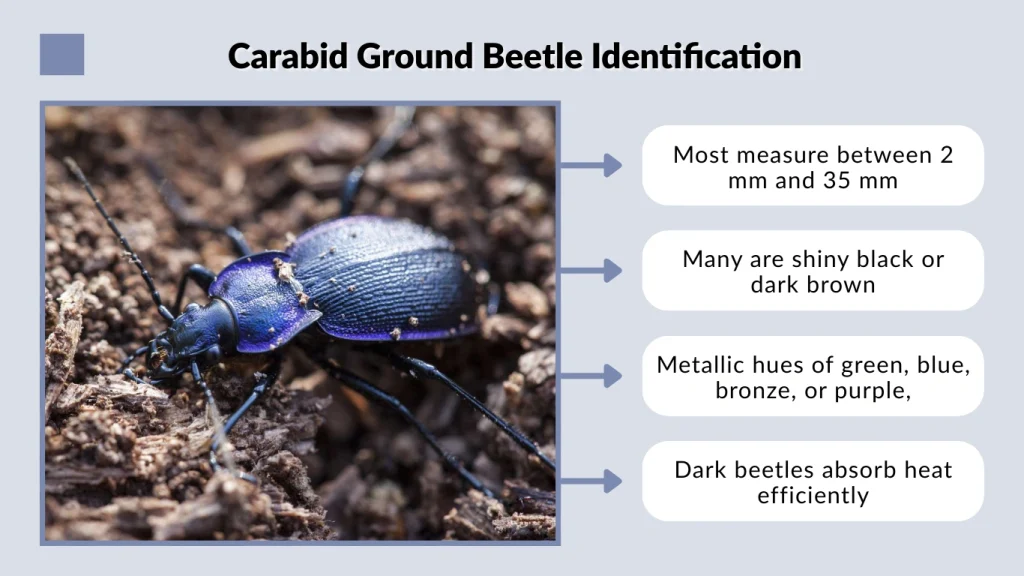
Carabid beetles can be recognized by their distinctive body shape and features. They typically have an elongated, flattened body that allows them to move swiftly on the ground or hide under stones, logs, and leaf litter. Their head is narrower than the pronotum (the shield-like plate behind the head), and they possess prominent mandibles used for seizing prey. The antennae are long, thread-like, and highly sensitive to vibrations, helping them navigate in darkness.
One of their most noticeable features is the hardened forewings, called elytra, which are usually grooved or ridged. These protect the beetle’s hindwings, though many species are either poor fliers or completely flightless. Their legs are strong and adapted for running, making them effective ground hunters. Unlike some other beetles, carabids do not climb plants frequently; they remain close to the soil surface, reflecting their preference for terrestrial hunting.
Size and Color
Carabid beetles vary greatly in size, depending on the species. Most measure between 2 mm and 35 mm, though some tropical species can grow even larger. Their robust exoskeleton gives them a sturdy appearance, enhancing their ability to withstand environmental stress.
In terms of coloration, they are often striking. Many are shiny black or dark brown, which helps them blend into soil and shadows. Others display metallic hues of green, blue, bronze, or purple, which can be particularly eye-catching under sunlight. Some species even have patterned elytra with spots or stripes, making them more easily identifiable. This variation in color is not only aesthetic but also functional—dark beetles absorb heat efficiently, while metallic shades may act as camouflage against predators.
Habitat
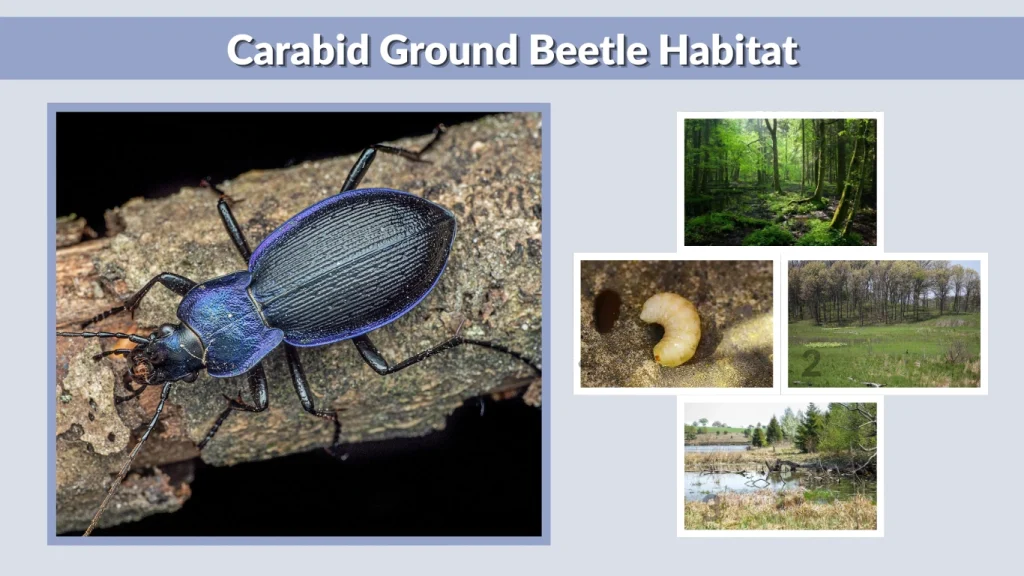
Carabid beetles are highly adaptable and can be found in a wide range of habitats. They are especially common in:
- Forests – Living under bark, leaf litter, and logs.
- Grasslands and fields – Hunting small invertebrates among vegetation.
- Gardens and farmlands – Attracted by soil-rich areas and prey availability.
- Riverbanks and wetlands – Moist conditions support both beetles and their prey.
They are typically soil-dwelling creatures, often hiding during the day and becoming active at night. Their preference for dark, moist, and cool environments makes them integral members of ground-level ecosystems. Seasonal variations also affect their habitat use; for example, some species may burrow deeper into soil during winter to avoid freezing temperatures.
Behaviors
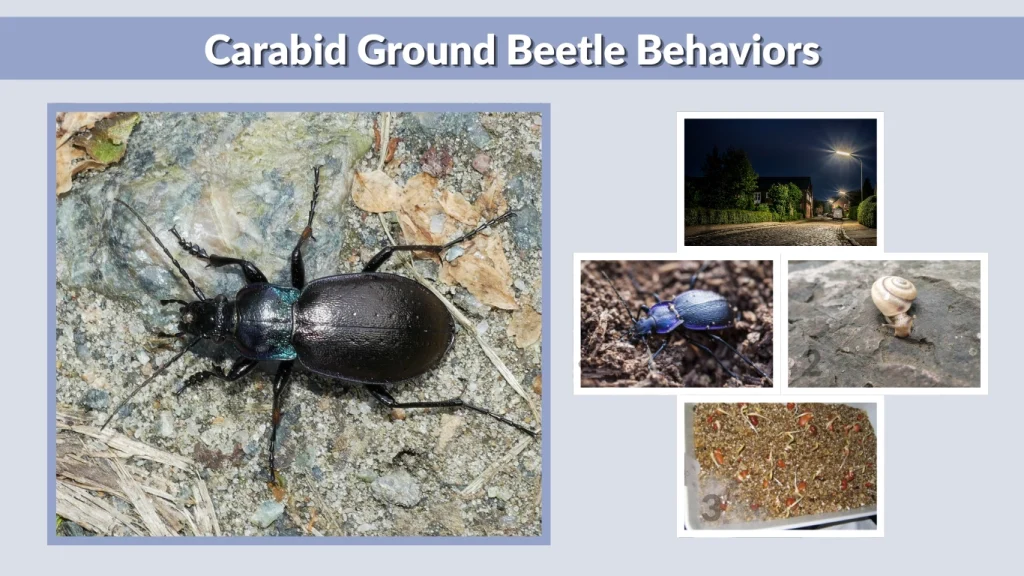
Carabid ground beetles are known for their unique and fascinating behaviors:
- Nocturnal Activity: Most species are active at night, using their speed and keen senses to ambush prey. By day, they retreat to sheltered places to avoid predators and desiccation.
- Predatory Lifestyle: They primarily feed on soft-bodied invertebrates such as caterpillars, grubs, slugs, snails, and aphids. Their large mandibles allow them to crush or tear prey with ease.
- Opportunistic Feeding: While predominantly carnivorous, some carabids also consume seeds, fungi, or decaying matter, making them omnivorous. This adaptability supports their survival in diverse ecosystems.
- Defense Mechanisms: Carabids are equipped with chemical defenses. Some can eject foul-smelling or irritating secretions from glands at the tip of the abdomen to deter predators. A well-known subgroup, the bombardier beetles, can even eject hot, explosive chemicals with a popping sound, startling potential attackers.
- Rapid Movement: Their long legs allow them to run quickly, making them efficient hunters and difficult prey for birds or mammals.
These behaviors collectively make carabids effective predators and vital components of the ecosystems they inhabit.
Life Cycle
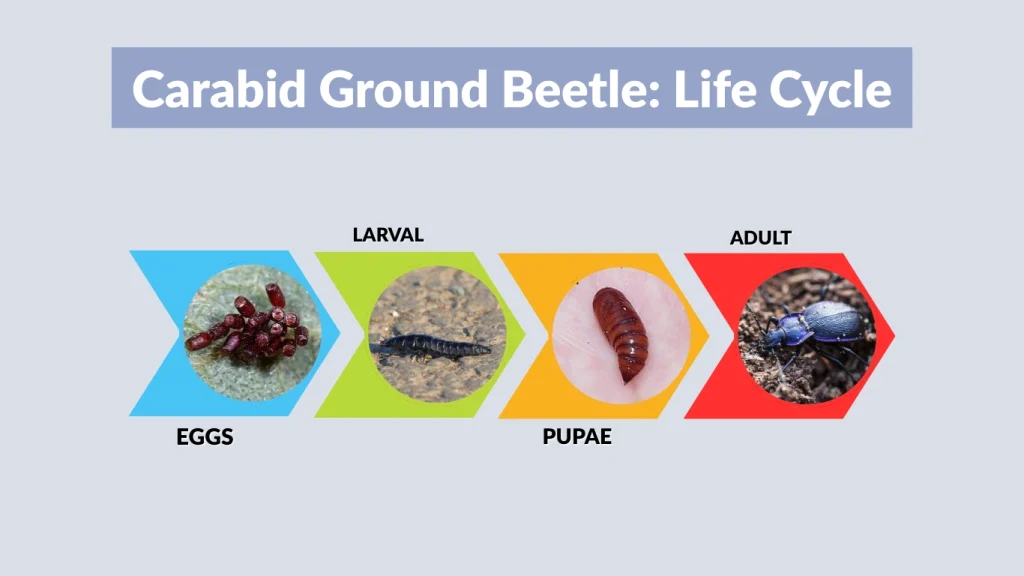
Like all beetles, carabids undergo complete metamorphosis, progressing through four life stages: egg, larva, pupa, and adult.
- Egg Stage: Females deposit eggs in soil, leaf litter, or under stones. The number of eggs laid depends on species and environmental conditions.
- Larval Stage: Carabid larvae are elongated, dark, and equipped with large jaws. Much like adults, they are voracious predators, feeding on soil-dwelling insects and larvae. Their mobility allows them to track prey underground.
- Pupal Stage: After several molts, the larva pupates in soil chambers. This non-feeding stage prepares them for transformation into adults.
- Adult Stage: Adults emerge from pupae with fully formed exoskeletons and continue the predatory lifestyle. Depending on species, adults may live from a few months up to two years.
Many species have seasonal cycles, with adults overwintering in soil and becoming active again in spring. This cycle ensures their survival across seasons and contributes to their long-term ecological presence.
Ecological Role and Benefits
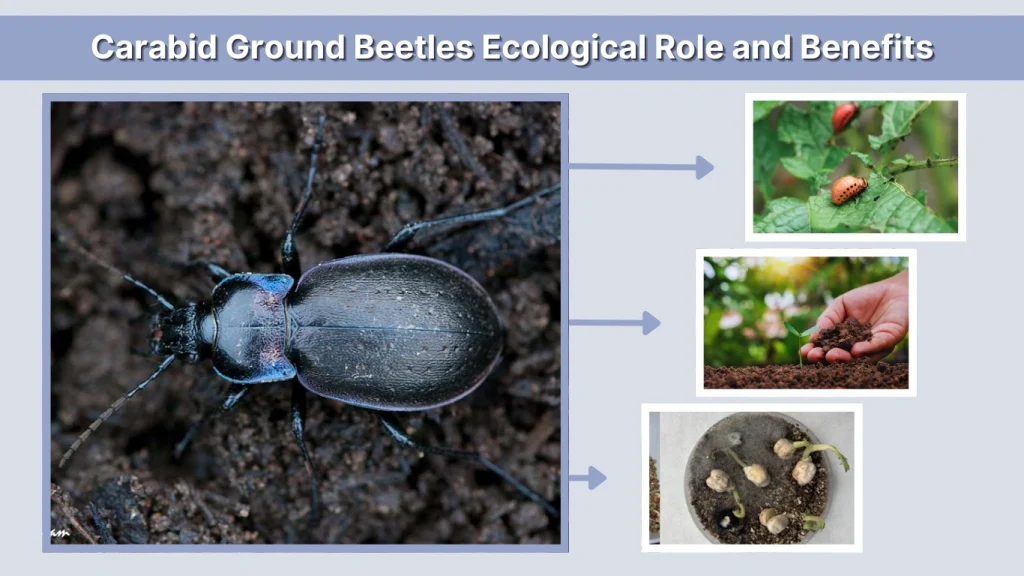
Carabid ground beetles play several vital roles in ecosystems, making them highly beneficial to humans as well:
- Natural Pest Control: By feeding on agricultural pests such as caterpillars, aphids, and slugs, they reduce crop damage and minimize the need for chemical pesticides.
- Soil Health: Their burrowing and predatory activities contribute to nutrient cycling and soil aeration, indirectly supporting plant growth.
- Seed Dispersal: Some species consume seeds and excrete them elsewhere, aiding in plant distribution. Others selectively eat weed seeds, reducing competition for crops.
- Bioindicators: Because carabids are sensitive to environmental changes, their presence or absence reflects the health of ecosystems. They are often used by ecologists as indicators of biodiversity and habitat quality.
In agricultural landscapes, encouraging carabid populations can significantly reduce pest outbreaks and promote sustainable farming practices.
Threats and Conservation
Despite their resilience, carabid beetles face several threats in the modern world:
- Pesticide Use: Widespread chemical application in agriculture kills carabids directly or reduces their food sources.
- Habitat Loss: Urbanization, deforestation, and intensive farming practices destroy the natural habitats they depend on.
- Climate Change: Altered temperature and precipitation patterns disrupt their life cycles and prey availability.
- Soil Disturbance: Frequent plowing and soil compaction reduce underground refuges, affecting larval and adult survival.
Conservation measures to protect carabid populations include:
- Promoting organic farming and reducing pesticide use.
- Maintaining field margins, hedgerows, and natural habitats around agricultural lands.
- Encouraging cover crops and mulch, which provide food and shelter.
- Protecting natural habitats such as forests, wetlands, and grasslands from destruction.
By fostering beetle-friendly practices, humans can ensure that carabids continue to thrive and provide their essential ecological services.
FAQs
What do carabid ground beetles eat?
Carabid beetles are mainly carnivorous, feeding on caterpillars, slugs, snails, grubs, and other soft-bodied insects. Some species are omnivorous and consume seeds, fungi, or decaying matter. This dietary flexibility allows them to thrive in diverse habitats while providing natural pest control in agricultural and garden environments.
Where are carabid ground beetles commonly found?
These beetles inhabit forests, grasslands, gardens, wetlands, and farmlands. They prefer moist and cool environments, often hiding under stones, logs, or leaf litter during the day. At night, they emerge to hunt. Their adaptability enables them to colonize both natural habitats and human-modified landscapes effectively.
How do carabid ground beetles defend themselves?
Carabid beetles have unique chemical defenses. Some secrete foul-smelling or irritating fluids from their abdominal glands. The famous bombardier beetle, a member of this group, can even eject a hot, explosive spray with an audible pop, which startles predators and protects the beetle from being eaten.
Are carabid beetles beneficial for agriculture?
Yes, carabid beetles are highly beneficial for farmers and gardeners. They act as natural pest controllers by preying on harmful insects like aphids and caterpillars. Some species also eat weed seeds, reducing competition for crops. Encouraging their presence helps promote sustainable farming with less reliance on pesticides.
What threats do carabid ground beetles face?
Carabid beetles are threatened by habitat loss, pesticide use, soil disturbance, and climate change. Agricultural practices such as frequent plowing destroy their shelters, while chemicals reduce their prey availability. Conservation practices like organic farming, habitat preservation, and maintaining natural field margins are essential to support their survival and ecological role.
