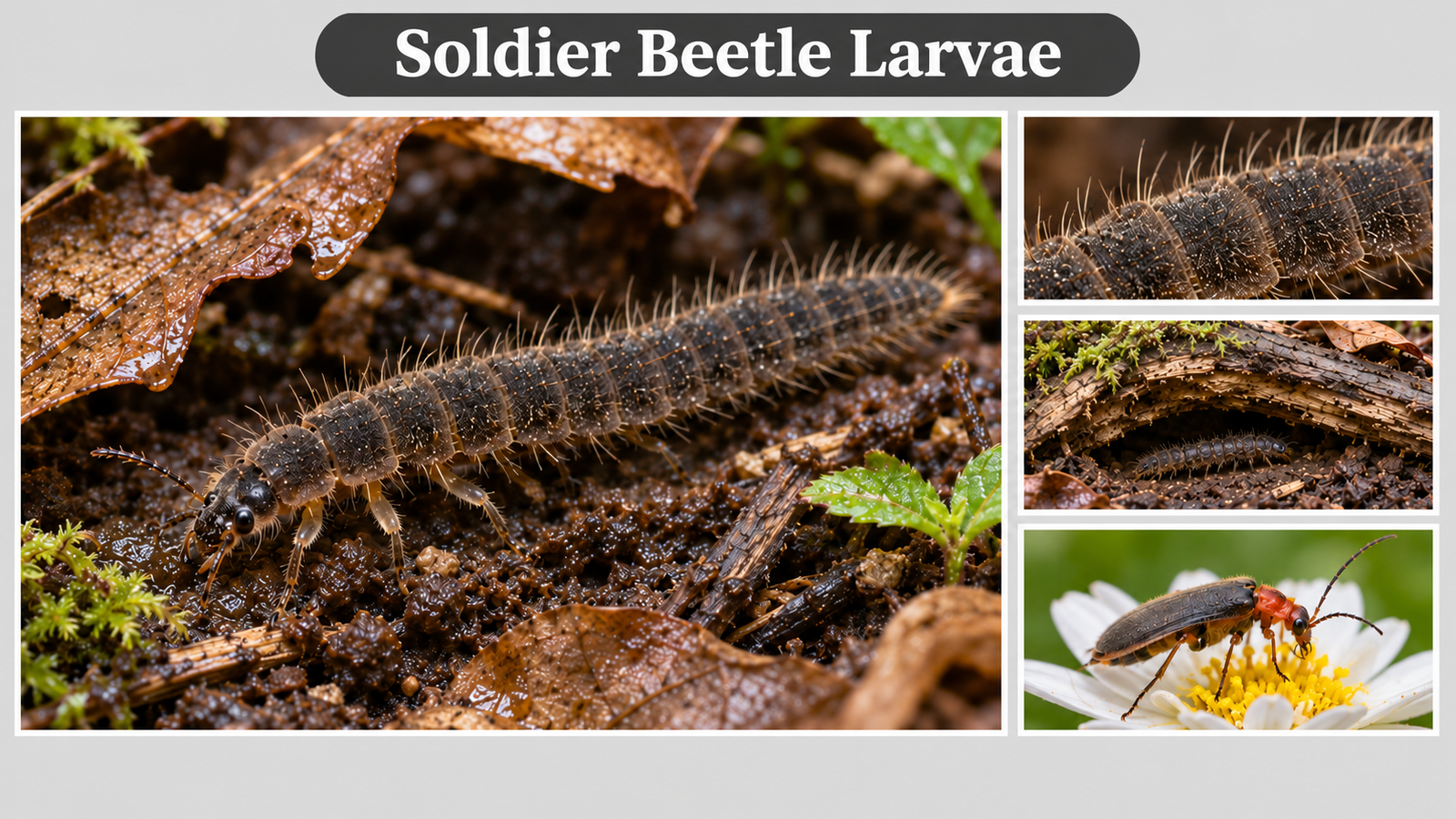
Soldier beetle larvae are dark, slender beetle young that live mostly in soil, leaf litter, and other sheltered ground-level places. They are easy to overlook because adult soldier beetles are much more visible on flowers. Larvae often have a velvety surface and feed on insect eggs, larvae, and other small invertebrates. They are generally considered helpful garden predators, though their exact appearance and habits vary by species. This guide explains how to recognize soldier beetle larvae, where to find them, what they eat, and whether they need to be removed.
Soldier Beetle Larvae at a Glance
| Feature | Details |
|---|---|
| Beetle family | Cantharidae |
| Common names | Soldier beetle larvae, leatherwing larvae |
| Appearance | Elongated, segmented, dark, and sometimes velvety |
| Usual habitat | Soil, leaf litter, loose bark, and spaces under rocks or logs |
| Diet | Insect eggs, larvae, and other small invertebrates |
| Garden role | Predators that can help reduce some pest insects |
| Life cycle | Egg, larva, pupa, adult |
“Soldier beetle” refers to many species in the Cantharidae family, so larvae do not all look or behave exactly alike. They are beetle larvae, not worms, even though their long, flexible bodies may resemble small caterpillars.
What Do Soldier Beetle Larvae Look Like?
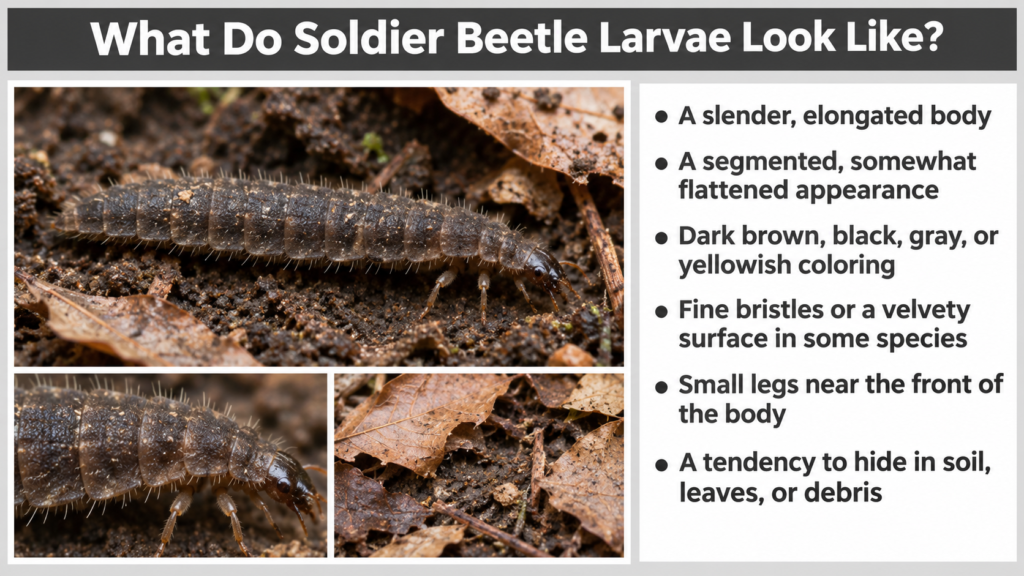
Most soldier beetle larvae have long, narrow bodies with clearly visible segments. They are usually dark brown, black, gray, or yellowish-brown. Fine hairs across the body can give some species a soft, velvety appearance.
Larvae have small legs near the front of the body and may move quickly when disturbed. Some grow to around three-quarters of an inch long, but size varies between species and stages of development. Young larvae are smaller and may be harder to identify without magnification.
Key features to look for
- A slender, elongated body
- A segmented, somewhat flattened appearance
- Dark brown, black, gray, or yellowish coloring
- Fine bristles or a velvety surface in some species
- Small legs near the front of the body
- A tendency to hide in soil, leaves, or debris
Their color and habitat can help distinguish them from pale, soft-bodied grubs commonly found in lawns. Still, many beetle larvae look alike, so appearance alone may not confirm the species.
Soldier beetle larvae or worms?
Soldier beetle larvae are insects with a head, segmented body, and legs near the front. Earthworms have no legs and a different body structure. Soldier beetle larvae can also be mistaken for caterpillars, but caterpillars usually have additional fleshy legs along the abdomen.
The name “velvet worm” is sometimes used informally for the hairy appearance of soldier beetle larvae. That name can be confusing because velvet worms are a separate group of animals. A dark, hairy larva in the soil is not automatically a soldier beetle; other beetle larvae can look similar.
Where Do Soldier Beetle Larvae Live?
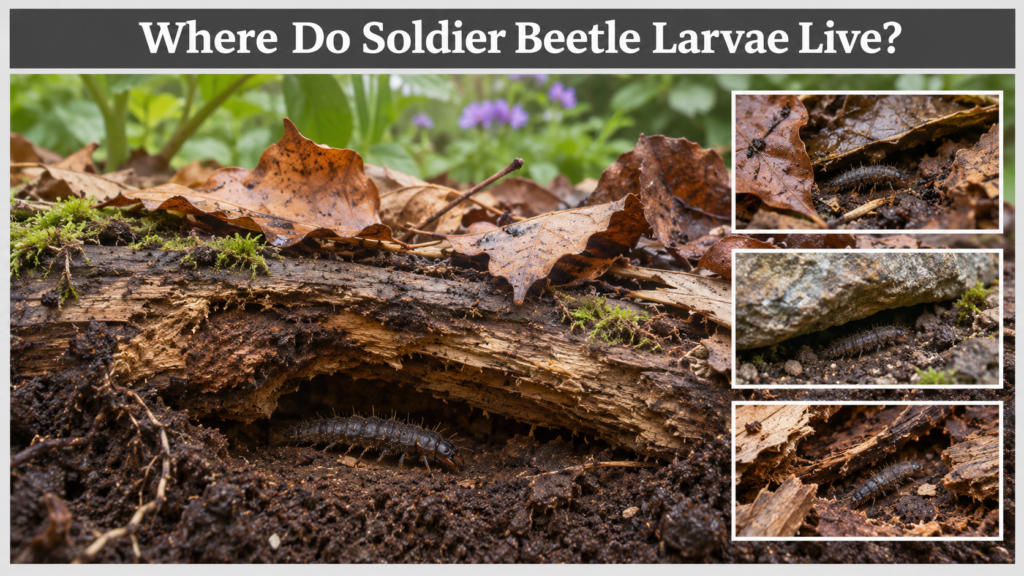
Soldier beetle larvae usually live close to the ground, where they can find prey and shelter. Common hiding places include moist soil, leaf litter, spaces beneath rocks and logs, loose bark, and decaying plant material. Some may also be found in garden beds or grassy areas.
They are rarely seen because they spend much of their time hidden. Turning over a stone or moving leaf litter may expose one, but it is best to return the cover afterward. Soil and plant debris provide shelter from drying conditions, temperature changes, and predators.
Do soldier beetle larvae live indoors?
They are outdoor insects and do not typically establish themselves inside homes. A larva may occasionally enter with firewood, potted plants, or soil, or wander in through an open door. Finding one indoors does not usually mean there is an infestation.
If you find one inside, place it in a cup or gently lift it onto a piece of paper and release it outside in a sheltered area.
What Do Soldier Beetle Larvae Eat?
Soldier beetle larvae are predators. Depending on the species, they feed on insect eggs, soft-bodied insects, and other small invertebrates found in soil or leaf litter. Their prey can include insect larvae, aphids, caterpillars, and other ground-dwelling organisms.
Some soldier beetle larvae actively search for prey, while others may encounter it as they move through their habitat. Their diet varies among species and locations, so it is not accurate to assume every larva eats the same garden pests.
Adults of many soldier beetle species have a different diet. They may feed on nectar, pollen, and small insects while visiting flowers. The larvae’s predatory habits can make them useful members of a garden’s natural food web, but they should not be expected to control every pest.
Soldier Beetle Larvae Life Cycle
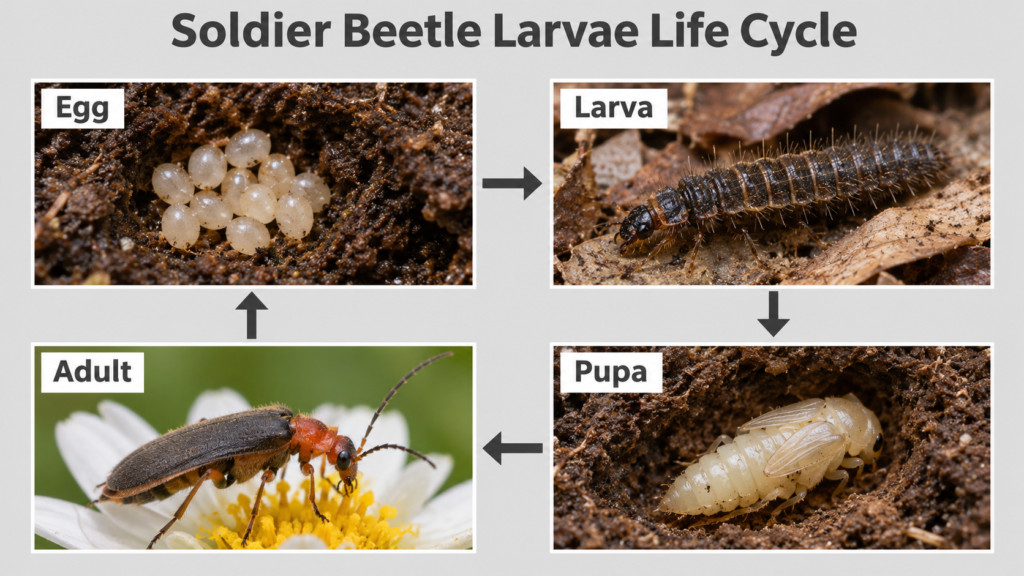
Soldier beetles go through complete metamorphosis. Their development includes four stages: egg, larva, pupa, and adult. The larva is the main feeding and growth stage.
Eggs and larval growth
Adult females lay eggs in soil or other suitable sheltered places. After hatching, the larvae feed and grow through a series of stages. They remain close to the ground, where leaf litter, soil, and debris provide both prey and protection.
Pupation and adult beetles
When a larva is mature, it enters the pupal stage before becoming an adult. The length of development depends on the species and local conditions. Many soldier beetles spend the colder part of the year as larvae in soil, leaf litter, or debris, but timing can differ among species.
Adults may appear seasonally on flowers, where they feed, mate, and lay eggs. Their bright colors make them easier to notice than the larvae that developed out of sight below them.
Are Soldier Beetle Larvae Good for the Garden?
Soldier beetle larvae are generally considered beneficial because they prey on insect eggs and other small invertebrates. They may help keep some pest populations in check as part of a diverse garden ecosystem.
However, they are not a targeted pest-control treatment. Their diet varies, and they may also eat other small invertebrates. A larva’s presence is usually not a reason for concern, especially if it is in soil or leaf litter and plants are growing normally.
If you find one while gardening, leave it in place if possible. It is more likely to be hunting or hiding than damaging roots or leaves.
Are Soldier Beetle Larvae Harmful to People or Plants?
Soldier beetle larvae do not sting and are not considered a threat to people. They are not household pests and do not typically feed on garden plants. Some species may have defensive chemicals, so avoid handling unknown insects with bare hands. If contact happens, wash your hands afterward.
Plant damage is not a typical sign of soldier beetle larvae. If seedlings or roots are being eaten, inspect the area for other possible causes, such as cutworms, grubs, slugs, or root-feeding larvae. A clear photograph or sample identified by a local extension service can help prevent unnecessary treatment.
Should You Remove Soldier Beetle Larvae?
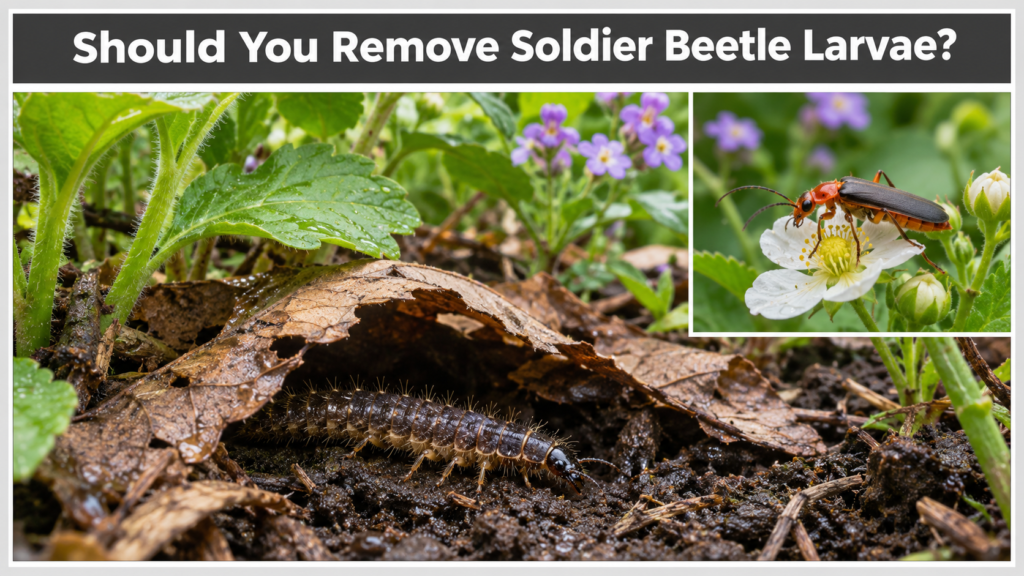
In most gardens, there is no need to remove or kill soldier beetle larvae. They are usually part of the soil’s natural insect community and may prey on pests. Broad insecticide use can also harm other beneficial organisms living in the soil and leaf litter.
If you need to move a larva from a walkway or indoor area, use a small container or a piece of paper to place it outdoors in a sheltered spot. Avoid disturbing large areas of soil or leaf litter just to search for larvae.
How to support them in the garden
- Leave some leaf litter in quiet garden areas.
- Keep patches of soil and vegetation undisturbed where practical.
- Limit unnecessary broad-spectrum insecticide use.
- Return rocks, logs, and other ground cover after checking beneath them.
- Maintain varied plants and habitat to support a range of beneficial insects.
These steps support many soil-dwelling organisms, not just soldier beetles.
FAQs
Are soldier beetle larvae harmful?
They are generally harmless to people and are not considered common plant pests. Many soldier beetle larvae prey on insect eggs, larvae, and other small invertebrates. Avoid handling unfamiliar larvae, since species can vary and some may have defensive chemicals.
What do soldier beetle larvae eat?
They mostly eat small invertebrates, including insect eggs and larvae. Their exact prey depends on the soldier beetle species and what is available in its habitat. Adults often feed on pollen, nectar, and small insects, so their diet can differ from that of the larvae.
Where can I find soldier beetle larvae?
Look in moist soil, leaf litter, loose bark, and beneath rocks, logs, or other garden debris. They are usually hidden near the ground and may be active under cover. Return any rocks or logs to their original place after checking.
Do soldier beetle larvae damage plant roots?
Plant roots are not considered their usual food. Soldier beetle larvae are mostly predators of small invertebrates. If you notice root or seedling damage, check for other soil-dwelling pests before deciding what is responsible.
Should I kill soldier beetle larvae in my garden?
Usually, no. They are part of the garden food web and can prey on some pest insects. If a larva is in an inconvenient place, move it outside rather than applying insecticide.