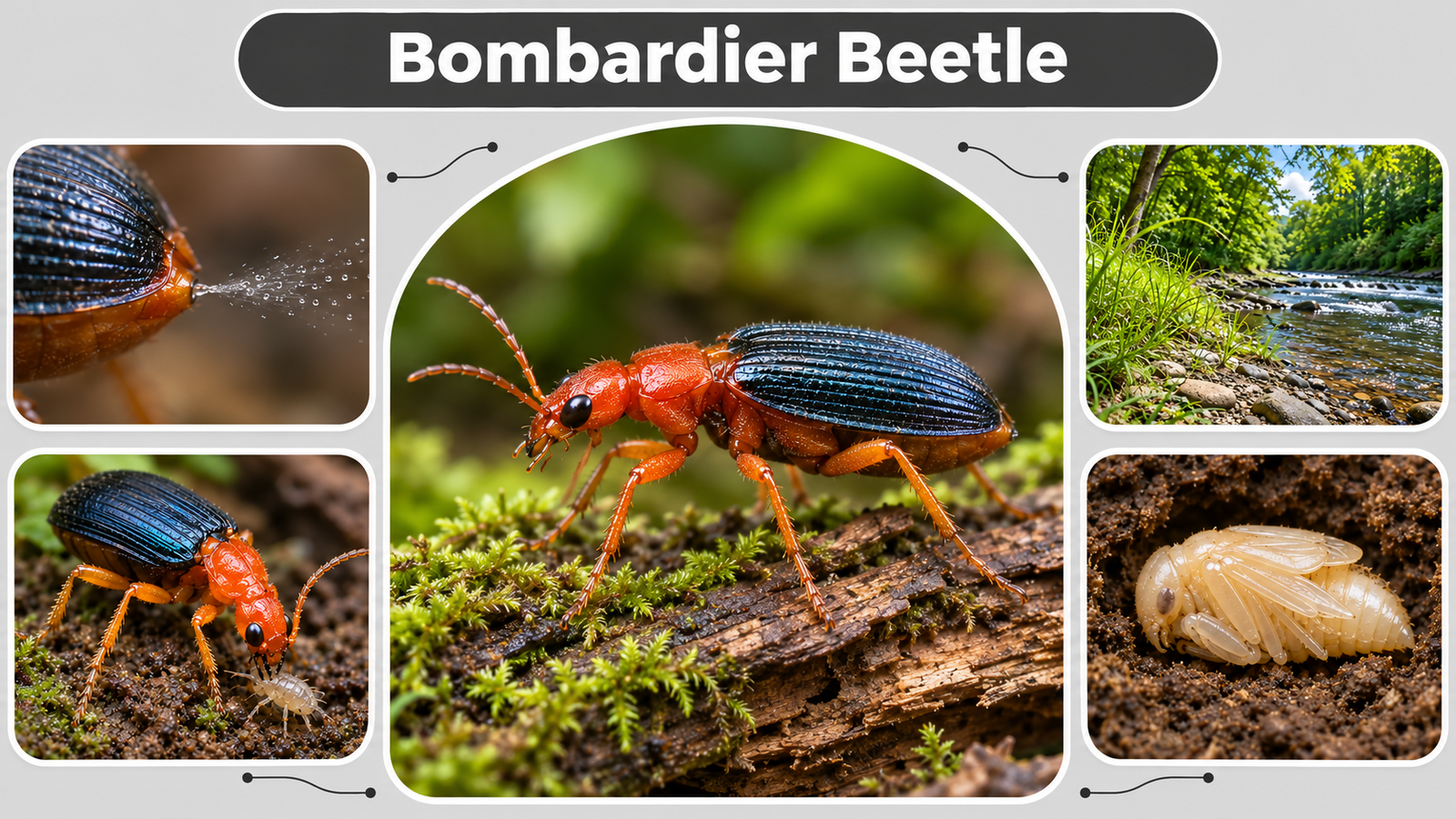
A bombardier beetle may look like an ordinary ground beetle until something threatens it. Then it can release a hot, irritating spray from the tip of its abdomen, sometimes with an audible pop. That unusual defense gives the beetle its name. Bombardier beetles spend much of their time on or near the ground, where they shelter beneath debris and search for food. Many eat small insects, although diets and habitats differ by species. If you find one in your garden or house, you can often get a useful look at its shape and markings without picking it up.
What Does a Bombardier Beetle Look Like?
Bombardier beetles belong to the ground beetle family Carabidae. Many are small, with an elongated body, six legs, and slender antennae. North American species in the genus Brachinus often have a reddish or orange head and legs that stand out against dark wing covers. Some of those wing covers have a bluish sheen. Other bombardier beetles have pale or yellowish markings, so the familiar red-and-dark pattern is one clue among several.
| Feature | What to look for |
|---|---|
| Body shape | Elongated, with a distinct head, thorax, and abdomen |
| Antennae | Slender and visibly segmented |
| Legs | Six legs adapted for moving quickly over the ground |
| Wing covers | Dark in many Brachinus species, with lighter markings in some other groups |
| Size | Often under an inch long, depending on the species |
| Common hiding places | Beneath stones, logs, leaf litter, or other ground cover |
How to Identify One Without Handling It
Take a photo from above that shows the head, the section immediately behind the head, and the full wing covers. A side view can show details of the legs and body shape. Include the location and habitat if you’re asking someone to identify it. A beetle found on a riverbank may belong to a different species from a similar-looking beetle found in a dry garden.
Several ground beetles share the same basic shape and color pattern. A clear photo is more useful than trying to provoke a pop or spray, which puts you within reach of its defense.
How Does a Bombardier Beetle Spray?
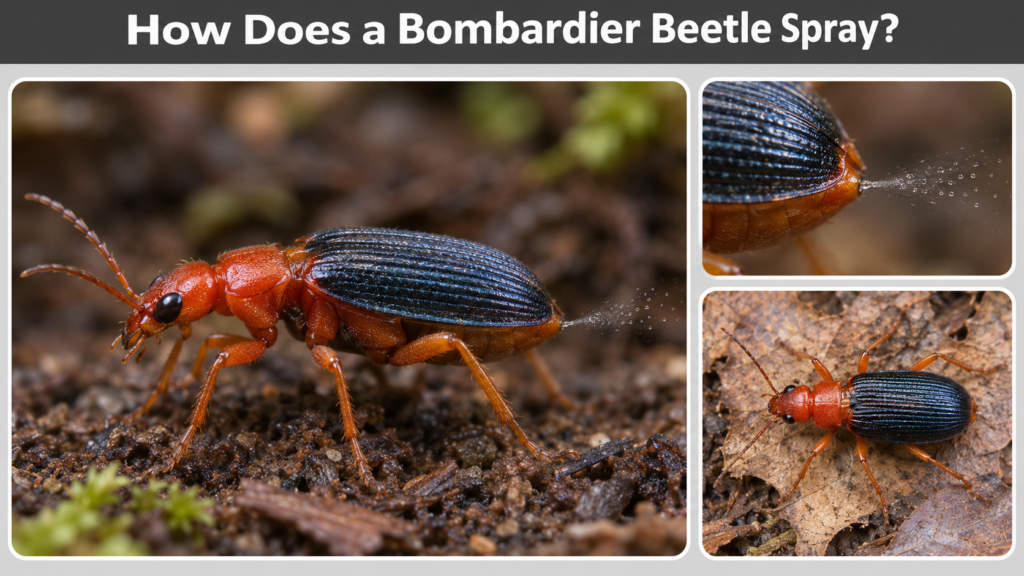
A bombardier beetle releases its defensive spray from the rear of its abdomen. When threatened, it moves stored substances into a chamber where they react rapidly. The reaction produces heat and pressure, which expel the irritating liquid. In some species, the spray comes out in a series of rapid pulses. A discharge may also make a popping sound, especially at close range.
Why the Spray Is Effective
The beetle can direct the spray toward the source of a threat. That matters when a predator approaches from the side or grabs the beetle before it can run. A sudden burst of hot, irritating liquid can make the predator back away or release its grip, giving the beetle a chance to escape.
The beetle can discharge several bursts in quick succession. An observer may see one brief event even when the beetle releases multiple pulses. The spray and sound can also vary by species and by how the beetle is disturbed.
Are Bombardier Beetles Dangerous to Humans?
A bombardier beetle can hurt someone who handles it or gets close enough to be sprayed. The discharge can cause pain and skin irritation, and some species have caused burns. People searching for a bombardier beetle bite are often trying to identify an injury caused by that defensive spray. Give a suspected bombardier beetle room to move away, especially if you uncover it beneath a stone or log.
What to Do After Accidental Contact
If spray gets on your skin, rinse the affected area promptly with clean running water. Seek medical advice if pain is severe or persistent, or if the area blisters. Avoid rubbing your eyes after touching the affected skin.
If spray gets into an eye, start rinsing immediately with clean running water and seek urgent medical advice. For future encounters, use a container and stiff card to move a beetle indoors so you can keep it away from your skin and face.
What Do Bombardier Beetles Eat?
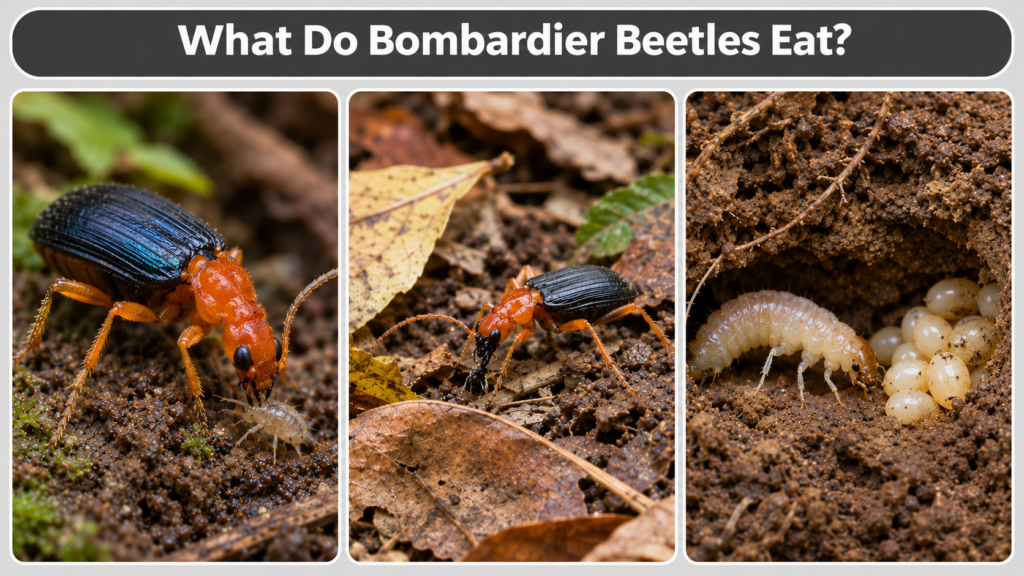
Many adult bombardier beetles eat small insects and other arthropods they encounter while moving across soil, through leaf litter, or beneath objects. Some also scavenge on dead or dying arthropods. Their diet varies with the species and what they find in their habitat. Finding one in a vegetable bed can simply mean it was hunting or sheltering there.
What Bombardier Beetle Larvae Eat
Larval diets can be more specialized than adult diets. The larvae of some species feed on the pupae of other beetles, while others use different insect hosts. For example, larvae of Pheropsophus aequinoctialis, a species native to parts of Central and South America, feed on mole cricket eggs.
The food available to larvae can affect where a species successfully reproduces. An adult may pass through a garden while hunting, even when suitable conditions for its larvae occur somewhere else.
Where Do Bombardier Beetles Live?
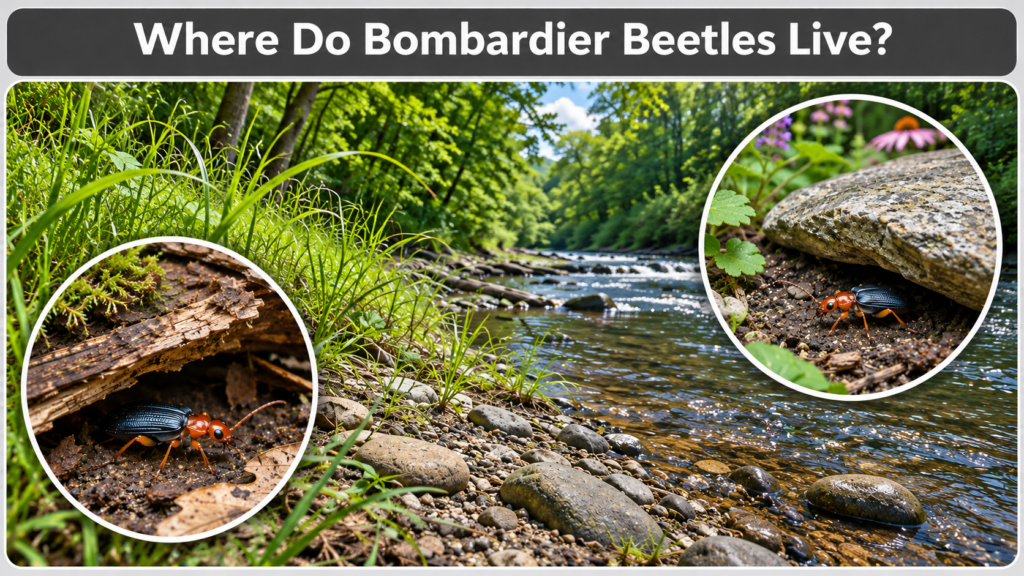
Bombardier beetles occur across several continents, including North America, South America, Europe, Africa, and Australia. Woodland floors, grasslands, gardens, and river margins can all provide suitable habitat for particular species. The eastern Australian species Pheropsophus verticalis, for example, is associated with undisturbed riverbanks and floodplains. Local habitat is one reason the beetles you find may differ in appearance from examples in a guide from another region.
Where to Look Outdoors
Stones, fallen wood, and leaf litter provide sheltered places where ground beetles can rest. Some bombardier beetles are active at night, so they may stay hidden during the day and emerge to forage after dark. You might first notice one running away as you move a piece of wood or work around the edge of a garden bed.
If you lift a rock to observe a beetle, return the rock gently once the insect has moved clear. A photo taken where you found the beetle preserves useful information about its surroundings and avoids disturbing it further.
Bombardier Beetle Life Cycle
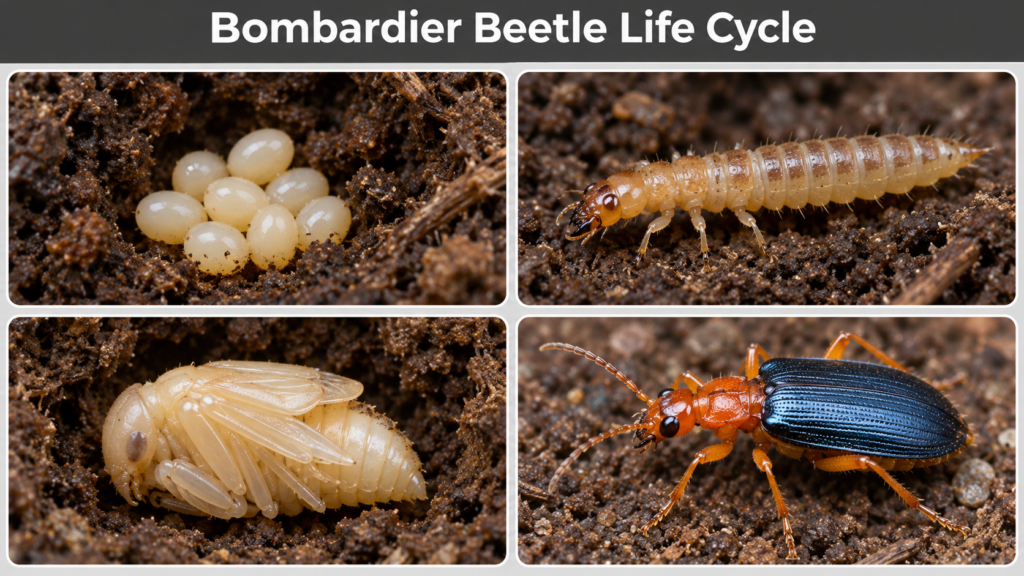
Bombardier beetles go through four stages called egg, larva, pupa, and adult. The larva grows through several molts before pupating. During the pupal stage, the insect develops the body form it will have as an adult. The exact timing and places where the immature beetles develop vary among species.
How Larvae and Adults Use Different Habitats
Larvae that depend on another insect’s eggs or pupae need access to those hosts during development. Adults can move through a wider area in search of food or shelter. This helps explain why observing an adult on a patio or in a garden gives you limited information about where it developed.
The larva can also look very different from the adult. An adult’s dark wing covers or reddish head are useful identification clues once it has matured. Identifying a larva usually requires closer attention to its body shape, where it was found, and the insects living nearby.
Bombardier Beetle vs. Blister Beetle and False Bombardier Beetle
The word “bombardier” describes a defensive discharge. “Blister beetle” refers to a different family of beetles that can cause skin blistering through contact with cantharidin. False bombardier beetles are ground beetles that also release an irritating defensive secretion. Their similar appearance makes color alone an unreliable way to distinguish them.
| Beetle | Family | Typical defense or behavior |
|---|---|---|
| Bombardier beetle | Carabidae | Releases a hot, directed defensive spray |
| False bombardier beetle | Carabidae | Releases an irritating defensive secretion of its own |
| Blister beetle | Meloidae | Cantharidin can cause blisters when it contacts skin |
If you spot an unfamiliar beetle, use body shape, coloration, and location together. The distinction matters especially when a red-headed, dark-bodied ground beetle resembles several species in the same area.
Frequently Asked Questions
Why is there a bombardier beetle in my house?
A ground beetle can wander through a doorway or a gap near an exterior wall. For a single beetle, use a container and stiff card to move it outdoors. If you keep finding beetles in the same spot, check the nearest door sweep, window screen, and gaps along the threshold.
Can a bombardier beetle spray more than once?
Yes. Some species can release several short bursts in succession. A beetle that has already discharged once may still be able to spray again, so give it space to move away.
Can bombardier beetles fly?
Flight ability varies by species. Some can fly, while others have reduced wings or rely mainly on walking. Seeing a beetle run quickly across the ground is common and does not establish whether that species can fly.
Are bombardier beetles beneficial in gardens?
Many feed on small insects and other arthropods, so they can contribute to natural pest control. An occasional beetle outdoors usually needs no intervention. Leave it room to retreat if you find it while working near the soil.
Do all bombardier beetles have a red head?
No. A reddish head and dark wing covers are common in many Brachinus species. Other bombardier beetles can have different colors or markings. Use the complete body pattern and the location of the sighting when comparing possible species.