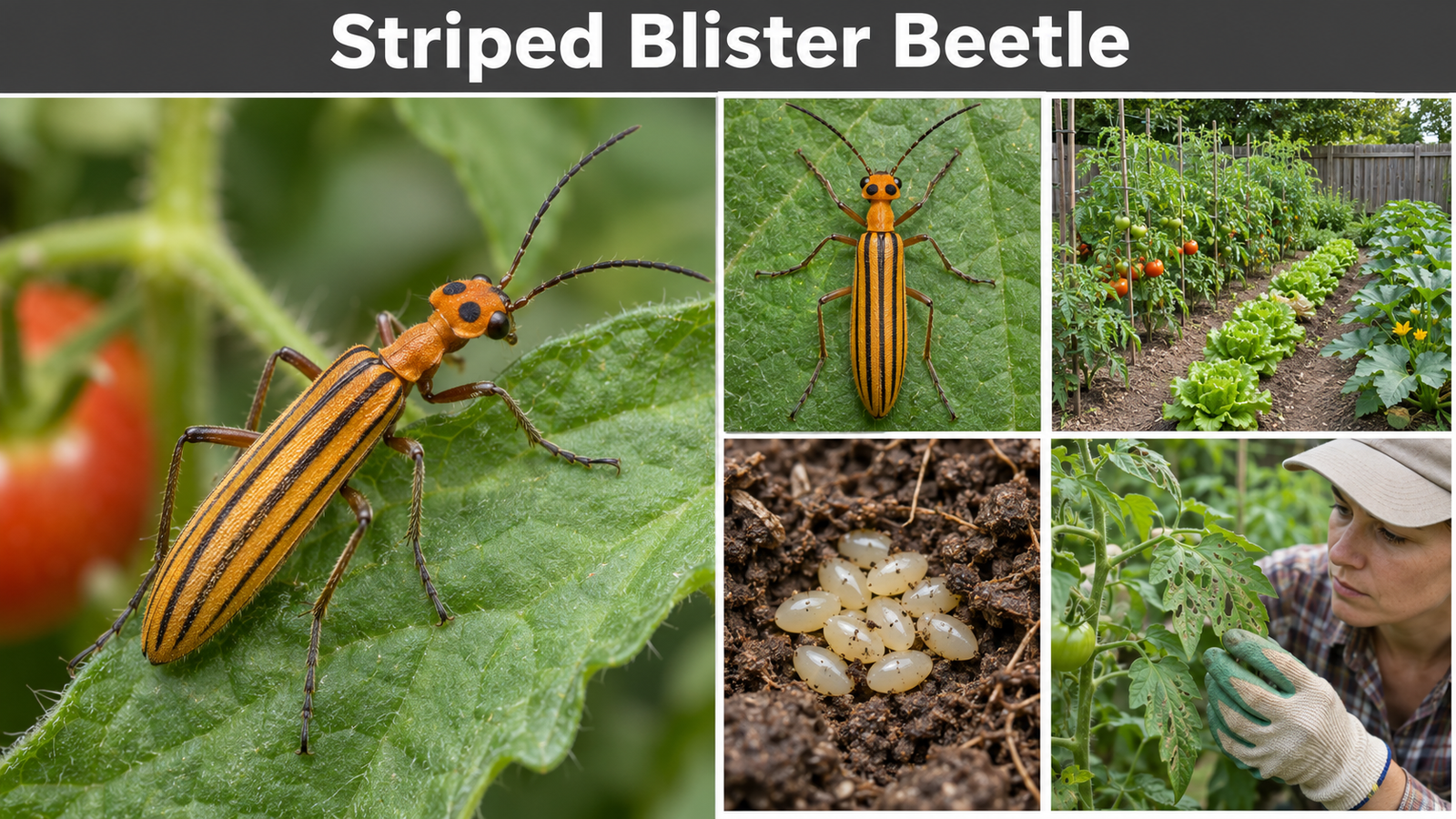
The striped blister beetle is a slender yellow-and-black insect that often turns up on tomatoes, potatoes, and other garden plants. A single beetle may cause little damage, but a group can chew through foliage quickly. The larvae live underground, where they feed on grasshopper eggs. Adults also produce a defensive substance called cantharidin, which can blister skin and poison horses that eat contaminated hay. This guide explains how to recognize a striped blister beetle, distinguish it from similar insects, and decide what to do if you find one in your garden.
What Is a Striped Blister Beetle?
The striped blister beetle (Epicauta vittata) belongs to the family Meloidae, commonly known as blister beetles. It occurs across much of the eastern and central United States, where adults feed on vegetables, weeds, and other plants. Gardeners often notice them after several adults gather on the same plant. Their name comes from the skin reaction caused by cantharidin, a substance they can release when disturbed. If you find one, take a close-up photo while it’s on the plant and leave it undisturbed while you check its features.
How to Identify a Striped Blister Beetle
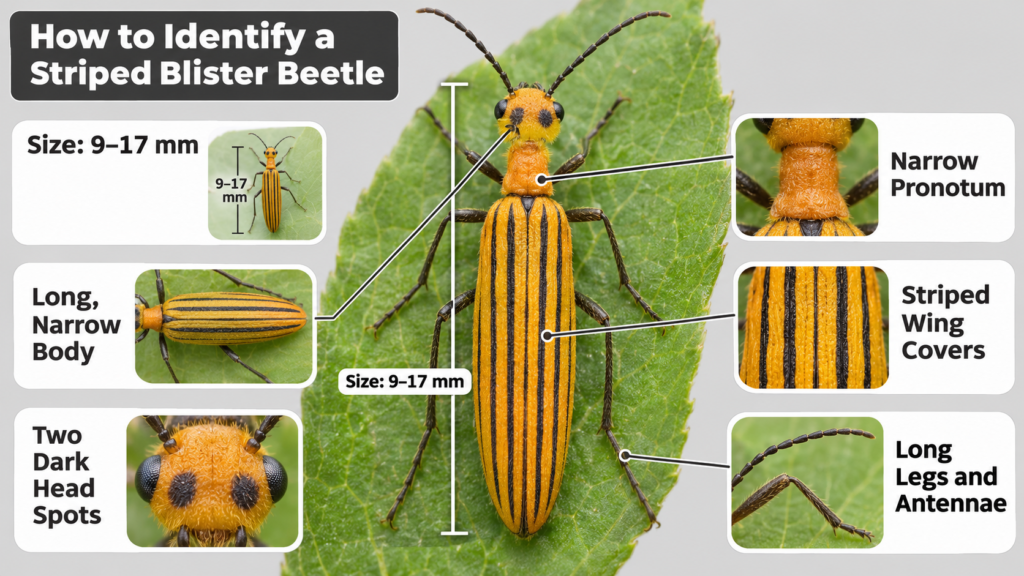
Start with the body shape. A striped blister beetle looks long and slender, with a distinct narrowing just behind the head. Its yellow or orange-yellow wing covers carry dark lengthwise stripes. The exact stripe pattern varies among populations, so check the head, the narrow section behind it, and the overall shape before making an identification.
Adult Identification
- Size: About 9–17 mm long, or roughly ⅓–⅔ inch.
- Body shape: Long and narrow, with a flatter profile than a Colorado potato beetle.
- Head: Fairly broad, often with two dark spots on top.
- Pronotum: The section directly behind the head is narrower than both the head and the abdomen.
- Wing covers: Yellow to orange-yellow with two or three black stripes on each cover.
- Legs and antennae: Relatively long and slender, giving the beetle a lanky appearance.
Striped Blister Beetle vs. Similar Garden Beetles
The striped cucumber beetle and Colorado potato beetle also have yellow and black stripes. The cucumber beetle is smaller and more compact, while the Colorado potato beetle has a broad, rounded back. The plants they feed on can help narrow down the possibilities, especially when the beetle is actively chewing. A beetle resting on a leaf may have landed there in passing.
| Beetle | Best identification clue | Where you may find it |
|---|---|---|
| Striped blister beetle | Long body with a narrow section behind the head | Tomatoes, potatoes, and other vegetation |
| Striped cucumber beetle | Small, compact body with three black stripes across the back | Cucumbers, squash, and related crops |
| Colorado potato beetle | Broad, rounded body with five dark stripes on each wing cover | Potatoes and related plants |
Where Do Striped Blister Beetles Live?
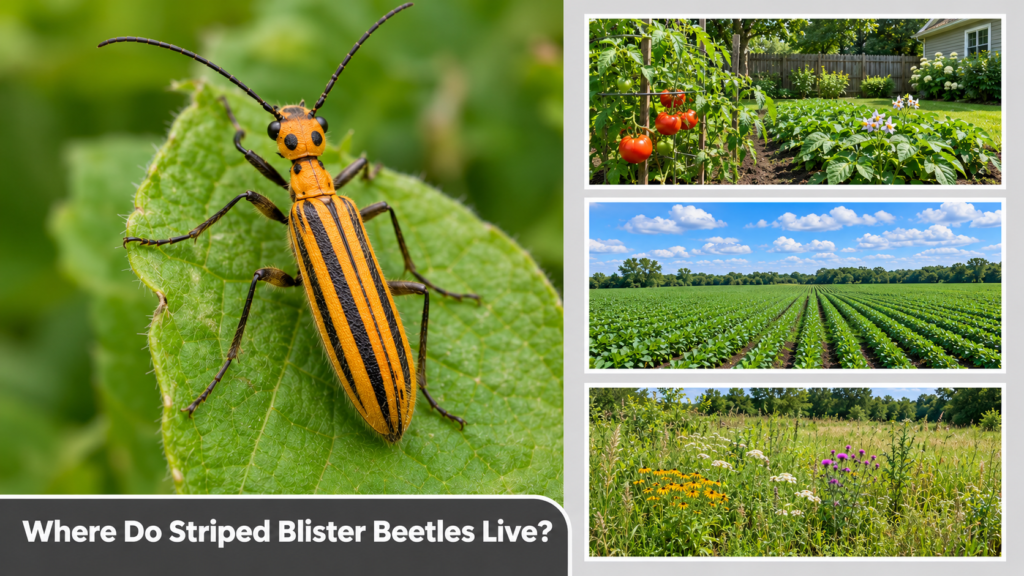
Adults occur in vegetable gardens, crop fields, and weedy areas where they can find plants to eat. Their season depends on the local climate. In Florida, many adults are active from April through June. In parts of their range farther north, you may see them from late spring into fall. They often feed in the morning and late afternoon. During the heat of the day, they can be harder to spot. If you find fresh chewing but see few insects at midday, return later and check the same plants and the foliage around them.
What Do Striped Blister Beetles Eat?
Adult striped blister beetles chew leaves and may feed on flowers. Tomatoes and potatoes are among the plants where gardeners may notice them, and adults can also be found in agricultural crops. The larvae have a different diet. They search for grasshopper egg pods in the soil and feed on the eggs. As a result, the beetle can help reduce grasshopper numbers during its larval stage and still damage garden plants as an adult.
What Does Their Feeding Damage Look Like?
Look for irregular holes inside leaves and ragged sections along the edges. Feeding damage can be uneven across a bed. Several beetles may gather on one plant and remove much of its foliage while the plant next to it still looks healthy. Check the plants with the freshest damage first and look for adults along the leaves and stems.
The holes alone are rarely enough to identify the insect. Caterpillars and other chewing pests can leave similar damage. If you find several slender, striped beetles feeding together, photograph them and check the body shape against the identification features above. Adult blister beetles readily drop when disturbed, so inspect the foliage before moving it.
Striped Blister Beetle Life Cycle
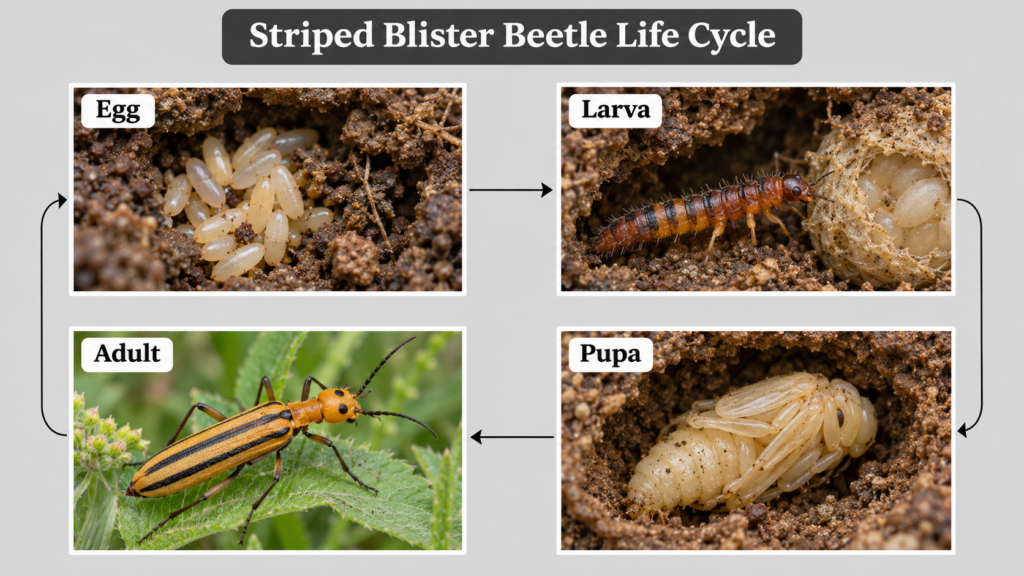
Striped blister beetles develop through four stages: egg, larva, pupa, and adult. Most of the early development happens underground. The larvae also change shape as they grow, so a young larva searching for food looks different from an older one preparing to overwinter.
Eggs and Larvae
Females lay eggs in clusters in the soil. Newly hatched larvae are small and mobile, which helps them search for grasshopper egg pods. Once a larva finds suitable food, it feeds and molts several times. Older larvae can spend the winter underground before development resumes.
Pupae and Adults
After completing larval development, the beetle pupates in the soil. The adult then emerges with wings and moves onto vegetation to feed. Adults may be present for several months where generations overlap. If a group suddenly appears on your plants, it may have moved in from nearby vegetation rather than developed in that particular garden bed.
Can Striped Blister Beetles Hurt People?
Contact with cantharidin can irritate the skin and cause painful blisters. Exposure can happen when someone handles a beetle or crushes it against their skin. If one lands on you, gently blow it away. Wash exposed skin with soap and water if you think you came into contact with the fluid, and avoid rubbing your eyes. If the fluid gets into an eye, rinse immediately with room-temperature water for 15–20 minutes and contact poison control or seek medical guidance. If someone may have swallowed a beetle, contact poison control promptly.
Why Are Striped Blister Beetles Dangerous to Horses?
Horses can be poisoned if they eat alfalfa hay containing blister beetles. Adults sometimes gather in groups, so several insects can end up in one section of a bale during harvest. Cantharidin remains harmful after the beetles die. If you find beetles in hay or suspect contamination, stop feeding the affected hay and contact a veterinarian promptly if a horse may have eaten it. Signs can include colic, loss of appetite, and repeated attempts to urinate. A clean-looking portion of the bale gives you little information about what’s elsewhere in it.
How to Manage Striped Blister Beetles in the Garden
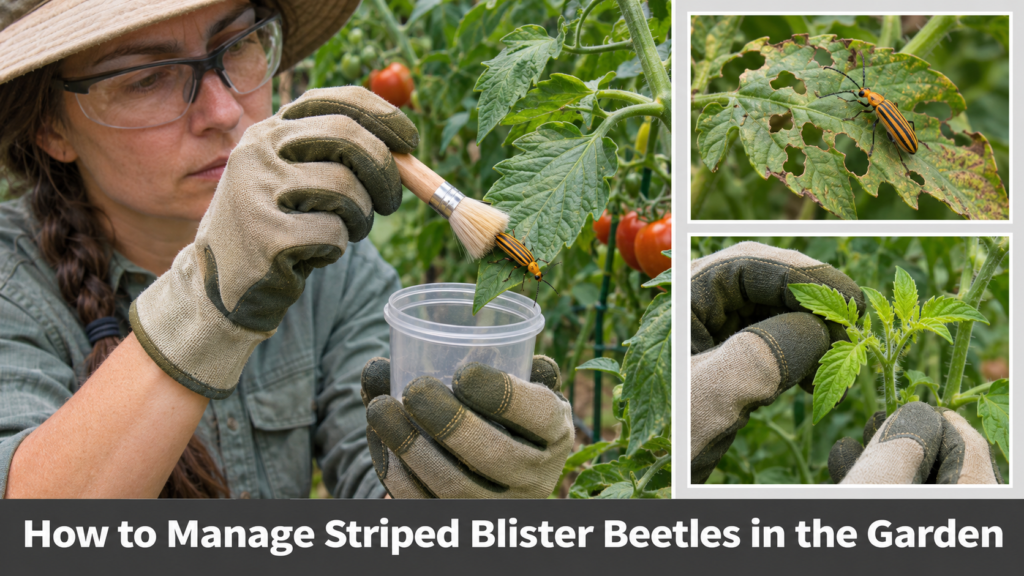
Decide what to do based on how much fresh damage you see and how many beetles are still feeding. An established plant with a few holes may only need monitoring. A young tomato or potato plant with several beetles and rapidly disappearing foliage deserves closer attention. Check neighboring plants as well, since adults can move through a bed after feeding heavily in one spot.
Remove Small Groups Without Bare-Hand Contact
Wear gloves and use a tool to guide beetles off the plant into a container. Hold the container below the leaf or stem so it catches adults that drop when disturbed. Avoid squeezing or crushing the beetles during removal. Check the plants again over the next few days to see whether fresh feeding continues.
Monitor New Growth
Compare younger leaves with the older, damaged foliage. Old holes remain visible after the beetles have moved on, so new leaves give you a better picture of current activity. If new damage continues across several plants, contact a local agricultural extension office for identification and crop-specific management advice. For alfalfa intended for horses, seek guidance before harvesting an area where blister beetles are gathering.
Frequently Asked Questions
Do striped blister beetles bite?
The blisters associated with these beetles come from contact with their defensive fluid. If a beetle lands on you, gently blow it away and wash the area if you suspect contact with the fluid.
Do all striped blister beetles have three stripes on each wing cover?
Stripe counts vary. Northern populations often have two black stripes on each wing cover, while southern populations commonly have three. The long body and narrow pronotum provide additional clues.
Are striped blister beetles beneficial?
The larvae can be beneficial because they eat grasshopper eggs. Adult beetles can damage plants when they gather in groups and chew through foliage. Their effect depends on the life stage and where they’re feeding.
Why did striped blister beetles suddenly appear on my plants?
Adults can move between feeding sites and gather on a plant within a short time. Check nearby vegetables and weeds for more beetles, especially if you’re seeing fresh damage on several plants.
Can dead striped blister beetles still be harmful?
Yes. Dead blister beetles can still contain cantharidin. Avoid handling them with bare hands, and keep any hay that may contain blister beetles away from horses.