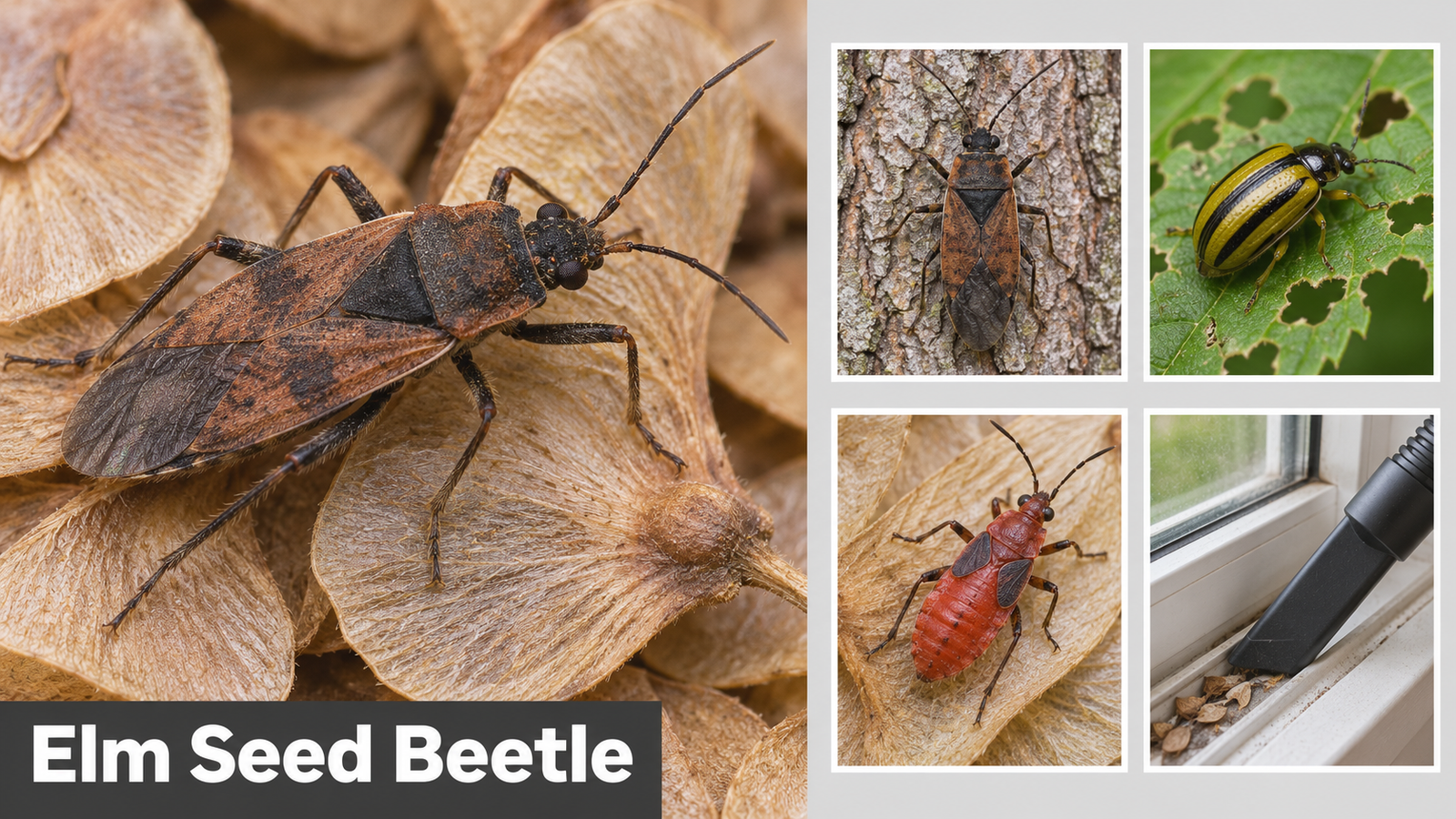
If small reddish-brown insects keep appearing on your windowsills, siding, or porch, a nearby elm tree could explain where they’re coming from. The insect often called an elm seed beetle is the elm seed bug (Arocatus melanocephalus). It feeds mainly on elm seeds and can gather in large numbers around buildings, especially during hot weather and as autumn approaches. Finding several indoors can be frustrating, but these insects usually come from outside or emerge from sheltered spots where they spent the winter. Here’s how to identify them, find their entry points, and keep them out.
What Is an Elm Seed Bug?
The elm seed bug is a small true bug in the seed bug family, Lygaeidae. It uses piercing mouthparts to feed on plant fluids, primarily from elm seeds. Native to Europe and the Mediterranean region, it was first detected in the United States in Idaho in 2012 and has since been recorded in several western states and parts of Canada. Most people notice it when adults gather around windows, doors, and exterior walls or start appearing indoors. A nearby elm, particularly a Siberian elm, can support a population that returns from year to year.
How to Identify an Elm Seed Bug
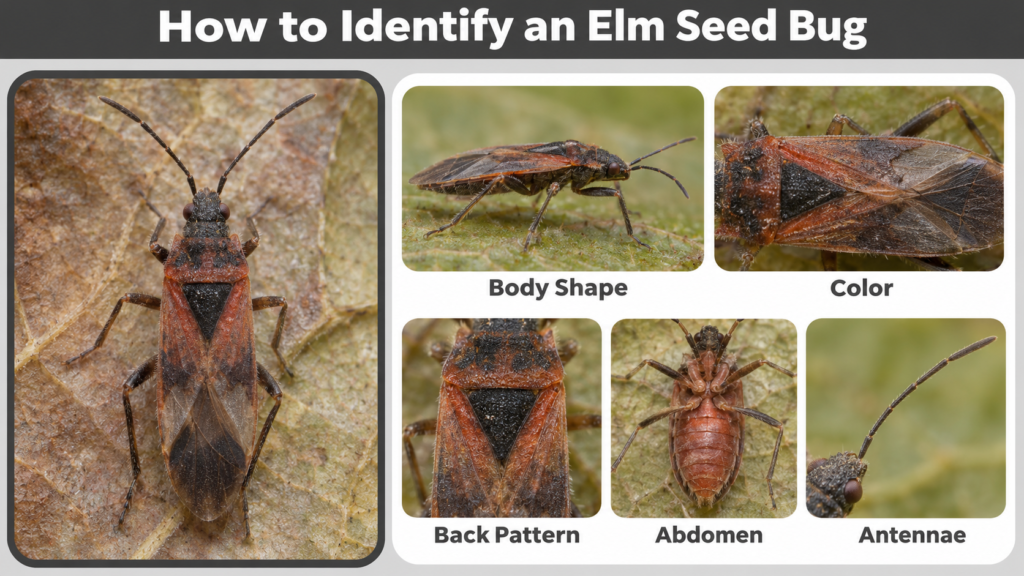
Adult elm seed bugs are about ⅓ inch long, or roughly 8 mm. From a distance, they can look mostly dark brown. A closer look reveals a reddish-brown and black pattern that helps distinguish them from other insects found around windows and doors. If you have several insects to examine, use an adult for identification. Young elm seed bugs have a different shape and color pattern, and they’re easier to confuse with the young of other seed bugs.
Adult Identification
- Body shape: Narrow and slightly flattened, with fully developed wings folded over the back.
- Color: Dark brown to black with rusty red or reddish-brown markings.
- Back pattern: A small dark triangle near the base of the wings, bordered by reddish areas.
- Abdomen: Reddish underneath, especially noticeable when viewed from below.
- Antennae: Slender and easy to see in a close-up photo.
What Do Elm Seed Bug Nymphs Look Like?
Young elm seed bugs, called nymphs, are smaller than the adults and often have a brighter red abdomen. Their heads and legs are dark. As they grow, dark wing pads become more visible on their backs. These pads are the developing wings, so older nymphs can look darker from above than younger ones.
If you see little red bugs crawling together beneath an elm, check the ground for fallen seeds. Finding nymphs among the seeds and adults nearby gives you a stronger identification than color alone. For a photo, take one close-up from above and another showing the seeds or tree leaves where you found them.
Elm Seed Bug vs. Elm Leaf Beetle and Boxelder Bug
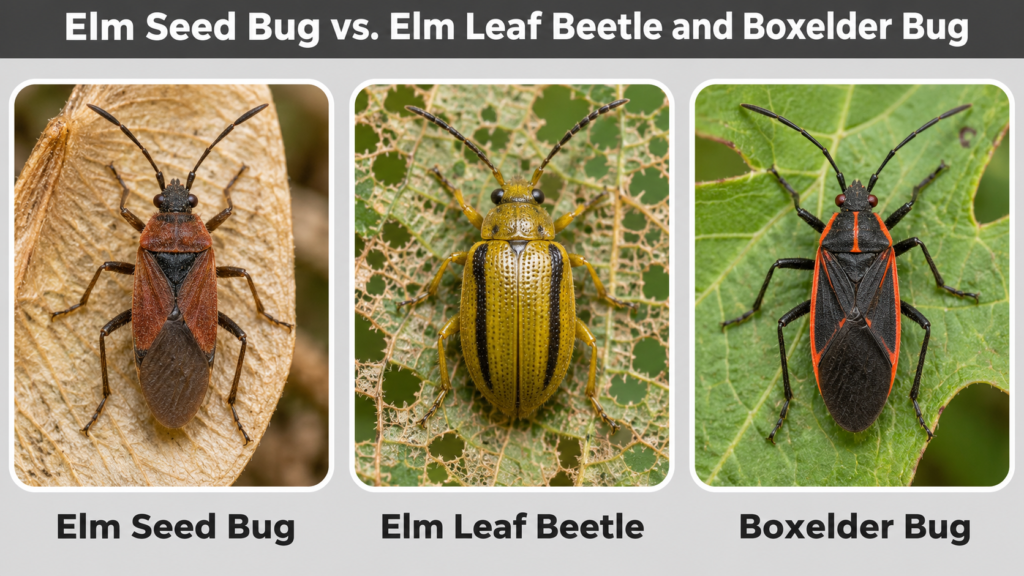
The elm leaf beetle is easy to confuse with the elm seed bug by name. Both are associated with elms, but they leave different clues. Elm leaf beetle larvae chew leaf tissue and can leave the veins behind, giving the foliage a lacy appearance. Boxelder bugs are a closer lookalike around buildings. They’re generally larger, with more distinct red or orange lines on a dark body, and often gather near seed-bearing boxelder trees.
| Insect | Appearance | Where you’re likely to notice it |
|---|---|---|
| Elm seed bug | Small, rusty brown and black, with a dark triangle on the back | Around fallen elm seeds, siding, doors, and windows |
| Elm leaf beetle | Yellowish to olive adult with dark stripes along the wing covers | On elm foliage, especially where leaves show chewing damage |
| Boxelder bug | Mostly black with red or orange lines along the back and wing edges | Near boxelder trees or gathered on exterior walls |
What Do Elm Seed Bugs Eat?
Elm seed bugs feed mainly on elm seeds. The flat, papery structures that drop from elm trees are called samaras, and each carries a seed. As samaras fall, they can collect along fences, in window wells, or in sheltered corners beside a house. Those piles can bring feeding nymphs close to the building. Elm seed bugs have also been observed feeding on elm leaves, but they generally cause little noticeable injury to the tree. If your elm has widespread holes or lacy leaves, inspect the foliage for leaf beetles or other chewing insects before assuming the seed bugs caused the damage.
Elm Seed Bug Life Cycle
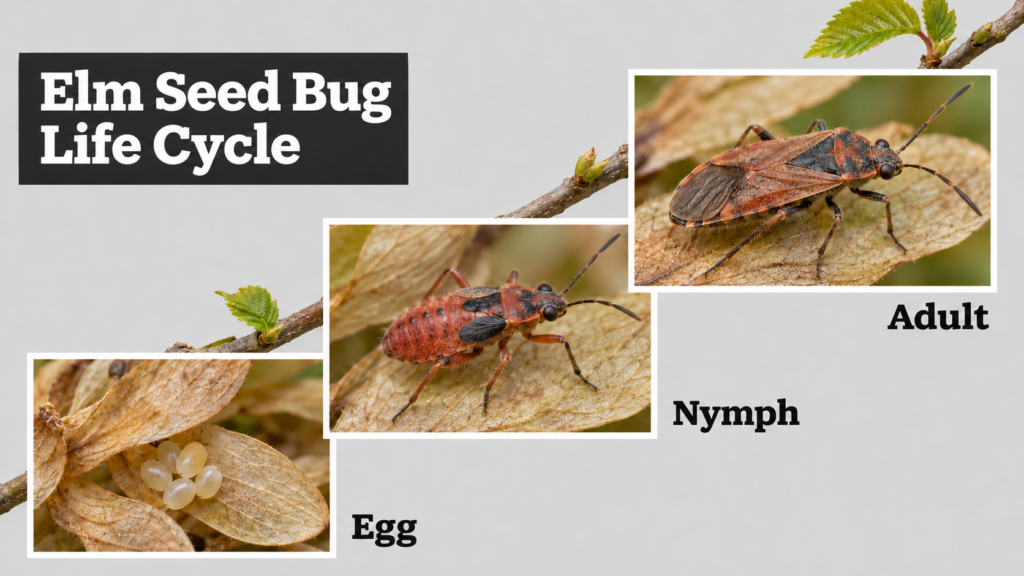
Elm seed bugs develop through egg, nymph, and adult stages. Their activity follows the seasons and the availability of elm seeds. Timing varies with local weather, so the first warm days and the start of seed drop are more useful clues than an exact calendar date.
Eggs and Nymphs Appear in Spring
Adults that survived the winter become active as temperatures rise. They mate in spring, and females lay eggs on elms, often near developing seeds. After hatching, the nymphs feed and molt several times as they grow. You may see them on the tree or moving through loose seeds that have collected below it.
Spring is a good time to check where seeds drift against your home. Sweep accumulations from porch corners, window wells, and the bottoms of exterior stairs. Pay particular attention to places where the seeds collect beside a door or a gap in the siding.
Adults Seek Shelter in Summer and Fall
Many nymphs reach adulthood during summer. Adults may enter buildings during hot spells and again as they look for protected places to spend the winter. They can shelter in exterior cracks, behind siding, or in gaps around doors and windows. Some remain out of sight until warm conditions bring them into view.
That timing explains why bugs can show up indoors even when you haven’t seen them outside that day. Adults already inside a wall or window frame may move into living spaces. If you seal an entry point and still see a few afterward, vacuum them up and watch whether the number gradually drops.
Why Are Elm Seed Bugs in My House?
A house offers sheltered spaces close to the bugs’ outdoor food source. If most of the insects appear in one room, start by checking the exterior wall on that side of the house. Look at the corners of window frames, the bottom of the door, and spots where pipes or cables pass through the wall. Check the fit of the window screen as well as the mesh. A screen can be intact and still leave an opening around its frame. Bugs often end up on windowsills after entering elsewhere, so finding them at a window gives you a starting point for inspection.
Are Elm Seed Bugs Harmful?
Elm seed bugs are primarily a nuisance. They don’t damage building materials or reproduce indoors, and they aren’t generally considered a threat to people or pets. The main problems are the number of insects, the unpleasant odor they can release when disturbed or crushed, and the small dark droppings that can stain light-colored surfaces. If they gather on curtains or walls, use a vacuum to remove them without pressing them against the material.
How to Get Rid of Elm Seed Bugs
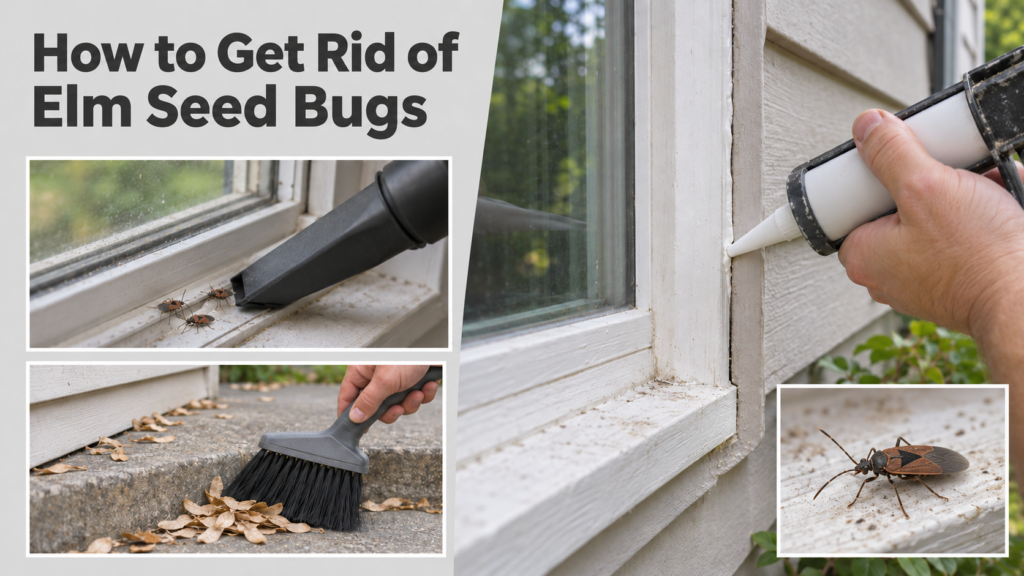
Vacuum the bugs you can see indoors, then focus on the areas where they keep appearing. Record which windows or doors have the most activity over a few days. That can help you find the openings that matter most, especially when bugs are scattered throughout a house.
Remove Bugs Indoors
Use a hose attachment to collect bugs from window tracks, baseboards, and corners. Empty the canister into a bag outdoors or dispose of the vacuum bag promptly. This helps keep live insects and odors out of the house.
If bugs keep appearing after you vacuum, check the same area the next day. A steady stream near a patio door suggests it’s worth checking the door sweep and weatherstripping. A smaller number emerging after you’ve sealed gaps may be adults already sheltering within the building.
Seal Openings and Clear Away Elm Seeds
Replace worn door sweeps and damaged weatherstripping, repair torn window screens, and close gaps around window and door trim. Inspect spots where utility lines enter the building and areas where siding meets trim. Use materials suited to the surface and keep designed drainage and ventilation openings functional.
Outdoors, sweep up seed piles around steps, patios, window wells, and the foundation. If a mature elm is healthy, start with seed cleanup and repairs to entry points. Removing a tree on your property may have little effect if there are other seed-bearing elms nearby.
Frequently Asked Questions
Do elm seed bugs bite people?
Elm seed bugs use their mouthparts to feed on plants and aren’t known for biting people. If you’re finding skin marks, the presence of elm seed bugs around a window is a poor clue to what caused them.
Why do elm seed bugs smell when crushed?
They release an unpleasant defensive odor when disturbed or crushed. Vacuuming is a practical way to collect them, especially when several are gathered on a windowsill or wall.
Can elm seed bugs lay eggs inside my house?
They normally lay their eggs outdoors on elms and don’t reproduce indoors. Bugs that keep appearing are usually entering from outside or emerging from sheltered areas within the building.
Do elm seed bugs go away in winter?
They become less active in cold weather, but adults can survive the winter in protected spaces. A warm spell or a heated room can bring some into view before spring.
Will removing an elm tree get rid of elm seed bugs?
Removing a nearby seed source may reduce local numbers, but bugs can still come from other elms in the area. Sealing entry points and clearing fallen seeds beside the house directly address the places where the bugs gather and get inside.