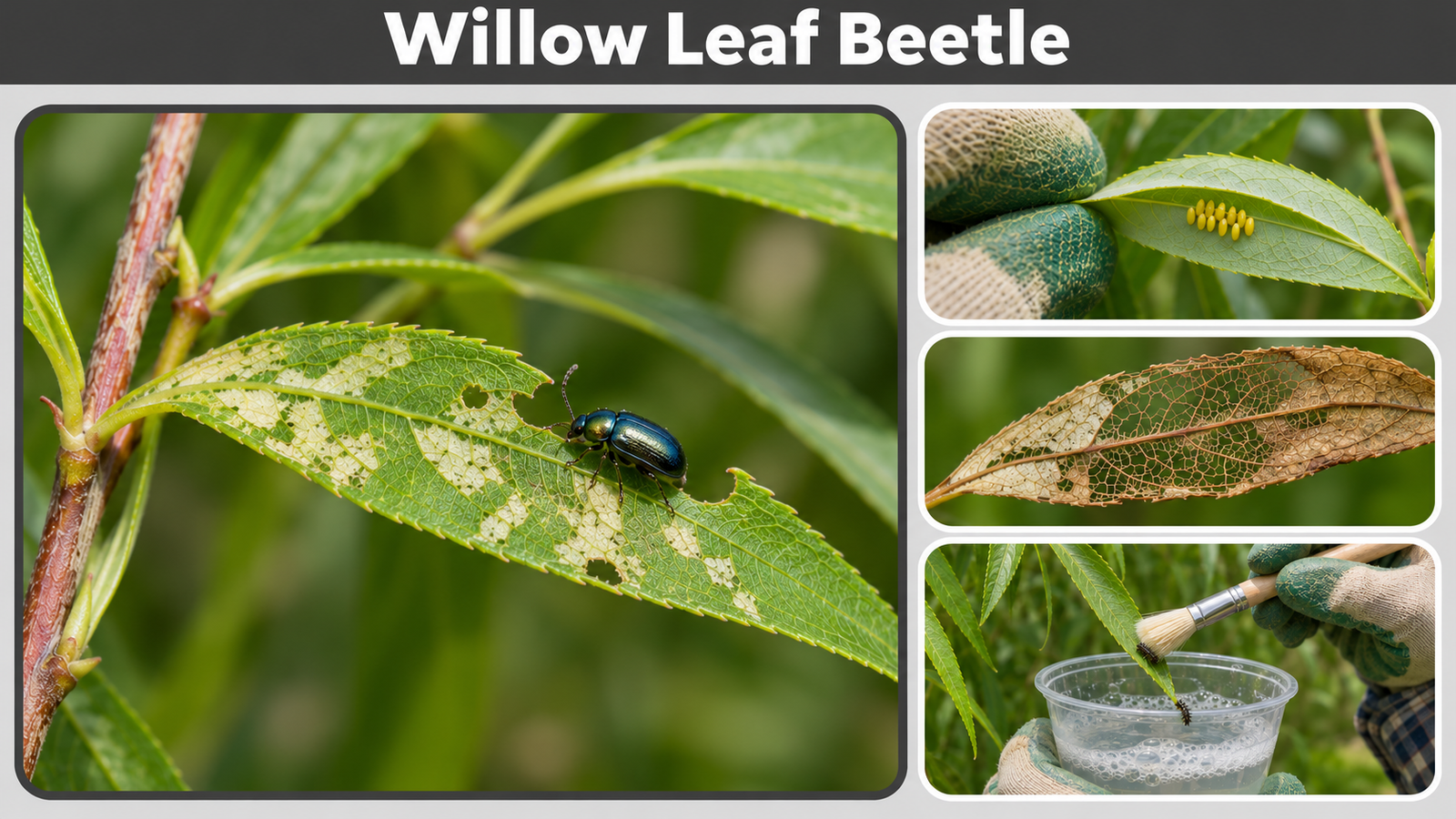
Small, shiny beetles on a willow tree may be easy to overlook until the leaves turn brown and take on a scorched appearance. The imported willow leaf beetle and its larvae both feed on willow foliage, but they leave different signs. Adults chew holes and notches, while larvae scrape or eat the soft tissue between the veins. A healthy, established willow can often tolerate light feeding. A young tree that loses much of its foliage needs closer attention. The first step is to check for live beetles or larvae and see whether the damage is still spreading.
What Is a Willow Leaf Beetle?
The name willow leaf beetle can refer to several species that feed on willows. In North American gardens, one common species to check for is the imported willow leaf beetle (Plagiodera versicolora). This small beetle feeds mainly on willows, including weeping willows, and can also use some poplars as hosts. Other beetles feed on willow foliage in different regions, so the plant and chewing damage can narrow down the possibilities without confirming the exact species.
What Do Adult Willow Leaf Beetles Look Like?
Adult imported willow leaf beetles are stout, oval, and about ⅛ inch long. Their shiny wing covers can look metallic blue, greenish blue, or nearly black. Because they are so small, you may notice the glint of their wing covers before you see the outline of the beetle.
Look along the edges of freshly chewed leaves and on nearby undamaged growth. Adults leave holes or notches, but many other insects can make similar marks. Finding several shiny beetles on the same branch as fresh damage gives you a stronger clue than finding one beetle resting on a leaf.
What Do Willow Leaf Beetle Eggs and Larvae Look Like?
The eggs are yellow and usually appear in clusters on the undersides of leaves. The larvae are soft-bodied with dark heads and dark markings. They can look bluish-black at a glance, though some show a paler abdomen with rows of dark bumps. Fully grown larvae are roughly ¼ inch long.
Larvae often feed close together. If you find a group, look at the tissue immediately around them and check both sides of the leaf. You may see thin, pale areas where feeding has just started and brown, papery patches where older damage has dried.
| What you find | What to look for | Where to check |
|---|---|---|
| Adult beetles | Small, shiny, oval beetles that look blue-green or dark metallic | Young foliage and leaves with fresh holes or notches |
| Eggs | Clusters of upright yellow eggs | Undersides of willow leaves |
| Larvae | Soft-bodied, usually dark-looking grubs that often feed together | Leaves with pale scraped patches or exposed veins |
| Older feeding damage | Dry, brown tissue or a lacy network of veins | Branches with a mix of damaged and healthy foliage |
What Does Willow Leaf Beetle Damage Look Like?
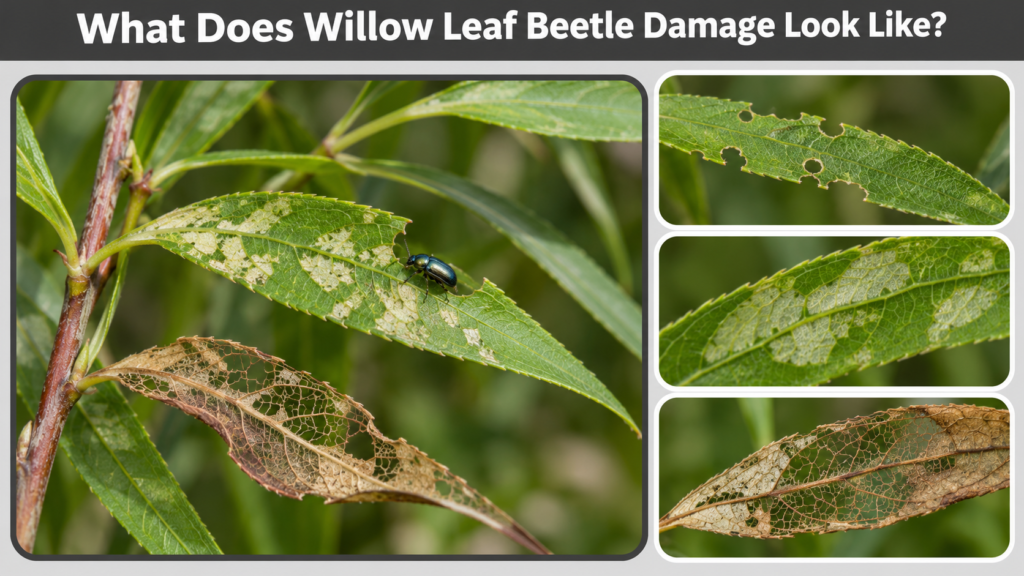
Look at individual leaves before judging the whole tree. A brown canopy can resemble drought stress or leaf disease from a distance. On closer inspection, beetle feeding removes tissue. You may see gaps along the edges, thin patches between veins, or leaves with little more than the veins remaining.
Holes and Notches From Adult Feeding
Adults chew through the leaf, leaving small holes and irregular notches. You may notice the damage first on young spring foliage. With light feeding, most of each leaf stays green, and the affected branches may still look healthy from a distance.
Check several leaves before deciding whether the damage is recent. An older leaf can keep its holes long after the beetle has moved on. Find a leaf that is only lightly chewed, take a photo, and compare it a few days later. Fresh holes or larger notches tell you that feeding is continuing.
Pale Patches and Lacy Leaves From Larval Feeding
Larvae can scrape away part of the leaf surface and leave a thin layer that looks pale or translucent. This is often called windowpane feeding because light can pass through the damaged tissue. As feeding continues, more of the tissue between the veins disappears, leaving a lacy pattern called skeletonization.
The exposed tissue eventually dries and turns brown. When several branches are affected, the tree can look scorched even though the twigs are still alive. Check whether brown areas have visible scraping and missing tissue. If the leaf surface remains intact and the main symptom is wilting or discoloration, look for other causes.
When Are Willow Leaf Beetles Active?
Imported willow leaf beetles spend the winter as adults in sheltered places, including loose bark and nearby leaf litter. They return to willow foliage in spring as new leaves develop. Females lay eggs on the foliage, and the larvae begin feeding after they hatch. More than one generation can develop during the growing season, so an early outbreak can be followed by fresh damage later in summer.
When Should You Start Checking Your Willow?
If the tree had beetle damage last year, start when leaves begin to unfold. Look at several reachable branch tips and turn over leaves with fresh holes. Finding eggs or small groups of larvae early gives you a chance to act while they are concentrated on a few leaves.
Continue checking in summer if you find new browning. Focus on where green leaves meet damaged foliage. These areas may tell you more about current activity than a branch full of dry leaves that the insects have already left.
How to Control Willow Leaf Beetles
Match your response to the age of the tree and the amount of fresh damage. An established willow with a few affected branches may only need monitoring. Take a closer look if a newly planted tree is losing foliage quickly, if the tree is already stressed, or if it has been heavily defoliated in successive years.
Monitor Light Damage on Mature Trees
Check several branches you can safely reach and look for active feeding, green leaves, and healthy growth. If damage stays limited and most of the canopy remains green, give the tree time. Treating old brown patches won’t restore the damaged leaves.
Keep an eye on soil moisture during dry weather, particularly around young trees. Supporting a recently planted willow while it establishes can help it cope with leaf loss. If browning continues without signs of fresh chewing, investigate watering conditions or other tree health problems.
Remove Egg Clusters and Larvae on Small Willows
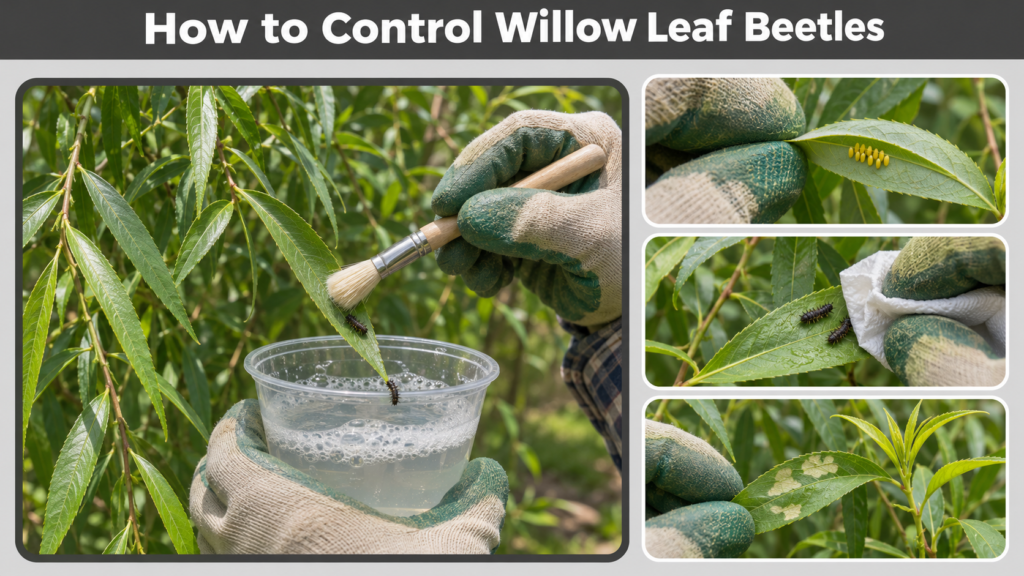
On a young willow or a small shrub, inspect the undersides of accessible leaves and remove confirmed egg clusters or groups of larvae by hand. You can brush larvae into a container of soapy water. Preserve leaves that still have green tissue, especially if the plant has already lost a significant amount of foliage.
Recheck the same branches a few days later and look at nearby shoots. Small larvae can be missed on the first pass, and eggs may hatch between inspections. Hand removal is most practical when the damage is concentrated on a small part of the plant.
Get a Diagnosis for Severe or Repeated Damage
If a mature willow repeatedly loses much of its canopy, an arborist or local plant diagnostic service can check whether beetles are responsible and assess the tree’s overall condition. Photos of the whole canopy, close-ups of damaged leaves, and images of any insects you found can help with identification.
If treatment is warranted, it works best when timed to the active stage responsible for the damage. Use a product only where the label permits the intended use. Willows often grow near ponds, streams, and other waterways, so check any restrictions around water and leave tall-canopy applications to a qualified professional.
Frequently Asked Questions
Can Willow Leaf Beetles Kill a Willow Tree?
A single episode of light or moderate feeding usually does little lasting harm to a healthy, established willow. Repeated heavy defoliation can weaken a tree, particularly if it is young, newly transplanted, or already under stress. Watch for healthy new growth and track whether severe damage returns the following year.
Why Does My Willow Look Burned?
Larval feeding can leave thin, papery tissue that dries brown, giving branches a scorched appearance. Examine individual leaves for pale scraped areas, exposed veins, or missing tissue. If the leaves are brown but largely intact, check for drought stress, disease, or another cause.
Do Willow Leaf Beetles Feed on Poplars?
Yes. The imported willow leaf beetle can feed on some poplars, and several other beetles also use willows and poplars as hosts. If nearby trees show similar damage, check whether the same insects are feeding on both.
Will Damaged Willow Leaves Turn Green Again?
Missing tissue won’t grow back, and areas that have dried brown will stay damaged. Look at newly opened leaves to judge how the tree is doing. Healthy new growth and fewer fresh feeding marks suggest that the tree is coping and the immediate pressure has eased.
Should I Prune Branches With Chewed Leaves?
Keep branches that are alive and still carry green foliage. Pruning them removes leaf area the tree can still use. If entire twigs are dying or branches remain bare after the rest of the tree has leafed out, have the tree assessed for other problems as well as beetle damage.