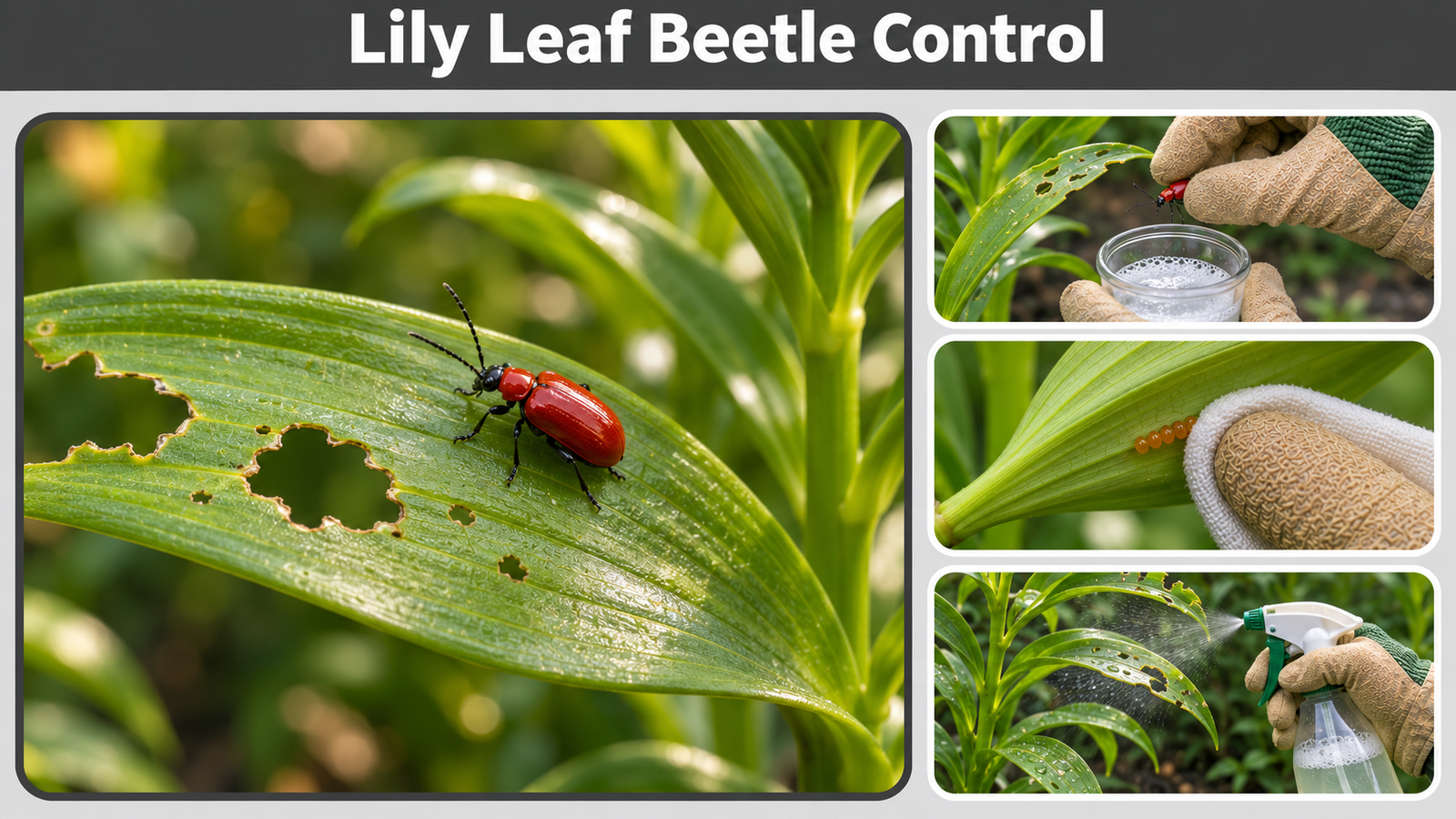
Bright red beetles on your lilies are easy to spot, but the eggs and larvae underneath the leaves often go unnoticed until the foliage starts disappearing. For a few pots or a small garden bed, the most practical way to control lily leaf beetles is to catch the adults, remove their eggs, and pick off the larvae. Start checking when lily shoots emerge in spring and continue through summer. If you already have chewed leaves, look for live insects and fresh feeding before deciding whether handpicking is enough or a treatment is needed.
How to Identify Lily Leaf Beetles and Their Damage
The lily leaf beetle (Lilioceris lilii) is also called the red lily beetle or scarlet lily beetle. Its bright red adults are the most obvious sign, but a close look at the underside of the leaves can reveal eggs and larvae before serious damage develops.
| What to look for | How to recognize it | Where to check |
|---|---|---|
| Adult beetles | Shiny scarlet wing covers with a black head, legs, and antennae | Leaves, stems, and around flower buds |
| Eggs | Small, elongated orange to reddish eggs in short rows or groups | Undersides of leaves |
| Larvae | Soft-bodied grubs usually hidden under a dark, sticky layer of their own droppings | Leaf undersides, chewed edges, and around buds |
| Feeding damage | Rounded holes, pale scraped patches, ragged edges, or leaves eaten back toward the stem | Foliage, buds, and sometimes petals |
Which Plants Do Lily Leaf Beetles Attack?
Lily leaf beetles mainly affect true lilies, including Asiatic, Oriental, and trumpet lilies. Fritillaries can also host the beetles, so inspect those plants if you find an infestation in a nearby lily bed. Check all your true lilies, even if you first notice damage on only one variety.
Daylilies belong to a different group of plants. If your daylilies are the only plants with holes and you find no red beetles, eggs, or dark larvae on nearby true lilies, investigate other causes of the damage before treating.
What Does Early Feeding Damage Look Like?
Adults often leave rounded holes in the leaves. Young larvae scrape the underside of a leaf, which can leave pale or brown patches. As the larvae grow, they can chew away whole sections of leaf and may feed on flower buds or petals.
Turn a freshly damaged leaf over and check the areas around its edges and base. A dark lump that looks like wet dirt may be a larva. If you find one, check the leaves above and below it. Several larvae can feed on the same stem.
How to Get Rid of Lily Leaf Beetles by Hand
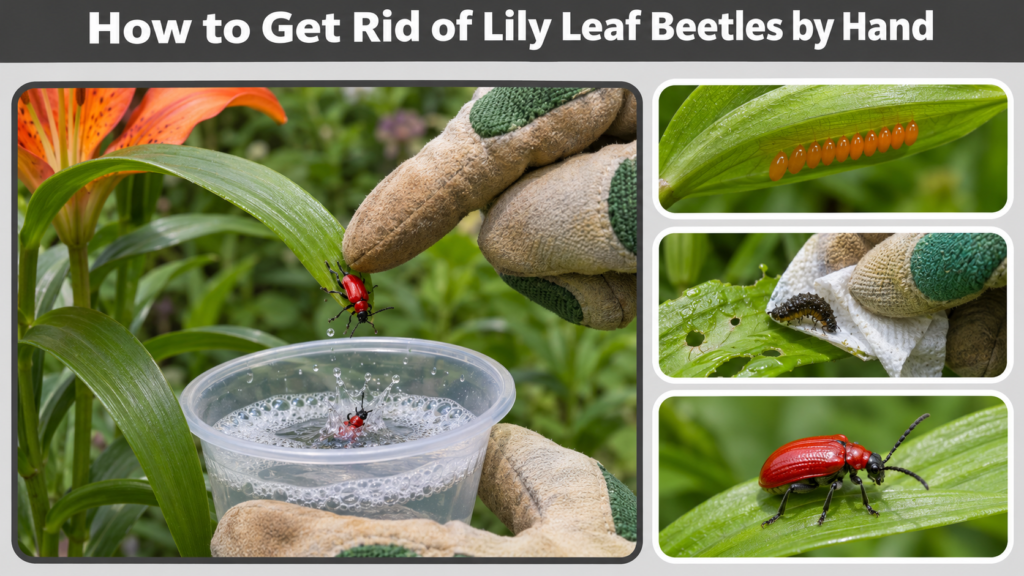
Hand removal is a practical first step for small plantings. Bring gloves and a small container of soapy water, then check each plant for adults, eggs, and larvae. Pay particular attention to leaf undersides, where you can miss two stages of the pest by inspecting from above.
1. Catch Adult Beetles Before They Drop
Hold the container directly beneath the beetle before touching the leaf. Gently brush the beetle off or tap the leaf so it falls into the container. These beetles often drop when disturbed, and once they land among soil or mulch, they can be hard to find.
Start with plants that have fresh feeding damage. Then check nearby lilies and fritillaries, including plants in pots. Catching adults early in spring is especially helpful because overwintered beetles look for host plants where they can feed and lay eggs.
2. Remove Eggs From the Undersides of Leaves
Look for small orange or reddish eggs arranged in rows or groups. Wipe them off with a gloved finger or crush them gently against the leaf. Keep the leaf attached whenever possible so it can continue supporting the plant.
Eggs can remain on the leaves after you’ve collected the adults. If you find several groups, inspect the same plants again in a few days. That gives you a chance to catch newly hatched larvae while they are still small and before they remove much foliage.
3. Pick Off Larvae While They’re Small
Lift larvae off the foliage with a gloved hand or a damp paper towel and drop them into the container. Check around the base of each leaf and near the buds. Use fresh chewing damage to guide your search when the larvae are difficult to see.
Leave partially chewed leaves in place as long as they’re green. A lily can often bloom with some leaf damage, and the remaining foliage helps the bulb rebuild its reserves. Removing the insects promptly gives the plant a better chance of keeping enough green growth for the rest of the season.
When to Use a Spray for Lily Leaf Beetle Control
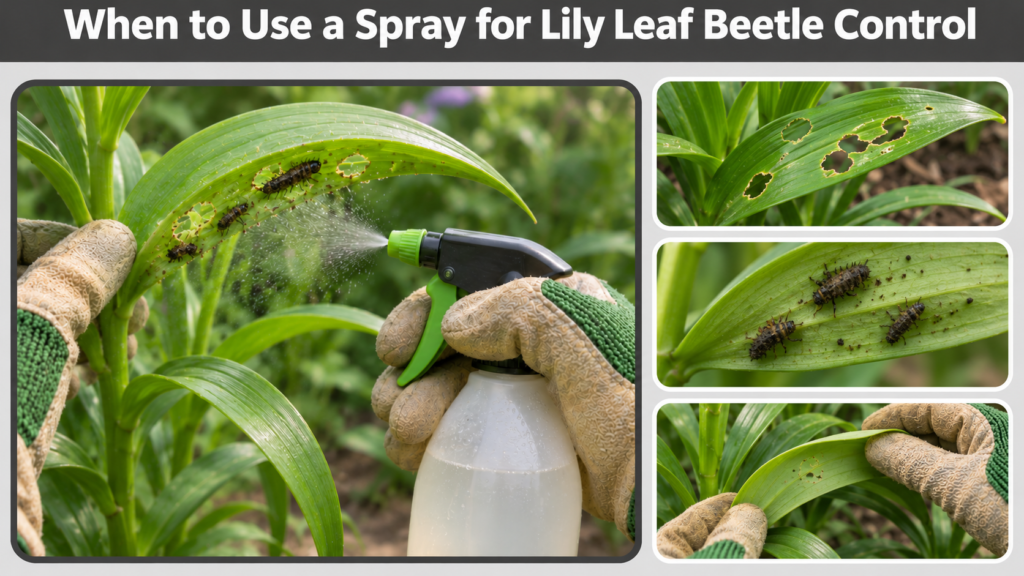
Consider a spray if larvae are feeding on several plants and fresh damage continues despite repeated hand removal. Check that the product label permits the intended use on outdoor ornamental lilies. The amount to apply, the timing of any repeat treatment, and the precautions can vary by product.
Can Neem Help Control Lily Leaf Beetles?
Some neem-based products can help control young larvae. If you choose one, check the plants first so you can time the application for when small larvae are present and feeding. Follow the label for coverage and pay attention to leaf undersides, where young larvae often hide.
After treatment, look for live larvae and new chewing. Old holes stay visible, so they tell you little about whether the treatment worked. A leaf that was intact during your last inspection is a better place to check for fresh damage.
How Can You Protect Pollinators During Treatment?
Avoid spraying open flowers or treating plants while pollinators are visiting. Check for flowers growing beside the lilies, too, since spray can drift onto nearby plants. Follow the product label’s precautions for bees and other beneficial insects.
If damage is concentrated on a few flowering stems, continue removing the insects by hand. Check buds and petals as well as the foliage, since feeding can extend to flowers during a heavier infestation.
How to Keep Lily Leaf Beetle Damage Under Control
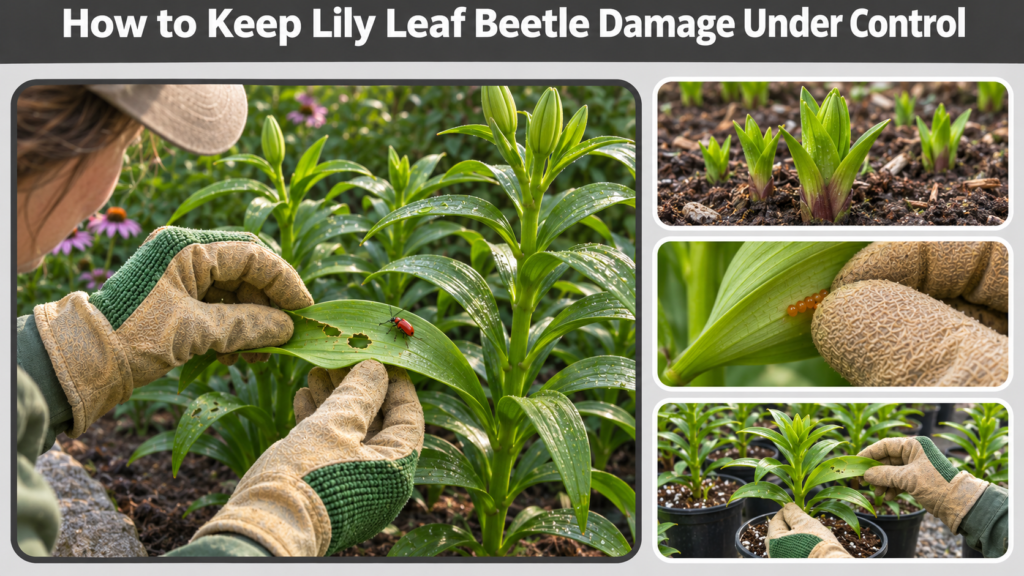
Lily leaf beetles can overwinter as adults in sheltered places and fly to host plants in spring. New adults can also emerge during summer after larvae finish feeding and pupate in the soil. Regular checks help you catch both periods of activity.
Start Checking When Lily Shoots Emerge
Inspect the first lily shoots as they come up in spring. For a small planting, a weekly check is a practical starting point. Check again in a few days if you find eggs, live larvae, or new holes. As the stems grow, work from the lower leaves up to the buds so you cover the whole plant.
Keep checking after the flowers fade. Healthy foliage still has work to do, and fresh holes later in summer may signal that another group of adults is feeding. Leave green stems standing until they die back naturally.
Inspect New Plants and Nearby Hosts
Look over potted lilies and fritillaries before bringing them home. Turn over several leaves and examine the buds and stems for beetles, eggs, and chewing damage. At home, include nearby containers and other lily beds in your checks whenever you find beetles.
Adult beetles can spend the winter away from host plants, so treating the soil beneath one damaged lily is unlikely to prevent their return. Put your effort into checking spring growth and removing the first beetles and eggs you find.
Frequently Asked Questions
Lily leaf beetle damage can range from a few holes to nearly bare stems. How you respond depends on how much green foliage remains and whether insects are still feeding.
Can Lilies Recover After Lily Leaf Beetle Damage?
Yes. Lilies with moderate damage can often still flower. If you find a heavily chewed plant, remove the pests and keep whatever green foliage remains. Severe leaf loss early in the season can reduce bulb growth and leave the plant weaker the following year.
What Are the Black Clumps on My Lily Leaves?
They may be lily leaf beetle larvae. The larvae cover themselves with their own droppings and can resemble small lumps of wet soil. Look for them near pale scraped patches or freshly chewed edges, especially on the underside of leaves.
Should I Cut Back Lilies With Chewed Leaves?
Keep the stems and leaves attached while they are green. Even a leaf with holes can still help support the bulb. Remove the insects and eggs, then let the remaining foliage die back naturally at the end of the growing season.
Can I Control Lily Leaf Beetles Without Spraying?
Yes. Handpicking is often enough for a few pots or a small bed if you start early and check regularly. Remove adults, eggs, and larvae during each inspection. If new damage keeps appearing, check the surrounding lilies and fritillaries for another group of beetles.
Why Do Red Lily Beetles Keep Coming Back?
Adults can fly in from nearby plantings, and beetles can emerge in summer after larvae complete their development in the soil. If you see fresh holes after several quiet weeks, check for adults around the buds and stems, then turn over the leaves to look for any larvae you missed.