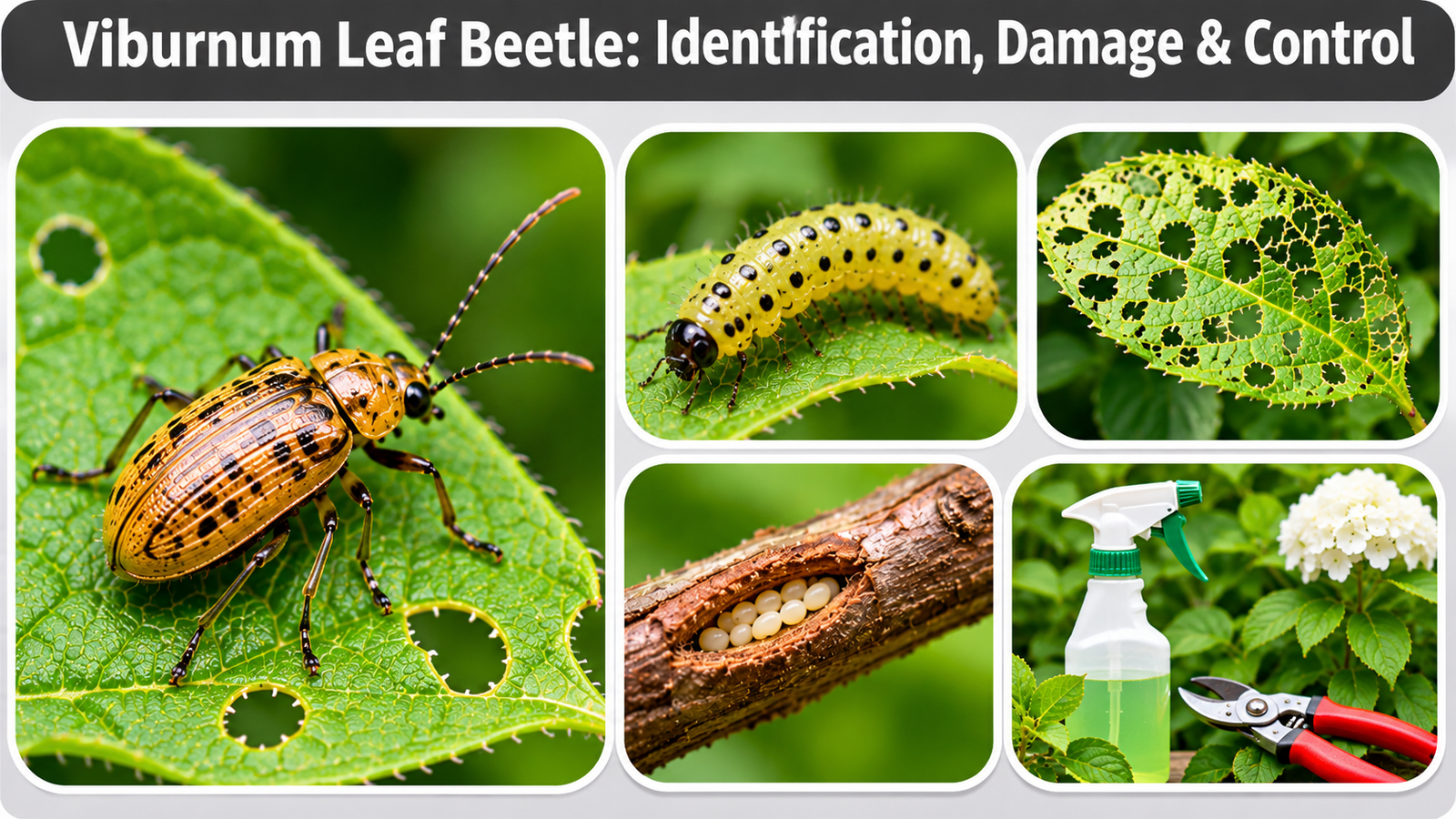
The viburnum leaf beetle is a destructive garden pest that feeds on viburnum shrubs, leaving damaged leaves and weakened plants behind. Both adults and larvae attack foliage, sometimes causing severe defoliation during the growing season. These small brown beetles are particularly troublesome for gardeners growing arrowwood viburnum, snowball bushes, and other susceptible varieties. Fortunately, early identification and timely treatment can help protect affected shrubs. This guide explains viburnum leaf beetle identification, life cycle, damage symptoms, natural control methods, insecticide options, and practical ways to prevent future infestations.
What Is a Viburnum Leaf Beetle?
The viburnum leaf beetle (Pyrrhalta viburni) is a small, leaf-feeding insect belonging to the family Chrysomelidae. Originally native to Europe and Asia, it has become an invasive pest in parts of North America, including the northeastern United States and areas of Canada.
Unlike many garden beetles that feed on multiple plant families, this species specializes in viburnum shrubs. Both adults and larvae consume leaves, often causing significant damage when populations become established. Repeated infestations can weaken shrubs and occasionally lead to plant death.
Viburnum Leaf Beetle Identification
Viburnum leaf beetles can be difficult to identify because their appearance resembles that of other small brown beetles. However, their body shape, coloration, feeding behavior, and the plants they attack provide useful identification clues.
Examining leaves, stems, and developing shoots can help gardeners recognize different stages of an infestation.
Adult Viburnum Leaf Beetle Identification
Adult viburnum leaf beetles are approximately 4.5–6.5 millimeters long. Their bodies are elongated and somewhat oval, with brownish-yellow or grayish-brown wing covers.
Common identifying features include:
- Body color: Light brown, yellowish-brown, or grayish-brown.
- Body size: Approximately ¼ inch long.
- Wings: Hard wing covers with a slightly textured appearance.
- Antennae: Slender and segmented, extending from the head.
- Legs: Six relatively short legs.
- Feeding behavior: Adults create irregular holes in viburnum leaves.
Adult beetles are commonly active during summer and early autumn, depending on local temperatures.
Viburnum Leaf Beetle Larvae Identification
Viburnum leaf beetle larvae are creamy yellow, yellow-green, or yellowish-brown with distinctive black spots and markings along their bodies.
Mature larvae may reach approximately 10–11 millimeters long. They have dark heads and three pairs of small legs near the front of their bodies.
Larvae usually feed in groups on leaf undersides during spring. Their feeding often produces more severe damage than adult beetles, making early larval identification especially important.
Viburnum Leaf Beetle Life Cycle

The viburnum leaf beetle completes one generation annually. Its life cycle includes four developmental stages: egg, larva, pupa, and adult. Each stage occurs during a particular season, making seasonal monitoring an important part of effective pest management.
Egg Stage
Female beetles deposit eggs inside small cavities chewed into young viburnum twigs during late summer and autumn.
They cover these cavities with chewed bark and other material, creating small, dark, raised scars along the stems. The eggs remain inside the twigs throughout winter.
Larval Stage
Eggs generally hatch during spring as new viburnum leaves develop. Young larvae begin feeding on tender foliage, often concentrating on leaf undersides.
As larvae grow, they consume increasing amounts of leaf tissue. Their development typically continues for several weeks before they leave the plant.
Pupal and Adult Stages
Mature larvae drop to the ground and enter the soil, where they pupate.
Adult beetles generally emerge during early to midsummer. They resume feeding on viburnum leaves, mate, and eventually lay eggs on young twigs, continuing the annual cycle.
Viburnum Leaf Beetle Damage: Signs and Symptoms
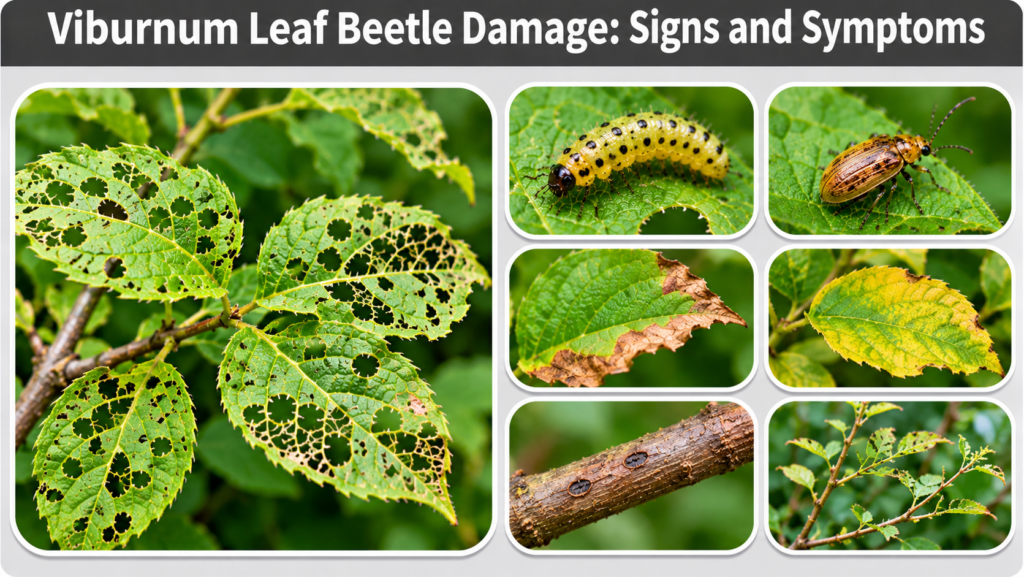
Viburnum leaf beetle damage can range from scattered holes to extensive leaf destruction. Larvae usually cause the greatest injury in spring, while adults contribute additional damage during summer.
Severe infestations may leave shrubs with very little healthy foliage. Although many established shrubs recover from occasional defoliation, repeated damage can seriously weaken susceptible varieties.
Common Signs of Infestation
Watch for the following symptoms:
- Small, irregular holes appearing in leaves.
- Skeletonized leaves with prominent remaining veins.
- Brown or dried leaf edges.
- Yellowing and premature leaf drop.
- Groups of spotted larvae feeding underneath leaves.
- Small, dark egg-laying scars on young twigs.
Can Viburnum Leaf Beetles Kill Shrubs?
Yes. Repeated, severe defoliation can eventually kill vulnerable viburnum shrubs.
When leaves are repeatedly destroyed, plants lose their ability to produce sufficient energy through photosynthesis. This weakens root systems, reduces new growth, and makes plants more vulnerable to environmental stress.
Prompt treatment and proper shrub care can improve recovery chances.
How to Get Rid of Viburnum Leaf Beetles Naturally
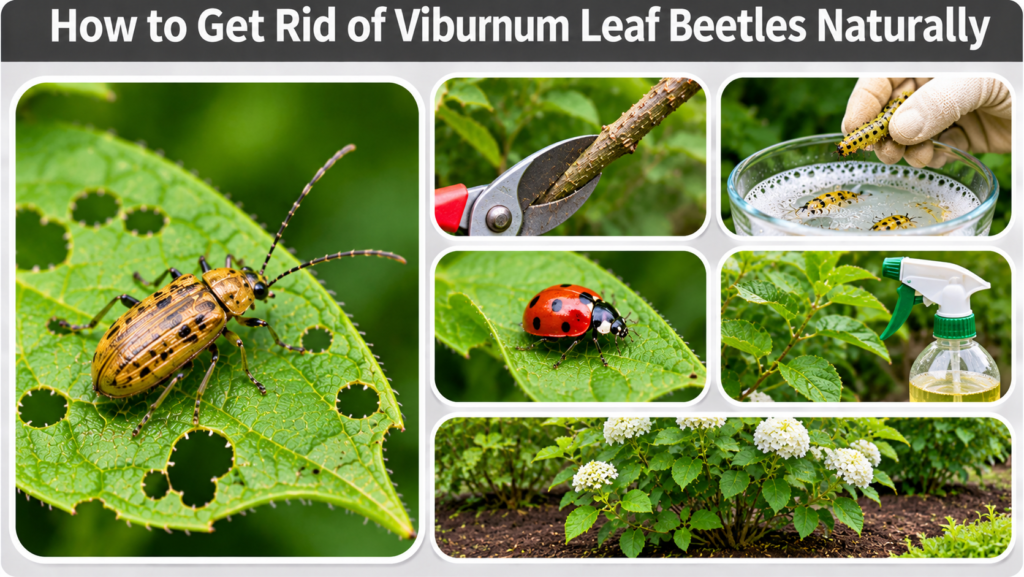
Natural viburnum leaf beetle control focuses on removing eggs, reducing larvae, and supporting beneficial insects. These approaches are particularly practical for home gardens and small landscape plantings.
The best results come from acting before populations increase significantly. Combining several management techniques generally provides better protection than relying on a single treatment.
1. Prune Egg-Infested Twigs
Inspect viburnum twigs from autumn through early spring for rows of small, raised egg-laying scars.
Prune affected sections before eggs hatch and dispose of the infested material. This is one of the most effective nonchemical methods for reducing future beetle populations.
2. Remove Larvae by Hand
Examine leaf undersides during spring, especially when new leaves begin expanding.
Remove visible larvae by hand or prune heavily infested leaves where practical. Place collected insects into soapy water to prevent them from returning to the plant.
3. Encourage Natural Predators
Several beneficial insects, including lady beetles, predatory stink bugs, and lacewings, may feed on viburnum leaf beetles.
Maintaining diverse garden vegetation and avoiding unnecessary broad-spectrum insecticides helps support these natural predators.
4. Use Horticultural Oil
Dormant horticultural oil may help suppress overwintering eggs when applied to infested twigs before leaves emerge.
Apply only a product labeled for the plant and intended use, following its concentration and temperature restrictions. Improper application can damage developing foliage.
5. Maintain Healthy Shrubs
Water viburnum shrubs appropriately during dry conditions and provide suitable growing conditions.
Remove dead or severely damaged branches and maintain adequate mulch around the root area. Healthy shrubs are better able to recover from moderate insect feeding.
Viburnum Leaf Beetle Treatment and Insecticide Options

When natural control methods are insufficient, insecticides may help manage significant infestations. Treatment works best when larvae are young because they are easier to control before extensive feeding occurs.
Insecticide selection should consider the growth stage, treatment timing, environmental impact, and product registration.
Neem Oil and Insecticidal Soap
Neem-based products and insecticidal soaps may help suppress young larvae when applications provide thorough coverage.
However, effectiveness varies, and these treatments are generally less reliable against adult beetles. Follow label directions and avoid spraying when conditions could cause plant injury.
Spinosad for Viburnum Leaf Beetles
Spinosad is an insecticide derived from naturally occurring soil microorganisms. Some formulations can effectively control young viburnum leaf beetle larvae.
Applications should target actively feeding larvae and follow product-label directions. Spinosad can harm pollinators when wet, so avoid spraying flowering shrubs or areas where bees are actively foraging.
Chemical Insecticide Treatment
Certain registered contact insecticides may control viburnum leaf beetle larvae and adults.
Some systemic insecticides are also used in ornamental shrub management, but they can present additional risks to pollinators and may be restricted in certain locations.
Always verify that a product is registered for ornamental viburnums and the target pest. Follow all safety instructions.
Viburnum Varieties Resistant to Leaf Beetles
Some viburnum species are more vulnerable to beetle infestations than others. Choosing less susceptible varieties is a practical long-term management strategy, particularly in areas with established beetle populations.
Highly Susceptible Viburnum Varieties
- Arrowwood viburnum (Viburnum dentatum).
- European cranberrybush viburnum (Viburnum opulus).
- American cranberrybush viburnum (Viburnum opulus var. americanum).
- Certain other susceptible native viburnums.
Less Susceptible Viburnum Varieties
- Koreanspice viburnum (Viburnum carlesii).
- Doublefile viburnum (Viburnum plicatum).
- Burkwood viburnum (Viburnum × burkwoodii).
- Judd viburnum (Viburnum × juddii).
- Leatherleaf viburnum (Viburnum rhytidophyllum).
Resistant or less susceptible varieties can still experience occasional feeding, but they generally withstand infestations better.
FAQs
1. What kills viburnum leaf beetles?
Young viburnum leaf beetle larvae can be controlled using suitable registered insecticides, including certain spinosad and neem-based products. Pruning egg-infested twigs before spring is also highly effective. Treatment should target the appropriate life stage and follow product-label instructions.
2. Does neem oil kill viburnum leaf beetles?
Neem-based insecticides may suppress young viburnum leaf beetle larvae when applied correctly. However, their effectiveness depends on the formulation, insect development stage, and application coverage. Neem oil alone may not provide reliable control of established adult beetle populations.
3. When should I spray for viburnum leaf beetles?
The best time to spray is generally in spring when young larvae first appear. Early treatment prevents extensive foliage damage. Exact timing depends on local climate, so inspect new leaves regularly rather than relying on a fixed calendar date.
4. Can viburnum recover from leaf beetle damage?
Yes. Many healthy viburnum shrubs recover from moderate or occasional defoliation. Providing adequate water and proper growing conditions supports regrowth. However, repeated severe infestations can weaken shrubs significantly and may eventually cause plant death.
5. Are viburnum leaf beetles harmful to humans?
Viburnum leaf beetles are not considered dangerous to humans. They do not sting and are not known for aggressive biting behavior. Their primary impact is on ornamental shrubs, where both adults and larvae can cause substantial foliage damage.