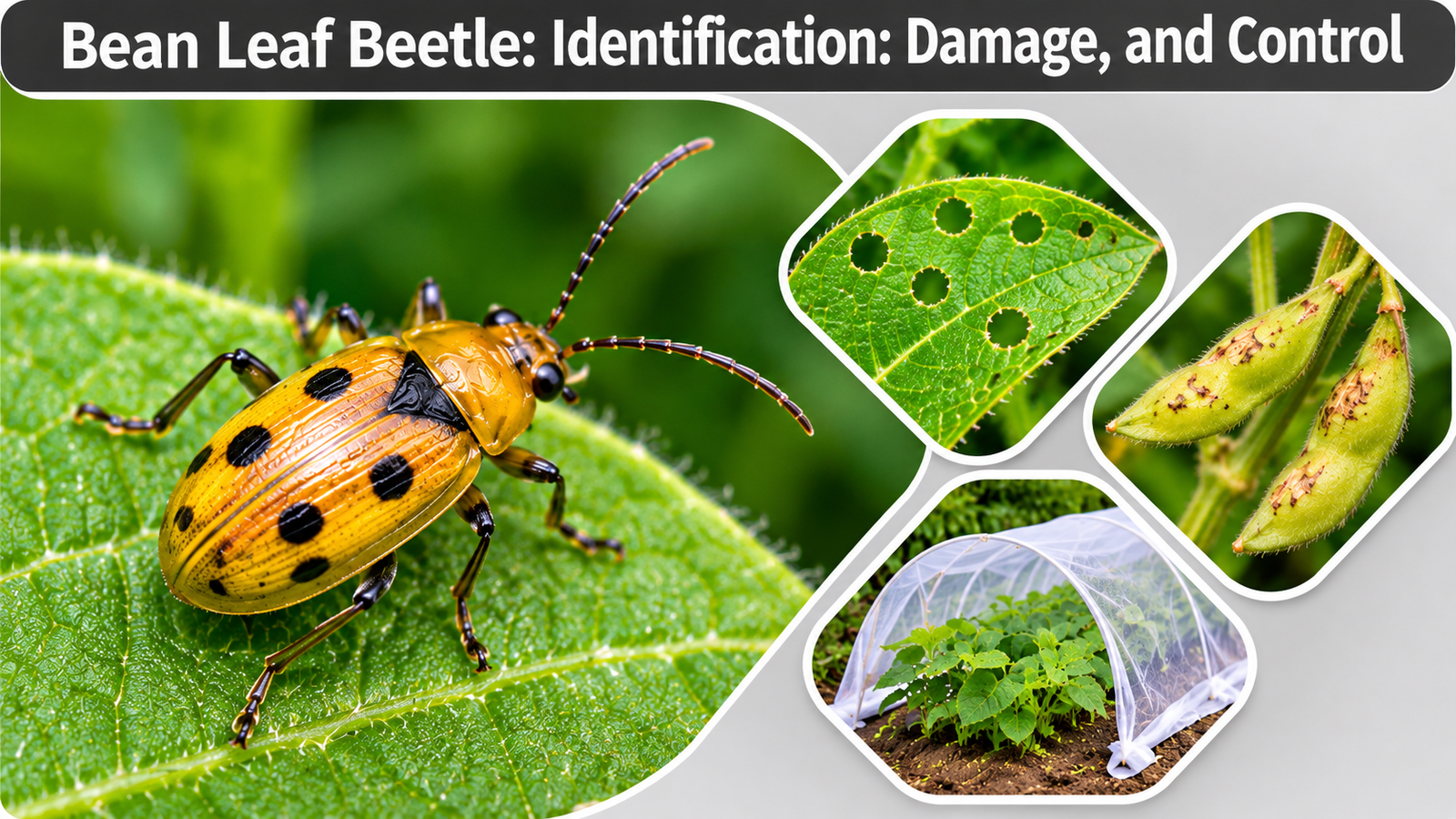
The bean leaf beetle is a small agricultural pest that commonly attacks soybeans, green beans, and other leguminous plants. Although these insects may appear harmless, large populations can damage young leaves, feed on developing pods, and reduce crop quality. Their colors range from yellowish-green to reddish-brown, making identification sometimes challenging. Understanding bean leaf beetle identification, life cycle, feeding behavior, and control methods is essential for gardeners and farmers. This guide explains how to recognize bean leaf beetles, identify their damage, and manage infestations effectively.
What Is a Bean Leaf Beetle?
The bean leaf beetle (Cerotoma trifurcata) is a small insect belonging to the family Chrysomelidae and order Coleoptera. It is native to North America and is commonly found in agricultural fields, gardens, and areas with leguminous vegetation.
Adult bean leaf beetles feed primarily on plant leaves and developing pods, while their larvae live underground and consume roots. Soybeans are among their preferred host plants, although they also feed on green beans, clover, alfalfa, and other legumes.
These beetles are especially important agricultural pests because heavy infestations can damage seedlings and affect soybean production. They can also transmit bean pod mottle virus, a disease associated with reduced soybean yield and seed quality.
Bean Leaf Beetle Identification: What Do They Look Like?
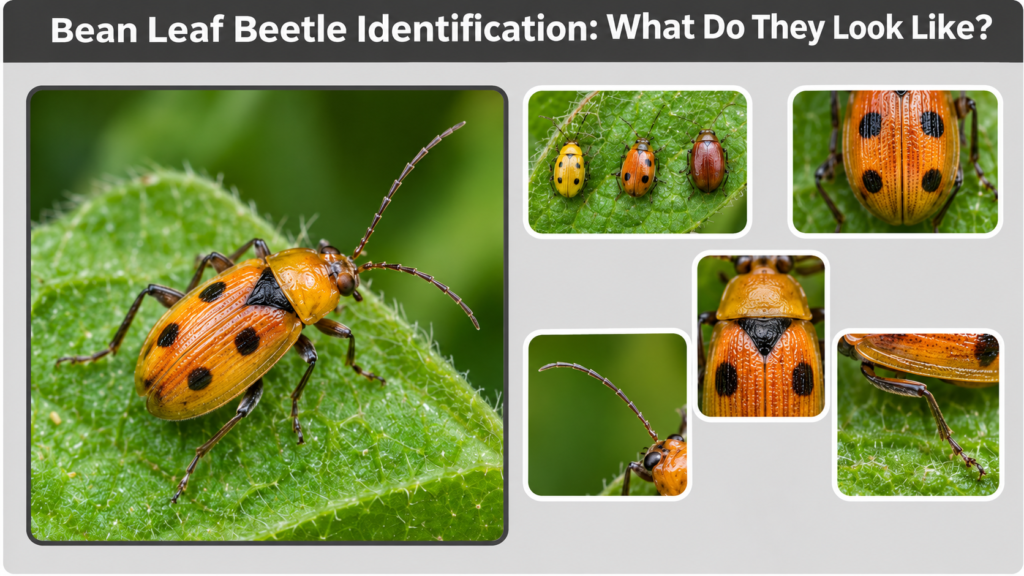
Bean leaf beetles have small, oval-shaped bodies and distinctive markings that help distinguish them from other insects. Their coloration can vary significantly, even among individuals living in the same field. However, one particular marking is especially useful for accurate identification.
Adult Bean Leaf Beetle Identification
Adult bean leaf beetles measure approximately ¼ inch (6 mm) long. Their bodies are slightly elongated and covered by hard wing cases.
Common identifying characteristics include:
- Body color: Yellow, orange, red, tan, or greenish-yellow.
- Black spots: Usually four dark spots on the wing covers, although some individuals lack spots.
- Black triangle: A distinctive dark triangular marking behind the thorax, at the base of the wing covers.
- Antennae: Thin, segmented antennae extending from the head.
- Legs: Six slender legs that allow movement across plant surfaces.
The black triangular marking is particularly reliable because it remains visible even when the beetle’s body color and spots vary.
Bean Leaf Beetle Eggs and Larvae
Female bean leaf beetles deposit small, orange-colored eggs in the soil near the base of host plants. The eggs are generally difficult to observe without examining the surrounding soil.
After hatching, larvae develop underground. They have soft, whitish bodies, brown heads, and small legs near the front of their bodies.
Unlike adults, which feed on leaves and pods, larvae primarily consume roots and root nodules. Their feeding usually causes less visible damage than adult feeding.
Bean Leaf Beetle Life Cycle
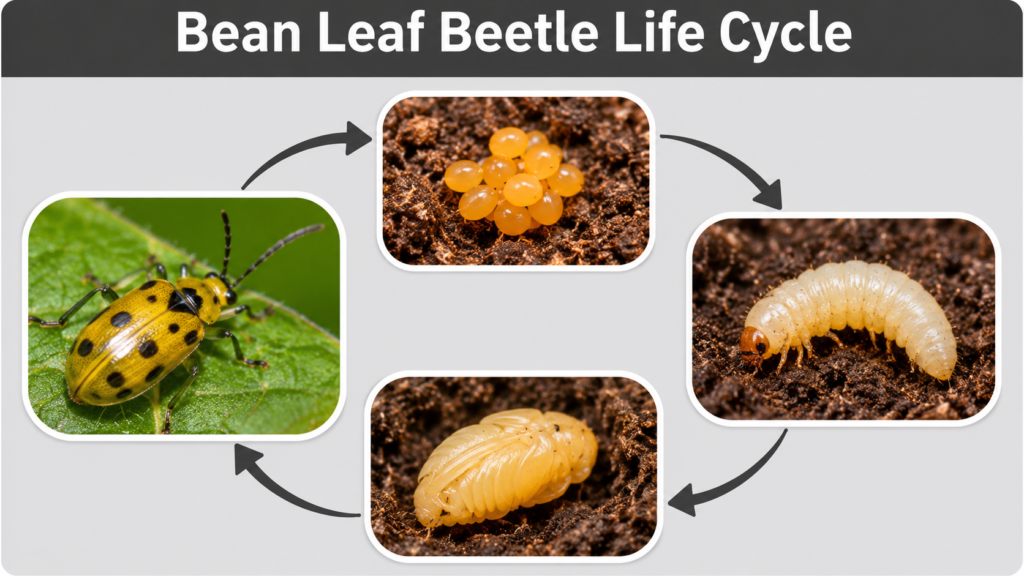
Bean leaf beetles undergo complete metamorphosis, passing through egg, larva, pupa, and adult stages. Their development depends on temperature, food availability, and regional climate. In many soybean-growing regions, they produce one or two generations annually, although additional generations are possible in warmer southern areas.
Egg Stage
After mating, females deposit eggs in the soil surrounding bean or soybean plants. Depending on environmental conditions, the eggs generally hatch within one to three weeks.
Larval and Pupal Stages
Newly hatched larvae feed underground on roots and root nodules for approximately two to three weeks. They subsequently pupate in the soil, where they develop into adults.
Adult Stage
Adult beetles emerge and begin feeding on plant foliage. They mate and reproduce during the growing season.
In colder regions, adults survive winter in protected locations such as leaf litter, wooded areas, and grassy vegetation. They become active again when temperatures rise during spring.
Bean Leaf Beetle Damage in Soybeans
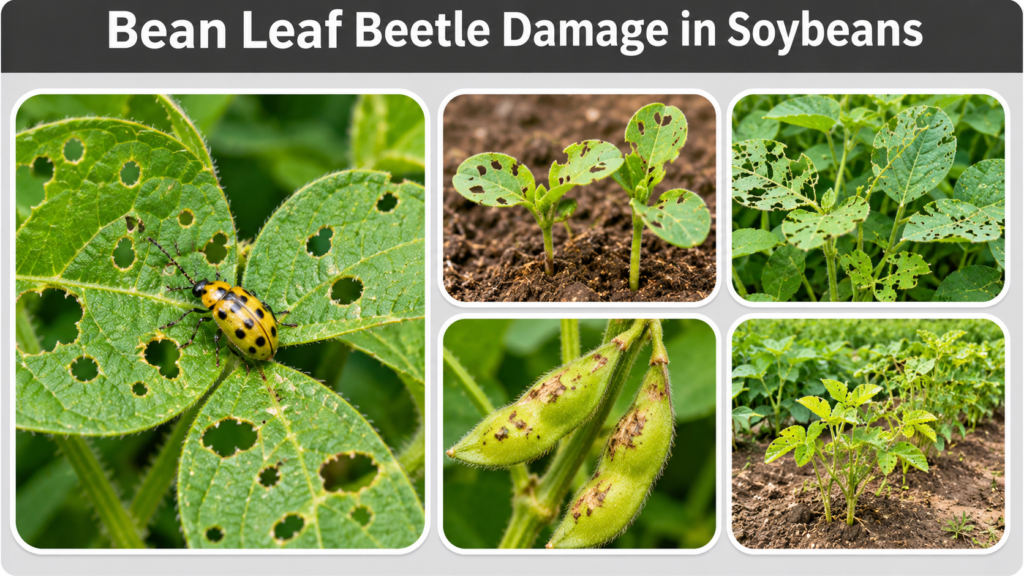
Bean leaf beetle damage occurs mainly when adults consume soybean leaves and developing pods. Although mature plants can tolerate moderate feeding, severe infestations may reduce plant growth and crop productivity. Young seedlings are particularly vulnerable because they have limited foliage and fewer resources for recovery.
Early identification helps growers determine whether control measures are necessary.
Common Signs of Bean Leaf Beetle Damage
Look for the following symptoms:
- Round holes: Small, nearly circular holes appearing throughout soybean leaves.
- Seedling damage: Feeding on young leaves and cotyledons.
- Reduced foliage: Extensive feeding that decreases available leaf area.
- Pod scarring: Shallow feeding marks on developing soybean pods.
- Pod clipping: Severe feeding that damages or detaches pods.
- Reduced plant vigor: Slower growth after substantial injury.
Bean Leaf Beetle Damage to Soybean Pods
During reproductive growth, adult beetles may feed directly on soybean pods. Their feeding removes protective outer tissue and creates shallow scars.
Damaged pods may become more vulnerable to secondary infections. Severe infestations can affect seed development, quality, and market value.
Bean leaf beetles can also spread bean pod mottle virus. This infection may cause mottled leaves, reduced seed quality, and yield losses, particularly when plants become infected early.
How to Get Rid of Bean Leaf Beetles Naturally
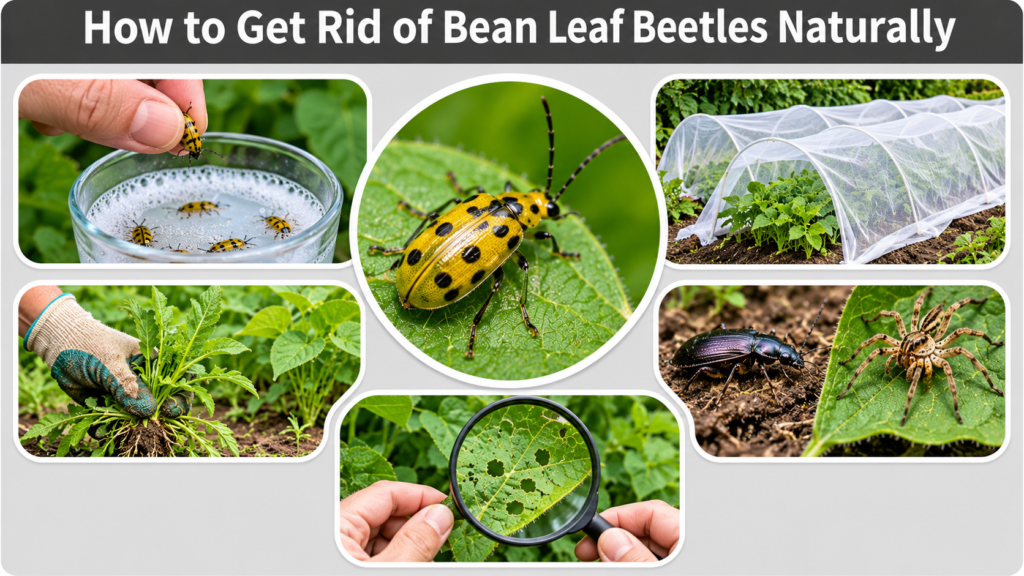
Natural bean leaf beetle control focuses on reducing insect populations while protecting beneficial organisms and maintaining healthy crops. These approaches are especially useful in home gardens and smaller plantings. Large soybean fields generally require additional scouting and economic assessment before choosing treatment methods.
1. Remove Beetles by Hand
Inspect bean plants regularly, especially during early growth. Collect visible adults and drop them into a container of soapy water. Hand removal works best when populations are small and plants are easily accessible.
2. Use Floating Row Covers
Install insect-exclusion row covers over young bean plants before adult beetles arrive. Secure the edges to prevent insects from entering. Remove covers when necessary for pollination, maintenance, or harvesting.
3. Remove Weeds Around Plants
Manage weeds and volunteer legumes surrounding garden beds because they may provide alternative feeding sites. Regular weed management can make inspection easier and help reduce pest shelter near crops.
4. Encourage Natural Predators
Ground beetles, spiders, and other beneficial organisms may contribute to pest suppression. Maintaining a diverse garden habitat and avoiding unnecessary broad-spectrum insecticides helps conserve these natural enemies.
5. Monitor Plants Regularly
Examine leaf undersides, growing shoots, and developing pods throughout the growing season. Early detection allows gardeners to remove small populations before extensive damage develops.
Bean Leaf Beetle Chemical Control and Insecticides
Chemical treatment may become necessary when bean leaf beetle populations reach economically damaging levels. However, insecticides should not be applied simply because a few beetles are present.
Foliar insecticides registered for bean leaf beetles can reduce adult populations and help protect soybean foliage and pods. Certain insecticidal seed treatments may also provide protection during early soybean development.
Choose an insecticide specifically labeled for bean leaf beetles and the crop being treated. Follow the application instructions, required protective measures, and preharvest intervals. Avoid unnecessary spraying during pollinator activity.
Insecticidal soap and common organic sprays should not be assumed effective against adult bean leaf beetles. Their suitability depends on the formulation, target pest, and product label.
Bean Leaf Beetle Economic Threshold in Soybeans
An economic threshold indicates when pest damage is likely to justify the cost of treatment. Soybean plants can tolerate considerable leaf damage without experiencing measurable yield losses, so spraying too early may waste money and harm beneficial insects.
Some U.S. extension recommendations use approximately 30% whole-plant defoliation before flowering and 20% after flowering as general treatment guidelines when damaging insects remain active.
During pod development, approximately 10% injured pods, together with actively feeding beetles, may justify treatment in certain production systems.
Thresholds differ by region, crop stage, soybean type, and market conditions. Growers should follow current local extension recommendations rather than applying one universal threshold.
How to Prevent Bean Leaf Beetle Infestations
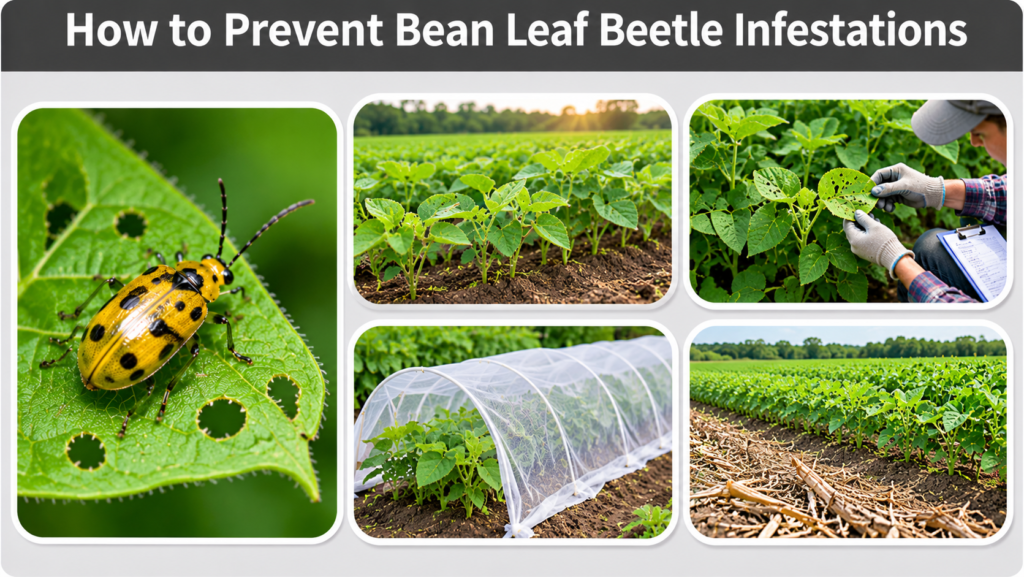
Preventing bean leaf beetle problems involves regular monitoring, crop management, and reducing conditions that favor damaging populations. Because adult beetles can fly between fields, no single prevention method guarantees complete protection.
Practice Regular Field Scouting
Inspect soybean fields shortly after emergence and continue monitoring throughout the growing season. Examine multiple locations rather than relying only on field edges.
Manage Planting and Crop Conditions
Early-emerging soybean fields may attract overwintered adults. Planting decisions should consider local pest pressure, crop requirements, and extension recommendations.
Maintain proper soil fertility and irrigation to help plants tolerate moderate feeding.
Remove Unnecessary Plant Debris
Manage crop residue and weeds according to local agricultural recommendations. Avoid assuming that debris removal alone will eliminate overwintering beetles, since adults can survive in surrounding vegetation and wooded habitats.
FAQs
1. Are bean leaf beetles harmful to humans?
Bean leaf beetles are not considered dangerous to humans. They do not sting and are not known for biting people. Their primary significance is agricultural, as adults can damage bean plants and soybean crops by feeding on leaves and pods.
2. What do bean leaf beetles eat?
Adult bean leaf beetles primarily feed on leaves and pods of soybeans, green beans, and other legumes. They may also consume clover and alfalfa foliage. Their larvae live underground, feeding mainly on plant roots and root nodules.
3. How do you get rid of bean leaf beetles naturally?
Natural control methods include handpicking adult beetles, using floating row covers, managing weeds, and monitoring plants regularly. These methods work best in small gardens. Larger infestations in commercial soybean fields may require additional management based on established economic thresholds.
4. Do bean leaf beetles bite humans?
Bean leaf beetles are not known to bite humans. Their mouthparts are adapted for chewing plant material rather than attacking people. They generally avoid contact and may drop from plants when disturbed. They are primarily pests of beans and soybeans.
5. What is the best insecticide for bean leaf beetles?
There is no single best insecticide for every situation. Effective treatment depends on the crop, insect population, growth stage, and locally registered products. Foliar insecticides can control adults, but treatment should follow scouting results, economic thresholds, and product-label instructions.